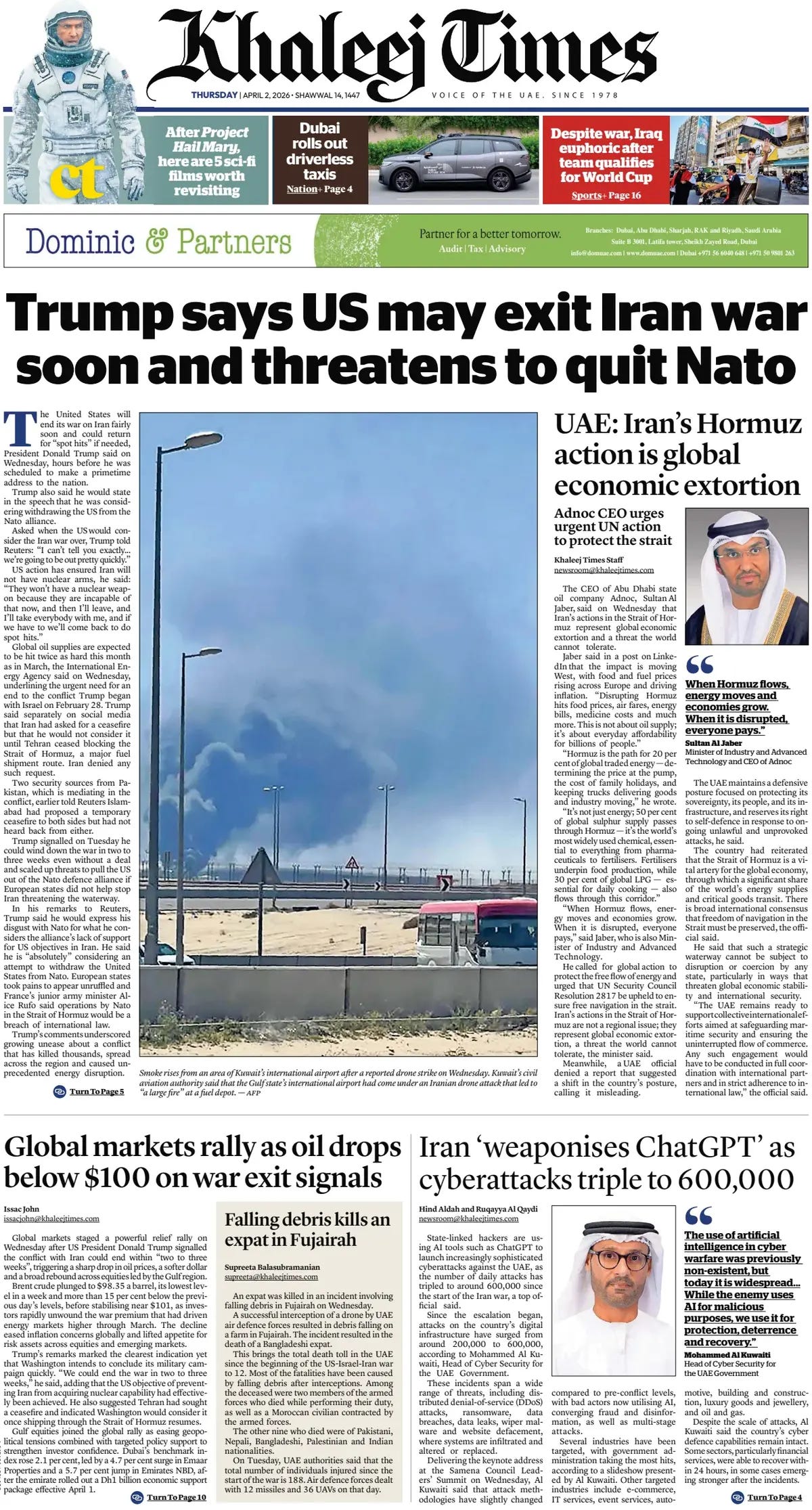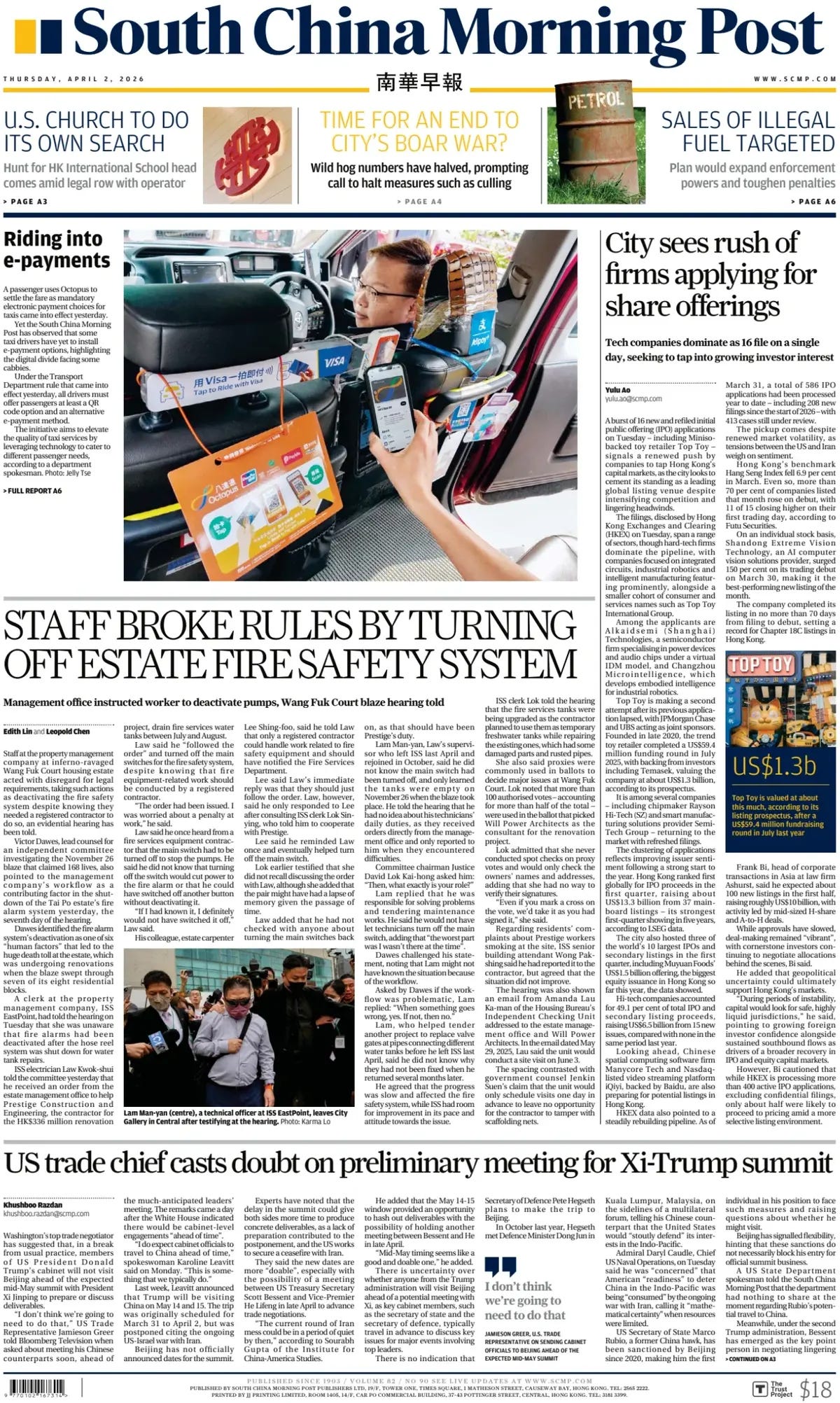
Oil prices surged and stock markets sank on Thursday, hours after President Trump declared in a national television address that the U.S. military campaign against Iran was an overwhelming success but failed to offer a clear exit strategy. On Wednesday night, in his first prime-time address from the White House since the United States and Israel launched strikes on Iran on Feb. 28, Mr. Trump threatened to bomb Iran “back to the Stone Ages” and repeated his threats to hit Iranian infrastructure, including electrical plants, unless a deal was struck. Investors hoping for clearer signals of a de-escalation appeared disappointed. The price of Brent crude, the global benchmark for oil, jumped more than 7 percent in early trading on Thursday, the steepest daily rise in three weeks. Stock markets around the world fell, with indexes in Asia, where countries import vast quantities of oil and gas from the Middle East, hit particularly hard. Mr. Trump said in his speech that Iran’s “ability to launch missiles and drones is dramatically curtailed.” On Thursday morning, Iran’s Revolutionary Guards Corps said that American and Israeli strikes had not decimated the country’s missile production centers, long-range drones, air defenses or electronic warfare systems. The United States and Israel “know nothing about our vast and strategic capabilities,” the Guards said in a statement on Thursday. The U.S. and Israeli militaries have destroyed many of Iran’s ballistic missiles and launchers in airstrikes. But a large number are undamaged, and Iran continues to launch missiles and drones. Early Thursday, Israel’s military said its forces had intercepted missiles launched from Iran. The authorities in the United Arab Emirates said their forces had responded to drone and missile strikes from Iran, while Saudi Arabia reported intercepting a missile and drones without saying where they came from - NYT
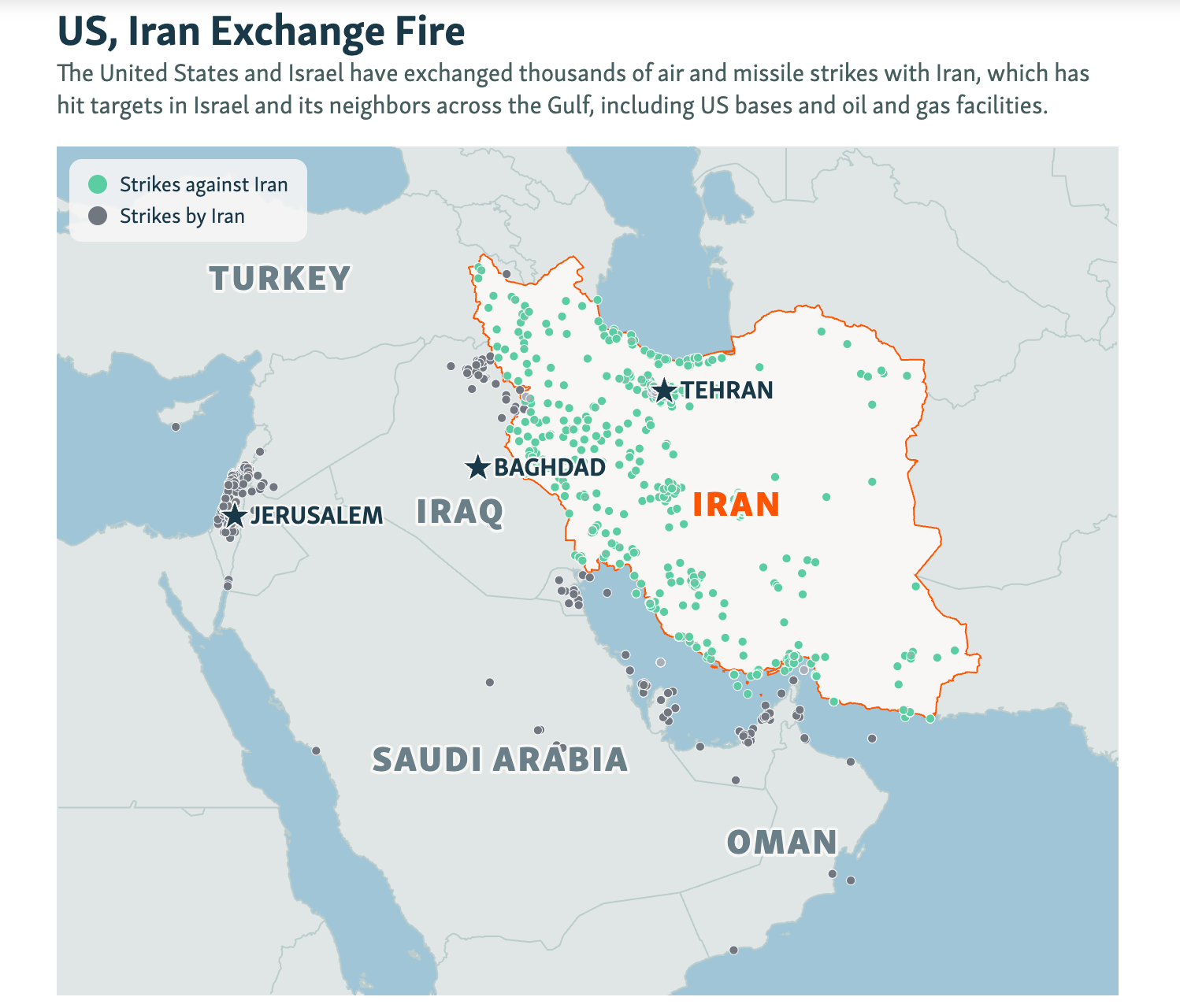
Since February 28, Tehran has launched fewer short and long-range missiles - about several dozen per day on average - yet its hit rate has increased, according to military analysts analyzing open-source data. That is partly down to the United States and Israel degrading Iran’s military capabilities, but also Tehran conserving its remaining arsenal and becoming more selective in what it targets, experts say. “US and Israeli strikes have clearly caused significant damage to Iran’s launcher infrastructure,” said Kelly Grieco, senior fellow at the Stimson Center, a Washington-based think tank. “That physical attrition likely accounts for a significant share of the launch rate decline….But Iran also seems to have also made a deliberate choice to change strategies,” she added. “Over time, Iran has shifted toward smaller, more precisely targeted salvos aimed at specific high-value targets.” Those targets include key US military installations and radar systems in the Middle East, the critical oil and gas infrastructure of America’s Arab allies in the Persian Gulf, and industrial and energy sites in Israel. By firing a relatively small number of missiles, Iran appears to be achieving its core war aims -- expanding the battlefield, disrupting the global economy, and imposing direct costs on the United States and its allies - RFE/RL
Yesterday, we brought you our report on the worsening situation facing ride-hailing drivers across Southeast Asia.
As fuel prices spike, tourism falters, and commissions from platforms such as publicly listed Grab Holdings hold firm, the people keeping cities moving are being pushed to breaking point. Some are sleeping less. Some are falling behind on car rental payments. Others are quietly absorbing rising maintenance and insurance costs that, in many cases, have doubled in a matter of weeks.
Below is an AI-simulated excerpt from our conversation with “Emmanuel,” a Grab driver in Manila. His predicament is emblematic of what many drivers across the region are now facing as the war in the Middle East grinds on.
After a hiatus of nearly a decade, China is jump-starting its island-building campaign in the South China Sea—and turning a once-obscure reef into what could be its largest military base in the disputed waters. The construction at Antelope Reef could give Beijing another runway, more missile facilities and additional surveillance installations, analysts say, and serve as a backup to its existing military footprint in the region. And because it is relatively close to the Chinese mainland, it also offers Beijing a chance to increase civilian infrastructure, bolstering its argument that the area is part of China. The work at Antelope Reef, which according to satellite imagery includes jetties, a helipad, gray-roofed structures and a new coastline that looks suitable to be a runway, caught some analysts by surprise. Antelope Reef is in the Paracel Islands, an archipelago in the northern part of the South China Sea that is firmly controlled by China, though Vietnam and Taiwan also have claims there. “This is the first time in a long time that they have reopened this basket of being able to build islands extremely large and extremely quickly,” Harrison Prétat, deputy director at the Asia Maritime Transparency Initiative at the Center for Strategic and International Studies in Washington, said of the work at Antelope Reef. “This could be a response to show Vietnam and maybe show others that China’s not going to be outdone, and they’re not going to sit by while someone else builds up their own outposts,” Prétat added, though he noted other factors are probably also at play. A CSIS analysis of satellite imagery determined that the area of reclaimed land at Antelope Reef was roughly 1,490 acres so far, already about the same size as Mischief Reef in the Spratlys, which is China’s largest outpost and measures some 1,504 acres. China’s largest island in the Paracels, Woody Island, which hosts an air and naval base and a town that administers the region, measures 890 acres, according to CSIS - WSJ
The journals……