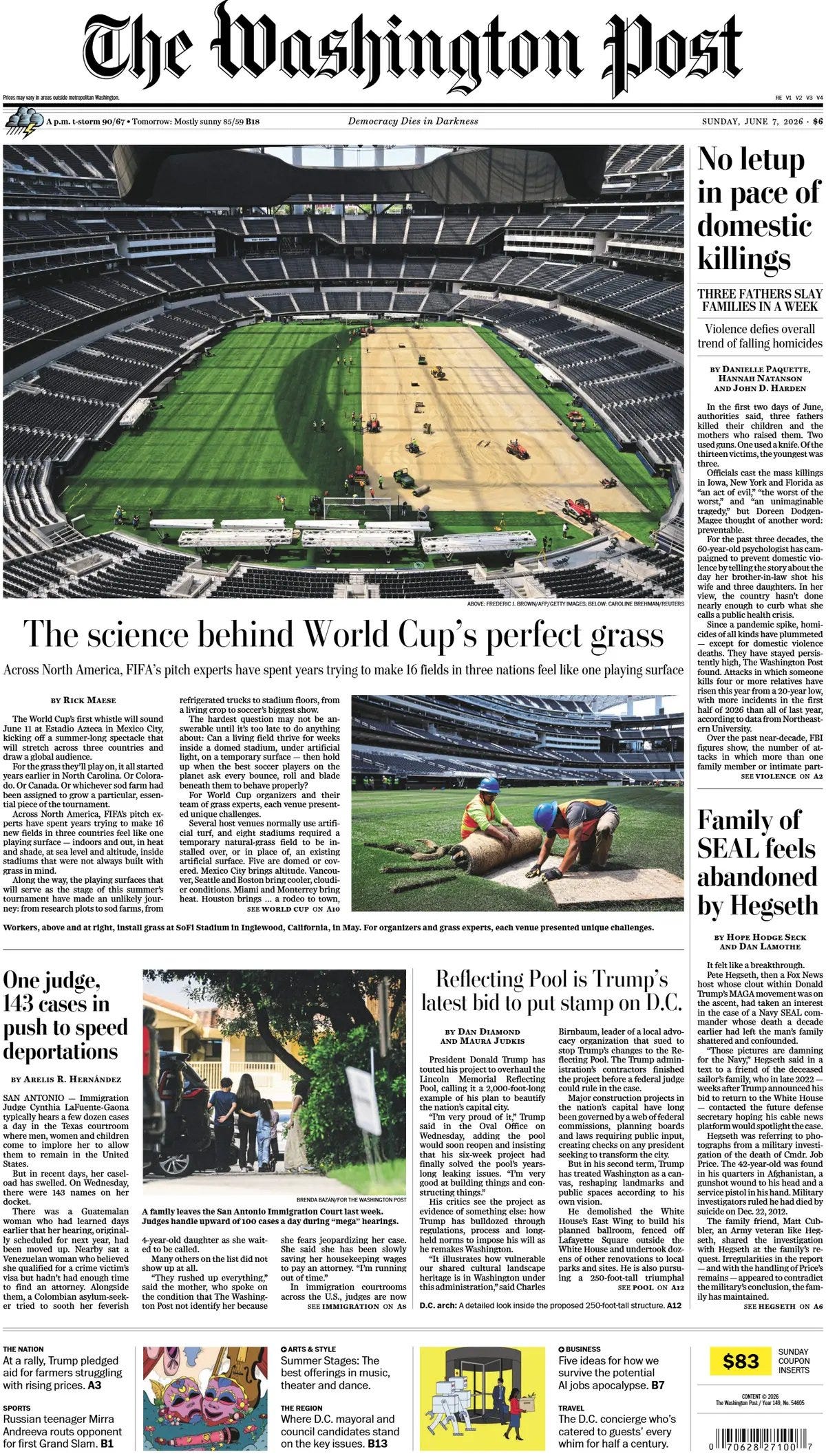
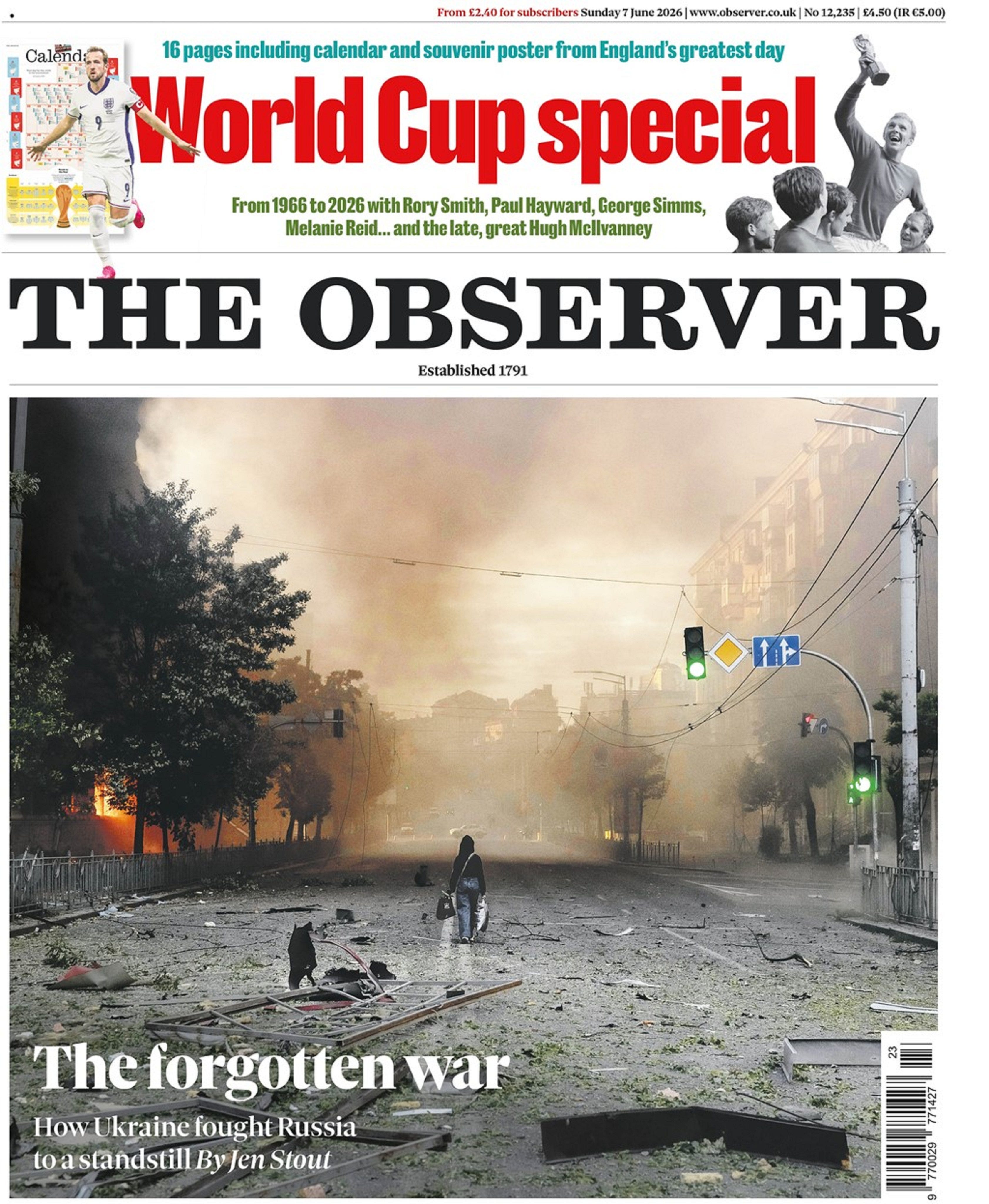
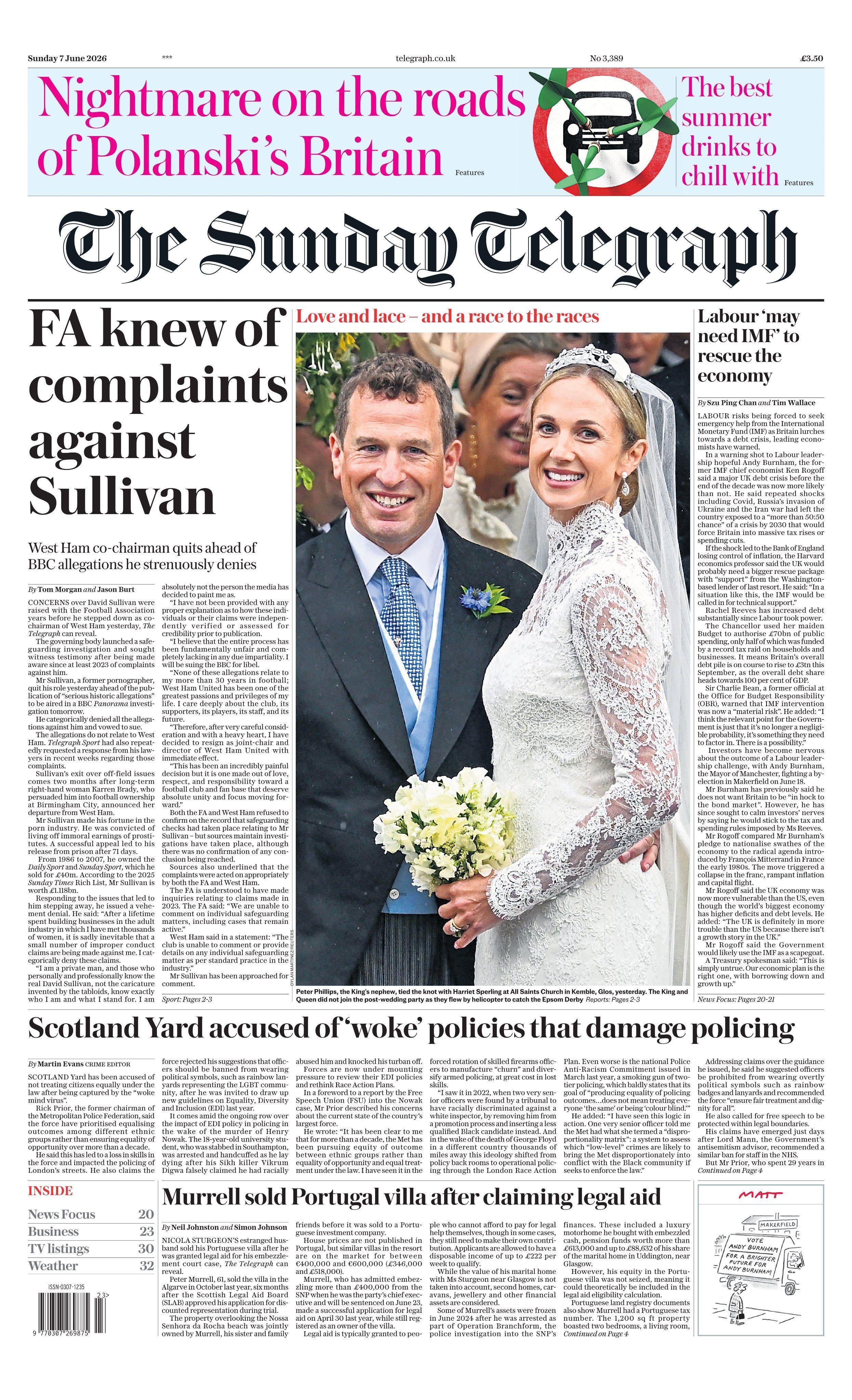
A Crisis on the Eve of the World Cup
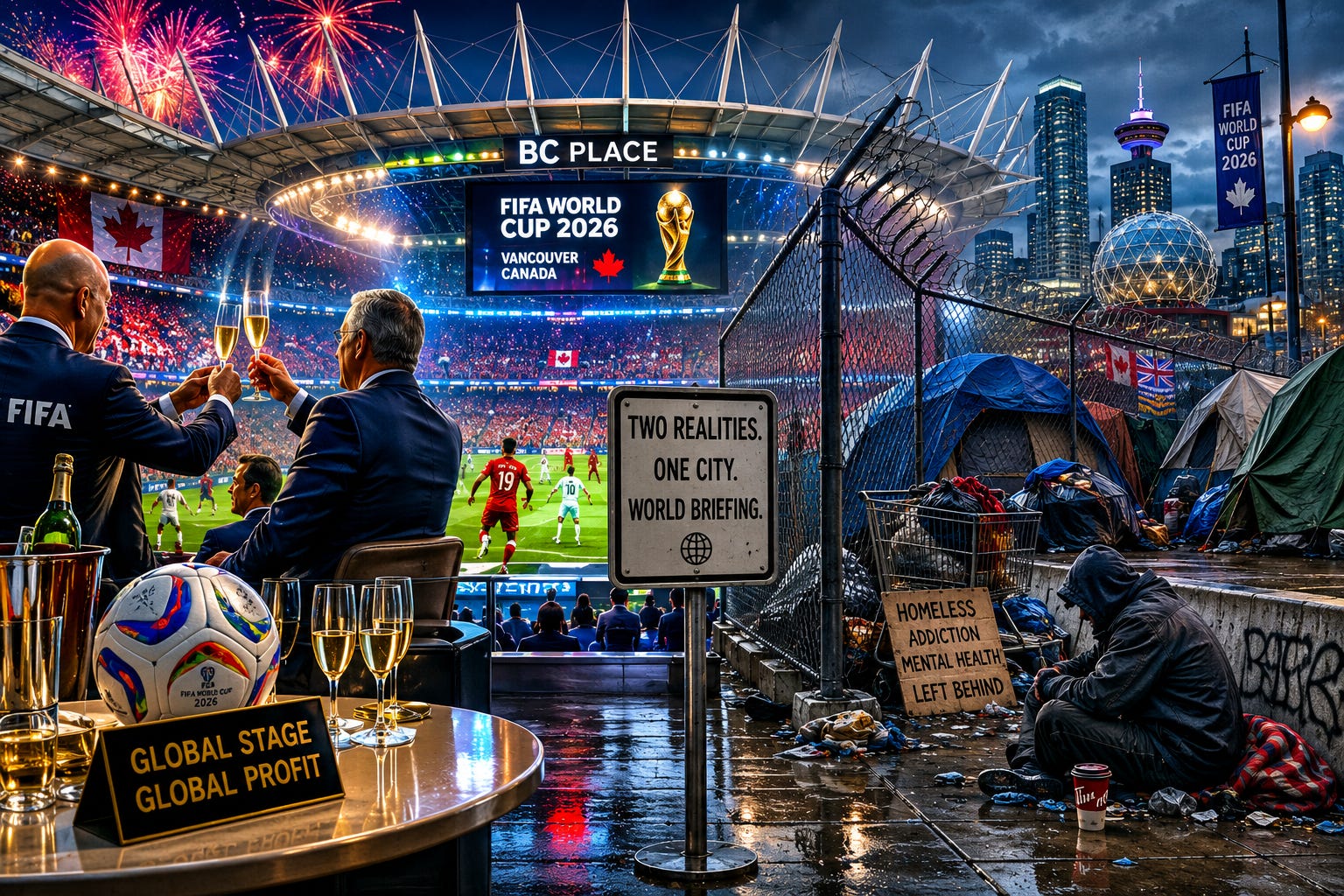
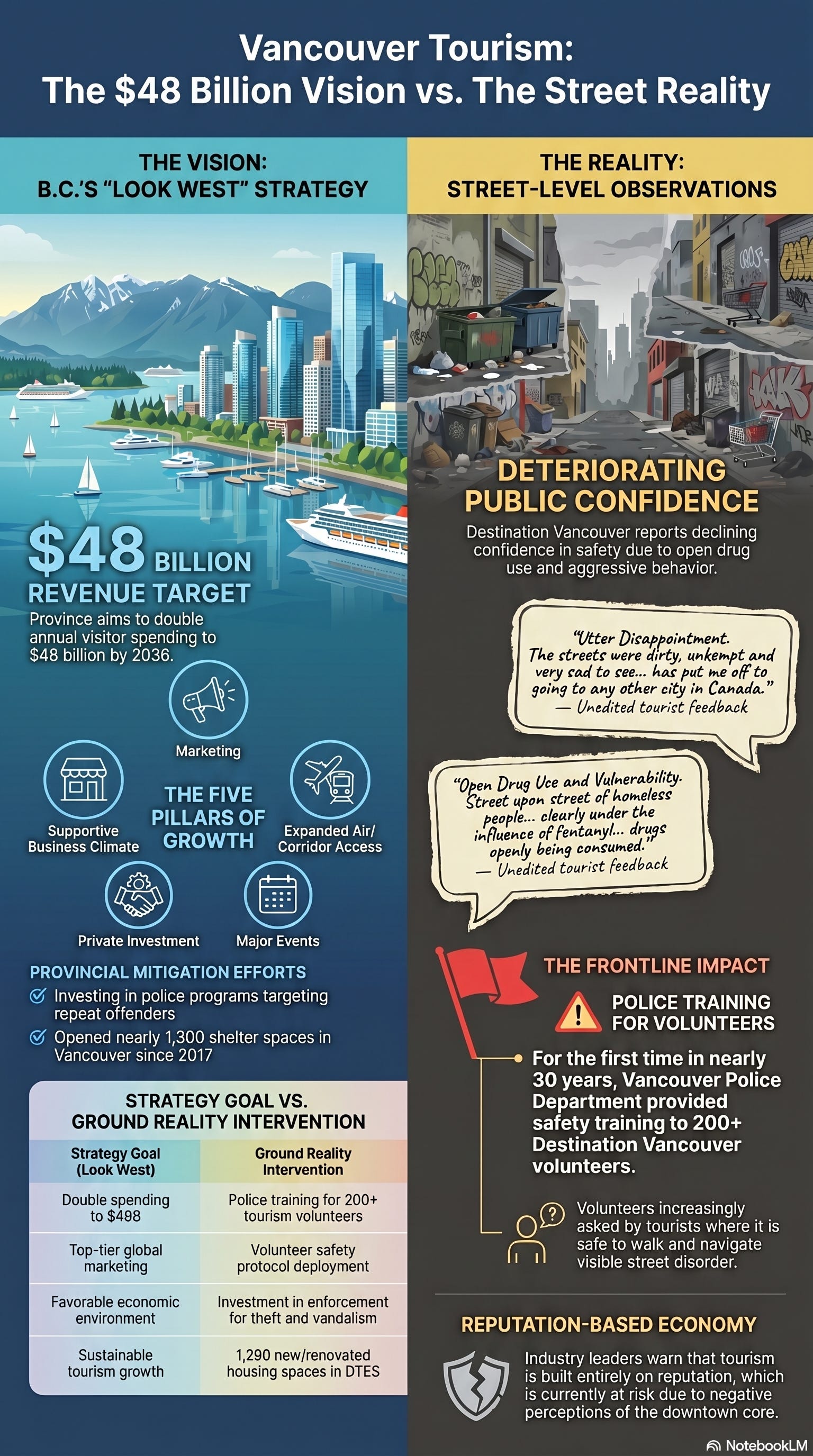
Just as Vancouver, one of two host cities in Canada, prepares to welcome the world for its first match next weekend, the city’s tourism leaders are issuing a desperate plea. In a recent news conference, Destination Vancouver CEO Royce Chwin sounded the alarm over plummeting public confidence and severe street disorder in the downtown core. Rather than projecting excitement for the impending global spotlight, Chwin was forced to share unedited, scathing reviews from recent visitors who described feelings of extreme vulnerability and “utter disappointment”.
Tourists Repelled by Open Drug Use The complaints shared by tourism officials paint a grim picture of the realities on Vancouver’s streets. Visitors reported navigating “street upon street of homeless people who were clearly under the influence,” witnessing drugs being openly cooked and consumed, and being aggressively yelled at by individuals suffering from severe mental health issues. For some tourists, the disorder has entirely destroyed the city’s reputation, with one visitor stating the experience “has put me off to going to any other city in Canada”. The situation has deteriorated so drastically that, for the first time in nearly 30 years, Destination Vancouver had to bring in the Vancouver Police Department to train its volunteers on how to field safety questions from frightened tourists.
Clueless Officials and Band-Aid Solutions Despite these glaring issues in high-traffic areas, local and provincial officials appear completely out of touch. The B.C. government recently unveiled its “Look West” strategy, which aims to double visitor spending to $48 billion by 2036. Yet, these ambitious economic goals seem entirely disconnected from the reality on the ground. The government claims to be investing in police enforcement, adding shelter beds, and addressing mental health, but the results are virtually invisible. Much like the superficial approach seen in Victoria - where officials have resorted to simply putting up fences to hide the infiltration of drug addiction and homelessness in tourist zones - the responses in Vancouver feel like nothing more than band-aid solutions masking a deep-rooted crisis. With the world’s eyes turning to Vancouver next weekend, the city’s reputation is hanging by a thread.
🔴 LIVE ON CBC | The letter that changed nothing
Zelensky wrote to Putin - calling for a ceasefire, face-to-face talks, even mocking his age. Putin’s answer? Drone strikes. One hit a storage facility near Chernobyl.
We’re back to war of attrition. But something has shifted: Ukraine is now striking deep inside Russia - including Saint Petersburg, during Russia’s Davos. Elites can no longer pretend the war isn’t real.
Plus: Armenia votes today — a thriving democracy in a very dangerous neighbourhood, trying to tilt West while staying alive.
Full analysis with CBC’s Natasha Fatah. 🎙️
World Briefing Explainer: The Sovereignty of the Street: South Africa’s Fragmented Response to Undocumented Migration
By Enzokuhle Jojo
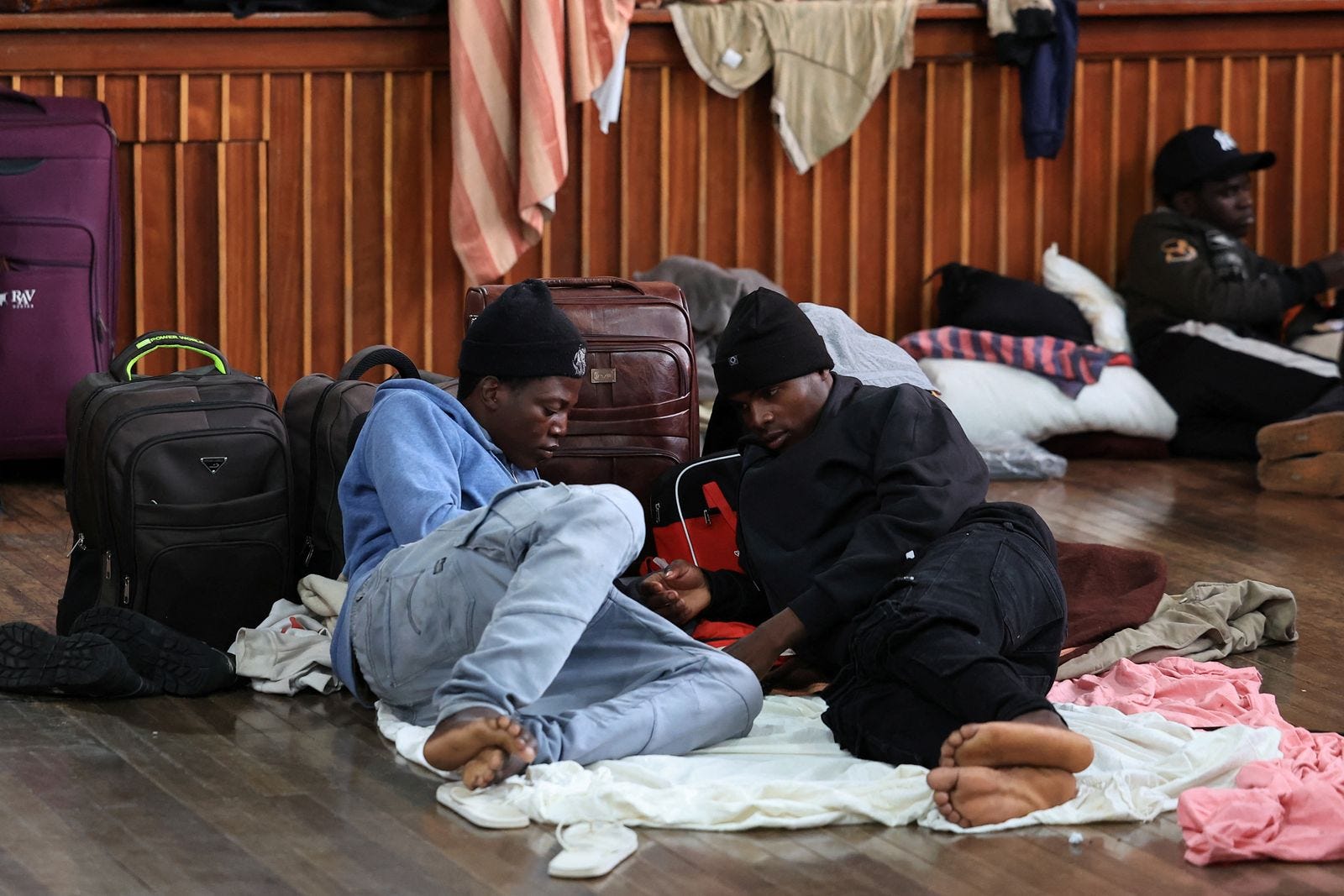
South Africa is currently witnessing a volatile collision between populist street-level mandates and the constitutional guardrails of the state. This dual authority crisis, where the government’s official deportation protocols are increasingly shadowed by a rising tide of public-led vigilantism, represents a fundamental challenge to the rule of law. As non-state actors attempt to seize the mantle of national policy, the internal friction has grown into a geopolitical liability, threatening South Africa’s standing within the African Union and its reputation as a stable continental leader.
The state is visibly struggling to contain mob-led movements that have transformed local frustrations into a paramilitary-style enforcement of borders, The Daily Maverick reported. It further emphasizes that while civil society maintains that “violence is not activism,” the persistent mobilization of these groups suggests the state’s monopoly on force is being tested.
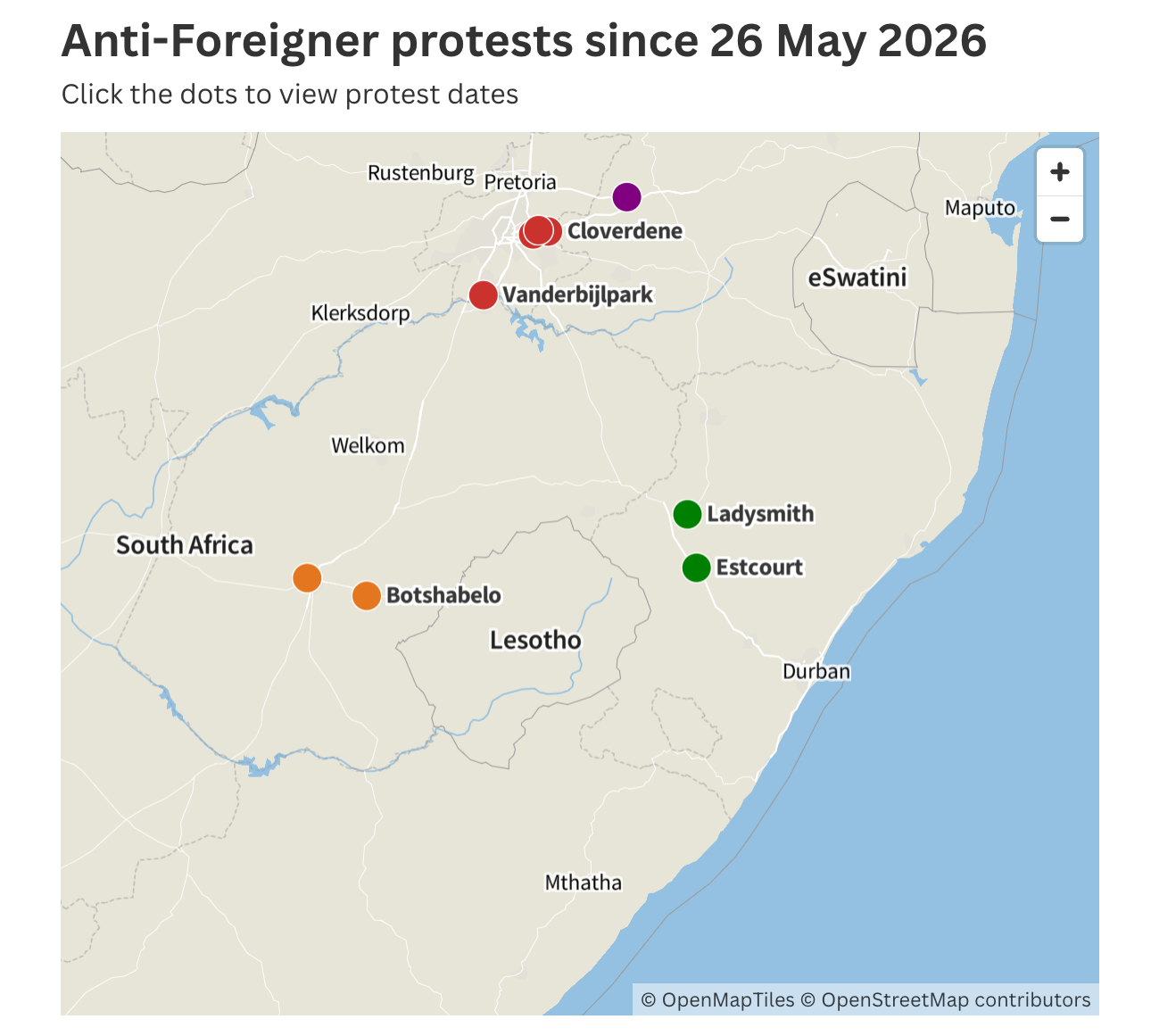
This friction marks a shift from mere policy disagreement to a tactical struggle for control of the country’s urban centers. The current unrest is anchored in the “30 June” phenomenon - a public-enforced deadline for undocumented migrants to vacate the country that operates entirely outside traditional judicial processes. This self-styled mandate represents a dangerous precedent in which non-state actors are, in the words of a presidency statement reported by SAnews, “assuming functions that only state officials are permitted to perform.”
This movement is heavily linked to the “March and March” campaign led by former broadcaster Ngizwe Mchunu, according to independent TV news channel eNCA. Reports detail Mchunu’s intent to “liberate the country” by migrating protest actions from the Durban CBD into the strategic heart of Gauteng, specifically targeting Pretoria and Johannesburg. This public deadline stands in stark contradiction to the official executive position.
President Cyril Ramaphosa, writing in a weekly newsletter cited by the South African government’s news agency, SAnews, denounced these demonstrations as the work of “opportunists who are exploiting legitimate grievances” under a false guise of activism. The presidency’s warning underscores that the assumption of policing powers by civilians is an act of lawlessness that threatens national security.
However, this domestic disconnect has already spilled across borders, igniting a regional diplomatic firestorm. The strategic fallout of this internal instability has reached a breaking point in Pan-African relations, transforming a domestic migration issue into a regional crisis that threatens the very principles of African integration.
The Government of Ghana has delivered the most forceful response to date. As reported by the Ghana News Agency (GNA), the administration, under the direction of President John Dramani Mahama, orchestrated a high-level repatriation exercise to rescue its citizens. GNA noted that the first batch of 300 Ghanaian nationals was received at the Accra International Airport by Chief of Staff Julius Debrah and Foreign Affairs Minister Samuel Okudzeto Ablakwa. In a significant investigative detail corroborated by GNA, Minister Ablakwa revealed that 26 Ghanaians previously detained for visa violations were released following intense diplomatic negotiations and included in the evacuation.
Beyond the physical exodus, GNA reports that Ghana has formally petitioned the African Union to place South African xenophobic attacks on the agenda for the AU Mid-Year Coordination Meeting on June 24 in Egypt. This is compounded by a formal travel advisory from the Ghanaian Ministry of Foreign Affairs, which warns citizens to “avoid non-essential travel to South Africa” due to widespread looting and the systematic destruction of property belonging to African nationals.
To prevent a total regional decoupling and reclaim authority from the streets, the South African state has pivoted toward a performative and intensified enforcement regime known as “Operation New Broom.” This strategic shift, led by the Department of Home Affairs under the Government of National Unity (GNU), aims to signal that migration management is no longer a siloed administrative project but a core security priority.
According to data released by the Department of Home Affairs and analyzed by Business Day, the state has conducted 109,344 deportations over the past two financial years, representing a 46% surge in activity.
Minister of Home Affairs Leon Schreiber said in a published statement that he credited the use of biometric verification tools for this efficiency and issued a blunt warning: illegal immigrants should “self-deport now” or face a permanent ban. This crackdown has penetrated the domestic labor market with investigative precision.
Business Day reports that 8,180 employers have been charged for hiring undocumented workers over the past five years, with enforcement particularly focused on the mining, agriculture, and education and training sectors. While the Eastern Cape recorded the highest number of non-compliant businesses, the broader enforcement successes are overshadowed by the accelerating decay of South Africa’s economic hubs.
Unregulated protests and urban decay are now creating conditions of profound risk for both foreign nationals and local industry alike, pushing South Africa’s major economic hubs toward a breaking point. The Daily Maverick reports a pervasive “gatvol” sentiment among business leaders, who warn that the decline of Johannesburg is no longer a municipal issue but a national emergency.
In a prominent op-ed published in the Daily Maverick, business leaders Adrian Gore and Martin Kingston argued that “If Joburg fails, SA pays,” linking the city’s deterioration directly to the erosion of national revenue and competitive standing. They called for urgent, structured private-sector intervention to rebuild the city.
This macro-economic anxiety is echoed at the local level in KwaZulu-Natal. As documented by eNCA, eThekwini councillor Sharmaine Sewshanker stated that the closure of shops and unlawful disruptions are “severely damaging to the local economy,” placing existing jobs at risk in a city already battered by high unemployment.
In response, the presidency has called for a “whole of society approach” to migration, as reported by SAnews, signaling that the regulation of movement must be balanced with the preservation of economic vitality.
We know that South Africans are not xenophobic as there is no space for xenophobia, racism, sexism, Afrophobia or any other forms of intolerance in South Africa - President Cyril Ramaphosa
South Africa now faces the fundamental challenge of reclaiming sovereign authority from vigilante groups while simultaneously addressing the legitimate socio-economic pressures of undocumented migration. Reasserting the rule of law requires the state to prove that its formal apparatus is a more effective guarantor of security than the lawlessness of public-led mobs.
According to SAnews, Mr. Ramaphosa has remained firm in his assertion that while South Africa will exercise its sovereign right to regulate migration and secure its borders, it must categorically reject “xenophobia, ethnic mobilisation, or intolerance.” The path forward for the Government of National Unity rests on its ability to deliver the “reforms focused on greater efficiency” promised by the Department of Home Affairs. Ultimately, the state must resolve the friction between official policy and the “30 June” mandate; failure to do so will continue to erode South Africa’s international reputation and threaten the fragile stability of its internal economy.
(In an address Sunday night, Mr. Ramaphosa put forward a number of measures to curb illegal immigration - a phased relocation of refugee reception centres to border posts, setting up dedicated courts to fast track the deportation of undocumented migrants, and discontinuing the green ID book - which he said “enables identity theft by undocumented immigrants and criminal syndicates,” Business Day reported).
What is unfolding in South Africa is not simply a migration crisis. It is a referendum on the legitimacy of the post-apartheid state itself. When ordinary citizens feel compelled to enforce borders because they no longer trust the institutions designed to do so, it signals a collapse far deeper than any policy failure. The Government of National Unity cannot legislate its way out of this moment. It must govern. That means confronting the unemployment, service delivery failures, and institutional decay that have made scapegoating foreign nationals so politically potent in the first place. A state that outsources its authority to the streets, even passively by failing to reclaim it, has already conceded something it may not easily recover. South Africa has built its democratic identity on a Constitution that protects the dignity of all people within its borders. To allow mob rule to override that founding promise, regardless of the economic pressures driving it, would be a far greater threat to the nation’s future than any number of undocumented migrants. The state does not have the luxury of delay. Every day the ‘30 June’ mandate goes unchallenged is another day the street wins.
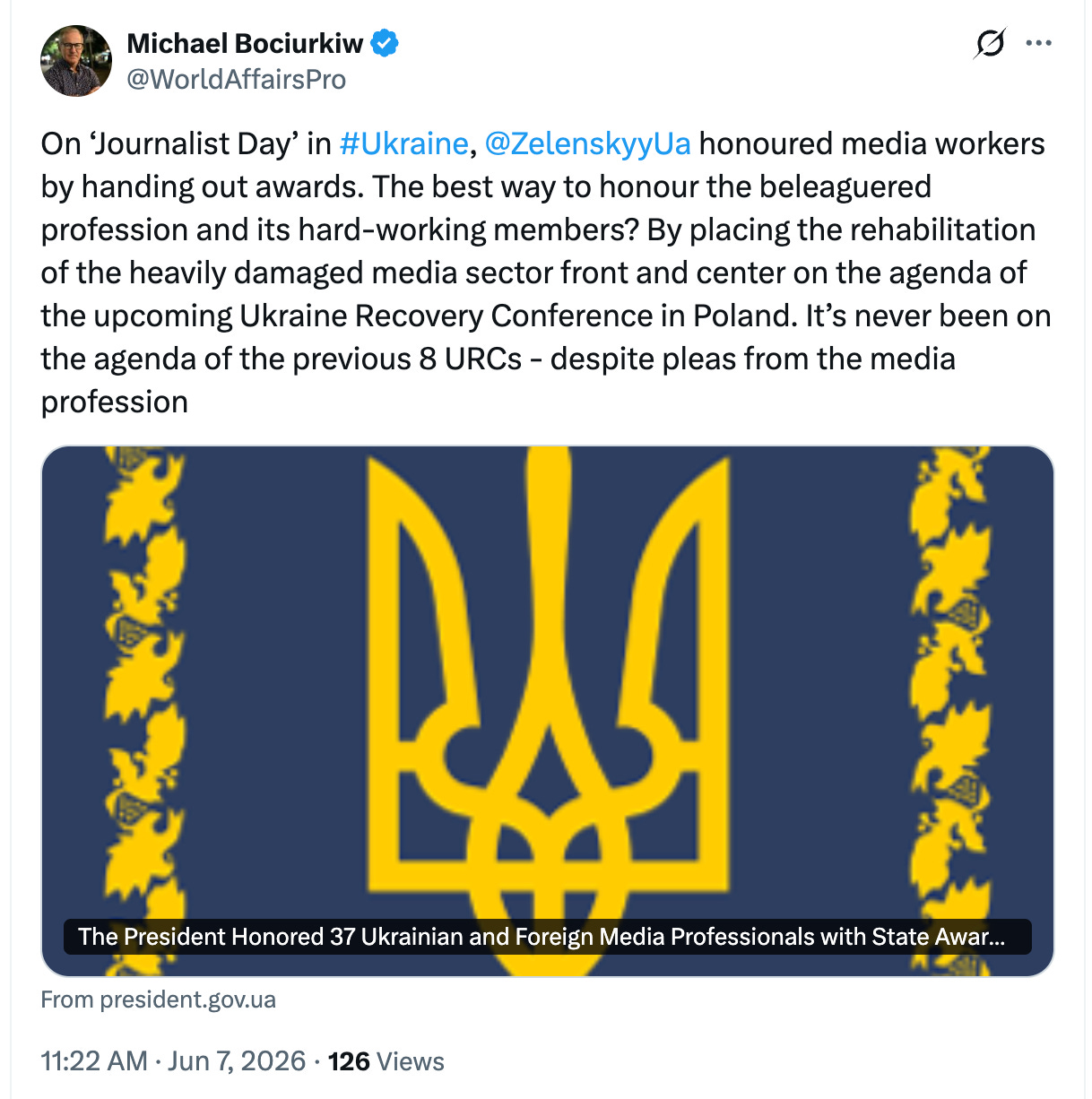
From The National Post, June 7, 2026: Michael Bociurkiw urges Canada to help rebuild Ukraine’s shattered independent media. Martial law forced channels into a single 24/7 “United News” telethon - patriotic, repetitive and increasingly unwatched. Advertising is banned, funding is strained, and many journalists have been killed, drafted or fled. “I feel we’re not far from Ukrainian media (becoming a media in exile) joining the Afghans, Persians and others who have fled their countries,” he warns.
There is no democracy without journalism….It can’t be done” - Former CBS Sixty Minutes Correspondent Scott Pellley
The journals….