The old post-Cold War order isn't just fraying - it's being replaced in real time, and no one is fully in charge. The Iran-Israel ceasefire is fragile and Trump-brokered. Xi is on a summitry sprint, positioning China as the world's indispensable interlocutor. Macron is rallying G7 to talk trade with Beijing before a summit even begins. Armenia just voted to leave Russia's orbit. And in London, the E3 - Britain, France, Germany - are doing the heavy lifting on Ukraine that Washington has largely abandoned, with Putin still refusing to even take Zelensky's call. What you're watching isn't chaos - it's a hostile takeover of the international system, with multiple bidders and no clear winner.
Xi Visits Pyongyang - But Who’s Really In Charge Of Kim?
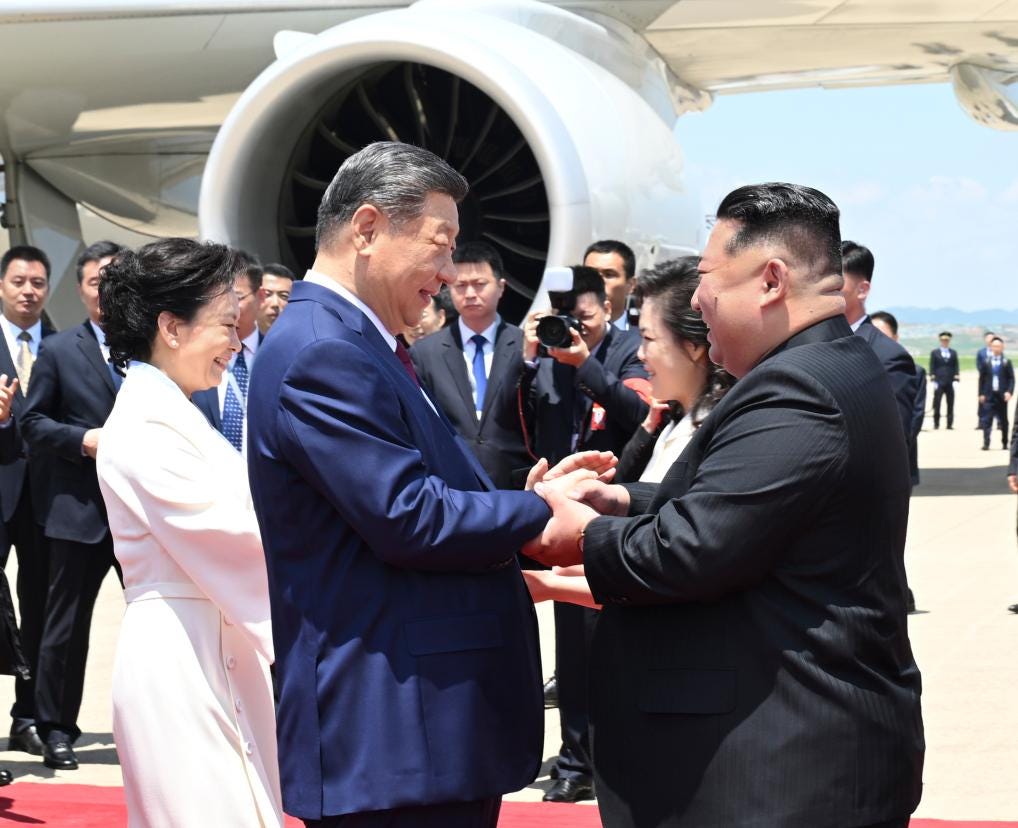
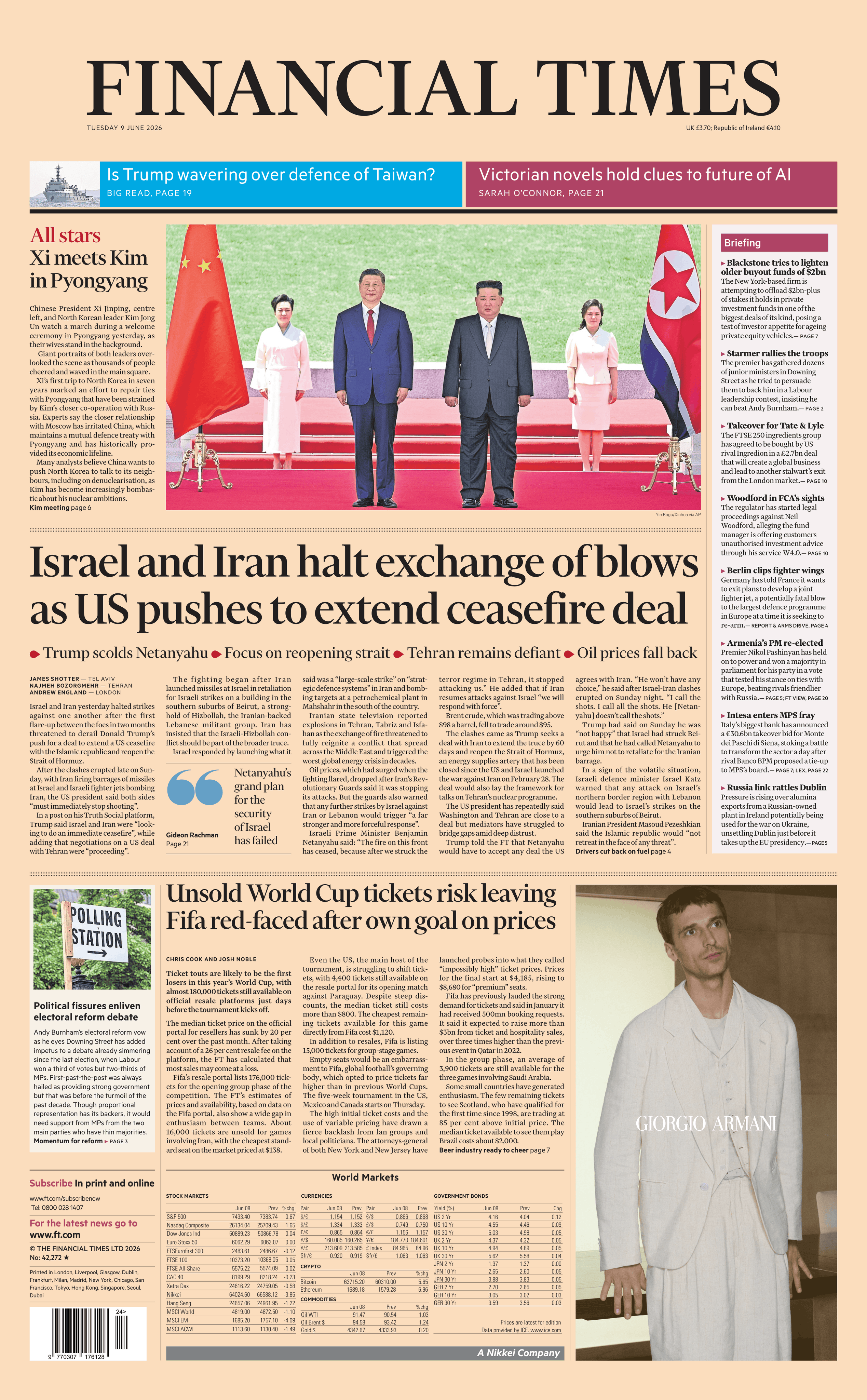
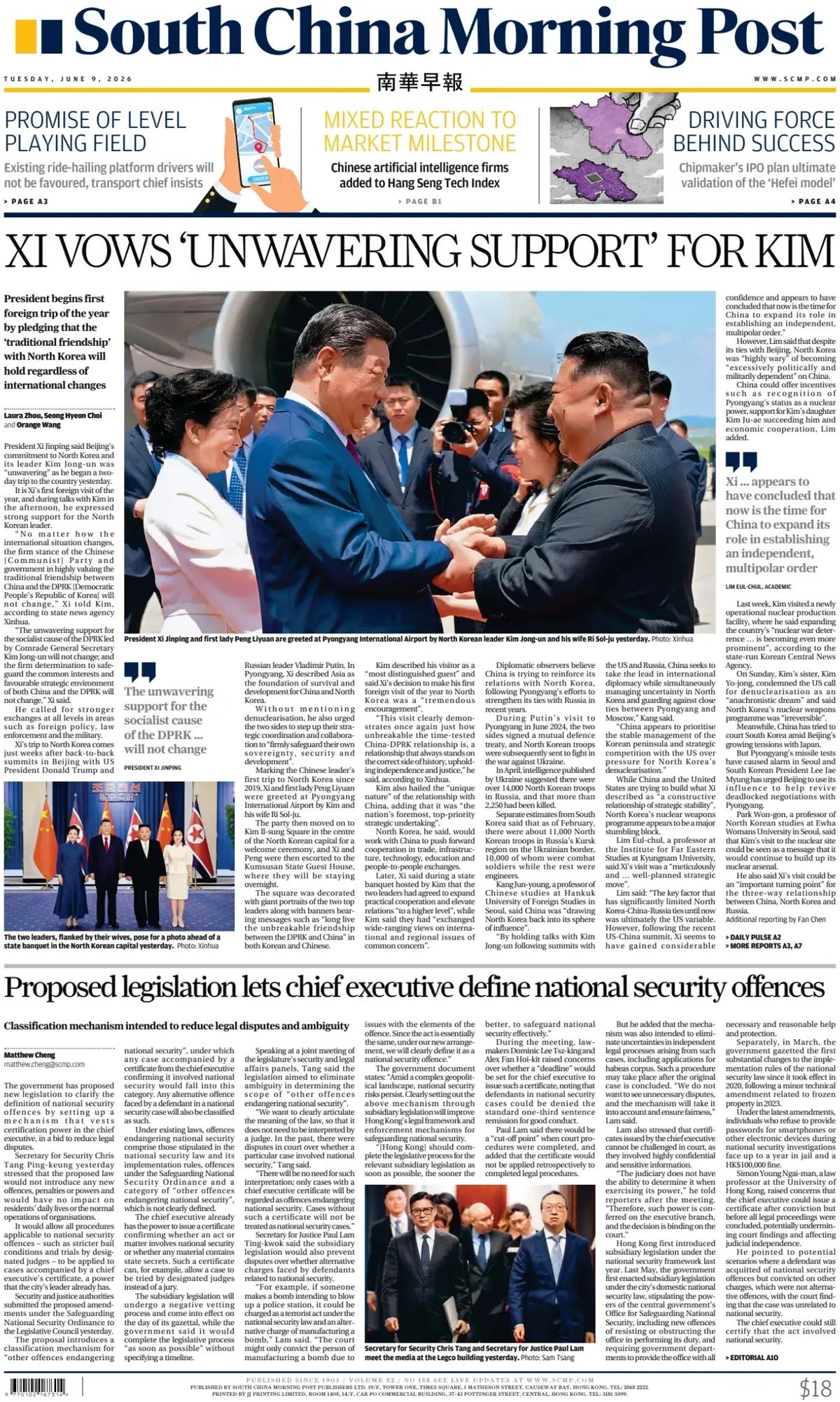
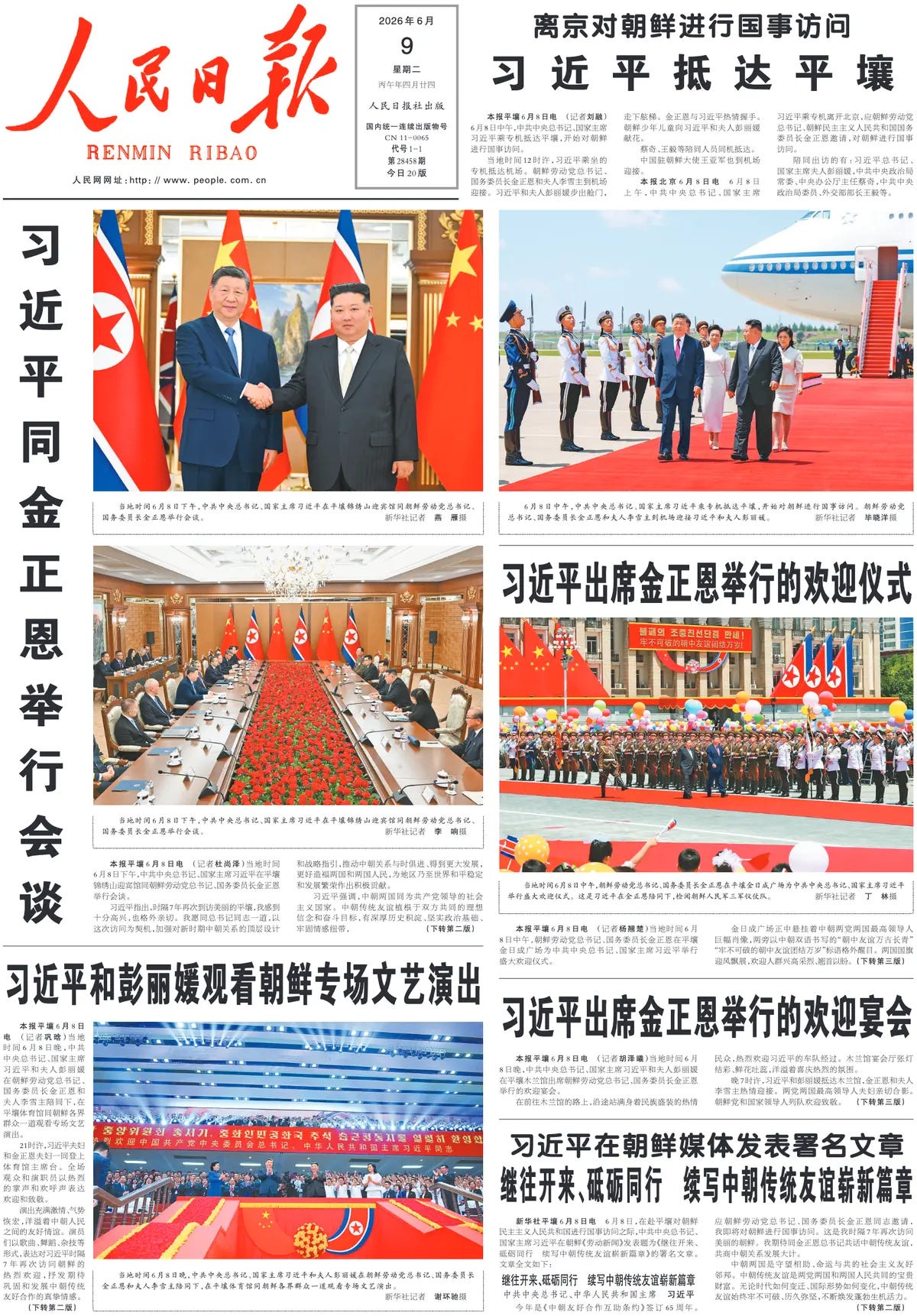
Chinese President Xi Jinping arrived in Pyongyang Monday for a two-day state visit - his first trip to North Korea since 2019 and notably his first overseas visit of 2026. Kim Jong Un and his wife Ri Sol-ju received Xi at Kim Il-sung Square, where he was welcomed by a large military band.
The Pyongyang trip comes amid a remarkable run of summitry for Xi. In recent weeks, he hosted U.S. President Donald Trump in Beijing, then Russian President Vladimir Putin shortly after - a sequencing that was almost certainly deliberate. Beijing is projecting itself as the world’s indispensable interlocutor: the one capital that every major power still needs to visit, even as Washington gets ground down by domestic dysfunction, the Iran war, and a growing list of foreign files it cannot close. As traditional U.S. allies quietly seek distance from Washington, Xi is filling the vacuum - not with ideology, but with availability.
Xi called for deepening “strategic coordination and cooperation,” saying the two sides should inject “powerful momentum” into their ties, with China ready to expand cooperation in economics, trade, agriculture, health, and science and technology. Conspicuously absent from Xi’s four-point framework for relations: any mention of denuclearization - a demand that has become diplomatic theatre at this point.
Xi….appears to have concluded that now is the time for China to expand its role in establishing an independent, multi-polar order - Lim Eul-Chul, academic
Notably, Defense Minister Dong Jun is part of Xi’s delegation - a departure from the 2019 visit - suggesting the military dimension of this relationship is being elevated, not just managed.
The conventional read is that Xi is visiting to claw back influence over a Kim who has grown increasingly cozy with Putin, supplying troops and weapons for Russia’s war in Ukraine. As one analyst put it, “North Korea has more leverage vis-à-vis China compared to June 2019.”
But that framing may be too tidy. Xi has no interest in seeing Putin lose in Ukraine. With Ukraine regaining battlefield initiative, there may be quiet urgency in Beijing to ensure Russian forces remain adequately supplied - and if Pyongyang is helping achieve that, Xi is hardly losing sleep over it. The concern isn’t that Kim is helping Russia; it’s that Kim is doing so without Chinese coordination, acquiring leverage with Moscow that Beijing doesn’t control. (In April, Ukrainian intelligence suggested there were over 14,000 North Korean troops in Russia, and that more than 2,250 had been killed. Meanwhile, South Korea said that as of February there were about 11,000 DPRK troops in Russia’s Kursk region on the Ukrainian border, 10,000 of whom were combat soldiers and the remainder engineers).
For North Korea, this visit is another chapter in its longstanding balancing act — extracting military and economic benefits from both Russia and China while avoiding excessive reliance on either. Kim plays this game well. Xi knows it. The pageantry in Pyongyang is as much about optics as influence.
French President Emmanuel Macron is set to host a video call between the Group of Seven countries and China to address global trade imbalances, according to four officials from three G7 countries familiar with preparations for the meeting. Two of the four officials, all of whom were granted anonymity to discuss sensitive diplomatic planning, said the call would take place Thursday ahead of next week’s G7 leaders’ summit in the lakeside resort of Evian-les-Bains. The call is a notable step for a group of Western democracies that has in recent years taken an increasingly confrontational stance toward China. But France, which has made tackling economic imbalances a key aim of its G7 presidency this year, has taken a more conciliatory approach when it comes to dealing with China. French officials argue that underinvestment in the European Union and overconsumption in the U.S. as well as Chinese overproduction contributed to the current situation - Politico
Iran and Israel say they have halted attacks on each other, after the two countries exchanged fire for the first time since April’s truce. Israel’s Prime Minister Benjamin Netanyahu said on Monday that his country was holding fire “at the moment”. But he stressed that the struggle against Iran and Hezbollah was “not finished”. It came hours after Iran’s armed forces said it had stopped operations following the delivery of a “painful response” to Israel. It promised “more severe and crushing measures” if Israel carried out more strikes, including in Lebanon, where Israeli forces are fighting the Iran-backed group Hezbollah. Tehran launched missiles at Israel on Sunday in retaliation for a strike on Beirut. Israel responded in the early hours of Monday morning by targeting what it said were military sites in the Islamic Republic. In a call with the BBC, US President Donald Trump denied that Netanyahu had defied his wishes by launching strikes. The White House confirmed that Trump had called Netanyahu to discuss the crisis. An Israeli official said Israel had halted its strikes at his request - BBC
Armenia’s ruling pro-Europe party has won parliamentary elections, confirming the country’s pivot towards Europe and away from its traditional ally, Russia. Final results in the small South Caucasus country showed the prime minister Nikol Pashinyan’s Civil Contract party securing a slim majority, while the Strong Armenia alliance, led by the Russian-Armenian billionaire Samvel Karapetyan, won 25% of the seats in parliament. Armenia’s ruling pro-Europe party has won parliamentary elections, confirming the country’s pivot towards Europe and away from its traditional ally, Russia. Final results in the small South Caucasus country showed the prime minister Nikol Pashinyan’s Civil Contract party securing a slim majority, while the Strong Armenia alliance, led by the Russian-Armenian billionaire Samvel Karapetyan, won 25% of the seats in parliament. The prime minister, known for his populist and at times divisive rhetoric, has sought closer ties with Europe, suggesting that Armenia’s future lies in deeper integration with the west and expressing hope that the country could one day join the EU. Yet difficulties remain for Pashinyan, who failed to secure the supermajority needed to call a referendum on amending the constitution, including removing references that Azerbaijan says imply territorial claims to Nagorno-Karabakh – a crucial condition for signing a final peace agreement. - The Guardian
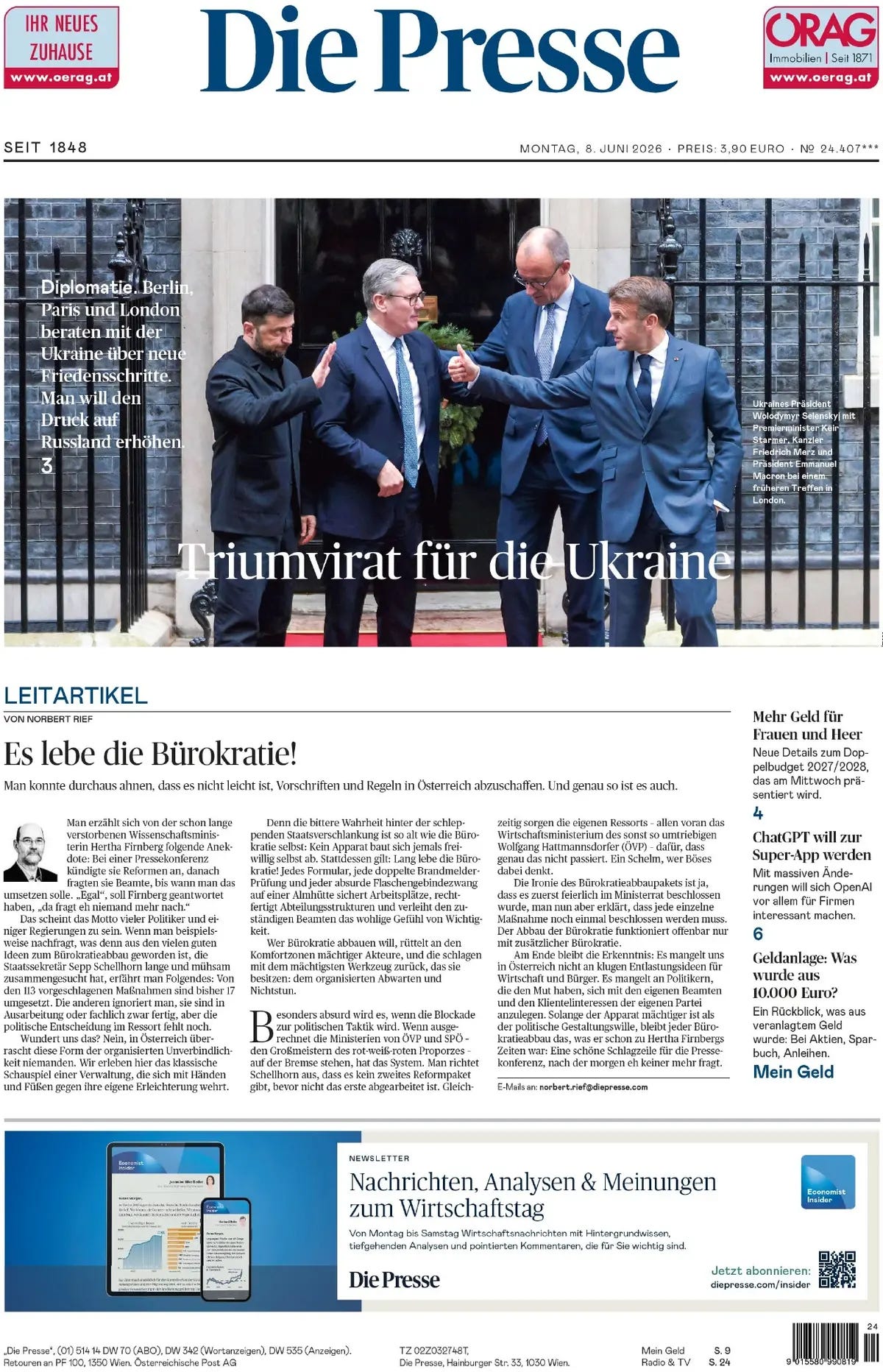
As Russia’s full-scale invasion of Ukraine continues in its fifth year, British Prime Minister Keir Starmer hosted Ukraine’s President Volodymyr Zelensky and European partners for talks on support for Kyiv. German Chancellor Friedrich Merz and French President Emmanuel Macron were present at the meeting. Together the three European leaders helm an informal security alliance known as the E3, which is one of Ukraine’s main sources of international support. In a joint statement, they extended their support to a proposal for a direct dialogue between Zelenskyy and Russian President Vladimir Putin — with US and European participation — to try to secure a ceasefire. “Leaders commended President Zelenskyy’s call for an end to the war, negotiated by diplomatic means, as set out in his letter to the president,” the statement said, referring to an open letter Zelensky wrote to Putin last week, proposing a face-to-face meeting between the two. The letter was snubbed by the Russian leader, who said the offer did not come across as sincere. Putin said he saw “no point” in meeting Zelensky until a possible peace deal had been agreed. Meanwhile, Zelensky - who joined the European leaders in Downing Street - said he told the UK's Starmer that Kyiv needed additional missiles for air defence systems - DW
Help Us Keep Connecting The Dots
For more than three decades, I’ve reported from conflict zones, humanitarian crises, and geopolitical flashpoints — and World Briefing is how I continue that mission independently. No editors second-guessing the story. No algorithms deciding what matters. Just rigorous, on-the-ground analysis delivered straight to your inbox.
If you find this reporting valuable, please consider upgrading to a paid subscription — or support World Briefing at your own level via PayPal.
At a time when foreign coverage is shrinking and misinformation is filling the void, your support helps keep independent global journalism alive and in the field.
Thank you for reading, sharing, and being part of this community.
Ticket touts are likely to be the first losers in this year’s World Cup, with almost 180,000 tickets still available on official resale platforms just days before the tournament kicks off. The median official ticket price on the official portal for resellers has sunk by 20 percent over the past month. After taking account of a 26 percent resale fee on the platform, the Financial Times has calculated that most sales may come at a loss. FIFA’s resale portals lists 176,000 tickets for the opening group phase of the competition. The FT’s estimates of prices and availability, based on data on the FIFA portal, also show a large gap in enthusiasm between teams. About 16,000 tickets are unsold for games involving Iran, with the cheapest standard seat on the market priced at $138. Even the U.S., the main host of the tournament, is struggling to shift tickets, with 4,400 tickets still available on the resale portal for its opening match against Paraguay. Despite steep discounts, the median tickets still costs more than $800. The cheapest remaining tickets for this game directly from FIFA cost $1,200. In addition to resales, FIFA is listing 15,000 tickets for group-stage games. Empty seats would be an embarrassment for FIFA, global football’s governing body, which opted to price tickets far higher than in previous World Cups. The five-week tournament in the U.S., Mexico and Canada starts Thursday. The high initial ticket costs and the use of variable pricing have drawn a fierce backlash from fan groups and local politicians. The attorneys-general office of both New York and New Jersey have laucnhed probes into what they called “impossibly high” ticket prices. Prices for the final start at $4,185, rising to $8,680 for “premium” seats. FIFA has previously lauded the strong demand for tickets and said in January it had received requests 500-million booking requests. It said it expected to raise more than $3-billion from ticket and hospitality sales, over three times higher than the previous event in Qatar in 2022 - Financial Times.
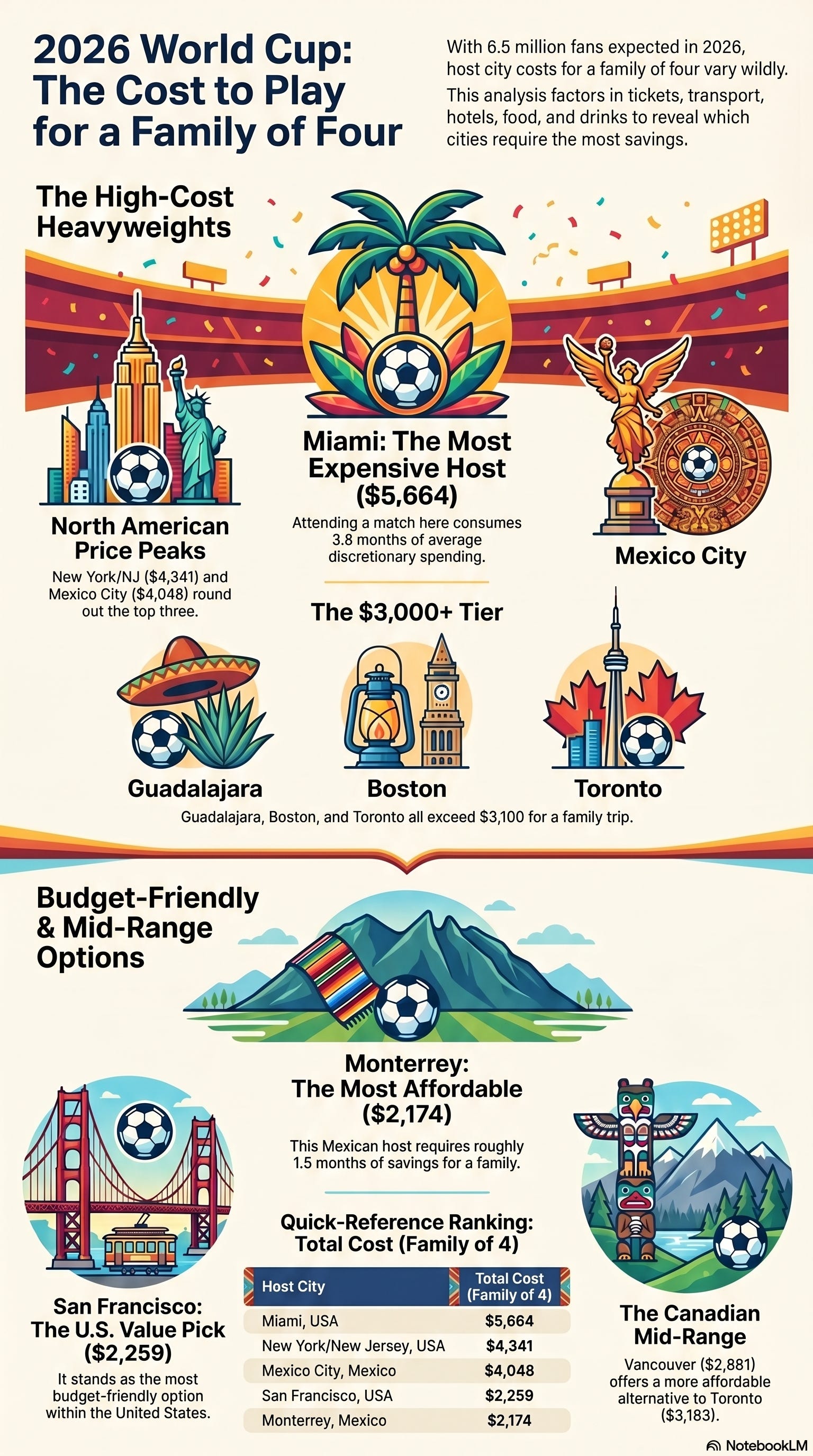
With a record 6.5 million fans expected to descend on North America for the 2026 FIFA World Cup, a new cost analysis lays bare just how unevenly the financial burden falls across host cities. Ticket-Compare.com ranked all 16 venues by total cost for a family of four - factoring in tickets, transport, hotels, food and drinks - and the results are stark. Miami tops the list at $5,664 all-in, consuming an estimated 3.8 months of average discretionary spending for a single match. At the other end, Monterrey, Mexico ($2,174) and San Francisco ($2,259) offer the most budget-friendly options, each requiring roughly 1.5 months of savings. The U.S. dominates the priciest tier, with New York/New Jersey ($4,341) and Boston ($3,394) rounding out the top five most expensive cities alongside Mexican hosts Mexico City ($4,048) and Guadalajara ($3,913). Canadian hosts Toronto ($3,183) and Vancouver ($2,881) land in the mid-range. The methodology drew on ticket data from Ticket-Compare’s own platform, Google Hotels, FIFA partner JustPark, the U.S. Bureau of Economic Analysis, and global cost-of-living database Numbeo.
For the tens of millions of fans eyeing a once-in-a-generation tournament on home turf, the message is clear: choose your city wisely.
President Donald Trump was booed at Madison Square Garden as he attended his hometown New York Knicks‘ NBA Finals matchup with the San Antonio Spurs on Monday. Trump will watch the game from a private box, alongside Kai Trump, the eldest daughter of his son, Donald Trump Jr. The boos came as Avery Wilson performed “The Star Spangled Banner.” It was the Knicks’ first home game in the team’s first Finals appearance since 1999. The president’s attendance, at the invitation of Knicks owner and longtime friend James Dolan, required airport-like security at the New York City arena and caused the NYPD to shut down 10-square blocks around the Garden, long dubbed the “Mecca of Basketball,” in Midtown Manhattan. The home crowd, many of whom paid thousands of dollars to attend, gave a cold welcome to the president, who has not attended a Knicks game in years. New York City Mayor Zohran Mamdani, a Democrat, was also in attendance but in a different part of the stadium. He told the press earlier on Monday that he had bought a standing room-only ticket for about $1,000. Trump's large motorcade rolled up to the Garden at 7:28 p.m., with intense security locking down most of midtown for his arrival. His route to the game took him down the FDR and he was greeted by signs that included, "Nobody wants you here," and "Trump Must Go." People/USA Today
The journals….