World Briefing Hot Take
I confess to mixed feelings about today’s big Canada-Europe embrace. The headlines sound extraordinary, especially when enthusiastically amplified by the state-supported Canadian Broadcasting Corporation. Some even call it “a stunt.” The substance is much harder to pin down.
No such status as “associate membership” currently exists - which is why nobody in Ottawa or Brussels could explain today what it would actually involve. Jonathan Wilkinson, Canada’s ambassador to the European Union, told reporters after the speech that the two sides need to get to the point where they actually know what they are describing, and said Ottawa is not there yet. He also repeated that Canada is not seeking membership.
There is also unease in some European capitals about how far Ursula von der Leyen has gone without asking them first.
And the elephant in the room: Donald Trump. Did anyone weigh whether a pivot this public would provoke Washington further? We got the answer before the day was out. Trump, lashed out - calling the idea laughable and threatened serious tariffs on Europe if it was meant as a hostile act - hours after signing a memorandum to strip Canadian goods out of US federal procurement, itself following last week’s import bans and Tuesday’s fresh 50 per cent levies.
Note the sequencing. The procurement order came before Strasbourg, not after. This was already an escalating week; von der Leyen simply gave it a headline.
Something still shifted today. Carney came to Europe straight from a Toronto investment summit that produced tangible announcements and drew heavy American participation. For days I’ve been picking up a palpable unease here in Ontario about where Canada is headed, and I can’t pretend some of it didn’t lift when the Strasbourg headlines started landing this morning. Canada suddenly looks a little less alone. It also now has a price quoted for the company.
News Briefs
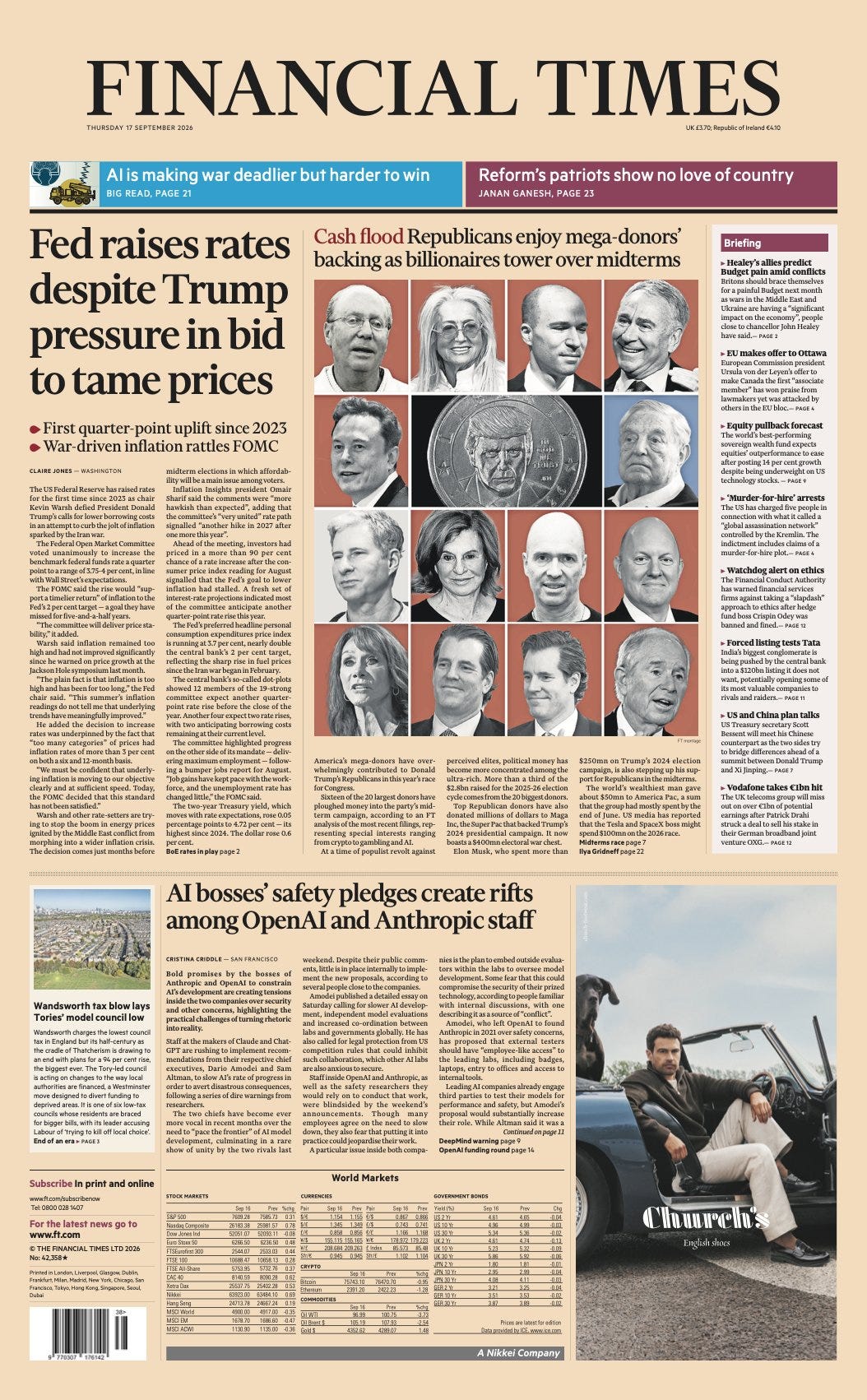
The offer. In her 2026 State of the Union address in Strasbourg, von der Leyen told MEPs she wants to work with Ottawa on “opening the door for Canada being the first associate member of the EU.” Carney, seated in the front row, rose to embrace her as the chamber applauded. She framed it as moving past a trade relationship toward a broader alliance covering tech, critical raw materials, energy and defence. (Euronews, AP, NPR)
The optics. Carney is the first foreign head of government to attend the annual State of the European Union address. He delivers his own speech to the European Parliament on Thursday, ahead of an EU-Canada summit in Montreal next month. (Al Jazeera)
The capitals weren’t asked. Three diplomats told POLITICO the announcement wrong-footed member states, who were never consulted - and that enlargement is a European Council competence, not the Commission’s. “Nobody really knows what it means,” one said. A second predicted Canada could realistically get something resembling the Deep and Comprehensive Free Trade Area arrangements offered to Georgia, Moldova and Ukraine, and little beyond that. A third argued any genuine associate status would require treaty change — which, in the current climate, is not happening - (POLITICO, CBC News)
This doesn’t exist yet as a setting in the EU. But it is veery positive that we are showing some willingness to think outside of the box. The underlying alliance between Europe and Canada is just very, very natural - German MEP Tobias Kremer told Times Radio
The precedent. Norway sits inside the single market via the EEA and cooperates with Brussels on defence; Switzerland has extensive regulatory alignment. Neither has a vote on EU legislation. Whether Canada would get one is the unanswered question — and Ottawa is already in talks on Erasmus+, Horizon Europe and mutual recognition of professional qualifications. Canadian officials have also floated an arrangement letting Canadians live and work in Europe visa-free. (Euronews, AP)
The Ukraine echo. Friedrich Merz floated “associate membership” for Ukraine last May in a letter to EU leaders: access to the Council, Commission and Parliament without voting rights or a portfolio, plus step-by-step entry into EU-funded programmes. Canada is obviously not Ukraine. But it tells you the concept was built for a country at war, not a G7 economy across an ocean. (Euronews)
The domestic backlash. Conservative leader Pierre Poilievre pushed back hard on social media Sunday, saying Canada will never be the 51st US state - and never the 28th EU one. Speaking at the Conservative caucus retreat in Penticton, B.C., he accused Carney of secretly negotiating with the EU, insisted Canada must remain independent, and said decisions for the country must not be made in Washington, Beijing or Brussels. He also contrasted summits and symbolic signing ceremonies with the gas pump, the grocery store and rent. (CTV/BNN)
Washington reacts. Speaking to reporters in North Carolina, Trump called the prospect laughable and said that if he judged it a hostile act, he'd hit Europe with very serious tariffs or cut off trade in some areas. He hedged it on intent - good intentions fine, bad intentions heavy tariffs - and worked in a line about Canada being a terrible trade partner. (AP)
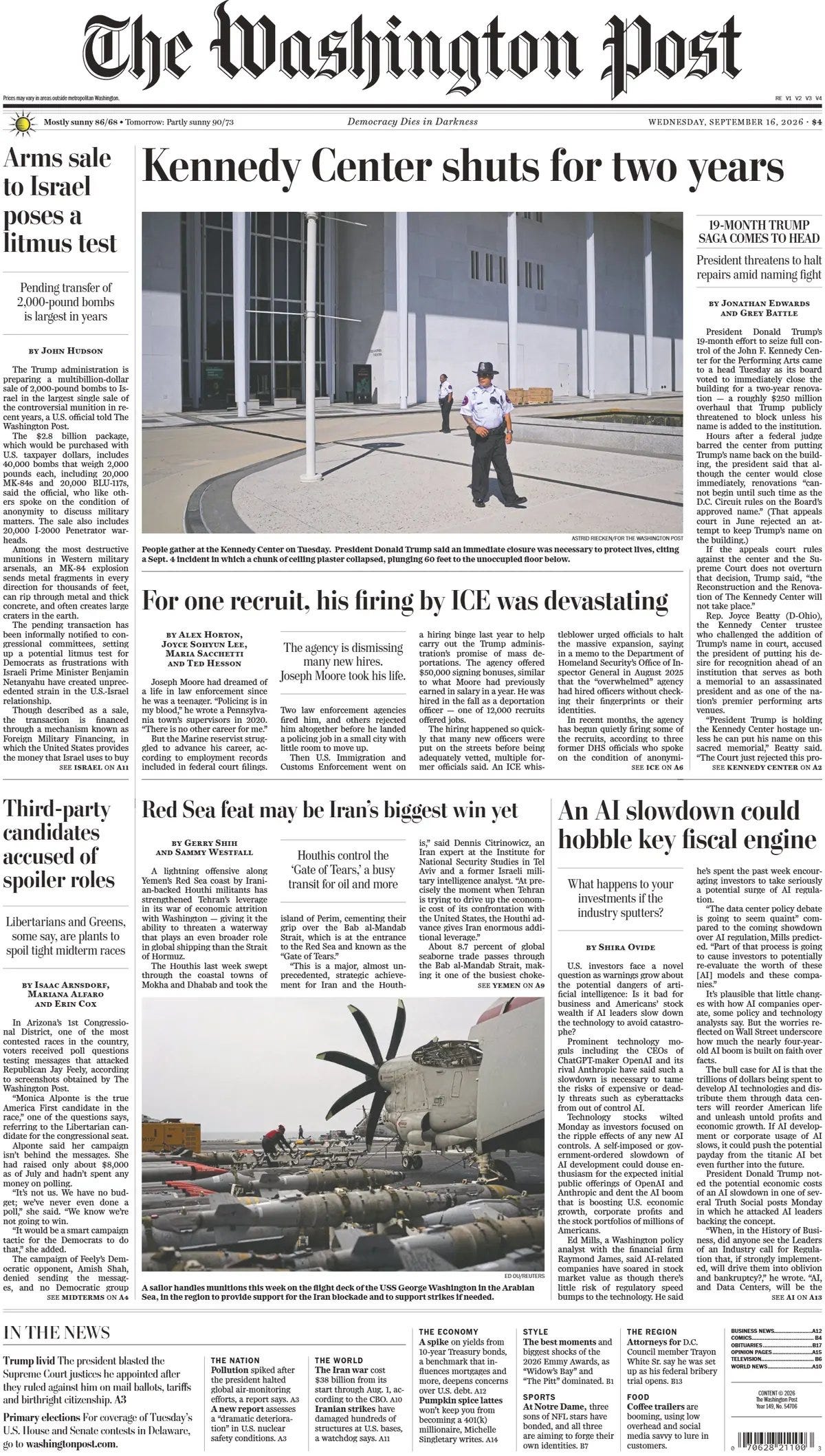
The Middle East conflict threatened to widen as fighting intensified between Saudi forces and Iran-backed Houthi fighters in Yemen. Riyadh said it intercepted a Houthi drone near the holy Muslim city of Mecca; the Yemeni group denied the charge and said it downed a Saudi fighter jet. The US, meanwhile, tightened its travel advice to urge its citizens to “reconsider” visiting Saudi Arabia. The back-and-forth exchanges — which have already displaced more than 100,000 people in Yemen — came as analysts warned the US-Iran war risked tilting towards escalation and Israel ramped up its strikes targeting Hezbollah in Lebanon, which is facing its own displacement crisis - Semafor
US special envoy John Coale announced that 25 people were released from Belarusian prisons in exchange for the lifting of US sanctions on two Belarusian companies following talks with the country’s longtime authoritarian leader, Aleksandr Lukashenko. The US envoy has been negotiating with Lukashenko since last year, with the talks leading to the release of some 500 people in return for an easing of Washington’s sanctions against Belarus. In the latest such effort, the United States will lift its sanctions on Belarusian paint manufacturer Lakokraska and forestry sector group Bellesbumprom, Coale told the state news agency BelTA. The United States and the European Union hit Lukashenko and his government with major sanctions in the wake of the 2020 presidential election, in which Lukashenko, in power since 1994, claimed victory. Further restrictions were imposed in 2022 after Minsk allowed Moscow to use Belarusian territory as a launchpad for its invasion of Ukraine - RFE/RL
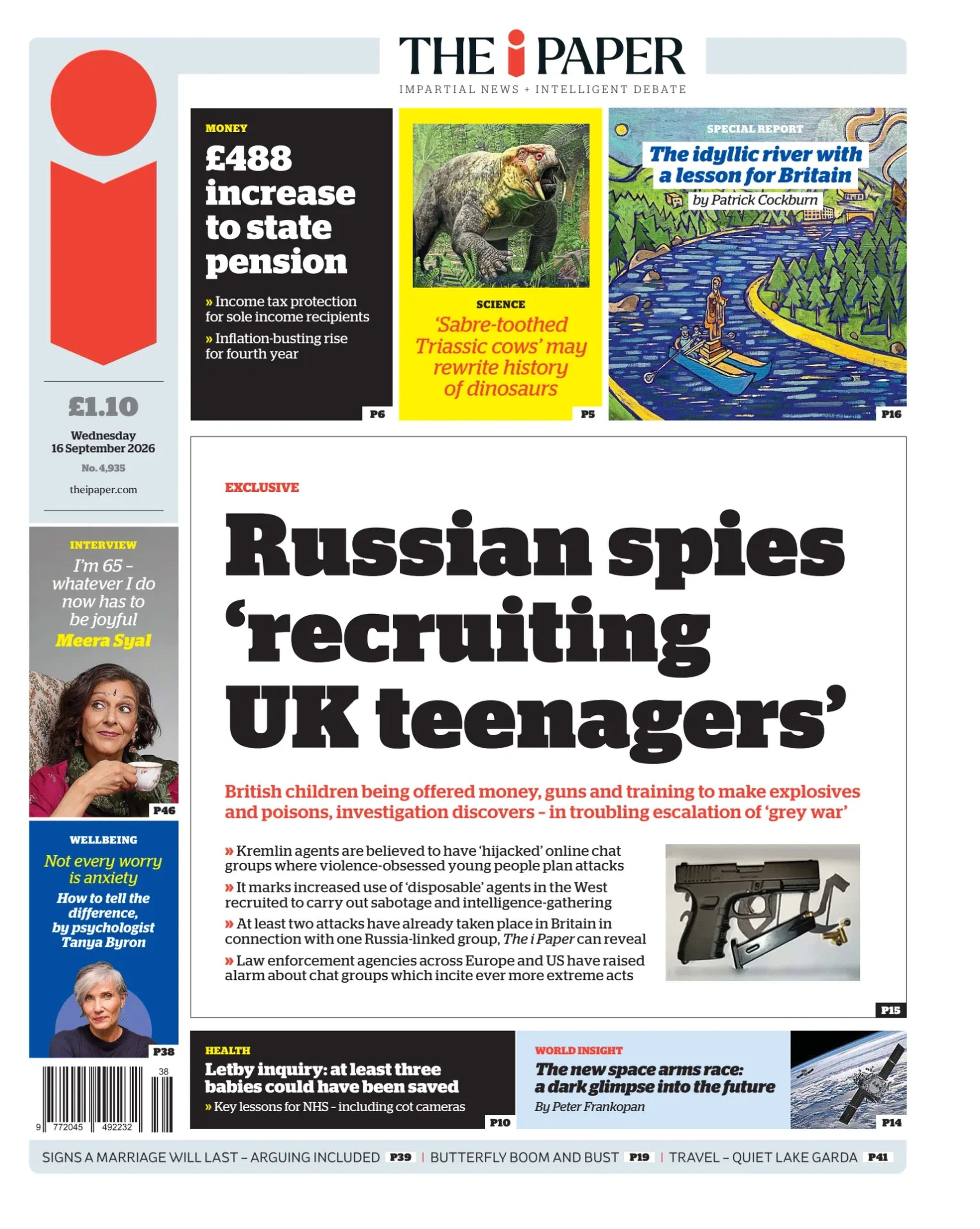
Russian intelligence is said to be recruiting British teenagers, offering money, weapons and training in making explosives and poisons. The i-Paper frames it as an escalation of the "grey war." Key claims: Kremlin-linked operatives have moved into online chat groups where violence-fixated young people plan attacks; at least two attacks in Britain are tied to one Russia-linked group; and law enforcement in Europe and the US has flagged these groups for pushing members toward ever more extreme acts. The through-line is Moscow's growing reliance on disposable proxies in the West for sabotage and intelligence-gathering.
The journals…