Now that the flags have been packed away and NATO summit merch is already surfacing on Facebook Marketplace, it's time for the sober accounting. We were skeptical of Ankara - and said so. But the view from Kyiv and the Ukrainian policy community is notably sunnier than ours. So today we hand the microphone to Ukrainians themselves: what did Kyiv actually walk away with?
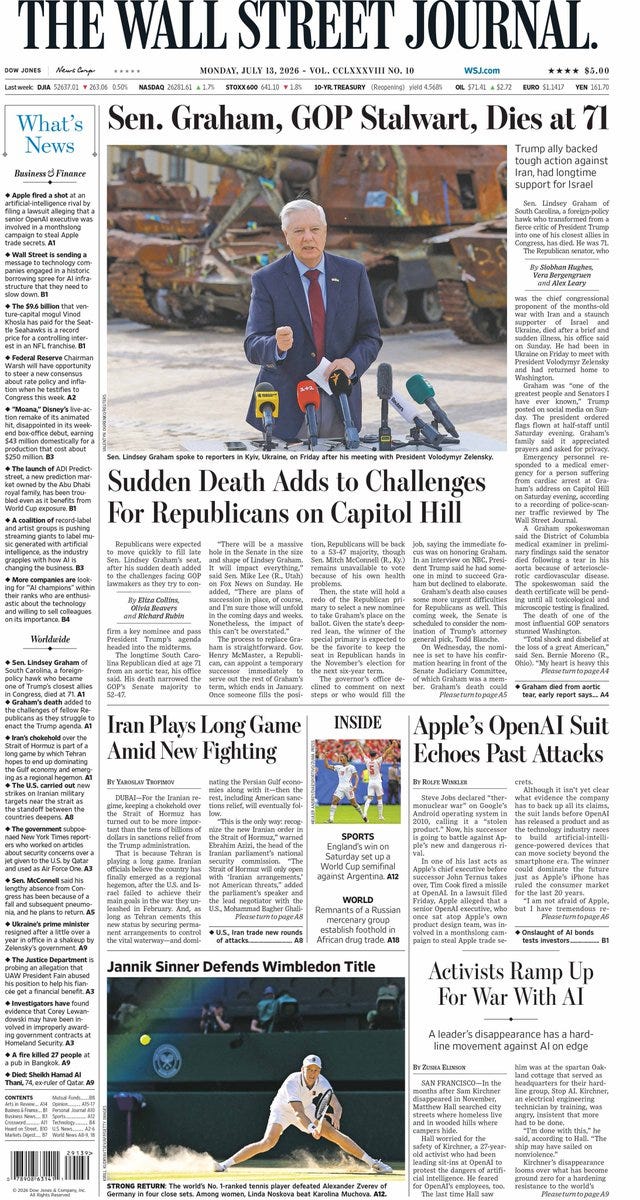
Before the NATO Summit, I argued that Ukraine is showing NATO the future of warfare. The success of Ukraine’s deep strikes inside Russia has changed perceptions - not only among European allies but even in the White House - demonstrating that Ukraine can shift the battlefield and alter strategic thinking. The summit reflected that growing confidence: support for Ukraine is increasingly seen not as charity, but as an investment in the future security of the Alliance - Myroslava Gongadze, non-resident senior fellow, Atlantic Council
The most important outcome of this NATO Summit is that allies are increasingly thinking beyond today’s battlefield. Immediate military assistance remains critical, but Ukraine also needs the ability to produce its own advanced defense systems. A stronger Ukraine means a stronger Europe, and that understanding is becoming more evident within the Alliance - Kira Rudik, People’s Deputy of Ukraine and leader of Holos Party
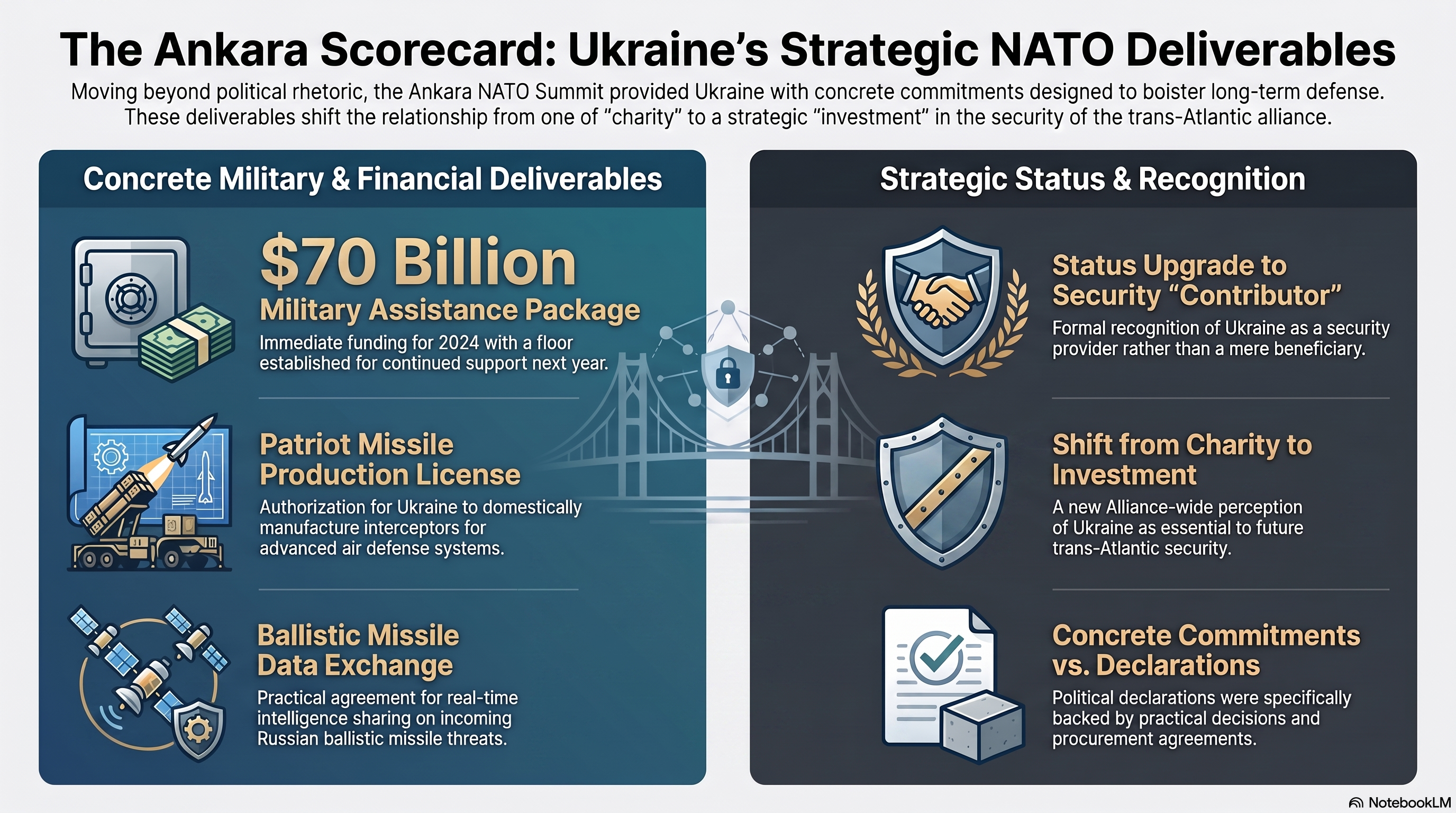
The NATO Summit concluded without any controversies involving Ukraine, and that is already a positive outcome. There is also encouraging news about a license to produce missiles for the Patriot air defense systems. The biggest question is where and how these missiles will actually be manufactured, and whether Ukraine has the necessary capacity to do so. This is particularly important given that Russia has recently been deliberately targeting warehouses and facilities linked to Ukraine’s defense industry in its missile strikes. In addition, the allies agreed to provide Ukraine with $70 billion in military assistance this year and to maintain at least the same level of support next year. That is an important and encouraging signal. It has long been clear that Ukraine is unlikely to join NATO in the near future. Still, this level of military assistance is critical to the country’s ability to defend itself - Oleksii Goncharenko, People’s Deputy of Ukraine
The summit went extremely well and Ukraine exceeded expectations. The Trump-Zelensky meeting showed significant improvement in bilateral relations, and we need that so much. Mr. Trump showed support for Ukraine publicly and that was a clear signal to Mr. Putin. It was not just a public gesture, but backed with concrete actions like licensing Ukraine to produce Patriot missiles…. As for Mr. Zelensky, he showed his best talents especially with really good one-liners for example: “I don’t want to go to Moscow because there are a lot of Ukrainian drones.’ It was extremely well positioned. I hope that as a practical result for Ukrainians is that we will be more safe with patriot missiles systems as we definitely need them. As well as exchange of data on (incoming Russian) ballistic missiles -Victor Liakh, President, East Europe Foundation
I think Ukraine was the main agenda item, and Ukrainian diplomacy demonstrated that it is working, because more and more countries, according to Mr. Zelensky, want us inside the NATO alliance. The press conference between the American and Ukrainian presidents was much better than a year ago. Ukraine emerged from the summit in Ankara in a position of strength, despite those horrible Russian ballistic missile attacks on the Ukrainian capital. At the same time, I, as a Ukrainian journalist, have a bittersweet moment after the Ankara summit. I’m afraid that Donald Trump will change his mind in a few days. So it remains to be seen whether U.S. commitments for licensing Ukrainian manufacturing of Patriot missile systems will remain in place. — Nataliia Lutsenko, TV anchor and Ukrainian journalist
The Ankara summit was definitely good news for Ukraine. As someone who is based in Kyiv and has to navigate life between Russian missile attacks that happen on almost a daily or nightly basis now and have become quite severe due to the lack of proper weaponry for the Ukrainian air defence system. I was particularly happy to hear about the prospects for Ukraine to receive the license for the Patriot interceptors production. In general, it was very encouraging to see the change in dynamics between presidents Trump and Zelensky, which was quite different from what we saw earlier in the Oval Office. Overall, the 70-billion Euro package and the new procurement agreements were a significant development and good, practical steps to reinforce the political declarations. But what particularly stood out for many of us here in Kyiv was the formal recognition of Ukraine as a contributor to the trans-Atlantic security system and the symbolism of this wording. If you read it alongside the Article 10 of the North Atlantic Treaty - which outlines the past NATO membership for a country - the choice of this wording sends quite a good and promising message about Ukraine’s log-term place in the alliance. It was also interesting to observe how this summit was positioned in the Russian media - framed as a proof of NATO’s further aggression, as Europe escalating the war, and Ukraine obviously as the proxy puppet. And reinforcing the narrative that Russia has to act in defence against the expanding threat from the West. For me as a Ukraine, the Ankara summit felt different from many previous meetings, which in the past often produced ambitious political declarations without enough practical decisions. This time the political declarations were backed-up by concrete commitments. I am optimistic, but carefully optimistic - Maryna Bezkorovaina, information, integrity and strategic communication expert; Director at The Sixth Domain
So were we wrong about Ankara?
Not entirely. Our skepticism about the optics, the host government’s treatment of independent media, and the alliance’s chronic gap between declaration and delivery still stands. NATO summits have broken Ukrainian hearts before, and no one in Ukraine or in diaspora communities have forgotten Bucharest 2008.
But the Ukrainians quoted here are making a different - and persuasive - case: judge this summit by the deliverables, not the atmospherics. A Patriot production license. Seventy billion dollars this year, with a floor under next year. And a phrase in the summit language (“Ukraine contributes to transatlantic security”) that quietly repositions Ukraine from beneficiary to contributor.
But careful optimism, from people who have earned the right to none at all, is worth listening to. Sometimes the view from the ground corrects the view from the desk. That’s why we asked.
If this kind of ground-truth reporting - Ukrainian voices, unfiltered, from Odesa to Kyiv - is why you read World Briefing, consider upgrading to World Briefing Plus.
News Briefs
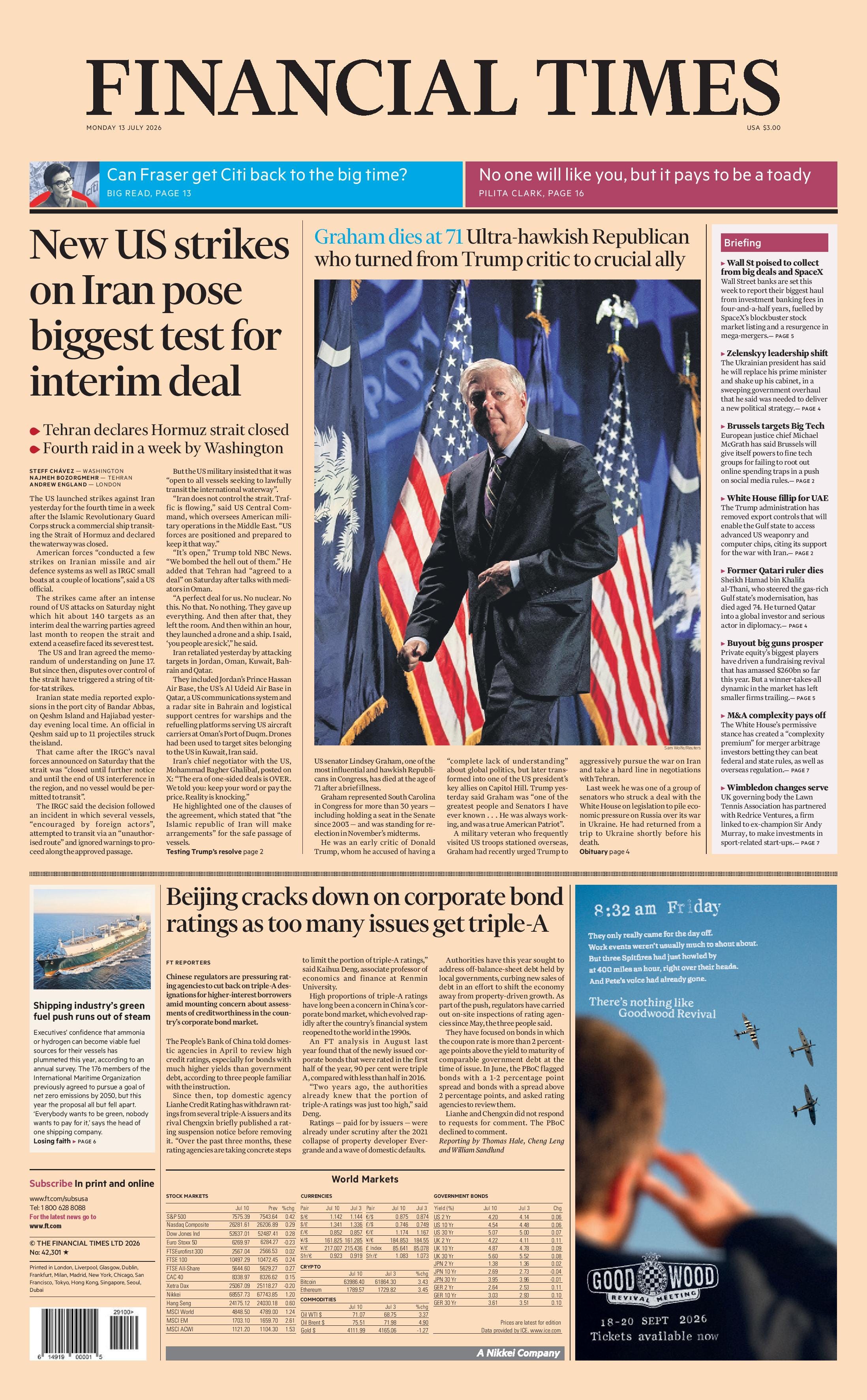
After another night of attacks, the United States and Iran appeared to be reverting to the heightened conflict that existed before their cease-fire, as they exchanged incendiary rhetoric and President Trump said he was reinstating the U.S. naval blockade of Iranian ports. Iran, threatening to escalate the confrontation further, vowed revenge for the killing of its supreme leader, and appeared undeterred by nearly a week of U.S. strikes. Mr. Trump said the United States would take control of the disputed Strait of Hormuz, charging a 20 percent fee on all goods passing through it. He had lifted the blockade last month after the two countries reached a truce, which has been threatened by repeated strikes by both sides. Mr. Trump told Fox News that the United States would charge other countries for keeping the strait safe. “We are going to guard it and we’re going to get paid for guarding it,” he said. The suggestion, which would amount to an expansion of the military conflict, echoed previous threats that had not come to pass. The upswell in rhetoric came after Iran’s military said early Monday that it launched another barrage of strikes aimed at American military assets in Jordan, Bahrain, Kuwait and Oman. Hours earlier, U.S. forces said they had launched more strikes on Iran aimed at stymying its ability to attack commercial ships in the Strait of Hormuz. The latest exchange of strikes caps a nearly weeklong flare-up of hostilities as the United States and Iran tussle over control of the strait, through which a fifth of the world’s oil and liquefied natural gas passed before the war. Soon after Mr. Trump said the blockade would be reinstated, the price of Brent crude, the global oil benchmark, climbed back toward $80 a barrel, an increase of roughly 5 percent since Friday. The framework deal signed by Mr. Trump and the Iranian president last month included language that Tehran said gave it control over traffic through the strait, but the United States has insisted that the passage remain open to all shipping - NYT
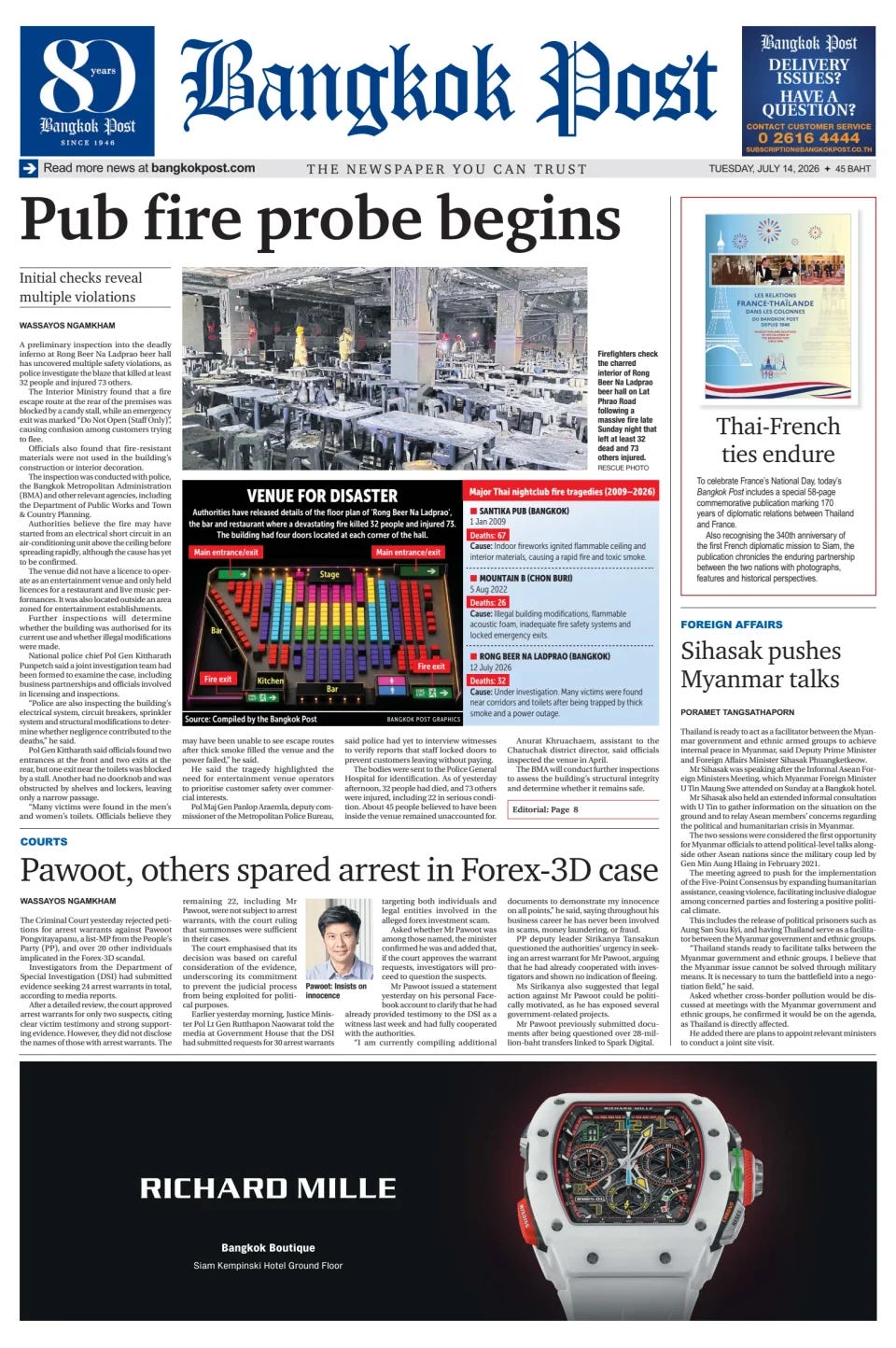
New reporting from RFE/RL’s Ukrainian Service documents a sharply escalated Russian campaign against Ukraine’s agricultural heartland, with incendiary drones torching wheat fields across the Kherson region at the very peak of harvest season. Regional military officials say Russian forces on the opposite bank of the Dnipro fired some 32,000 shells in June - a 26 percent jump from March - while drone launches now average 5,500 per week, more than double last year’s pace. Civilian deaths rose 78 percent over the same period. Viktor Hordiyenko says roughly 2,000 hectares of his wheat went up in flames in a single night, wiping out two years of investment worth nearly $3 million. He works his frontline fields in a helmet and body armor. His father, who spoke to RFE/RL last year about the drone threat, was killed in a Russian strike in September. The tactics have grown more cynical still: farmers report incendiaries being dropped on workers’ homes in villages, timed so emergency crews can’t respond because of shelling - and anyone attempting to fight the fires becomes a target themselves. The bigger picture: this isn’t collateral damage. It’s the systematic destruction of the economic engine of a country that feeds much of the world - a hybrid-warfare play against Ukraine’s export capacity, rural population, and staying power. State compensation for war losses is capped at 2,000 hectares at $100 per hectare - a rounding error against the losses. As Hordiyenko put it bluntly: bread is burning.
African prisoners of war captured fighting for Russia are telling POLITICO they want to be exchanged back to Russia - not repatriated to their home countries. A Congolese fighter with the call sign Avatar says he considers Russia home and has family there; an Egyptian prisoner claims Ukraine is deliberately tagging captured Africans by their citizenship to block their return to Russia. Several rejected outright the claim they were tricked into enlisting, saying they understood their contracts and signed up for the money. Kyiv has framed Moscow’s recruitment drive as exploitation of vulnerable foreigners - “meat grinder” material, as Ukraine’s ambassador to South Africa put it - and Foreign Minister Sybiha has warned of a dangerous trend of African recruitment, with Kenya’s parliament alleging more than 1,000 citizens funneled through trafficking-style job schemes.
France's state-owned energy group EDF temporarily shut down three nuclear reactors on Sunday, while warning that seven others may need to adjust their power output as the heatwave sweeping the country continues. According to the company, the measure is an environmental protection requirement to avoid discharging excessively hot water into rivers already warming because of the heatwave. Nuclear power plants use river water to cool their reactors before releasing the warmed water back into rivers. “There is no nuclear safety risk. Reactors are capable of operating under high-temperature conditions. These limits are intended to protect aquatic flora and fauna,” said a spokesperson for EDF - Euronews
The Trump administration chartered an almost empty flight to take white refugees from South Africa to the U.S. The taxpayer footed the bill, even though the government could only muster up 59 people for the maiden voyage of President Donald Trump’s push to offer refuge to allegedly persecuted Afrikaners. The flight, in May last year, was chartered by Omni Air International, which operates three passenger aircraft types with maximum capacities ranging from 290 to 440. Boeing 767-300 charter rates typically range from $16,000 to $21,000 per flight hour, so the Johannesburg-Washington, D.C. journey could have cost Americans up to $400,000. This figure does not include various extras like positioning flights, landing fees, handling charges, crew hotels, catering, taxes, or other government-specific costs. Those can add tens of thousands of dollars. The flight was so sparsely populated because officials were under pressure to find people ready to hop on quickly. Former officials told CNN that the White House wanted the resettlement to happen “so fast” that, upon approval, someone could be on a plane within 24 hours. “They carved out this group out of nowhere,” a source said. These conditions made it hard to fill the flight and, ultimately, there were only a few dozen passengers. “They didn’t get close to filling the plane,” one former official told CNN. Another former official suggested the haste was all so the Trump administration could manufacture a “photo-op.” They added that this “wasn’t fair” to the people involved. “We would never have picked a date for people to arrive before we explicitly knew that they could leave,” one former official pushed back. Another resettlement flight was planned for this summer, but it was suddenly scrapped, another insider claimed. The White House insists that “President Trump has provided a lifeline for Afrikaners, who are being raped, maimed, killed, and driven off their property across South Africa.” - The Daily Beast
The journals…..