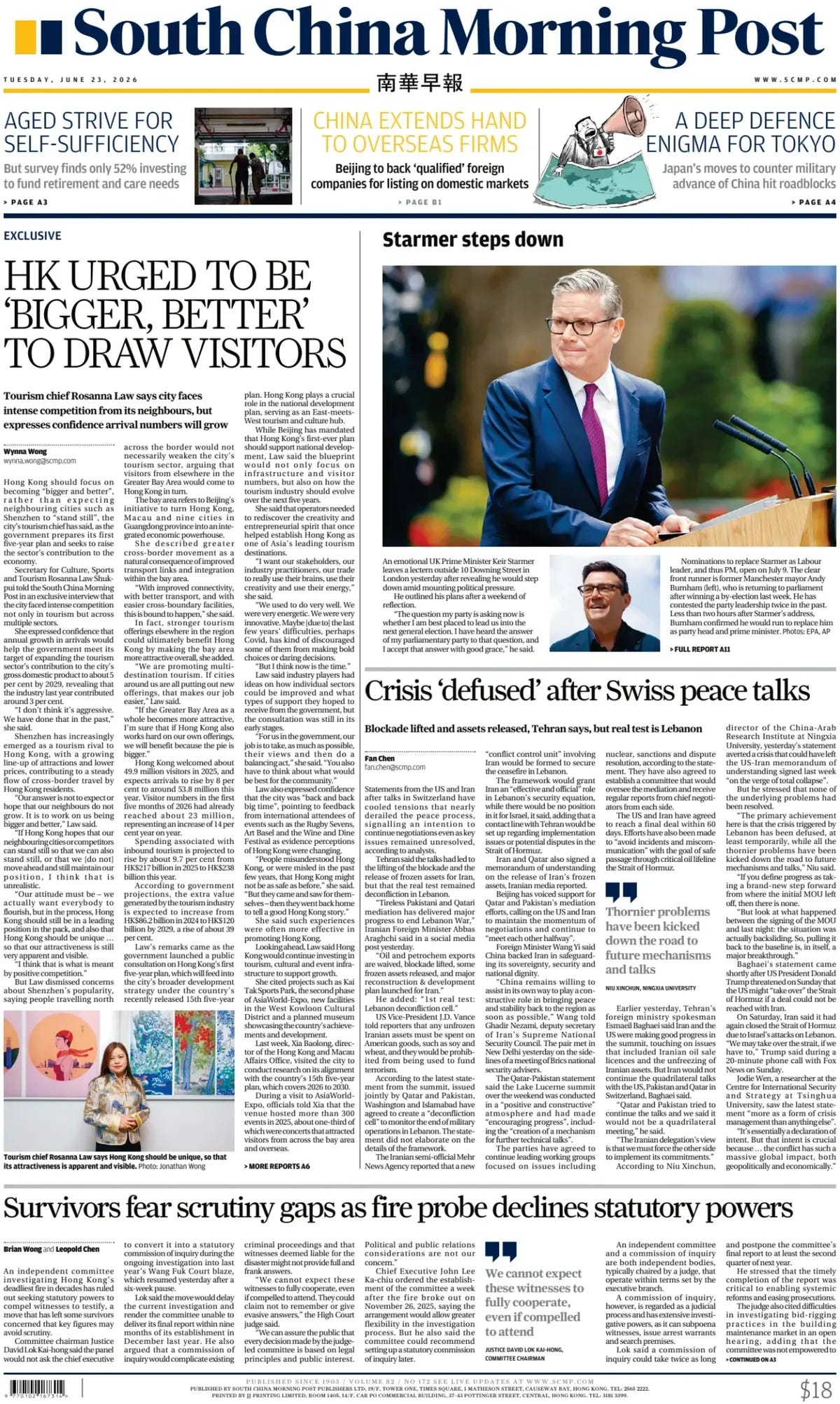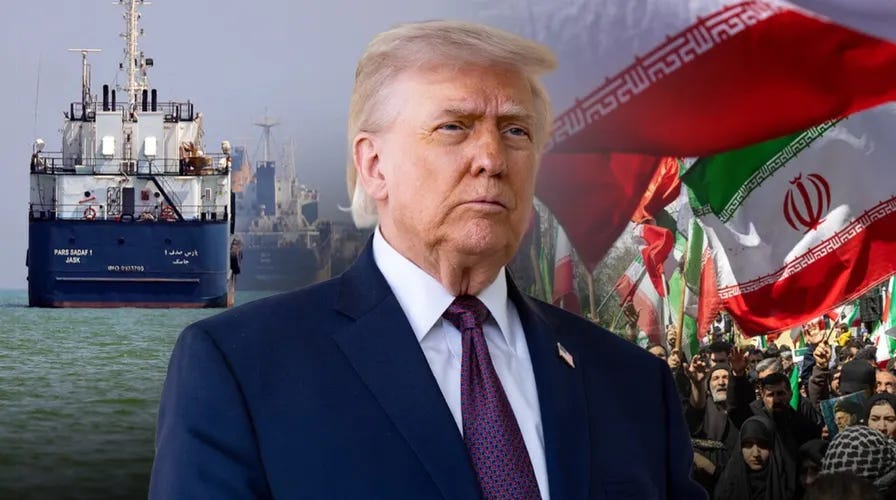
The architect of the 2015 Iran nuclear agreement has a stark message for the Trump administration: what you’re celebrating isn’t a breakthrough - it may be barely a beginning. Ernest Moniz, the nuclear physicist who served as Obama’s Energy Secretary and spent years at the negotiating table with Iranian officials, told PBS NewsHour on Tuesday that the current framework has critical gaps that could render any agreement dangerously hollow. Start with the inspections row. When Vice President Vance claimed Iran had agreed to allow IAEA inspectors back in, Tehran flatly denied it. Moniz says even if Iran follows through, it won’t be enough. What made the 2015 deal meaningful wasn’t access to declared nuclear sites — it was the right to enter undeclared sites that inspectors had reason to suspect. That provision, with a 24-day access window unique in international law, is the difference between verification and theatre. Then there’s the uranium. Iran has stockpiled material enriched to 60 percent purity. Weapons-grade is 90 percent — but Moniz is unsparing: 60 percent is adequate to build a bomb. Getting rid of it, he says, is the “absolute first order of business.” And the timeline? Moniz calls 60 days to a comprehensive agreement deeply unrealistic. The JCPOA ran over 150 pages. Every ambiguity was closed. He sees no evidence that level of groundwork has been laid. The White House is selling a deal. One of the world’s foremost nuclear negotiators is urging the world not to buy it — not yet.
Iran’s state-affiliated Tasnim News Agency has pushed back hard on Bloomberg’s reporting about a United States–Iran memorandum of understanding, calling the published text inaccurate and insisting it does not reflect what was actually agreed at the negotiating table. In a pointed statement, Iranian officials added that the final version of any memorandum will not be made public — that confidentiality, they say, was part of the deal between negotiating parties. The dispute lays bare the competing narratives now swirling around the Washington–Tehran nuclear talks, with Iran moving quickly to discredit details circulating in international media even as diplomacy continues behind closed doors. Neither the United States nor Iran has issued a joint confirmation of any draft text. Both governments are maintaining tight control over public disclosure — a posture that is adding fuel to speculation rather than dampening it. Bottom line: When the parties to a sensitive negotiation start fighting publicly over leaked documents, it usually signals one of two things — a deal is closer than either side wants to admit, or trust between the delegations is beginning to fray. Watch this space.
The Senate on Tuesday voted to cut off the U.S. military campaign against Iran, handing a fresh loss to President Donald Trump despite his attempts to convince lawmakers and the public that a deal to end the war is at hand. Four Republicans broke ranks to help approve a resolution to block further military action unless it is green-lighted by Congress. The war powers measure is largely symbolic — the resolution cleared Tuesday doesn’t go to the president to sign or veto — and the White House quickly dismissed the legislation as ineffectual. But the bipartisan 50-48 vote is a damaging milestone for the Trump administration: both the Senate and House have now weighed in against the Middle East conflict that’s stretched on for more than 100 days. The same measure passed the House in early June after months of close calls. The successful vote came on the 10th attempt by the Senate to rein in Trump. Republican Sens. Bill Cassidy of Louisiana, Susan Collins of Maine, Lisa Murkowski of Alaska and Rand Paul of Kentucky sided with Democrats in support of the measure. Democratic Sen. John Fetterman of Pennsylvania opposed it - Politico
Estimates from the insurer Allianz are the first to put a value on assets and cargo stuck in the Gulf following the ‘unprecedented’ blockade which, the company said, raised ‘concerns about the future of global maritime trade’. The Hormuz closure has stranded 1,200 cargo ships with $125bn worth of goods, the Financial Times reported
The UN’s International Maritime Organization (IMO) is set to evacuate more than 11,000 sailors who have been stranded in the Gulf because of the US-Israel war against Iran. IMO secretary-general Arsenio Dominguez said the “large-scale operation” would be carried out in cooperation with Iran, Oman, the US, other coastal states in the region and the maritime industry. “We have secured the necessary safety guarantees and have thoroughly verified the conditions for safe navigation to support these operations,” he added - BBC
More than 5,300 people are still trapped in online scam centres near Myanmar’s Thai border, a human rights group said, over one year after thousands were freed during a multinational crackdown in the region. In a June 22 letter to Thai police urging them to take action, the Civil Society Network for Human Trafficking Victim Assistance (CSNHTV) said many of those trapped were foreign nationals held at four locations inside areas controlled by a Myanmar militia. The group estimates that the people trapped include around 1,600 Chinese nationals, some 200 Burmese, 20 Thais as well as citizens from the Philippines, Taiwan, Malaysia, Brazil, Russia, Kenya, Uganda, Rwanda, and Zimbabwe. Scam centres in Southeast Asia, including those in Myanmar and Cambodia, run illegal online schemes that defraud people worldwide and generate billions of dollars of annual revenues, according to the United Nations. Many of these facilities, such as those along parts of the Myanmar-Thailand border, are operated by foreign nationals trafficked there by criminal gangs, often working in oppressive environments and subjected to abuse. Thailand last year fronted a regional effort to dismantle the scam centres along its borders, pulling out some 5,000 people from sprawling scam hubs in Myanmar’s Myawaddy area, but large-scale illegal operations have continued. In its letter, the Thailand-based CSNHTV said a large number of victims were currently confined in scam compounds located within areas controlled by Myanmar’s Democratic Karen Buddhist Army (DKBA) militia. Many of these compounds have yet to be dismantled or subjected to rescue operations to free all remaining victims,” it said. “As a result, these syndicates continue to engage in online fraud and human trafficking, causing harm to victims around the world, particularly in the United States and Europe.” - Reuters
Russia on Tuesday said the United States was no longer an “objective mediator” in its efforts to broker an end to the Ukraine war as it blasted Europe’s plans to bolster defense spending. U.S.-led talks on ending Europe’s deadliest conflict since World War II remain effectively frozen as President Donald Trump has shifted his attention toward the Middle East after ordering strikes on Iran in late February. “As for the United States, judging by their actions, they appear to be abandoning any claim to the role of an objective mediator and are instead pursuing a course of escalating sanctions pressure on Russia,” Russian Foreign Minister Sergei Lavrov told foreign envoys in Moscow on Tuesday. At the G7 summit in France earlier this month, leaders including Trump agreed to increase pressure on the Russian “war economy” by strengthening sanctions, including on energy - AFP
Ukrainian Prime Minister Yulia Svyrydenko on Tuesday announced she will lead Kyiv’s delegation to this week’s Ukraine Recovery Conference in Gdańsk, with President Volodymyr Zelenskyy set to skip the event amid a growing diplomatic dispute with his Polish counterpart, Karol Nawrocki. The Ukrainian team will include business leaders, officials, lawmakers and local community representatives looking to secure “concrete agreements” on Ukraine’s defense capabilities, resilience and energy sector, she said. The conference, which is co-hosted by Poland and Ukraine and set to take place from June 25 to 26, is aimed at rallying international backing for Ukraine’s reconstruction and securing investment for the country’s war-torn businesses. Svyrydenko’s announcement lands amid a bitter spat between Warsaw and Kyiv. Nawrocki on Friday stripped Zelenskyy of the Order of the White Eagle — Poland’s most prestigious medal — after Kyiv named a military unit after the Ukrainian Insurgent Army, a World War II-era force responsible for killing tens of thousands of Poles in Volhynia. The fallout has escalated quickly, with several Ukrainian officials returning their Polish honors, and three former Ukrainian presidents giving up their own Orders of the White Eagle. Zelenskyy also sent his medal back to Warsaw. The clash between the two heads of state has also provoked a domestic rift in Poland. On Monday, Polish Prime Minister Donald Tusk’s government accused Nawrocki of making a strategic blunder, arguing that Warsaw must preserve its role as one of Kyiv’s most important allies against Russia and as a future player in the country’s reconstruction - Politico
Michael Bociurkiw joins Our City Tonight for a wide-ranging conversation about journalism, international reporting, media, humanitarian work, and the realities of covering major world events.
Officials from the European Commission and 15 member states discreetly met with a Taliban delegation on Tuesday in an attempt to speed up the deportation of Afghan migrants to the country. The meeting in Brussels, whose details and venue were not disclosed, was harshly criticised by progressive lawmakers and civil society organisations for liaising with an authoritarian regime that regularly violates human rights. The gathering was co-chaired by Sweden, one of the countries with the largest Afghan population per capita. It was held outside the Commission’s institutional premises and took place on a strictly technical level because of the lack of recognition of the Taliban government that took over the country in 2021. The discussions focused on the return of irregular Afghan migrants “who have committed serious crimes or pose a security threat”, a Commission spokesperson said in a statement. European countries are often unable to repatriate these individuals as the Afghan authorities do not accept them back. In Sweden, roughly 200 Afghan nationals are awaiting deportation having been convicted of serious crimes, such as aggravated rape and aggravated drug trafficking, Forssell explained. Amid the criticism, he argued that his government must negotiate with dictatorships in certain situations to "protect Swedish interests" - Euronews
A royal correspondent thinks Harry and Meghan have run out of options—so they’re “crawling” back to Buckingham Palace. Tom Bower, a longtime royal biographer and author of Betrayal: Power, Deceit and the Fight for the Future of the Royal Family, believes it’s easy to understand why the Duke and Duchess of Sussex are returning to the institution they publicly shunned six years ago. “I think you can summarize it in two words: desperation and failure,” he told Tom Sykes on The Royalist podcast. “They’ve run out of ideas, and their finances are basically in jeopardy…And Meghan is someone who is desperate for fame. She’s desperate for recognition. She is desperate for money, of course, and status,” he went on. “And it just seems to her that a visit to the royal family in Britain would restore to her the credibility she once had.” The controversial couple is bringing their two kids—Prince Archie, 7, and Princess Lilibet, 5—back to the U.K. in July for the first time in four years to mark the one-year countdown to the 2027 Invictus Games. The visit follows Prince Harry’s interview with the BBC last year, when he expressed a desire for “reconciliation” with the royal family - The Daily Beast
The journals…..