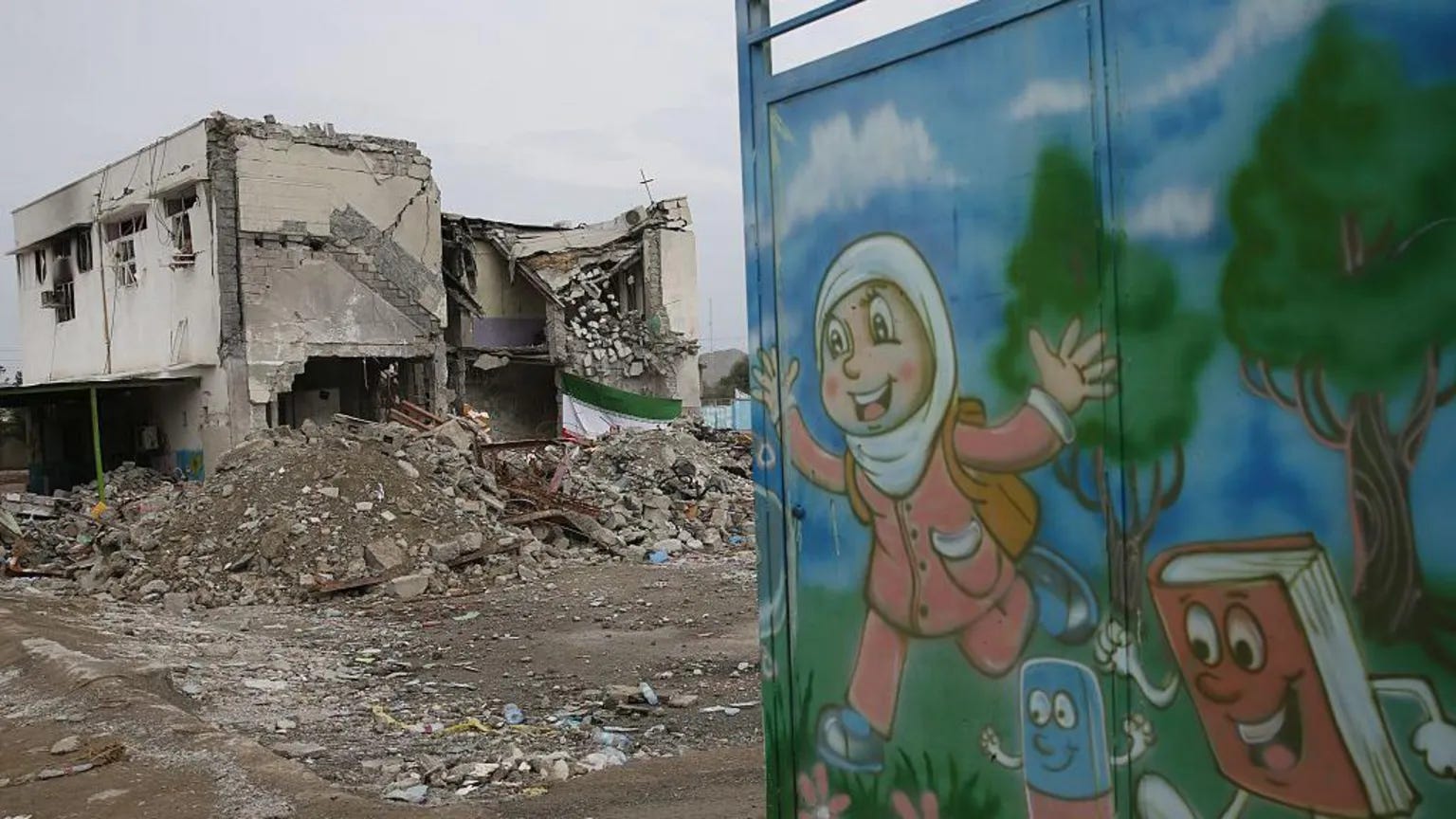
The UN’s human rights chief has urged the US to conclude its investigation and publish its findings into a deadly strike on an Iranian primary school that happened on the first day of the war - saying it “evoked a visceral horror.” The strike, if a US role were to be confirmed, would amount to one of its worst single cases of civilian casualties in decades of US conflicts in the Middle East. Volker Türk made the statement at an urgent UN Human Rights Council debate, adding that there “must be justice for the terrible harm done”. The attack on Shajareh Tayyebeh school consisted of two missile strikes in quick succession that killed at least 168 people, including about 110 children, Iranian officials have said. US media have reported that American military investigators believe its own forces were likely responsible for hitting the school unintentionally. US Defence Secretary Pete Hegseth previously said the matter was being investigated. “The images of bombed-out classrooms and grieving parents showed clearly who pays the highest price for war: civilians with no power in the decisions that led to conflict,” Türk said. He said that “the onus is on those who carried out the attack to investigate it promptly, impartially, transparently and thoroughly”. “Senior US officials have said the strike is under investigation,” he said, calling “for that process to be concluded as soon as possible, and for its findings to be made public”. Iran’s Foreign Minister Abbas Araghchi said in a video address to the UN meeting in Geneva that the bombing was a “deliberate and intentional” attack by the US. “This atrocity cannot be justified, cannot be concealed, and must not be met with silence and indifference,” he said. Earlier this month, Democrats in the US Senate wrote to Hegseth demanding answers about the strike - BBC
The images of bombed-out classrooms and grieving parents showed clearly who pays the highest price for war: civilians with no power in the decisions that led to conflict - UN Human Rights Chief Volker Türk
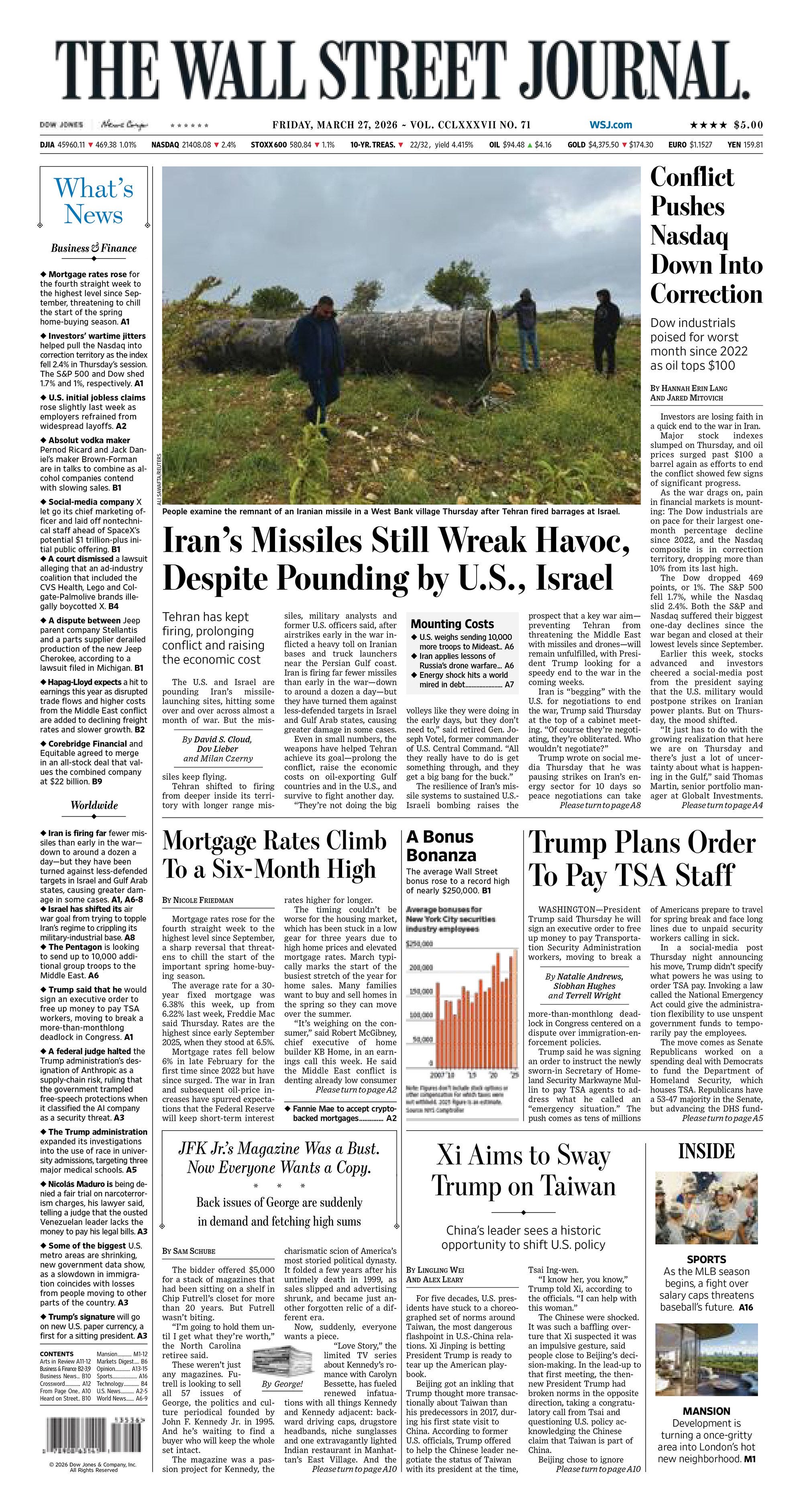
The Pentagon is considering sending up to 10,000 additional ground troops to the Middle East to give US President Donald Trump more military options, even as he is pushing a 15-point peace plan that has been delivered to the regime in Tehran, The Wall Street Journal reported on March 26. The WSJ cited Defense Department officials with knowledge of the planning as saying the force would be in addition to the approximately 5,000 Marines and the thousands of elite paratroopers of the 82nd Airborne Division who have already been ordered to the region. The report said it was not yet clear where in the region the forces would go, but it said they would likely be within striking distance of Iran and Kharg Island, a crucial oil export hub off Iran’s coast. Some observers have speculated that the Trump could order US forces to seize the island as part of efforts to secure shipping through the Strait of Hormuz, which has been largely blocked by Iran. “All announcements regarding troop deployments will come from the Department of War. As we have said, President Trump always has all military options at his disposal,” Anna Kelly, deputy White House press secretary, was quoted by the WSJ as saying - RFE/RL
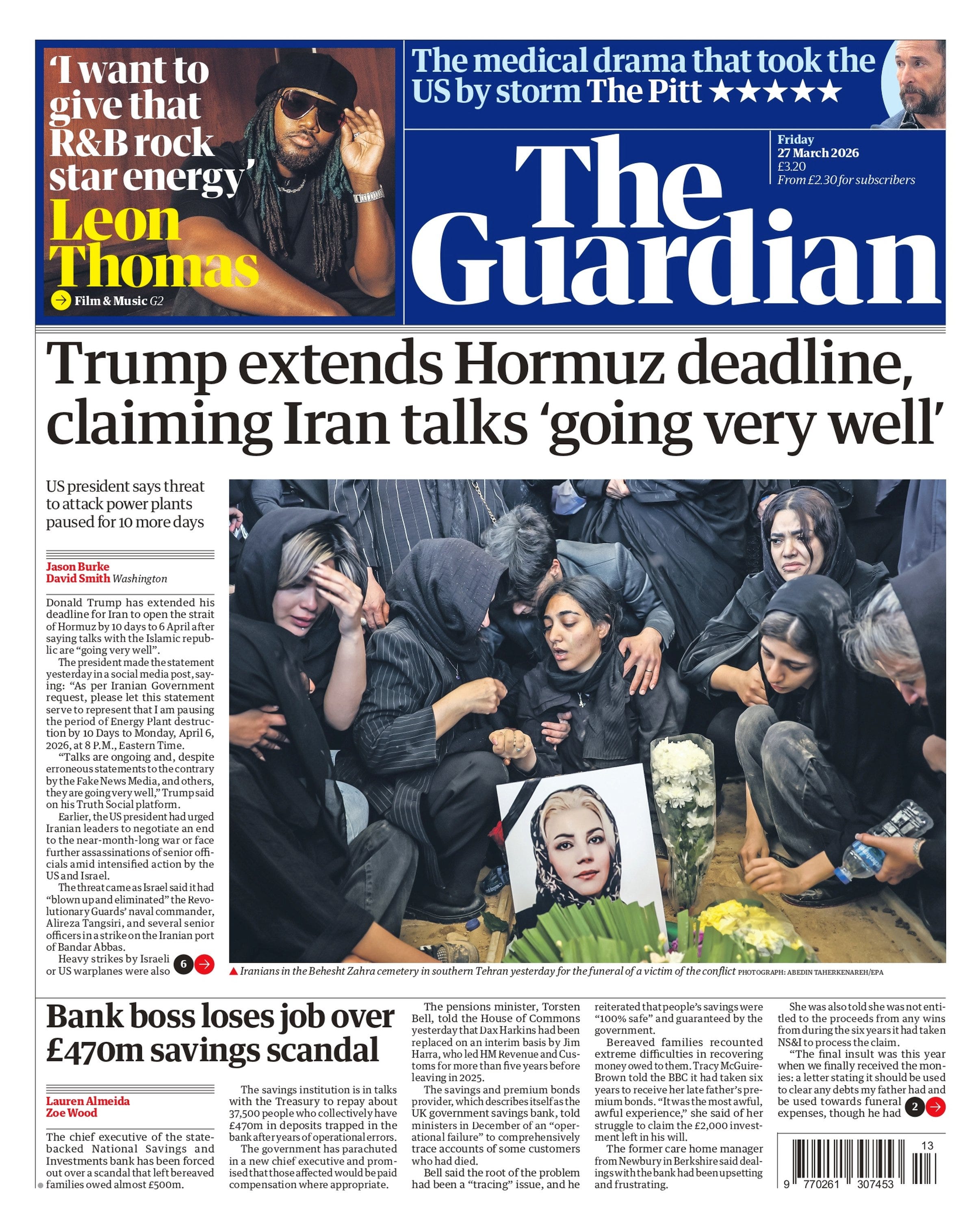
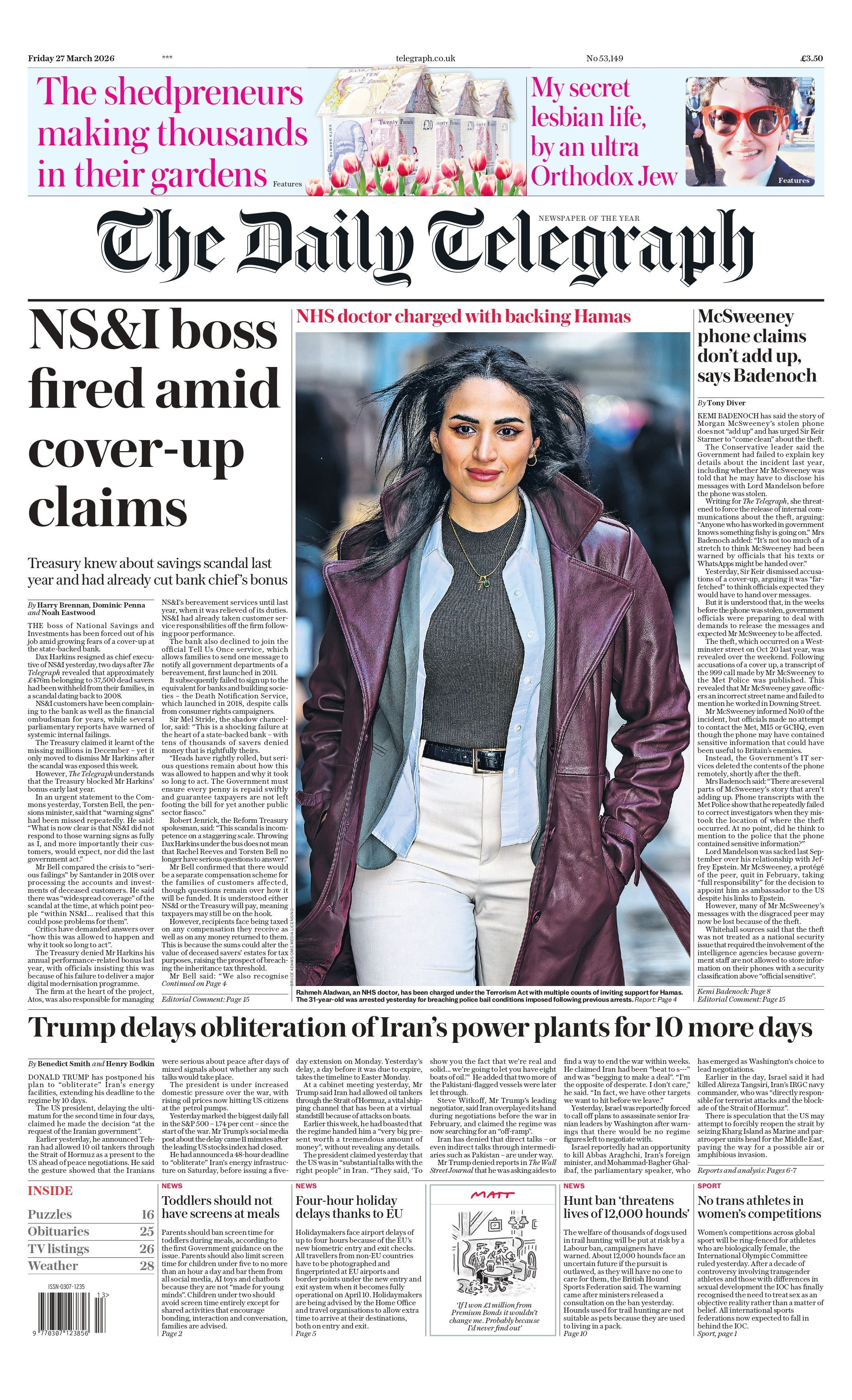
US President Donald Trump has postponed threatened attacks on Iranian power plants for a second time, citing what he said was a request from Tehran. “As per Iranian Government request…I am pausing the period of Energy Plant destruction by 10 Days to Monday, April 6, 2026, at 8 P.M., Eastern Time,” Trump wrote in a social media post on March 26. On March 21, Trump said the United States would “obliterate” Iran’s power plants if Tehran did not open the Strait of Hormuz, a crucial oil and gas transport channel that Iran has effectively blocked to most traffic amid the war with the United States and Israel, within 48 hours. He later extended the deadline until March 27. “Talks are ongoing and, despite erroneous statements to the contrary by the Fake News Media, and others, they are going very well,” Trump said in the post on his platform Truth Social. Senior Iranian officials have denied Tehran is in negotiations with Washington, but Iran said on March 25 that it was reviewing a 15-point US proposal and put forward what it said were five conditions that needed to be met in order for the conflict to end.
Iran’s Revolutionary Guards (IRGC) urged civilians across the Middle East on Friday to stay away from areas near US forces, ramping up its threats despite President Donald Trump’s claim that talks to end the month-long war were “going well”. “We recommend that you urgently leave locations where American forces are stationed so that no harm comes to you,” the IRGC said -- hours after Iran’s military threatened to target hotels housing US soldiers across the region. The warning came as Kuwait said its main commercial port was damaged in a drone attack at dawn. The elite IRGC paramilitary, responsible directly to the ayatollah, also said on their Sepah News website that the Strait of Hormuz was “closed” to vessels travelling to and from enemy ports and that it had turned back three ships seeking to cross the transit point. - RFE/RL
In the United Arab Emirates and Qatar, the authorities have arrested hundreds of people since the war began last month, accusing some of spreading rumors and others of merely sharing videos and imagery of Iranian attacks, according to statements published by their official news agencies. Some in the Emirates and in Bahrain have also been charged with “glorifying” the attacks, those countries’ governments said. In Kuwait, three men were accused of making a satirical video that officials said “harmed the country’s national security interests.” Sultan Alamer, a fellow at the Middle East Policy Council, a nonprofit in Washington, said the crackdown appeared to have multiple motivations. “The first has to do with preventing Iranian open-source intelligence analysts from using these photos and videos to locate air-defense systems, improve the precision of their attacks and identify new vulnerable targets for future strikes,” he said. “The second has to do with protecting the image of certain Gulf cities as islands of safety and prosperity in the region.” - NYT
Ukraine and Saudi Arabia agreed on the defence cooperation amid the Iran war and Tehran’s drone attacks against neighbouring countries, with Kyiv signing its first deal of the kind in the Gulf. The arrangement was signed in Jeddah on Thursday during Ukrainian President Volodymyr Zelenskyy’s visit to Saudi Arabia, one month into the Iran war. Kyiv says the document “lays the foundation for future contracts, technological cooperation, and investment, while also strengthening Ukraine’s international role as a security donor….Through its expertise and technologies, our country will help Saudi Arabia enhance its capabilities to counter aerial threats.” Having met Saudi Arabia Crown Prince Mohammed bin Salman Al Saud, Zelenskyy said Ukraine is ready “to share its expertise and system to cooperate with Saudi Arabia in protecting lives.” Zelenskyy did not provide more details during his visit. In his previous statements, he made it clear what Kyiv wants above all: air defence for Russia’s ballistic missiles. Zelenskyy also met with Ukrainian anti-drone experts who have been deployed to Saudi Arabia for over one week now - Euronews
Vladimir Putin is seeking handouts from Russia’s ultra-wealthy in order to help fund the war in Ukraine, according to reports. Sources told The Financial Times that Putin wants more money so he can keep fighting until Russia captures the remaining areas of Ukraine’s eastern Donbas region that it has not already seized. Putin’s appeal for cash suggests he intends to press on with the invasion regardless of its crippling effect on the Kremlin’s budget. The war has seen Russia’s defense costs soar to an estimated 15.5 trillion rubles ($191 billion) in 2025, up from an estimated 9.1 trillion rubles (then $86.4 billion) in 2022. Russian independent news outlet The Bell first reported that Putin issued a call for “voluntary contributions” to the budget during a behind-closed-doors meeting with top businessmen. As noted by The Financial Times, Putin making a personal request to oligarchs means it is “all but inconceivable” they will refuse to help fund the war effort. At least two businessmen have reportedly already said they will donate money to the Kremlin’s budget so Putin can continue the war. Russian senator Suleiman Kerimov, who has an estimated net worth of more than $25 billion, said he was willing to donate around 100 billion rubles ($1.23 billion). Metals magnate Oleg Deripaska, believed to be worth more than $7 billion, also agreed to contribute. Both Kerimov and Deripaska have been sanctioned by the U.S. and Ukraine.
Russia stands to reap gains from surging global fertilizer prices amid the U.S.-Israeli war with Iran, adding to Moscow’s windfall from higher oil and gas revenues. The conflict, now in its fourth week, has tightened global supplies of key crop nutrients by damaging Gulf energy infrastructure and choking off shipping through the Strait of Hormuz, a critical artery for both fuel and fertilizer exports. Urea, the most widely traded fertilizer, has risen by roughly 50% since the Iran war began. Middle East granular urea prices surged to $604-$710 per ton by March 19, from $435-$490 before the crisis and around $400 at the start of the year, price reporting agency S&P Platts said. Futures for next-month delivery rose to $745 per ton on Monday from $475 on Feb. 27, Josh Linville, vice president of fertilizers at brokerage StoneX, told The Moscow Times. He said the Middle East hostilities have had an “incredible impact” on global nitrogen prices. As the world’s second-largest fertilizer producer after China, Russia is well positioned to capitalize on the disruption. It produced 65.4 million metric tons of fertilizer in 2025, nearly 65% of which — or around 43 million metric tons — was exported - Moscow Times
A group of State Duma lawmakers is set to meet members of Congress on Thursday, while a separate, previously unreported delegation of Russian federal officials will hold a meeting at the U.S. Institute of Peace on Friday, a State Department spokesperson told The Moscow Times. Alexei Chepa, a lawmaker from the A Just Russia party, had told Russian media this week that a group of “four or five” lawmakers could travel to Washington in the coming days.
However, Chepa said “several details” regarding the trip still needed to be finalized due to the fact that Russian lawmakers are under U.S. sanctions for backing the 2022 invasion of Ukraine. A State Department spokesperson, speaking on condition of anonymity, confirmed that talks between Russian and U.S. lawmakers would take place on Thursday. Anonymous sources in the State Duma told Russian media earlier that Vyacheslav Nikonov, a member of the ruling United Russia party, is set to lead the group. In addition, the State Department spokesperson said a separate delegation of Russian federal government officials would visit the U.S. Institute of Peace on Friday, a meeting that has not been previously reported. The spokesperson did not say which Russian officials would take part in that meeting -Moscow Times
The war in Iran is set to weigh on global growth this year, the OECD forecast Thursday, knocking the world’s economy off a path of strong expansion. The global economy was set for stronger-than-expected growth before the conflict began, but the near-halt to energy shipments from the Gulf “could result in lower growth and higher inflation,” the organization’s chief said: Inflation in the US could reach more than 4%, according to the forecast. Business surveys this week showed the conflict is already dampening activity because of uncertainty and expectations of stalled deliveries and higher costs. It is “ringing stagflation alarm bells,” particularly in Europe, an S&P Global economist said - Semafor
Myanmar junta chief Min Aung Hlaing’s family reportedly purchased a $3 million luxury residence in Bangkok, bypassing Thai laws that bar foreigners from owning land or houses, according to The Irrawaddy, citing rights group Justice for Myanmar (JFM). The group said the property, in the Issara Residence Rama 9 development, was bought under the name of Min Aung Hlaing’s daughter-in-law, Myo Yadana Htaik, wife of his son Aung Pyae Sone, allowing the family to evade US and Canadian sanctions. The purchase was facilitated by Thai developer Charn Issara and junta-linked arms broker Tun Min Latt. The group called on Thai authorities to investigate the sale and seize the family’s assets, and urged Western governments to close sanctions loopholes for family members not currently targeted. JFM condemned the purchase, saying it underscores the Thai government’s failure to block illicit funds from junta members and their associates - Thai Enquirer
Stephen Colbert has officially landed his next role after The Late Show’s cancellation, and it’s definitely a passion project. The 61-year-old Late Show host, who is exiting the CBS program in May, announced via the Warner Bros. social media accounts on Wednesday, March 25 that he will be writing a new Lord of the Rings film that he and his son, Peter Colbert, pitched to Lord of the Rings filmmaker Peter Jackson two years ago. In honor of Tolkein Reading Day, Jackson and Colbert made the video announcement, with Colbert admitting, “I’m pretty happy about it.” The longtime Lord of the Rings super-fan, explained the origin of the upcoming film, sharing that he found himself re-reading early chapters from J.R.R. Tolkein’s 1954 book, The Fellowship of the Ring, which Jackson chose not to include in his hit 2001 blockbuster film of the same name. “It’s, basically, the chapter is ‘Three Is Company’ through ‘Fog on the Barrow-Downs,’ and I thought, ‘Oh wait, maybe that could be its own story that could fit into the larger story? Could we make something that was completely faithful to the books, while also being completely faithful to the movies that you guys had already made?’ ” Colbert mused. “And I started talking it over with my son, Peter, who is also a screenwriter, and we worked out what we thought would work, especially as a framing device for that story.” - People
The journals….