

Welcome, dear subscribers, to World Briefing’s annual coverage of the United Nations General Assembly, or UNGA, often called the Super Bowl of international diplomacy. We’re here on location in New York thanks to the generosity of our paid subscribers. As a thank-you, there’s a video just for them below the paywall.
This year marks a first: World Briefing has been officially accredited by the UN Secretariat for the UN Media Centre. But as we well know, much of what really needs to be reported doesn’t come from sitting in an air-conditioned media centre. It comes from street corners, hotel lobbies and corridors, after-hours networking, and closed-door briefings.
We’re also on the ground at the Concordia Summit, the Clinton Global Initiative, Goals House and, of course, Atlantic Council Week at UNGA.
Poll: The world still wants the UN
A new UN Foundation poll finds that 84 percent of people see the UN as necessary for navigating today’s turbulence. They’re clear-eyed about it: more than half say it’s struggling to deliver. Only 13 percent consider it outdated. The survey of 5,000 people in 20 countries covers 56 percent of the world’s population, some 4.5 billion people, including all Security Council members. On the Secretary-General race, 61 percent say it’s important the next SG be a woman. Yet 85 percent have heard little or nothing about the selection. Another interesting finding is that trust in institutions' ability to deliver is higher in the Global South (65%) than the Global North (44%).
“What the UN can really be at the end of the day is the place where countries, where companies, where citizens, where stakeholders can actually show up and try to think their way through really challenging problems that impact all of us,” said Elizabeth Cousens, President and CEO of the UN Foundation.
This year’s UNGA comes at a time of huge change, and not just here at UN headquarters, where a change of leadership is set to take place at the end of the year. Key UN agencies are also being forced into deep cost-cutting, among them UNICEF, an organization I was proud to serve.
Yesterday we were briefed that major cuts have been made at UNICEF headquarters here in New York and at its Geneva office. Many of the remaining staff will be transferred to what UNICEF describes as a lower-cost base: Rome.
The regional map is being redrawn too. The regional office for Eastern Europe and Central Asia will merge with the office for the Middle East and North Africa in Amman. Bangkok will become the hub for the merged regional offices for South Asia (ROSA) and East Asia and the Pacific (EAPRO).
UNICEF is also expected to see a change at the top before long. Catherine Russell, an American attorney and former political adviser, is expected to step down as executive director next year. By tradition, the U.S. has held the top job at both UNICEF and the World Food Programme (WFP).
Just as the UNGA got underway, the U.S. Federal Aviation Administration blamed a telecommunications failure late Monday afternoon that had snarled thousands of flights across the country, halting arrivals for hours at major East Coast airports. Arrivals were stopped at all three major New York-area airports, as well as Philadelphia, Boston and two smaller airports in the New York region. The problem took eight hours to fully resolve. FlightAware said about 7,000 flights were delayed or cancelled, including 1,400 at the three major New York-area airports. Among those affected was Prime Minister Mark Carney, whose delayed flight meant he missed a scheduled event in New York. He was expected to arrive later Monday night - CBC
The timing, as leaders arrived for UN Week, fuelled speculation in some UK media that the outage was more than coincidence. Transportation Secretary Sean Duffy, however, blamed a severed fibre line, saying an Amtrak construction crew had accidentally cut into it in New Jersey. Amtrak, in turn, pointed the finger at NJ Transit, and CNN reported that both an aging circuit and its backup system had failed. Duffy used the moment to press his case, saying the incident underscores the need for more funding to modernize aging infrastructure.
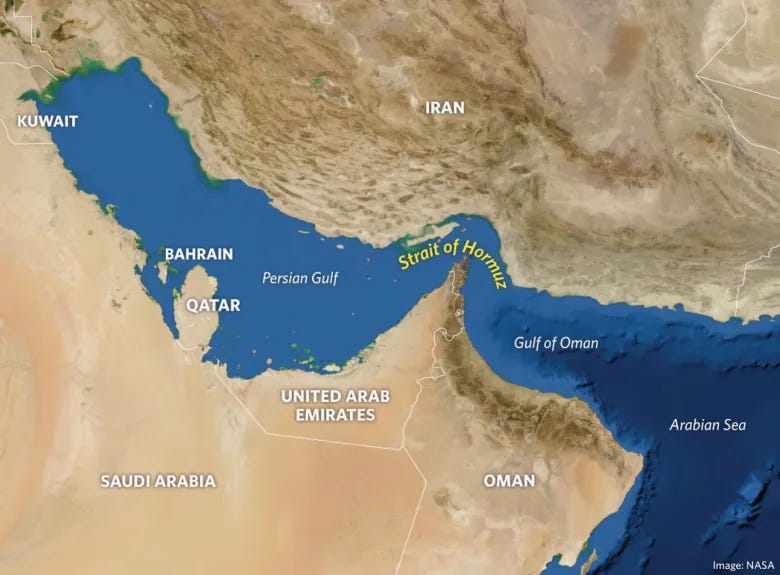
At the Qatar Economic Forum here in New York, Qatar's energy minister, Saad al-Kaabi, hit back at U.S. Treasury Secretary Scott Bessent's claim that the Strait of Hormuz is headed for irrelevance. Earlier this month, Bessent predicted that as pipelines bypassing the waterway come online, "in two years, the Strait of Hormuz will be like a worthless piece of water." Al-Kaabi, who also runs QatarEnergy, called that completely wrong, arguing that Hormuz carries far more than oil and gas and will never become obsolete. He added that Qatar decided against pipelines on commercial and technical grounds, and that the two LNG production lines damaged in Iranian strikes will take about three years to repair. Al-Kaabi noted that LNG, Qatar's main export, can't move by pipeline in liquefied form, so a pipeline route would make the plants being built for the North Field expansion redundant. He also said Qatar could resume normal gas operations within weeks once Hormuz reopens.
The UN is in its own state of “perma-crisis,” according to Richard Gowan of the International Crisis Group. “The organization seems to be constantly short of money, constantly marginalized when it comes to major crises and … is also retrenching,” he said, noting that it’s had to fire thousands, close peacekeeping bases, and cut off humanitarian supplies to millions. “It’s not a pretty picture.”
“Nobody thinks that just changing secretary-general is going to solve all the problems of the organization,” he said. “Guterres has done his best to keep the organization afloat. He has managed to sort of stop it from going bankrupt, despite some very severe financial headwinds. But there is a sense that you need someone new, and that at least a new U.N. leader can sort of bring some clarity to where the organization can go from here.”
The Mississippi question
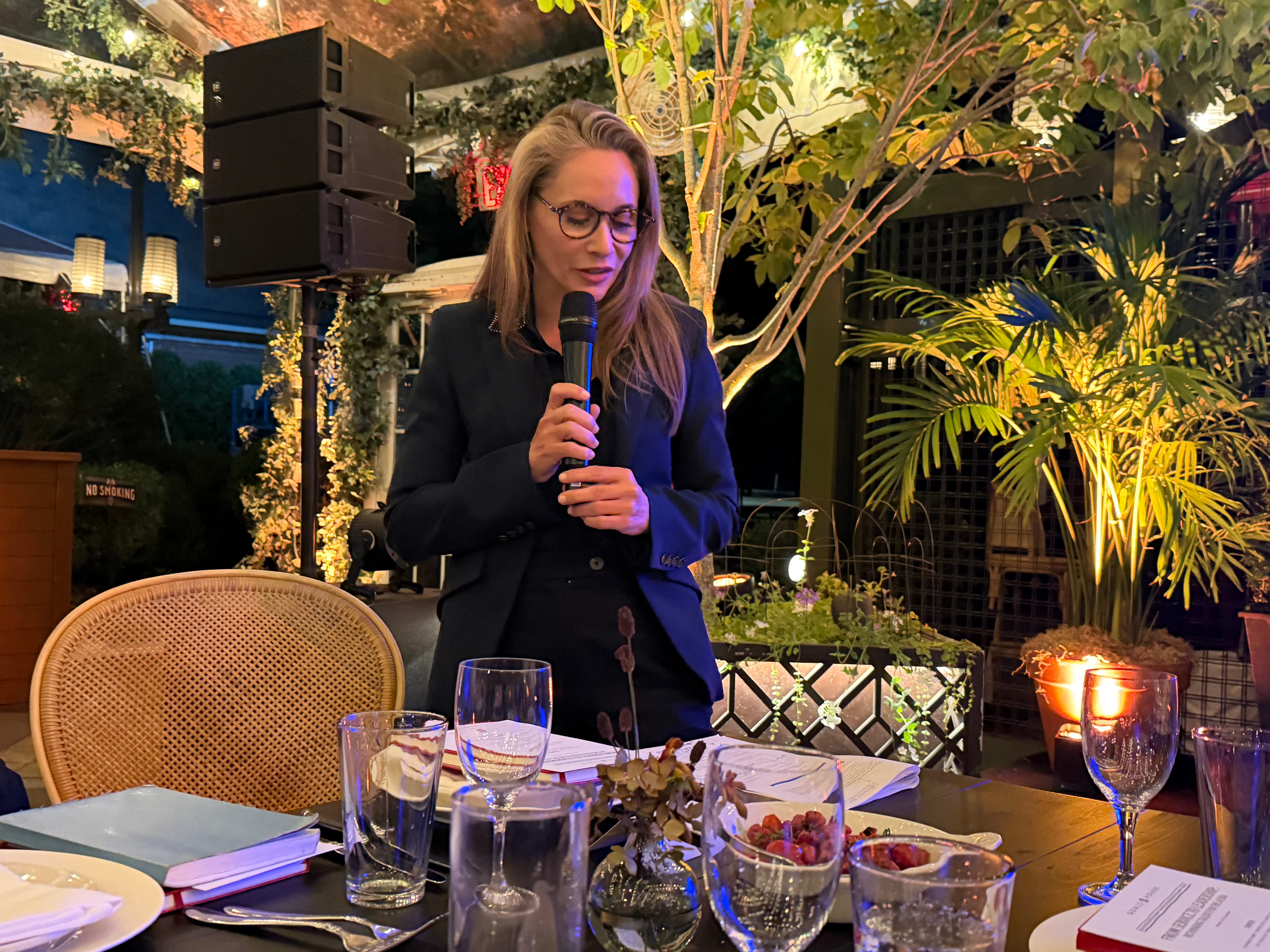
At the Goals House dinner, sponsored by ServiceNow and City Year, one audience member dropped a sobering stat: take London out of the UK, and the rest of the country would be poorer per head than Mississippi, America’s poorest state. An FT analysis backs that up.
The wider discussion, moderated by former CNN anchor and Goals House director Nina dos Santos, focused on how to engage today’s young people and instil a sense of service. The Mississippi stat tied neatly into a point I made: at UNICEF, we were laser-focused on giving children “the best start in life.” Where a child grows up, whether in London, the north of England, Gaza, Lesotho or the Mississippi Delta, still shapes how good that start can be.
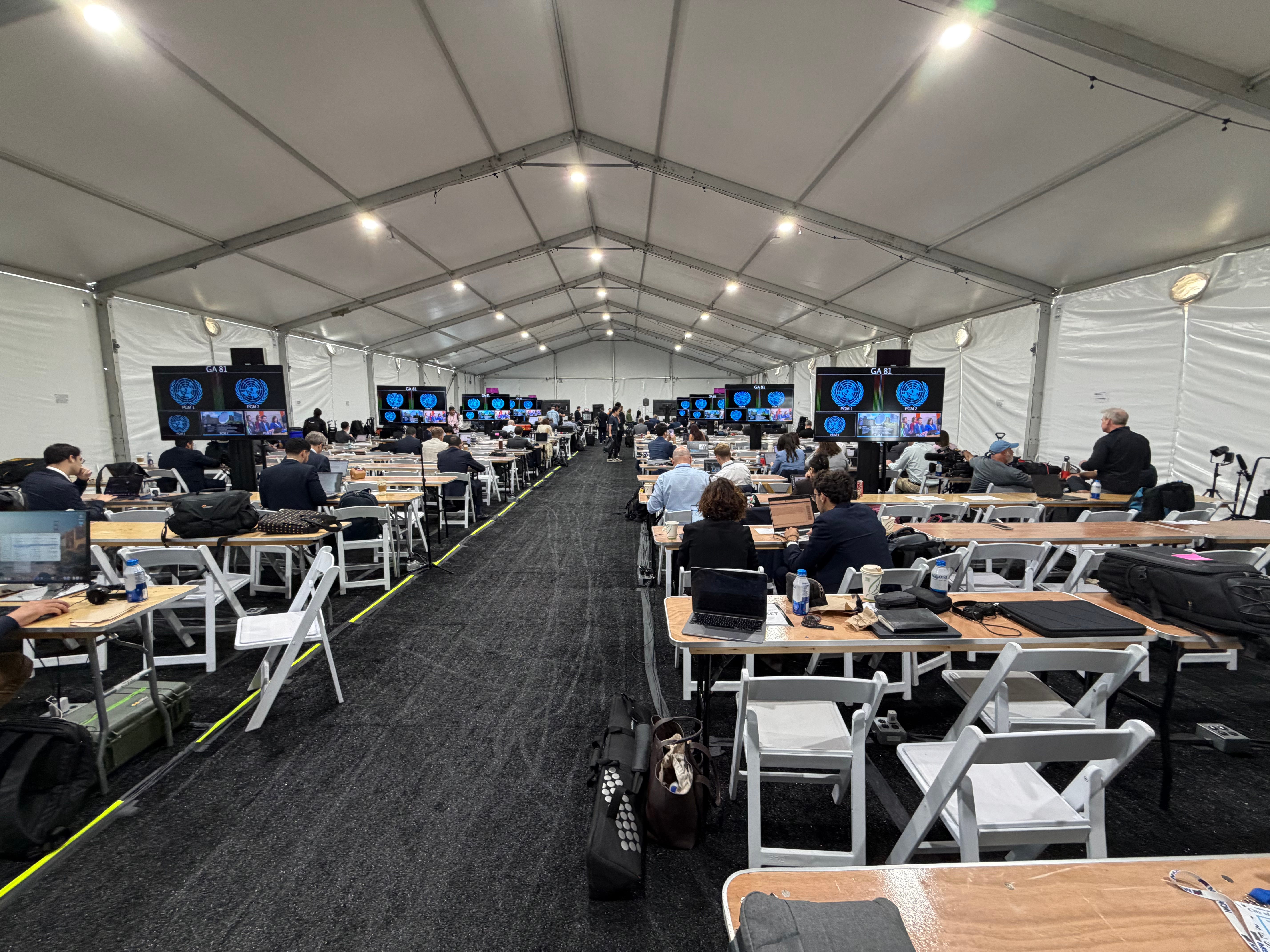
At the UN Media Centre, where World Briefing is accredited this year, I bumped into a White House correspondent from MS NOW. It’s one of three outlets, along with CNN and Politico, that President Trump abruptly banned from the White House last Friday.
She told me this was unprecedented. Yes, the AP was barred and there were restrictions at the Pentagon, but she said this is on a completely different playing field. The networks, she added, would likely stand together, and they already have. The major TV networks refused to cover Trump’s events on Monday in solidarity, so there was no pool camera as he travelled to New York. The three outlets have also filed a federal lawsuit, arguing the ban violates their First Amendment rights.
CNN reports that Trump’s close aide Natalie Harp showed him clips of media coverage shortly before he announced the ban.
On the surface, nothing looked different. The MS NOW team was working as hard as everyone else in the media centre. But hearing it from someone so close to the impact carried real gravity.
My take: Trump isn’t doing himself any favours. Media attention is his oxygen. As I told one reporter, he can’t live without it for long. With Trump due at the UN on Tuesday, I expect him to relent and let them back in.
Exclusive video: UNGA on foot
Our feet got a real workout today. From the Concordia Summit to the UN grounds, Goals House in Central Park and beyond, we crisscrossed Manhattan to bring you exclusive analysis and insight you won’t get from the media centre alone.
Paid subscribers can watch below. Not a subscriber yet? Upgrade to World Briefing Plus (and take advantage of a time-limited 30% discount on annual subscriptions) to unlock this video and the rest of our UNGA coverage.
