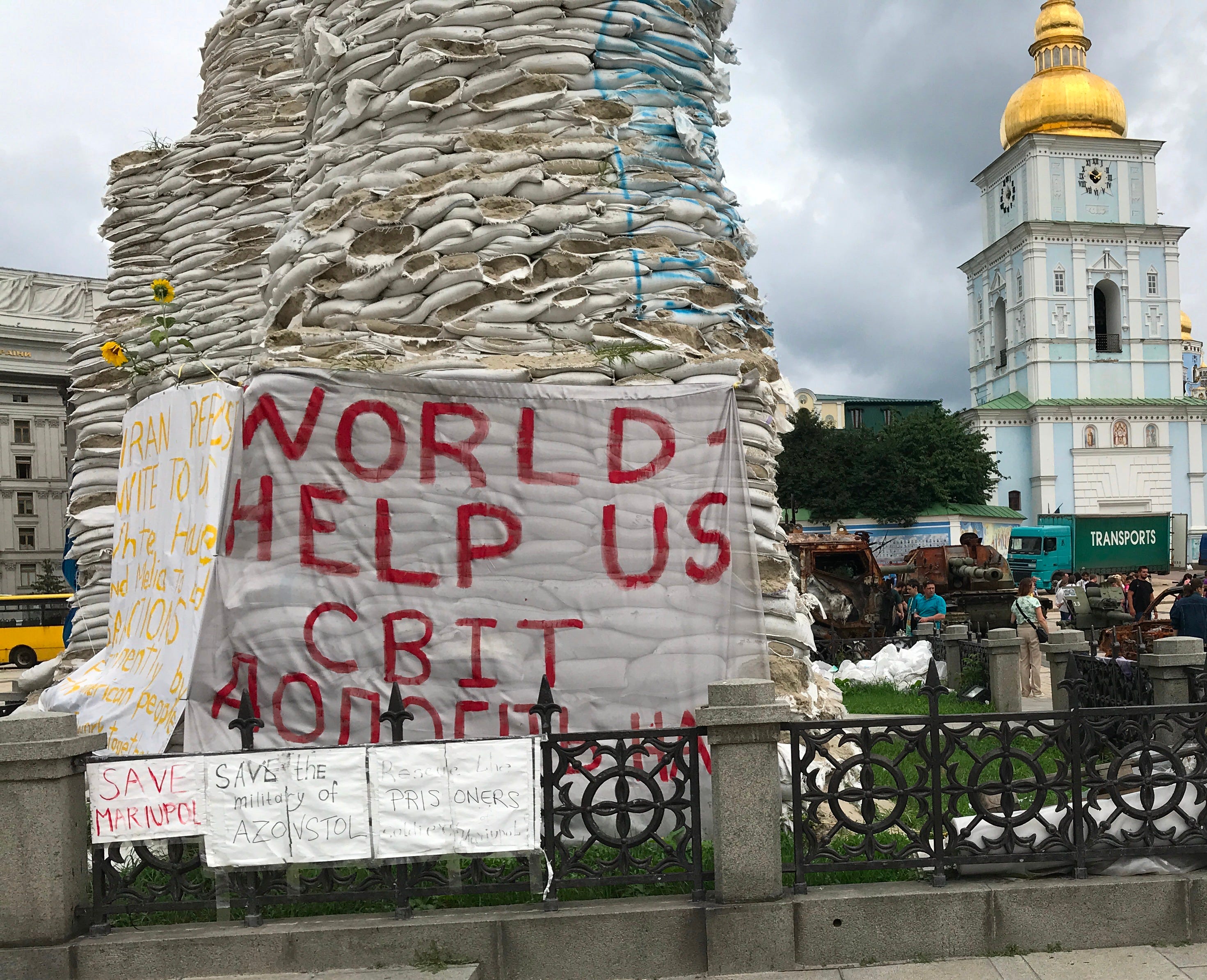
This is shaping up to be one of the most consequential weeks of the Ukraine-Russia war - not on the battlefield, but in Europe’s corridors of power. As U.S. officials - seemingly with an attitude (as I said on BBC today) that borders matter less than the business, push hard for a negotiated end to Russia’s invasion, Ukraine is being asked to say “yes” to peace - with conditions it neither controls nor fully trusts. Especially when it comes to security guarantees.
European leaders, stung by Donald Trump’s public jabs that they talk but don’t produce, are racing to shield Kyiv from what many fear would be a lopsided, humiliating settlement quietly carved out between Washington and Moscow. At the same time, the EU is struggling to hold together a fragile consensus on a multi-billion-euro loan meant to keep Ukraine financially afloat - even as some member states waver.
From Berlin to Brussels, this week’s frantic diplomacy has taken on an unmistakably existential tone. NATO chief Mark Rutte’s warning that Europe is already “in harm’s way” hangs heavily over meetings with President Volodymyr Zelensky and U.S. envoys. The question now is not just whether Europe can influence the terms of peace - but whether it still has the leverage to matter at all.
The European Union faces a critical week as it seeks to shield Ukraine from a humiliating peace deal carved out by the U.S. and Russia while attempting to salvage an agreement to fund a multi-billion euro loan to keep Kyiv afloat. After a series of stinging attacks from Washington ― including Donald Trump telling POLITICO that European leaders are “weak” ― the coming days will be a real test of their mettle. On Monday leaders will attempt to build bridges and use their powers of persuasion over the peace agreement when they meet Ukraine President Volodymyr Zelenskyy and U.S. officials in Berlin. At the same time in Brussels, EU foreign ministers and diplomats will battle to win over a growing number of European governments that oppose the loan plan. By Thursday, when all 27 leaders gather in the Belgian capital for what promises to be one of the most pivotal summits in years, they’ll hope to have more clarity on whether the intense diplomacy has paid off. With Trump’s stinging put-downs ― Europe’s leaders “talk, but they don’t produce” ― and NATO chief Mark Rutte’s stark warnings about the the threat from Russia ringing in their ears, they’re taking nothing for granted. “We are Russia’s next target, and we are already in harm’s way,” Rutte said last week. “Russia has brought war back to Europe and we must be prepared for the scale of war our grandparents and great grandparents endured.” Little wonder then that European officials are casting the next few days as existential. The latest shot of 11th-hour diplomacy will see the leaders of the U.K., Germany and possibly France, potentially with Trump’s son-in-law Jared Kushner and his special envoy Steve Witkoff, meeting with Zelenskyy in Berlin. As if to underscore the significance of the meeting, “numerous European heads of state and government, as well as the leaders of the EU and NATO, will join the talks” after the initial discussion, said Stefan Kornelius, spokesperson for German Chancellor Friedrich Merz. French President Emmanuel Macron hasn’t confirmed his attendance but spoke to Zelenskyy by telephone on Sunday. - Politico
US and Ukrainian officials met for a second day of talks in Berlin today (Monday) as Washington pushes for an agreement to end Russia’s war on Ukraine and Kyiv struggles to avoid a deal that would favor Moscow. Ukrainian President Volodymyr Zelenskyy and other officials were meeting with the US delegation at the Chancellery, Ukrainian public broadcaster Suspilne and other media outlets reported. Zelenskyy and other top Ukrainian officials met for five hours on December 14 with White House special envoy Steve Witkoff and President Donald Trump’s son in law Jared Kushner, among other US delegates. “Representatives held in-depth discussions regarding the 20-point plan for peace, economic agendas, and more,” Witkoff said in a post on X after the first day of talks. “A lot of progress was made,” he added, without giving details. Zelenskyy had already been scheduled to meet with the leaders of Germany, France, and Britain in Berlin later on December 15, and other European leaders may take part. Reuters cited a German government spokesman as saying US envoys were also invited. Talks aimed at bringing peace to Ukraine “have never been as serious as they are now,” German Foreign Minister Johann Wadephul told radio station Deutschlandfunk. He said the efforts were “substantial” but that it would only become clear “at the end of the week” whether the outcome would be “successful.” The 20-point plan emerged after Ukraine and its European backers scrambled to make counterproposals after the United States came out with a 28-point plan that echoed some of Moscow’s positions and was widely seen as favorable to Russia - RFE/RL
Commentary by long-time Kyiv resident, Canadian-Ukrainian Bohdan Chomiak: Over the last two weeks while I have been recovering I watched with interest at first and then started ignoring peace negotiations. From my perspective they have been what can I get through negotiations. Remarkably the most important action in the talking process over the last few weeks was the EU freezing russian assets until russia agrees and funds Ukraine reconstruction. In the same period the US has demonstrated it is acting on behalf of russia to get the assets so that a few US companies can benefit. It comes as no surprise that the US government is losing US citizen support. US government failure in these talks would not matter to Americans if it weren’t for the fact that current US foreign policy mirrors current US domestic policy. Both cases demonstrate policy actions to benefit a few Americans and not America. The EU freeze will not be lifted until russia provides funds, regardless of whether they say they will. X was penalized by the EU for failing to follow EU rules and not because it encouraged “free speech”. The beauty of the rule of law is that it works when laws are enforced and not when they are used by those in power to benefit themselves and their friends.
As U.S. and Ukrainian officials met behind closed doors in Berlin, I went live with BBC News to break down what’s really at stake - the pressure on Kyiv, Europe’s struggle to stay relevant, and why the emerging peace push risks hard-coding instability rather than ending it.
⬇️ Scroll down to watch this video
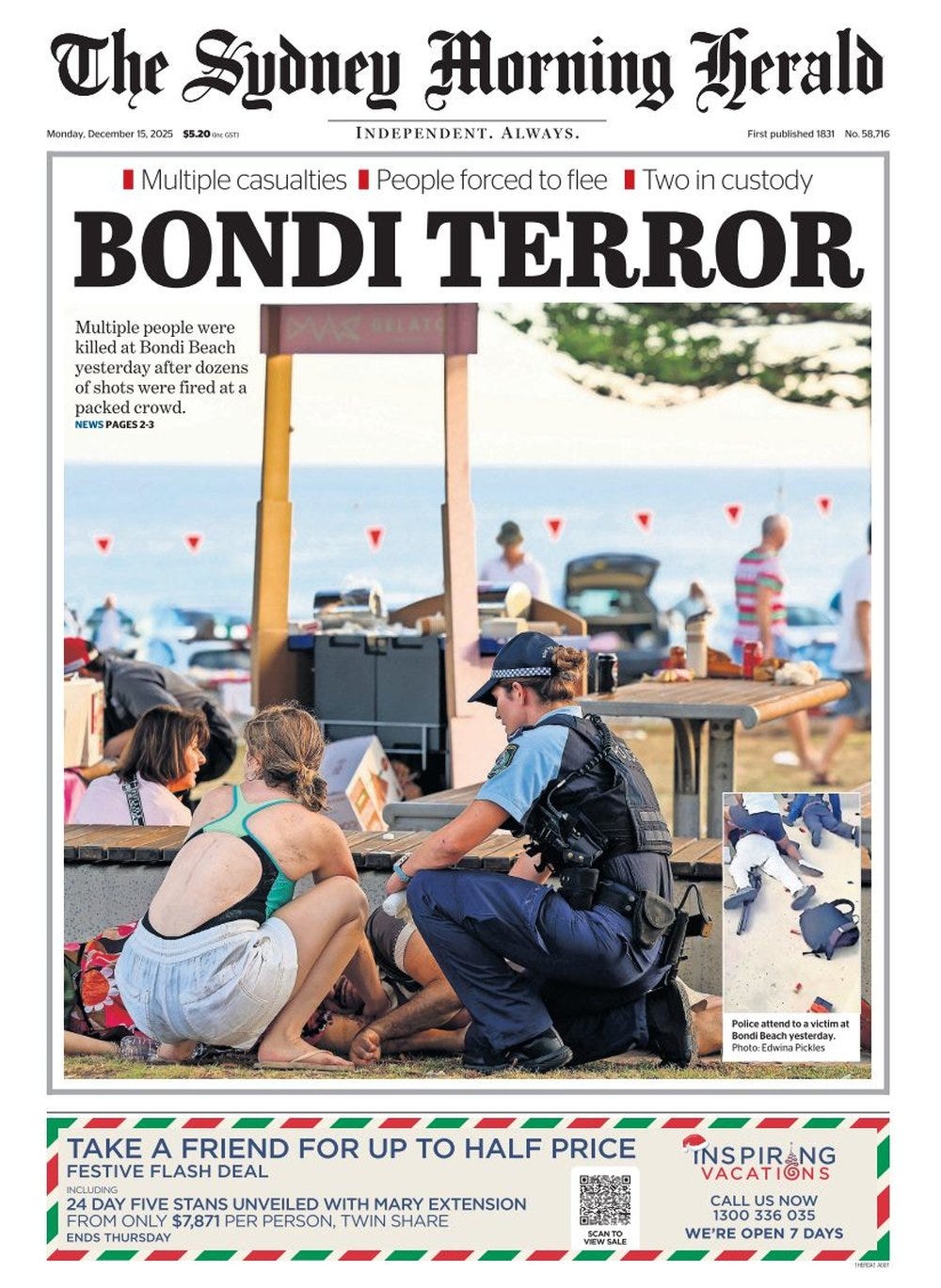
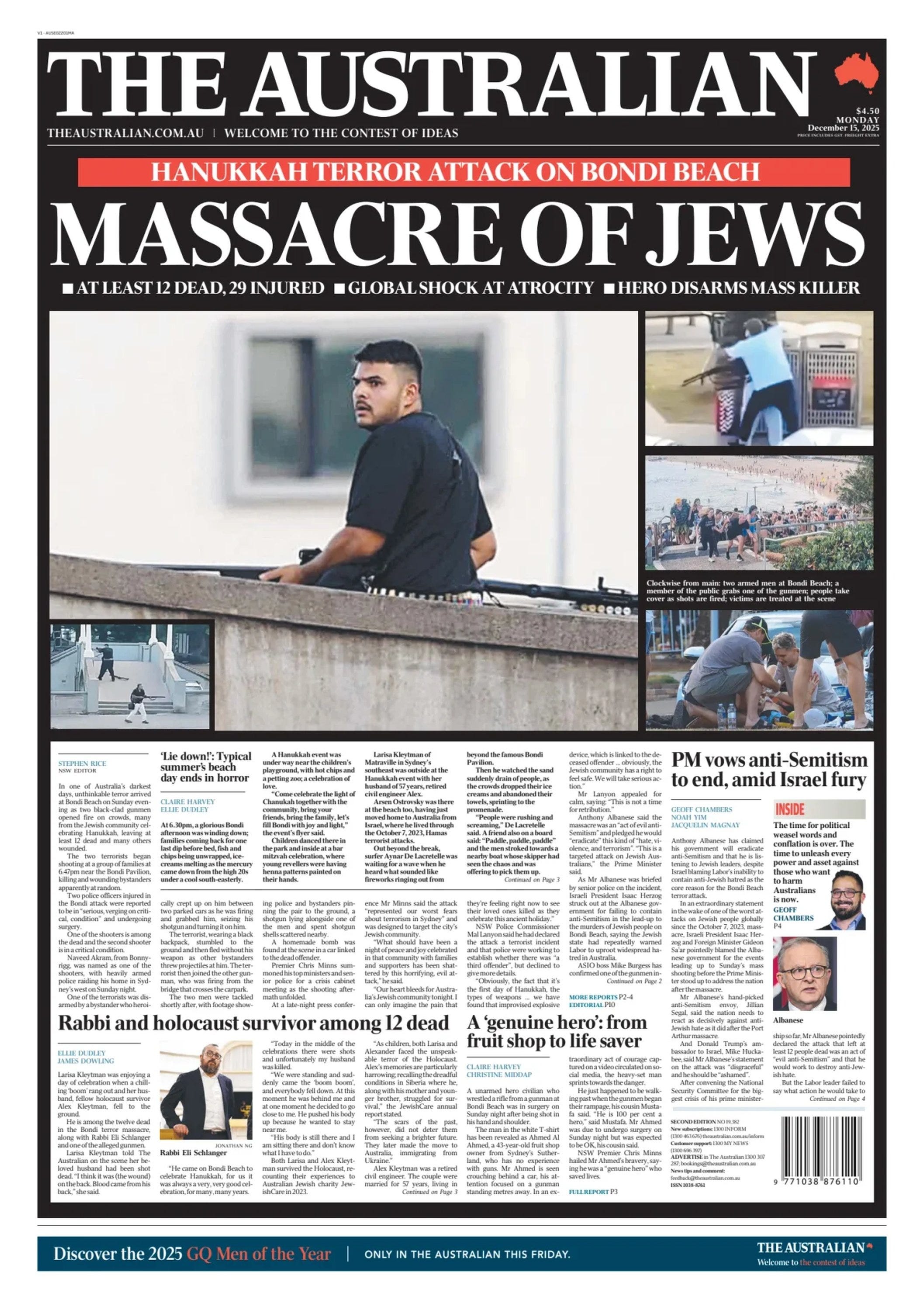
Hours after 15 people were killed around a Jewish Hanukkah festival at Sydney’s Bondi Beach, more and more information about the two gunmen has emerged. According to police, the shooters were 50-year-old fruit shop owner Sajid Akram, who died in a shootout with law enforcement, and his 24-year-old son Naveed, an unemployed bricklayer, who was severely injured and taken to a hospital where he remained in critical but stable condition under police guard. The older Akram had arrived in Australia in 1998 on a student visa, then became a permanent resident in 2001 and later obtained a Resident Return Visa (RRV). This document allowed him to travel overseas and re-enter Australia while keeping his permanent resident status. His son was born in Australia and is a citizen. Australian media reports said the father hailed from Pakistan, although this has not been confirmed yet by the authorities. The men had reportedly pledged allegiance to the radical Islamic State group (IS) and flags of the terrorist group were found in their car where police also discovered at least two improvised explosive devices. They told family members they were traveling to the coast for a longer fishing trip. Australian Prime Minister Anthony Albanese said the gunmen were acting alone and not part of a wider extremist cell. “There’s no evidence of collusion,” he said, but they were “clearly motivated by extremist ideology.” - Euronews
In a verdict long foretold by China’s Communist Party, a Hong Kong court on Monday convicted Jimmy Lai, a media mogul and rambunctious critic of the rulers in Beijing, finding him guilty of crimes endangering national security. The conviction, swathed in the formal garb of a nominally independent judicial system left over from British rule, was never in any real doubt. Mr. Lai, 78, has been pilloried for years by China’s ruling party and its loyalists in Hong Kong as a traitor, a crook and the leader of a subversive “gang of four” who must be severely punished. In this case, he was convicted of two counts of conspiring with foreign forces to impose sanctions against Hong Kong and another of publishing seditious material in the former British colony. He had already been convicted and imprisoned on fraud charges. When Mr. Lai was arrested five years ago and released briefly on bail, a group of self-declared Chinese “patriots” gathered outside his home in Kowloon and waved banners warning ominously that “traitors who bring disaster to Hong Kong will not have a good end.” Monday’s verdict delivered on that warning and brought nearer to a close a case that has crystallized the changes that have swept Hong Kong since the introduction of a harsh national security law in 2020 in response to months of antigovernment street protests that the authorities suppressed. The charges on which Mr. Lai was convicted can be punished by up to life in prison. A pre-sentencing hearing is set to begin Jan. 12 - NYT
Serbia’s prosecutor for organized crime on Monday charged a government minister and three others with abuse of office and falsifying of documents to help pave the way for a real estate project linked to Jared Kushner, U.S. President Donald Trump’s son-in-law. Proposed criminal charges were announced against Culture Minister Nikola Selaković, who is a close ally of autocratic President Aleksandar Vučić, and three other officials, according to a statement published on the official website of the Public Prosecutor’s Office for Organized Crime. The investigation centers on a controversy over a bombed-out military complex in central Belgrade that was a protected cultural heritage zone, but that is facing redevelopment as a luxury compound. Last year, Serbia’s government signed a 99-year-lease agreement with Kushner-linked Affinity Global Development in the U.S. At the time, Kushner confirmed reports that his company plans to finance the $500 million project. It would feature a high-rise hotel, a luxury apartment complex, office spaces and shops - AP
The journals….