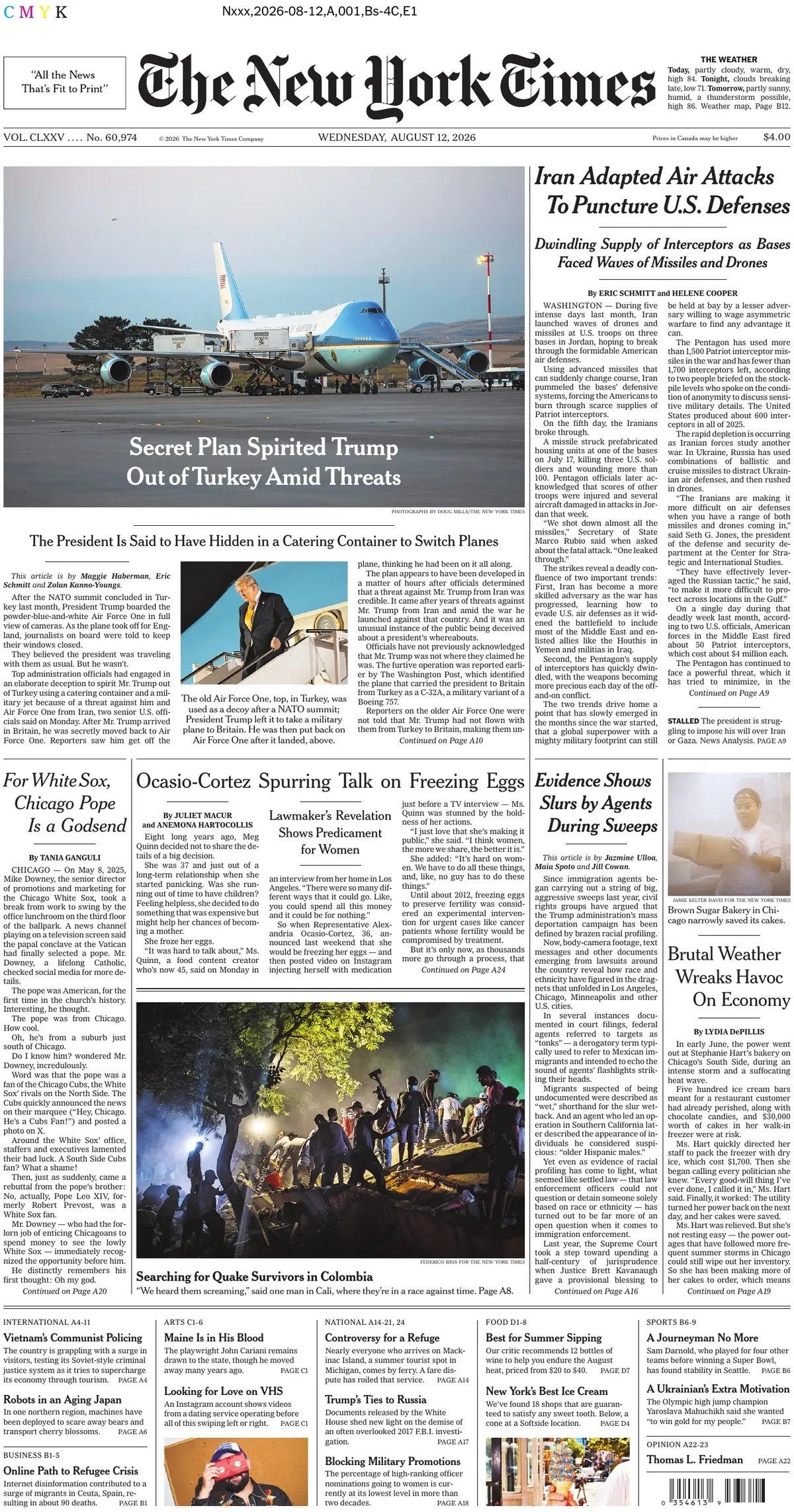
The headline number is clean enough. In July, Istanbul Airport handled 8.15 million passengers against Heathrow’s 7.86 million — up 2.3 percent year on year versus a 1.5 percent decline in London. A gap of roughly 290,000 in a single month. Heathrow, which held the title in most years from 1996 to 2019 and reclaimed it in 2023, has been dethroned.
Anyone watching the trend line saw it coming: the two hubs finished 2025 separated by about 40,000 passengers — 84.46 million to 84.44 million. As Carl Littlechild of Tourism Economics noted in flagging the July crossover, the question was never whether Istanbul would pass Heathrow. It was when, and on the back of what.
Here is the answer, buried in Heathrow’s own traffic data: Middle East traffic through the London hub fell 20.2 percent year on year in July.
That is half the story. The other half is four years older.
The redirection thesis, confirmed
We flagged this in World Briefing in the spring from Oman: the Iran war would not simply dent Gulf aviation, it would reroute it. Airspace closures across Iran, Iraq, Bahrain, Kuwait, Qatar and parts of the UAE disrupted what is normally the world’s densest connecting corridor — roughly 40 million passengers a year moving between Europe and Asia via Dubai, Doha and Abu Dhabi.
The damage has been structural, not cosmetic. Dubai International handled 18.6 million passengers in Q1, down 20.6 percent, with March collapsing 66 percent to 2.5 million. Emirates stripped nearly half a million seats from its June schedule. IATA recorded Middle East carrier traffic down 13.9 percent year on year in June — and that was the good news, after minus 28.8 percent in May.
The number that tells you most, though, is a count of airlines, not passengers. As of May, only 51 of the 90 carriers that served DXB had resumed operations there. The airport was running at 38 percent of normal, on 541 daily movements. Paul Griffiths, the Dubai Airports chief executive, has since guided toward 80 to 85 percent operational recovery by the end of this year, and — in remarks reported by Arabian Business — said the 100-million passenger milestone he had expected to break in 2026 is now relegated to 2027, a slip he still frames with confidence.
Recovery is happening. It is not happening fast, and I do not expect the Gulf hubs to return to the growth trajectory they were on before February — not in the short to medium term.
The reason is not runways or fleet. It is uncertainty. Passengers do not price war risk rationally; they avoid it. I’ve watched a good deal of price-slashing by the big Gulf carriers, and it isn’t moving the needle the way it should. When the calculation includes what happens if I get stuck in Doha for four days, no fare sale fixes that. Corporate travel managers, who are being handed formal risk advisories, are less moveable still.
Türkiye is what’s left — not because Istanbul out-competed anyone, but because it is the one hub of comparable scale sitting outside the risk perimeter.
The other war dividend
There is a second conflict underwriting Istanbul’s rise, and it has been running four years longer.
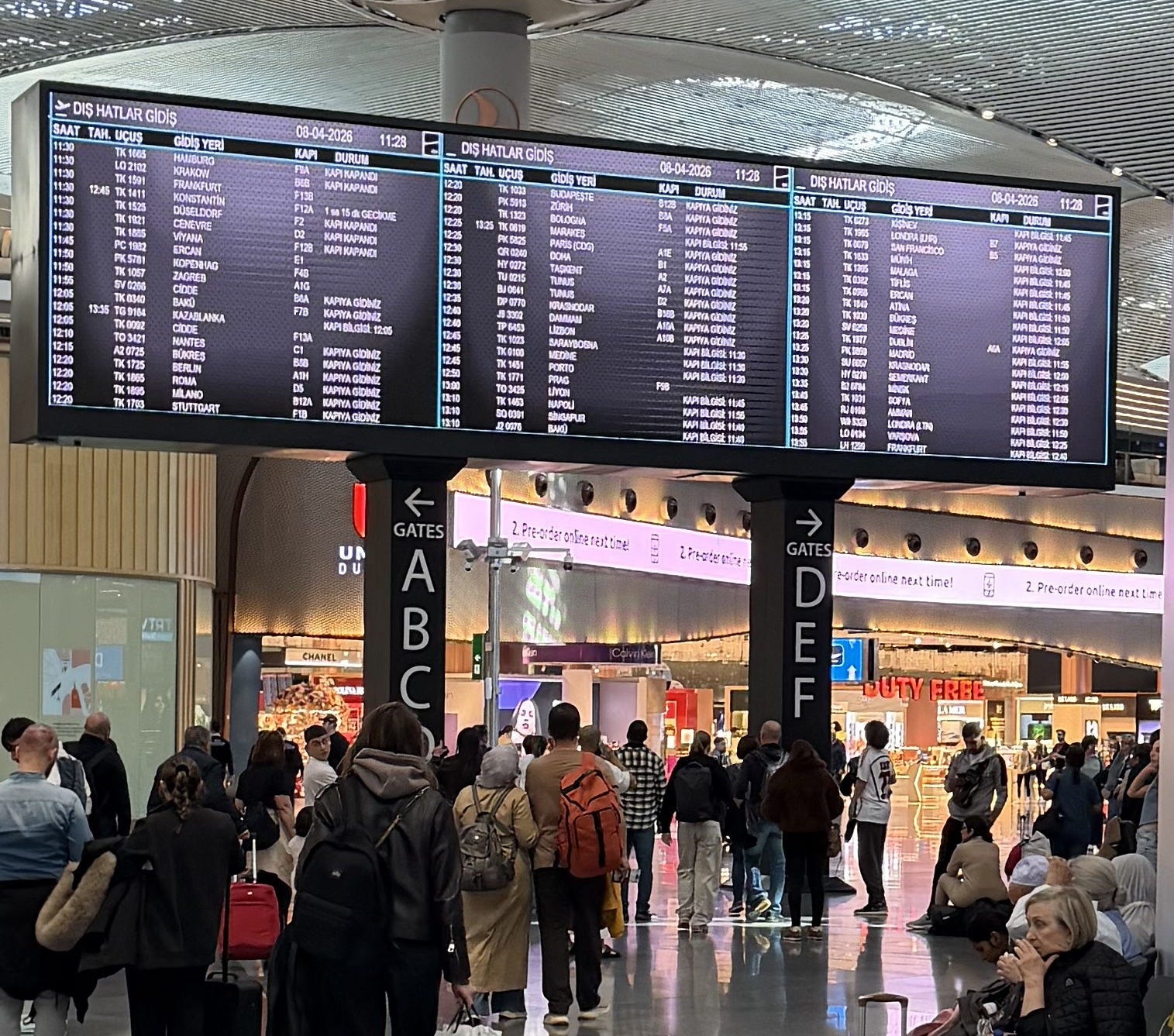
Look at a departures board at IST and you will find Moscow on it — not on a Turkish tail, but on Russian ones. Ural Airlines, S7, Rossiya, Red Wings, Aeroflot and Pobeda all serve Istanbul. Why? Because Türkiye is among the shrinking number of countries whose airspace remains open to them. Russia’s direct international network is down to roughly 32 countries. Around 60 foreign carriers still serve Russia, almost all from the Middle East, Asia and the former Soviet space — and Istanbul is the single most important gateway among them, with Turkish operating five to seven daily flights to Moscow alone, plus St Petersburg, Sochi, Kazan and Mineralnye Vody. Pegasus adds Krasnodar, Grozny and Makhachkala out of Sabiha Gökçen. Every EU, British, American and Canadian passenger travelling to or from Russia now needs a third-country connection, and Istanbul is the default one.
Ankara’s neutrality also pays in a way that’s usually described wrongly. Turkish can still cross Russian airspace, which is worth real money in fuel and aircraft utilisation on its own eastbound routes. But it does not make a Frankfurt passenger’s trip to Tokyo faster — a connection through Istanbul costs a stop, and a stop costs more than the hour the southern detour adds a European nonstop eastbound.
The advantage is positional. When European carriers reroute south, the path runs over Türkiye and Central Asia — which means Istanbul now sits on the Europe–Asia axis in a way Frankfurt and Helsinki no longer do. Finnair is the cautionary tale: a hub built entirely on the Siberian shortcut, which grounded Tokyo, Seoul, Osaka, Shanghai and Guangzhou when the shortcut closed. That geographic dividend went to the Gulf hubs and to Istanbul, and Istanbul is the one still collecting it.
For Russian traffic the calculation is different again, because there is no nonstop to lose to. A Berliner bound for Moscow cannot fly direct at any price. Istanbul isn’t competing with a faster option — it’s competing with Belgrade, Yerevan and Dubai, and it wins on frequency and proximity.
It is also the most politically exposed traffic in the building. EASA’s conflict-zone bulletin covering Russian airspace west of 60 degrees East has been rolled forward repeatedly, and drone-driven closures around Moscow have been disrupting Turkish Airlines departures from Vnukovo. A sanctions settlement would let Russians fly direct to Europe again and hand this business straight back. Tighter secondary sanctions would squeeze it from the other side. Istanbul’s league-table win rests on two wars, and it does not control the ending of either.
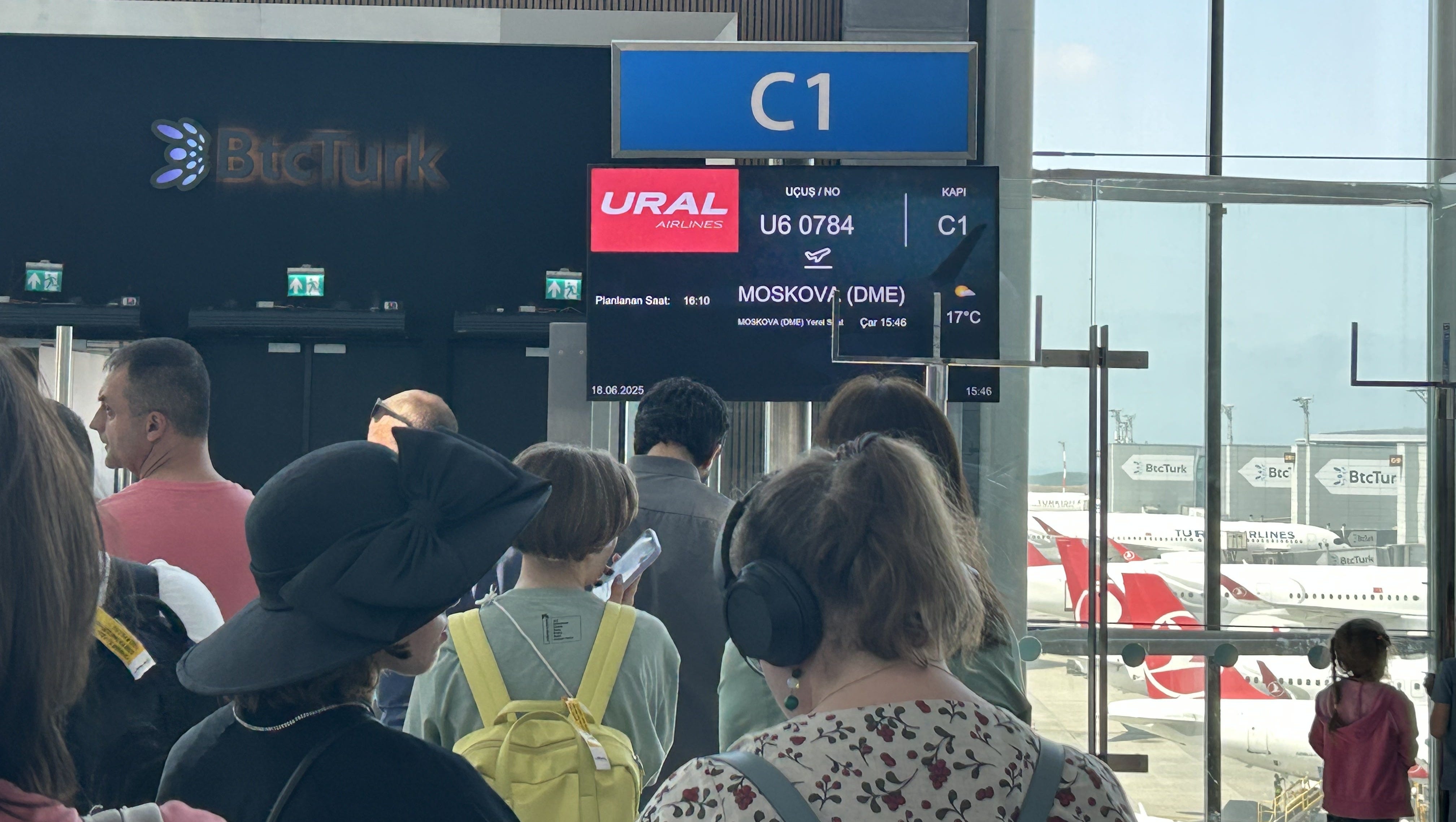
The view from Istanbul’s Terminal 1
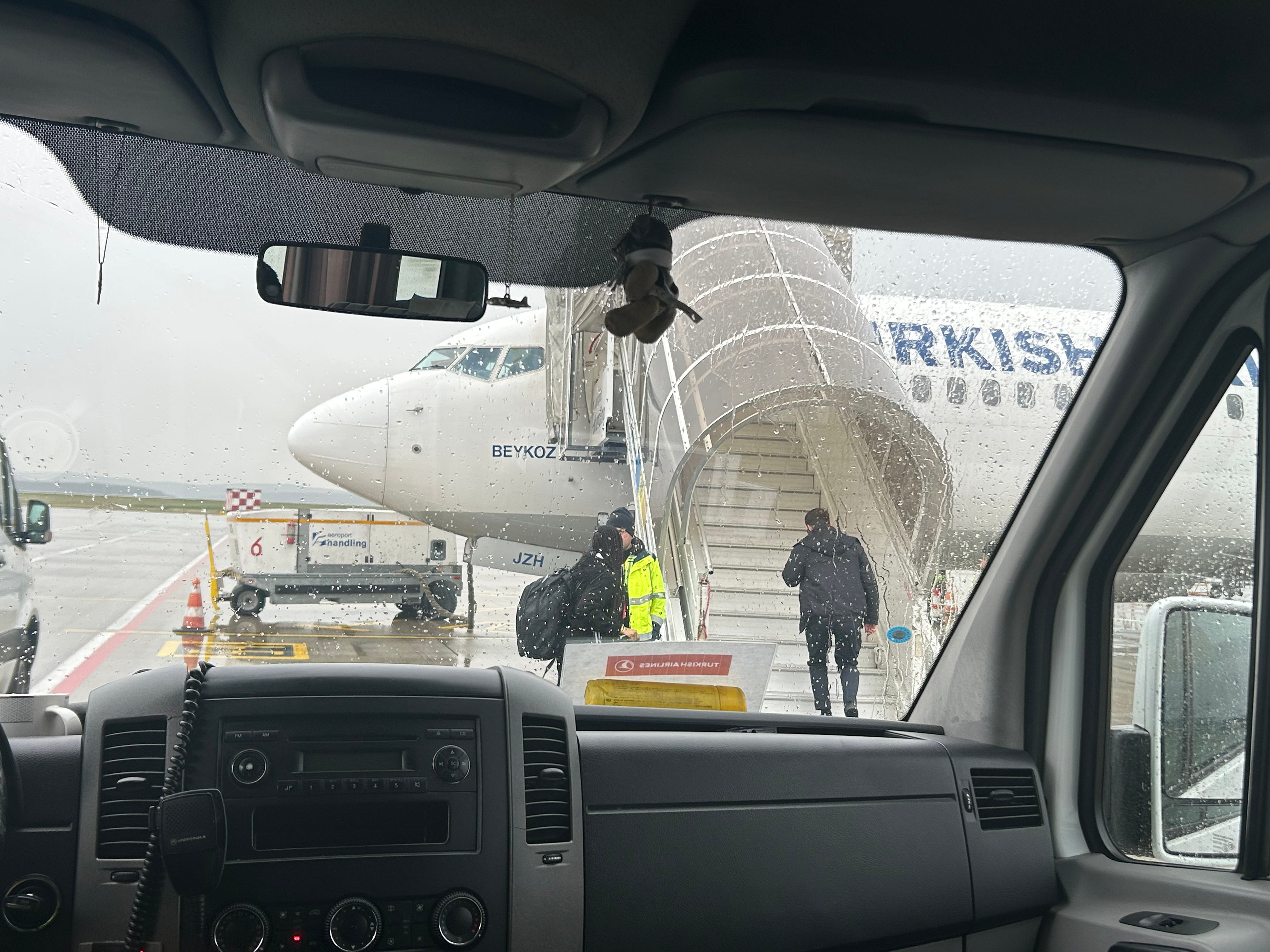
I came through Istanbul a few days ago. It does not, on the evidence of my own eyes, look like an airport under strain. There are peaks — transfer security backs up, immigration queues stack — but they clear. The building was designed for surge and behaves like it. Istanbul is targeting around 90 million passengers this year against a design capacity running to 200 million once all phases land; a fourth main runway enters service this month, and terminal expansion to 120 million is on the drawing board. On 9 August it moved 289,732 passengers in a single day, which Turkish officials called the highest daily figure ever recorded in European aviation.
Translation: Istanbul took Heathrow’s crown while operating well below its own ceiling. Heathrow is running two runways at close to full tilt and used the news to restate its case for a third.
That case has never been weaker politically. Rachel Reeves, who wanted spades in the ground this parliament and the runway open by 2035, has been sacked. Her successor government under Prime Minister Andy Burnham is markedly cooler: Burnham has argued the scheme pulls investment away from the North and traps it in London. Heathrow’s expansion would lift it to roughly 150 million passengers a year from just under 85 million. It is no longer clear it will be built at all.
And there is a cost the passenger statistics never capture, which is what happens after you land. For anyone who transits London often, Heathrow's real penalty isn't the runway count — it's the ground game. Chronic delays getting out of the airport, and a set of fares that reads like a surcharge on arriving at all: £26 for a walk-up Heathrow Express single, recently raised from £25, against £15.50 on the Elizabeth line and £5.90 on the Piccadilly, which takes 50 to 60 minutes. I have quietly rerouted a good deal of my own flying away from London for exactly this reason. Multiply that decision across the frequent-flyer population and you have a slow leak no third runway fixes.
Turkish Airlines supplies the other half: infinite state backing and a fleet that keeps arriving from Toulouse and Paine Field, WA. It hit 563 aircraft at the end of July, up from just over 520 in January, en route to a stated 800 by its 2033 centenary. It carried 9.5 million passengers in July at a record 86.5 percent load factor.
The detail that caught my eye, though, wasn’t in the terminal — it was out on the field. The main Turkish Technic maintenance hangar is under expansion and, from the ramp, looks close to doubling in footprint. That squares with the airline’s own disclosures: new hangars this year are meant to lift simultaneous heavy-maintenance capacity by around 20 percent, to a dozen aircraft at a time. Passengers rarely think about hangars. They should. A hub that services its own wide bodies is one where an aircraft-on-ground event costs hours rather than days — and Turkish Technic already does third-party work, so I’d expect Istanbul to start pulling heavy maintenance from other carriers, including some that would previously have sent airframes to the Gulf. Quiet, high-value, and it outlasts whatever happens in the Strait of Hormuz.
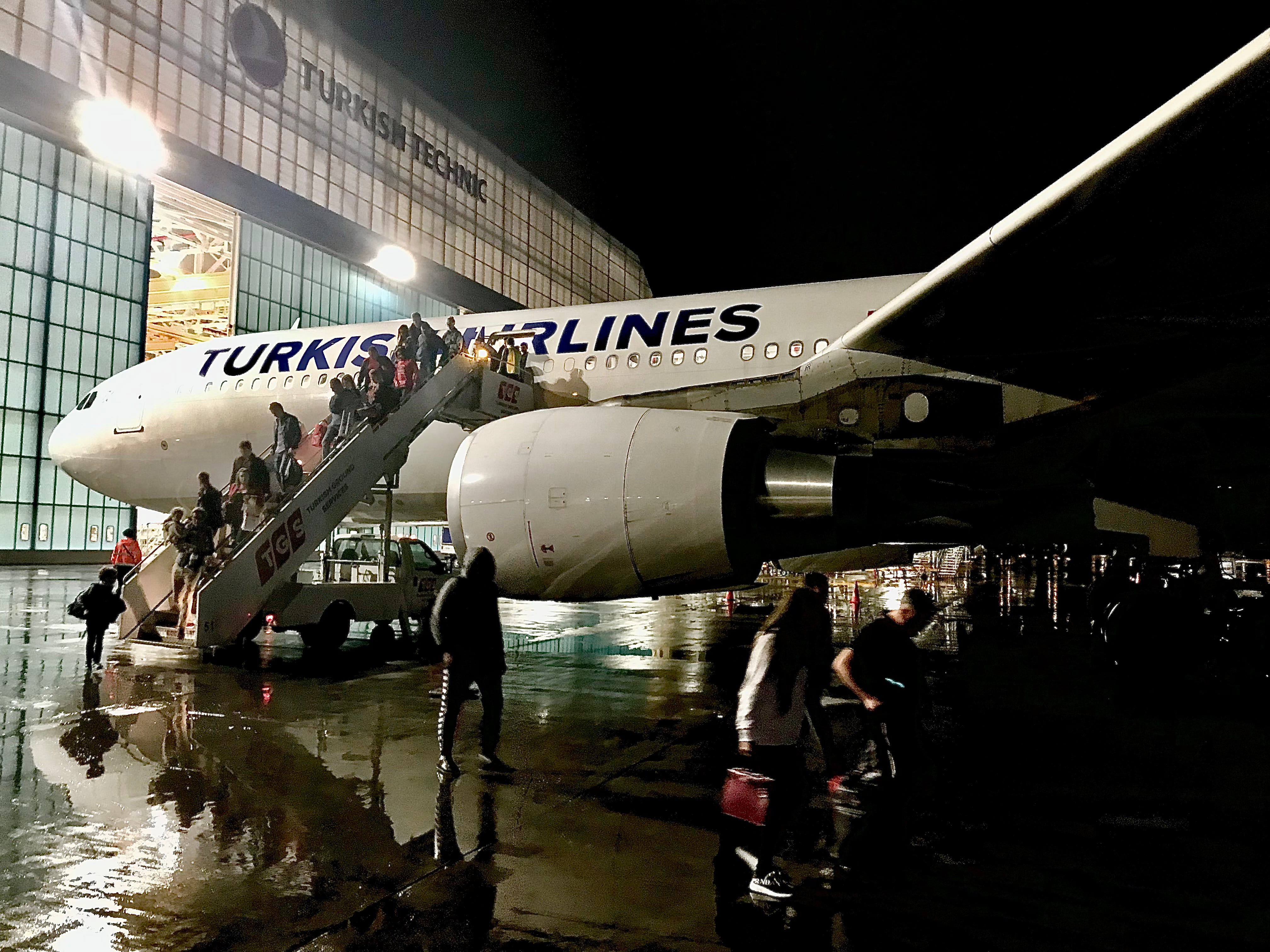
The corridor dividend
Airports are only half the map. The other half is at 38,000 feet, where the biggest winners aren’t hubs at all — they’re air navigation service providers.
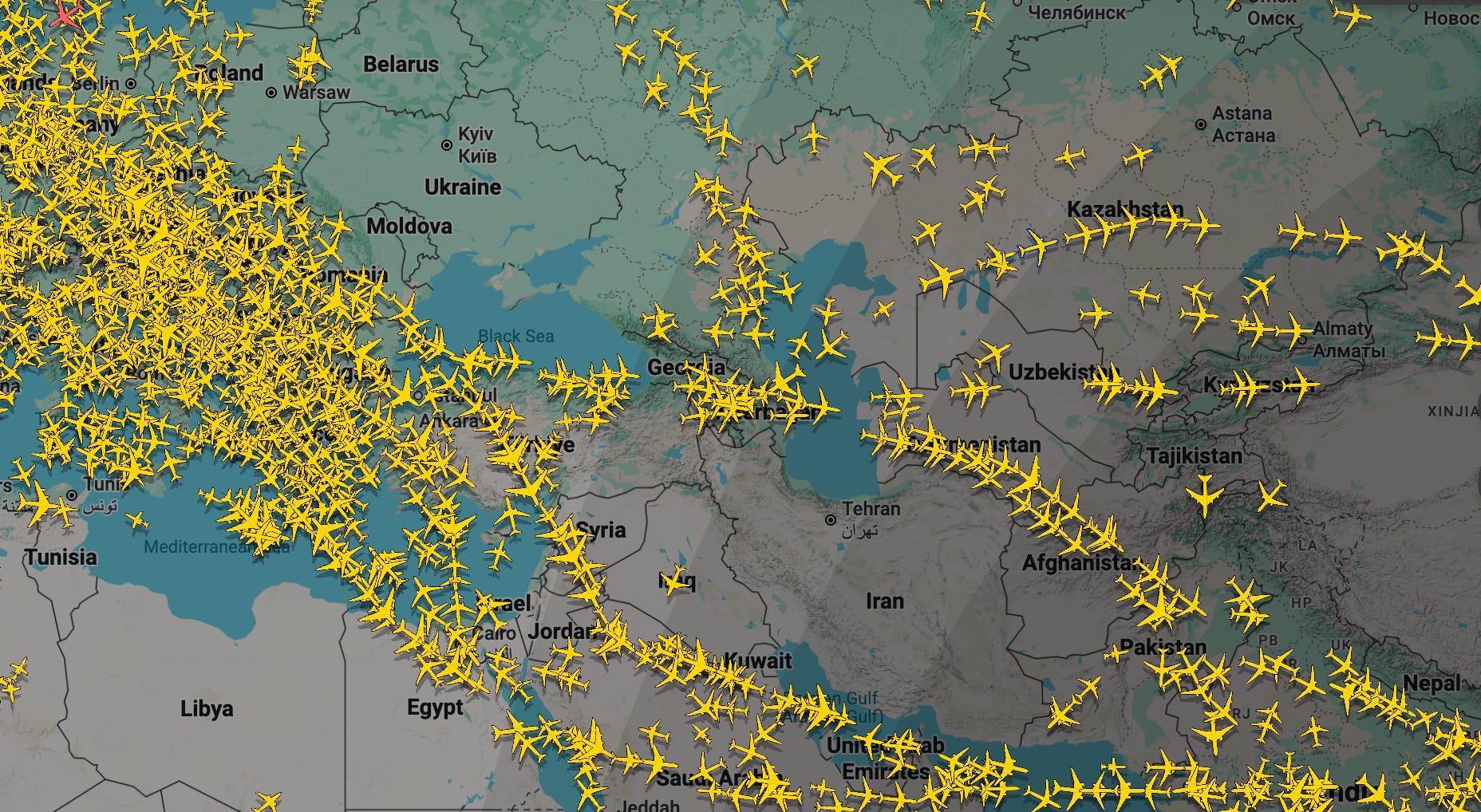
Azerbaijan is the standout. With Russian airspace closed to Western carriers since 2022 and EASA steering operators away from Iran, Israel and parts of the Gulf, Europe–Asia traffic has been funnelled into the Caucasus. AZANS, Azerbaijan’s air navigation authority, has seen overflight volumes quadruple in five years — from about 278 flights a day in early 2022 to roughly 695 by end-2025 (it handled a peak of 1,062 flights in a single day on May 9 and has seen over 60 new carriers using its airspace since the Middle East crisis began). Its director has been candid that the resulting revenue uplift arrived on the back of other people’s wars. Baku’s Heydar Aliyev International picked up around 974,000 transit passengers in 2025, up 30 percent.
But the dividend is unevenly distributed, and Armenia is the instructive case. Yerevan sits on the same bypass route — OPSGROUP's Safe Airspace database notes the Yerevan FIR seeing increased traffic, with the Armenia–Azerbaijan corridor now one of the main Europe–Asia bypass routes — and carries no airspace warning at all, a cleaner risk rating than its neighbour. Yet the numbers are modest. Armenia's Civil Aviation Committee logged 6,414 transit flights between 28 February and 23 March, a gain of just 129 over the same window in 2025, with volumes tailing off through March and no meaningful new operators added. Overflight rents follow established routings and existing bilateral arrangements, not geography alone. Armenia's real gain from this realignment is arriving on the ground, through Istanbul, not overhead
It is one of the least-discussed transfers of wealth in global aviation: a Gulf war quietly capitalising the treasuries of the South Caucasus.
The catch is that the corridor is absurdly thin — 85 to 100 miles at its tightest, between Russian and Iranian airspace. And it isn’t risk-free: on 5 March, Iranian drones crossed into Azerbaijan, one striking the terminal at Nakhchivan, and Baku closed its southern sector, squeezing a narrow corridor to a sliver. If it ever shuts properly, there is no third option worth the name. The southern alternative — looping via Egypt and the Arabian Sea — exists, but it adds hours and fuel on routes already carrying a 60-to-90-minute penalty.
That, more than any league table, is the systemic risk worth naming.
The neighbourhood play
Watch what Turkish does with its own back yard, because that’s where the strategy shows.
Armenia. Turkish launched scheduled Istanbul–Yerevan service on 11 March, restoring a link absent for decades. It began daily, went to ten weekly in May, and to fourteen — double daily — from mid-June. That escalation is worth reading as foreign policy, because that is what it is. Turkey and Armenia have had no diplomatic relations for decades, and the land border has been shut since 1993, closed in solidarity with Azerbaijan over Nagorno-Karabakh. It is still shut. The two sides agreed years ago to open it to third-country nationals and diplomatic passport holders; that has not happened either. Ankara’s foreign ministry has denied there is any timetable, tying progress to a final Armenia–Azerbaijan peace agreement. So the border stays closed and the flights go daily. This is Turkish soft power working exactly as designed: the flag carrier — majority state-held through the Türkiye Wealth Fund — is the instrument that moves first, because it is the one that can be dialled up or quietly dialled back without anyone signing anything. Ankara has consistently coordinated its Armenia policy with Baku, and retains a political brake on the timeline. A frequency is not a treaty. It is a signal with a schedule attached, and the fact that it tripled inside three months tells you where Ankara thinks the peace process is heading. Commercially, it also makes Istanbul the default one-stop for Armenians reaching Europe, North America and Asia — which is the point. Connectivity creates dependency, and dependency is leverage.
Moldova. Turkish is now among the busiest carriers at Chișinău, alongside local operators FlyOne and HiSky. With Air Moldova’s collapse in 2023 leaving the country without a flag carrier, Istanbul has become Moldova’s principal window on the world — a position with obvious strategic weight for a country sharing a long border with a war.
Ukraine. This is the one to bookmark. Before February 2022, Turkish served eight Ukrainian airports: Kyiv Boryspil, Odesa, Lviv, Kharkiv, Zaporizhzhia, Kherson, - and previously, Mykolaiv and Ivano-Frankivsk (the airline’s exit from Ivano-Frankivsk is worth a separate sidebar). That is not a foreign carrier’s route map; that is a domestic network flown by someone else’s flag carrier. Sources inside the airline tell me the intent is to come straight back the moment conditions allow — and “conditions” need not mean a settlement. A durable ceasefire, or even a workable partial reopening of Ukrainian airspace (as I have argued in print should happen now), would be enough. Whoever moves first on Ukraine takes the market, and Turkish has the metal, the proximity and the institutional memory to move first.
What I’m watching: the service ceiling
Here is where I’d push back on the triumphalism.
Turkish is a good airline, and its membership with Star Alliance adds to its desirability. It is not one to set global service standards such as Singapore Airlines, and has never pretended otherwise. What it delivers is reliability at density — double and triple dailies into markets like Bangkok, and enough metal on the ground that a technical failure means a swap rather than a cancellation. On-time departures improved 10.5 points year on year to 82.4 percent, which is the metric that actually matters at a transfer hub.
But service culture is the first thing to break when an airline expands this fast. Eighty-five new aircraft in a year means thousands of cabin crew trained at speed, with ground handling, catering and maintenance scaling in lockstep or not at all. Turkish has been building the supporting infrastructure, which suggests management understands the risk; a leadership change at the top earlier this year adds a variable. The Gulf carriers built their reputations on service and took two decades to get there. Turkish is attempting scale first. Whether the service culture survives contact with 100 million passengers will decide whether Istanbul’s lead is a wartime artifact or a permanent realignment.
One more liability worth stating plainly: Türkiye did not sit out this war. NATO assets intercepted Iranian ballistic missiles entering Turkish airspace three times in March — on the 4th, 9th and 13th — with debris in Hatay and Şahinbey, and US sources indicating at least one was aimed at İncirlik. All were southeastern, all were intercepted, none since spring. The risk to a passenger connecting through IST is very low. It is not zero, and “outside the risk perimeter” is a relative statement. Perimeters move.
The verdict
Istanbul is Europe’s busiest airport today because of geography and two wars — one that emptied the Gulf corridor, and one that made Türkiye the last open door to Russia. It will stay Europe’s busiest airport because of concrete, aircraft orders and a neighbourhood strategy that runs from Yerevan to Chișinău and is waiting on Kyiv.
Heathrow’s response — that the case for expansion has never been clearer — is correct, roughly a decade late, and now aimed at a government that doesn’t want to hear it. Türkiye is opening a fourth runway this month. Britain is relitigating its third. That asymmetry, not the July league table, is the story.
For the Gulf, the more uncomfortable read: hub traffic is habit. Once a connection pattern breaks and a traveller discovers Istanbul works fine, the reason to switch back has to be better than “the airspace reopened.”
News Briefs
The New York Times reports that crude moving through the Strait of Hormuz has collapsed from roughly 20 million barrels a day before the US and Israeli strikes on Iran began on 28 February to about 3.7 million as of last week, per maritime tracker Kpler. Overlapping blockades, sea mines, missile strikes and unaffordable insurance have done the work. Tankers still running the gauntlet do so under drone threat or dark, transponders off. At least 17 seafarers have been killed. So the Gulf is building its way around Tehran’s chokehold. In Fujairah, on the UAE’s Gulf of Oman coast, crews are laying a second line alongside the existing Abu Dhabi bypass pipeline — a project that would double bypass capacity to 3.6 million bpd, the Times reports. ADNOC has committed $8.2 billion to expanding its gas business and is weighing an east-coast LNG export terminal. Saudi Aramco is accelerating expansion of the 1,201-km East-West Pipeline to Yanbu, which has already rerouted some seven million bpd, with another one to two million under study. Kuwait is talking to Riyadh about a Red Sea or Oman outlet; Iraq and Jordan have dusted off the Aqaba line; Baghdad wants the Kirkuk–Syria pipeline rebuilt. The catch is that the risk doesn’t disappear, it relocates. Rerouting west pushes tankers into the Bab-el-Mandeb, where a Houthi strike killed six on Tuesday. Gulf producers are also stockpiling in South Korea, Japan and India — oil parked on the right side of the gate. Energy analyst Carole Nakhle, quoted by the Times, put it bluntly: “It was foolish for them to put their faith in Hormuz entirely.” Billions of dollars and years of construction to unlearn one assumption. Iran’s leverage shrinks accordingly — which may prove the strait’s most lasting export.
Ukraine reportedly halted attacks on a Russian port after a request from US Vice President JD Vance. Kyiv’s repeated strikes on tankers in Novorossiysk had alarmed Washington, which feared they would further destabilize already strained oil markets and hurt US oil majors, the Financial Times reported. The port is a key export point for Kazakh oil, and Chevron and ExxonMobil own stakes in the pipeline that carries it there. Ukraine has left Novorossiysk alone since Vance’s Jul. 31 call, although attacks on Russian oil infrastructure continue: Kyiv said it hit a major refinery 930 miles from the front line Tuesday. Russia has been suffering from gasoline and diesel shortages for more than three months due to Ukrainian drone strikes - Semafor
The journals…