

It is rare to get a clean natural experiment in geopolitics. This week we get one.
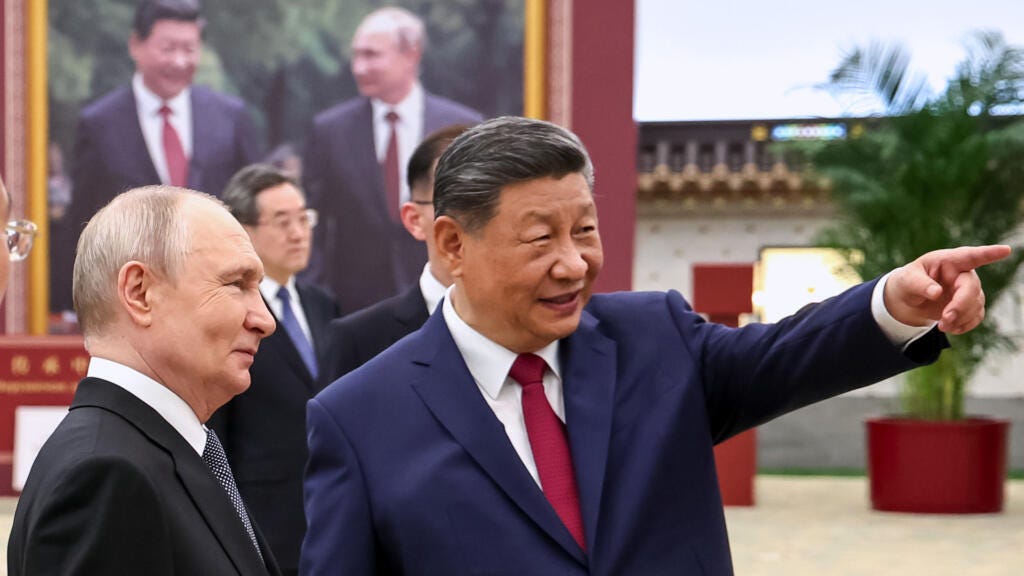
On August 31 and September 1, the Shanghai Cooperation Organisation meets in Bishkek: Xi, Putin, Modi, up to 21 heads of state, a bloc worth close to $30 trillion, with a development bank on the table. On exactly the same two days, in Asheville, North Carolina, Scott Bessent hosts the G20 finance ministers. Same 48 hours. Two competing answers to who writes the rules.
Remember what kind of G20 this is. Washington boycotted last year's Johannesburg summit, which I covered, and Trump has since barred South Africa from the 2026 meetings altogether while cutting off payments and subsidies - the first outright exclusion in the group's history. In its place, Poland has been invited as a guest of the host: the first Central or Eastern European country ever asked to a leaders' summit, despite the IMF's own revision confirming it has not yet displaced Switzerland from the top 20, a milestone now projected for 2028. Warsaw's ambition for full membership is undimmed. But note what just happened to the entry criteria. A founding member is out and a guest is in, and neither decision had anything to do with GDP.
Not that South Africa is likely to notice the snub this weekend. They were rather busy at Cape Town’s DHL Stadium, where the Springboks put 33 on the All Blacks to level the series, a week after losing the world number one ranking. Trump can withhold an invitation. He can’t withhold that.
The contrast is in the offer. Bishkek is selling connectivity: the China–Kyrgyzstan–Uzbekistan railway, and $11.7bn in China–Kyrgyz trade in seven months, led by EVs, batteries and solar. Asheville is selling conditions - Bessent will tell counterparts that continued access to the dollar-based financial system depends on cutting remaining ties to Iran, and a Treasury official expects it in every single bilateral. One summit arrives with a catalogue. The other arrives with a compliance form.
Xi and Putin sit down on the 31st, their second face-to-face this year, and they have rather more than longevity to discuss. Power of Siberia 2 is on the agenda again — 2,600km, up to 50 billion cubic metres a year via Mongolia, Russia’s answer to the European market it lost. It has been “on the agenda” for years; May’s Beijing meeting ended without a breakthrough. Watch whether Bishkek finally moves it. Putin also meets Erdogan on the Black Sea and Ukraine, Modi, Tokayev, and - note this - Iranian President Masoud Pezeshkian. Iran, the country Bessent is demanding every G20 member cut off, is a guest of honour at the other summit. Meanwhile the Kremlin says it has no information that talks with Washington and Kyiv might resume next month.
And watch François-Philippe Champagne. Canada’s finance minister sits down with his American host roughly a week before Ottawa starts tariffing him. Washington hit $20bn of Canadian goods with 50% tariffs on August 22 - applying even to CUSMA-compliant goods, with no expiry date. Mark Carney called it a miscalculation and will match it dollar for dollar from September 8. Every minister in that room will be doing the same arithmetic: if a treaty partner and neighbour gets 50% with no end date, what is a signature worth?
Xi doesn’t stop at Bishkek either. He flies on to Cairo, his first Egypt visit since 2016, in the 70th anniversary year of China–Arab relations - courting the Arab world in the very week Washington is squeezing it.
Note the traffic between camps. Indonesia, a full BRICS member, will sit in Asheville. Nobody is defecting. Everybody is hedging.
Written from Kuala Lumpur, where Anwar Ibrahim is skipping Bishkek (after attending for the first time last year) - though the simpler explanation may be visible from the street: tomorrow is Merdeka Day, and the flags are already up.
News Briefs
Iceland's 'No' camp has narrowly won a referendum on whether to resume the country's suspended European Union membership negotiations officials confirm. The final results were confirmed as 105,399 (47.2%) said "Yes", while 118,040 (52.8%) said "no". A total of 225,031 votes were cast, resulting in a voter turnout of 82.5%. The “No” outcome will shelve the EU debate in Icelandic politics for at least two more years. The nation of roughly 400,000 people, first sought EU membership after the 2009 financial crisis pushed its economy to the brink, but accession talks stalled in 2013 once a euroskeptic coalition took power. Prime Minister Kristrún Frostadóttir’s current Social Democratic-led government revived the question this year, arguing that a more volatile international climate made it worth asking voters whether to pursue closer EU ties. Iceland’s relationship with Brussels won’t fundamentally change either way, though: the country already participates in the European Economic Area and the passport-free Schengen zone, and both arrangements stay intact. The referendum itself carries no legal force, but the government has committed to abiding by whatever Icelanders decide - Euronews
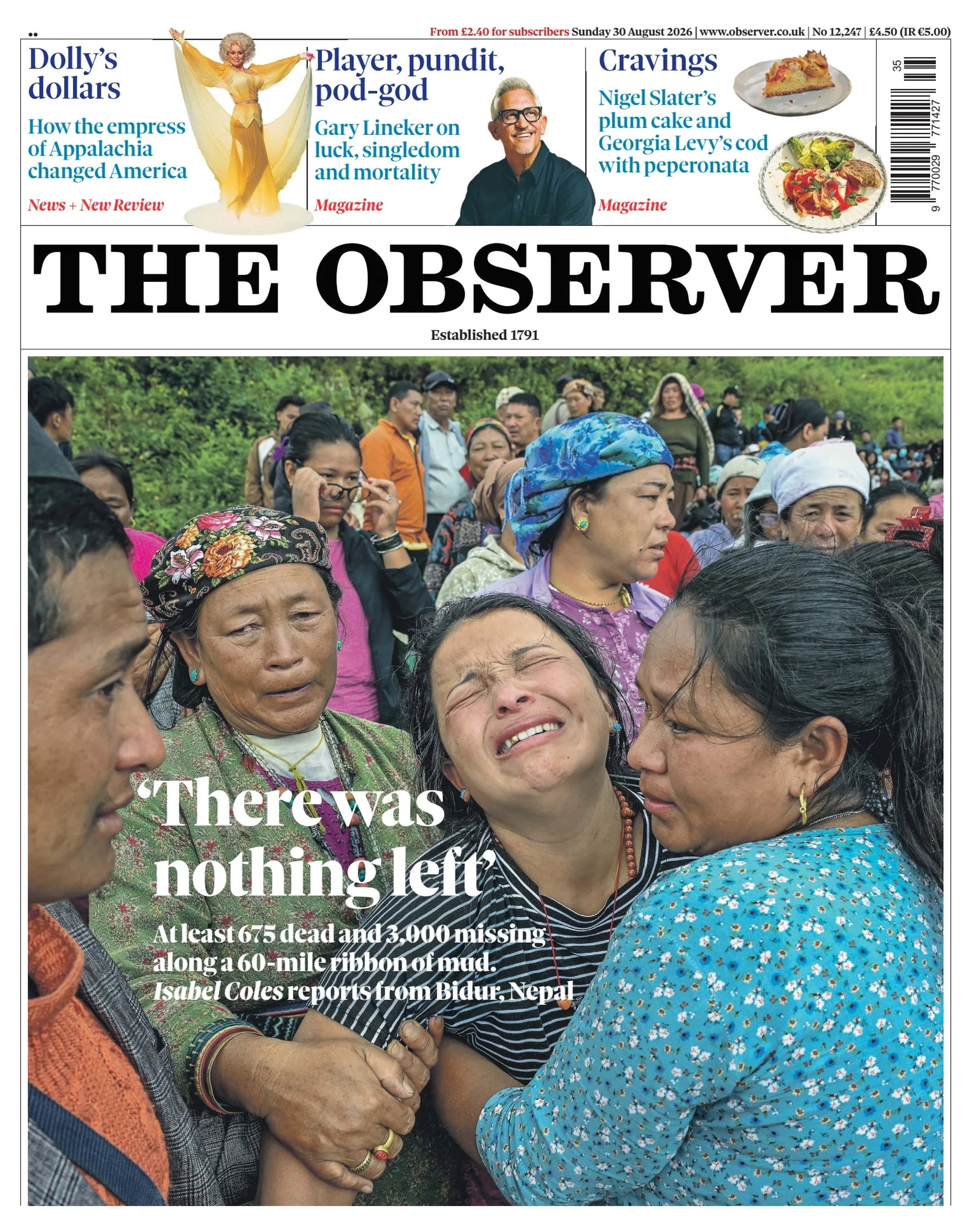
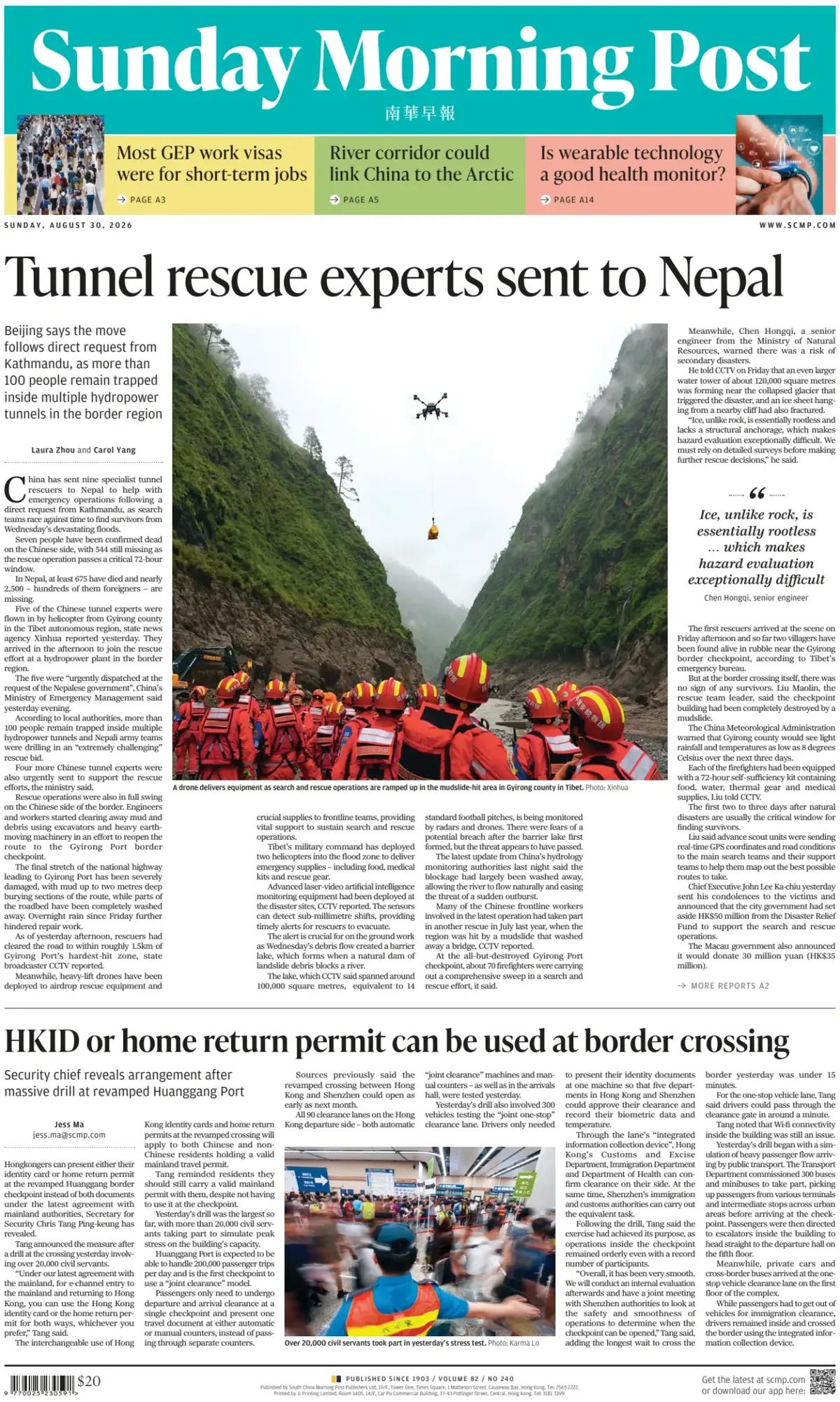
At least 752 people have died and more than 2,500 people are missing in Nepal, local officials say, after flash floods on Wednesday. In Tibet, the official death toll is 16, with 546 reported to be missing, according to Chinese state media. A new lake has formed in Tibet after a landslide occurred downstream of the existing barrier lake, Chinese state media says. A barrier lake is a body of water formed when debris dams up a river. An existing barrier lake, which formed in the aftermath of the flash floods, had reportedly been depleting naturally following concerns it could result in more flooding. Chinese Central TV (CCTV) says a monitoring drone detected a landslide on Saturday, which then resulted in debris forming a new blockage and a new barrier lake. A second flood could have serious consequences, even if it is smaller in scale than the first, a disaster risk expert tells the BBC
Russian forces struck a transhipment terminal in the southern Ukrainian city of Mykolaiv on Aug. 29, the Russian Defense Ministry claimed on Telegram. The attack caused a temporary power outage that shut down the port city’s public transport network. Refuelling vessels and unloading points for fuel and lubricants were also hit, the ministry said. Across the border in Russia, three people have been killed and nine injured in a Ukrainian drone attack in the Russian Belgorod region. According to local authorities. Three of the injured are in serious condition, the authorities said. In Kyiv, Russian missiles struck logistics warehouses Moscow claimed contained components for Ukraine’s domestically produced Flamingo cruise missiles, which Kyiv uses to strike oil terminals and logistics hubs in Russia. The Moscow Times could not immediately confirm that the affected facility was related to Flamingo manufacturing - Moscow Times
Ukraine President Volodymyr Zelensky said on Sunday that the death toll from Saturday's Russian drone strike on a munitions depot in the village of Myla, in the Bucha district near Kyiv, had risen to 38, with 20 people injured and four still missing. Writing on Telegram, Zelensky said "the extent of contamination in the area is significant" as emergency crews worked to extinguish the remaining fires and bomb disposal teams cleared the site. The strike triggered a massive detonation and secondary explosions that sent flames into surrounding residential areas, damaging around 50 buildings and forcing the evacuation of more than 380 residents, according to regional officials. Among the dead was Taras Didych, mayor of the nearby village of Dmytrivka. It is one of the deadliest single incidents Kyiv’s suburbs have seen since Russia’s full-scale invasion began more than four years ago. Ukrainian prosecutors have opened a criminal negligence investigation focused on why explosives were being stored so close to homes - Euronews
The Sound of No One Clapping: Europe won’t cheer Mark Carney out loud. Watch what it does instead
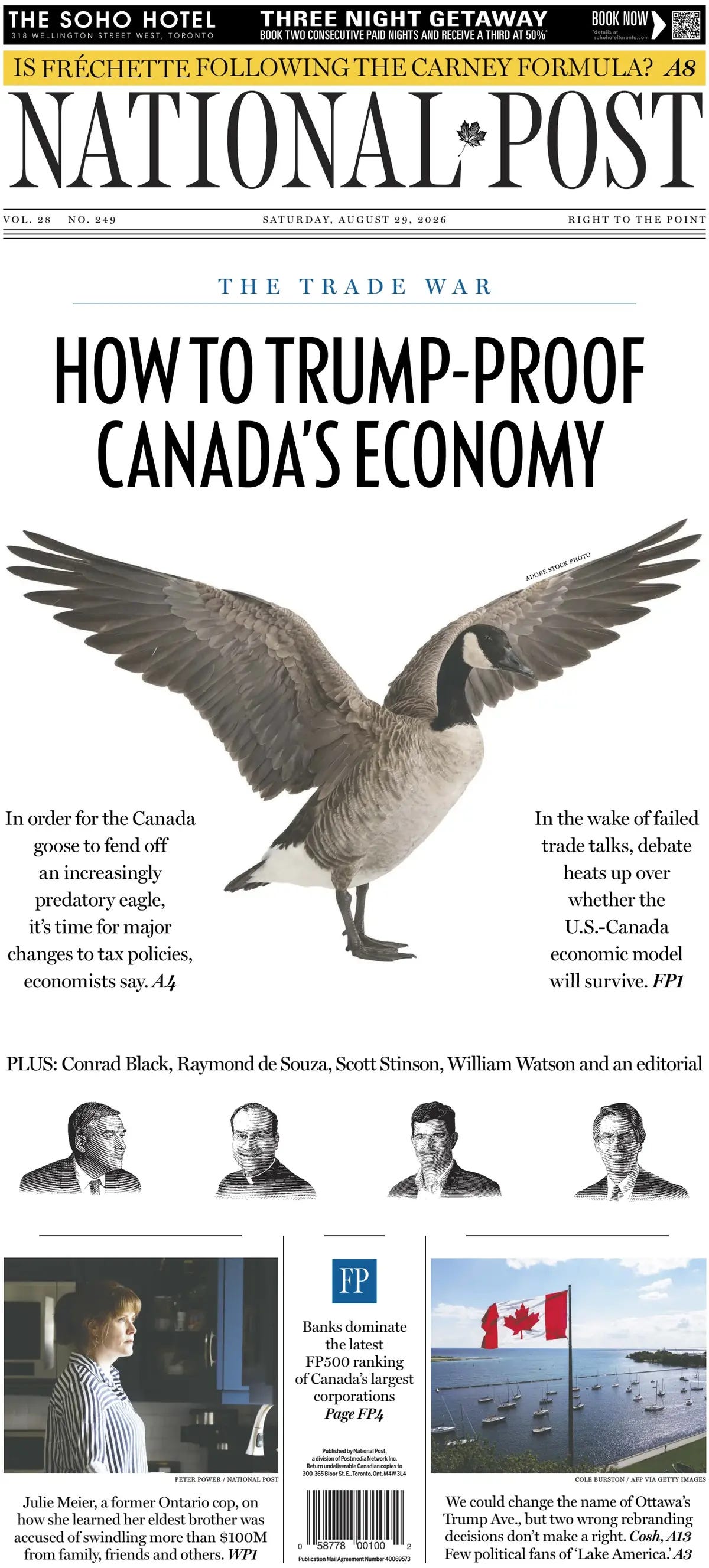
When Donald Trump’s 50 per cent tariffs on roughly $28-billion of Canadian goods took effect at one minute past midnight on August 22, Mark Carney did what almost no allied leader has done in eighteen months: he refused to sign. He called the tariffs a miscalculation, said Washington’s final demands were uneconomic and unfair, and announced Canada would match them dollar for dollar from September 8.
Then he waited. Across Europe, nothing happened.
Eric Reguly, the Globe and Mail’s European bureau chief in Rome, went looking for a senior politician anywhere on the continent willing to applaud, and found exactly one: Paolo Gentiloni, the former Italian prime minister and EU economy commissioner, who said Carney had delivered “the speech I would like to hear in Europe.” One, out of twenty-seven member states.
The silence is the story.
Reguly’s explanation is fear - not of Trump alone but of the men around him, Lutnick, Greer, Vance. Better the lopsided deal you already swallowed than a worse one you provoked. That reading is hard to argue with. Germany’s carmakers and Italy’s exporters don’t have Canada’s option of pivoting to another continent. Europe is the other continent.
I’d add a second reason: nobody knows which register works. Keir Starmer went further in ceremonial deference than any European leader and got a marginally less bad outcome, not a good one. Giorgia Meloni, once the bloc’s designated Trump whisperer, has taken to telling him publicly that the friendship has cost her at home. And yet Mark Rutte took obsequiousness at NATO to a place most thought beneath a secretary-general, and is broadly judged to have kept the Americans in the tent. Caught between those two data points, capitals do the safest available thing, which is nothing.
There is a third reading, and it’s the one worth watching. National leaders are quiet. The institutions are not.
Ursula von der Leyen has invited Carney to sit in the chamber for her State of the Union address in Strasbourg on September 16; he addresses the European Parliament himself the next day. As Reguly points out, the last American president to get that podium was Ronald Reagan, in 1985. An EU–Canada summit follows in Canada on October 29 and 30.
That isn’t a cheer. It’s calendar space, protocol, and a platform Washington cannot obtain - considerably more useful.
The money is moving the same direction. Reguly catalogues the shopping list: attack submarines from Germany’s ThyssenKrupp, early-warning aircraft from Sweden’s Saab, over-the-horizon radar from Australia, talks on Italian jet trainers, and an increasingly live question about the Gripen versus another tranche of F-35s. That question gets easier every time Trump reaches for the tariff baton.
If anyone still thought this was a negotiation about trade balances, Thursday settled it. Trump ordered Interior to rename Lake Ontario “Lake America” within thirty days, mused about doing the Atlantic and Pacific next, and said there was no message in it - before explaining the message at length. Carney noted the name comes from the Wendat Ontari’io and predates both Confederation and the Declaration of Independence.
You don’t rename your neighbour’s lake over a dairy quota. Which brings us to Reguly’s harder judgment, and he is right about it: Carney’s error wasn’t last week’s walkout. It was the year spent assuming a deal was available from a president driven by spite rather than economics.
Europe’s silence is not neutrality. It’s triage - every capital calculating separately how much noise it can afford. The applause, when it comes, won’t arrive as applause. It will arrive as signatures.
So the question isn’t who spoke up for Carney last week. It’s who is in the chamber in Strasbourg on September 17, and who is still in the room in Canada on October 30.
The journals…
One of the most insightful analyses I’ve seen. Thank you Michael.
Hopefully ALL the European leaders will read this article.
Some well outside the G20 have also raised the ire of the US administration by taking a public stand to ban imports from Israeli settlements in the occupied territories (Belgium, Ireland, the Netherlands, Norway, etc)
Michael Bociurkiw is incredibly lucid (as are Scott Lucas, Jeff Sachs, Glenn Diesen & Robert Reich).