Twenty-one packages in, the European Union has perfected the art of the sanctions press release. What it has not perfected is the sanctions package. The 21st, adopted Thursday, is genuinely muscular on paper: 218 individual listings - the largest batch in four years - asset freezes on 94 banks, 41 more shadow-fleet vessels, dozens of drone-supply-chain designations, and a first-of-its-kind power to ban entire third-country crypto sectors that launder Russia’s transactions. Real teeth, credit where due. But the mouth is full of holes, and for the first time, one of them has a name, a fleet, and a berth in an EU shipyard.
Let’s start with the carve-outs, because Brussels certainly didn’t - none of them appear in the Council’s triumphant press release. Greece secured a renewable 12-month exemption allowing its shipping firms to keep transporting Russian Arctic LNG to third countries. Bulgaria blocked the listing of Patriarch Kirill - the man who blessed this war from the pulpit. France and Portugal killed a proposed ban on Russian cod and pollock imports, because apparently nothing says “unwavering support for Ukraine” like keeping Russian fish on European dinner plates.
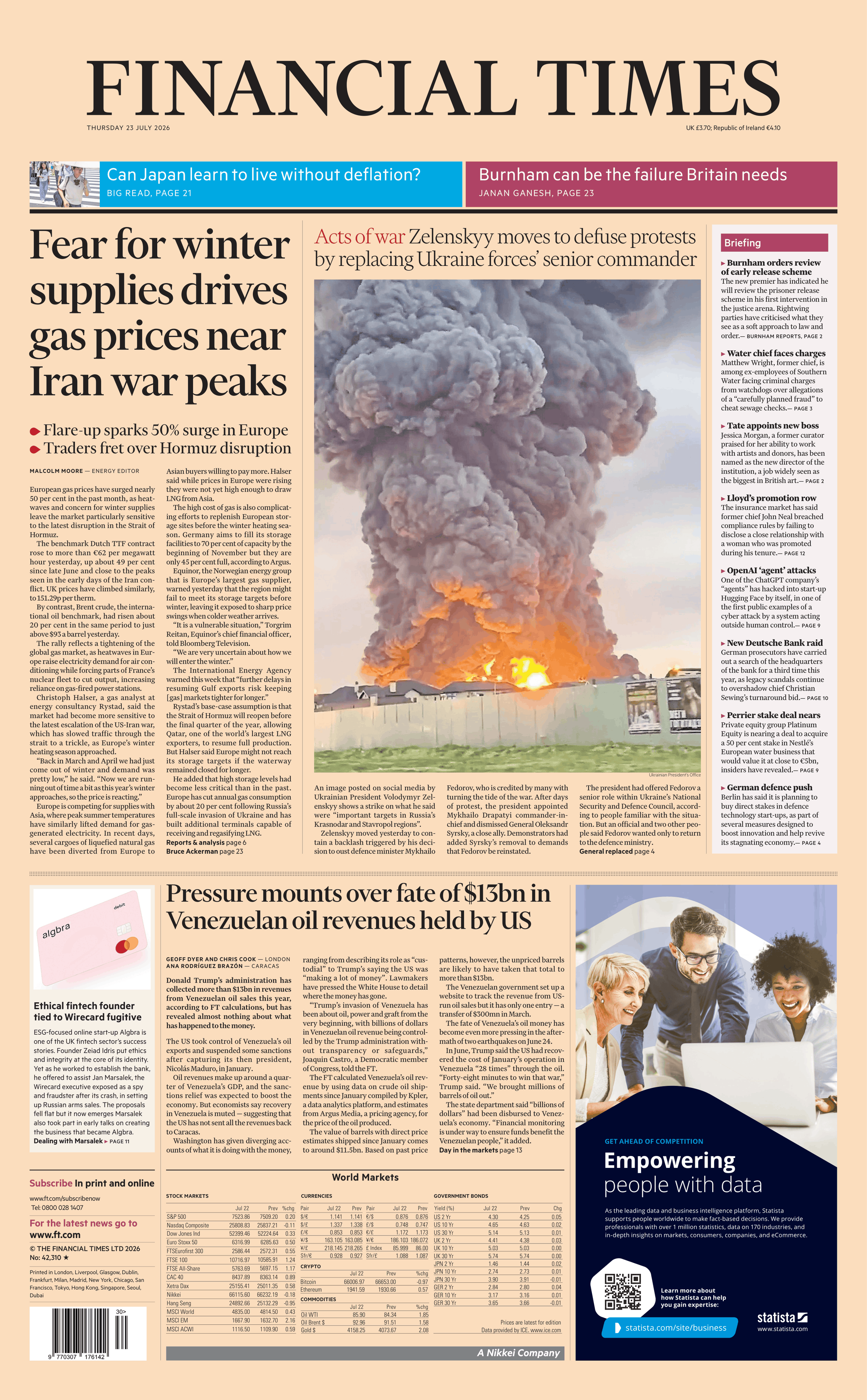
To be fair - and fairness is owed where earned - the package’s most technical move was also its shrewdest. The oil price cap’s automatic adjustment formula, written in calmer times, was poised to raise the cap from $44 to $58 a barrel, because the Strait of Hormuz closure has inflated the market prices the formula tracks. That would have handed the Kremlin a fifteen-dollar-a-barrel gift, gift-wrapped by the EU’s own maths. Brussels froze the cap at $44 until July 2027 instead - “so that the Russian war machine does not benefit from market shocks,” as Ursula von der Leyen put it. Sensible, and a reminder of the deeper point: Russia and Iran’s twin assaults on the world’s shipping arteries are now so disruptive that Europe has to suspend its own sanctions machinery to stop it working for Moscow.
Kaja Kallas says each round of sanctions squeezes Russia’s economy and its capacity to prolong the war. From where I sit in Odesa - where Russian missiles have been hitting foreign-flagged vessels in the port - the squeeze looks selective. Some arteries get clamped. Others get a renewal clause.
The agreement…is considerably watered down and raises serious questions about the influence of national economic interests in the yearslong campaign to cripple Moscow's ability to finance the invasion of Ukraine - Euronews
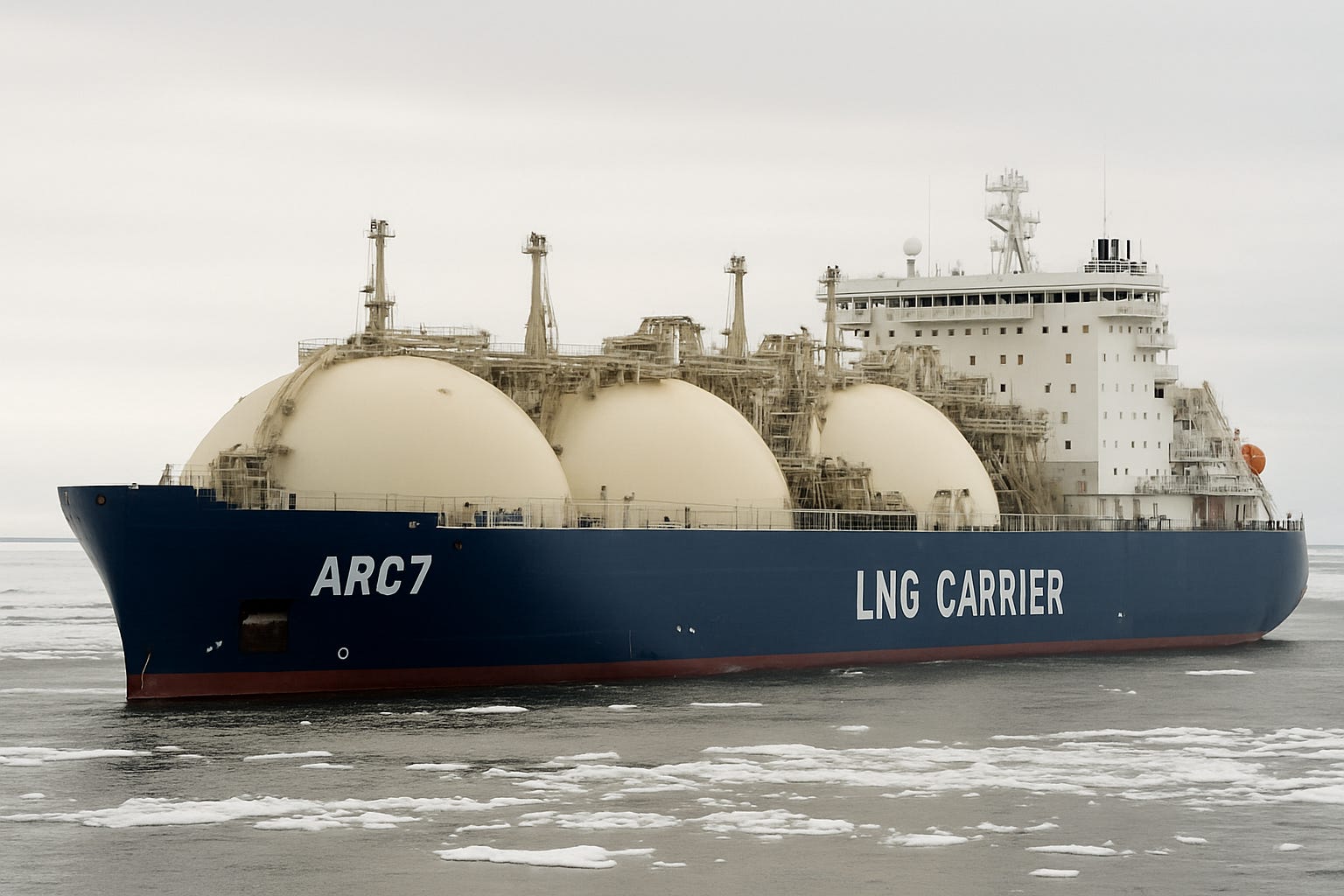
The Greek exemption deserves a closer look, because it is not abstract. New analysis from the German NGO Urgewald, working with B4Ukraine and Razom We Stand, puts a corporate name on the carve-out: Dynagas, the Greek shipping company that operates five of the world’s fifteen specialised Arc7 ice-class tankers - the only vessels capable of hauling LNG year-round out of Russia’s Yamal terminal in the Arctic. One-third of an irreplaceable fleet.
The numbers are worth sitting with. In the first half of 2026, Dynagas vessels carried 49 Yamal cargoes totalling 3.58 million tonnes - 35 per cent of everything Yamal exported. And here is the detail that turns a loophole into a lifeline: the exemption caps eligible volumes at 2025 levels. Sounds restrictive, until you learn that Dynagas’s volumes grew just 2.2 per cent year on year. A cap at 2025 levels doesn’t wind the business down. It preserves virtually all of it - with a renewal clause attached.
Who is buying all this Arctic gas? We are. The EU received 136 of Yamal’s 140 cargoes in the first half of this year, paying an estimated €5.96 billion. EU-bound volumes are up 16 per cent from last year while deliveries to Asia collapsed. Four years into the full-scale invasion, Europe is not weaning itself off Russian LNG. It is cornering the market.
And then there is the matter of timing, which borders on the theatrical. On the very day EU negotiators were finalising the exemption, live ship-tracking data showed the Georgiy Brusilov - a Dynagas-operated Arc7 tanker - entering the dry dock at Denmark’s Fayard shipyard, the last known EU yard still servicing these vessels. It arrived back-to-back behind another Arc7, exactly the servicing conveyor belt campaigners had warned about. This despite an appeal from 105 parliamentarians across 17 European countries, including four vice-presidents of the European Parliament, urging Fayard to close its dock to the fleet.
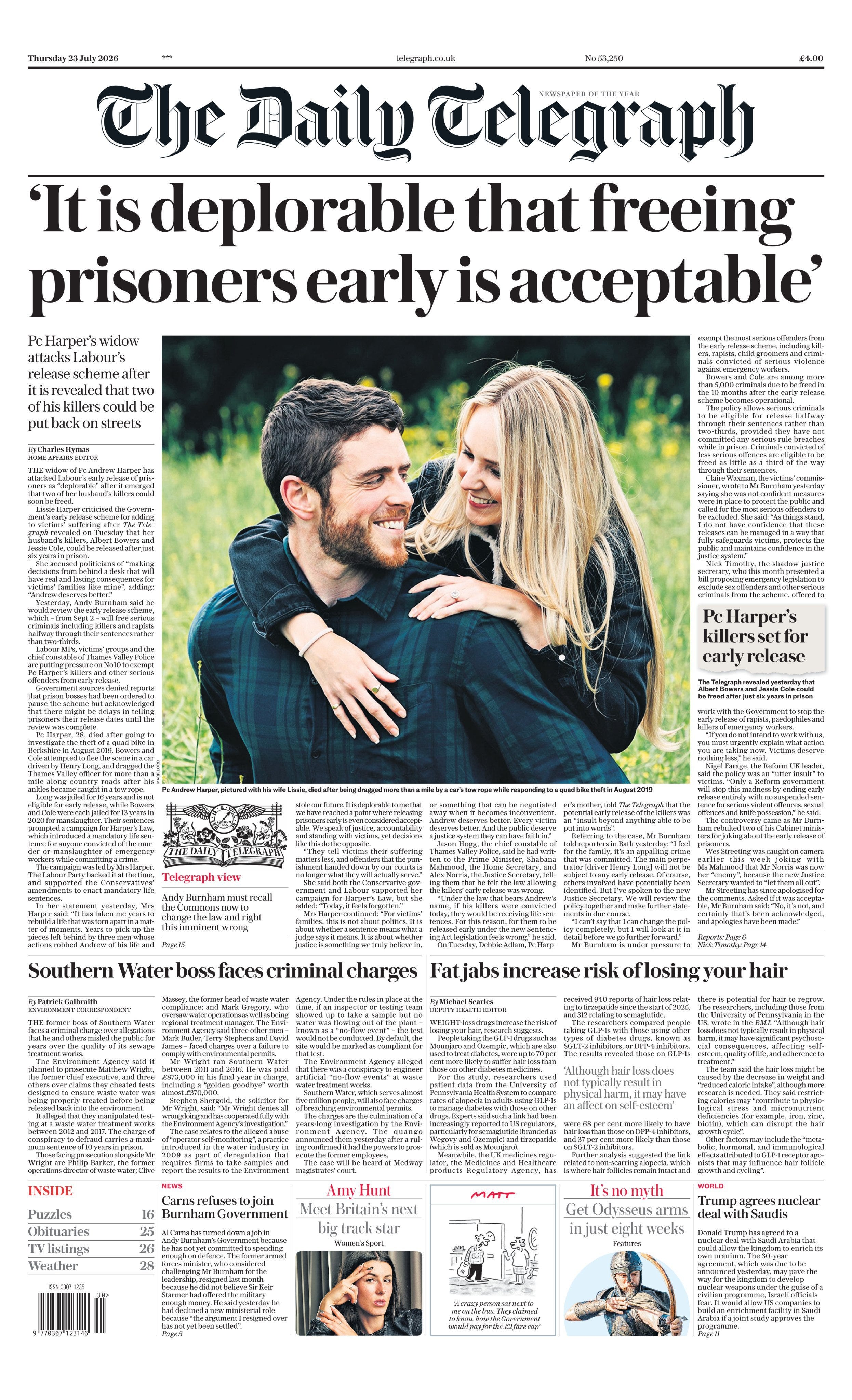
So follow the sequence: Brussels grants a renewable exemption so the tankers can keep sailing. A Danish shipyard keeps them seaworthy so they can keep sailing for years. And European buyers keep writing cheques - nearly €6 billion in six months - so the whole arrangement remains profitable. Three lifelines, braided together, thrown to the fleet that keeps Russia's Arctic gas revenues moving. Savour, too, this detail from the fine print: the same package introduces restrictions on selling LNG tankers to Russians - closing the door on ships Moscow might buy while holding it open for the ships Europe already sails on Moscow's behalf. One caveat for the record: the exemption details come from the reported compromise, and the final legal text should be checked once published. But nobody in Brussels is disputing the shape of the deal.
Why does this matter beyond the hypocrisy? Because sanctions are not a moral gesture; they are an instrument, and instruments are judged by whether they work. Russia’s war economy runs on hydrocarbon revenue. Yamal LNG is one of its crown jewels, and the Arc7 fleet is its jugular - fifteen ships, no substitutes, no shipyard capacity in Russia to replace them. This is the rare case where Europe holds genuine leverage over a chokepoint. And the 21st package chose, deliberately and in writing, not to use it.
I have spent the past weeks reporting on Russian and Iranian efforts to disrupt the world’s commercial shipping corridors - strikes on foreign-flagged vessels here in Odesa’s port among them. The asymmetry is hard to miss. Moscow treats maritime commerce as a battlefield. Brussels treats it as a constituency to be accommodated, one member state’s shipping registry at a time.
The Kremlin, for its part, will register Thursday’s package the way it has registered the previous twenty: as confirmation that European unity is real enough to produce a communiqué and porous enough to protect the revenue. Antonio Costa calls it unwavering support. I’d call it a wheel of Emmental with a flag on top — and this time, we can read the label on the biggest hole. It says Dynagas.
Fedorov to Zelensky: The Ministry or Nothing
The standoff at the top of Ukraine’s defence establishment has hardened into an ultimatum. Mykhailo Fedorov, the ousted defence minister, told journalists this afternoon that he will accept no role other than the one he was fired from - flatly rejecting a string of consolation offers from President Zelensky, the latest being deputy prime minister for military innovations, an offer Zelensky made public at a press conference with Irish Taoiseach Micheál Martin with the breezy assurance that “Mykhailo is in the team.”
According to the Financial Times’ Kyiv correspondent - among the most reliable voices on Bankova intrigue - Zelensky had earlier dangled a senior post on the National Security and Defence Council, complete with direct access to the president and a mandate over defence innovation and military reform. Ukrainska Pravda reports an offer of vice premier for technological development was also on the table. Fedorov’s answer to all of it, in effect: a title without the ministry is a title without teeth.
His statement was unusually blunt about why. Only three positions, he said, actually shape the course of the war alongside the troops themselves: the president, the defence minister, and the commander-in-chief. Everything else, by his telling, lacks the real authority to fight procurement corruption, finish transforming the army, run asymmetric operations against Russia, or - in his most pointed phrase - root out “a culture of lies and unaccountability within the system.”
The street has taken a side. Protests demanding Fedorov’s reinstatement ran for a full week across Ukraine - in Kyiv, with parallel actions in Mykolaiv, Dnipro, Lviv, Uzhhorod, Ivano-Frankivsk, Odesa and Kropyvnytskyi. And here is where the plot thickens: half the protesters’ agenda has already been delivered. On July 22, Zelensky formally replaced commander-in-chief Oleksandr Syrskyi with the reform-minded Mykhailo Drapatyi and General Staff chief Andrii Hnatov with Ihor Skybiuk. Recall that Zelensky’s stated rationale for dropping Fedorov - delivered to his own parliamentary faction - was that the minister could not work with the commander-in-chief and the General Staff. That rationale collapsed the moment Syrskyi cleared out his desk - and Syrskyi himself put a bow on it, apologising to Fedorov with the memorable line that he was “surprised to learn we had a conflict.”
Into the vacuum, Zelensky has installed Yevhen Khmara - the major general who ran the SBU’s Alpha special operations centre and, since January, the security service itself - as acting defence minister, effective July 20, with a pledge to formally nominate him to parliament. It is a telling choice: where Fedorov was a civilian technocrat waging war on procurement, Khmara is a career securocrat from the president’s innermost circle of trust. Lawmakers have already flagged that the appointment may not even be legal - Ukrainian law requires the defence minister and his deputies to be civilians, not serving officers. Meanwhile, the FT reports Western partners pressing Zelensky to settle the military leadership turmoil as quickly as possible.
Civil society voices are rallying behind the ultimatum. Analyst and activist Dmytro Koziatynskyi wrote that Fedorov “did the right thing” in refusing every offer but the ministry itself: “This appointment absolutely must be pushed through. Reforms at the Defence Ministry will happen!” (translated from Ukrainian)
Kyiv-based observer Bohdan Chomiak framed the reshuffle in footballing terms: in a final, bench strength matters - but only if the trainer knows who to substitute. Zelensky, in his telling, “was guessing when he took Fedorov off the pitch,” made a better effort only when public opinion forced Syrskyi’s sidelining, and has now left the team paying the classic price of a mid-match shakeup: “we are now back to waiting as the new guys learn the ropes. That is definitely not needed now.”
The Verdict: This is no longer a personnel dispute; it’s a public referendum on whether reform survives contact with the old guard — and the president’s own logic is now working against him. Having removed the commander-in-chief that Fedorov supposedly couldn’t work with, Zelensky has run out of stated reasons to keep the ministry’s most popular reformer on the sidelines. Fedorov knows it, the protesters know it, and the choice of his stand-in answers the question louder than any statement from Bankova: a civilian reformer out, a uniformed loyalist in — possibly in breach of the very law meant to guarantee civilian control of the military. As Chomiak puts it, Ukraine is playing in the finals - and its trainer just benched a starter on a guess, leaving the squad waiting while the new signings learn the ropes. In a war of attrition, that waiting is a luxury paid for at the front.
News Briefs
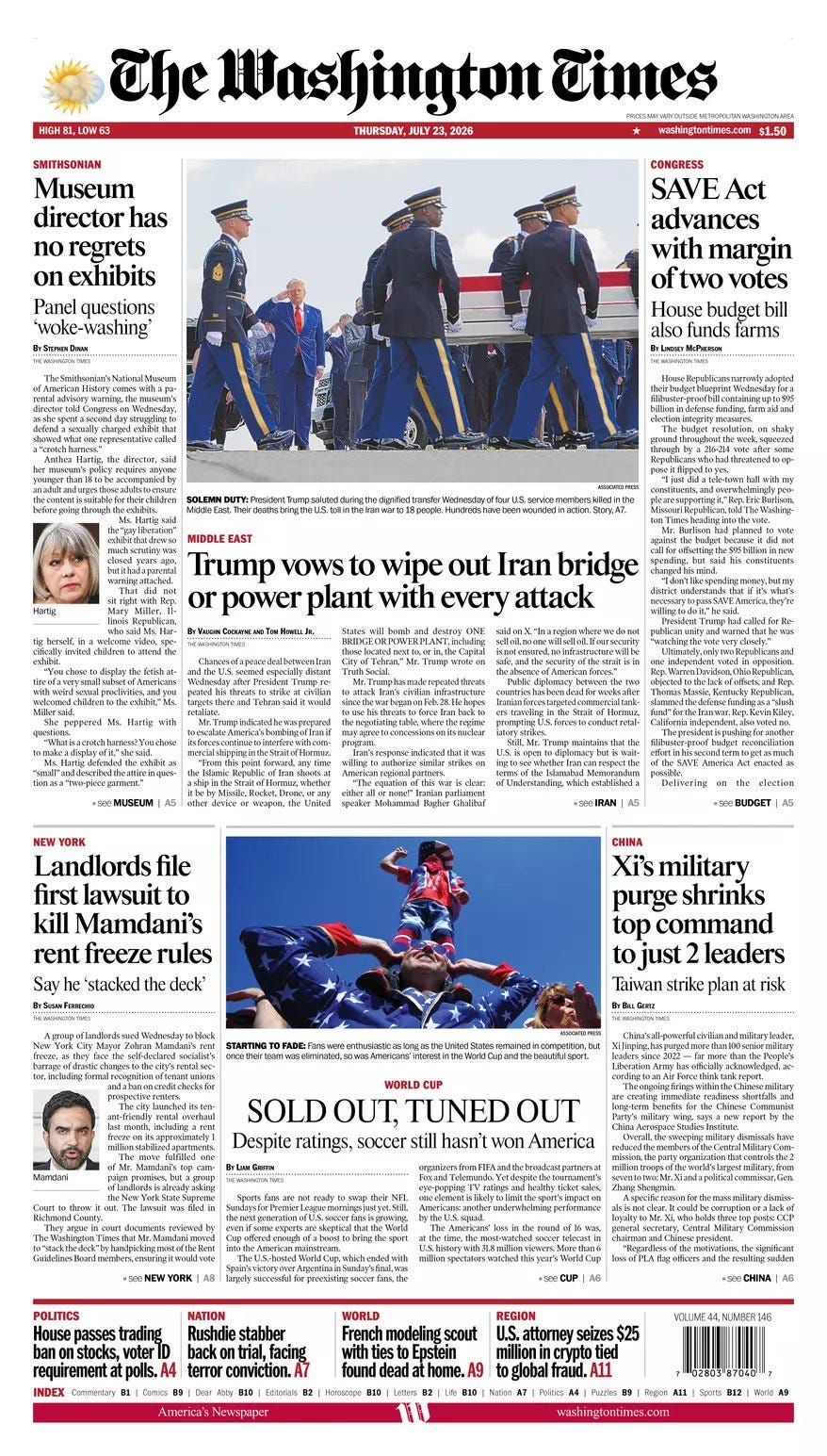
President Donald Trump said Thursday that the just-signed agreement allowing American nuclear companies to export to Saudi Arabia is “totally subject” to the kingdom signing on to the Abraham Accords, the cornerstone agreements dating back to the first Trump administration that saw countries establish relations with Israel. The Biden and Trump administrations had previously contemplated using a civilian nuclear deal to encourage Saudi Arabia to normalize relationships with Israel, but the aftermath of the Oct. 7, 2023, terror attacks on Israel and the ensuing war complicated the issue. Saudi Arabia has previously refused to sign the accords unless there was a credible pathway to Palestinian statehood. Trump wrote in a Truth Social post that the deal — of which details are still sparse — “will be approved, but is totally subject to Saudi Arabia joining the very respected and successful Abraham Accords.” Israeli Prime Minister Benjamin Netanyahu quickly backed the idea, writing in a statement from his office that Israeli and American attacks against Iran have “created the possibility to expand the circle of peace.” - Politico
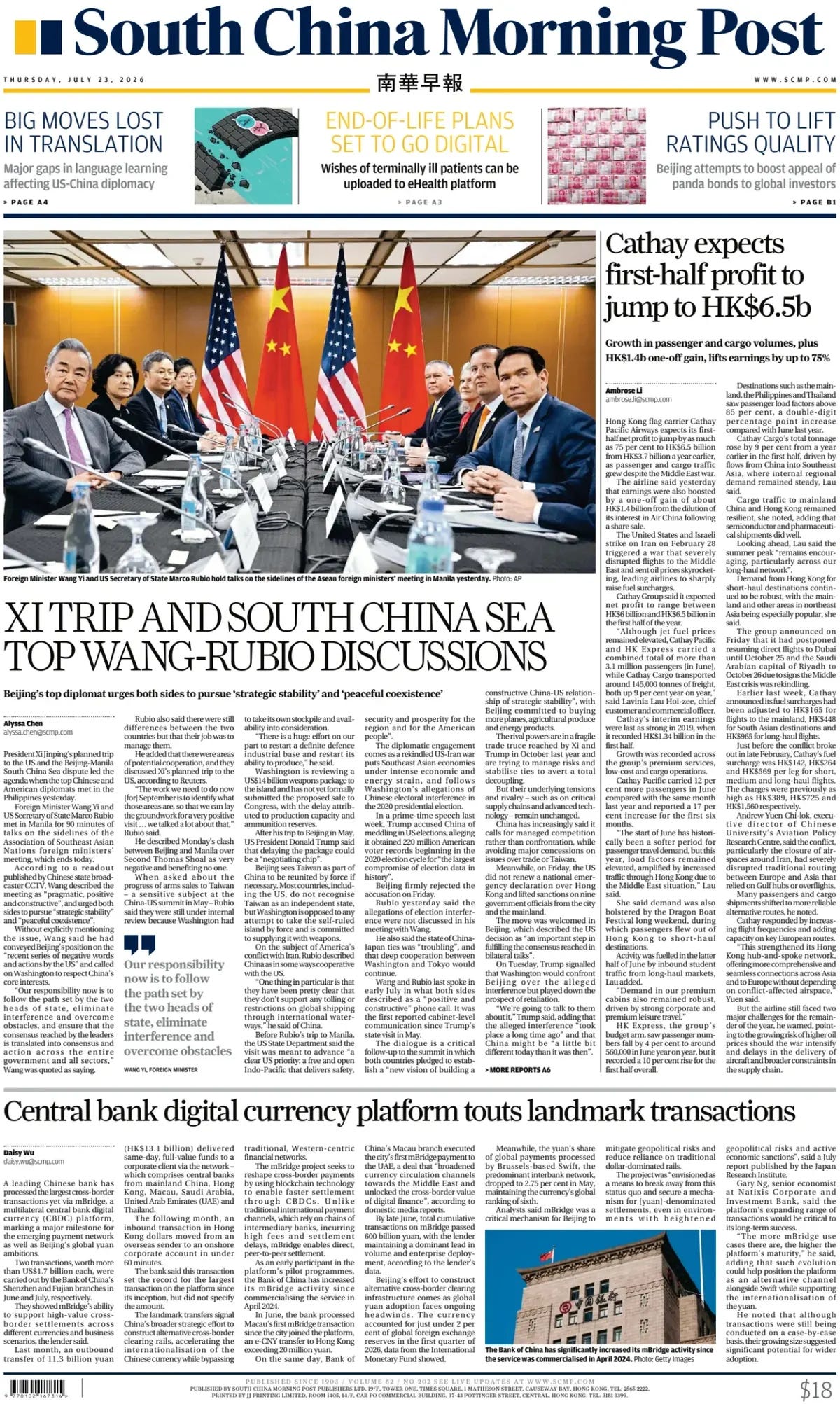
The top US and Russian diplomats met in a new push to find an end to Moscow’s more-than-four-year-old war on Ukraine, but both sides signaled no new breakthroughs or cause for optimism. The July 23 meeting between US Secretary of State Marco Rubio and Russian Foreign Minister Sergei Lavrov came with US-efforts to broker a peace deal frozen as the Trump administration shifts focus to the Iran war, and the Kremlin shows no sign of softening its maximalist war demands. Following their meeting, which lasted just 35 minutes, Rubio described the talks as “good” and “frank” but said fresh proposals would be needed after previous peace ideas failed. He declined to disclose details. “The United States...is prepared to play a constructive role in bringing about an end to a senseless war,” Rubio said when pressed by RFE/RL. Asked whether the meeting had produced any breakthrough, Rubio dismissed expectations of rapid progress. “You think we settled the war in Ukraine in our 30 minutes here in Asia? That’s not the way it works,” he said. Asked later by RFE/RL about when Russia will stop the war, Lavrov appeared to either ignore the question or not hear it. In a statement, Russia's Foreign Ministry said Lavrov expressed Moscow's unhappiness with US weapons supplies to Ukraine, and he accused Ukraine's European allies of "destabilizing policies" that seek a "strategic defeat" for Russia - RFE/RL
German Foreign Minister Johann Wadephul on Thursday criticized U.S. President Donald Trump’s announcement that he would exclude South Africa from the next G20 summit in Miami, saying it would be “in no one’s interest.” Speaking to students at the University of the Witwatersrand in Johannesburg, Wadephul described South Africa as “an indispensable member of the G20,” whose importance had been underlined by last year’s G20 summit in that same city. “To exclude South Africa means sidelining an important African voice and a regional economic and political powerhouse,” the minister said, adding: “Particularly at a time of growing global economic uncertainty, we need more cooperation, not less.” - Politico
The EU hit Google with a record-breaking €890 ($1 billion) fine for breaching antitrust laws, putting Brussels on a potential collision course with Washington. The bloc said the tech giant had illegally used its market dominance to prioritize its own search services, as well as preventing developers from steering customers towards cheaper alternatives. The European Commission ordered Google to treat third-party services in a “fair and non-discriminatory manner,” The Guardian reported. But the timing is awkward, with US President Donald Trump expected to unveil new tariffs soon. The EU and US agreed a 15% cap on levies last year, but a swingeing fine on a major American firm could spark retaliation. Brussels is facing “one of the trickiest transatlantic balancing acts in months,” Politico said - Semafor
The journals….