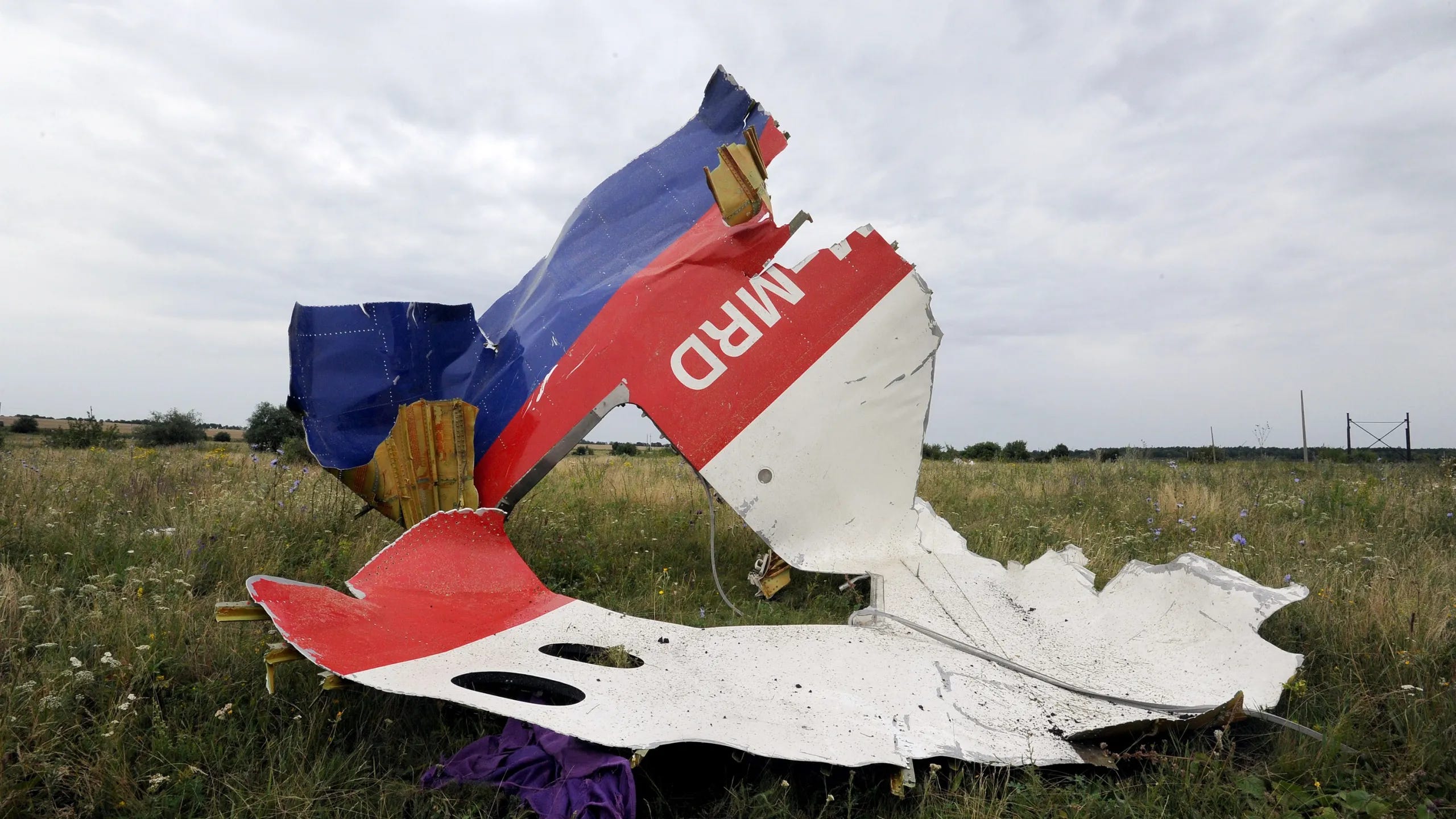
ODESA, Ukraine — Twelve years ago today, a Russian Buk missile blew Malaysia Airlines Flight 17 out of the sky over eastern Ukraine, killing all 298 aboard - 80 of them children. The next day, I was part of the first international team to reach the crash site - unarmed monitors as part of the Organization for Security and Cooperation in Europe’s (OSCE) Special Monitoring Mission to Ukraine negotiating access checkpoint by checkpoint past the very gunmen whose side had just committed one of the defining crimes of our era.
The verdict, twelve years on: the world hit snooze.
Not one perpetrator is behind bars. Three men were convicted in absentia by a Dutch court in 2022; Moscow shrugged. International bodies - the European Court of Human Rights and the UN’s own aviation watchdog, — the International Civil Aviation Organization (ICAO) - have since ruled Russia responsible. The Kremlin’s response has been to deny, deflect and, since February 2022, to place the crash site itself behind the front lines of its full-scale war. Families who still have nothing to bury but a fragment of bone - and some who have not even that - cannot so much as visit the sunflower fields near Hrabove in Donetsk Oblast where their loved ones fell. Justice delayed, closure denied, grief weaponized.
(Legal experts have told me that ongoing civil suits related to MH17, if successful, could make Moscow liable for huge compensation claims filed by the relatives – which in turn could lead to seizure of Russian assets overseas, I wrote for CNN Opinion in 2022).
People often ask how our small OSCE team coped with the enormity of what we witnessed in those fields. The answer: knowing we were providing families with crucial bits of information in those chaotic first days, when no one else could. It is for those families that this anniversary must never become a footnote.
But here is the part that should concern every one of you reading this from an airport lounge: the skies have not become safer since July 17, 2014. They have become considerably more dangerous.
The encroachment on civil aviation’s safe spaces
In the past few years, authoritarian leaders and warring belligerents have been steadily encroaching on the spaces where civilian airliners fly. More conflicts are running simultaneously than at any point in recent memory. Sophisticated weaponry - the kind once reserved for state militaries - is finding its way into the hands of non-state actors. And airline executives, with few exceptions, appear to be sleepwalking their way through the crisis.
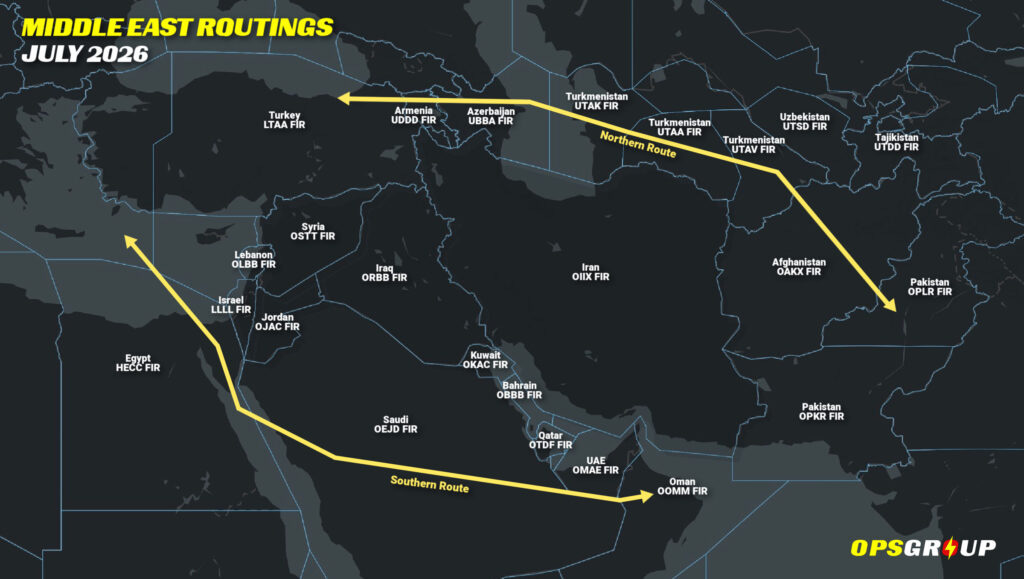
Consider the geography from where I write. Russia’s war on Ukraine spills routinely onto the Black Sea and into neighbouring EU states such as Poland and Romania - no exaggeration; I have covered it from this coastline. To the south, the conflict with Iran has seen strikes reach as far as Jordan and even Turkey, while swathes of Gulf airspace carry unsafe designations. Airlines are threading ever-narrowing corridors between two simultaneous wars, with dispatchers and pilots left to make judgment calls that should never rest on their shoulders alone.
All of this is happening in a vacuum. The bodies responsible for keeping the skies safe - ICAO and the industry’s own International Air Transport Association (IATA) — have done precious little to help operators navigate through increasingly hostile airspace. After MH17 there were solemn promises of better threat-intelligence sharing and clearer conflict-zone guidance. Twelve years later, risk assessment remains largely a patchwork: each airline, each national regulator, improvising its own red lines.
And don’t expect the countries beneath these air corridors to voluntarily close their skies. Hundreds of aircraft overfly conflict-adjacent states every day, and the overflight fees they generate are simply too lucrative to shut off - even temporarily. When safety competes with revenue, revenue has a distressing habit of winning.
My advice to the travelling public: do your own due diligence
Airlines frequently tell us that safety is their number one priority. Take that with the appropriate grain of salt - because at the end of the day, it is up to each and every one of us to ensure we reach our destinations safely. Before you fly, check your airline’s safety record on free, online resources such as the Aviation Safety Network. Then verify whether your planned routing traverses - or skirts close to - a conflict zone: Safe Airspace, the conflict-zone risk database run by OPSGROUP, is the gold standard, and live trackers such as Flightradar24 or FlightAware will show you the corridors your carrier actually uses. If a routing gives you pause, ask the airline directly, or vote with your wallet and book a carrier that takes the longer way around. A few extra minutes of homework - or of flight time - is a small price against the lesson of MH17.
Twelve years ago, 298 people boarded a flight to Kuala Lumpur - families off on holiday, researchers bound for the world AIDS conference in Melbourne (like the Dutch AIDS activist and feminist anthropologist Martine de Schutter) - trusting that the system would keep them safe. The system failed them. It has been failing quietly ever since.
We have not forgotten. We never will. 🌻
Work should continue on fixing an aviation system that is so ill-suited to breaking news developments and conflicts that it places passengers’ lives at risk. If proper guidelines for pilots were put into place after the tragic crash of MH17, it’s possible that Ukrainian Airlines International PS752 wouldn’t have taken off from the international airport in Tehran in January 2020 to be shot down by the Iranians, killing 176 on board - from my OpEd for CNN Opinion on Nov 28, 2022 (read it in full here
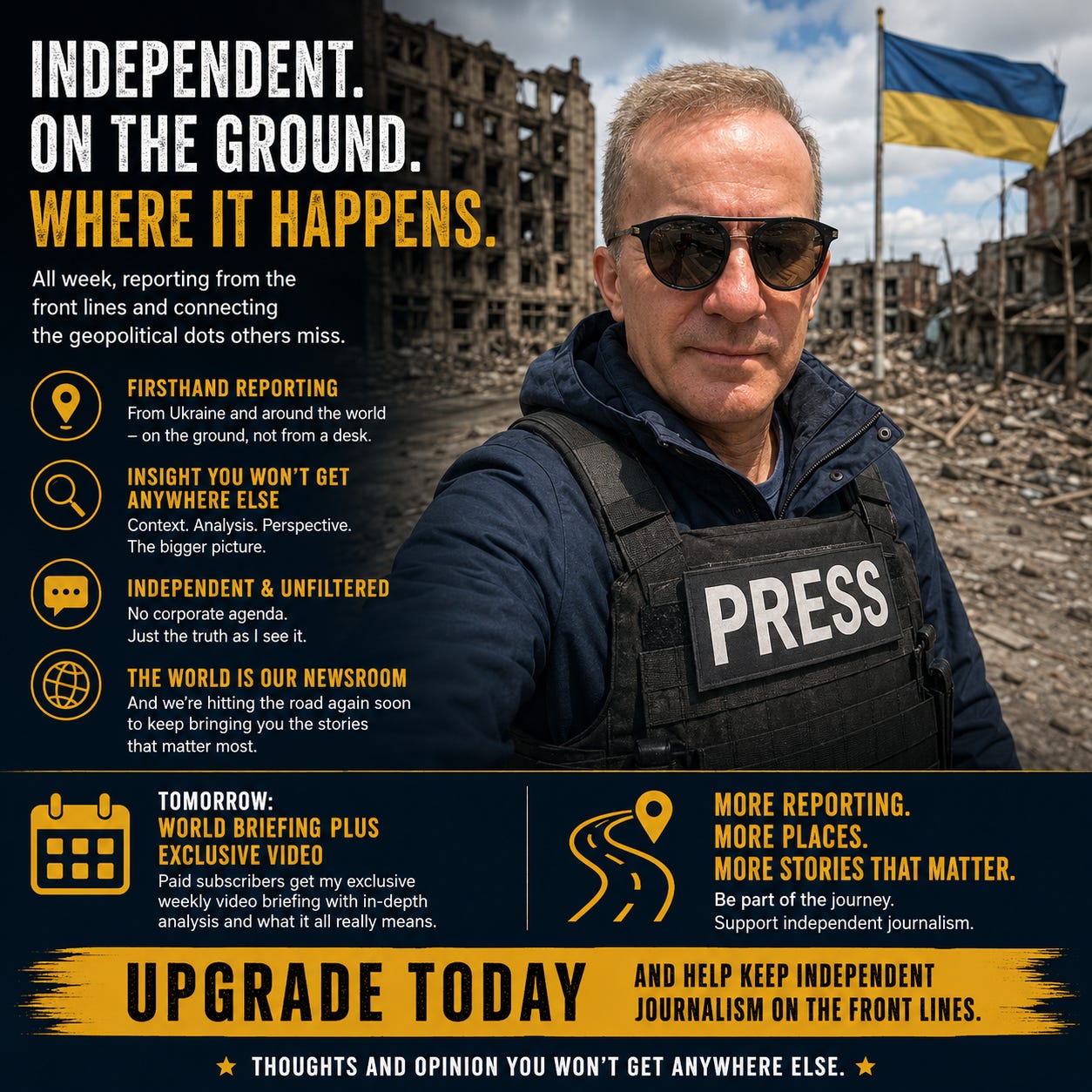
This week alone, I’ve been reporting from Ukraine’s front lines—speaking to the people living through the war, observing events firsthand, and connecting the geopolitical dots from where they actually happen.
Independent reporting takes time, travel, and resources. It also brings perspectives and analysis you simply won’t get from studio discussions or headline summaries.
Tomorrow, paid subscribers receive my exclusive World Briefing Plus video, where I step back from the daily headlines to explain what really matters, what’s being missed, and where events are heading next.
We’ll be back on the road again soon because the world doesn’t stop—and neither does this reporting.
If you value independent journalism that goes beyond the headlines, now is the perfect time to upgrade and help keep this work going.
Upgrade today and join us behind the scenes.
Thailand Is Doing Other Governments' Dirty Work
Thailand is once again being asked to choose between its international legal obligations and keeping Beijing happy - and the timing could hardly be worse for the man whose life depends on the answer.
The Foreign Correspondents’ Club of Thailand has voiced deep concern over the months-long detention of Bai Zhaodong, a veteran Chinese investigative journalist now facing possible extradition to China. Bai, who spent his career exposing official corruption - most recently for Caijing magazine in Beijing - fled China in November 2023. The Public Security Bureau in Yulin issued an arrest warrant for him in September 2024 on extortion allegations, and Beijing has now formally requested his “prompt return,” with the Chinese Foreign Ministry telling Reuters he is suspected of extortion and bribery.
Human rights groups aren’t buying it. Reporters Without Borders and Safeguard Defenders say Bai exposed a sprawling corruption and financial fraud network implicating local officials and higher-ranking figures in the Chinese Communist Party - reporting that brought surveillance, interrogations and detentions before he fled. They warn the charges are politically motivated and that forcible return would expose him to arbitrary detention and possible torture. Friends say Bai disappeared last November; in the single video call they’ve had with him since, he appeared to be in detention, visibly thinner and stressed. RSF says he is being held at the Suan Phlu immigration detention centre in Bangkok.
The FCCT is asking Thai authorities to disclose the conditions of Bai’s detention and to refrain from extraditing him while legitimate concerns remain over his treatment.
The diplomatic optics are awkward, to put it mildly: Thai Prime Minister Anutin Charnvirakul is in China through Monday and expected to meet President Xi Jinping - with an extradition request sitting on the table.
And Bai’s case doesn’t exist in a vacuum. Bangkok has developed an unsettling habit of lending its legal machinery to foreign governments looking to silence their critics - what rights groups call transnational repression. Last year, Thailand deported 40 Uyghurs to China at Beijing’s request, drawing international condemnation. And in a case that alarmed press freedom advocates across the region, Australian journalist Murray Hunter was arrested at Bangkok’s main airport at the behest of Malaysian authorities and prosecuted under Thai criminal defamation law - the first known instance of that law being wielded on behalf of a foreign government - over blog posts criticizing Malaysia’s internet regulator. Thai Lawyers for Human Rights branded it a “transnational SLAPP,” and human rights and labor activist and FCCT board member, Phil Robertson, accused Thai authorities of letting themselves be “played for fools.” Hunter escaped with an apology and a travel ban; Bai Zhaodong, facing return to a state that rights groups warn could subject him to arbitrary detention, torture and enforced disappearance, may not be so fortunate. At least three other Chinese dissidents reportedly sit alongside him at Suan Phlu.
The question is whether Thailand sees itself as a haven governed by the principle of non-refoulement - or as a convenient outsourcing hub for other governments’ vendettas. China, it bears repeating, sits near the bottom of every credible press freedom index and routinely jails journalists on questionable charges. The FCCT is right to demand answers. The world should be watching whether Bangkok gives them.
News Briefs
Azerbaijan will soon resume direct flights to Russia after they were suspended earlier over the deadly downing of an Azerbaijani passenger jet in late 2024, the South Caucasus country’s foreign minister said Friday. Azerbaijan Airlines halted flights from Baku to 10 Russian cities after a Russian surface-to-air missile struck an Embraer E190 traveling from Baku to Grozny, the capital of Chechnya, on Dec. 25, 2024. The heavily damaged aircraft attempted to divert but crashed in western Kazakhstan, killing 38 of the 67 people on board. The diplomatic crisis caused by the tragedy was quietly resolved in April, when Moscow and Baku reached an agreement for Russia to formally acknowledge the role of its air defense system and pay financial damages to the families of the victims. During talks with Russian Foreign Minister Sergei Lavrov on Friday, Azerbaijan’s Foreign Minister Jeyhun Bayramov said the suspension of direct flights between the two countries would be lifted sometime soon but did not give an exact date - Moscow Times
Ukraine fought Russia’s more than 4-year-old invasion under an interim defense minister Friday, a day after a government reshuffle exposed a deep split between the military’s old guard and young innovators over how to fight the war. President Volodymyr Zelenskyy’s major shake-up of his government on Thursday, which included the dismissal of Mykhailo Fedorov as defense minister and the appointment of a new prime minister, unsettled the country’s military leadership and triggered a public outcry. It tested Zelenskyy’s authority and was an unwelcome difficulty after Ukraine in recent months gained traction in the war. Zelenskyy said he had asked Maj. Gen. Yevhen Khmara, acting head of the state’s security service and a highly regarded special operations expert, to take over the defense minister’s duties. Zelenskyy said late Thursday he would ask Parliament to formally approve Khmara’s appointment as defense minister, as required by law. That step could be delayed by bureaucratic hurdles, however. Ukrainian law requires the defense minister to be a civilian, so a serving soldier or security service officer must leave active duty before being formally appointed. Also, lawmakers will be on summer recess through mid-August. It was not clear whether Khmara would have enough votes in Parliament to be confirmed in the job - AP
Riot police had to be deployed today as demonstrators gathered to protest against the visit of US Ambassador to Italy, Tilman Fertitta, who arrived aboard his 117-metre megayacht, in Venice. According to organisers, the protest opposed Fertitta's visit during the city's annual Redentore festival and criticized mass tourism, the influence of billionaires on Venice, and US policies under President Donald Trump. According to the Financial Times, the flamboyant envoy is on a two-month diplomatic outreach tour of Italian seaside towns on his private $450mn yacht. Fertitta made news recently for acquiring casino giant Caesars Entertainment for $6 billion cash and assuming $12 billion in debt. This significant deal expands Fertitta's empire, which already includes Golden Nugget casinos, numerous restaurants, and the Houston Rockets - Reuters/Forbes
World Cup organizers said Friday they were "monitoring closely" the smoke gripping swaths of the United States ahead of the tournament's weekend final in New Jersey. “There’s been discussion about it, and we have somebody with the National Weather Service that sits in FIFA headquarters there, so we’re monitoring closely,” Andrew Giuliani, White House World Cup task force executive director, told a briefing. Officials urged people to stay indoors or wear masks outside as air quality reached unhealthy to hazardous levels, prompting concerns about teams training outdoors. “These are high-level athletes who are moving a lot of air through their lungs during every practice in every game, and really they shouldn’t be practicing outside if the air quality levels are at hazardous sort of ranges for wildfire-related air pollution,” said Dr. Courtney Howard, an emergency room physician and Global Climate and Health Alliance official. On Thursday, Spain trained outdoors in northern New Jersey ahead of the World Cup final despite hazardous air quality caused by smoke from Canadian wildfires. Argentina stayed in the Atlanta area to train less than 24 hours after coming from behind to beat England and reach a second consecutive World Cup final. Marietta, Georgia, lies far enough south to avoid the wildfire smoke drifting southeast from northern Ontario, which has prompted air-quality warnings across the US Midwest and Northeast - Euronews
Papua New Guinea will close Taiwan’s trade mission in Port Moresby, saying Taiwan’s presence was “no longer recognised or required”. PNG’s foreign minister said it marked a “vital” step towards deepening trust with Beijing and reiterated PNG’s commitment to the One China policy. An expert says PNG is providing reassurance to China after a landmark defence alliance with Australia came into force last month - ABC
The journals…..