The Roast That Wasn’t
The Washington press corps got its “do-over” correspondents’ dinner Friday night - and Donald Trump got his revenge. Fifteen years after Obama and a ballroom of journalists laughed him into a grievance that never healed, Trump returned the favour at the Waldorf Astoria (the gaudy former Trump hotel, no less), delivering more than an hour of insults, crude jokes, and score-settling before a scaled-down crowd of roughly 700 still processing April’s assassination attempt at the Washington Hilton.
He mocked late-night hosts as “sick” and “angry.” He singled out CNN’s Kaitlan Collins, again (thank goodness, CNN dished it back live to Trump). He celebrated the friendly billionaires now consolidating ownership of America’s networks. And for the finale - the “scoop,” as he called it - he donned a bright red “Trump 2028” cap and declared his intention to run for a term the Constitution flatly prohibits. The room’s response was stunned silence curdling into scattered titters. That was the point. He wasn’t there to be funny; he was there to make the press corps sit still and take it.
And sit still they mostly did. The lone act of visible dissent we’re aware of came from Puck’s Julia Ioffe, who appears to have slipped out before the evening ended - posting a selfie video from outside the hotel in which she made clear she’d attended only at her employer’s insistence. Ioffe, notably, had been scathing about the first dinner too. That one reporter’s quiet exit may stand as the sum total of the room’s resistance says everything about an institution whose colleagues have been subpoenaed, sued, doxxed, and frozen out of the Pentagon - and still applauded politely while power announced, to their faces, that it intends to stay past its constitutional expiry date.
The evening’s most telling split-screen came courtesy of the outgoing WHCA president, Weijia Jiang of CBS News. Her speech was genuinely moving - the daughter of Chinese immigrants who ran a restaurant in West Virginia coal country, watching Connie Chung on the evening news and daring to imagine herself in that chair, an arc that ended with her telling Trump to his face that the First Amendment “is a done deal” and drawing the distinction that matters: criticizing the press is healthy; trying to undermine it is precisely what the founders feared. And how did the president receive this quintessentially American story, seated just feet away? Judging by the countless clips ricocheting around social media - with visible boredom, eyes drooping, at moments seemingly fighting sleep. The immigrant’s daughter defending the Constitution; the president who swore to uphold it, nodding off beside her. If you want one image that captures where the American press and the American presidency stand in mid-2026, that’s the frame.
Nick Bryant, the former BBC US correspondent who has watched Trump’s speeches for a decade, likened the performance to a high-speed version of Biden’s fateful debate - minus the decency - and said it raised, again, the question of the president’s mental fitness to serve out his term. The decline, he noted, is becoming more evident. Bryant’s sharper point was institutional: why platform a serial abuser at a celebration of journalism? Access isn’t the excuse - Trump craves press attention; it feeds him. And abstention is hardly a radical idea: some outlets have had standing policies against attending for years, most notably The New York Times, which has kept its journalists away since 2008. As then-Washington bureau chief Dean Baquet explained it, the dinner had evolved into a celebrity-driven spectacle in which press and government appear to shed their adversarial roles for a night - sending readers exactly the wrong signal about whose side journalists are on. That was the Times’ judgment eighteen years and three presidents ago, when the man at the head table merely tolerated the press rather than sued it. Bryant’s conclusion is hard to argue with: the event has run its course.
Excruciating indeed, as I replied to his post. The WHCA had a rare second chance here - a rescheduled dinner, a clean slate, every reason in the world to change course - and it could have replaced Trump at the podium with a passionate defender of press freedom. Imagine that evening instead: Nobel Peace Prize laureate Maria Ressa, a jailed Ukrainian reporter’s family, anyone who has paid a real price for the work this dinner claims to celebrate. Instead, the association handed its stage back to the man suing, subpoenaing, and sidelining its own members - and let him use it as a weapon.
As Jim Acosta - the former CNN chief White House correspondent said: “In my view, the WHCA should have used the cancellation of the first dinner as an excuse to wave off any talk of a replacement event. Just too risky. It would have been perfectly acceptable to hand out the awards and scholarships and table the whole matter until next year.” Acosta, who famously sparred with Trump from the front row of the briefing room - called the dinner a disgrace and urged journalists to get up and walk out. Almost nobody did.
If you’re determined to watch, the full speech is on YouTube - though be warned: he rambles on, largely incoherently, for over an hour, and as Bryant put it, there are far better ways to spend that hour of your life.
Acosta’s darker warning is the one worth sitting with: this speech wasn’t just payback. It was a message. Things are about to get much, much worse.
What unfolded Friday night inside that gaudy, former Trump hotel ballroom was a monstrosity. And it warranted a stout response from the Washington press corps that sadly never came - Jim Acosta
Field note: When a president jokes about a third term while wearing the merch for it, the joke is the trial balloon. We’ve seen this movie in other capitals. It rarely ends at the punchline.
New Briefs
Russia considers it premature to comment on reports that the United States and Ukraine are discussing a possible halt to aerial attacks as part of efforts to end the war, Kremlin spokesman Dmitry Peskov said on Sunday. A Ukrainian source told Reuters that Ukrainian and U.S. officials had discussed a proposal for an air ceasefire to present to Russia as part of a new push to revive peace talks aimed at ending the conflict triggered by Moscow’s 2022 invasion of Ukraine. The source said Ukraine had approached Russian President Vladimir Putin in the past with offers of a ceasefire, which had been turned down. However, some officials believe that pressure on Russia‘s economy from ongoing Ukrainian drone and missile strikes may soften Putin’s stance. “We do not know how credible these reports are or where they come from. These are newspaper reports and nothing more. Therefore, it is premature to comment on them at this stage,” the Interfax news agency quoted Peskov as saying. He said Russia‘s response to any new peace initiative would depend on whether it aligns with Moscow’s interests. Peskov reiterated that Moscow maintains channels of dialogue with U.S. negotiators - Reuters
Iran has summoned Ukraine’s diplomatic chief of mission after an attack on an Iranian commercial vessel in the Caspian Sea that killed one sailor and wounded another. The strike is a huge concern for Iran because it does not want further expansion of battlefields. Iran is already experiencing conflict in the southern coastal provinces, as well as the Strait of Hormuz, the Sea of Oman and even the Indian Ocean, which have turned into a battlefield. The Iranian Foreign Ministry has released a statement saying the Ukrainian attack will not go unanswered. So, now there are questions whether Iran is going to retaliate. Technically, Iranians say that is possible because, roughly, the distance between Tehran and Kyiv is less than 2,000km, and Iranians are saying that this is within the range of their missiles and drones. This latest development looks like “a multi-pronged confrontation”, says Paul Musgrave of Georgetown University in Qatar. He said previously it would have been difficult to ever see the Caspian Sea as a front in the current confrontation between Ukraine, Russia and Iran. But the sea is now seen as an important economic lifeline for Iran in the north. “If this also comes into play, then that’s something that is going to widen the scope of this. We are looking at energy, global energy markets being drawn in, and that’s going to draw in everywhere where there’s global energy supplies,” Musgrave said. The Caspian Sea is where the conflict has extended from “a Russian and local and Iranian lake” to a place where now the “Ukrainians have greater familiarity with this area”. Musgrave said the situation is unfolding in “what some analysts call the third missile age” as Iran and Ukraine are exercising regional influence. “I think that’s a development in itself,” he said - Al Jazeera
The spokesperson of Iran’s foreign ministry says there has been progress in talks with Oman on how to manage shipping in the Strait of Hormuz. It comes as it has now been two consecutive nights with no US attacks on Iran – a period of calm after nearly two weeks of bombings. Tehran says that, in response, it has also halted retaliatory attacks in the region.
A Canadian woman working as an intern at the operational headquarters of the NATO military alliance in Belgium was arrested Friday on suspicion of espionage. Belgium’s Federal Prosecutor’s Office said in a statement issued Saturday that the suspect was “a Canadian national of Chinese origin.” “She is suspected of spying on behalf of a third country and of being a member of a criminal organization,” the statement said. Public Safety Canada said the government was aware of the arrest of a Canadian citizen employed by NATO at Supreme Headquarters Allied Powers Europe, known as SHAPE. It did not disclose the suspect’s identity or say which “third country” she is alleged to have been spying for. “The arrest is related to an ongoing criminal investigation,” the department said in a statement. As a member of the NATO alliance, Canada has military representatives based at the SHAPE command centre, located in the southern Belgian city of Mons, near the French border. Military officials at SHAPE plan and command joint strategy, tactics and operations. NATO’s Cyber Security Centre is also based there. The suspect was an intern at SHAPE, although it is not known in which division she was working or how long she had been working there - Globe and Mail
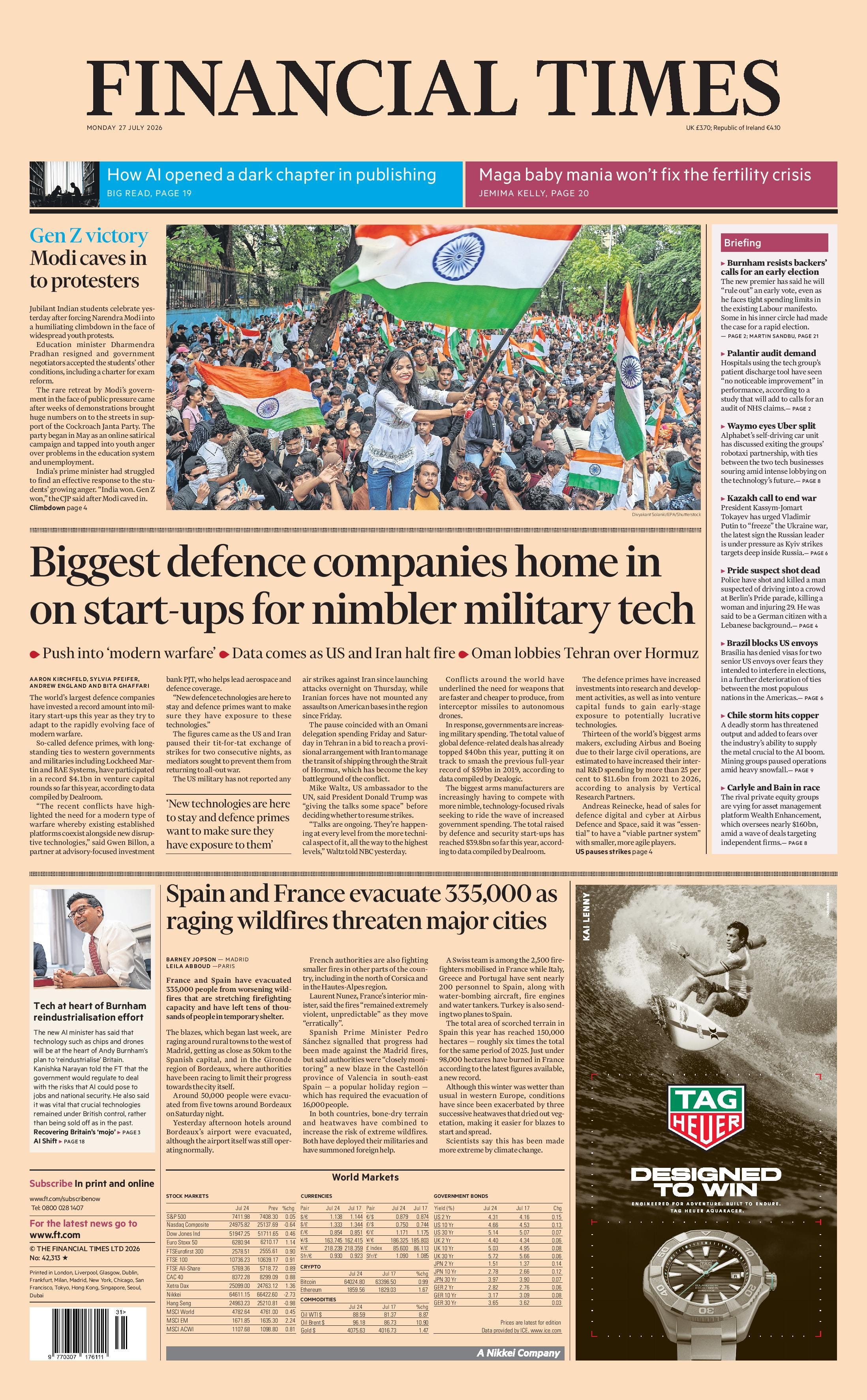
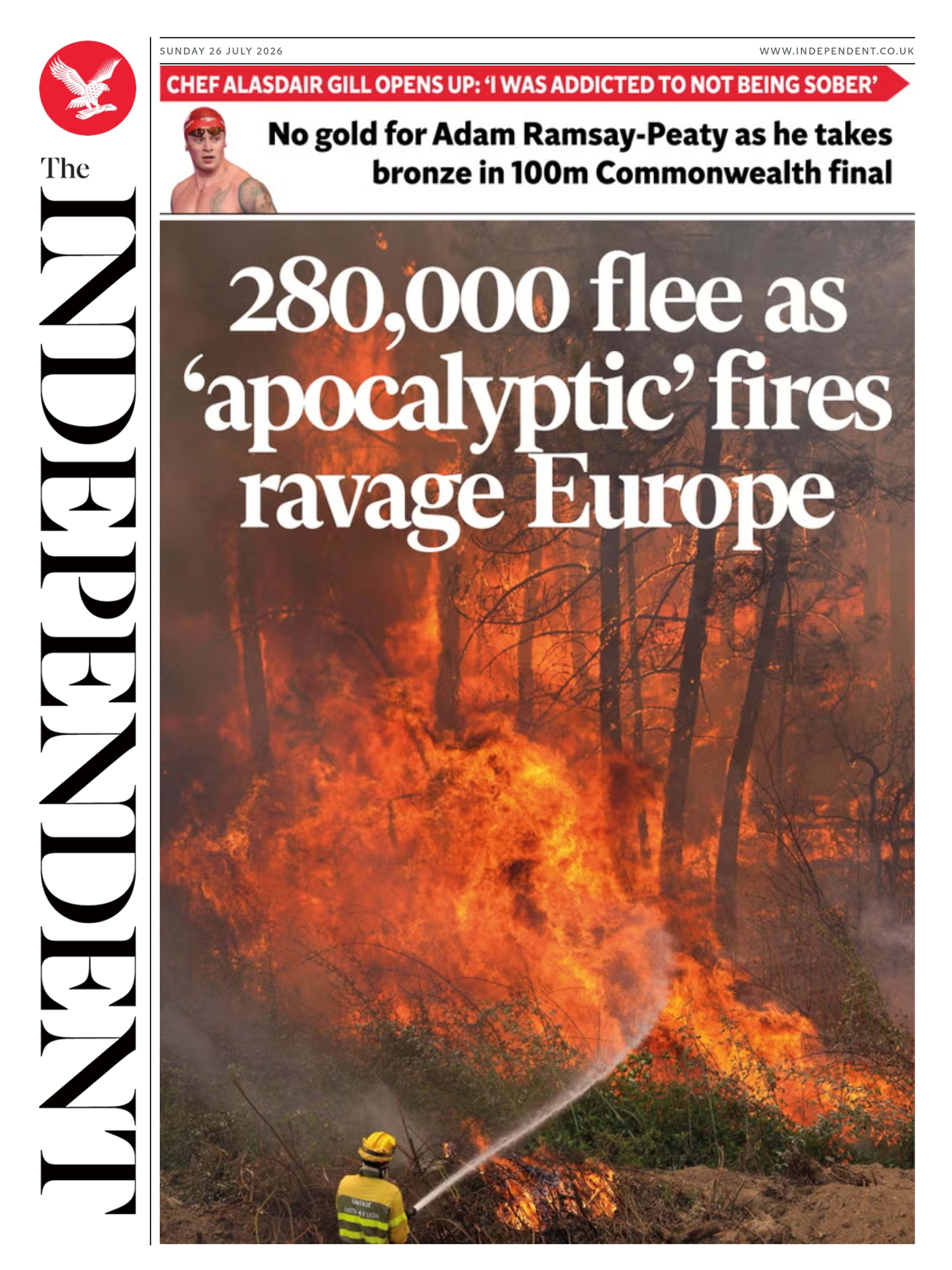
More than 320,000 people have now been evacuated across parts of France and Spain as wildfires continue to ravage southern Europe. In southwestern France, more than 220,000 people have been forced to flee their homes after evacuation orders were issued in a further five villages around Bordeaux on Saturday night, as the parched landscape and strong winds helped the area’s main blaze spread rapidly, local authorities said. The fire has so far burned through around 42,000 hectares across the region. On Sunday, French Interior Minister Laurent Nuñez described the situation as “highly unfavorable,” saying the Gironde blaze had become “extremely fierce and unpredictable” in the evening before calming slightly later in the night. - Euronews
Myanmar: ASEAN Doubles Down on a Peace Plan the Junta Just Rejected
Five years and three months after adopting its Five-Point Consensus on Myanmar, ASEAN has finally decided to measure whether it’s working. Spoiler: it isn’t - and Naypyidaw just said so out loud.
At back-to-back meetings in Bangkok (July 12) and Manila (July 21), the bloc’s foreign ministers sat down with Myanmar’s top diplomat for the first time since the 2021 coup and delivered their wish list: a permanent end to violence, the release of all political detainees - including Aung San Suu Kyi - and unimpeded humanitarian access across the country, including areas the regime doesn’t control. Singapore’s Vivian Balakrishnan called for “demonstrable progress.” The junta’s response arrived with unusual candour: Myanmar’s parliament passed a motion rejecting the peace plan outright - the same military-controlled body seated after a three-phase “election” that ASEAN’s own communiqué could only bring itself to call “the succeeding developments.”
Undeterred, ministers in Manila agreed to develop benchmarks for measuring progress and began discussing a longer-term special envoy, with proposals headed to the leaders’ summit in November. There’s even a “non-paper” in the works to define what “demonstrable progress” actually means - a document category that tells you everything about the bloc’s appetite for enforcement. Special envoy Theresa Lazaro says Myanmar’s return to top-level ASEAN meetings remains “still far off.”
The verdict: benchmarks without consequences are a filing system, not a strategy. The junta has ignored the 5PC since the ink dried in April 2021, and now it has formally rejected it - while ASEAN responds by commissioning paperwork to measure the rejection. Consensus-driven diplomacy has its virtues, but Myanmar’s generals long ago learned the bloc’s secret: the price of defiance is another meeting.
The journals…