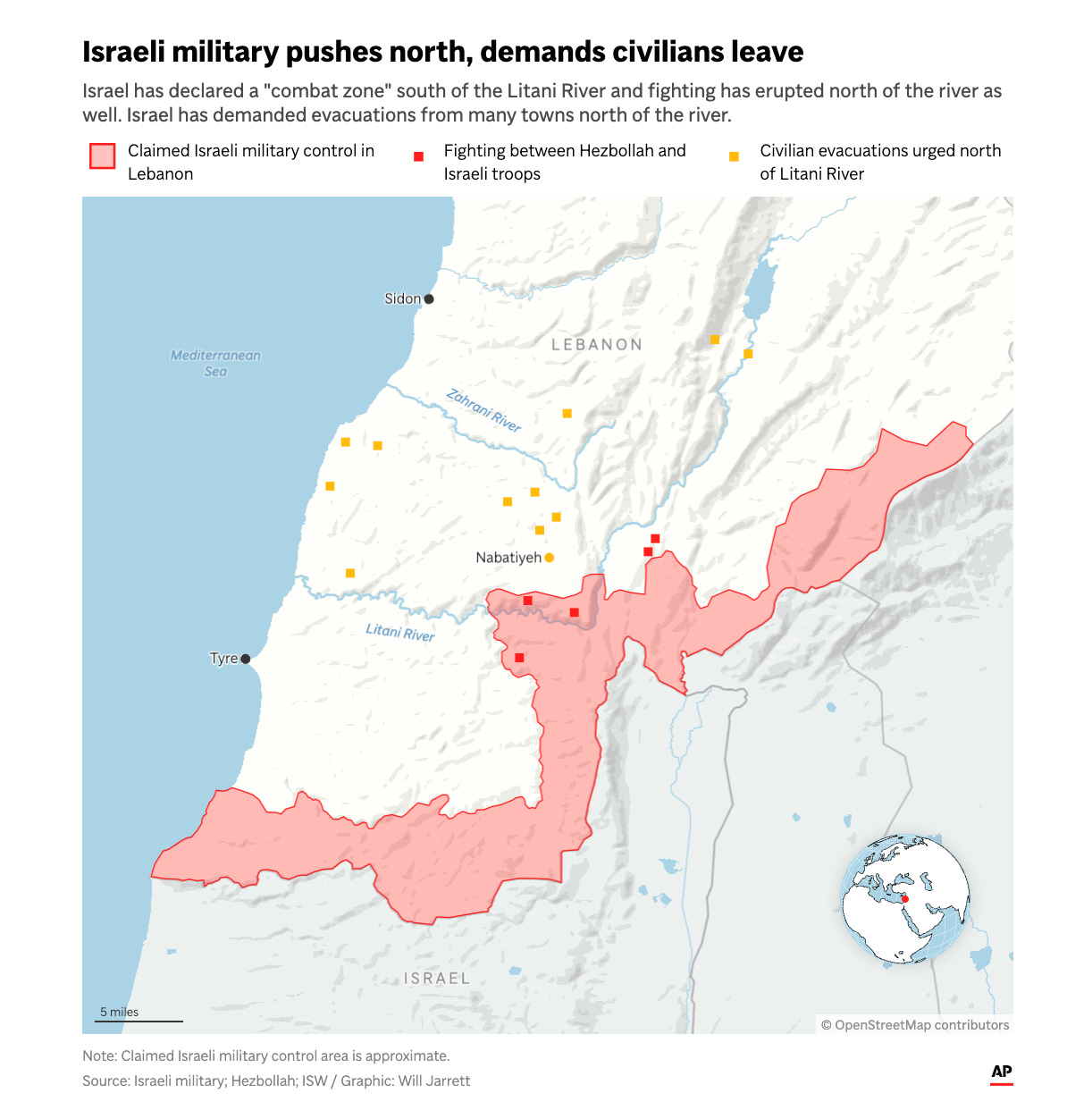
US President Donald Trump sharply criticised Israeli Prime Minister Benjamin Netanyahu during a tense phone call on Monday, according to three people familiar with the exchange cited by the news website Axios. The call came as Israel expanded its military operations in Lebanon and amid concerns that the escalation could derail ongoing US talks with Iran. A US official told Axios that Trump told Netanyahu, “You’re f****** crazy. You’d be in prison if it weren’t for me. I’m saving your a**. Everybody hates you now. Everybody hates Israel because of this.” Another source quoted Trump as saying: “What the f*** are you doing?” and added that the US president was “pissed”. The White House has not publicly commented on the reported exchange. US officials said Trump acknowledged that Hezbollah had launched attacks on Israel and that Israel had the right to defend itself. However, they said he believed Netanyahu’s recent actions were disproportionate, citing the scale of civilian casualties and strikes on buildings to target individual commanders - RFE/RL
The United States said Monday that it bombed radar and drone sites in Iran after Tehran shot down an American drone over the weekend. Iran then said it targeted American soldiers in Kuwait with missiles, which the U.S. says it shot down. The nominal ceasefire between Iran and the U.S. has been repeatedly tested with back-and-forth attacks, though officials from both countries are still trying to negotiate an end to the war. It’s not clear how close they are to a deal — and there is always the risk that an attack could derail those talks. Fighting has also been escalating between Israel and the Lebanese militant group Hezbollah, despite their nominal ceasefire, and that has increasingly threatened the emerging deal to extend the Iran war ceasefire. Meantime, Iran maintained its chokehold on the Strait of Hormuz, disrupting global energy supplies and driving up the price of fuel around the world, with far-reaching consequences. A cargo ship came under attack off Iraq Monday afternoon, the British military said - AP
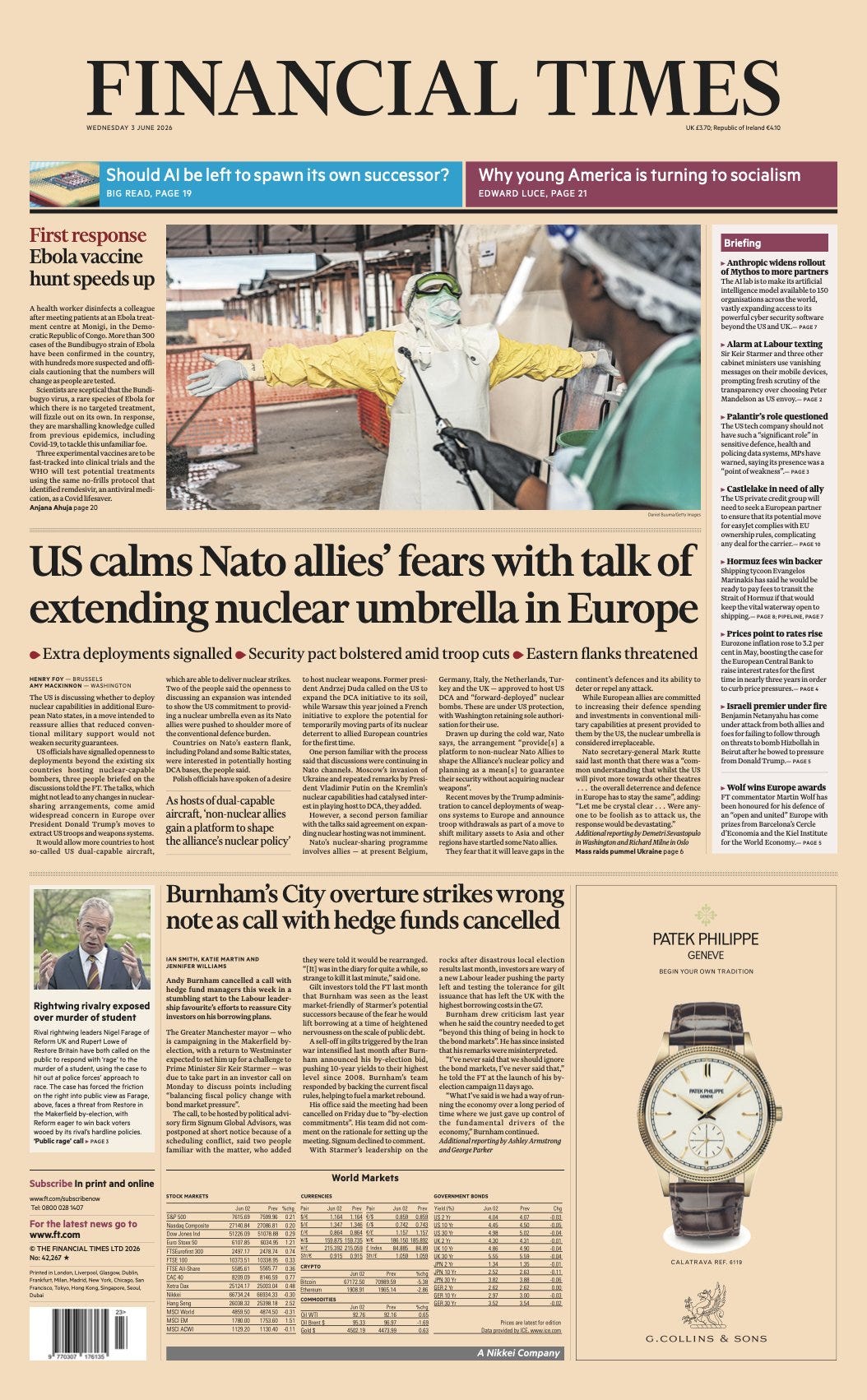
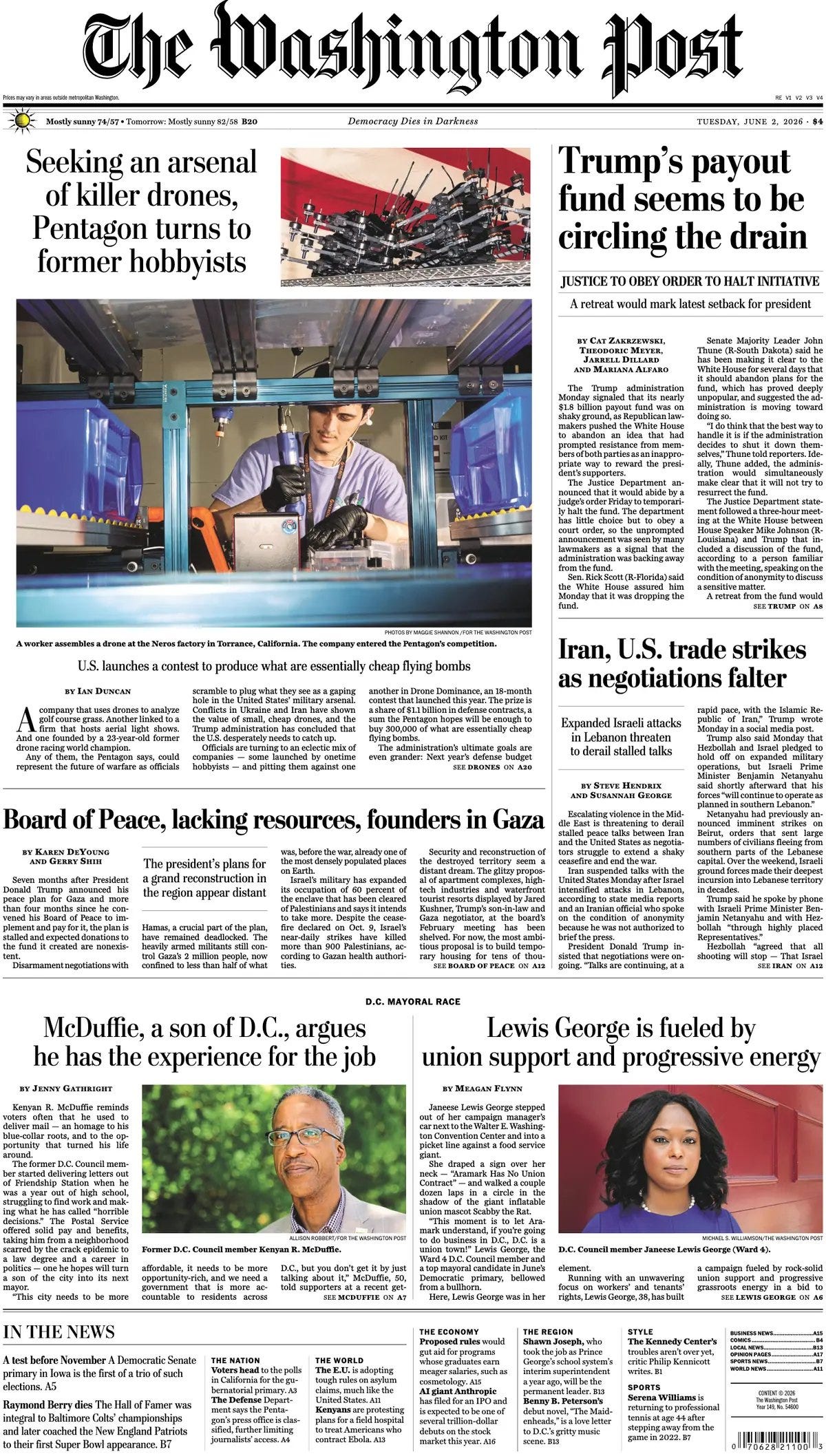
Seven months after Donald Trump unveiled his Gaza peace plan and four months after convening a high-profile Board of Peace to oversee reconstruction, the initiative appears stuck in neutral. According to reporting by The Washington Post, little of the promised funding has materialized, reconstruction projects have yet to begin, and the international stabilization force intended to oversee Gaza’s transition exists largely on paper. The plan’s central assumption - that Hamas would eventually agree to disarm in exchange for political participation and a phased Israeli withdrawal - has proven elusive. Hamas remains armed and in control of Gaza’s population, while Israel has expanded its military footprint to roughly 60 percent of the territory and Prime Minister Benjamin Netanyahu has signalled he may seek to retain even more. The numbers are sobering. Board officials say members have pledged $17 billion toward reconstruction, but little has been collected and virtually none spent. Meanwhile, more than a million Palestinians remain displaced, most major infrastructure lies in ruins, and the UN says food insecurity remains severe despite improvements in humanitarian access. Perhaps the most damning assessment came from Nickolay Mladenov, the Board’s chief representative, who recently told the UN Security Council: “There is no recovery.” Despite diplomatic blueprints, donor conferences and ambitious visions of a rebuilt Gaza, the political and security foundations required to make reconstruction possible remain absent. For now, the Board of Peace risks becoming another Middle East initiative long on promises and short on implementation.
The Board of Peace, the Ukraine peace initiative, and the Iran ceasefire all share a common problem: they depend on political compromises that the parties involved still appear unwilling to make.
Help Us Keep Connecting The Dots
For more than three decades, I’ve reported from conflict zones, humanitarian emergencies and geopolitical flashpoints around the world. World Briefing allows me to continue that mission independently - connecting the dots so you don’t have to.
If you find this reporting useful, please consider upgrading to a paid subscription. Alternatively, you can support World Briefing through a PayPal contribution and choose your own level of support.
In an era of shrinking foreign coverage and growing misinformation, your support helps keep independent global journalism alive.
Thank you for reading, sharing and supporting World Briefing.
Russian seaborne crude oil exports have climbed to their highest levels since the start of the war in Ukraine as repeated Ukrainian drone strikes on refineries have reduced domestic processing capacity and left more crude available for shipment abroad, Bloomberg reported Tuesday, citing tanker-tracking data. Average crude exports since the beginning of 2026 have reached 3.46 million barrels per day (bpd), about 120,000 bpd higher than in 2025 and above the previous post-invasion annual high of 3.36 million bpd recorded in 2023, according to Bloomberg’s calculations. Seaborne exports averaged 3.64 million bpd in the four weeks to May 31, Bloomberg reported, citing tanker movement data. Ukraine intensified attacks on Russian refineries in May, striking facilities across the country as part of a campaign aimed at reducing fuel supplies available to the Russian military and weakening a key source of state revenue. The strikes helped push Russian refinery throughput to its lowest level since 2009, according to industry data cited by Bloomberg. Moscow has expanded restrictions on fuel exports in response, banning overseas sales of jet fuel in addition to earlier limits on gasoline exports. At the same time, export terminals on the Baltic and Black Seas that had previously faced disruption from Ukrainian attacks have largely resumed normal operations. Combined with lower refinery utilization, that has increased the amount of crude available for foreign buyers, Bloomberg said. Higher global oil prices, driven in part by the fallout from the Iran war, have also boosted the value of Russia’s crude exports. The four-week average value of crude shipments stood at about $2.24 billion per week in the period ending May 31, down slightly from $2.38 billion in the previous four-week period because of lower oil prices. Analysts say the rise in crude exports does not necessarily translate directly into higher state revenues. Sergei Vakulenko, a fellow at the Carnegie Russia Eurasia Center in Berlin, told Bloomberg that Ukrainian attacks appear to have disabled most of the spare refining capacity that Russia traditionally maintained. If further capacity is lost, the risk of a fuel shortage would increase significantly, he said - Moscow Times
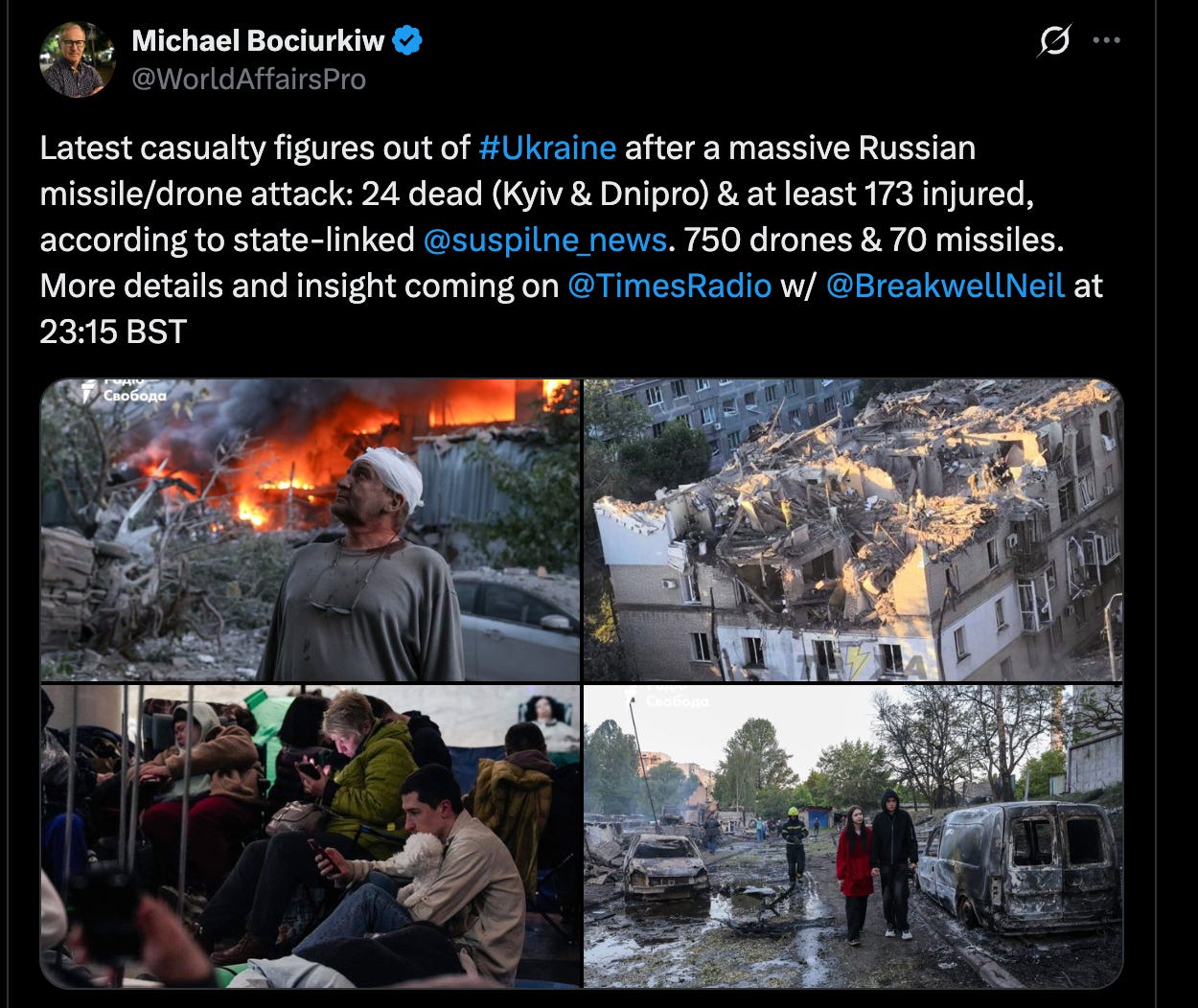
Russia launched one of the largest aerial attacks of the full-scale war overnight on June 2, targeting various Ukrainian cities, including Kyiv, with missiles and drones. Across the country, at least 24 people, including two children, have been killed and 173 others injured, officials said. In all, 70 missiles and 750 drones were launched. Many of the victims were first responders who were injured from a Russian “double tap” strike.
Chinese tech giant Tencent is reportedly getting closer to launching an AI agent for WeChat, its “everything app” widely used across China for messaging, social media, and payments. A public launch could happen as soon as this month, the Financial Times reported, ramping up competition among Chinese tech players racing to roll out AI features for customers. AI-powered commerce, in which an agent can shop and make payments on a user’s behalf, could represent the next big bet for online platforms — though it’s unclear how much customers will trust AI with their finances. Governance and hallucinations also remain challenges: A recent survey of large companies across 10 countries found three-quarters have already rolled back or shut down a customer-facing AI agent - Semafor
CBS News fired Scott Pelley on Tuesday, jettisoning one of the network’s best-known journalists in a clash over the future of “60 Minutes,” the country’s top-rated news program. Mr. Pelley, 68, a “60 Minutes” correspondent and a former anchor of “CBS Evening News,” joined the network in 1989. At a staff meeting on Monday, he accused the network’s editor in chief, Bari Weiss, of “murdering ‘60 Minutes,’” citing the ouster last week of the program’s leadership team and two on-air correspondents. “We have parted ways with Scott Pelley,” Nick Bilton, the tech journalist who was hired last week as the new “60 Minutes” executive producer, wrote in a memo to the show’s staff on Tuesday night. CBS News declined to comment. In a formal letter to Mr. Pelley, which was obtained by The New York Times, Mr. Bilton wrote that the correspondent had been “terminated for cause effective immediately.” Mr. Pelley, in a telephone interview on Tuesday evening shortly after he was fired, said he had devoted decades of his life to “60 Minutes,” which he said he still cared about deeply. “I have been in combat in Afghanistan,” Mr. Pelley said. “I have been in combat in Iraq. I have been in the war zone in Ukraine multiple times, risking my life and the happiness of my family because of my devotion to the broadcast.” The firing of Mr. Pelley is among the most consequential moves of Ms. Weiss’s rocky tenure at CBS. And it is almost certain to spike tensions that have coursed through the network for months. It also raises the stakes of Ms. Weiss’s surprising decision to replace the entire leadership team at “60 Minutes,” CBS News’s most successful franchise, and hire Mr. Bilton, who has no experience in broadcast TV, to oversee the show. The program’s viewership was up 9 percent this past season from a year prior, and the show is routinely among the nation’s highest-rated weekly broadcasts, according to Nielsen. Those viewers are accustomed to familiar faces like Mr. Pelley, who has contributed to the program since 2004. The “60 Minutes” staff prides itself on autonomy, and it is not clear how the show’s production team may react to the firing of Mr. Pelley. - New York Times
The World Meteorological Organization said this El Niño is likely to strengthen over the rest of 2026, driving more extreme weather around much of the globe. Several forecasts from national weather agencies suggest it could end up as one of the strongest ever recorded - a possible so-called “super” El Niño. Predicting the exact timing and strength of El Niño can be challenging, and scientists have been watching conditions in a tell-tale region of the central Pacific for clues. El Niño forms when a switch in wind patterns allows warmer waters to spread across the tropical Pacific Ocean. And while an El Niño event had been anticipated, many scientists believe this one could be unusually powerful. “We're very confident that there's a big event coming,” said Prof Adam Scaife, head of monthly to decadal prediction at the UK Met Office. “It may even be a record event.” Part of the reason why scientists expect a strong El Niño lies deep below the ocean surface. Data from satellites, buoys and ocean floats indicate a huge wave of unusually warm water - more than 6C above average in places - creeping eastwards across the Pacific, hundreds of metres deep - BBC
A Swiss soccer star was forced to stay home from the World Cup following an 11-hour decision from U.S. authorities to review his clearance to travel. Breel Embolo’s travel authorization was placed under review just hours before the team was scheduled to leave for the U.S. for the World Cup. “Unfortunately, Breel Embolo is currently unable to travel to the United States with the team,” the Swiss Football Association said. The 6-foot-2 forward, 29, was convicted in 2023 for making threats to another player years earlier when he was 21. He requested an appeal in September 2025, but was rejected. Embolo has traveled to the U.S. since this conviction, even scoring a goal against the U.S. men’s national team in a victorious 4-0 match in Tennessee. The Swiss team, however, was optimistic that he will be able to make it in time for the World Cup. “One seat empty, but not for long😉 See you soon, @breelembolo97 ✈️.” The review raises legal concerns for other players with criminal records and teams of countries in conflict with the U.S. The Iranian team is also struggling with visa approval for its players and staff members, and has moved its practice facility to Mexico - The Daily Beast
The journals…..