🔥 World Briefing Hot Take
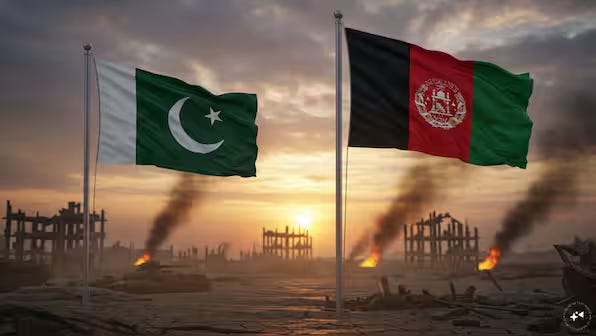
The world is not calming down - it’s fraying at the edges. A nuclear-armed Pakistan is now openly at war with the Taliban in Afghanistan, reopening a conflict many assumed had been contained. At sea, China’s rapid leap in submarine production signals something even bigger: the slow erosion of American industrial and strategic primacy. And all of this is unfolding as Donald Trump, the self-declared “peace president",” leans on a narrative that no new wars began on his watch - a claim increasingly at odds with the reality of a world sliding into new zones of risk. These aren’t isolated crises. They are warning lights flashing across a system where power is shifting, deterrence is thinning, and instability is becoming the new normal.
News Briefs
Pakistani war planes continued to bomb targets in Afghanistan on February 27 as fears of all out war between the two rose as they trade strikes on each other in their volatile mountain border region following days of escalating tensions boiled over. Local sources told RFE/RL’s Radio Mashaal that three locations in Afghanistan’s Paktika province in the early afternoon on February 27, including a Taliban camp in Bermal district, were targeted by fighter jets. The strikes followed attacks overnight on Kabul, the first time Islamabad has directly targeted its former allies, that came amid a major escalation in hostilities between Afghanistan’s Taliban-led government and Islamabad. Just hours earlier before the attacks on the capital, Zabihullah Mujahid, a spokesman for Afghanistan’s Taliban-led government, said Kabul had launched “a large-scale offensive operation against Pakistani military centers and military installations along the Durand Line,” a volatile border that cuts through traditional Pashtun and Baloch tribal territories. The Taliban’s Defense Ministry claimed that 55 Pakistani security personnel had been killed, while two bases and 19 posts were captured across the border by its forces. Islamabad’s troops retaliated, Pakistani officials said, with Mosharraf Zaidi, a spokesman for the Pakistani government, saying a total of 133 Afghan Taliban members are “confirmed killed,” and more than 200 others wounded. Pakistani Prime Minister Shehbaz Sharif said country’s forces were ready to “protect the country’s security, sovereignty, and territorial integrity.” - RFE/RL
Meanwhile, Iran has offered to “facilitate dialogue” between Pakistan and Afghanistan as it urged them to “resolve their differences through good neighbourliness and dialogue”. UK Foreign Secretary Yvette Cooper also urged the two sides to re-engage in talks, take “immediate steps toward de‑escalation [and] avoid further harm to civilians”. While a fragile ceasefire between the two countries was agreed in October, negotiations failed to reach a broader agreement for a complete end to hostilities, with both side blaming the other for not engaging seriously with talks. Pakistan has long accused Afghanistan’s Taliban government of supporting “anti-Pakistan terrorists”, who it blames for carrying out suicide attacks in the country, including at a mosque in the capital recently - BBC
There is no gainsaying the fact that there are no simple exits in such scenarios. Escalation acquires its own momentum, and each strike invites a reply, narrowing the space for discretion. As a result, economies suffer, border communities absorb the shock, and terrorist groups thrive. For durable security, Islamabad must convert its battlefield advantage into diplomatic leverage rather than allow it to harden into permanent hostility. Meanwhile, this conflict must drive home to Kabul that a policy of hosting terrorist sanctuaries carries strategic costs. If that lesson is not absorbed, what is now a crisis will solidify into a recurring pattern, and hostility will become entrenched - Dawn Newspaper (Pakistan)
There is one front in the geopolitical and military confrontation where China is progressively overtaking the United States: the production of nuclear powered submarines. This acceleration risks eroding American maritime supremacy, a primacy Washington has held since the Second World War. According to a report by the International Institute for Strategic Studies, in the period 2021 to 2025 China outpaced the United States in submarine construction both in terms of number of units, ten versus seven, and total tonnage, 79,000 tons versus 55,500. The report The Military Balance 2025 highlights that Beijing operates twelve nuclear powered submarines, six ballistic missile submarines and six attack or guided missile submarines. These are complemented by a substantial fleet of forty six conventionally powered submarines. For their part, the United States deploy sixty five submarines, fourteen of which are ballistic missile submarines. Taken in isolation, the numerical data do not yet indicate an overall overtake. However, China’s industrial and technological trajectory appears unequivocal. According to the Royal United Services Institute, across all sectors Chinese weapon systems are becoming increasingly sophisticated, progressively narrowing the gap with Western systems. Beijing’s defense policy is shifting from a model based on quantity and scale to one centered on quality and efficiency. The White House itself, in the document America’s Maritime Action Plan, acknowledges that for decades the United States’ strategic position and shipbuilding industrial capacity have weakened due to the absence of a coherent strategic vision. Today, less than one percent of new commercial ships are built in the United States. This development must be understood within a broader structural transformation. China accounts for roughly thirty percent of global manufacturing output, compared with seventeen percent for the United States. Beijing concentrates approximately half of global industrial robot installations, sixty percent of worldwide electric vehicle production, seventy five percent of batteries, and ninety percent of solar panels, rare earths, and antibiotics. Its shipbuilding capacity is estimated to be roughly two hundred times greater than that of the United States. Naval competition is thus the visible symptom of a deeper industrial, technological, and strategic rivalry. History teaches that those who control productive capacity, over the long term, shape global geopolitical balances - Foreign Affairs
The Kremlin said Friday it was “absurd” to suggest that a drone jammed near a French aircraft carrier in Sweden earlier this week was Russian, after Swedish authorities said there was a “strong link” to Moscow. Stockholm said a Swedish navy vessel spotted and jammed the drone on Wednesday in the Oresund Strait, around 13 kilometers (eight miles) from France’s Charles de Gaulle aircraft carrier, which was there at a stopover on the way to a NATO exercise. On Thursday, Sweden’s Defense Minister Pal Jonson told the broadcaster SVT that the drone “probably” came from Russia, “as there was a Russian military vessel in the immediate vicinity at the time.” When asked about the allegation, Kremlin spokesman Dmitry Peskov told journalists it was “quite an absurd statement.” He said the Kremlin had no information about the incident. NATO’s easternmost countries have reported numerous drone sightings in recent months, with some pointing the finger at Russia - RFE/RL
Ghana’s foreign minister said Friday that 55 Ghanaians had been killed while fighting in Ukraine, among hundreds of Africans said to have been lured to fight there for Russia. “We were informed that 272 Ghanaians are believed to have been lured into battle since 2022 for which an estimated 55 have been killed and 2 captured as prisoners of war,” minister Sam Okudzeto Ablakwa said on X. He called the news “depressing and frightening,” speaking after meeting with his Ukrainian counterpart in Kyiv. “We cannot turn a blind eye to these heartbreaking statistics. These are not just numbers, they represent human lives, the hope of many Ghanaian families and our nation,” Ablakwa wrote. Ukraine said on Wednesday that more than 1,780 citizens from 36 African countries had been identified among Russia’s ranks. Ablakwa said the government was “committed to tracking and dismantling all dark web illegal recruitment schemes operating within our jurisdiction.” AFP reporters in Ukraine in late 2025 met prisoners of war from Kenya, Togo, Cameroon and Nigeria. AFP recently spoke with four Kenyans – three wounded – who made it home. They had been promised lucrative civilian jobs in Russia but were forced to sign contracts with the army and sent to the frontlines in Ukraine with limited training. A key figure in a network that sent more than 1,000 Kenyans to fight for the Russian army was charged on Thursday with human trafficking, the state prosecutor said. In South Africa 15 men who were reportedly tricked into joining mercenary forces were repatriated this week. Foreign Minister Ronald Lamola said several remain in Russia and at least two have died fighting in Ukraine - RFE/RL
South African President Cyril Ramaphosa has thanked his Russian counterpart, Vladimir Putin, for assisting in the return of South African men allegedly lured into the battle lines between Russia and Ukraine “by South African elements that remain under investigation.” In a statement, he said the intervention followed the receipt of distressed calls for assistance to return home from 17 South African men between the ages of 20-39 years. Out of the seventeen men, four are already back in the country, while eleven will be on their way home soon. Two remain in Russia with one in a hospital in Moscow, while the other one is being processed before finalising his travel arrangements.
How Putin’s Black Sea Fleet could be annihilated for good - my discussion on Times Radio with host Kate Gerbeau
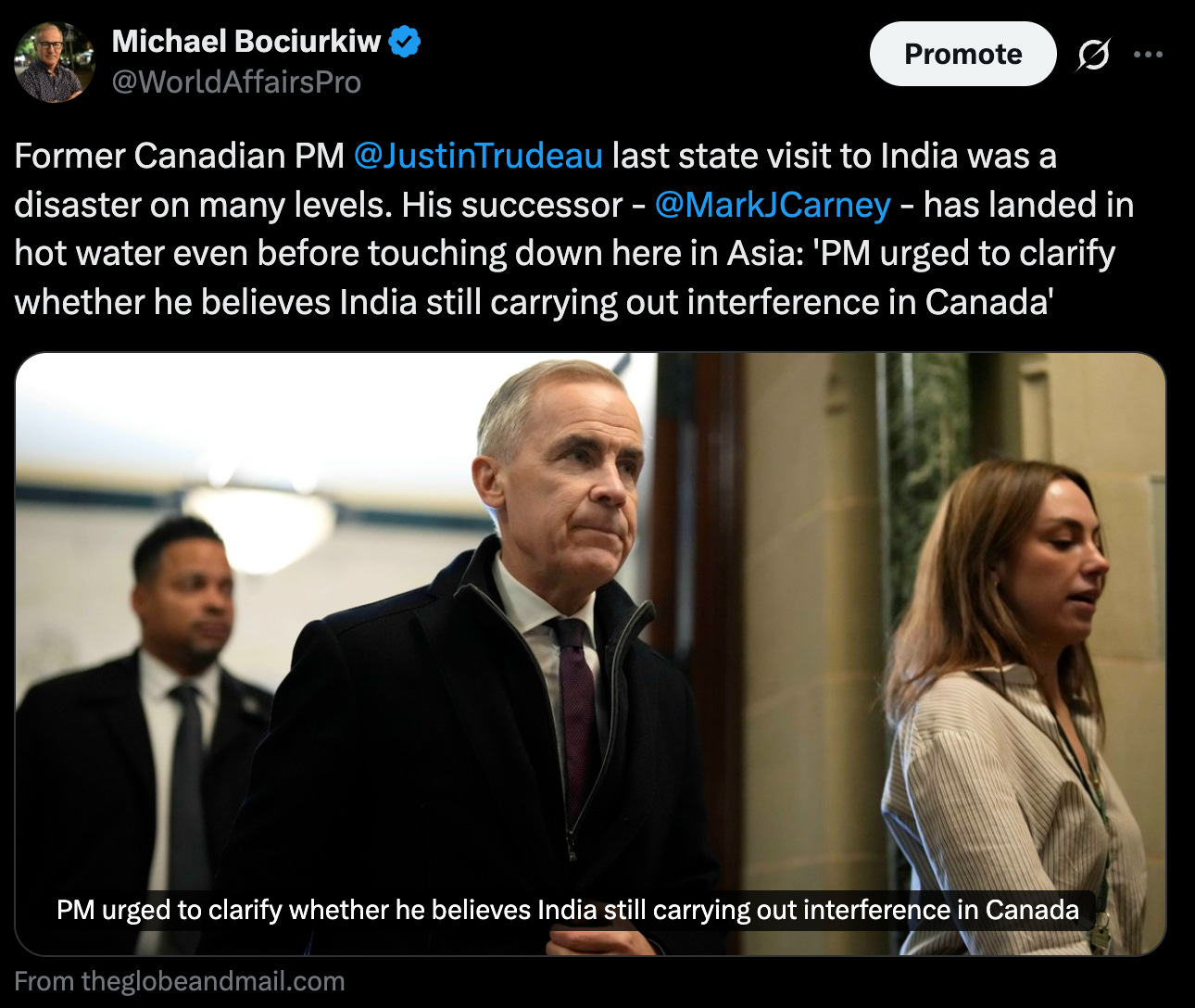
Canadian Prime Minister Mark Carney is being urged to clarify whether he agrees with a senior government official who said India is no longer involved in foreign interference and transnational repression in Canada. Mr. Carney left Canada Thursday en route to India on a trade and goodwill mission, during which he will hold high-level talks with his Indian counterpart, Narendra Modi. He left behind a political and national-security controversy. A senior government official told reporters Wednesday that Ottawa does not believe India is still meddling in this country’s domestic politics and orchestrating violence and intimidation against Canadian Sikhs who support the idea of creating an independent Sikh homeland in what is now the Indian state of Punjab. The senior official spoke to journalists during a background briefing that dealt with the Prime Minister’s trip to India. The Globe and Mail is not naming the official because they weren’t authorized to speak for attribution on the matter. “I strongly condemn the remarks made by the official,” Liberal MP Sukh Dhaliwal said in an interview Thursday. “This view is disconnected from the reality confronting members of the Sikh community across Canada and contradicts assessments by national-security and law-enforcement agencies.” Mr. Dhaliwal, a Canadian Sikh who represents the riding of Surrey-Newton, said the Prime Minister must issue a clarification and review the qualifications of the official who made the comments. “This is totally not tolerable. This matter must be addressed without delay, and a formal review is a necessity,” he said. The Prime Minister’s Office issued a statement to The Globe and Mail Thursday that said both countries have established regular top-level channels on security and law enforcement. But the statement did not say that India is no longer involved in foreign interference and transnational repression. Nor did the statement outright reject the comments made by the senior official - The Globe and Mail
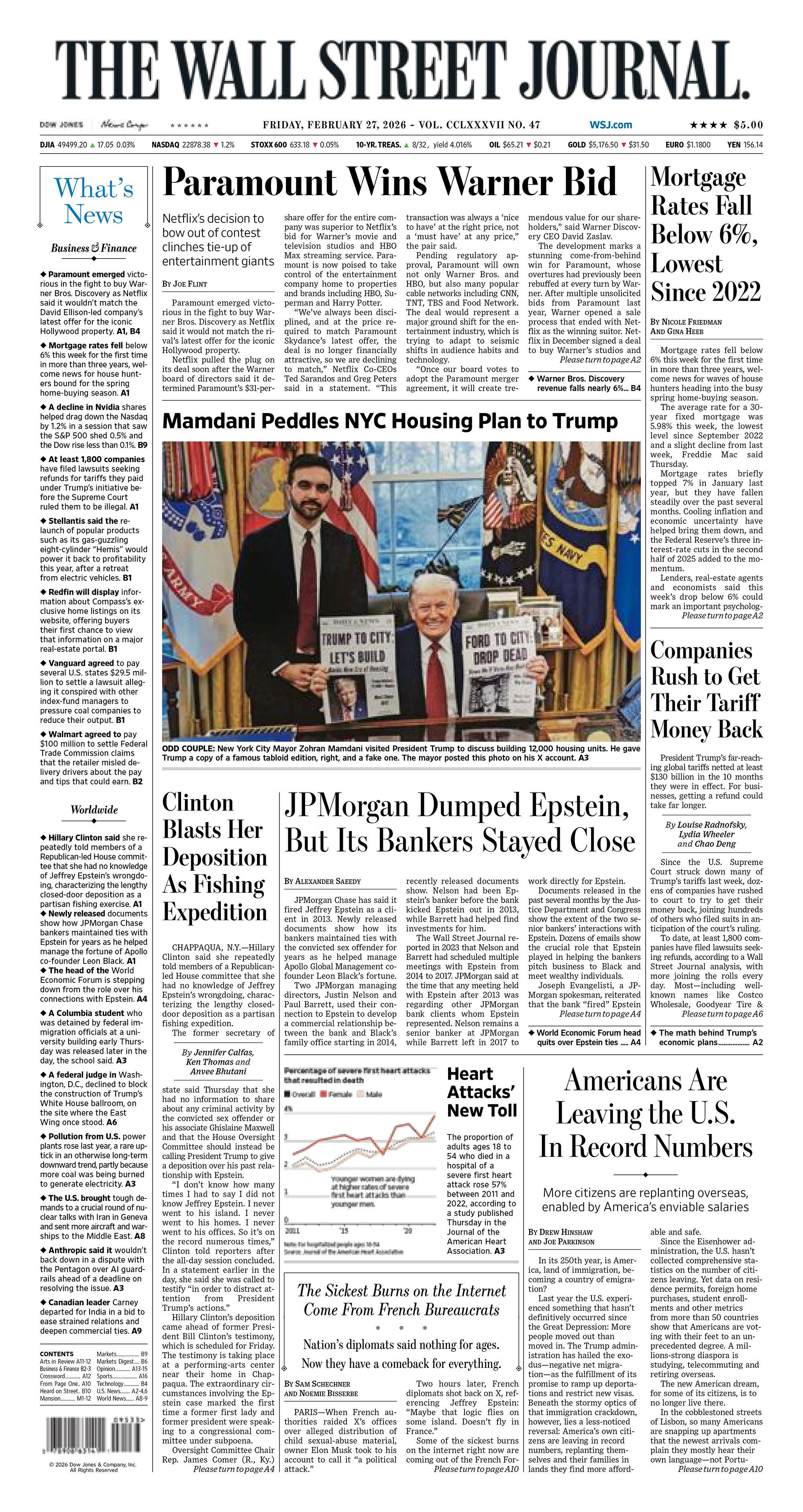
The trilateral trade agreement between Canada, Mexico, and the US could require annual reviews if Washington refuses to sign an extension, risking huge trade upheaval, Ottawa warned. USMCA’s signatories must reconfirm the deal every six years, or it reverts to yearly checks. The first renewal falls in July, and Canada’s Minister for US Trade Dominic LeBlanc warned that the US may block it. President Donald Trump has repeatedly threatened to withdraw from the accord, agreed during his first term; Canada and Mexico both rely on the US for the vast majority of exports, and are seeking trade ties elsewhere. The uncertainty over whether the agreement will continue could be a deliberate strategy on Washington’s part, LeBlanc said - Semafor
The journals…..