Today in Odesa we spent more hours without power than with it. The same was true in Kyiv and across much of Ukraine. So part of this World Briefing was filmed indoors in the dark, and the rest in a chilly alleyway.
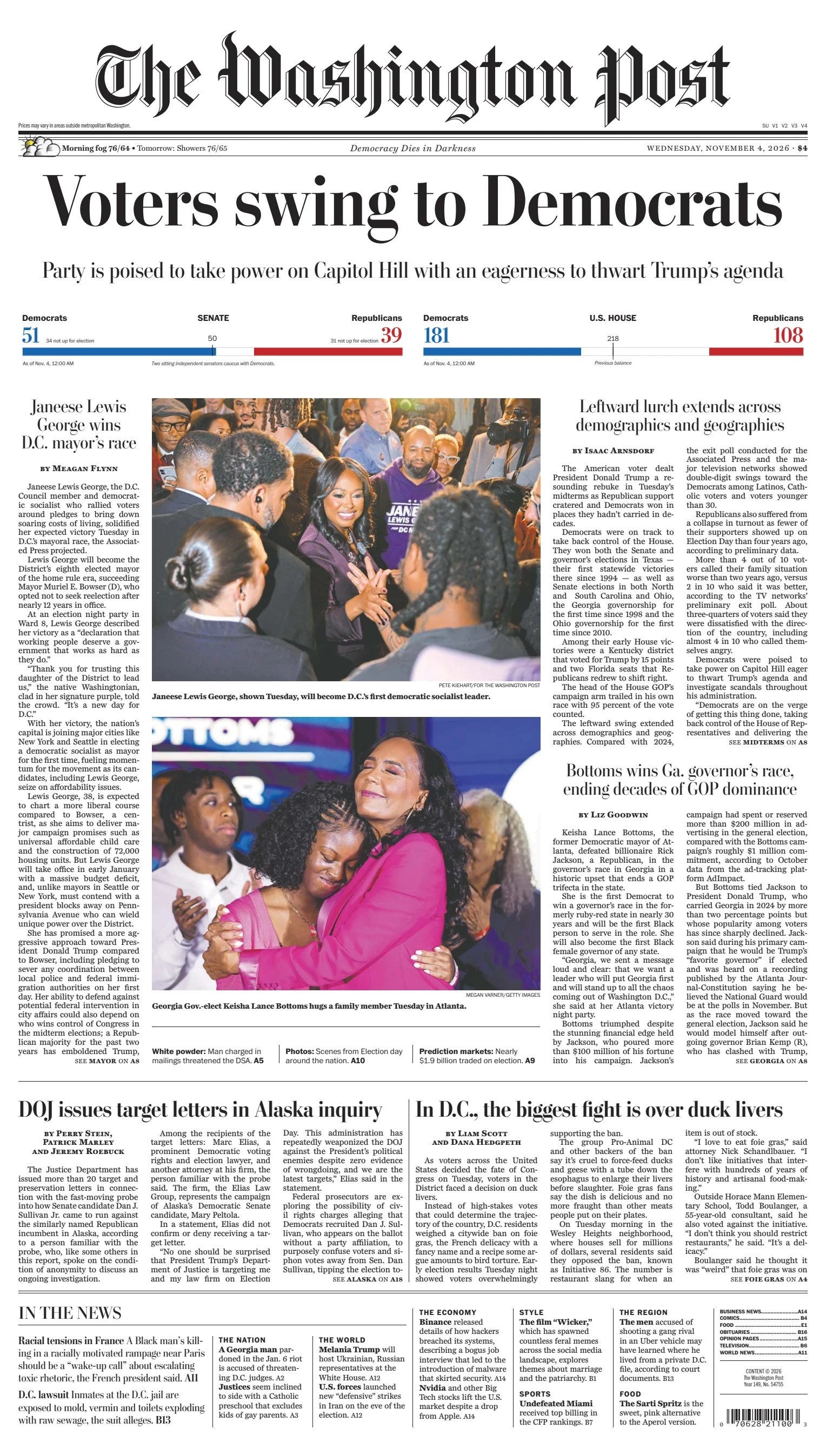
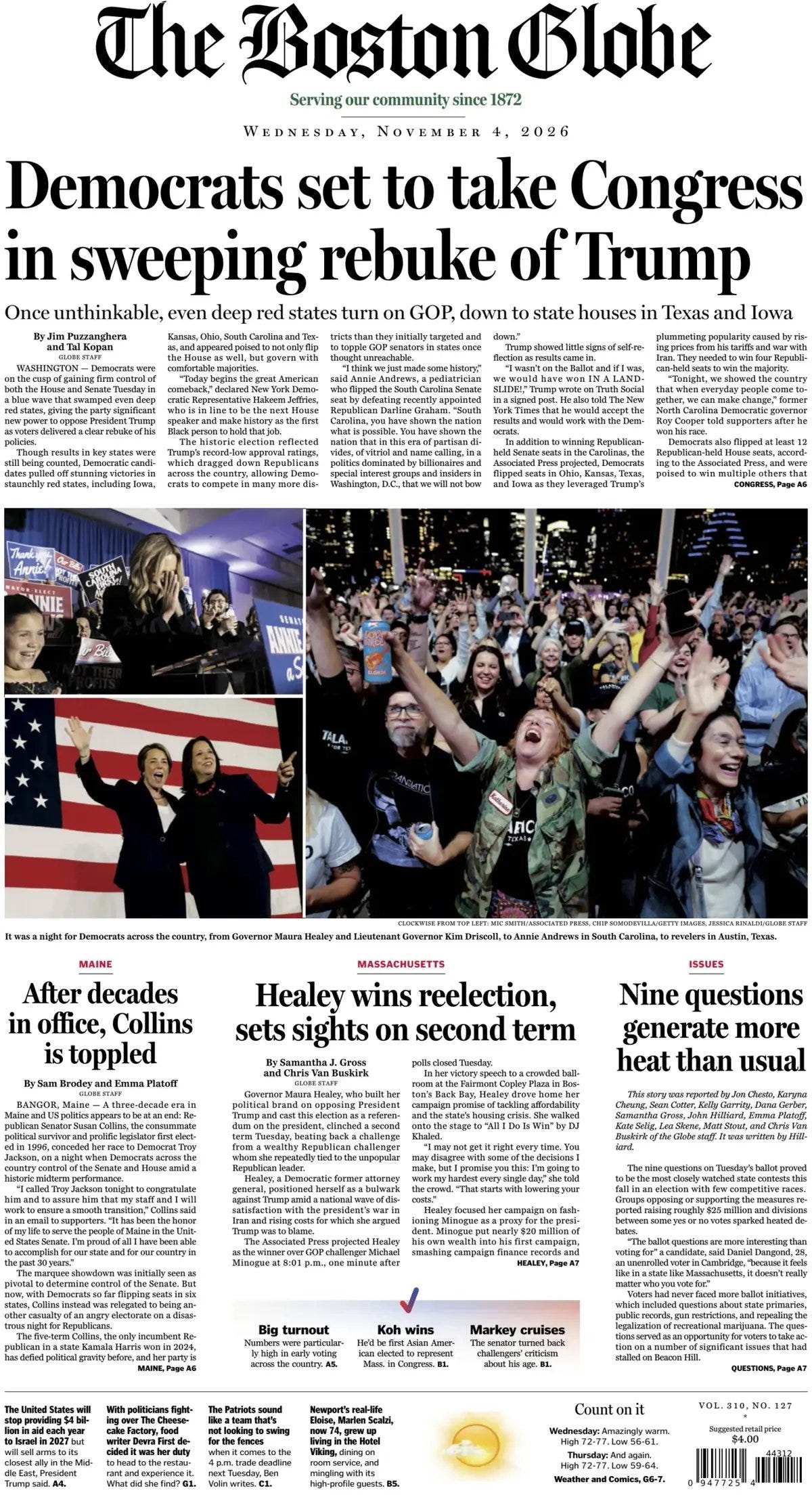
Back in Washington, the midterm verdict is in. Call it a shellacking, call it a rebuke of the Trump presidency and its priorities. Many U.S. voters walked into the booth feeling one flat tire or one illness away from bankruptcy, and it showed.
What does it mean beyond America’s borders? The Constitution still gives the president a firm grip on foreign affairs. But a Democratic House means a new Speaker, new committee chairs, subpoena power, leverage over spending and, quite possibly, investigations into the Trump circle. The Senate also confirms ambassadors, and dozens of posts sit empty, including the recently vacated one in Athens.
Then I step outside to talk about Ukraine on a day defined by tone-deafness. Tomorrow, Melania Trump is due to host Russian and Ukrainian representatives at the White House to discuss the Oleshky humanitarian mission. Kyiv is reportedly sending human rights commissioner Dmytro Lubinets and Servant of the People faction head Davyd Arakhamia. According to Kremlin spokesman Dmitry Peskov, Moscow plans to send its human rights commissioner, Yana Lantratova, and Kirill Dmitriev, Putin’s special envoy for investment and economic cooperation, visas permitting. All this as rescuers are still pulling bodies from a school in eastern Ukraine struck by Russian missiles. And while her localized truce in Oleshky was underway, Russia hit a train platform in Dnipro, killing civilians.
Finally, Ukraine has had no ambassador in Washington for three months. With a new Congress arriving, President Zelensky needs to fill the post now. Former foreign minister Dmytro Kuleba is reportedly on the shortlist and, in my opinion, superbly suited to the job.
Reporting from a corner of Europe few foreign journalists reach. Watch the full briefing below.

Let’s just be clear. That is going to hurt… I don’t think most of us thought it would be this bad - Florida Governor Ron DeSantis (R)
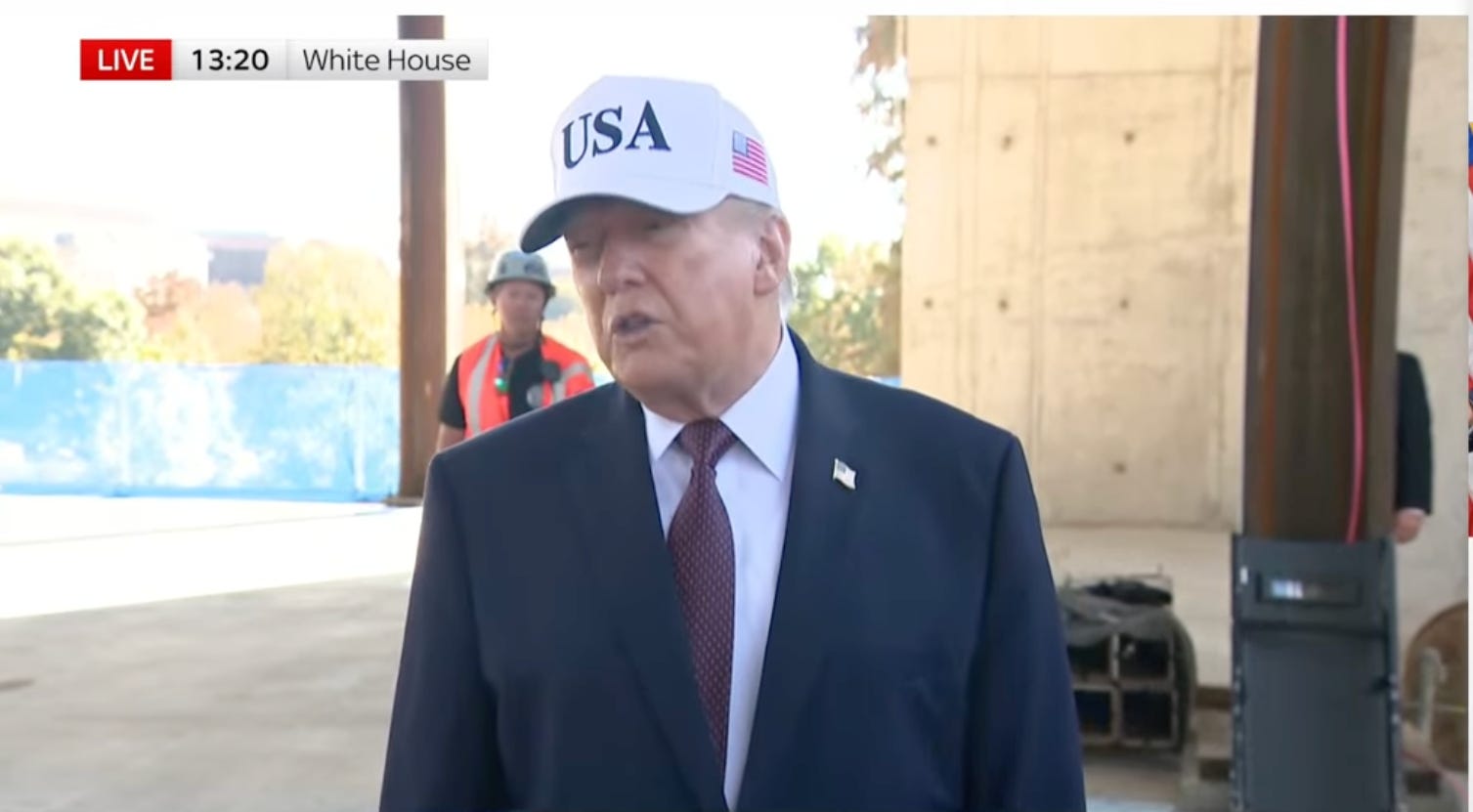
Republicans’ thumping defeat in midterm elections sharply circumscribes US President Donald Trump’s domestic power, leaving him more likely to focus on foreign policy. American leaders often increase their attention on global issues towards the end of their presidencies as they enter a lame-duck period. With the scale of the swing already evident as results poured in, Trump told the Financial Times he had no immediate plans to strike Iran. Europe, meanwhile, fears it may face a frustrated US president, with policy towards Ukraine especially uncertain and the White House likely to pressure European nations more on trade and defense: “We need to brace ourselves for … more acrimony,” the longtime head of the Munich Security Conference told Politico - Semafor
I learned very early on that a setback was nothing more than a setup for a comeback. Today begins the great American comeback - Democratic House Leader Hakeem Jeffries
Iran’s Supreme Leader Mojtaba Khamenei says the US cannot be trusted, stressing that changes in its political leadership will not alter its hostility towards Tehran. “If there are still those who harbour even the slightest hope that the behaviour of the hegemonic system could change through party or factional shifts, or who believe that making concessions to the US could persuade it to abandon its hostility towards the Iranian people, they are gravely mistaken,” he said. Khamenei accused the US of seeking Iran’s unconditional surrender, warning that concessions would only encourage further aggression. “Even the slightest inclination towards surrendering to the hegemonic enemy will squander the enormous gains achieved,” he said - Al Jazeera
Blood bank sites in France are the latest to be hit by cyber attackers. The attack, which affected three blood banks, sought to raise temperatures to extremely high levels but was thwarted before it could do any damage, authorities have said. Temperatures in cold rooms were affected, but alarm systems at the sites meant that no blood stocks were damaged - Sky News
Russia’s information war reached into readers’ inboxes. The Kyiv Independent says hackers, most likely Russian, broke into its content management system and a newsletter service overnight. They emailed subscribers fake messages in Russian claiming Zelensky had teamed up with Putin and launched a nuclear warhead at Kyiv. It came days after Ukraine’s air-raid alert app was hijacked to push false warnings of nuclear, chemical and radiation threats.
The European Commission is mapping out a deliberately cautious path for Ukraine’s EU accession talks, setting only modest targets for 2027 and steering clear of any membership date, according to a draft roadmap seen by Politico. The document, part of the enlargement package Brussels unveils today, urges Kyiv to “urgently and significantly step up the pace” of rule-of-law reforms. It makes clear that key benchmarks in that area must be met in the first half of 2027 before talks in any individual policy area can be provisionally closed. Of the 35 negotiating chapters every candidate must work through, the Commission sees Ukraine provisionally completing just seven next year. Education and culture comes first, in the first half of 2027. Intellectual property, employment and social policy, industrial policy, research, external relations, and foreign and security policy follow in the second half. Brussels has set up a dedicated task force to help, and calls the roadmap a “living document” that can be expanded if reforms move faster. The sharper story may be the widening gap with Moldova. The two countries won candidate status together in 2022 and opened talks on the same day in 2024. Chisinau is now positioned to close more than 20 chapters next year, which raises the real prospect that the two bids will be decoupled. The Commission also wants the stalled clusters on the green agenda and on agriculture and cohesion opened before year’s end. It says Ukraine has already met the conditions for opening them. The war is the unspoken ceiling on all of this. Even a peace deal would not settle the questions of security, territory and mutual-defence obligations that Ukrainian membership would raise.
Tomorrow, in time for Diwali, India attempts something it has never quite done before: sell one of its most sacred stories to the world as a Hollywood-scale blockbuster. Ramayana: Rise of a Legend, the first of a two-part retelling of the ancient Hindu epic, opens across the UK, US and Australia on 5 November. Sony Pictures is handling distribution outside India, and the rollout covers 50,000 international screens, which would make it one of the widest overseas releases an Indian production has ever had. The numbers are eye-watering. Producer Namit Malhotra puts the cost at around $500 million across both films, which would make it India’s most expensive production by a distance. The talent is deliberately cross-border: Hans Zimmer and A.R. Rahman are composing together for the first time, and Malhotra also runs DNEG, the British-Indian visual effects house behind Dune. The film is releasing in both Hindi and English, a clear signal that the target is not only the diaspora. That is the real story. Bollywood has long travelled well among South Asian audiences abroad and in markets like the Gulf, Russia and Africa, but it has rarely broken through to mainstream Western cinema-goers. RRR’s Oscar win in 2023 showed the appetite exists. Ramayana is a bigger bet: that India can do with myth what South Korea did with K-drama and K-pop, turning culture into a lasting source of soft power. Early signs are promising. The Guardian’s Peter Bradshaw gave it four stars, likening it to Lord of the Rings. UK opening-day pre-sales of roughly $64,000 nearly matched US numbers. Whether Western audiences show up beyond the first weekend, and whether a religious epic lands as entertainment rather than devotion, will tell us how far Indian storytelling can travel.
The journals…