🔥 World Briefing Hot Take
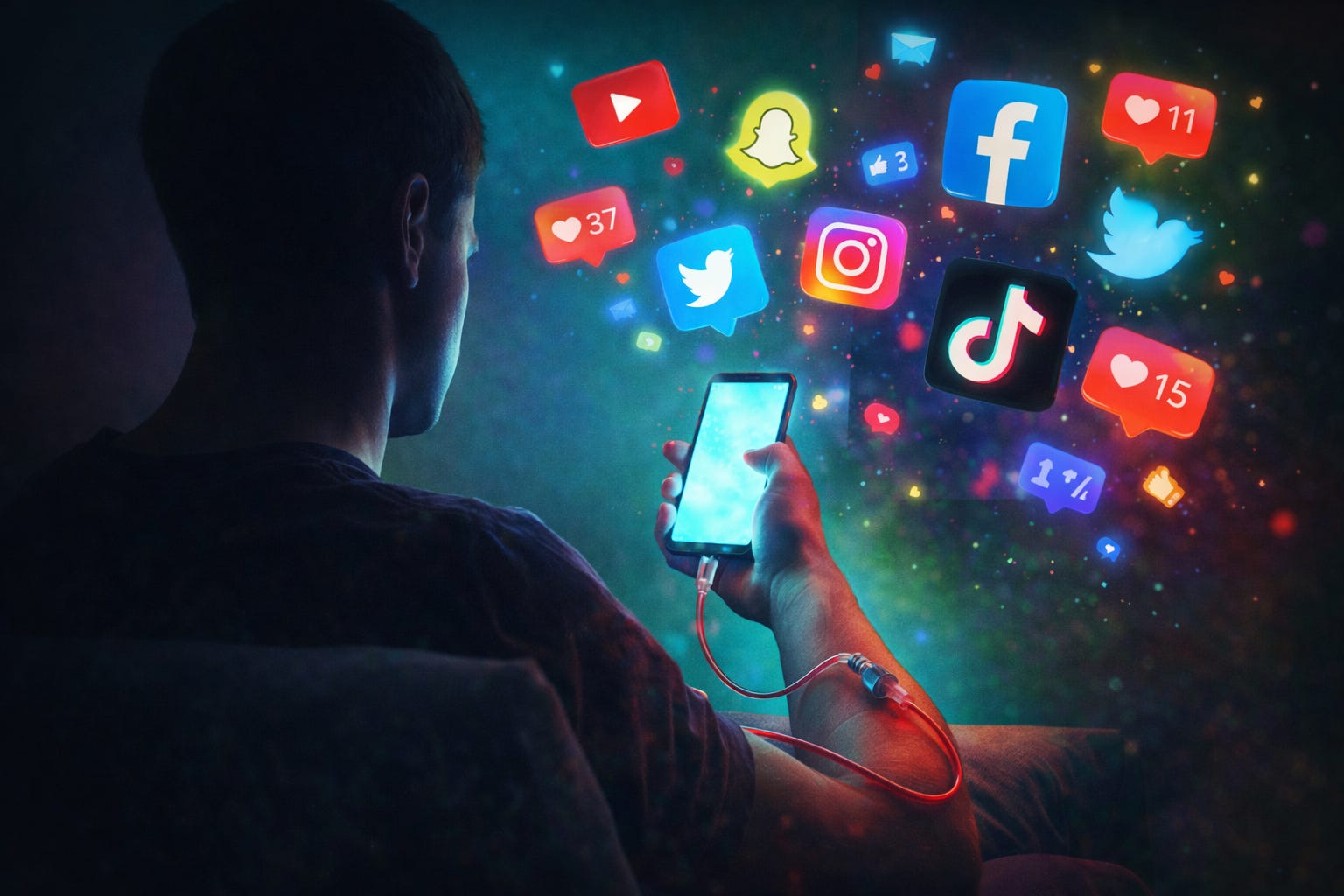
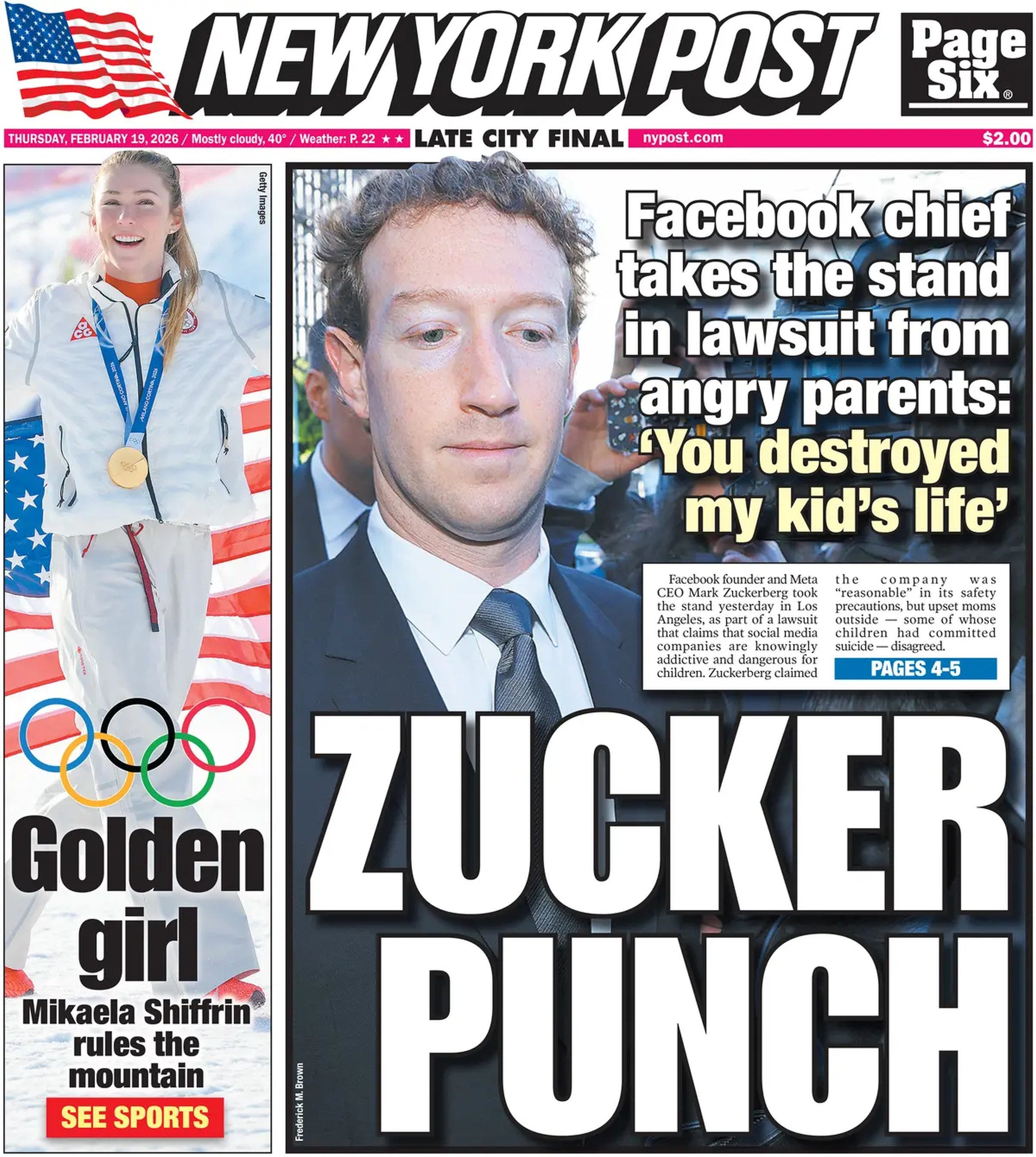
The courtroom battle over Meta isn’t just about one company - it’s about whether an entire digital ecosystem was engineered to keep us scrolling long after it stopped being healthy. As Mark Zuckerberg defends his platforms against claims they were deliberately designed to hook young users, the bigger question hangs in the air: are we witnessing the social media industry’s Big Tobacco moment - or just another cycle of denial?
Around the world, governments - having sleepwalked their way in the way they’ve been doing with the threats from climate change - are scrambling to restrict teenage access to platforms even as smartphone adoption accelerates, algorithms grow more sophisticated, and cheaper devices push constant connectivity deeper into everyday life. The result is a society increasingly glued to screens - distracted, anxious, and in many cases unable to look away.
This Saturday, my World Briefing subscribers-only video goes far deeper. I’ll share my never-before-released observations and research on smartphone and social media addiction - insights that genuinely made the hair stand up on the back of my neck. If you think you understand the scale of this problem, think again.
News Briefs
Mark Zuckerberg took the stand in federal court to defend Instagram against allegations that it was deliberately designed to be addictive to children and teens. It’s the first time he’s testifying about child safety in front of a jury. YouTube is also included in the lawsuit. TikTok and Snapchat chose to settle before the trial began. It’s the first time he’s testified about child safety in front of a jury. The trial focuses on a now 20-year-old woman known by her initials, KGM, who says she became addicted to social media as a young girl and that excessive use exacerbated her depression, anxiety and suicidal thoughts. At issue is whether tech companies, despite knowing it would cause psychological harm, intentionally design their social media platforms to hook young users with addictive features like infinite scroll, personally tailored algorithms and push notifications. The outcome will have big implications for some 1,600 similar cases across the country and could lead to monetary damages or force major changes to the platforms themselves. Says Bobby Allyn, Business and Technology Reporter, NPR: “The central question is, are these tech companies legally culpable for hooking young people to social media apps? And what that essentially will mean is, will they have to pay billions of dollars in monetary damages? Will they have to make sweeping reforms to Instagram, to YouTube? And what did they know about the harms to young people? What did they do to conceal it to the public? And, very importantly, Geoff, was this deliberate?”
Bobby Allyn on PBS:
It’s going to be a really uphill battle, because it’s one thing that social media apps have fueled people’s feelings of depression, body dysmorphia, suicide ideation, all of these other mental health issues, right, to sort of exacerbate that.
It’s another to cause it. And what experts say is adolescent mental health issues have a lot of sort of very complex root causes. And this case is going to hinge on what degree the jury believes the companies themselves caused the mental distress that so many of these young people have experienced.
And we have one person here who’s now in her 20s who says she got addicted to TikTok and Instagram and YouTube very young, but there are 1,600 other plaintiffs who have consolidated into this giant legal case against these tech giants.
So the verdict here from this jury is going to have a really, really far-reaching impact on all of these other cases that are awaiting the outcome.
We have been debating that for decades. The reason why we haven’t had a big trial until now is because of Section 230, which is a sort of impenetrable fortress for Silicon Valley. Any time you try to sue Meta or Google or TikTok, they invoke Section 230. The lawsuit goes away.
What’s novel here is the legal approach. They are attacking Meta and Google by saying this is a defective product, similar to how tobacco was a defective product. In the ‘90s, there was a huge landmark lawsuit saying that they specifically targeted and misled young people to get addicted to their product.
That is what is being compared in this case, that this is the big tobacco comparison, but in the social media era.
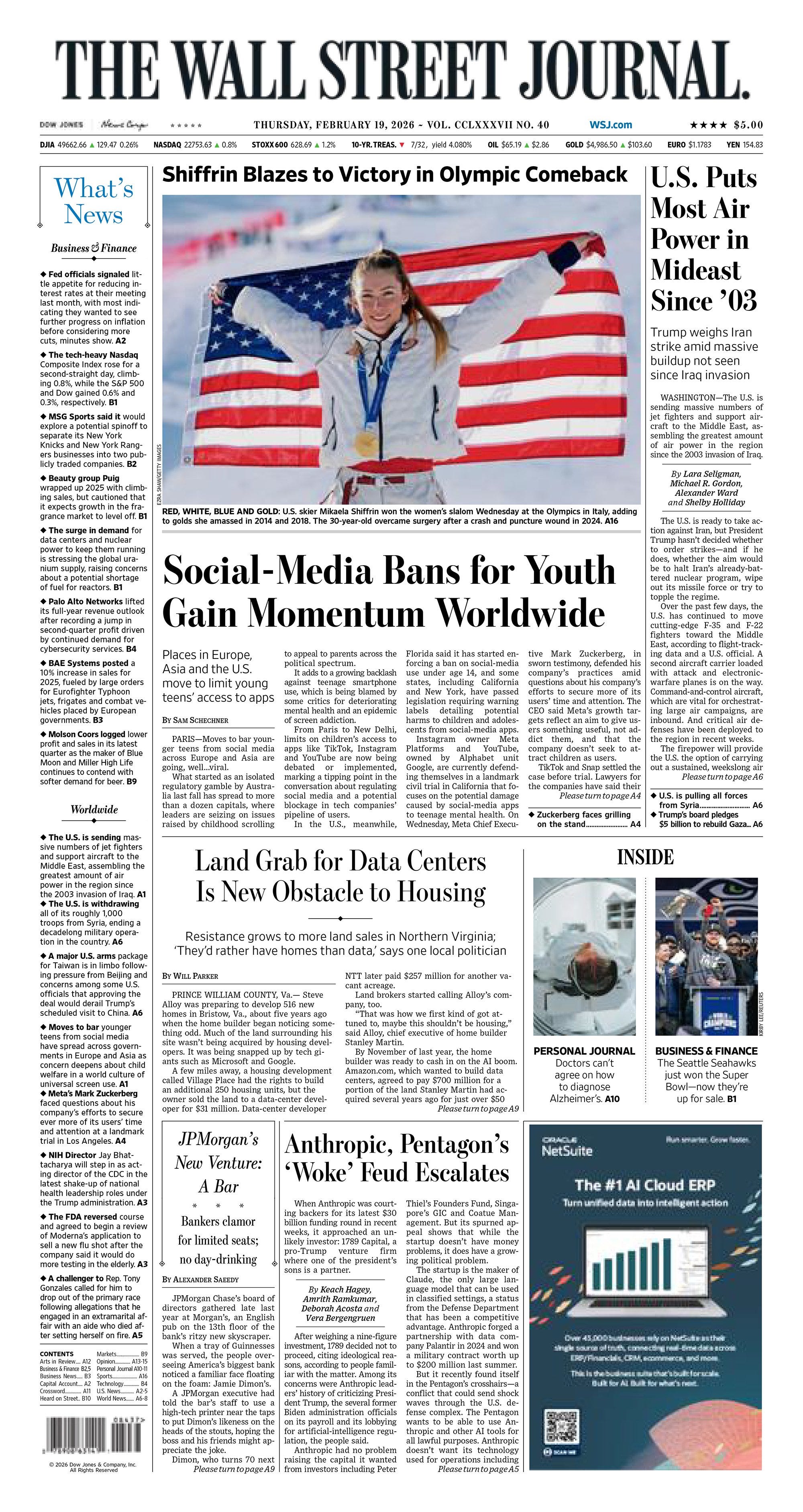
Moves to bar younger teens from social media across Europe and Asia are going, well…viral. What started as an isolated regulatory gamble by Australia last fall has spread to more than a dozen capitals, where leaders are seizing on issues raised by childhood scrolling to appeal to parents across the political spectrum. It adds to a growing backlash against teenage smartphone use, which is being blamed by some critics for deteriorating mental health and an epidemic of screen addiction. From Paris to New Delhi, limits on children’s access to apps such as TikTok, Instagram and YouTube are now being debated or implemented, marking a tipping point in the conversation about regulating social media and a potential blockage in tech companies’ pipeline of users. In the U.S., Florida says it has started enforcing a ban on social-media use under age 14, and some states, including California and New York, have passed legislation requiring warning labels detailing potential harms to children and adolescents from social-media apps - WSJ
Thames Valley Police said they arrested “a man in his 60s from Norfolk” after vehicles, believed to be unmarked police cars, were seen arriving at the Sandringham Estate, a private royal residence. Andrew was not identified in the statement from police, and which confirmed the man was in custody while searches were carried out at addresses in Berkshire and Norfolk. The arrest comes after police said they were assessing a complaint over the alleged sharing of confidential material by the former prince with the late sex offender Jeffrey Epstein. Andrew, who turns 66 today, has consistently and strenuously denied any wrongdoing. “This is another extraordinary development in what has been an extraordinary story,” writes royal correspondent Sean Coughlan. “It’s hard to think of any precedent.” - BBC
King Charles has said “the law must take its course” after expressing his “deepest concern” over the arrest of his younger brother, Andrew Mountbatten-Windsor.
In a statement, the monarch said: I have learned with the deepest concern the news about Andrew Mountbatten-Windsor and suspicion of misconduct in public office. What now follows is the full, fair and proper process by which this issue is investigated in the appropriate manner and by the appropriate authorities. In this, as I have said before, they have our full and wholehearted support and co-operation. Let me state clearly: the law must take its course. As this process continues, it would not be right for me to comment further on this matter. Meanwhile, my family and I will continue in our duty and service to you all. - The Guardian
In a sign of his possible desire to run for the presidency – after the war is over – Ukraine’s former military chief - Valerii Zaluzhnyi - spoke publicly for the first time about a deep rift between himself and President Volodymyr Zelensky in a recent interview with AP. Tensions emerged soon after Russia’s full-scale invasion in February 2022, and tempers often flared between the two men over how best to defend the country, Zaluzhnyi said. The strained relationship reached a boiling point later that year, when dozens of agents from Ukraine’s domestic intelligence service raided Zaluzhnyi’s office, he said. Zaluzhnyi alleges that the previously unreported incident was an act of intimidation. It risked exposing their rivalry at a time when national unity was paramount. Ukraine’s security service, known as the SBU, said that no search was ever carried out at Zaluzhnyi’s office, though it acknowledged that the address was part of an investigation unrelated to him. Zelenskyy’s office declined to comment for this story. The AP could not independently confirm Zaluzhnyi’s account of the raid. Zaluzhnyi said that during the 2022 raid on his office he called Zelensky’s then chief of staff warning him he was prepared to call in the military to stop it and protect the command center: “I will fight with you and have already called in reinforcements to the center of Kyiv for support.” While that near crisis early in the war passed, disagreements between Zaluzhnyi and Zelensky over how to defend their country persisted, according to Zaluzhnyi, who said he often challenged the president’s military strategy. A dispute over a counteroffensive in 2023 that ultimately failed was particularly contentious, the former general said. Although Zaluzhnyi’s popularity with the public had been cemented by several successes on the battlefield, Zelensky dismissed him as army chief in February 2024, and later announced he would be headed to London. The move was widely seen by political analysts as an effort by Zelensky to limit Zaluzhnyi’s potential as a political rival by distancing him from day-to-day affairs in Ukraine - AP
A European Commission spokeswoman confirmed that Brussels was in touch with Ukraine regarding the Druzhba pipeline that has been damaged since late January, preventing Russian oil from flowing to Hungary and Slovakia. Anna-Kaisa Itkonen told journalists in Brussels the EU executive was ready to call an emergency coordination group with relevant parties to discuss alternative routes to fuel supply. Itkonen also said there were “no short-term risks to security of supply for Hungary and Slovakia” as they hold 90 days of reserve stocks. The halt of Russian oil via the pipeline has caused tensions between Ukraine and EU member states Hungary and Slovakia. While Kyiv has maintained that a Russian drone attack was responsible for the disruption starting on January 27, Slovak Prime Minister Robert Fico said on February 15 that Ukraine had delayed the restart of the oil flow in order to pressure Hungary to drop its veto on Ukraine’s future membership of the European Union - RFE/RL
Four journalists investigating a secretive Trump administration effort to deport migrants to the African nation of Cameroon were detained on Tuesday, according to two of the people detained. The journalists, along with a lawyer representing most of 15 detained migrants, were seized by the police at a state-run compound in Yaoundé, the capital of Cameroon, where they were interviewing the deportees. The New York Times reported on Saturday that the compound was a detention center for African migrants who were recently deported from the United States by the Department of Homeland Security. None of the deportees are Cameroonian citizens. And almost all had received protection from American courts, which banned the government from sending them back to their home countries, where they would most likely face persecution, according to government documents obtained by The Times and interviews with their lawyers. The five people detained on Tuesday were taken to the judicial police headquarters, where the journalists were separated and interrogated, according to Joseph Awah Fru, the lawyer supporting the deportees, and Randy Joe Sa’ah, a freelance journalist who regularly works for the BBC and was one of the detainees. The three other journalists — a reporter, a photojournalist and a videographer — were based in Cameroon and working on assignment for The Associated Press. The A.P. said that, according to its understanding, the reporter was slapped but “did not sustain serious injury.” Some of the journalists, Mr. Fru and Mr. Sa’ah said, were kept in a cell for hours. The two men said the A.P. reporter appeared to have been beaten up and had told them the police had attacked him. All of the five were later freed. Before the journalists were released, the police confiscated their phones, cameras and laptops, saying the journalists had captured sensitive government information, according to Mr. Fru and Mr. Sa’ah. It was unclear if any had been charged - NYT
Donald Trump is now seen as a bigger threat to global peace than even Russia by some of America’s former allies. A POLITICO Poll conducted Feb. 6–9 with over 2,000 respondents each from Canada, the U.K., France, and Germany, found Canadians are far more likely than Europeans to view the U.S. as a greater threat to global peace than Russia. Nearly half of Canadians, 48 percent, ranked the United States as the biggest threat to world peace, compared with just 29 percent naming Russia. Sixty-nine percent of Canadian respondents said Trump is actively seeking conflict with other countries with no provocation. The Daily Beast has contacted the White House for comment. The survey results come as relations between the U.S. and Canada, historically close allies, have broken down since Trump began his second term. Even more striking, 42 percent of Canadians said the U.S. is no longer an ally at all, while only 37 percent insisted the partnership remains intact. The survey also highlights broader concerns about U.S. actions overseas following Trump’s operation in Venezuela and push to seize Greenland from Denmark, a NATO ally: 43 percent of Canadians see the U.S. as “mostly a threat” to global stability, while another 34 percent say America is “sometimes a force for stability, sometimes a threat.” - The Daily Beast
The journals…..