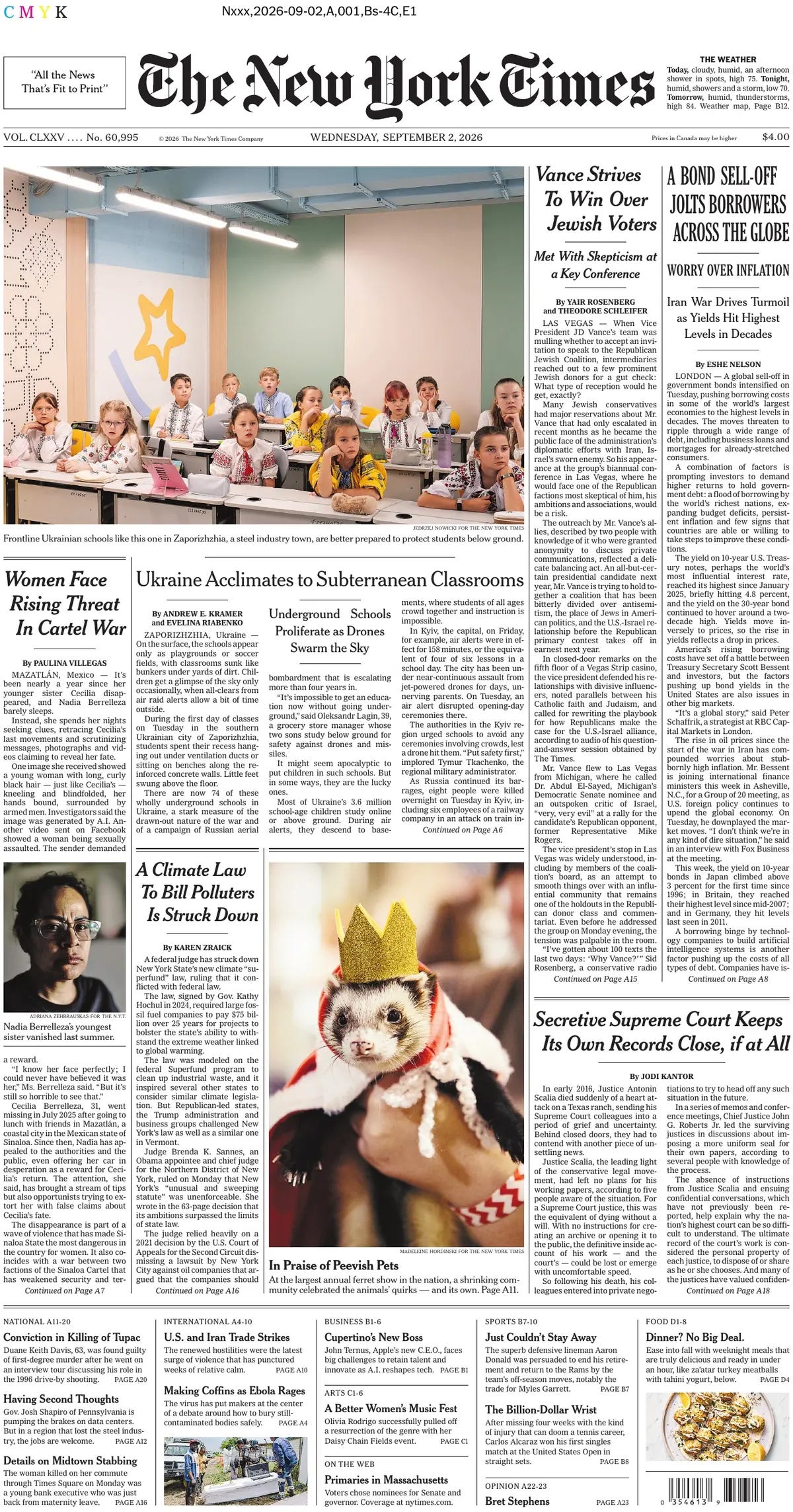
The United Nations Environment Programme released a report in Nairobi today conceding what climate scientists have warned for years: the world will cross 1.5°C of warming, probably within the next few years. The best-case scenario in Limiting Overshoot: Navigating Exceedance of 1.5°C and Pathways Towards Return peaks at 1.8°C. Most scenarios run higher.
The number is not really the story. The framing is.
For a decade, “keep 1.5 alive” was the organizing slogan of UN climate diplomacy. UNEP has now replaced it with “overshoot, peak and decline” — an argument about how far past the line we go and how long we stay there, rather than whether we cross it.
Officially, 1.5°C has not been abandoned. UNEP's own summary of the report calls it a cornerstone of the Paris Agreement in the same breath as it describes exceedance as "widely assessed as unavoidable" — the objective is now to cross the line, minimize the overshoot and eventually return below it. But that is a profound change nonetheless. UNEP anticipates this reading and rejects it, arguing that overshoot is a case for urgency rather than resignation. The distinction is real. It is also the argument that becomes available once prevention no longer is.
The timing matters. This is a Spotlight Report, not UNEP's flagship Emissions Gap Report, which lands closer to the summit. That makes it a separate and deliberately early intervention.
COP31 opens in Antalya on November 9 under one of the oddest arrangements in the summit’s history: Türkiye hosts and runs the public programme, Australia chairs the negotiations, and Pacific states supply much of the moral urgency. Both COP31 principals quoted in UNEP’s release — Australia’s Chris Bowen and Türkiye’s Murat Kurum — use the report to point toward Antalya.
In other words, the incoming COP leadership is setting expectations more than two months before delegates arrive: 1.5°C is no longer something the world can realistically avoid crossing. The argument now is over how badly we overshoot it — and whether we can ever get back.
News Briefs
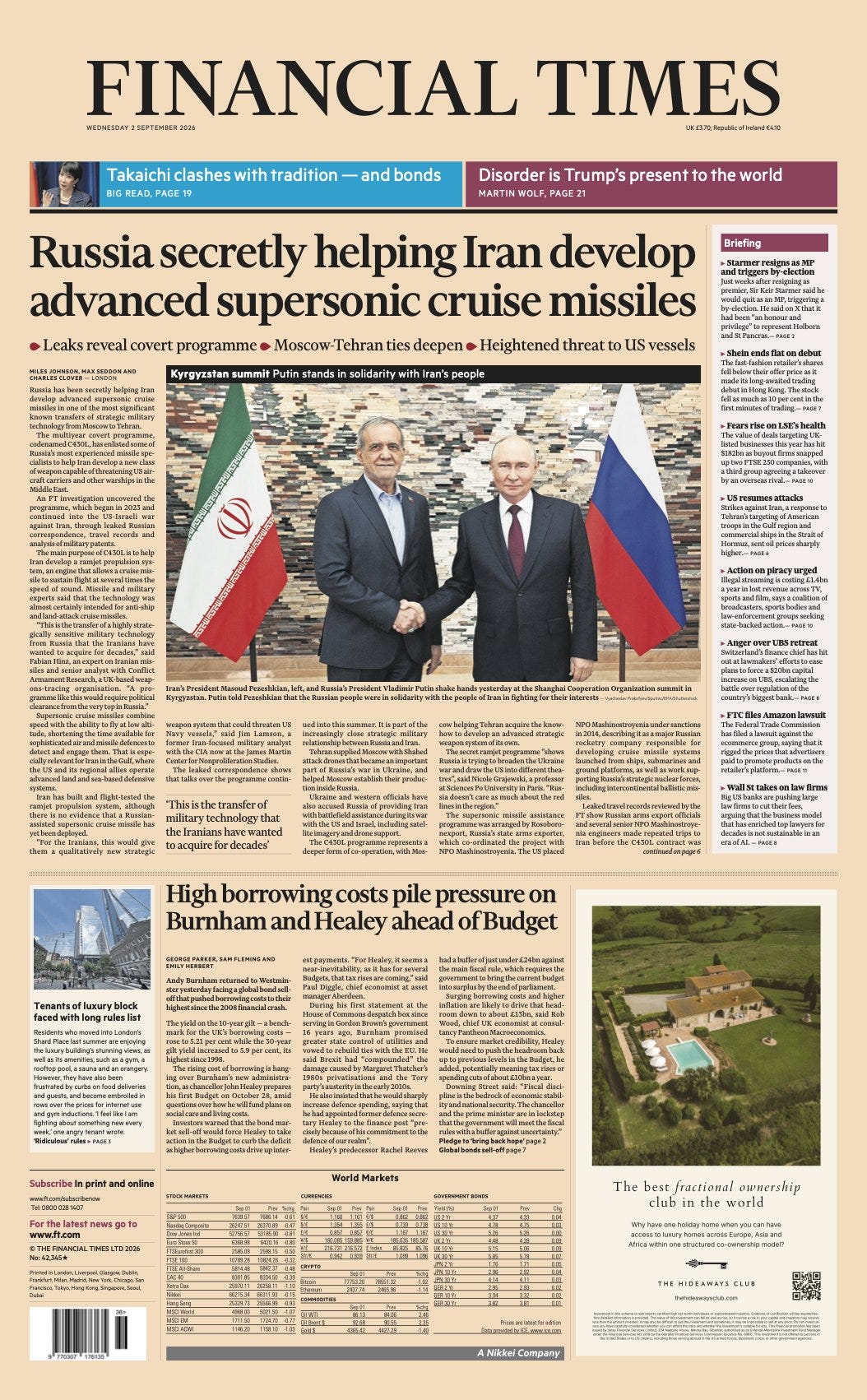
The Financial Times reports today that Russia has been covertly helping Iran develop advanced supersonic cruise missiles, based on leaked correspondence, travel records and patent filings. The transfer centres on ramjet propulsion — the technology that lets a missile sustain supersonic speed over distance — and the FT says the programme began in 2023 and continued through the twelve-day Israel-Iran war. The significance is in the direction of travel. For three years the Moscow-Tehran arms relationship ran the other way: Iranian Shahed drones, then Russian-built copies, launched nightly at Ukrainian cities. What the FT describes is Russia settling that account with something far higher up the technology ladder. Drones are cheap and disposable. Ramjet propulsion is a capability Iran has wanted for decades and could not build alone. Two implications. Iran’s ability to threaten US carriers and warships in the Gulf changes if this matures — and Washington resumed strikes on Iranian-linked targets in the region this week. And the sanctions architecture built around Russia’s arms exporters after 2014 has not stopped the transfer. Note the timing. Putin and Masoud Pezeshkian shook hands at the Shanghai Cooperation Organisation summit in Kyrgyzstan yesterday, where Putin spoke of Russian solidarity with the Iranian people. The public embrace and the covert programme are the same policy.
Iran’s foreign ministry spokesman Esmaeil Baqaei says the killing of four people - including a child - at a wedding celebration was a “war crime”. The Iranian Red Crescent says they were killed when shrapnel from a US missile hit a house in southern Iran - Iranian media initially said five people had died. The US military says it is aware of the reports but that it never targets civilians, and was striking Iranian targets in response to “recent attempted” Iranian attacks. In response to US strikes on Iran, Tehran launched missile and drone attacks at American targets across the Middle East on Wednesday - including in Kuwait, Jordan, Iraq and Bahrain. The latest strikes appear to be more widespread and more intense, signalling a serious military escalation, the BBC says. Meanwhile, Iran’s Revolutionary Guard Corps says two oil tankers hit mines while trying to cross the Strait of Hormuz - BBC
The German government said on Tuesday that it had concluded that Russia was responsible for an attempted drone attack at Leipzig/Halle Airport last month and ordered a series of measures in response, including the closure of a consulate and a Russian cultural center in Berlin. German Interior Minister Alexander Dobrindt said intelligence findings indicated that individuals involved in the attack were acting on behalf of Russian state agencies. “Taken together, police investigations, patterns of the offenses and intelligence findings establish Russian responsibility for the attempted attack at Leipzig Airport,” he said. Standing alongside Dobrindt, Foreign Minister Johann Wadephul said Germany did not view Leipzig as an isolated incident. “It fits into a broader pattern of Russian hybrid operations in Europe,” he said. Wadephul said Germany’s response would include closing Russia’s consulate general in Bonn and terminating its agreement with the Russian House cultural center in Berlin. Russia’s ambassador to Germany was summoned on Tuesday. Responding to Germany’s announcement, Russian Foreign Ministry spokeswoman Maria Zakharova said Moscow would respond to what she called Berlin’s “anti-Russian action,” according to Interfax news agency. She did not elaborate - Moscow Times
Ukraine’s President Volodymyr Zelensky warned airlines and insurance companies on Tuesday that the presence of Ukrainian drones had made Russian skies dangerous to use and that they were effectively closed. “Today, we want to warn every airline that uses Russian airspace, every insurer, everyone who still uses key Russian airports: the Russian sky is becoming completely dangerous,” Zelensky said in his nightly video address. Ukraine poses no threat to civil aviation, he said, “but there will be drones in Russia‘s skies and due notice must be taken….Although Russian authorities are not properly announcing it, Russian airspace will effectively be closing. The war started by Russia is closing its own skies,” Zelensky added. The full risk of Ukrainian drones to aviation over Russia is not clear, but there have been deadly incidents of civilian aircraft being mistakenly targeted in the region. Aviation risk advisory firm Osprey Flight Solutions said in an alert to clients that while the majority of Ukraine’s drone and missile strikes were likely to occur within 300 kilometers (186 miles) of the border, daily attacks deeper inside Russia were near-certain through 2026, including near Moscow and St Petersburg. “There is also a realistic possibility that the frequency of Ukrainian strikes will continue to increase in the short term deep inside Russian territory,” the alert said. “It is assessed that miscalculation and/or misidentification is likely in areas related to the Ukraine conflict.” - Reuters
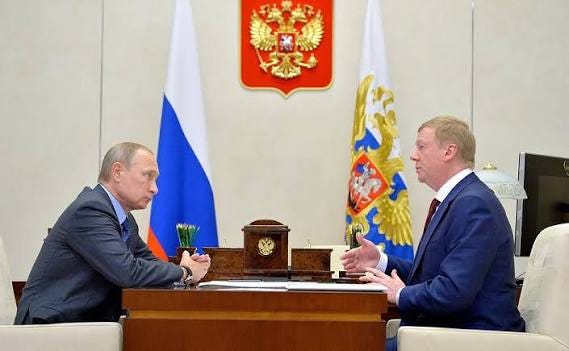
Ottawa Quietly Delists Chubais
Canada removed one of Putin’s former envoys from its sanctions list this month. No announcement, no explanation - just a line repealed in the Gazette while the government insists its Russia policy has never been tougher.
On August 26, in the Canada Gazette’s Part II, under the heading Regulations Amending the Special Economic Measures (Russia) Regulations, a single item was repealed: number 1509, Anatoly Borisovich Chubais.
There was no press release. No statement from Global Affairs. The order, approved on the recommendation of Foreign Minister Anita Anand and dated August 13, runs to two operative sentences. Its stated justification is that the minister received a delisting application “that provides reasonable grounds.” Which grounds, the document does not say.
Chubais is not a marginal figure. He ran Russia’s privatisation programme in the 1990s, the process that manufactured the oligarch class. He headed the state nanotechnology corporation Rosnano for more than a decade. Until March 2022 he was Putin’s special representative for relations with international organisations — a serving envoy of the state that invaded Ukraine. Canada listed him in mid-2025, after Navalny’s Anti-Corruption Foundation named him among the Kremlin insiders it wanted sanctioned following its founder’s death in an Arctic penal colony.
He applied to be removed in September 2025. When Ottawa did not respond within the ninety days the regulations allow, he went to the Federal Court in February seeking an order compelling a decision; by then, his filing noted, 162 days had passed. His case was that he had “historically” opposed Putin, had opposed the war, and had lived in exile since 2022. He also directed Global Affairs to a Council of Europe parliamentary decision declining to recognise the Anti-Corruption Foundation as a Russian democratic force - incredibly, using a ruling against Navalny’s organisation to undo a listing that organisation had prompted.
Six months after filing, he was off the list. He may now enter Canada, and Canadians may do business with him.
This is not a one-off. In February, Ottawa quietly removed former Rosneft Belgian-born executive Didier Casimiro by the same route — application, Gazette notice, no comment. A pattern is becoming visible: apply, wait out the deadline, litigate, and Canada’s Russia list turns out to be negotiable, one line at a time, in a publication almost nobody reads. The additions come with ministers at podiums. The subtractions come in the Gazette.
Set that against the posture. Canada has sanctioned more than 3,400 individuals and entities since 2014 and rarely misses a chance to say so. Canada is also the only G7 country that has not expelled a single Russian diplomat since February 2022 — the last expulsions were four, in 2018, over the Salisbury poisoning. Ottawa appears to be leaning into questionable arithmetic rather than principle: Russia has dozens of accredited diplomats in Canada, Canada has barely a dozen left in Moscow, and any reciprocal round would finish off the embassy.
Global Affairs Canada did not respond by deadline to questions about the grounds for the decision, whether the Federal Court application bore on its timing, or how many people have been removed from the Russia list on application since February 2022. The Ukrainian Canadian Congress did not respond to a request for comment, or to a question about whether it was consulted before the delisting.
The regulatory impact statement accompanying the order says Canada’s delisting process supports the fair and transparent application of sanctions. Asked to explain one, the department said nothing.
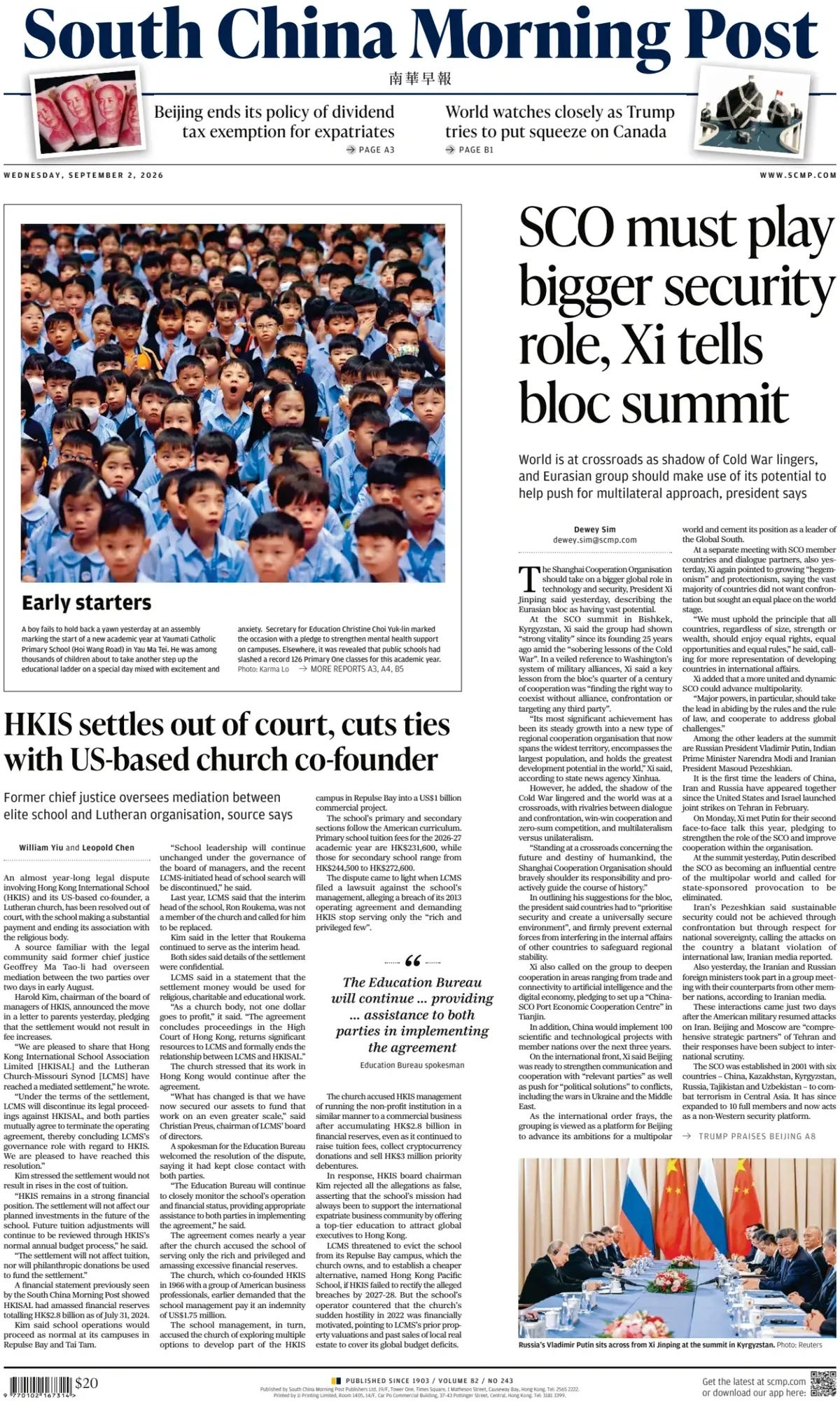
A segment from my BBC World Television interview on Tuesday, connecting the dots between the G20 finance ministers' meeting in North Carolina and the SCO summit in Kyrgyzstan — with analysis up top on why Modi's language on Russia's war in Ukraine appears to have shifted.
Donald Trump has melted down over a minute-long ABC News segment about his disastrous war in the Middle East. The network’s chief White House correspondent, Mary Bruce, reported on Tuesday evening that the Trump administration was looking to “turn up the economic pressure” on Iran as the two countries traded military strikes for the first time since June. Not long after the broadcast, the 80-year-old president posted on Truth Social, denying the report and appearing to contradict Bessent’s comments. “I’m not trying to force Iran to the bargaining table, as ABC Fake News reported,” he said. “I couldn’t care less if they sign a worthless, to them, agreement. I like our position now much better, with almost total control of the Hormuz Strait, and their economy totally collapsing. They are just playing out the inevitable. When are the Iranian people going to rise up and fight?” he added. Trump’s post ended with his usual sign-off—“President DJT”—although his Truth Social posts are mostly written and sent by his $150,000-a-year assistant, Natalie Harp, 35 - The Daily Beast
The journals…