When Donald Trump opens the G20 at his own Trump National Doral resort on 14–15 December, the most telling thing about the room will be who isn’t in it.
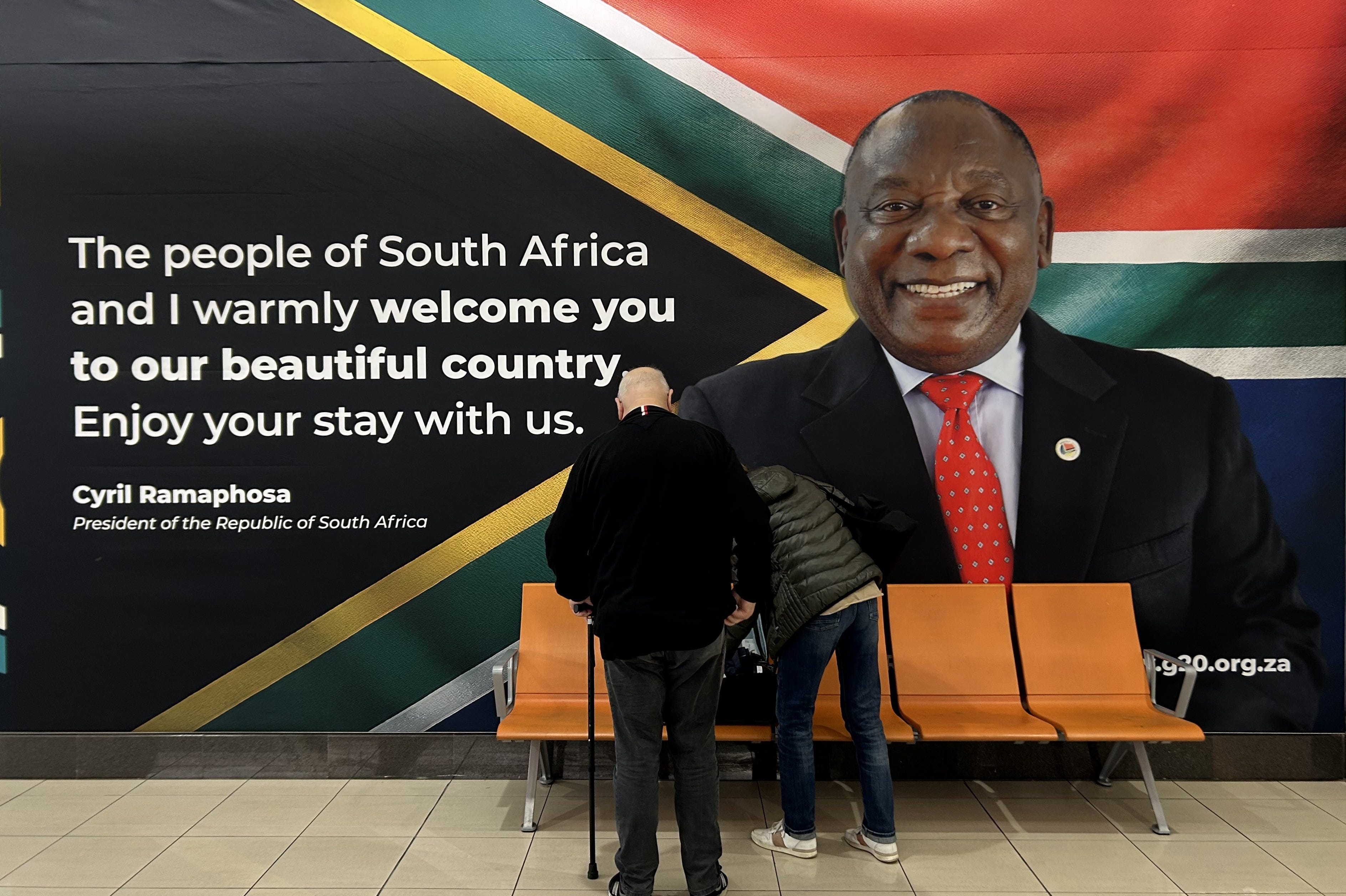
South Africa, a founding member and last year’s host, has been shut out. No G20 member has ever been excluded from a leaders’ summit before. Its seat, in all but name, has gone to Poland, which the US presidency lists not among its guests but alongside the members.
Washington’s stated reason is that Poland has grown into one of the world’s 20 largest economies. The unstated ones are Trump’s feud with Cyril Ramaphosa and his warm ties to Poland’s president, Karol Nawrocki, whom he endorsed.
The result is a G20 with no African state at the table. The continent’s only voice is the African Union, a permanent member since 2023.
The guest list reads less like a ranking of economies than a ledger of White House deals. Armenia and Azerbaijan showcase the peace accord Trump brokered between them. Kazakhstan and Uzbekistan bring uranium and critical minerals. Then come Qatar, the UAE, Singapore and Vietnam, plus a heavy European contingent: Finland, Ireland, the Netherlands, Norway and Spain, on top of the European members.
Russia stays on the member list, as it always has, and the Kremlin says it will be represented one way or another. Washington formally invited Vladimir Putin in September. Whether he comes is still undecided. But after the red carpet in Alaska, and a 40-minute meeting in Shenzhen last week where Trump greeted him as “my friend”, nobody should be surprised if he does. Ukraine is not invited.
Ramaphosa, the democratically elected president of a founding member, is shut out. Meanwhile, the host goes out of its way to make room for a leader wanted by the International Criminal Court for war crimes.
Also missing from the official participant list: the UN, the IMF, the World Bank and the WTO, whose leaders normally attend. Only the AU and the EU appear as non-state participants. Whether by omission or design, it fits a presidency that wants the G20 back to growth and nothing else.
The room that couldn't agree
If Miami is about who gets a seat, Antalya showed what happens when the room can’t agree.
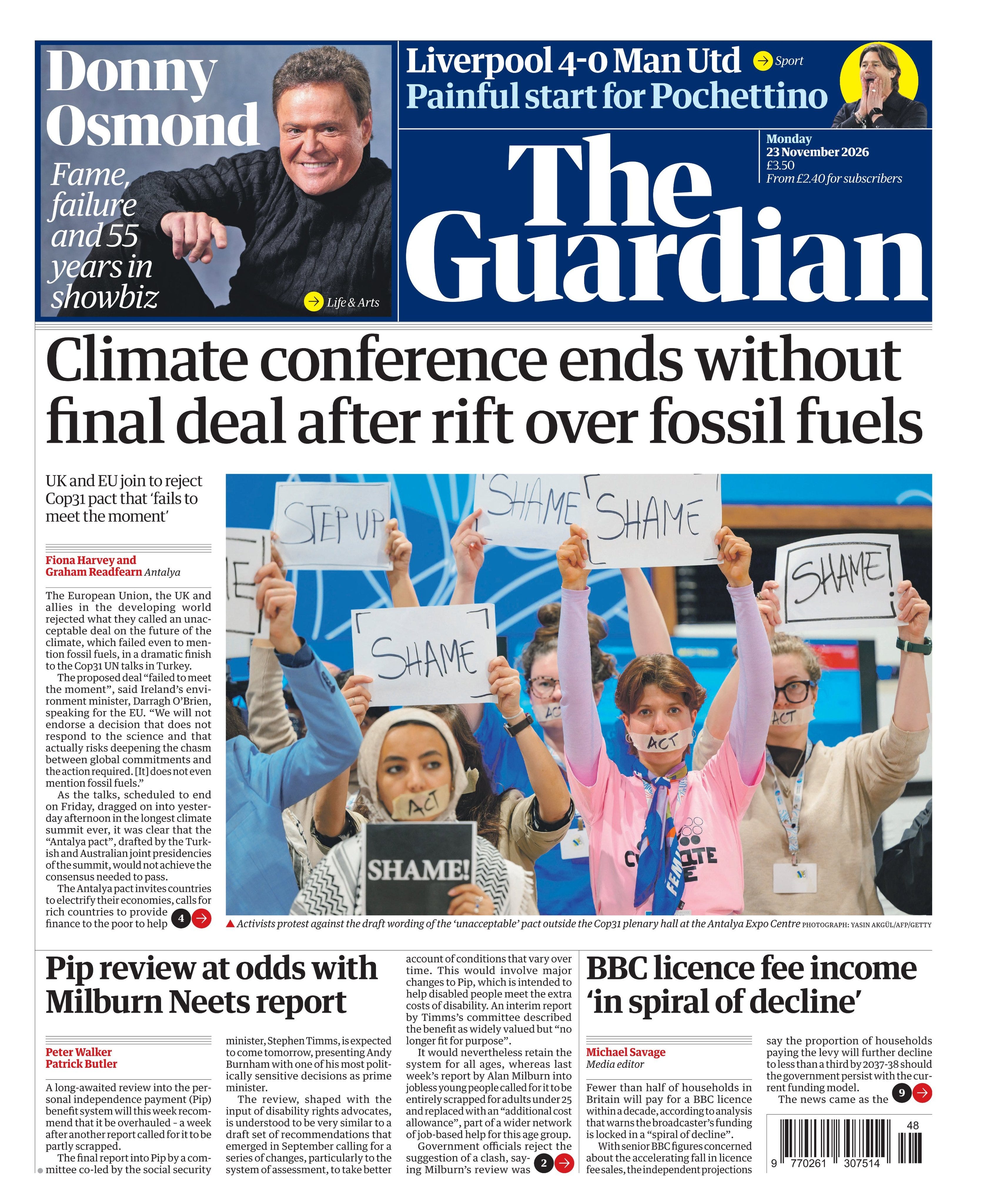
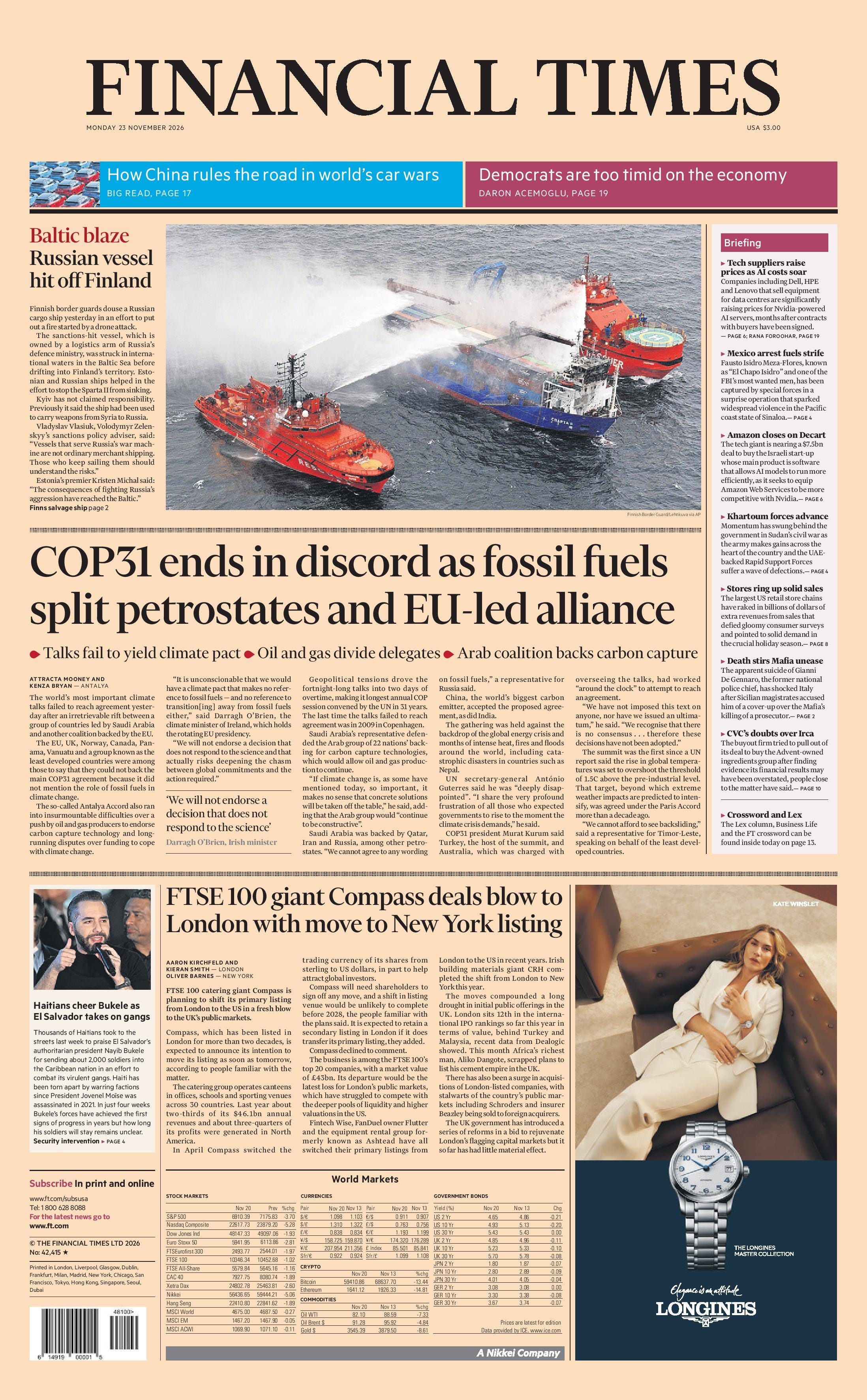
COP31 ended on Sunday, two days into overtime, without its headline agreement. The Antalya Pact, the overarching political decision meant to define the summit, was not adopted. It was the longest UN climate summit on record - and the first time since Copenhagen in 2009 that the talks failed to reach agreement.
That is not the same as nothing agreed. Separate negotiating tracks produced decisions on a just transition, the Adaptation Fund, carbon markets and transparency, and the Just Transition Work Programme was extended for three years. Businesses, investors and cities announced voluntary clean-energy initiatives on the sidelines. What failed was the political declaration, and with it any agreed language on fossil fuels.
The Turkish presidency’s draft pact was built around energy: electricity at 35% of global final energy use by 2035, more grids and storage, more carbon capture. What it left out was the words “fossil fuels”. The EU, speaking through Ireland’s climate minister, refused to endorse it. Britain, Panama, the Marshall Islands and other island states joined. China and India said they could accept the text.
By the end, Riyadh, backed by Qatar, Iran and Russia, according to the FT, was the immovable one: it would not even restate the fossil-fuel commitment agreed three years ago.
European diplomats told Politico privately that with the "old U.S." still in the room, Saudi Arabia could have been contained. Either way, the countries that sank Antalya's climate language will be at Trump's table next month: Saudi Arabia and Russia as members, Qatar as a guest.
The island states had enough leverage to block a weak deal, but not enough to win a strong one. That is the limit of influence for small and middle powers today: a veto on paper, little pull in practice.
"COPs have turned into a laughing stock."
— Juan Carlos Navarro, Panama's climate minister
For Ankara, this stings. I saw Turkey’s promotional push for this COP around UNGA in New York, and it leaves without the signature outcome it wanted. But Turkey shared the presidency with Australia, whose climate minister Chris Bowen ran the negotiations, so expect Ankara to spread the blame. Its COP president, Murat Kurum, was quick to say Turkey had forced the draft on no one.
Who runs the UN on 1 January?
Add one more layer of uncertainty. António Guterres steps down on 31 December, and the Security Council still cannot agree on his successor.
Costa Rica’s Rebeca Grynspan remains the frontrunner. But in Friday’s ninth straw poll she drew 10 votes in favour and four against. Crucially, two of those opposing votes came from permanent Security Council members with veto power. The secret ballot doesn’t reveal which countries they were.
With barely five weeks remaining, the prospect of the UN entering 2027 without a confirmed Secretary-General is becoming uncomfortably real. The UN Charter provides no automatic interim arrangement if the Council fails to agree.
A drawn-out succession would compound every problem the UN already faces: wars it cannot stop, humanitarian emergencies it cannot fund, a deepening cash crunch and a Security Council paralysed by great-power rivalry.
So picture mid-December. A G20 redrawn to the host's liking. A climate summit that couldn't agree on a sentence about fossil fuels. And a UN that may enter 2027 without a confirmed leader. The referees of the global system are being sidelined, ignored or left without successors.
World Briefing is preparing its own alternative coverage of the Miami G20. Expect a rather different view of the summit - and of the people who won't be in the room.
News briefs…
EU countries’ plans to send failed asylum-seekers to Rwanda risk fueling violent conflict and forced migration in Africa, according to the Democratic Republic of the Congo. Rwanda stands accused of supporting rebel forces that have taken control of large areas of eastern Congo, resulting in thousands of deaths and hundreds of thousands being displaced, the United Nations has said. Kinshasa fears the new migration plan will allow Rwanda to funnel European money to the rebels and “divert attention from [the country’s] destabilizing role in the Great Lakes region,” according to Congo’s Foreign Affairs Minister Thérèse Kayikwamba Wagner. Last week, five countries — Austria, Denmark, Germany, Greece and the Netherlands — announced they will set up a deportation hub in Rwanda. While talks are ongoing, the five countries plan to start sending people to Rwanda in 2027. It’s part of a broader push by the bloc to gain greater control over who enters the EU — and who gets to stay. EU legislation approved earlier this year allows countries to negotiate such deals, as long as they safeguard fundamental rights. The announcement led to an outcry from rights groups, which warned that Kigali’s human rights record should disqualify it from such a partnership. Rwanda, besides having “a well-established record of repressing dissent,” also “provides critical support to and exercises overall control over the M23 armed group in eastern Congo,” NGO Human Rights Watch said this week. - Politico
Ukrainian President Volodymyr Zelensky said Monday that Ukraine’s military used several naval drones to attack and sink a Russian warship and a cargo vessel alleged to be transporting Russian weapons near the coast of Libya over the weekend. In a post on X, Zelensky called the strikes “an exemplary Ukrainian operation in response to Russia’s war.” He added: “Despite all the enemy’s efforts to counter the attack, the Russian corvette Merkury was sunk,” he wrote in the post, which included a nighttime video of the operation. “It’s one of their newest ships, commissioned in 2023, during the full-scale war.” Zelensky claimed that a Russian Ka-27 combat helicopter was also destroyed along with the Merkury. “We continue our operations in designated waters. We are responding to Russia’s aggression,” he wrote. Al Jazeera, citing local sources, reported Sunday that an “unknown number” of Libyan and Russian nationals were killed in the attack. The Merkury, a warship designed to patrol coastal waters and escort other ships, was reportedly carrying weapons, ammunition and drones. Medical sources told Reuters that 10 people, including Russians and Libyans, were slightly injured and were receiving treatment in Benghazi, where the Merkury was docked. Benghazi is the de facto capital of the eastern Libyan government, which maintains close ties with Russia - Moscow Times
A string of recent incidents across Europe — including a drone strike on a Russian cargo ship near Finland, an alleged Moscow-orchestrated assassination plot in Denmark, and Russian missiles landing in Poland — has raised fears that the Ukraine war is becoming increasingly difficult to contain. While these actions are drawing European countries closer to the conflict, they have remained “just below the threshold of war,” an intelligence analyst told NBC News, allowing Russia to sow instability and confusion across the continent without provoking a direct confrontation. The escalating hybrid attacks come amid faltering US-led diplomatic efforts to end the war. “Before diplomacy can have its day,” a Carnegie Endowment expert wrote, “the likelihood is that cannons will keep doing the talking.”
A Beer With a Canadian? Ask the Pentagon First

Fancy a beer in the mess with a Canadian? If you’re an American soldier, you may now need a permission slip.
According to The Washington Post, U.S. Defence Secretary Pete Hegseth signed a classified memo last week requiring American troops to get approval before socializing with their Canadian counterparts. The Post hasn’t seen the memo itself, and apparently neither has Ottawa. Defence Minister David McGuinty told Reuters he hadn’t personally reviewed it and had seen “no evidence of any kind of change” in how the two militaries operate.
The clearest description came from U.S. senators at the Halifax International Security Forum. Republican Sen. Mike Rounds said the order leaves formal agreements alone and goes after informal and social contact that hasn’t been approved.
Pentagon spokesman Sean Parnell framed it as making sure dealings with Canada “advance tangible U.S. defense objectives.” He said NORAD, intelligence-sharing and NATO cooperation are exempt. That’s a large exemption: NORAD is literally a joint command, with Americans and Canadians sitting side by side watching the continent’s skies.
It fits a pattern. Hegseth has already pulled troops out of programs at think tanks and elite universities he calls “woke,” and he has gone after beards and fitness standards in the ranks. Canada, it seems, is the latest suspect.
For a country that has fought alongside the U.S. from Normandy to Kandahar, the timing is awkward. Canada is pouring billions more into defence, just as Washington has demanded. Apparently, though, buying more military hardware is one thing. Buying an American soldier a beer is quite another.
The journals…