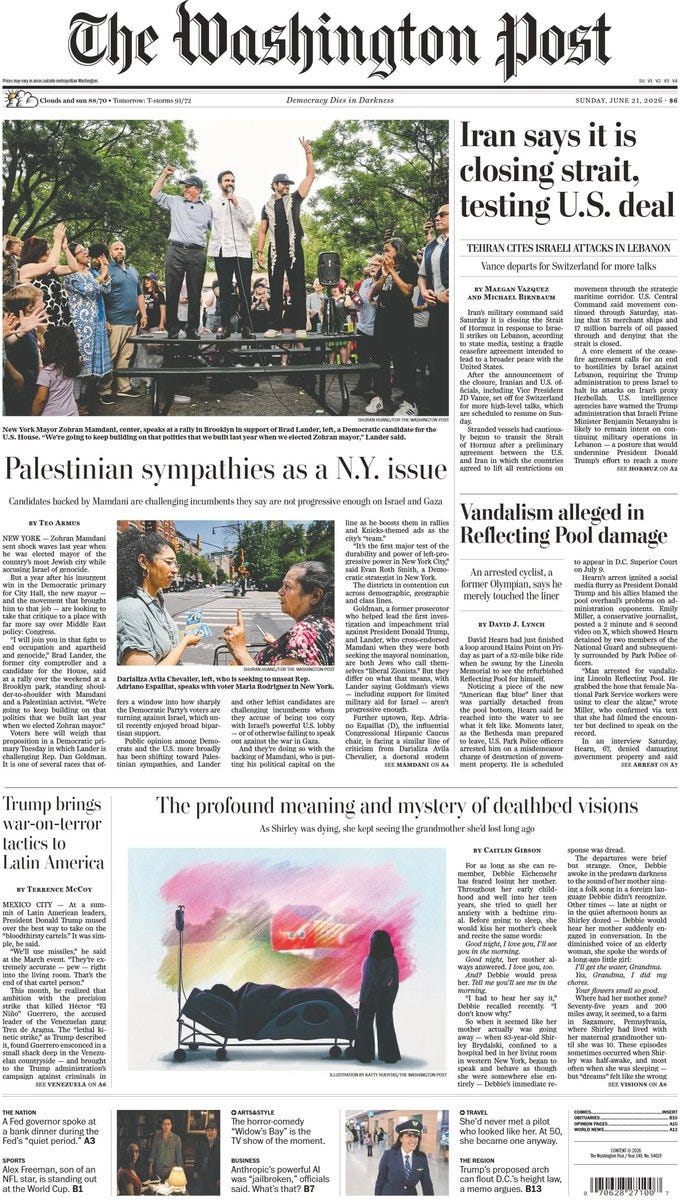
Mediators Pakistan and Qatar emerged from a gruelling 12-hour session in Switzerland declaring “encouraging progress” - with the US and Iran agreeing on a 60-day roadmap toward a final deal, a communication line on the Strait of Hormuz, and a “de-confliction cell” to wind down military operations in Lebanon.
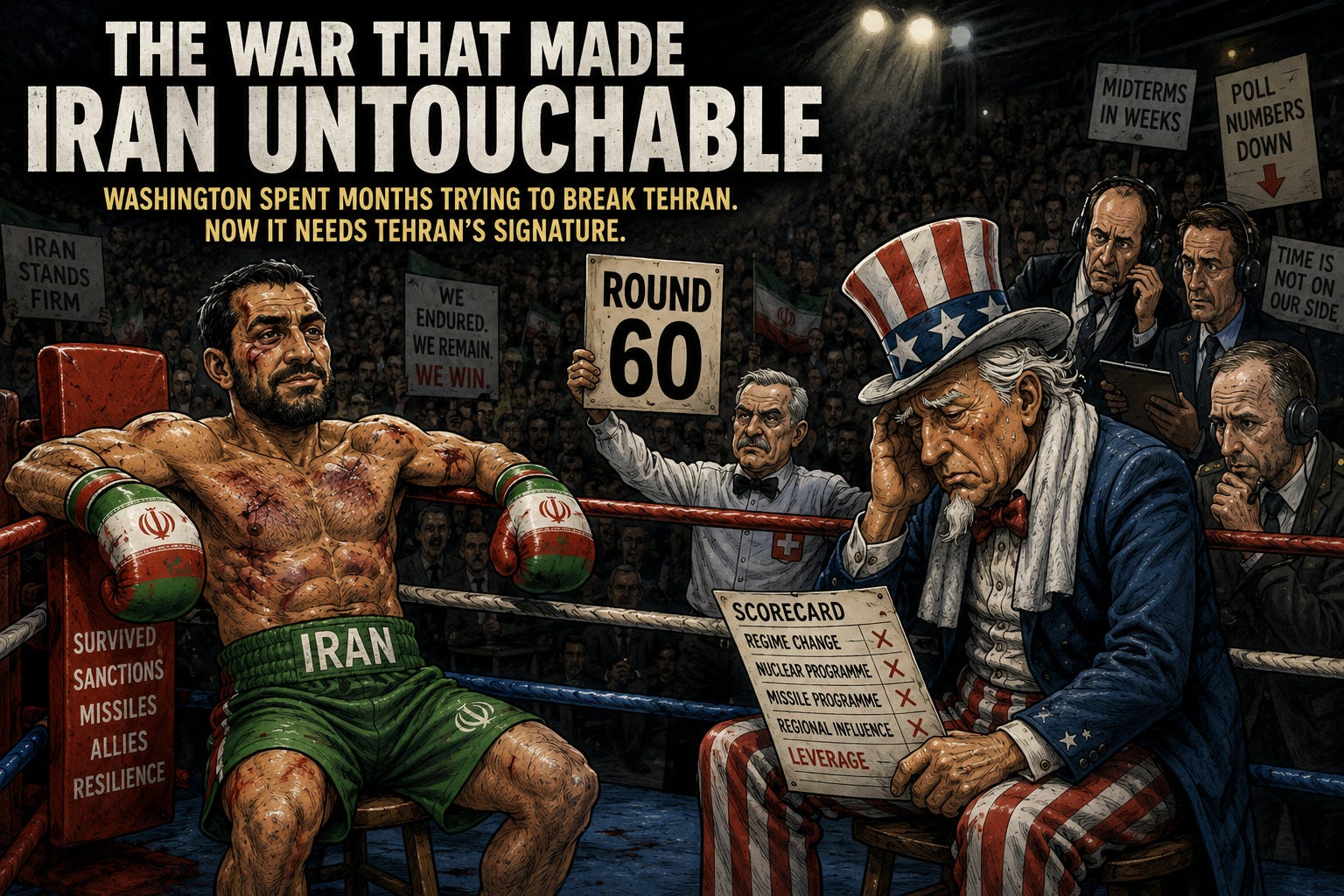
But as Leon Hadar observed this week in Global Zeitgeist, the war itself already rewrote the regional order before anyone sat down at the table. The US set out in February 2026 to destroy Iran as a regional power. It may have crowned it instead.
The Switzerland talks nearly collapsed before they began. When President Trump threatened military action over Iran's support of Hezbollah, Tehran's delegation walked out - forcing Qatari and Pakistani mediators into emergency shuttle diplomacy. As I explained to Times Radio listeners Monday morning UK time, Iran's chief negotiator Mohammad Bagher Ghalibaf projects himself and his country as the ones calling the shots, issuing a blunt warning: Washington should "be careful with its rhetoric." That Iran could deliver such a warning from a negotiating table - rather than a bunker - tells you something about who holds leverage here. And time is not on Washington's side either. Midterm elections are only weeks away, Republicans are bracing for a bruising at the ballot box - and Trump needs something that looks like victory before voters weigh in. Iran knows this. That may explain just how much Washington gave away at the table.
The eventual package was substantial. Iranian Foreign Minister Abbas Araghchi declared “major progress”: the US waived sanctions on Iranian oil exports, released some frozen assets, and launched a major reconstruction plan for Iran. A high-level oversight committee and working groups on the nuclear file, sanctions, and dispute resolution have been stood up immediately.
Hadar’s analysis cuts to the bone here. Iran, he argues, didn’t need to defeat the United States militarily to win strategically. It needed to survive, reconstitute its missile forces faster than anticipated, and wait for American political will to erode. That is precisely what happened. The new leadership around Mojtaba Khamenei and the IRGC - harder, younger, more strategically disciplined than the founding generation - comes to this table not as a supplicant but as a state that survived a superpower’s attempt to destroy it. That is a different kind of authority, and it shows.
The Gulf Arab states, notably, saw this coming. With the partial exception of Saudi Arabia, they denied Washington airspace access and made their opposition to the war public. They live next door to Iran. They knew that whatever emerged from the rubble would still be there in the morning.
The deal’s most combustible variable isn’t in Switzerland - it’s in southern Lebanon. Israeli Defence Minister Israel Katz says Israeli forces will remain there “as long as necessary.” Hezbollah has vowed to confront any ceasefire violations. The de-confliction cell is a mechanism, not a solution.
Hadar’s conclusion is worth sitting with: the patient, unglamorous work of diplomacy that Washington consistently finds unsatisfying was always the only serious option for a country of Iran’s size, history, and strategic position. Sixty days, a lot of working groups - and an American president who still can’t resist a threat.
Watch the Strait of Hormuz. Watch Katz. And watch whether Trump’s impulse control outlasts the calendar.
News Briefs
After a gruelling 12-hour session in Switzerland, mediators Pakistan and Qatar declared “encouraging progress” on the first day of high-level US-Iran talks - with the two sides agreeing on a 60-day roadmap toward a final deal, a communication line on the Strait of Hormuz, and a “de-confliction cell” to end military operations in Lebanon. But, according to Al Jazeera reporting, the talks nearly went off the rails. When President Trump threatened military action against Iran over its support of Hezbollah, Tehran’s delegation walked out of the quadrilateral format - forcing Qatari and Pakistani mediators to scramble to keep negotiations alive. Iran’s chief negotiator Mohammad Bagher Ghalibaf warned Washington to “be careful with its rhetoric.” Despite the turbulence, Iranian Foreign Minister Abbas Araghchi declared “major progress,” saying the US had waived sanctions on Iranian oil exports, released some frozen assets, and launched a major reconstruction plan for Iran. A high-level oversight committee has been established, with working groups immediately taking up the nuclear file, sanctions, and dispute resolution. The fly in the ointment: Israeli Defence Minister Israel Katz says Israeli forces will stay in southern Lebanon “as long as necessary” - even as Hezbollah vows to confront any ceasefire violations. Lebanon, it seems, remains the deal’s most combustible variable.
Oil retreated while global stocks diverged as investors assessed early signs of progress in diplomatic talks between the US and Iran. Brent crude slid 1.9% to $79 a barrel, erasing declines, after the two sides agreed to a roadmap toward reaching a final peace deal within 60 days. A rally in technology shares helped lift Asia’s equity benchmark up 0.6%, but futures on the S&P 500 as well as contracts for European stocks dropped around 0.5%. Gold prices rebounded and Treasuries fell as cash trading resumed after Friday’s US holiday.
Swiss Precision, Meet Middle East Chaos
When your peace talks are so secret that even Switzerland’s famously punctual air traffic controllers get caught off guard, you know the stakes are high. The no-fly zone around the Bürgenstock resort - site of the US-Iran talks - was activated at the last minute, because the decision to hold the negotiations there was only taken on Saturday. The result? A technical fault at Swiss air traffic controller Skyguide that knocked out radar displays at the Dübendorf control centre and Zurich airport’s control tower, forcing the closure of airspace east of Bern for several hours and halting all take-offs at Zurich for part of the morning. In other words: US and Iranian delegations were waved through just fine. It was the rest of Europe’s air travellers who paid the price. Skyguide was quick to stress that safety was ensured at all times, and operations gradually resumed from 07:45. A slight capacity reduction remained in place - barely noticeable, they insisted, with a very Swiss confidence. The lesson? Brokering peace between Washington and Tehran on 48 hours’ notice is possible. Just don’t expect your flight to Zurich to leave on time.
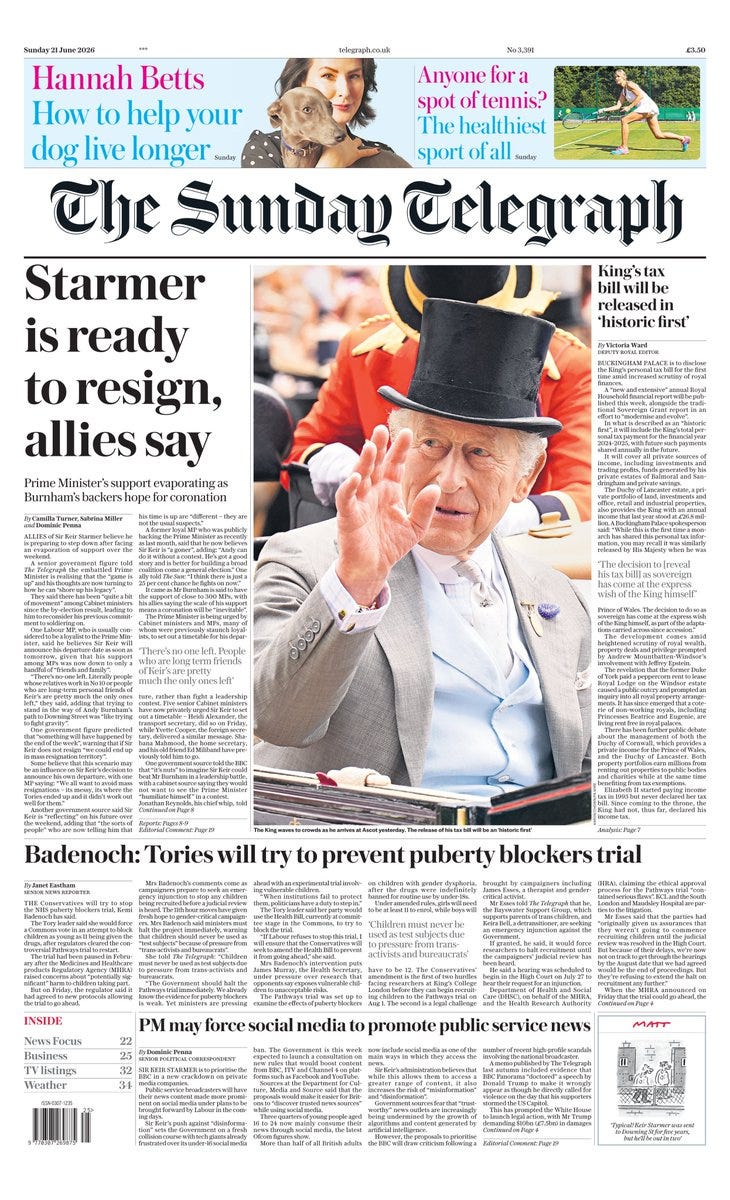
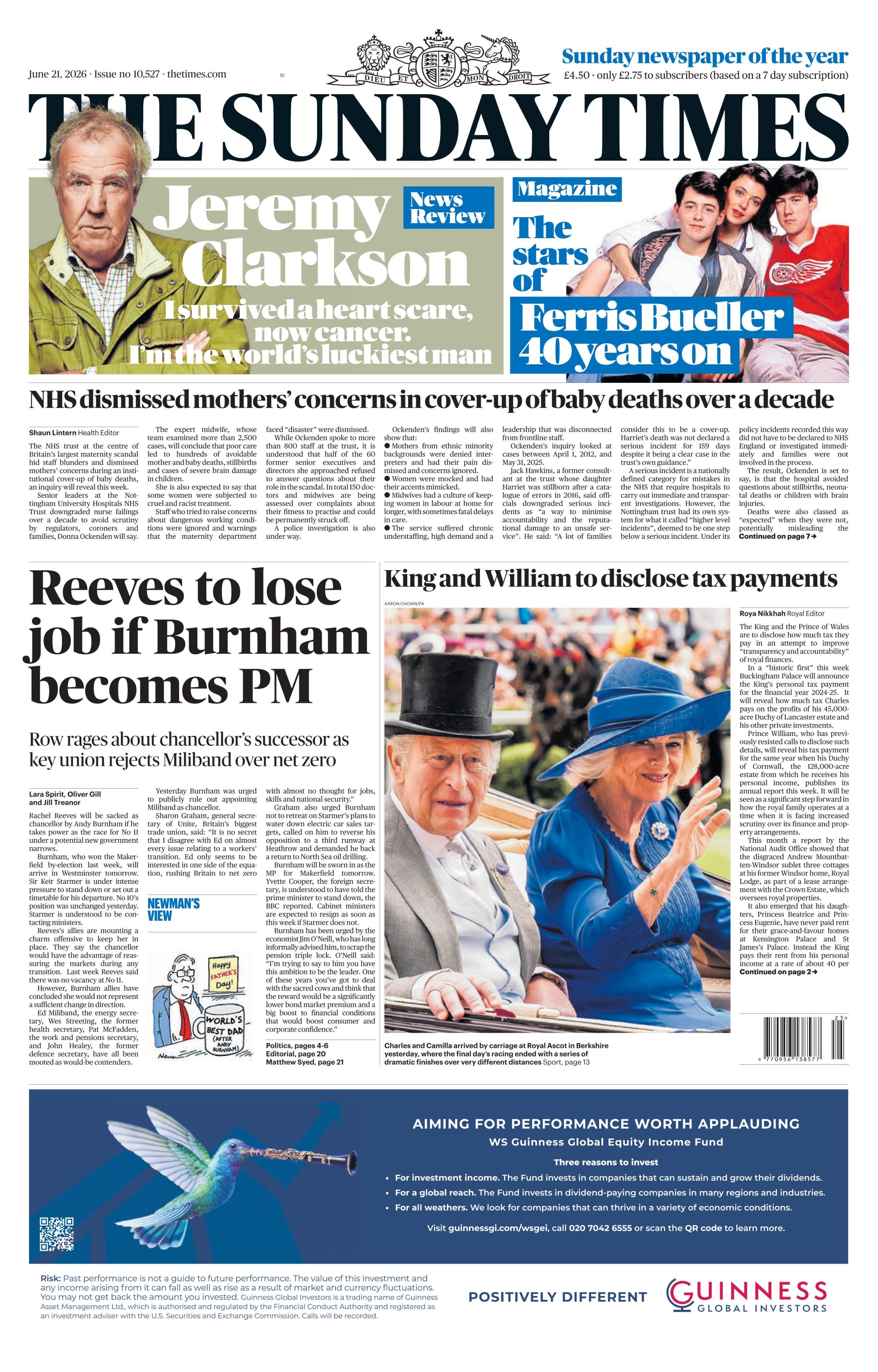
British Prime Minister Keir Starmer is weighing up the current "political realities" amid reports that he is set to step down next week, the UK's business secretary has said. Speaking with the BBC’s Laura Kuenssberg on Sunday, Peter Kyle said Starmer was “taking the time to think through what the political realities are today compared to last week…We will find a way for this to be, whatever unfolds, a functional process,” Kyle added. UK media reported on Saturday that Starmer is expected to announce his resignation on Monday while laying out a timetable for his exit. US President Donald Trump piled on the pressure on Sunday afternoon by claiming in a post on his social media platform Truth Social that the British Prime Minister “will resign”, criticising him for failing “badly” on immigration and energy. Trump appeared to be responding to media reports of Starmer’s resignation, however, rather than concrete knowledge of what was being planned within Downing Street. The Labour leader has repeatedly vowed to fight on in his role but has come under increasing pressure in recent weeks following calamitous local election results for his party in May. He has also faced mounting calls to step down in the wake of Andy Burnham’s victory in the crucial Makerfield by-election earlier this week. Burnham, who previously served as the MP for Leigh from 2001 to 2017 before becoming mayor of Manchester, is regarded by many Labour members as the party’s best chance of recovery and of beating off the growing challenge posed by Nigel Farage’s Reform UK.
Colombia’s voters on Sunday elected a Donald Trump-endorsed right-wing businessman in a presidential runoff, ending a period of left-wing rule that coincided with the country’s worst security crisis in decades. Abelardo de la Espriella proposed bombing gang-held territory and building 10 El Salvador-style megaprisons, while his opponent, the leftist ruling-party senator Iván Cepeda, had pledged to continue negotiating with armed groups under President Gustavo Petro’s “Total Peace” strategy. Latin America has lurched rightward in recent elections, as governments scramble to curtail violence stemming from record cocaine production. Under pressure from Washington, Mexico’s president has foregone her predecessor’s “hugs, not bullets” approach in favor of direct military confrontation with cartels - Semafor

Four people were killed and fuel sales were suspended in annexed Crimea, the Moscow-backed authorities there said on Sunday, after a massive Ukrainian barrage hit the Black Sea peninsula. Ukraine said it targeted military and energy facilities in Crimea — Moscow’s key logistics base for its four-year military offensive — in one of the biggest attacks on the peninsula in recent months. “As a result of the enemy’s drone attack on the Kerch Peninsula, unfortunately, there are casualties among the civilian population,” said Russia-backed Crimea Governor Sergey Aksyonov, referring to the part of Crimea that borders Russia. “According to the latest information, four people were killed, 28 were wounded,” he added. “Today, June 21, starting from 09:00 am, fuel sales at Crimean petrol stations have been suspended,” said Aksyonov in a separate statement, adding that fuel would only be sold to state enterprises. The mass raid also killed one person on a ferry and hit an oil terminal in Russia’s southern Krasnodar region bordering Crimea, the authorities there said. Part of Crimea, which was annexed by Russia in 2014, was left without power after the attacks, local utilities company Krymenergo said. Separately, overnight Russian strikes in eastern Ukraine killed three people. After upgrading its long-range drone capabilities, Kyiv now says it can strike at will along the land corridor through occupied southeastern Ukraine that Russia uses to supply Crimea and its forces stationed there - AFP
Taiwan’s defense ministry on Sunday announced a five-day combat readiness exercise as China intensifies military activity around the island. The announcement came as Taiwanese authorities said 21 Chinese aircraft, including fighter jets and surveillance planes, were operating near Taiwan, which Beijing considers a renegade province. Taipei’s drills will simulate a scenario where China abruptly escalates one of its military exercises into an actual attack. Taiwan is now almost always surrounded by five or six Chinese warships, The Wall Street Journal reported. Analysts say the deployments allow Beijing to collect intelligence on Taiwan’s forces and operating patterns as it builds capabilities for a potential conflict. China’s leader has directed the military to be prepared for a possible Taiwan takeover by 2027 - Semafor
U.S. President Donald Trump inexplicably posted a shout-out to a “great daughter” on the eve of Father’s Day using a photo of a woman who was definitely not his daughter. The baffling post immediately set off fresh concerns about the 80-year-old president’s mental state, as the woman he was publicly paying tribute to was neither of his actual daughters, Ivanka, 44, or Tiffany, 32. “Great daughter. My Honor!!! President DJT,” Trump wrote. Online sleuths identified the woman as Margo Catsimatidis, 74, the wife of billionaire retail mogul and Trump ally John Catsimatidis, suggesting that the photo had likely been taken at Camp David at some time during the Clinton administration. The couple’s daughter, Andrea Catsimatidis, is the chairwoman of the Manhattan Republican Party. It’s unclear why the president would post a decades-old photo of the Catsimatidis family matriarch to reference a “great daughter.” The White House did not respond to the Daily Beast’s repeated requests for clarity on the post. Political analyst Arieh Kovler wondered why Trump would be “scanning photos of Camp David from the 1990s with random blonde women” and theorized that “he must have told some staffer to post this and nobody queried it or told him ‘that’s not your daughter.’” “Nothing to see here. Just the President of the United States actively sundowning in real time for the entire world to see,” another X user noted. “What in the name of dementia is going on here?” another said - The Daily Beast
The journals…