🔥 World Briefing Hot Take: The battlefield is in Ukraine - but the supply lines run through the global economy.
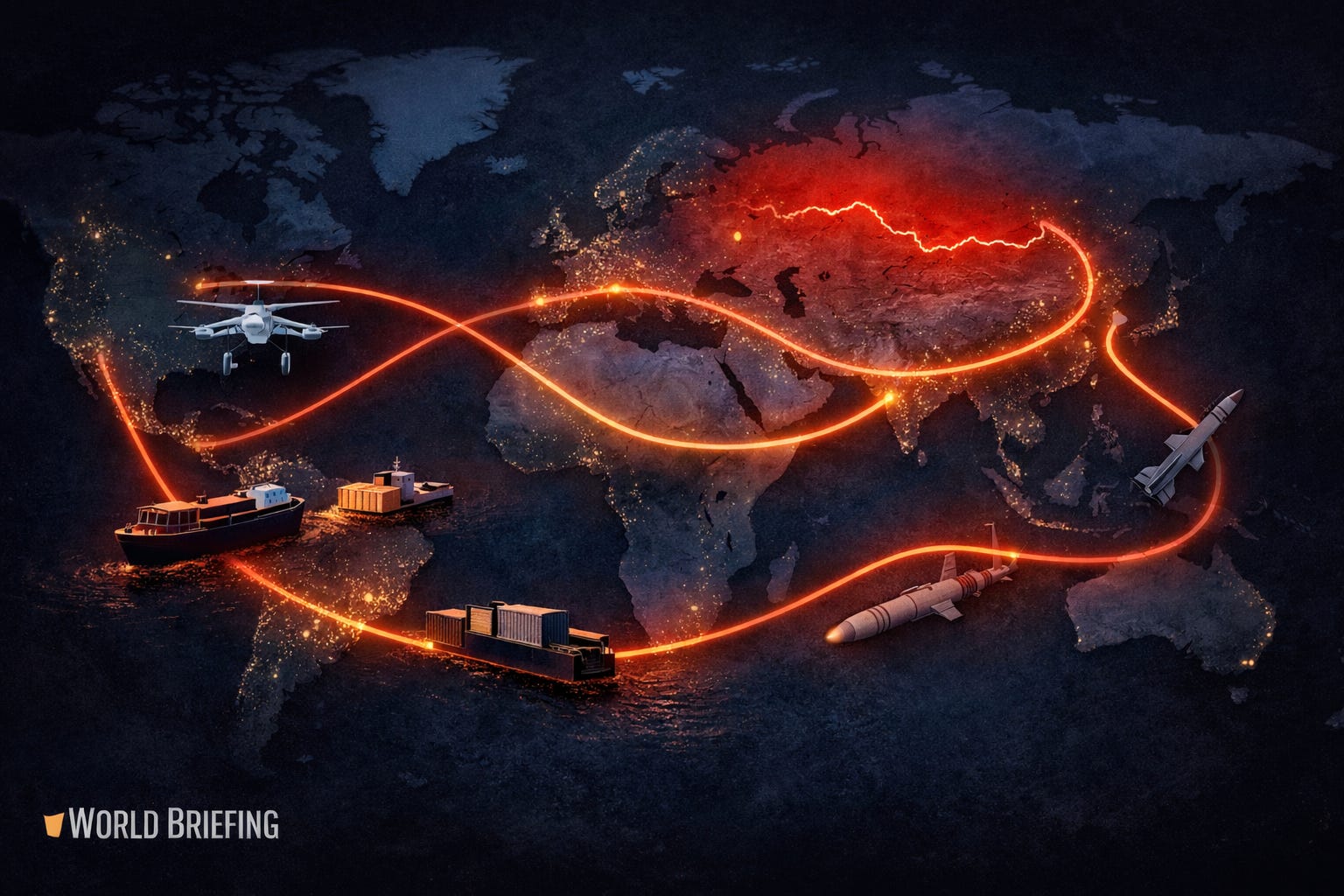
Four years into Russia’s full-scale invasion of Ukraine, the battlefield is no longer confined to Ukraine - it runs through ports, factories, shell companies and trade routes scattered across the globe. Even through Hong Kong harbour and Gambia. Chinese-linked equipment helping build rocket components in Belarus. A shadow fleet moving tens of billions of dollars in sanctioned oil. Thailand emerging as a transit hub for Chinese drones heading toward Russian buyers. And now a reported covert missile deal binding Moscow and Tehran even closer together.
Seen together, these are not isolated headlines. They form a map - one showing how the Kremlin’s war machine has adapted into a decentralized, globalized system designed to outmaneuver sanctions and exploit the gray zones of international trade. When one route is blocked, another quietly opens. When one company is sanctioned, a new name appears. The methods are familiar; the scale is unprecedented.
The uncomfortable truth is that while governments talk about pressure, the money and the munitions keep moving. Oil revenues still flow. Dual-use technologies still reach the battlefield. Arms partnerships deepen.
On the eve of the invasion’s fourth anniversary, the lesson is stark: sanctions alone are not enough if enforcement remains slow and fragmented. Unless the world acts faster - and far more decisively - the global economy will continue to supply the very war it says it wants to stop.
News Briefs
Transaction records reviewed by Nikkei Asia indicate that a Chinese state-owned defense trading company has signed contracts with a Belarusian partner to build a production line for key components used in 122-mm rocket ammunition — a weapon widely deployed by Russian forces in Ukraine. The planned facility in Belarus would produce warhead components for rockets compatible with Russia’s BM-21 Grad launchers, systems frequently blamed for strikes hitting civilian areas. Under the agreement, China National Electronics Import & Export Corporation (CEIEC) will provide manufacturing equipment, technical documentation, and training for Belarusian staff, with operations expected to begin in the second half of 2026. Documents obtained by Belarusian opposition group BELPOL suggest Chinese specialists will oversee early production stages, including prototype manufacturing and supervision of explosive-loading processes. Initial annual output is projected at 120,000 rounds - potentially equal to roughly 20% of Russia’s estimated annual production of such munitions. Beijing has repeatedly denied providing military support to Moscow, insisting its exports are civilian in nature. But the scale and specificity of the contracts raise fresh questions about whether Chinese entities are enabling Russia’s war effort indirectly — a move that could collide with Western sanctions policy at a moment when both Washington and European capitals are trying to stabilize relations with China.
An investigation reported by the Financial Times and cited by the Moscow Times has uncovered a network of nearly 50 companies exporting sanctioned Russian crude while masking its origins - highlighting how Moscow continues to finance its war despite Western restrictions. The firms, operating from multiple jurisdictions and often linked to traders in Azerbaijan, appear to function as a coordinated system rather than independent entities. Investigators discovered that hundreds of associated web domains shared the same private email server, suggesting centralized management behind what appears on paper to be a dispersed group of companies. According to the FT’s findings, companies connected to the network have shipped more than $90 billion worth of Russian oil, with the true total likely higher. One Dubai-based firm alone reportedly exported $5.6 billion in crude. Customs data reviewed by the newspaper indicates that more than 80% of Rosneft’s seaborne exports passed through this apparent network as recently as late 2024. Experts say the structure resembles 1990s-era front-company systems used to evade taxes and obscure ownership - except this time on a scale crucial to sustaining Russia’s wartime economy.
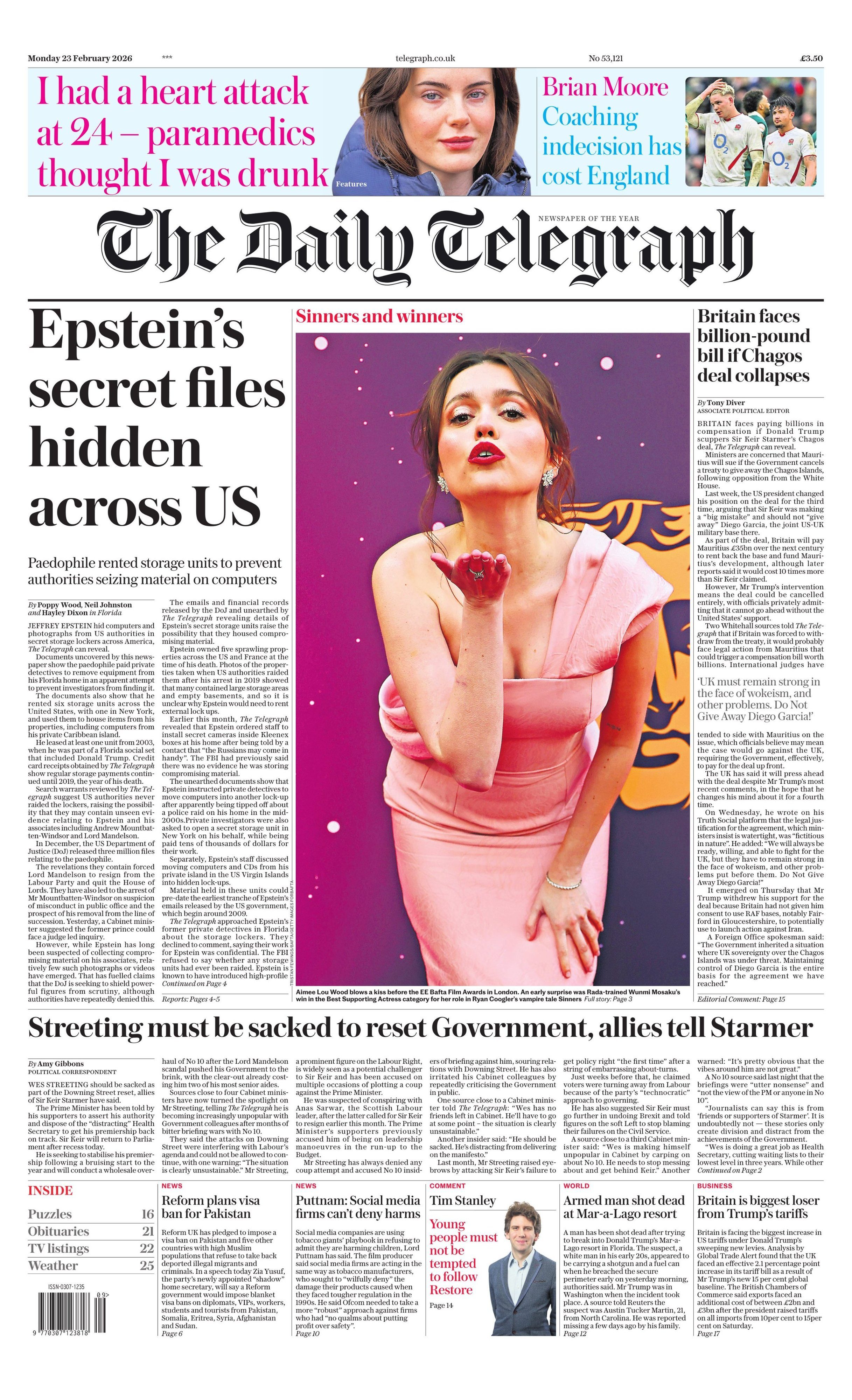
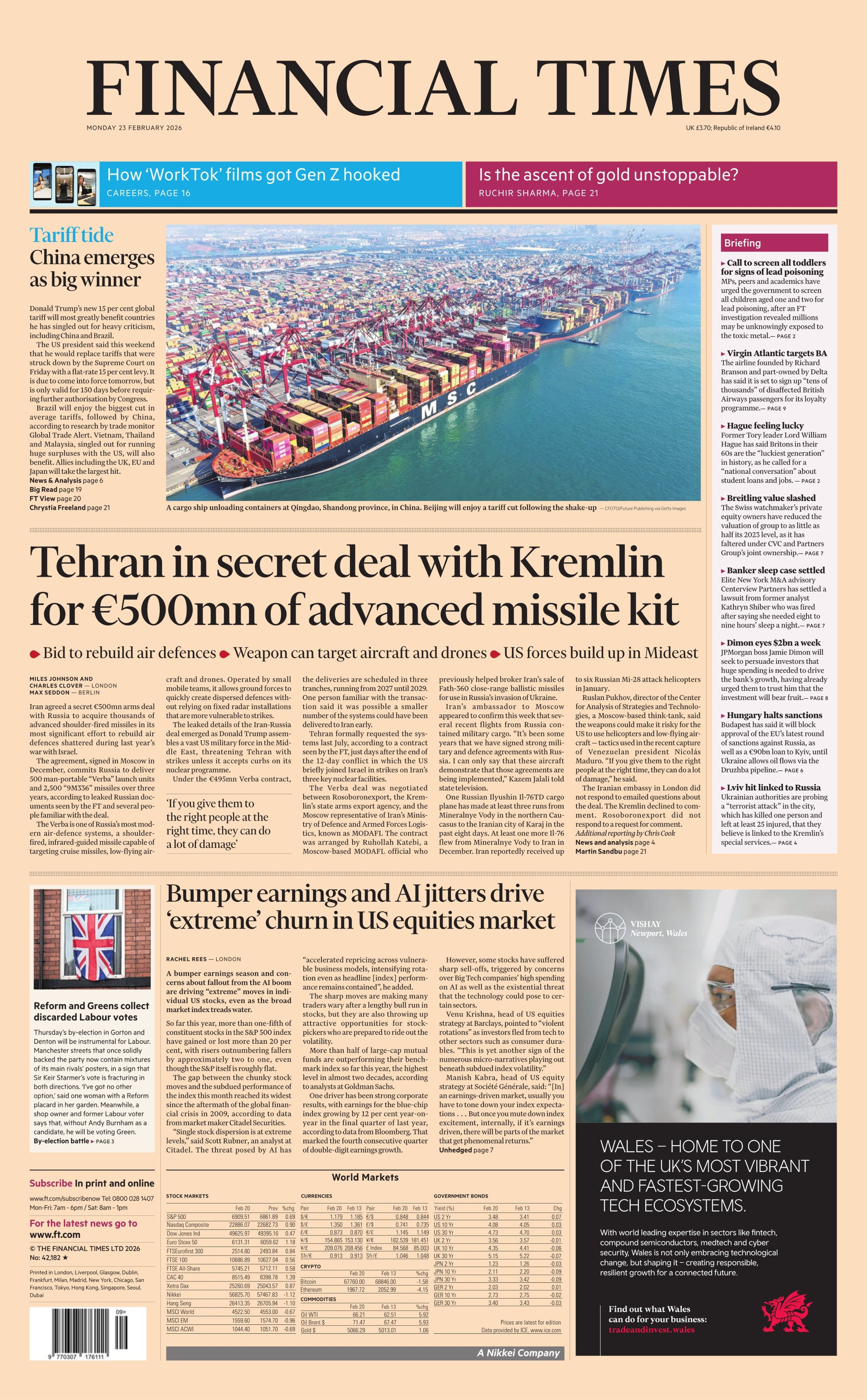
Iran has signed a secret 500 million euro ($589 million) deal with Russia to acquire thousands of advanced shoulder-fired missiles, the Financial Times (FT) reported, citing leaked Russian documents and sources familiar with the agreement. The arms deal was signed in Moscow in December, and requires Russia to send Iran 500 “Verba” Man-Portable Air-Defense System (MANPADS) launch units and 2,500 9M336 surface-to-air missiles over three years, FT reports. The Verba is one of Russia’s most advanced air defense systems, a shoulder-fired, infrared-guided missile capable of targeting cruise missiles, low-flying aircraft and drones. News of the secret missile deal comes as tensions rise alongside ongoing nuclear negotiations between Washington and Tehran, with U.S. President Donald Trump again threatening Iran with possible military action. The agreement between Russia and Iran was negotiated between Russian state weapons exporter Rosoboronexport and a representative of Iran’s Defense Ministry and Armed Forces Logistics (MODAFL), according to FT. Iran officially requested the missile systems in July 2025, following U.S. and Israeli strikes in June. Ukraine’s Foreign Intelligence Service previously reported in August that Iran had sought help from Belarus to restore its damaged air defense and electronic welfare systems after the escalation with Israel. Iran will receive the pledged weapons in three tranches from 2027 to 2029, according to the delivery schedule set out in the deal. Russia and Iran have deepened cooperation in recent years, with Tehran supplying drones and other military equipment used by Russian forces in the war against Ukraine. The two countries held joint naval exercises in the Gulf of Oman and the northern Indian Ocean on Feb. 19, amid reports that U.S. Armed Forces had deployed warships near Iran and were preparing for possible strikes - Kyiv Independent
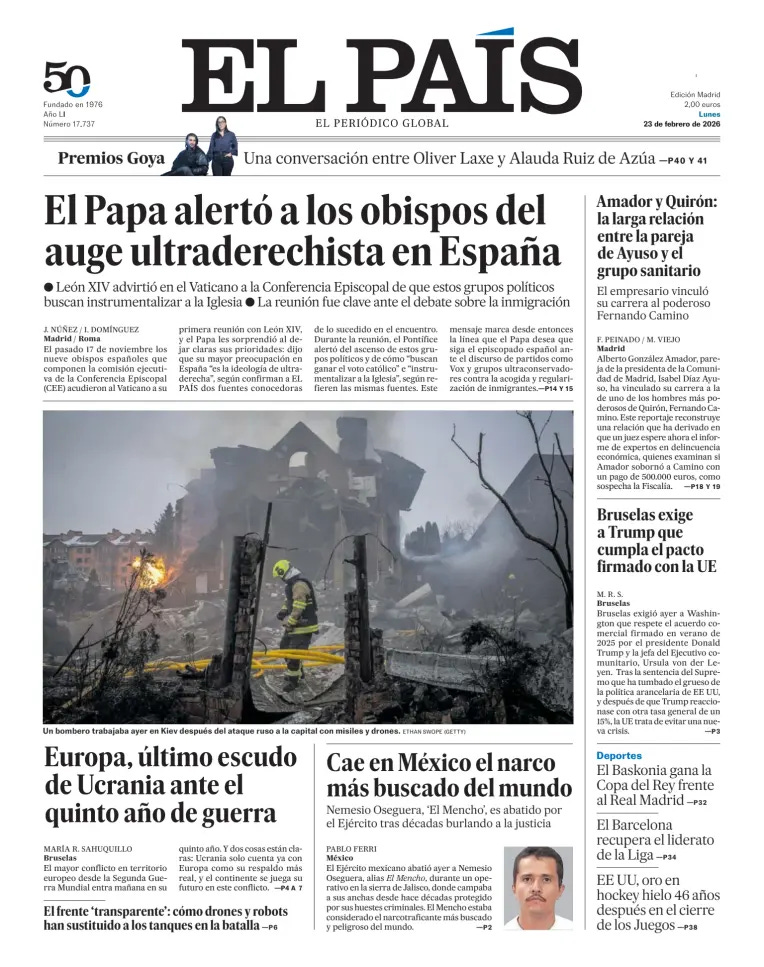
The Jalisco New Generation Cartel unleashed a wave of violence across Mexico setting vehicles ablaze, blocking roads and turning the state capital into a ghost town after the army killed its powerful leader known as “El Mencho.” Nemesio Rubén Oseguera Cervantes, El Mencho, was the Mexican government’s biggest prize yet to show the Trump administration in its efforts to crack down on the cartels. His death was met with a forceful reaction by his Jalisco New Generation Cartel, known by its Spanish initials, CJNG. Cars set on fire by cartel members blocked roads in nearly a dozen Mexican states and left smoke billowing into the air. Jalisco’s capital, Guadalajara, was turned into a ghost town Sunday night as civilians hunkered down. Later, authorities announced they had cleared most of the more than 250 cartel roadblocks across 20 states. Several Mexican states canceled school Monday, and local and foreign governments warned citizens to stay inside as violence erupted. While no airports have been closed, roadblocks are affecting airline operations and travelers’ ability to get there, according to the U.S. Embassy and consulates in Mexico. In Guadalajara, burning vehicles blocked roads. Mexico’s second-largest city is scheduled to host matches during this summer’s soccer World Cup.
Airlines are cancelling flights, and thousands of Canadians are stranded. There is a shelter in place order in Puerto Vallarta, where Canadians are advised to keep a low profile, monitor media reports, and follow orders from local authorities. Authorities in Jalisco, Michoacan and Guanajuato reported at least 14 other people killed Sunday, including seven National Guard troops. Air Canada and WestJet were among the airlines that diverted flights. WestJet said earlier Sunday it had diverted seven flights enroute to Puerto Vallarta and cancelled 24 additional flights to and from Puerto Vallarta, Guadalajara and Manzanillo. - CBC
President Trump has told advisers that if diplomacy or any initial targeted U.S. attack does not lead Iran to give in to his demands that it give up its nuclear program, he will consider a much bigger attack in coming months intended to drive that country’s leaders from power, people briefed on internal administration deliberations said. Negotiators from the United States and Iran are scheduled to meet in Geneva on Thursday for what appears to be last-ditch negotiations to avoid a military conflict. But Mr. Trump has been weighing options for U.S. action if the negotiations fail. Though no final decisions have been made, advisers said, Mr. Trump has been leaning toward conducting an initial strike in coming days intended to demonstrate to Iran’s leaders that they must be willing to agree to give up the ability to make a nuclear weapon. Targets under consideration range from the headquarters of Iran’s Islamic Revolutionary Guard Corps to the country’s nuclear sites to the ballistic missile program. Should those steps fail to convince Tehran to meet his demands, Mr. Trump told advisers, he would leave open the possibility of a military assault later this year intended to help topple Ayatollah Ali Khamenei, the supreme leader. There are doubts even inside the administration about whether that goal can be accomplished with airstrikes alone. And behind the scenes, a new proposal is being considered by both sides that could create an off-ramp to military conflict: a very limited nuclear enrichment program that Iran could carry out solely for purposes of medical research and treatments. It is unclear whether either side would agree. But the last-minute proposal comes as two aircraft carrier groups and dozens of fighter jets, bombers and refueling aircraft are now massing within striking distance of Iran. Mr. Trump discussed plans for strikes on Iran in the White House Situation Room on Wednesday - NYT
French Foreign Minister Jean-Noël Barrot said Sunday he would summon the US ambassador to France, Charles Kushner, over comments made about the death of a French far-right activist earlier this month, which he labeled as “interference.” Quentin Deranque, 23, died two days after suffering severe head injuries in a brawl in the city of Lyon on February 12, drawing criticism from the Trump administration which described the death as the result of left-wing violence. “We are summoning the US ambassador to France because the embassy issued a commentary on this event which concerns the national community. We reject any interference in this event,” Barrot said in an interview with radio station France Inter. On Friday, the US embassy in France shared an X post from the US State Department’s Counterterrorism Bureau which said reports that Deranque “was killed by left-wing militants, should concern us all….Violent radical leftism is on the rise and its role in Quentin Deranque’s death demonstrates the threat it poses to public safety.” The fatal brawl was caught on video, which showed several masked people kicking and punching a man on the ground, causing widespread shock and anger in France. Authorities have charged two people with murder in connection with Deranque’s death, and altogether 11 have been arrested. The incident has also sparked a diplomatic spat between France and Italy, after Italian Prime Minister Giorgia Meloni said Deranque’s death was caused “by groups linked to left-wing extremism” and condemned “a climate of ideological hatred sweeping several nations. This is not the first time that Kushner, father of President Donald Trump’s son-in-law Jared Kushner, has been summoned amid criticism from the French authorities - CNN
Hungary vowed to block the latest round of EU sanctions against Moscow unless Ukraine restarts Russian oil flows to Hungary and Slovakia, escalating a dispute just before the war’s four-year anniversary. Hungary and Slovakia are the EU’s only nations that rely heavily on Russian oil shipped through the Druzhba pipeline over Ukraine. Budapest and Bratislava have also threatened to stop electricity supplies to Ukraine over the issue: Kyiv condemned what it described as “ultimatums and blackmail.” Hungarian Prime Minister Viktor Orbán, one of Vladimir Putin’s top European partners, has previously threatened to scuttle EU efforts to penalize the Kremlin. Tensions between Brussels and Budapest have escalated ahead of Hungary’s elections this spring. Orbán has made anti-Ukraine messages central to his campaign. - Semafor
Greenland rejected a seemingly impromptu plan by Donald Trump to send a hospital boat to the island he’s trying to acquire, saying in a searing statement that the U.S. president should respect the territory’s sovereignty and stop needling it on social media. “It’s a no thank you from here,” Greenland’s Prime Minister Jens Frederik Nielsen said. “President Trump’s idea of sending an American hospital ship here to Greenland has been noted.” The statement followed Trump’s announcement in a Feb. 21 social media post that he planned to send a hospital vessel to Greenland to care for sick residents of the Arctic island, whom he said weren’t receiving treatment. His comments reignited tension with Greenland over the administration's aggressive push to purchase the self-governing territory of Denmark. Trump backed down from a threat to launch a military invasion following congressional blowback, tumbling stock prices and criticism from America's closest allies. In place of that effort, Trump said the United States had agreed on a framework with Denmark that provides "total access" to Greenland. Further details on the deal have yet to emerge - USA Today
A fully automated food delivery robot caused chaos in a Los Angeles garden, smashing down a fence and stealing part of the debris. Kaiya Reel said the Coco delivery robot ploughed into her property on the weekend, trampling her flowers and then making a dash for it as she tried to stop it. “I came out here, and I found the Coco in my garden,” the East Hollywood resident told KTLA. “It had gotten my fence caught up in its wheel. It uprooted a whole bunch of plants in my garden and then just drove away with the fence attached to it.” She added, “I chased after it and looked like a total crazy person, running after a robot in the middle of the street and yelling at it. I was trying to block it and get in its way and it would try to go around me.” Her neighbor Roman Henson said, “I heard this crunching sound and turned around. The robot had driven through the little fence and was dragging it.” - The Daily Beast
The journals……