I won’t re-litigate the tariff arithmetic. You saw it yesterday. What matters is what came next.
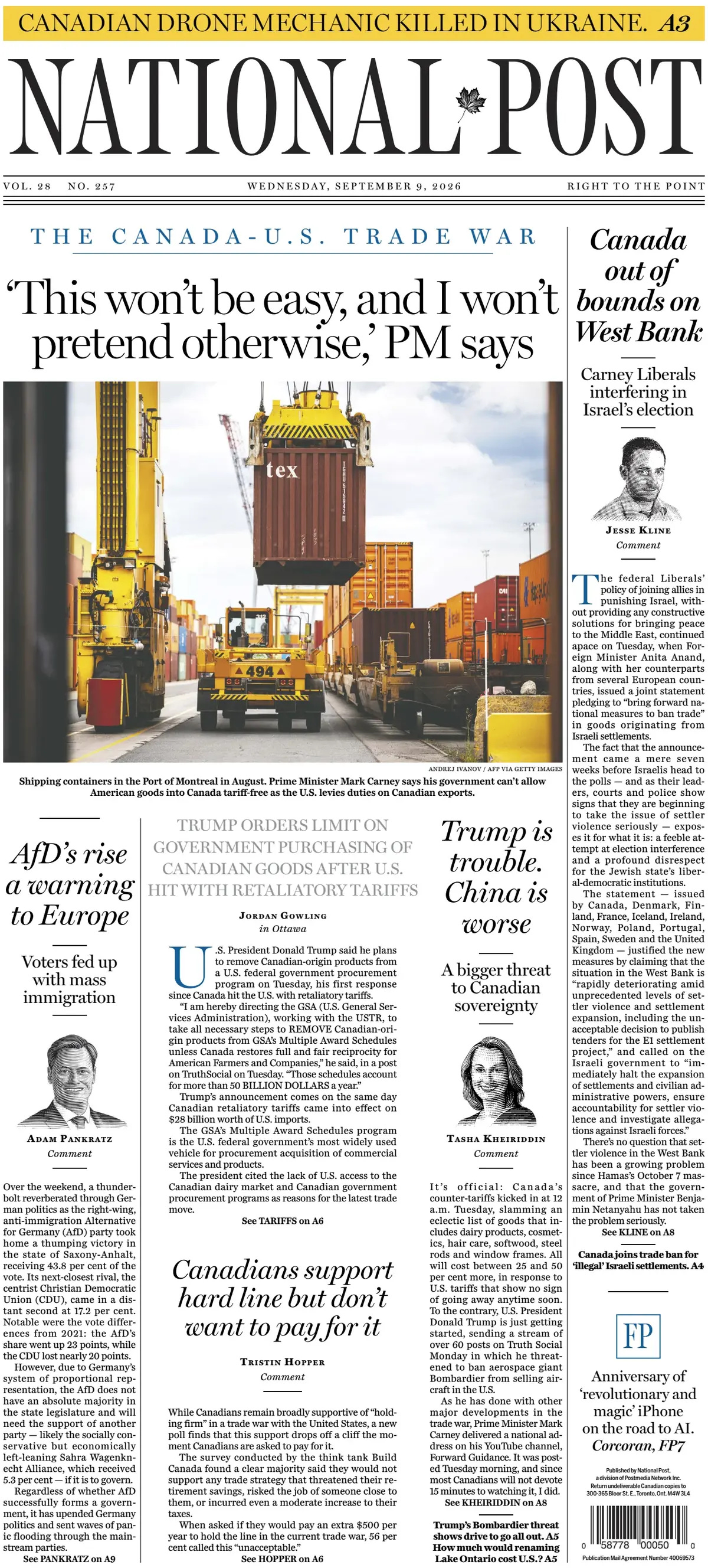
On Tuesday, hours after Canada’s counter-tariffs took effect, Trump signed five executive orders barring a range of Canadian products from entering the United States at all — most alcohol, certain dairy, motorcycles, and a list of oddments down to whey concentrate and cane molasses. Effective September 29. Not a tariff. A ban.
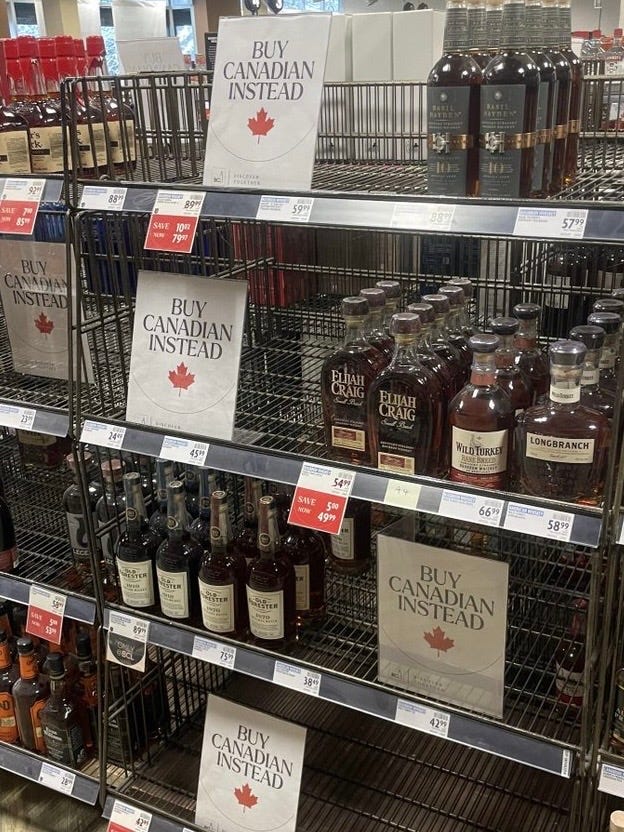
A senior administration official explained the choice on background, and it is the most important sentence of the week: Washington went with outright bans rather than tariffs because some Canadian provinces had pulled American alcohol from their government liquor stores.
Then, the same day, Trump directed the agency that runs U.S. federal procurement to strip Canadian-origin products from its awards schedules, complaining in a post that Canada and its provinces had shut American small businesses out of their procurement markets.
Note what has happened here. Twice in one day, the escalation was aimed squarely at provincial policy. Ottawa is no longer the only address.
Note also the instruments. A tariff makes you expensive — you can hedge it, absorb it, wait it out. A ban makes you absent. A procurement exclusion makes you ineligible. There is no margin to eat and no clever routing through a third country. A distillery that spent fifteen years building U.S. distribution is simply gone from the market on the 29th.
Each Canadian move is now met with a new category of weapon rather than a bigger version of the last — and the old ones stay in place. The tariffs didn't come off when the bans went on.
And savour the sequence, because it is instructive. Carney spent August asking the premiers to put American liquor back on the shelves as a concession to get a deal. Several resisted, including Ontario, which is one of the biggest purchaser of booze anywhere! The deal collapsed anyway. Canada is now being punished for a policy Ottawa was already trying to unwind — and which was never uniform in the first place. Alberta and Saskatchewan never had a ban. New Brunswick restored American products months ago. A Dalhousie scholar who studies economic coercion has pointed out that it was never an embargo, a blockade or a boycott in any technical sense. It was patchy, provincial and half-reversed, and it has been answered with a federal wall.
The damage will not be evenly spread. Big firms have trade counsel and balance sheets that absorb eighteen months. The wineries, the craft distillers, the forty-person family manufacturers in southwestern Ontario have a line of credit and one customer across the river. Ottawa’s package will keep some of them breathing. It will not find them a new customer.
Which is the point of this piece.
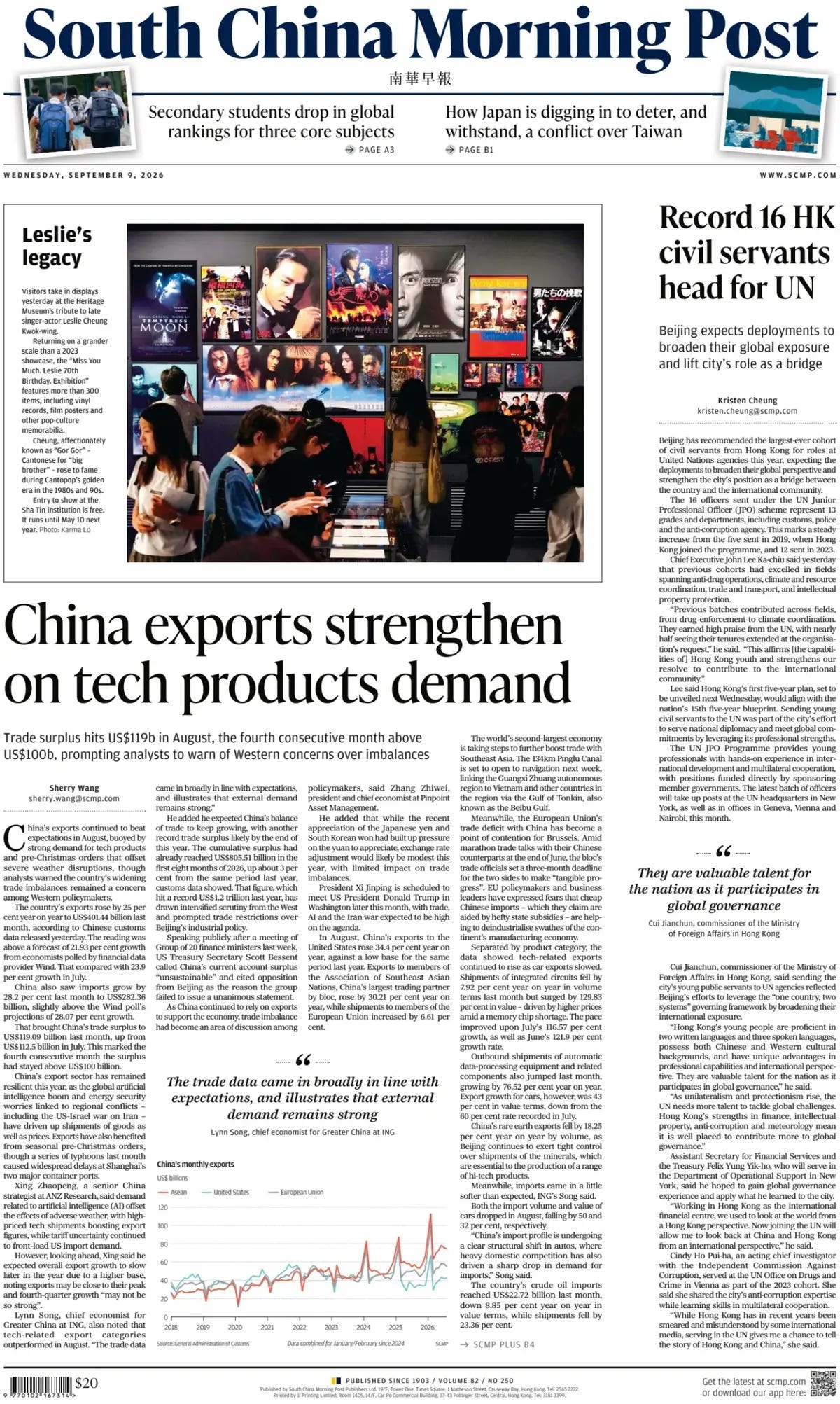
Take ice wine — arguably the finest thing Canada makes that Canadians themselves barely drink. It moves as a duty-free gift, and it commands serious money in China, Hong Kong, Taiwan and Korea. As of September 29 it does not have an American market at any price. There is nothing left to discount into, no tariff to eat. The door is shut.
That is the starting pistol. Not for wine — for every small and medium producer that spent three decades calling a drive to Detroit an export strategy.
Now the uncomfortable part, and it is the conversation I have been having out here in Asia since the 1990s. Canadian businesspeople hardly come often enough, if at all. The flight is too long. They get tired. Meanwhile the Australians are here, the Kiwis are here, the Irish and the Danes are here, and they are eating lunches that should have been ours.
Here is the concrete step, and it needs no signature from Ottawa.
When I lived in Asia in the late 1980s and 1990s, the provinces ran trade offices out here. Aggressive ones. British Columbia’s people were getting Canadian beer onto store shelves in Taiwan — not writing a white paper about it, actually doing it, buyer by buyer. That machinery has withered.
Provinces do not need federal permission to open an office in Bangkok, Ho Chi Minh City, Jakarta or Taipei. The embassies will support them, as they always have. But the initiative is provincial, the money is provincial, and the timeline is months rather than mandates. Some still exist, including in China — which rather proves the point that the model works and has simply been starved.
And the premiers now have no excuse to sit this out. Washington has named them. It has built an import ban explicitly around their liquor policy. They are belligerents in this whether they wanted the part or not — so let them fight where they can win. Not in Washington, where they have no standing and less leverage, but in markets where a premier with a delegation and a decent product still opens a door.
The economies out here are growing while North America argues about the price of eggs. Carney’s government, after January’s reset with Beijing, set a target of lifting exports to China by 50 per cent by 2030. Ambitious, and I support it. It is also unreachable at current staffing, because the plumbing no longer exists on the ground.
Trump has done Canada one accidental favour. He has made the diversification argument for us, in public and at volume. The question is whether Bay Street treats this as weather to wait out or as the week the map changed.
I fly home Friday. I’ll report what I find.
News Briefs
U.S. President Donald Trump signed new executive orders on Tuesday, ramping up retaliation after Canada imposed its latest set of duties on the United States. The five orders, which will take effect later this month, will completely bar the import of certain Canadian goods, including motorcycles, some dairy products and alcoholic beverages. It comes after Ottawa’s tariffs — a response to the 50 per cent duties Washington hit Canada with last month — took effect just after midnight EDT Tuesday. After Ottawa’s duties were implemented, Prime Minister Mark Carney warned that Canada’s pivot away from the United States will come at a cost, but the alternative would be far worse. “In the spring of last year, I warned that America is trying to break us so they can own us. And I promised that that will never, ever happen,” Carney said in a video posted on social media. Since negotiations fell apart last month, Trump has taken aim at Canada almost daily but his latest orders are a significant escalation of trade tensions between the two countries. Trump used Section 338 of the Tariff Act of 1930 to hit Canada with 50 per cent tariffs, accusing Canada of treating the U.S. unfairly. He pointed to provincial bans on U.S. liquor imports and quotas on certain U.S. vehicles — put in place in response to Trump’s initial tariffs — as well as Canada’s supply-managed dairy system. Tuesday’s executive orders justified Trump’s latest move by saying Canada didn’t stop its discrimination against U.S. autos, dairy and vehicles so now they are able to block the import of certain products because it is “consistent with the interests of the United States and the public interests.” Trump also posted on social media earlier Tuesday that he is directing the federal agency that oversees government procurement to remove all Canadian-origin products from its “awards schedules.” In a post on social media, Trump said “the Canadian Government, including Canadian Provinces, have banned American Small Businesses and Companies from selling into their Government Procurement Markets.” “That is not reciprocity, it is a Canadian Trade Scam,” Trump posted. “From now on, NO RECIPROCITY — NO ACCESS!” Trump seemed to be referring to Ottawa’s “Buy Canadian” policy, which was launched after the president targeted Canada with tariffs and threats of annexation. Some provinces have implemented similar policies - Global News
Canada-U.S. Trade Minister Dominic LeBlanc said in a statement on social media Tuesday night that the government is assessing the latest moves. “Our first priority remains on protecting and supporting Canadian workers, farmers, families, and businesses from these unjustified actions,” he wrote, adding that he is in contact with U.S. Trade Representative Jamieson Greer. “When the U.S. is ready to engage, our government will work in good faith and constructively towards a more secure mutually beneficial trading relationship that fully respects Canadian sovereignty,” LeBlanc said - CTV
We have everything we need to pivot and prosper. That pivot will come at a cost. There's always a cost to action. But it doesn't come close to the cost of standing still - Canadian PM Mark Carney
Houthi forces launched a major attack on southwestern Saudi Arabia early Tuesday, hitting oil infrastructure and King Khalid Air Base near Khamis Mushait and injuring dozens of civilians. Saudi-led coalition officials vowed a resolute response. It is the sharpest escalation since the UN-brokered truce of 2022. The strikes put a month-old alliance to its first real test. On August 7, Crown Prince Mohammed bin Salman, Recep Tayyip Erdogan and Shehbaz Sharif signed the Mecca Joint Defence Agreement, declaring an armed attack on one signatory an attack on all three. The language borrows from NATO’s Article 5; the machinery does not. The text has never been published, and the pact created no joint command, no standing forces and no defined trigger. Whether Islamabad and Ankara do more than issue statements will determine if Mecca is an architecture or a piece of paper. The stakes are compounded by geography. With Iran’s effective closure of the Strait of Hormuz, Saudi crude has been rerouted through Bab al-Mandeb — the strait the Houthis are now pushing toward. The ICRC warned Tuesday that the widening hostilities risk a broader regional conflict. President Mirjana Spoljaric said continued fighting would bring more deaths, displacement and catastrophic disruption to health care, water, fuel and electricity, and that humanitarian action cannot substitute for respect for international humanitarian law or political will to de-escalate.
Putin Has Named His Price, And it is Ukraine
Yuri Ushakov, Putin’s foreign policy adviser, told Rossiya 1 that Putin has told Trump the United States could have an immediate ceasefire in Ukraine on one condition: that Washington end all assistance to Kyiv. They should stop providing any aid, in Ushakov’s phrasing. He added that talks could resume in the trilateral format, according to our monitoring of the pro-Kremlin channel.
Read that carefully, because it is not a peace proposal. It is an invitation for the United States to deliver a Russian victory and be credited as the peacemaker for it. Moscow is not negotiating with Ukraine through Washington. It is asking Washington to disarm Ukraine on its behalf. The summits, the envoys, the root causes — all of it is scaffolding around that single ask.
The context makes it sharper. Witkoff and Kushner saw Putin in Moscow on Saturday and Zelensky in Kyiv on Sunday, their first wartime visit to the Ukrainian capital, and came away with warm language and nothing else. Hours after they flew out, Russia put ballistic missiles and drones into the city.
Which is the backdrop to the FT’s Christopher Miller reporting that CIA director John Ratcliffe is being lined up for a larger role, while the White House considers scaling back Witkoff and Kushner. Five people familiar with the thinking described the shift.
Ratcliffe is not a newcomer. He made a covert trip to Moscow in late August, met SVR chief Sergey Naryshkin and FSB director Alexander Bortnikov, and floated a Trump–Putin–Zelensky summit. He reportedly came away judging Bortnikov someone who could help restart the process — an assessment worth sitting with, given whose institution that is and what it has done in Ukraine these four and a half years. The CIA declined to comment.
One caveat, flagged as exactly that: the Russian emigré outlet Agentstvo, citing a Kremlin source, reported that Putin declined to see Ratcliffe on that trip, having concluded from accounts of the CIA director’s view that Russia is starting to lose that he was detached from reality. It is unverified. If it holds, promoting the man Putin refused to meet is a curious way to restart a negotiation.
The premise of the reshuffle is that the intelligence channel carries more weight in Moscow than the envoy channel. Perhaps it does. But Ushakov has just said on state television that the channel was never the problem. The price is.
Moscow Stops Pretending
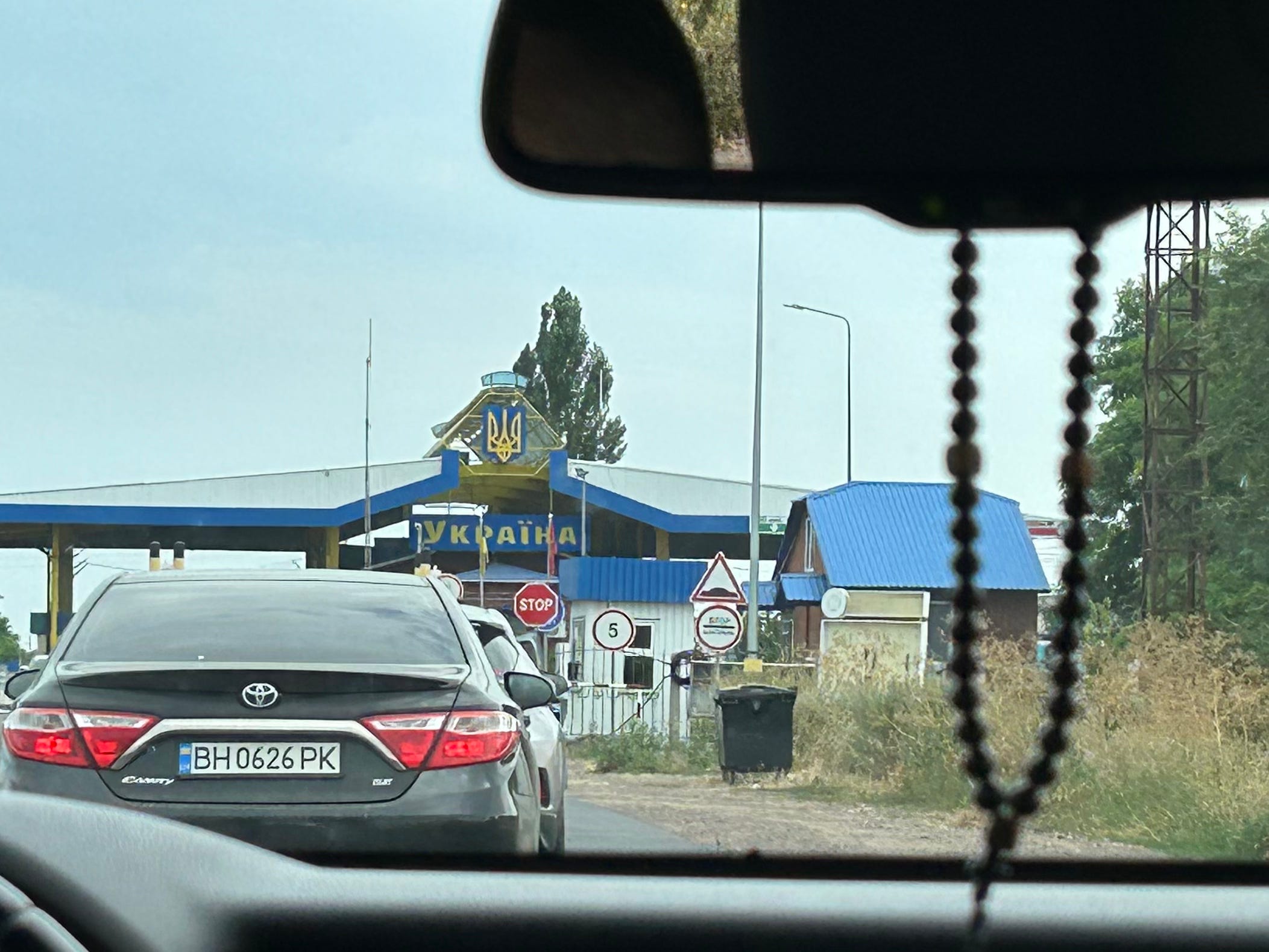
Two civilians were killed at a Ukraine–Moldova crossing overnight. This time Russia’s defence ministry claimed the strike by name.
Russian drones hit the Starokazachye border crossing on the Moldovan frontier in the early hours of Wednesday, setting the checkpoint alight. Ukraine’s Border Guard Service reported dead and wounded among civilians waiting near the barrier. Moldova’s count: two killed, two injured, among them a Moldovan citizen who declined hospitalisation and drove on to Chișinău. The crossing is closed.
The dead fell one kilometre from Moldovan territory.
I’ve used this crossing repeatedly. On an ordinary night it holds cars, minibuses and people going about the smallest business imaginable.
What is new is not the strike. Since August, Russia has worked steadily through southern Odesa oblast’s road links — the Zatoka bridge on 1 August, the Maiaky bridge on the M-15 nine days later, then the crossings themselves at Tabaky and Vynohradivka. The pattern was legible from the map alone, which is why I have written it as a pattern rather than a plan.
What is also new is that Moscow has now said it. The Russian defence ministry confirmed the strike and named the crossing’s logistics facilities as its target. Ukraine’s foreign minister called it a deliberate effort to sever transport links with Moldova. Both capitals now describe the same object.
The night before, Moldova had already been overflown. A drone entered from Ukraine at 4:20 p.m., headed toward Chișinău, skirted the city to the north and crossed into Romania near Ungheni before doubling back and exploding in a sunflower field at Mihăilenii Vechi, Rîșcani. Moldovan police confirmed it carried explosives and ran a turbojet engine — a Geran-4 or similar, not the propeller-driven Shahed Moldova has grown used to. Seven aircraft were affected: three held on the ground at Chișinău, three put into holding patterns, one diverted to Iași on the captain’s decision. The Institute for the Study of War read the flight as a test of Moldovan air defence and of NATO’s eastern posture. There were 17 airspace incursions in August alone — more than in all of 2025.
Chișinău heard it. President Sandu said the war has reached Moldova’s borders. Her defence minister, Anatolie Nosatîi, went further: he cannot rule out deaths inside Moldova, and the country cannot modernise its air defences as fast as Russia is improving its drones.
That is a defence minister, on the record, describing a gap.
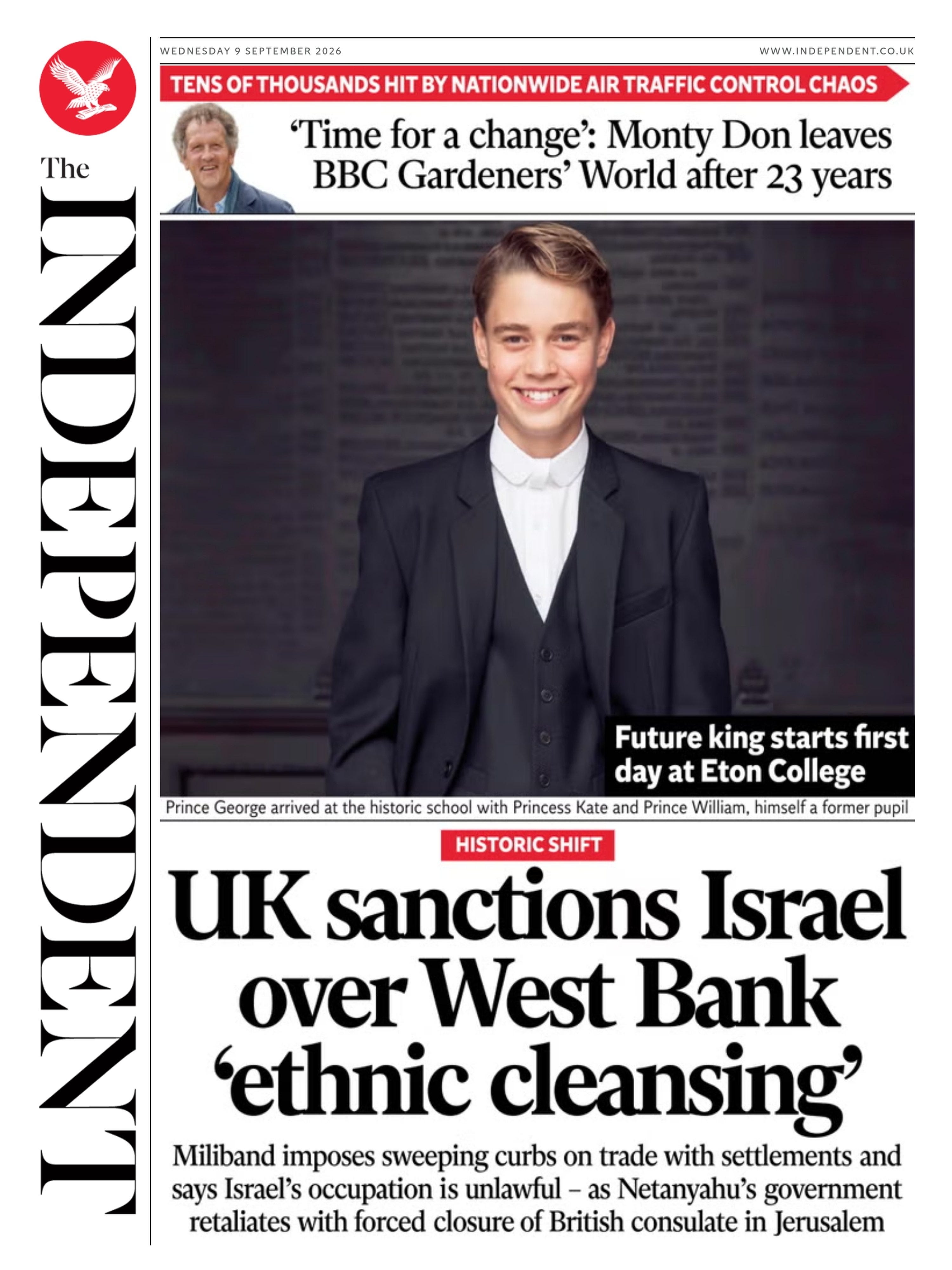
A spokesperson for the Duke and Duchess of Sussex says the couple were surprised to see a letter sent on behalf of King Charles clarifying that Prince Harry and Meghan remained non-working royals. The spokesperson said the couple, who have recently moved back to the UK, “were a little surprised not to have been told about this in advance”. But royal sources say Prince Harry and Meghan were made aware of the letter, sent on Monday afternoon, before it was made public. It is also understood a security committee, which includes Home Office representatives, is meeting this week to look at the level of taxpayer-funded security that should be given to the Sussexes who are now resident in the UK. The Royal and VIP Executive Committee - known as Ravec - decides security for royals and public figures and Prince Harry has previously complained about a lack of adequate police protection in the UK. The Home Office does not comment on such decision making - and would be unlikely to reveal the outcome of such a meeting. In terms of Prince Harry and Meghan being “surprised” by the King’s message on Monday - it’s understood that reflects the lack of time given to them to respond - BBC
The journals…