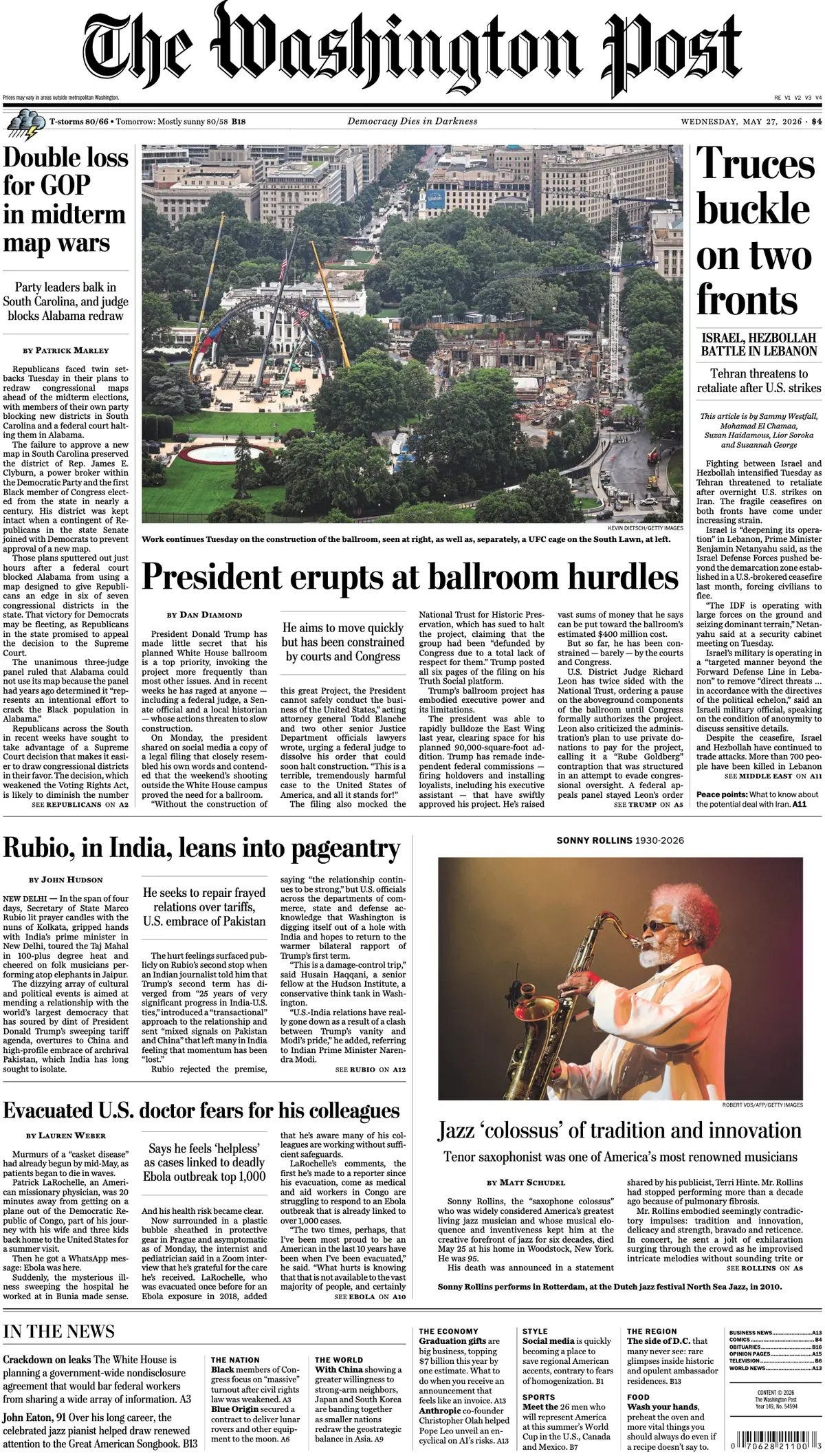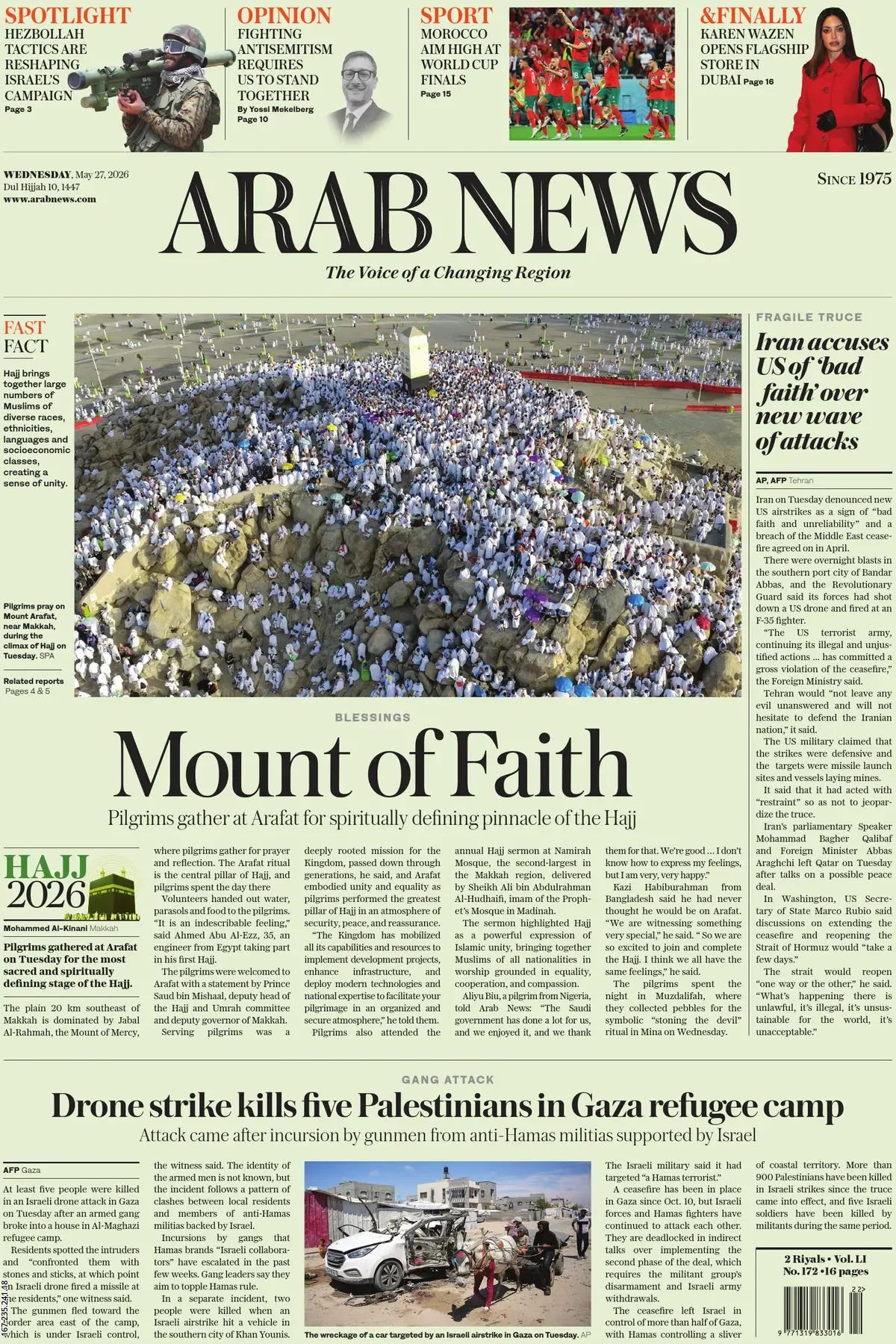
The US and Iran appeared still willing to reach a peace deal despite American strikes and Tehran’s threats of reprisals — but the global economic fallout from the conflict deepened. Bangladesh pressed the IMF for new financial support, while the African Development Bank forecast slowing growth across the continent this year as a result of higher fuel prices, supply chain struggles, and worsening global financial conditions. Asian countries, meanwhile, are grappling with plummeting currencies that have depleted central banks’ foreign exchange reserves and threatened to accelerate already-high inflation. And in Latin America, two Atlantic Council experts projected slower growth and accelerating price rises. Things could yet worsen: “Downside risks to the outlook remain significant,” the AfDB warned.
The Philippines ranks among the hardest-hit countries in the world from the spillover effects of the ongoing Middle East conflict, according to BMI, a unit of Fitch Solutions. Analysts from the global research firm said during a Tuesday webinar that the Philippines’ heavy dependence on oil imports passing through the Strait of Hormuz has made it one of the most adversely affected economies in both the Asia-Pacific region and globally. In light of the crisis, BMI slashed its Philippine gross domestic product (GDP) growth forecast for the year to 3.9 percent, a downgrade of around 1.3 percentage points. This marked BMI’s largest downward revision for any economy outside the Middle East region. The firm also raised its 2026 headline inflation forecast for the Philippines to 6.1 percent, up by 3 percentage points and the second-largest upward revision among its global forecasts related to the energy shock, trailing only Egypt. The Philippines became one of the first countries in the world to declare a State of National Energy Emergency amid the crisis - Daily Tribune
The ready‑made garment industry, which accounts for more than 80 percent of Bangladesh’s export earnings, has been hit severely due to the war in Iran. Bangladesh’s factories import much of their raw materials from China. The shipments are routed via the Red Sea and the Middle East, so recent shipping disruptions have pushed up import costs. Sayeed Ahmed Chowdhury, director of the fabrics manufacturer Square Denim, told the Bangladesh newspaper The Financial Express that he expected work orders to decline by about 20 to 25 percent in the next season. After the outbreak of the war, several airlines cancelled flights in March. As a result, shipments of garments destined for Zara owner Inditex and other major clothing retailers were stuck at airports in Bangladesh and India - Al Jazeera
Even before the full economic impact of the US-Iran conflict is felt, signs of growing hardship are emerging inside the United States itself. A new survey by the Federal Reserve Bank of New York found food insecurity at its highest level in six years - surpassing even the depths of the COVID-19 pandemic. Ten percent of American families reported skipping meals because they could not afford food, while nearly 16 percent relied on food donations, NPR reported. Food banks across several states report unprecedented demand, with some families lining up overnight for assistance. Analysts warn that rising fuel prices linked to Middle East tensions could further squeeze household budgets, especially among lower-income Americans already struggling with inflation and high living costs.
Israeli forces intensified strikes in Lebanon and killed the military chief of Hamas in Gaza, moves analysts said were driven by fears a potential US-Iran deal may curtail Israel’s ability to hit its enemies. The attacks in Lebanon killed at least 31 people; Israel says it is targeting Hezbollah, and the country’s leader has vowed to “deal them a crushing blow.” A Washington-Tehran agreement could, however, require Israel and Hezbollah to step back. “In light of that possibility, both sides are trying to improve their positions before the fighting ends,” Haaretz’s military analyst noted. But alongside continued tensions in Iran, the offensive has meant that “multiple silent humanitarian crises are deepening across the region,” the International Federation of Red Cross warned.
Republicans in U.S. Brace for Midterm Impact as Trump Approval Hits Record Low
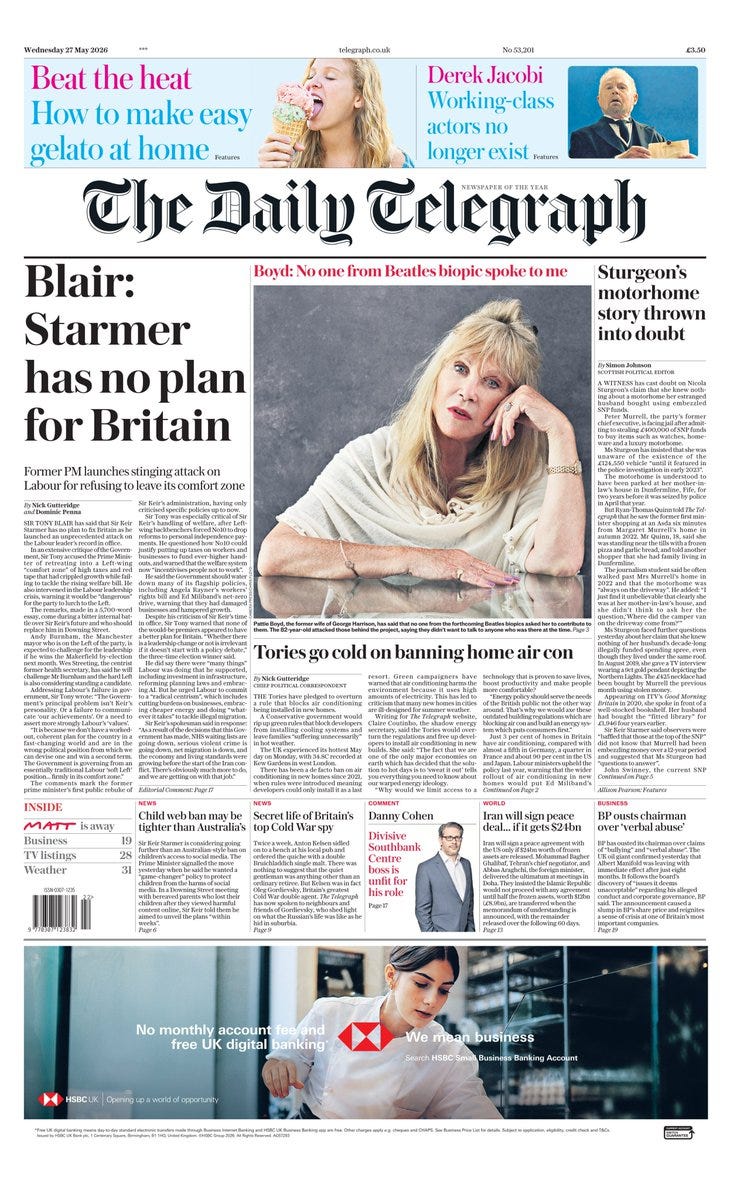
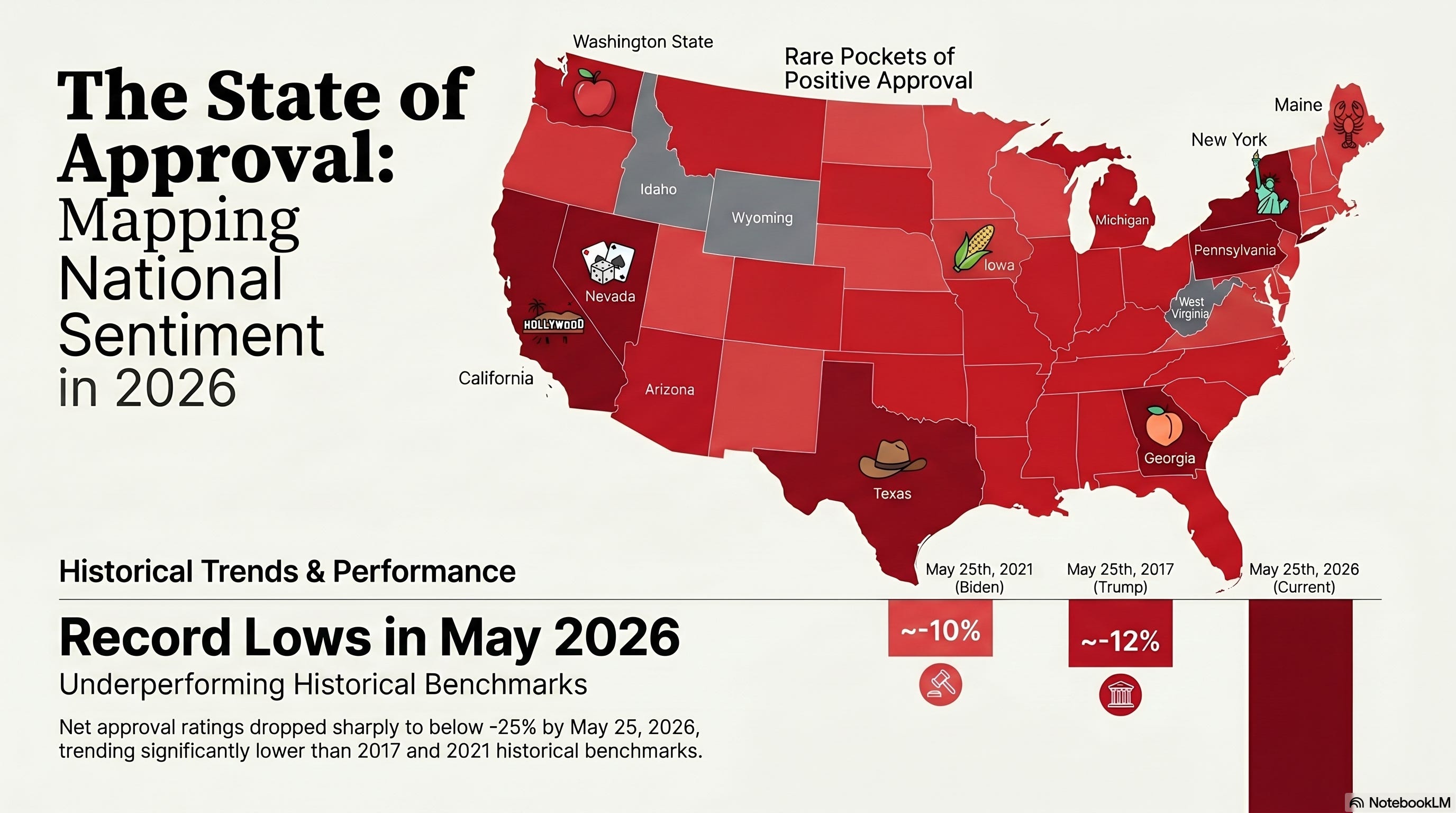
Recent polling cited by The Economist indicates that Donald Trump’s net approval has fallen to -24, the lowest mark since 2009. Driven by intense economic frustration and the conflict in Iran, the data suggests a difficult path for the Republican Party in the upcoming midterms. Approval for his handling of inflation stands at a staggering low of -43, with 63% of Americans believing the economy is worsening. While the “Trump endorsement” continues to dominate GOP primaries—evidenced by Ken Paxton’s recent victory in Texas—analysts warn that candidate fealty to the former president may prove a liability in general elections. Current models give Democrats a 90% chance of taking the House, while the Senate remains a toss-up. Dissatisfaction is even spreading to historically solid Republican blocs, including senior voters.
Russia has threatened to suspend or terminate a natural gas supply agreement with Armenia if authorities in Yerevan continue to pursue closer ties with the European Union. Foreign Ministry spokeswoman Maria Zakharova warned in a Telegram post on Wednesday that Russia is prepared to unilaterally cancel a 2013 bilateral agreement that guarantees Armenia duty-free deliveries of natural gas, petroleum products and rough diamonds. Her warning comes after Armenia’s infrastructure ministry denied having received an official letter from Russian Energy Minister Sergei Tsivilev threatening to rip up the agreement. Zakharova insisted the Russian Embassy in Yerevan delivered the letter earlier on Wednesday. She mockingly suggested that Armenia’s infrastructure minister check with officials at his own foreign ministry to get filled in. Armenian Prime Minister Nikol Pashinyan later on Wednesday rejected the ultimatum. “It’s illogical to frighten Armenia with high prices,” Pashinyan told the Kremlin-funded news outlet Sputnik. He said EU membership would bring Armenia “so much more money that things won’t actually seem expensive.” Pashinyan also highlighted Armenia’s growing independence from Russia’s defense industry, adding: “Today, we have our own military-industrial complex, and we sell weapons to developed countries.” The diplomatic spat comes just ahead of parliamentary elections in Armenia next month, where Pashinyan’s Civil Contract party faces a challenge from an array of pro-Russian opposition groups - Moscow Times
Nearly 500,000 Russian soldiers are estimated to have been killed in Moscow’s full-scale invasion of Ukraine since it began in 2022, a top British intelligence official has said, as the conflicts grinds to a near stalemate. The figure, announced in a speech on May 27 by the director of the UK’s Government Communications Headquarters (GCHQ) tracks with other estimates made in recent months by other Western governments, as well as independent media organizations. Anne Keast-Butler echoed other British government warnings that Russia was “relentlessly targeting critical infrastructure, democratic processes, supply chains, and public trust” in Britain and across Europe. GCHQ is Britain’s top signals intelligence unit, the equivalent to the US National Security Agency. Keast-Butler said GCHQ was focusing on protecting underwater cables and pipelines connecting Britain, and countering “sabotage and assassination attempts." - RFE/RL
Italy’s Foreign Policy Shift: Rising Tensions with the US and Israel
Italian Prime Minister Giorgia Meloni’s government is navigating a complex shift in foreign policy, characterized by growing friction with historical allies the United States and Israel. This pivot has ignited fierce domestic debate, highlighted by a recent clash between Lega Senator Claudio Borghi and Democratic Party (PD) Deputy Arturo Scotto.
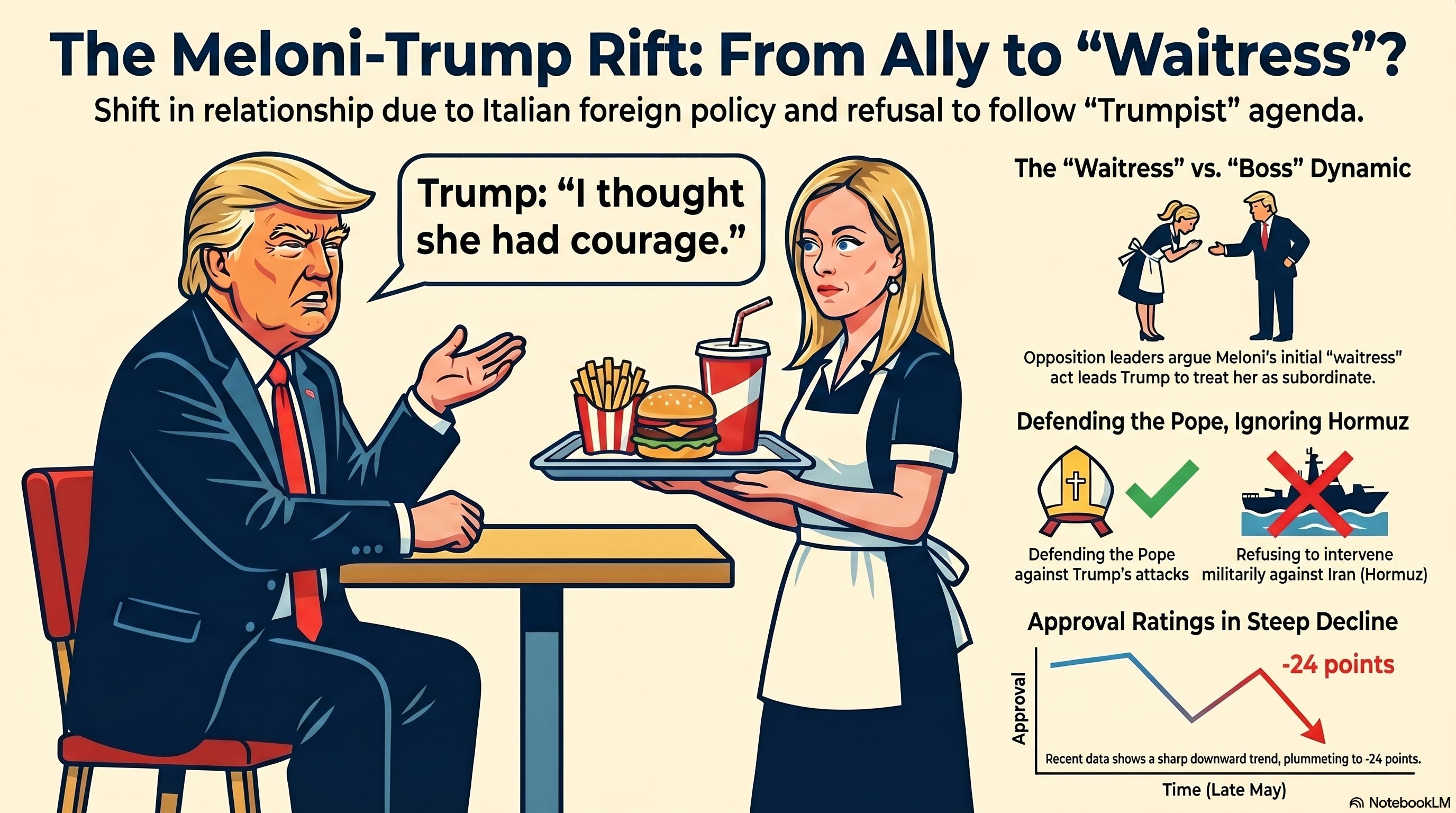
The Trump Dynamic and “Waiter” Accusations Meloni has recently fallen out of favor with Donald Trump after defending Pope Leo XIV from his attacks and ignoring his appeal for military intervention against Iran. Trump publicly criticized her, stating he was “shocked” and mistaken to think she had courage. PD Deputy Arturo Scotto argued this is the result of Meloni’s past subservience, stating that when you “behave like a waiter... the boss ends up treating you like a waiter”. Lega Senator Claudio Borghi rejected this framing, maintaining that the U.S. remains Italy’s most vital strategic and commercial ally. However, Borghi expressed regret that Italy missed an opportunity to bypass the EU and strike favorable bilateral trade deals directly with Trump.
Clashes Over Israel and the Gaza Flotilla Diplomatic ties with Israel are highly strained following Italy’s call for European sanctions against Israeli National Security Minister Itamar Ben-Gvir and the summoning of the Israeli ambassador. The debate is heavily polarized around the Global Sumud Flotilla. Scotto, who participated in the flotilla, defended the mission as a necessary response to the international community’s inaction and “double standards,” advocating for the suspension of the EU-Israel association agreement. Borghi dismissed the flotilla as a “radical chic” stunt- successful for marketing but ineffective for delivering real aid. He also strongly warned against economic sanctions on Israel; because Italy runs a trade surplus with the nation, he argued such measures would act as a “boomerang,” ultimately sanctioning Italian businesses.
Euroscepticism vs. EU Integration The underlying ideological divide focuses on Italy’s role in Europe. Borghi remains fiercely critical of the European Union, labeling it one of history’s “most clamorous failures” and suggesting Italy should eventually consider leaving. He specifically targeted the EU Stability Pact, calling its strict economic rules “madness” that harms Italian competitiveness. Conversely, Scotto believes Italy’s destiny lies within Europe, but he argued the EU must pivot away from rigid financial rules and military rearmament. Instead, he envisions an EU focused on defending welfare, healthcare, and building a unified foreign policy.
A Rare Consensus on Ukraine Despite their deep divisions, Borghi and Scotto found surprising common ground regarding the war in Ukraine. Both politicians firmly oppose the dispatch of further military aid, arguing that the continued escalation of arms sales only prolongs the conflict. They stressed an urgent need to prioritize diplomacy, agreeing that a prominent European figure with immense authority—such as former Prime Minister Mario Draghi—could potentially serve as an effective peace envoy to negotiate with Russia.
CBS News declined to renew its contract with the “60 Minutes” correspondent Sharyn Alfonsi, six months after her segment on torture in Salvadoran prisons was pulled off the airabruptly by the news division’s editor in chief, Bari Weiss. Ms. Alfonsi’s deal expired on Saturday. She said in a phone interview that her agent’s inquiries with CBS News over the past several weeks had been met with silence. “It sends a chilling message to the entire newsroom,” Ms. Alfonsi said. “I think it was a deliberate choice to penalize a journalist for refusing to sanitize accurate reporting.” Ms. Alfonsi remains employed at CBS, but with no contract in place, she said she had no expectation of returning to “60 Minutes.” “I’m not resigning,” she said. “If they want me gone because I did my job, they’ll have to fire me.”
The journals…..