

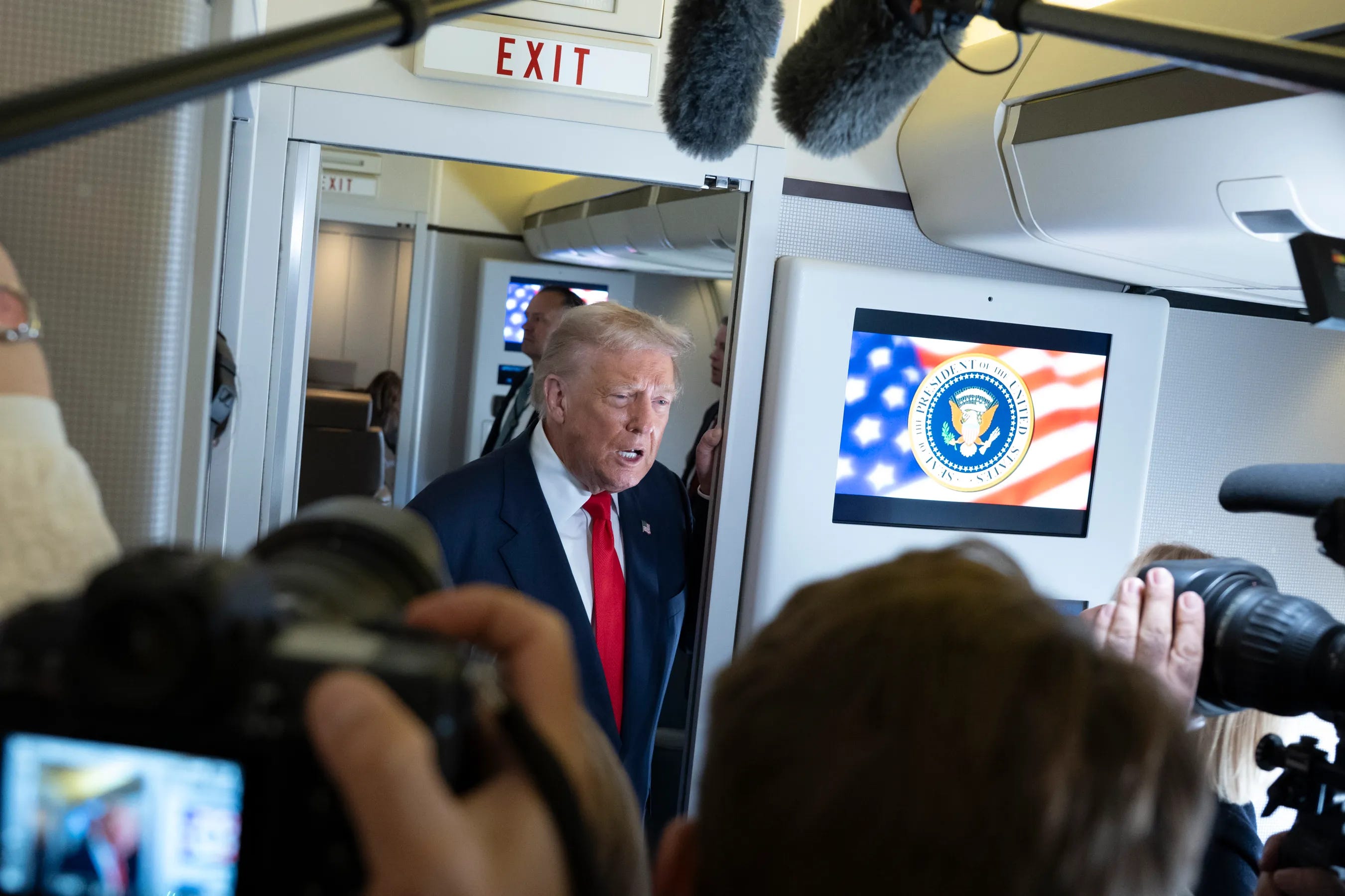
Donald Trump is once again casting himself as America’s great peacemaker — insisting he has “ended” or “solved” at least eight wars and claiming no other president has ever brought a conflict to a close. But having just come from Indochina, I can say with certainty: the Thai-Cambodian tensions are anything but resolved. And let’s not even start with the wreckage left behind in Gaza.
Meanwhile, this weekend his handpicked negotiators are sitting down with Ukrainian representatives in Miami before heading to Moscow for talks with Vladimir Putin. It doesn’t take a geopolitical genius to predict where that trajectory leads — and who stands to lose.
The mythology doesn’t stop there. Historians and even some of Trump’s own former advisers note that his “eight wars” tally includes disputes that were never wars in the first place, as well as conflicts that continue to this day. And it conveniently overlooks the many wars U.S. presidents actually did end.
Yet even as he pushes this revisionist narrative, Trump opened another front: ordering the airspace above and around Venezuela closed “in its entirety.” The move leaps far beyond existing FAA guidance and has triggered furious condemnation in Caracas — a dramatic escalation that analysts warn edges Washington toward a dangerous showdown with Nicolás Maduro.
It’s a revealing moment. At home, Trump casts himself as the president who ends wars; abroad, his actions show a leader willing to stretch legal boundaries, flout international norms, and test the limits of American power. And once again, it’s the rest of the world left to navigate the fallout.
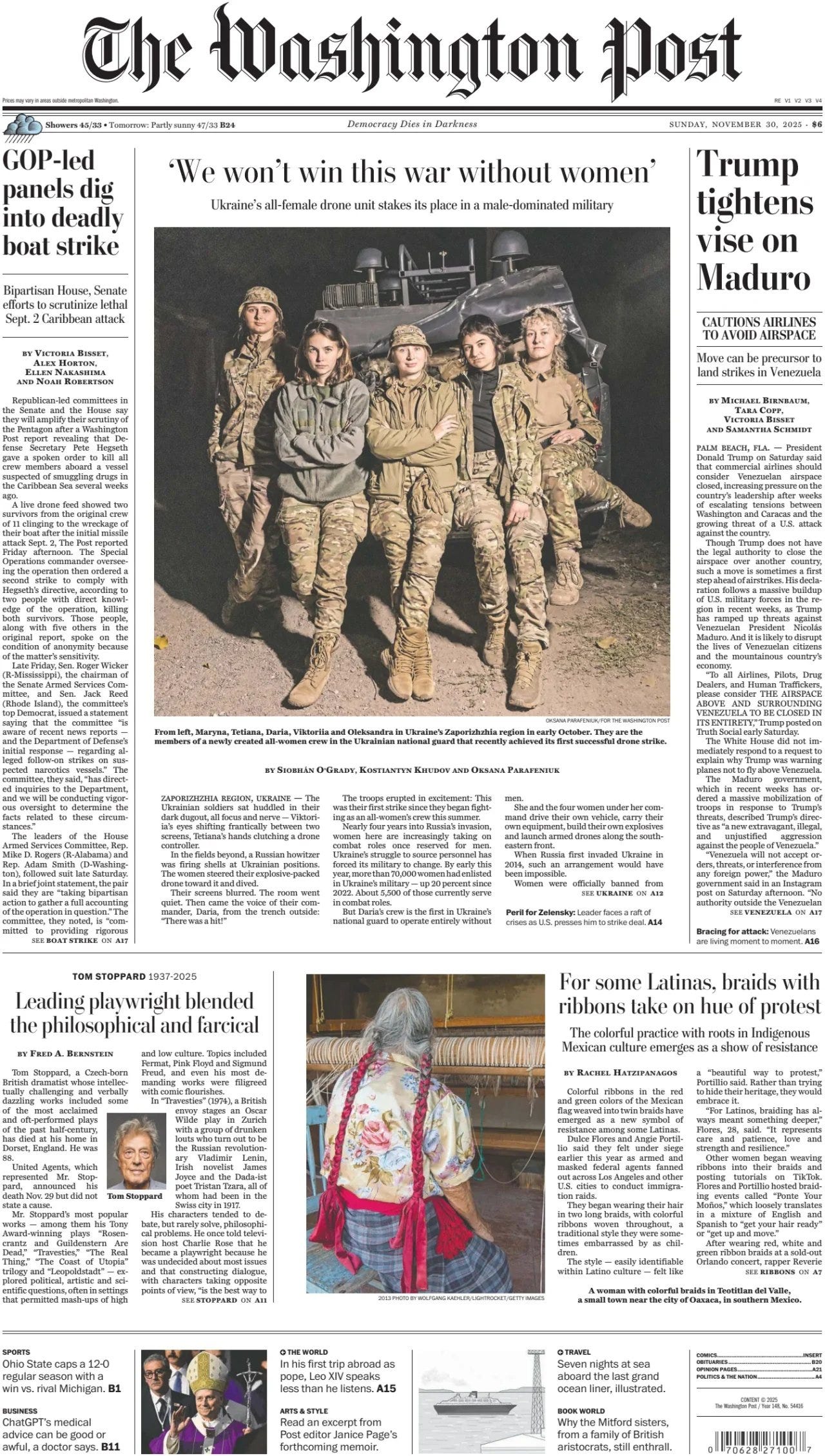
President Donald Trump abruptly ordered the airspace closed above and around Venezuela on Saturday, further escalating tensions between the U.S. president and Venezuelan dictator Nicolás Maduro, whom the White House accuses of working with narco-terrorist organizations to facilitate drug trafficking. “To all Airlines, Pilots, Drug Dealers, and Human Traffickers, please consider THE AIRSPACE ABOVE AND SURROUNDING VENEZUELA TO BE CLOSED IN ITS ENTIRETY,” the president wrote on Truth Social Saturday morning. The Federal Aviation Administration recently issued a security notice warning airlines and pilots to avoid Venezuelan airspace, citing “a worsening security situation,” increased military activity and potential GPS interference as risks to flights. On Thursday, Venezuela revoked operating rights for six major international airlines that had suspended flights to the country following the FAA’s warning. But Trump’s move to close the airspace “in its entirety” goes further than the FAA’s decision, signaling the U.S. now views Venezuelan skies as an active security threat, not just a risky transit zone. In a statement, Venezuelan Foreign Minister Yvan Gill said that Trump’s post constituted a “hostile, unilateral, and arbitrary act,” prohibited by the Charter of the United Nations. “Venezuela denounces and condemns the colonialist threat that seeks to affect the sovereignty of its airspace, constituting a new, extravagant, illegal, and unjustified act of aggression against the people of Venezuela,” he said. The White House did not respond to a request for comment. Trump and Secretary of State Marco Rubio have spent the last several months staging a major pressure campaign in the hopes of ousting Maduro, keyed by the build-up of American military might in the Caribbean and lethal strikes on boats the White House says are trafficking drugs. The attacks on alleged drug vessels have provoked international outcry, as Democrats and some Republicans fret that Trump is consolidating more power into the hands of the executive branch and violating international law - Politico
Israeli Prime Minister Benjamin Netanyahu has asked the country’s President, Isaac Herzog, for a pardon over corruption cases he has been battling. The president’s office said Herzog would receive opinions from justice officials before considering the request “which carries with it significant implications”. Netanyahu has been standing trial for the past five years on charges of bribery, fraud and breach of trust in connection with three separate cases. He denies wrongdoing. He said in a video message that he would have preferred to see the process to the end but national interest “demanded otherwise”. The Israeli opposition says he should admit guilt before seeking a pardon. In 2020, Benjamin Netanyahu became the first serving Israeli prime minister to stand trial. His political opponents have accused Netanyahu of attempting to conflate his interests with those of the state. Opposition leader Yair Lapid said there could be no pardon without an admission of guilt, an expression of remorse and Netanyahu’s immediate retirement from political life. Yair Golan, a left-wing politician and former deputy commander of Israeli forces, said “only the guilty” sought pardon - BBC
“President Herzog has never shown any real leadership, and would be happy to assist the PM, in the name of stopping socio-political chaos; as if Netanyahu and his coalition have nothing to do with the chaos and the country-wide PTSD. But if Herzog should do so, it would most likely spark a major Civil War” - Dr. Leora Danzig Leeder
Nigeria’s president declared a national security emergency and named nominees to fill key ambassadorial posts, as he grapples with mass kidnappings that have exposed widespread insecurity and his government’s diplomatic weaknesses. The abduction of hundreds of schoolchildren in two northern states last week — including more than 300 from a Catholic school — has created the biggest crisis of Bola Tinubu’s two-year presidency, coming as Washington threatens sanctions and military action over claims that Christians are targeted in violent attacks. Nigeria’s response to US President Donald Trump’s allegations of Christian persecution has been coordinated between the foreign ministry and presidency in Abuja, without a senior envoy or lobbyists in Washington. It has been a “shocking” and too-casual approach to diplomacy, according to Washington analysts and insiders. Tinubu finally nominated ambassadors to the US, UK, and France this week; Nigeria’s missions to more than 100 countries have been run by career diplomats since Tinubu recalled all serving ambassadors two years ago. He also declared “a nationwide security emergency” and nearly doubled the initial target for a new police recruitment drive to 50,000 officers. The army will also add to its ranks, Tinubu said, describing Nigeria as being in “a challenging moment.” - Semafor
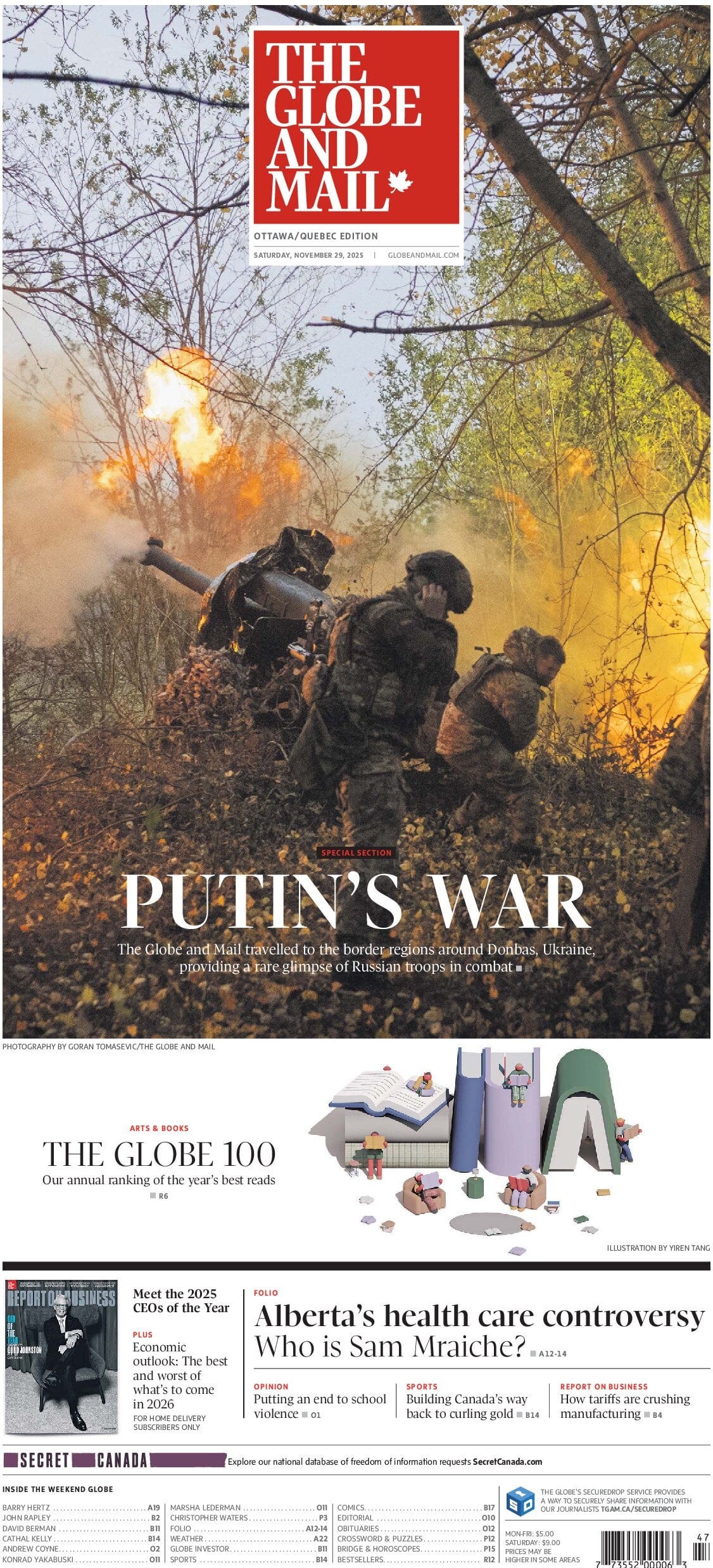
Ukrainian negotiators met with top US officials in Florida, amid accelerating efforts to hammer out terms of a plan to end Russia’s war on Ukraine, as Russian drones again battered residential buildings, wounding more than a dozen people. In a post on Telegram, Rustem Umerov, the head of Ukraine’s National Security and Defense Council, announced the start of talks, being held at the golf club of the White House’s lead envoy, Steve Witkoff. Secretary of State Marco Rubio and President Donald Trump’s son-in-law, Jared Kushner, were also participating in the talks. Rubio was quoted as telling reporters that the talks were aimed at halting the fighting, but also “an end to the war that leaves Ukraine sovereign and independent and with an opportunity at real prosperity.” Umerov took over as head of the delegation after the abrupt resignation of Andriy Yermak, who has headed the offices of President Volodymyr Zelenskyy. Yermak resigned two days earlier, amid a major corruption scandal that has undermined support for Zelenskyy. Witkoff is later scheduled to travel to Moscow to meet with top Russian officials, including President Vladimir Putin. It will be Witkoff’s sixth meeting with Putin since January - RFE/RL
French authorities announced that President Emmanuel Macron will host Zelenskyy in Paris on December 1 to discuss “the conditions for a just and lasting peace.” Macron has been one of Kyiv’s strongest backers. The initial 28-point US proposal, released last week, alarmed Ukrainian officials -- and reportedly angered Zelenskyy -- who then held their own talks with Rubio and other US officials in Geneva. Those talks resulted in a 19-point plan that leaves several major issues on the table, including the fate of a chunk of Ukraine’s Donbas region, the fate of Ukraine’s NATO aspirations, and a potential cap on the size of Kyiv’s armed forces.
Ukraine’s main intelligence agency has released dramatic video allegedly showing maritime drones striking two Russian “shadow fleet” oil tankers in the Black Sea. This clandestine fleet — notorious for opaque ownership structures and sanctions-dodging routes — has been central to Russia’s ability to export oil and fund its war machine. But what’s caught global attention is the location: the tankers were operating just off Turkish waters, with Turkish fireboats rushing in to contain the flames. The incident places Ankara in an uncomfortable spotlight, raising pointed questions about maritime safety, sanctions enforcement, and the security of vital shipping lanes.
Live from Cape Town, I spoke with the BBC about a fast-moving and consequential 24 hours in the war in Ukraine.
Ukraine has struck a major Russian oil refinery—another blow to the infrastructure that finances the Kremlin’s war machine. At the same time, two so-called Russian “ghost ships” have been spotted alarmingly close to Turkish waters, raising questions about intent, escalation, and maritime security in the Black Sea region.
We also unpack the flurry of peace-related activity, from back-channel negotiations to competing proposals being floated by the U.S. and others.
And finally, we look at the political earthquake in Kyiv: the shock resignation of Andriy Yermak, the powerful head of President Zelensky’s office. Yermak has long been seen as Zelensky’s “Siamese twin”—a near-indispensable partner. His departure leaves the Ukrainian president exposed at a critical moment. Zelensky must now move quickly to steady the ship of state as the war enters a volatile new phase.
This is a pivotal moment—and I break down what it means for Ukraine, Russia, NATO, and the global energy map.
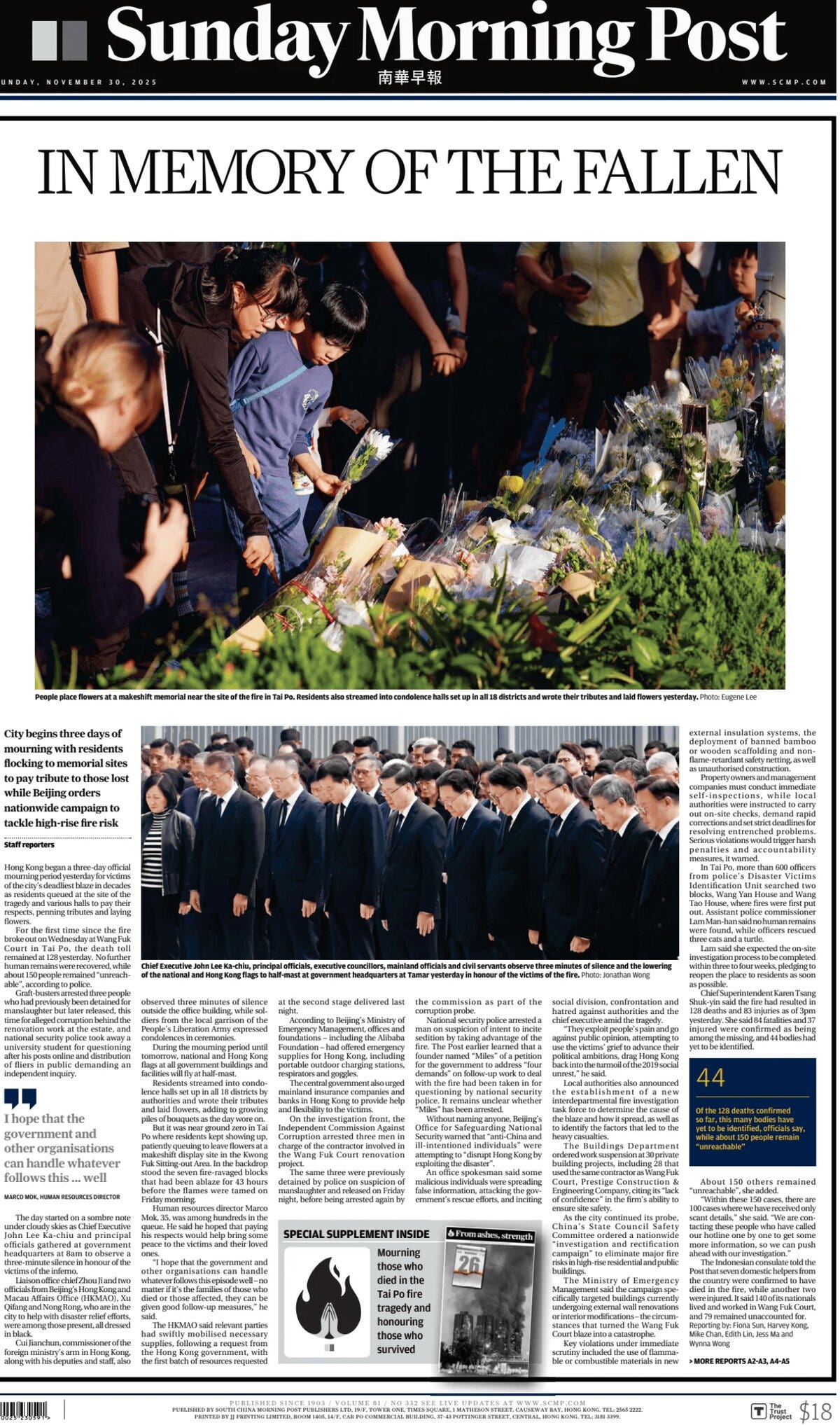
Thousands of mourners poured into Hong Kong’s Tai Po district on Sunday, forming a solemn river of remembrance for the 146 lives lost in the territory’s deadliest fire in more than seven decades, while Beijing called for unity and healing as a massive rescue and recovery operation continued amid the charred ruins. The scale of the calamity was evident, as the Disaster Victim Identification Unit (DVIU) discovered 18 more bodies in the wreckage of Wang Fuk Court in Tai Po following Wednesday’s blaze. They have completed searches in four of the seven affected buildings, but about 40 people remain unaccounted for. As the city grieves, a sweeping resettlement effort is under way. Deputy Financial Secretary Michael Wong Wai-lun said 1,827 survivors of the blaze had moved into temporary homes such as hotels and transitional housing. The 2021 census found that about 4,600 people lived in the housing estate, including in the unaffected block - SCMP
The journals…
.