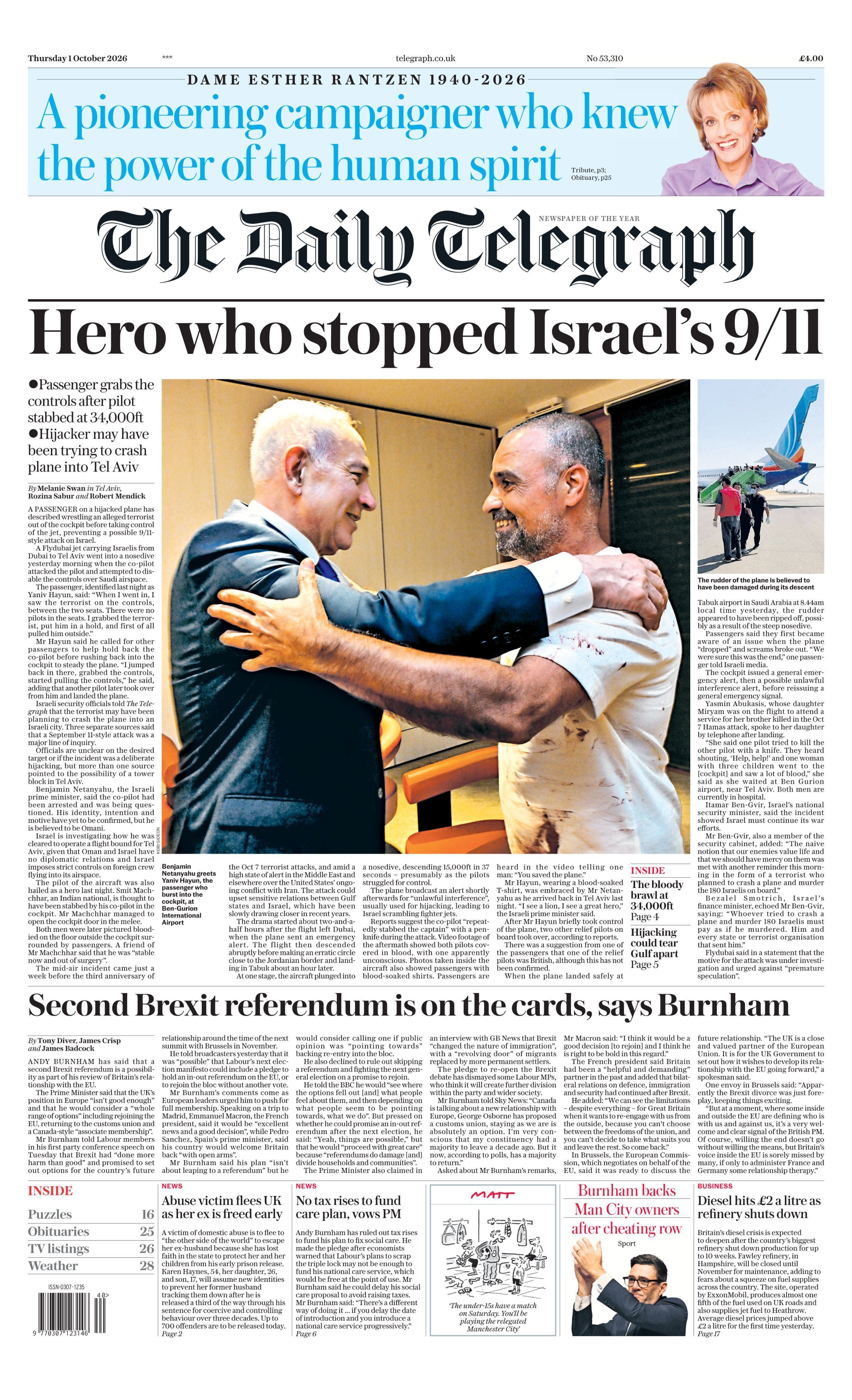
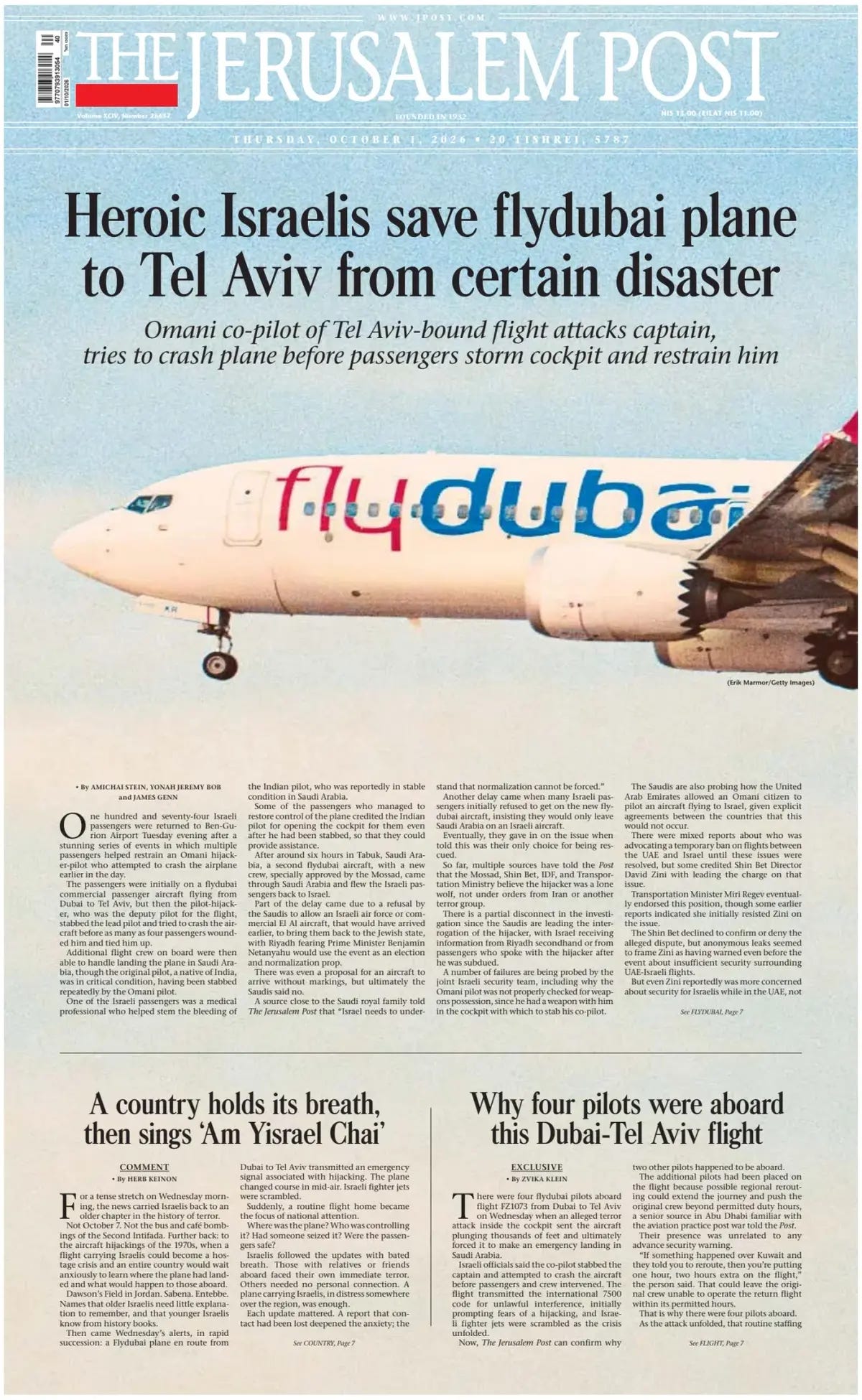
Israeli intelligence believes the Omani co-pilot who stabbed his captain on Wednesday’s flydubai flight FZ1073 from Dubai to Tel Aviv acted alone, The Jerusalem Post reports. The Mossad (foreign intelligence), the Shin Bet (domestic security), the Israel Defense Forces and the Transport Ministry all assess that he was not directed by Iran or any militant group. An Israeli official told The Times of Israel that the co-pilot had posted on social media about killing Jews and was “probably going to try to down that plane,” but cautioned that the investigation is ongoing. Defence Minister Israel Katz has called it a “jihadist terror attack” without offering evidence.
It is worth noting that Saudi Arabia, not Israel, is holding and questioning him. Riyadh and Jerusalem do not have diplomatic relations.
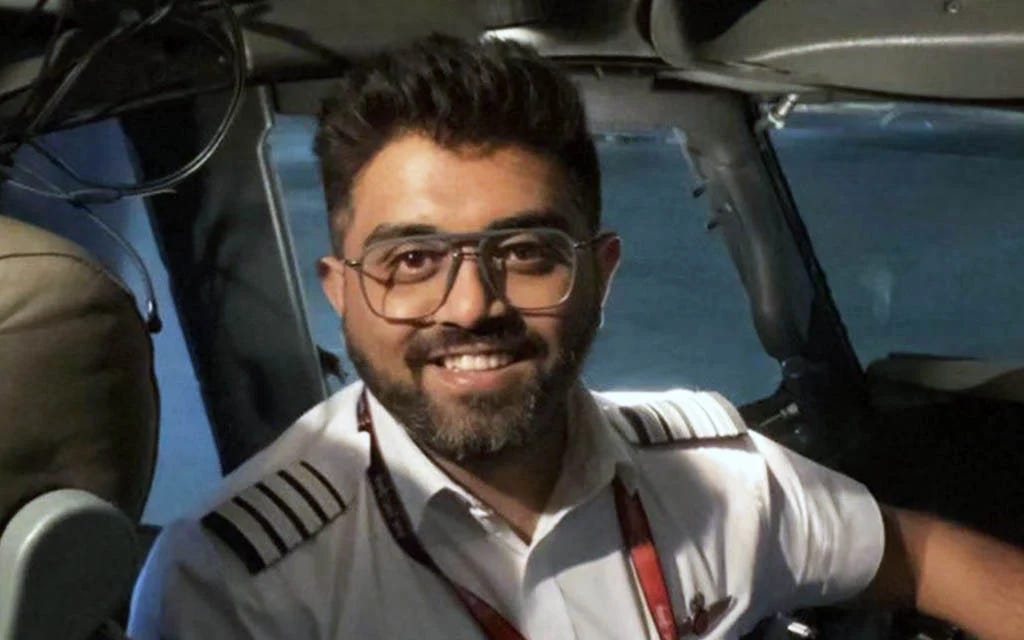
According to Haaretz, the jet dropped from 34,000 to 16,000 feet in less than two minutes and squawked the hijack code, and Israel scrambled fighter jets. Passengers and off-duty pilots, carried because of possible rerouting, forced their way into the cockpit, restrained the co-pilot and landed the plane in Tabuk, Saudi Arabia. The captain, Indian national Smit Machchhar, was seriously wounded. The first reports, which blamed a fight between a Ukrainian pilot and a Russian pilot, turned out to be false, Haaretz notes.
The central question is how he was in that seat. Under the UAE–Israel aviation agreement, only pilots holding passports from countries with diplomatic ties to Israel may fly there, The Telegraph reports. Oman has none. Transport Minister Miri Regev has demanded that all flydubai flights to Israel be suspended and asked Israel’s aviation authority to examine whether the UAE broke the agreement. Flydubai has already halted the route. Abu Dhabi’s official line is much more guarded than Israel’s: the UAE’s aviation authority calls it a “security incident” and has urged the public not to speculate, and flydubai describes an “altercation” between the pilots with motives unknown.
Riyadh, meanwhile, refused to let an Israeli military or El Al aircraft collect the passengers and is running the interrogation itself, leaving Israel to get its information secondhand.
Why it matters: If the attacker acted alone, this is a screening failure, serious but containable. If anyone sent him, the stakes change. Iran has spent the past week warning its neighbours, the UAE in particular, against joining new US sanctions on Iranian airlines. There is no evidence of an Iranian hand, but proof of one could draw Israel back into direct conflict with Tehran. Either way, the UAE–Israel air link, the most visible dividend of the Abraham Accords, is now in question three weeks before an Israeli election.
Sources: The Jerusalem Post, Haaretz, The Times of Israel, The National, The Telegraph
The Trump administration has circulated a proposal to European governments asking them to release a large portion of the bloc’s strategic diesel reserves to ease soaring fuel costs, according to four officials in European and U.S. governments. The plan, put forward by U.S. Energy Secretary Chris Wright, was pitched as an alternative to President Donald Trump’s threat of a blanket ban on diesel exports from the U.S. Under the proposal, EU governments would release 120 million barrels of diesel from their national strategic reserves over 180 days, a government official from a European country told POLITICO. That would account for well over a third of the approximately 315 million barrels of diesel EU countries held in reserve as of June this year, according to Eurostat figures. Among EU countries, Germany, France, Italy, Spain and Poland hold the largest reserves of the essential transport fuel. POLITICO reported Tuesday that the White House was floating the idea of asking the EU to use its diesel reserves to bolster global supply and thus lower prices. A German government official on Thursday confirmed that the United States had contacted Berlin in the matter. Multiple countries in Europe were approached for a coordinated release, according to a person familiar with the Trump administration’s plans. “It was very hypothetical: ‘What do you think about Europe releasing some of the reserves in order to decrease prices, put pressure on supplies?’” the official said. “’It could also help our government not to continue the discussion on the export ban.’”
The US political calendar is shifting from making legislation to the fight for November’s midterms, with a top Democrat telling Semafor the race for control of Congress is “50-50.” US President Donald Trump is set to kick off a month of campaigning, though GOP candidates in tough battles have distanced themselves from a historically unpopular leader. Republicans passed a sweeping tax cut last year, but worry they have not addressed voters’ concerns over inflation and AI regulation. Democrats lead in nationwide polling, but key races remain up for grabs: “The battle for the Senate is on a knife’s edge,” Semafor’s congressional bureau chief wrote, though the top Democrat in the Senate told him, “We’re right on the edge of winning.”
South Koreans have given up on talking to Pyongyang
South Koreans’ distrust of North Korea has hit its highest level since tracking began nearly two decades ago, the Korea Herald reports.
Seoul National University’s Institute for Peace and Unification Studies found in its 2026 annual survey that 78.3% of respondents believe dialogue and compromise with the North Korean regime are impossible. That is a record since the survey started in 2007. Another 86.4% feel threatened by the North’s nuclear arsenal, and 90.4% expect Pyongyang never to give it up. More than four in five (81.8%) now see the two Koreas as effectively separate states.
The mood has been hardened by events on the border. According to Defence Ministry figures cited by the Herald, North Korean troops crossed the Military Demarcation Line about 50 times in August and September. Two explosions inside the DMZ on September 21 wounded three South Korean soldiers. The UN Command has since found that the incident involved armistice violations. In a separate poll, 70.5% of respondents called the government’s handling of the aftermath inappropriate.
Why it matters: President Lee Jae-myung is still pressing for dialogue and de-escalation, but the public he would need behind any opening has largely moved on.
Source: The Korea Herald, Oct. 1, 2026

Your support is what keeps me on the front lines, in the rooms where decisions get made and the backrooms where secrets are shared, and able to report on what others miss. If you value independent, on-the-ground analysis, please consider upgrading today. For a limited time, annual subscriptions are 30% off. It makes a real difference.
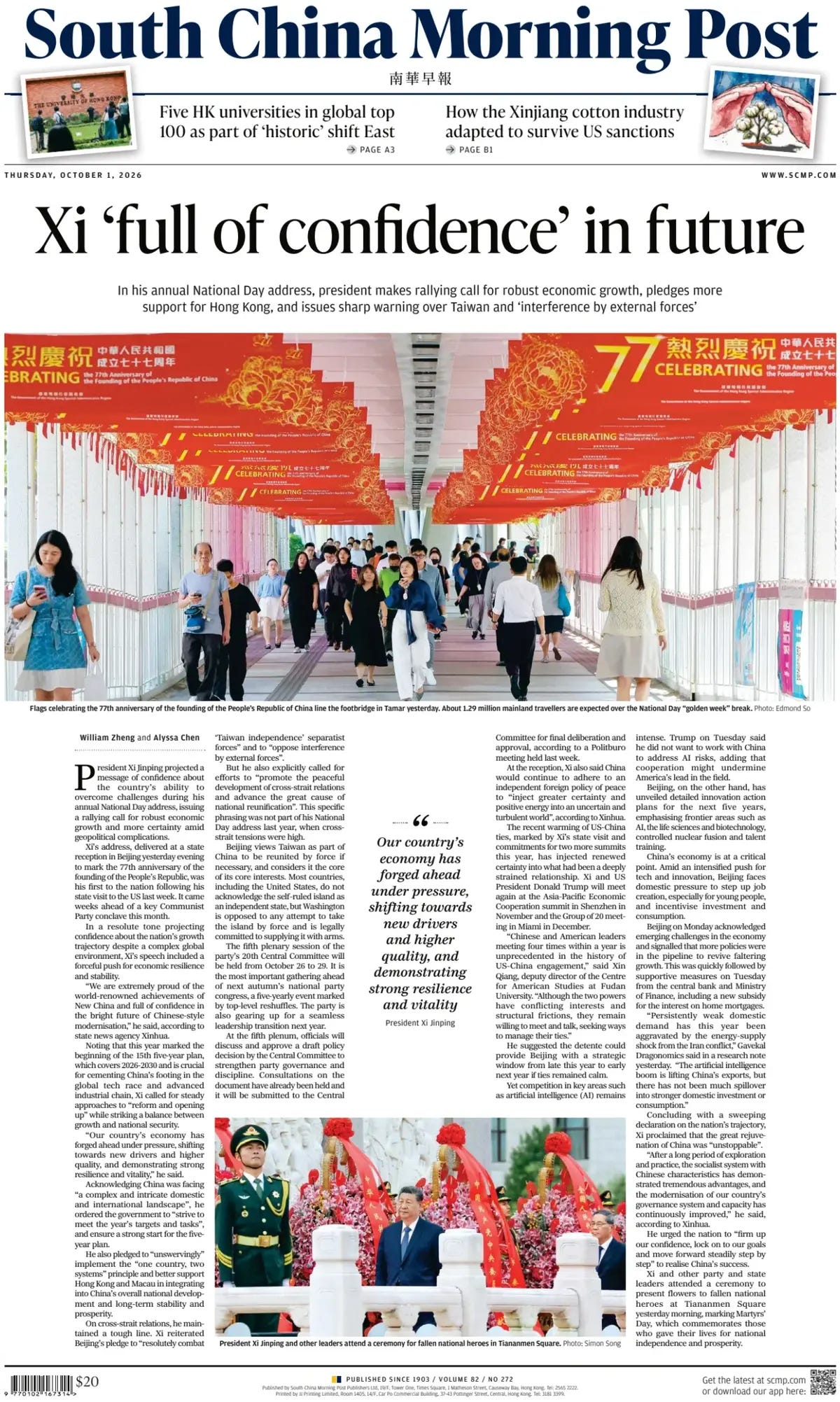
President Xi Jinping used his National Day address on Wednesday to call for the “peaceful development” of relations with Taiwan. The South China Morning Post notes that the phrase was absent from last year’s speech, given at a time of high cross-strait tension. The speech still contained the usual warnings. Xi pledged to resolutely oppose “Taiwan independence” separatist forces and interference by “external forces,” and said the “great rejuvenation” of the Chinese nation is unstoppable. But the softer line comes in Beijing’s warmest stretch with Washington in years. Xi made a state visit to the US last week, and he and Donald Trump are due to meet again at APEC in Shenzhen in November and at the G20 in Miami in December. That would make four leader-level meetings in one year. The speech came weeks before the Communist Party’s fifth plenum (October 26–29), which is expected to tighten party discipline ahead of next year’s leadership transition. At home, Xi struck a confident tone about the economy. Beijing, however, has acknowledged new pressures, including weak domestic demand made worse by the energy shock from the Iran conflict, and this week it announced new subsidies on mortgage interest.
Why it matters: Beijing appears to be cushioning its Taiwan language while it has Trump’s attention. For Taipei, and for US allies across Asia, the question is what Washington offers in return.
President Donald Trump will not win this year’s Nobel Peace Prize as he wages war with Iran, but his influence will still be felt by the awarding body that picks the laureate, according to experts. Last year’s award, presented to Venezuela’s Maria Corina Machado, marked an unprecedented moment in the prize’s 125-year history after Trump persistently lobbied to secure the award himself. Weeks later, Machado handed her gold Nobel medal directly to Trump in a bid to gain support for her efforts to advance democracy in Venezuela. This year, the five-member Norwegian Nobel Committee will be mindful of selecting a candidate capable of withstanding pressure from Trump, according to Haakon Gjerloew, acting director at the Peace Research Institute Oslo. "I think last year's events around the Nobel Peace Prize, Maria Corina Machado giving it to Trump afterward, will affect some of the considerations that they make," he told Reuters. "One worry the committee might have is whether awarding it to someone could put them under pressure from Donald Trump ... I think the committee will consider whether the award does more harm than good." According to experts, that caution could lead the panel toward choices such as Pope Leo, the International Criminal Court, the International Court of Justice, or Francesca Albanese, the UN special rapporteur on the Occupied Palestinian Territories. The formal announcement is scheduled for October 9. Leo, who made history as the first US-born pope, said he intends to keep speaking out against military conflicts. His comments came after the president described him as “weak” for voicing criticism of the U.S. conflict with Iran. Meanwhile, Italy's Albanese has drawn substantial criticism from both the U.S. and Israel over her sharp condemnation of Israel's conduct during its war against Hamas in Gaza, as well as its occupation of the West Bank - The Independent
The journals…