🔥 World Briefing Hot Take
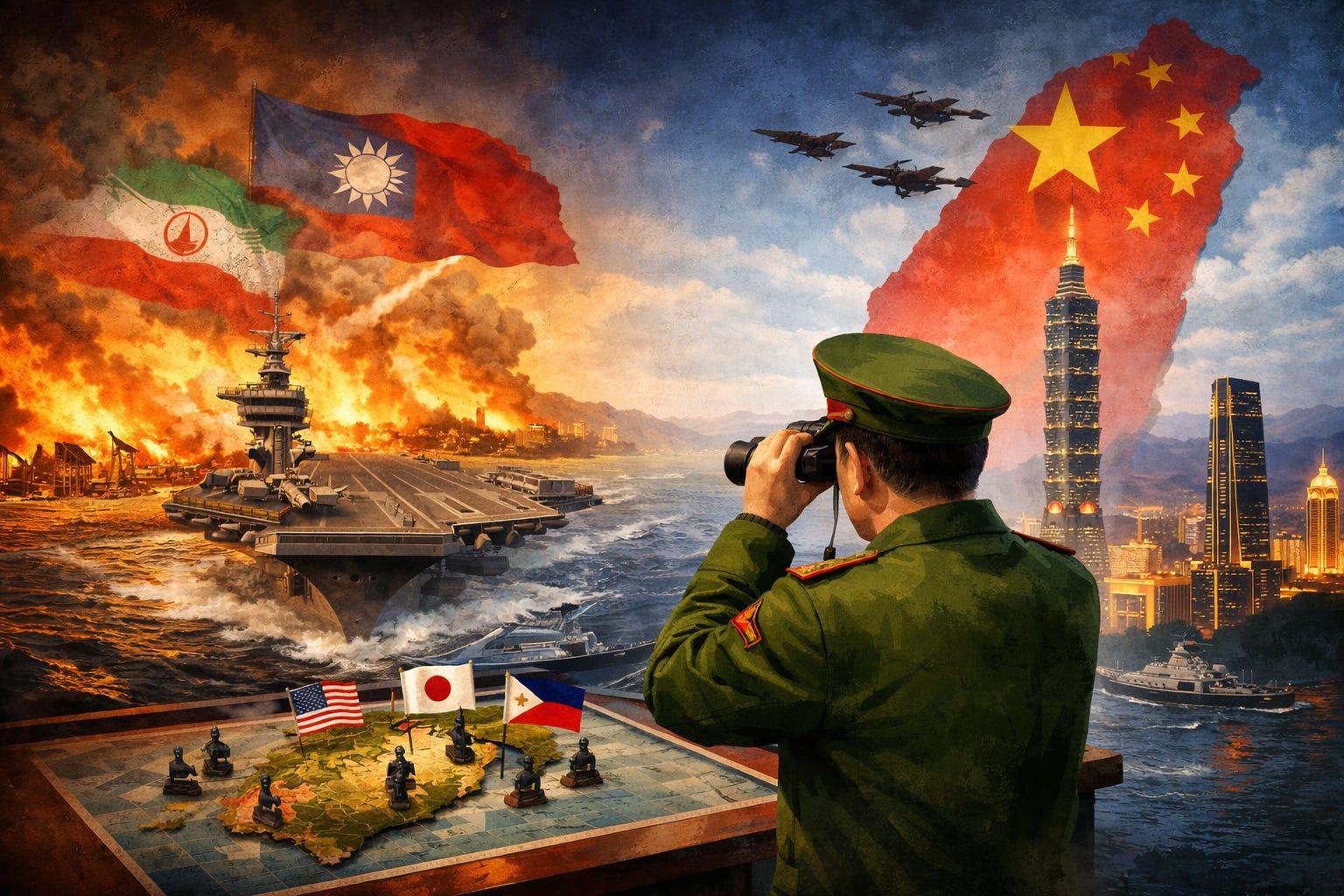
While much of the world focuses on the immediate destruction inside Iran, strategists in Beijing are studying something else entirely: the alliance stress test unfolding around the conflict. As I told Times Radio London this morning (see video below) China appears to have been caught off guard by the U.S.–Israeli assault, but the war is offering an unexpected strategic laboratory. European and Gulf allies have shown hesitation about hosting or openly supporting U.S. military operations, even as Washington rapidly redeploys ships, aircraft and precious munitions to the Middle East. For Chinese planners contemplating a future move on Taiwan, the question becomes unavoidable: would those same allies - from Japan to the Philippines and beyond - actually step forward in a crisis? The war is also straining America’s arsenal and attention span, with weapons stocks being consumed faster than factories can replenish them. Meanwhile Beijing faces its own dilemma: safeguarding energy supplies after losing Iranian oil flows that once accounted for roughly 13 percent of its imports. Hovering over it all is what I’ve called the “Contortionist-in-Chief” problem - Donald Trump simultaneously predicting the war will end “very soon” while threatening even larger strikes if Iran disrupts shipping. For Beijing, the message is mixed but instructive: the Gulf war may be about Iran, but its strategic lessons are already echoing across the Taiwan Strait.
News Briefs
United States President Donald Trump has said that he expects the war on Iran to be over “very soon” after dubbing the past 10 days of war, which have wrought devastation on Iran, a “short-term excursion”. Addressing the media in Doral, Florida, Trump claimed that the US and Israel had struck 5,000 targets since the war began on February 28, when Iranian Supreme Leader Ayatollah Ali Khamenei was killed. Trump spoke as Iran’s hardliners staged a show of loyalty to new Supreme Leader Mojtaba Khamenei – the former supreme leader’s son – whose appointment was confirmed on Sunday amid US-Israeli strikes on Iran’s nuclear facilities, civilian areas and critical infrastructure, such as oil refineries and a desalination plant. While Trump appeared to say hostilities would soon end, he nevertheless threatened a larger attack on Iran if it continued to block shipping in the Strait of Hormuz, which has led to a major spike in oil prices, with Brent crude, the international benchmark, at one point topping $119 a barrel. “I will not allow a terrorist regime to hold the world hostage and attempt to stop the globe’s oil supply. And if Iran does anything to do that, they’ll get hit at a much, much harder level,” the US president said. He said the US was putting an end to threats in the Strait of Hormuz, offering political risk insurance to tankers operating in the Gulf” and asserting, “We’ll perhaps go alongside them for protection”. He also said that the US and Israel were continuing to target Iran’s drone and missile stocks. “Starting today, we know all of the places they manufacture drones, and they’re being hit one after the another,” he said, adding that the country’s “missile capability” was “down to about 10 percent, maybe less”. - Al Jazeera
Trump’s appearance at the news conference came on the back of his call with Russian President Vladimir Putin on the wars in Ukraine and the Middle East. Trump said Putin wanted “to be helpful” on the latter conflict. “I said, ‘You could be more helpful by getting the Ukraine war over with. That will be more helpful.’ But we had a very good talk,” Trump said. Unlike Trump, Putin had on Monday congratulated Mojtaba Khamenei on succeeding his late father as supreme leader, reaffirming Moscow’s support for Tehran.
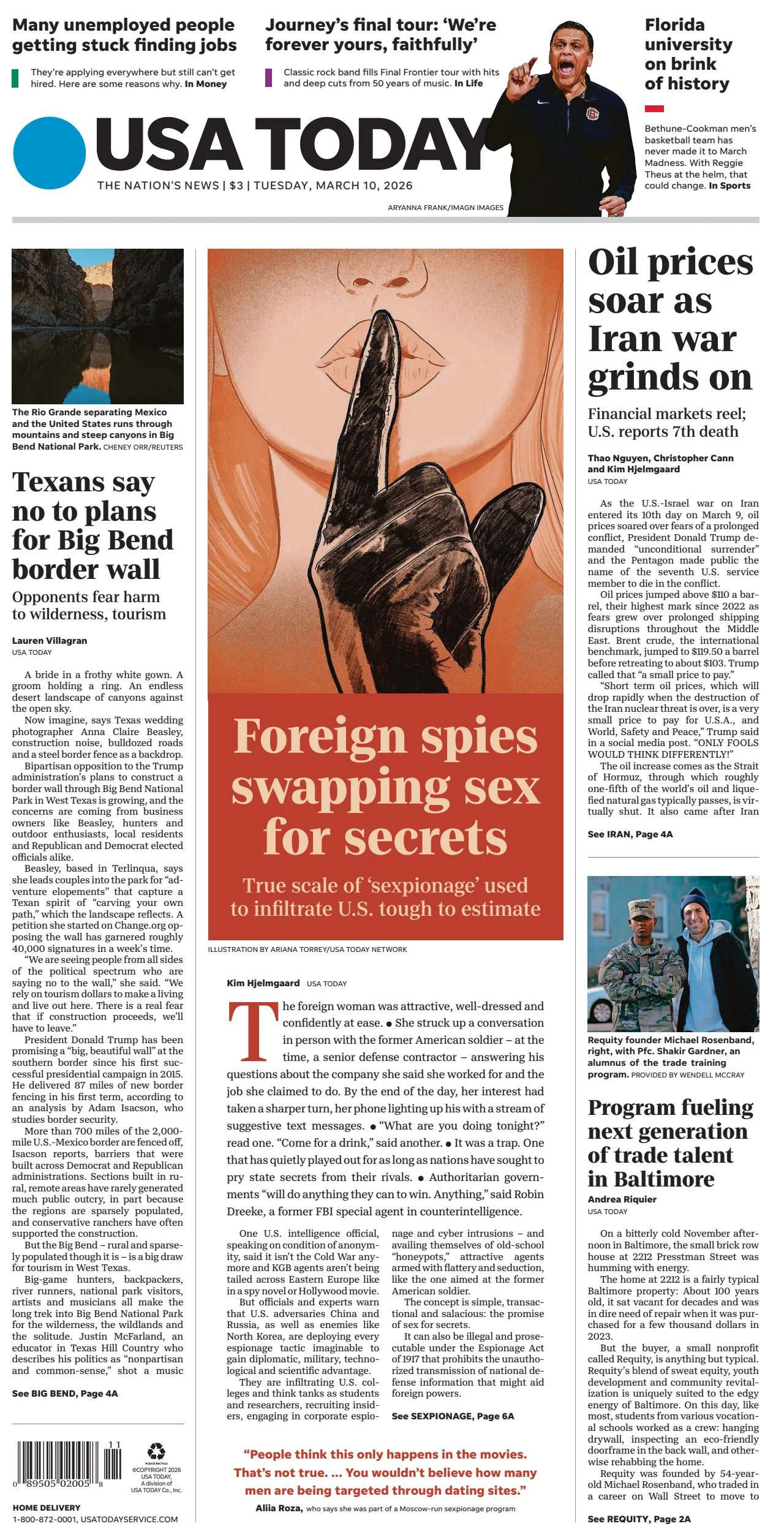
Russia would supply oil and gas to European buyers, provided such co-operation was “long-term” and did not put political pressure on Moscow, President Vladimir Putin said Monday. Oil prices have skyrocketed since the United States and Israel began striking Iran on Feb. 28, trading above $100 this week for the first time since Russia launched its Ukraine war in 2022. In a televised meeting, Putin said Moscow would continue to supply oil to “reliable” partners in Asia, as well as EU members Hungary and Slovakia. “If European companies and European buyers suddenly decide to reorient themselves and provide us with long-term, sustainable cooperation, devoid of political pressures ... then go ahead. We’ve never refused,” Putin said. The European Union banned maritime imports of Russian crude in 2022, while Russia’s pipeline exports to Hungary and Slovakia have been effectively halted since January due to damage to the Druzhba oil pipeline via Ukraine. Putin’s comments came hours after Hungarian Prime Minister Viktor Orbán urged the EU to suspend sanctions on Russian oil and gas to counter prices sent soaring by the war in the Middle East - AFP/Moscow Times
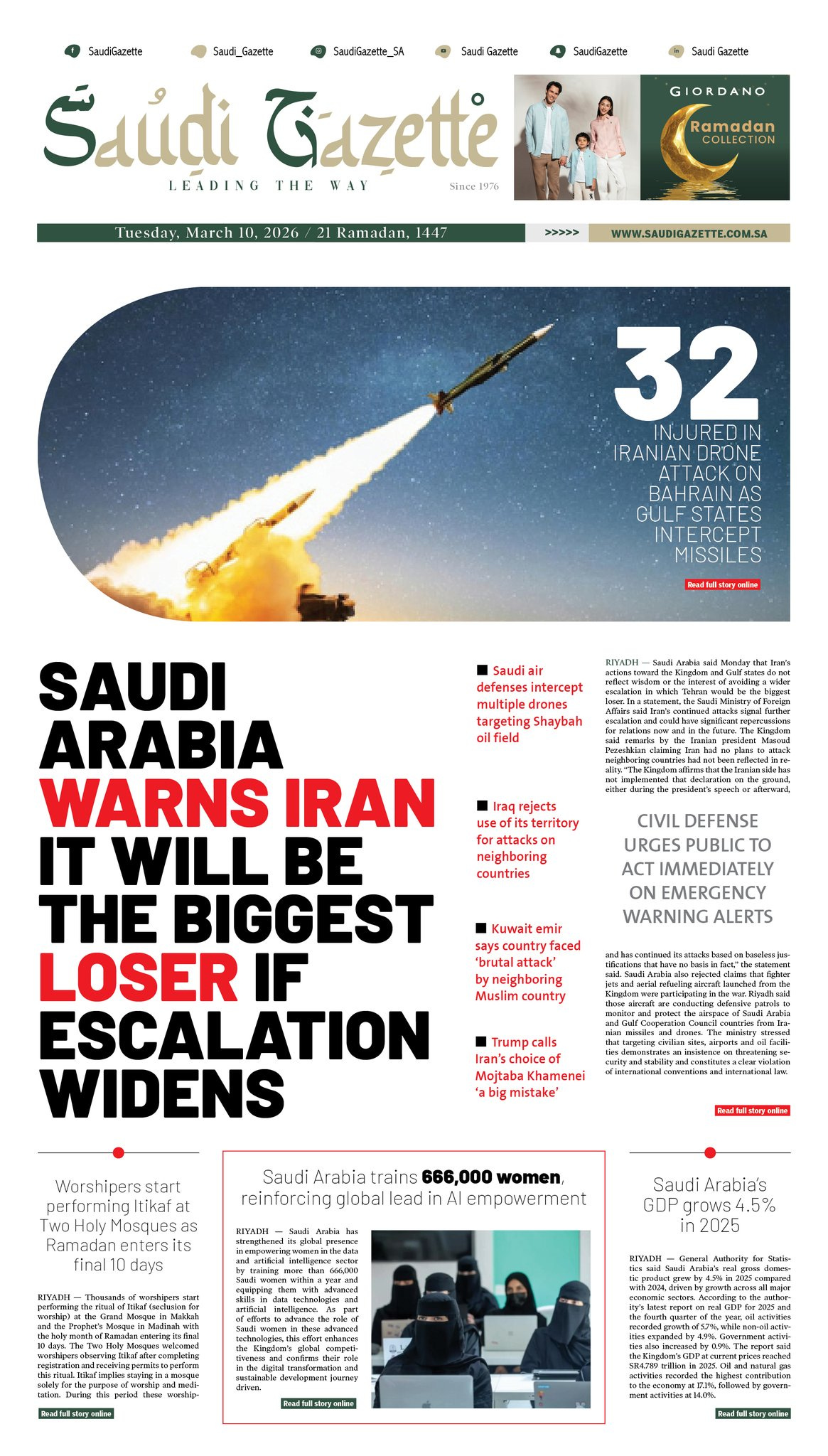
Saudi Arabia on Monday announced more drone attacks on the Kingdom despite Iran claiming it was only targeting US assets in the Middle East. The Ministry of Defense said nine drones heading toward the Shaybah field were shot down in the Empty Quarter. The latest attack came a day after the Shaybah oil field was targeted with at least five drones, all of which were intercepted. Late Sunday, Riyadh issued another warning to Iran. It said its continued attacks may have a “significant impact on bilateral relations now as well as the future,” cautioning Tehran that it would be the biggest “loser” if these attacks continued - Al Arabiya
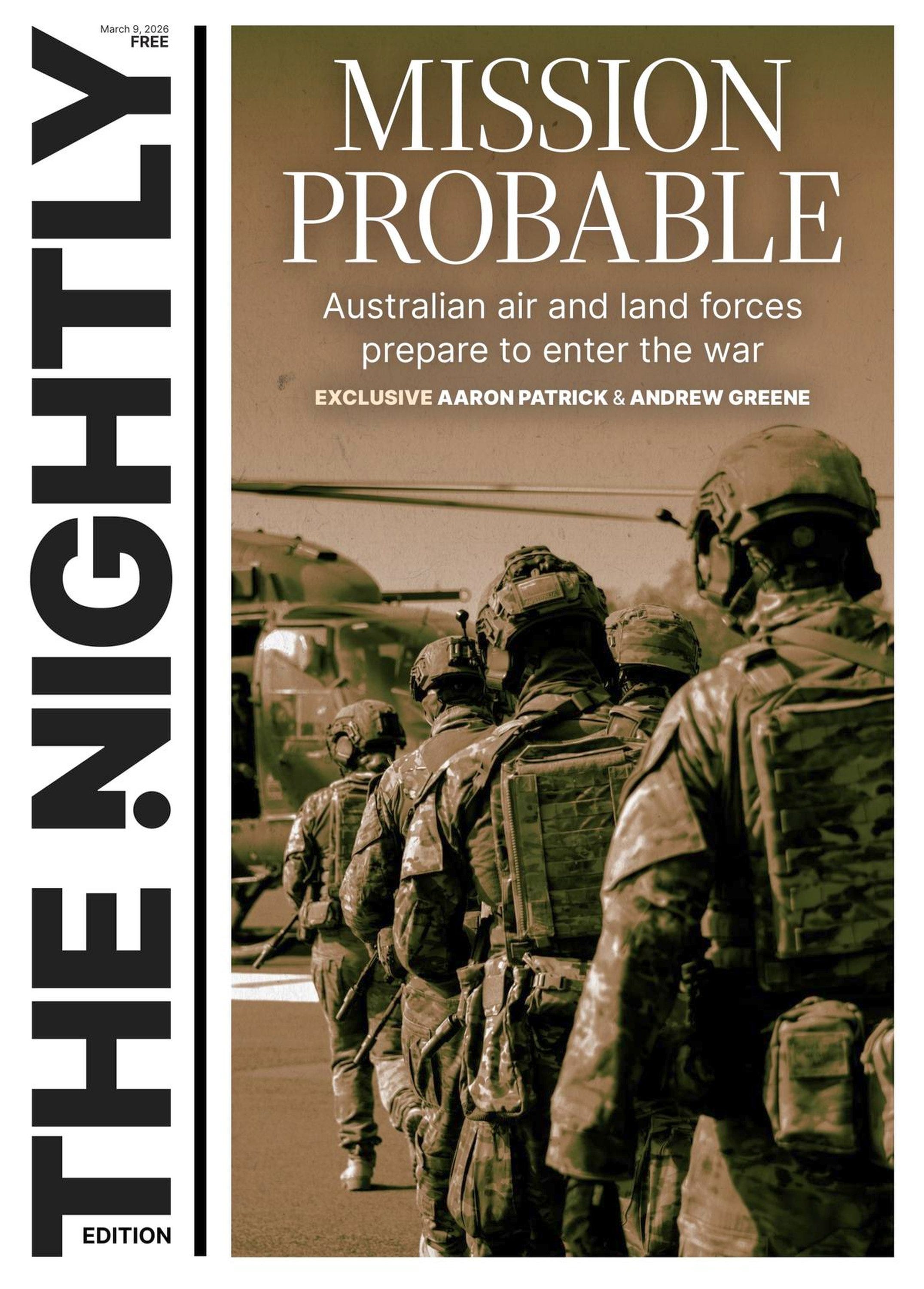
“They want Donald Trump to focus on the problems at home, of which there are many.” With oil prices beginning to rise and US boots on the ground in Iran becoming more 'probable', Trump’s voter base is losing “tolerance” for the war in Iran to go on much longer, says senior fellow of the Atlantic Council Michael Bociurkiw. He was speaking to Kate McCann and Stig Abell on Times Radio Breakfast.
The Trump administration has cited Iran’s Tehran Research Reactor as a central justification for its military strikes, but has provided no evidence that the facility — built by the United States and used for civilian research for nearly six decades — was being used to develop nuclear weapons. Multiple nuclear scientists and nonproliferation experts told MS NOW that the reactor does not have the capacity to serve as an easy conduit to a bomb as asserted by the administration. The gap between the administration’s numerous claims about Iran and the available evidence has become a focal point of criticism as questions mount over the decision to launch strikes rather than continue negotiations. But the Trump administration has yet to provide evidence or intelligence — to the public or to Congress — demonstrating that Iran intended to use the uranium at the Tehran Research Reactor for weapon development or that the facility was being covertly used for stockpiling purposes. In two classified briefings provided to lawmakers since the attacks, administration officials made no assertion that the reactor was being used for stockpiling purposes for a potential weapon, according to two people familiar with their comments. Several nuclear experts who spoke to MS NOW questioned the extent to which U.S. negotiator Steve Witkoff and Jared Kushner — who led the nuclear negotiations and described the Iranian position to Trump — understood the technical details of the enrichment programs at the heart of the deliberations. Elena Sokova, the executive director of the Vienna Center for Disarmament and Non-Proliferation, called the administration’s assessments of the Tehran Research Reactor “confusing and misleading” and riddled with “technical errors.” She added: “It mixes up different elements of the nuclear program and their potential proliferation capabilities. Research reactors are not capable of doing enrichment of uranium, whether for civil or military purposes.” Witkoff and Kushner did not bring technical experts from the U.S. to sit in on their talks in Geneva, according to a senior Middle East diplomat with knowledge of the talks, and the White House opted to forgo scheduled technical talks set for this past Monday in Vienna, where more detailed nuclear details were expected to be addressed. “When it comes to nuclear nonproliferation discussions, the details matter,” said Daryl Kimball, executive director of the Arms Control Association. “And working out the details requires time and technical expertise, and the administration was not patient enough to apply either to this effort.” Witkoff defended his credentials last week to lead the nuclear talks. “I wouldn’t tell you I’m an expert in nuclear, but I’ve learned quite a bit, and I’ve studied it and have read quite a bit about it, and I’m competent to sit at the table and discuss it, and Jared [Kushner] is as well,” Witkoff said on “The Mark Levin Show.” - MS Now
A Hong Kong court has rejected the Wall Street Journal’s bid to throw out a wrongful dismissal suit it faces from a former employee who said she was fired for taking up a leadership role at a local press union. On Monday morning, Principal Magistrate David Cheung shot down the American newspaper’s application and ordered the lawsuit, brought by Hong Kong Journalists Association chairperson Selina Cheng, to continue. Cheng is suing the paper’s parent company, Dow Jones Publishing Co. (Asia) Inc., for firing her in July 2024 because she took up a leadership position at the HKJA. The publisher pleaded not guilty last month to one count of preventing or deterring an employee from exercising the right to hold office in a trade union, and another count of terminating employment, penalising, or discriminating against an employee for exercising that right. Lawyers for Dow Jones previously sought a stay of proceedings, saying Cheng’s request for a HK$3 million settlement indicated an “ulterior purpose” of seeking money, which the publisher said amounted to an abuse of the legal system. The publisher accused her of intentionally concealing her settlement request from Hong Kong’s labour authorities and the court so she would not appear to have an ulterior motive, whereas Cheng denied the claim - HKFP
Thailand could lose more than 40 billion baht in tourism revenue in the worst-case scenario, assuming the Middle East airspace closure lasts for eight weeks, says the Tourism and Sports Ministry. Natthriya Thaweevong, tourism and sports permanent secretary, said travellers from the Middle East and Europe have been greatly hampered by the airspace closure as many flights are unable to operate. Gulf carriers such as Emirates and Etihad Airways have only resumed limited flights. The ministry evaluated the tourism impact using three scenarios: if the Middle East airspace is closed for three, four and eight weeks. If the airspace remains closed for eight weeks or longer, foreign arrivals could drop by 595,874, resulting in a loss of 40.9 billion baht - Bangkok Post
Russia’s ambassador to Thailand has publicly welcomed Bangkok’s long-standing neutral stance on the war in Ukraine, calling it a sign of the kingdom’s “balanced” foreign policy. Speaking to the Bangkok Post, Ambassador Evgeny Tomikhin highlighted Thailand’s historical ties with Russia and its willingness to maintain dialogue with all sides, noting that Moscow values the relationship as the two countries approach 130 years of diplomatic ties. But Thailand’s neutrality has come under increasing scrutiny. Investigations and earlier reporting have found that the country has served as a transit hub for high-end Chinese drones ultimately destined for Russia, while sanctioned aviation components have also reportedly been routed through Thai channels to Russian customers. The developments underscore how Southeast Asia’s major economies are increasingly walking a fine line - maintaining official neutrality on the Ukraine war while remaining embedded in global supply chains that can indirectly sustain Russia’s war effort.
The journals…..