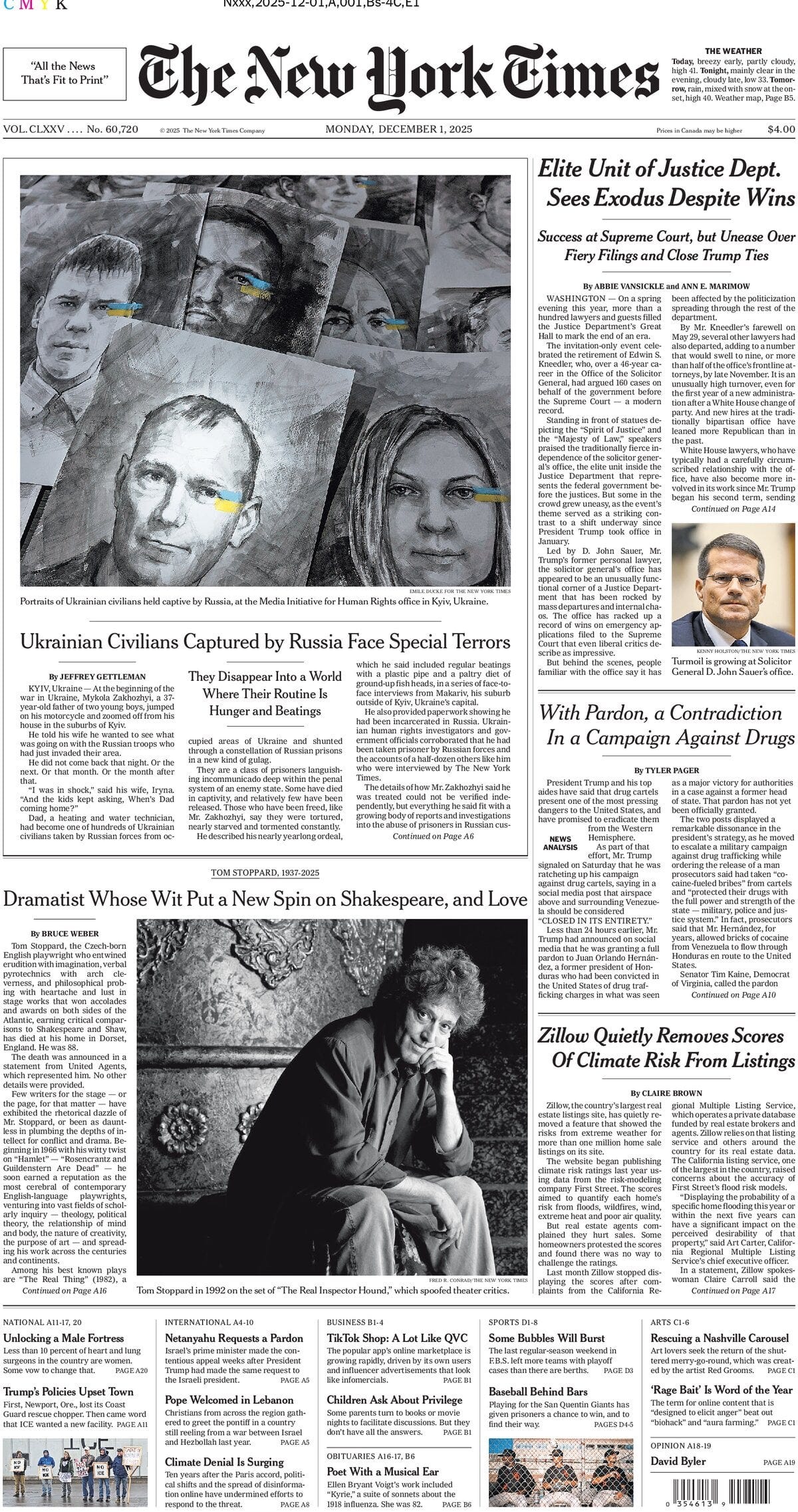
Pathetic, isn’t it? Russia is widening the conflict on every front — from cyber strikes and sabotage across Europe to covert recruitment networks in Africa — and now, chillingly, through deeper industrial alignment with China. A major Chinese drone-parts supplier has quietly taken a stake in a key Russian drone manufacturer, a tie-up so sensitive Moscow erased the ownership records within 24 hours. As Russia accelerates hybrid warfare with new backing from Beijing, NATO admits it remains too reactive, too divided, and too hesitant to adopt a proactive posture. Meanwhile the U.S. pushes ahead with a Ukraine peace plan that risks granting the Kremlin impunity, prompting European officials to warn that absolving Russian war crimes would sow the seeds of future aggression. The pattern is unmistakable: Russia and its partners move fast; the West debates slowly - and Ukraine is caught in the gap.
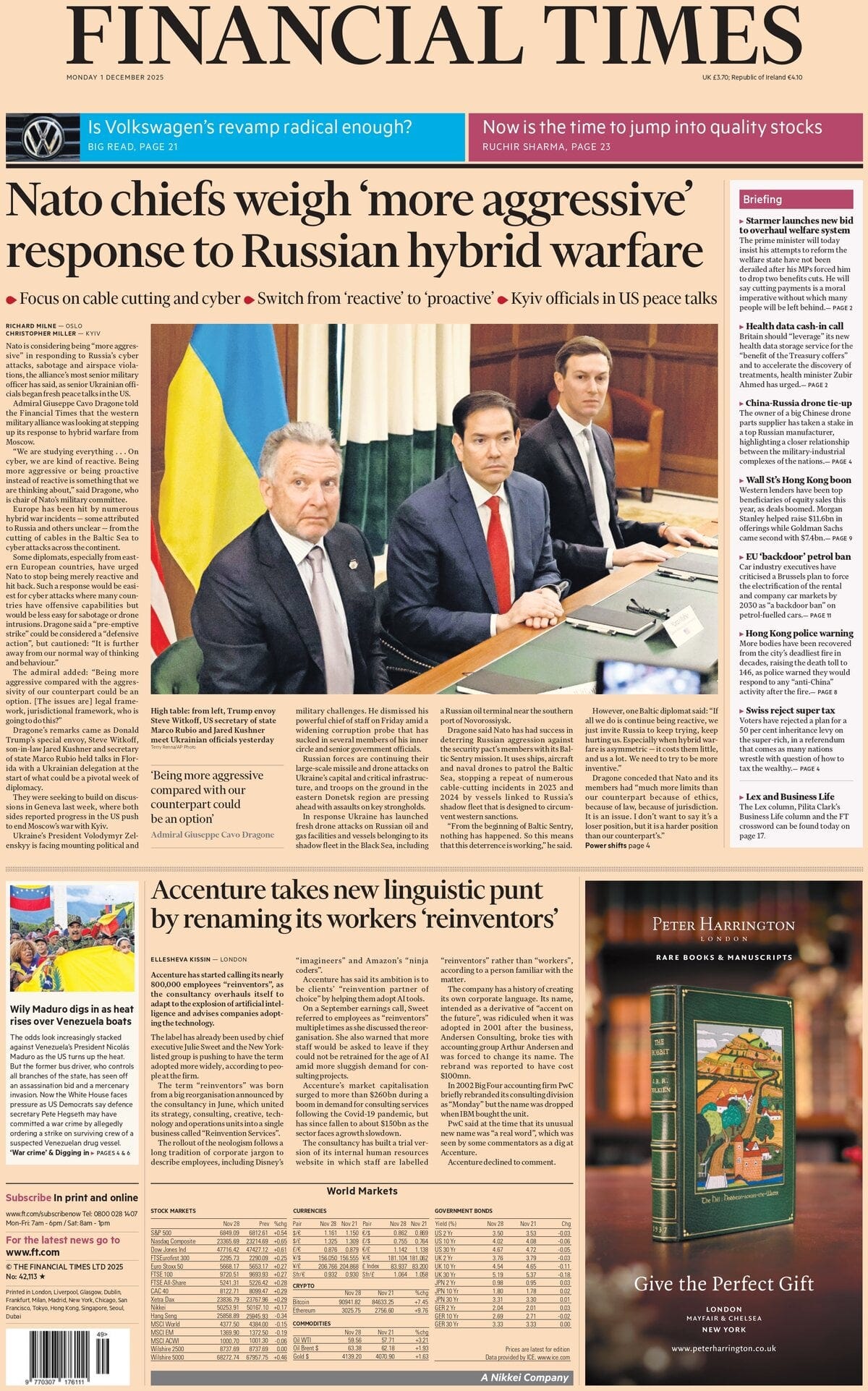
Nato is considering being “more aggressive” in responding to Russian cyber attacks, sabotage and airspace violations, the alliance’s most senior military officer has said. Admiral Giuseppe Cavo Dragone told the Financial Times that the western military alliance was looking at stepping up its response to hybrid warfare from Moscow. “We are studying everything….On cyber, we are kind of reactive. Being more aggressive or being proactive instead of reactive is something that we are thinking about,” said Dragone, who is chair of NATO’s military committee. Europe has been hit by numerous hybrid war incidents - some attributed to Russia and others unclear - from the cutting of cables in the Baltic Sea to cyber attacks across the continent. Some diplomats, especially from eastern European countries, have urged NATO to stop being merely reactive and hit back. Such a response would be easiest for cyber attacks where many countries have offensive capabilities but would be less easy for for sabotage or drone intrusions. Dragone said a “pre-emptive strike” could be considered a “defensive action,” but cautioned: “It is further away from our normal way of thinking and behaviour.”
Top US and Ukrainian officials wrapped up their talks in Florida, with Secretary of State Marco Rubio calling the session “very productive” but saying additional work was needed in the effort to thrash out a plan to end Russia’s war on Ukraine. “We had another very productive session, building off [talks in] Geneva, building off the events of this week, but there’s more work to be done,” Rubio told reporters on November 30 following the meeting, without being specific. “There are a lot of moving parts, and obviously there’s another party involved here that will have to be a part of the equation,” he said, referring to Russia. “And that will continue later this week, when [White House special envoy Steve] Witkoff travels to Moscow...We’ve also been in touch in varying degrees with the Russian side, but we have a pretty good understanding of their views as well,” Rubio added. Rustem Umerov, Ukraine’s security council secretary and leader of Kyiv’s delegation, hailed the negotiations as “meaningful and successful” but also did not discuss details. “Concluded a difficult but productive session of negotiations in Florida. We have tangible progress toward establishing a just peace,” he wrote on Telegram. “The meeting was meaningful and successful….There is still a lot of work to be done -- we continue to consult and agree on further steps for the sake of peace for Ukraine,” he added. AFP quoted an unnamed source close to the Ukraine team as saying the talks were “not easy” and that “the search for formulations and solutions continues.” The negotiating teams met in Hallandale, Florida, north of Miami, amid accelerating efforts to hammer out terms of a plan that would be acceptable to both Kyiv and Moscow - RFE/RL
The owner of a major Chinese drone parts supplier has taken a stake in one of Russia’s leading drone companies, highlighting a deepening relationship between Moscow and Beijing’s military industrial complexes. A company filing, made in September and seen by the Financial Times (which first reported it), listed Wang Dinghua as the new owner of five percent of the shares in in Rustakt, a manufacturer of the VT-40 first-person view (FPV) drone widely used by Russia in attacks on Ukrainian forces. While China has given Moscow greater access to its vast capacity to produce electronics than Kyiv, the tie-up marks a previously unknown level of cooperation between a Chinese company and a Russian military supplier. The FT found the filing in Russian public records. Within a day of accessing it, however, all of Rustakt’s ownership records had been suppressed and removed from official corporate registries in Russia.
Donald Trump’s drive to secure peace in Ukraine must not let Vladimir Putin off the hook for war crimes committed by Russian forces, a top EU official has warned, effectively setting a new red line for a deal. In an interview with POLITICO, Michael McGrath, the European commissioner for justice and democracy, said negotiators must ensure the push for a ceasefire does not result in Russia escaping prosecution. His comments reflect concerns widely held in European capitals that the original American blueprint for a deal included the promise of a “full amnesty for actions committed during the war,” alongside plans to reintegrate Russia into the world economy. The Trump team’s push to rehabilitate the Kremlin chief comes despite international condemnation of Russia for alleged crimes including the abduction of 20,000 Ukrainian children and attacks targeting civilians in Bucha, Mariupol and elsewhere. “I don’t think history will judge kindly any effort to wipe the slate clean for Russian crimes in Ukraine,” McGrath said. “They must be held accountable for those crimes and that will be the approach of the European Union in all of these discussions. “Were we to do so, to allow for impunity for those crimes, we would be sowing the seeds of the next round of aggression and the next invasion,” he added. “And I believe that that would be a historic mistake of huge proportions.” - Politico
A South African radio presenter appeared in court on Monday accused of recruiting men to fight for Russia in the war in Ukraine. Nonkululeko Mantula, 39, was arrested alongside four men after a tip-off, South African police said. She is accused of recruiting the four men and organising for them to join the Russian army. South African police said three of the men were detained while trying to board a flight to Russia via the United Arab Emirates. Police said they believed another person had already travelled to Russia after being recruited by Mantula.
It is illegal in South Africa to fight for another country’s army without permission from the government. The five suspects arrested in South Africa were ordered to be held in custody until a bail hearing next week. The arrest of Mantula, a presenter on the state broadcaster’s SAFM radio station, came as police are separately investigating the daughter of former South African President Jacob Zuma for allegedly tricking another 17 men into fighting as mercenaries for Russia in Ukraine - Euronews
Why the China → Russia Drone Story Matters
It marks the first documented direct Chinese equity stake in a Russian military drone manufacturer.
It suggests a shift from grey-zone support to formalized cooperation.
The rapid suppression of the ownership record signals Moscow’s awareness of the diplomatic sensitivity - and its intent to hide deeper ties.
For Ukraine, this means Russia could gain scale, quality, and supply-chain resiliency in its FPV drone fleet - a battlefield game-changer.
For NATO, it underscores that Russia is not isolated - it is rearming with China’s help while the West debates incremental measures.
Just before wheels-up from South Africa on Sunday, I joined CNN’s domestic channel live to analyse the high-stakes Miami talks between Ukraine and the Trump team — and to unpack what they mean for the wider war and the shifting diplomatic landscape.
Georgia’s authorities used a World War One-era chemical weapon to quell anti-government protesters last year, evidence gathered by the BBC suggests. “You could feel [the water] burning,” one of the protesters said of water cannon turned on him and others on the streets of the capital Tbilisi. A sensation, he said, which could not immediately be washed off. Demonstrators against the Georgian government’s suspension of its European Union accession bid have complained of other symptoms too - shortness of breath, coughing, and vomiting that lasted for weeks. The BBC World Service has spoken to chemical weapons experts, whistleblowers from Georgia’s riot police, and doctors, and found the evidence points to the use of an agent that the French military named “camite”. The Georgian authorities said our investigation findings were “absurd” and the police had acted legally in response to the “illegal actions of brutal criminals”. Camite was deployed by France against Germany during World War One. There is little documentation of its subsequent use, but it is believed to have been taken out of circulation at some point in the 1930s, because of concerns about its long-lasting effects. CS gas - often referred to as “tear gas” - was used as a replacement.
Former RFE/RL contributor Nika Novak, who was sentenced to prison last year by a Russian court for carrying out her professional duties, has disappeared from a Siberian correctional colony, her lawyer said. Yulia Kuznetsova said in a social media post that it appeared Novak was being transferred from Penal Colony No. 11 in the village of Bozoy in the Irkutsk region, though her destination was unknown. “This week, a lawyer colleague of mine tried to visit Nika, but was denied entry,” Kuznetsova wrote. “He noticed a loud noise and a large number of Investigative Committee officers in the colony. The prison staff are not explaining what exactly happened.” Kuznetsova said she called the colony on November 30 for information on Novak but was rejected and told to submit a request, which she subsequently did. Novak was handed a four-year sentence after a closed-door trial for “confidential cooperation with a foreign state, international or foreign organization” -- a sentence she and rights organizations consider unjust. She was transferred to Penal Colony No. 11 on March 1, where she complained about torture-like conditions before going on a hunger strike. She has said she was placed in solitary confinement for refusing to give media interviews about how “everything is fine in the colony and the prisoners are happy” and for refusing to work as a seamstress. RFR/RL President Steve Capus has called on Russian authorities to release Novak, saying her conviction on “politically motivated charges are aimed at silencing and chilling individual reporters.” Before her arrest, Novak had worked for ChitaMedia and was editor in chief of the Zab.ru website. She contributed to programs by RFE/RL’s Siberia.Realities in 2022. The 33-year-old’s case marked the first time that a journalist was sentenced under Article 275.1, a crime that was only introduced in 2022 in the months after Russia launched its full-scale invasion of Ukraine - RFE/RL

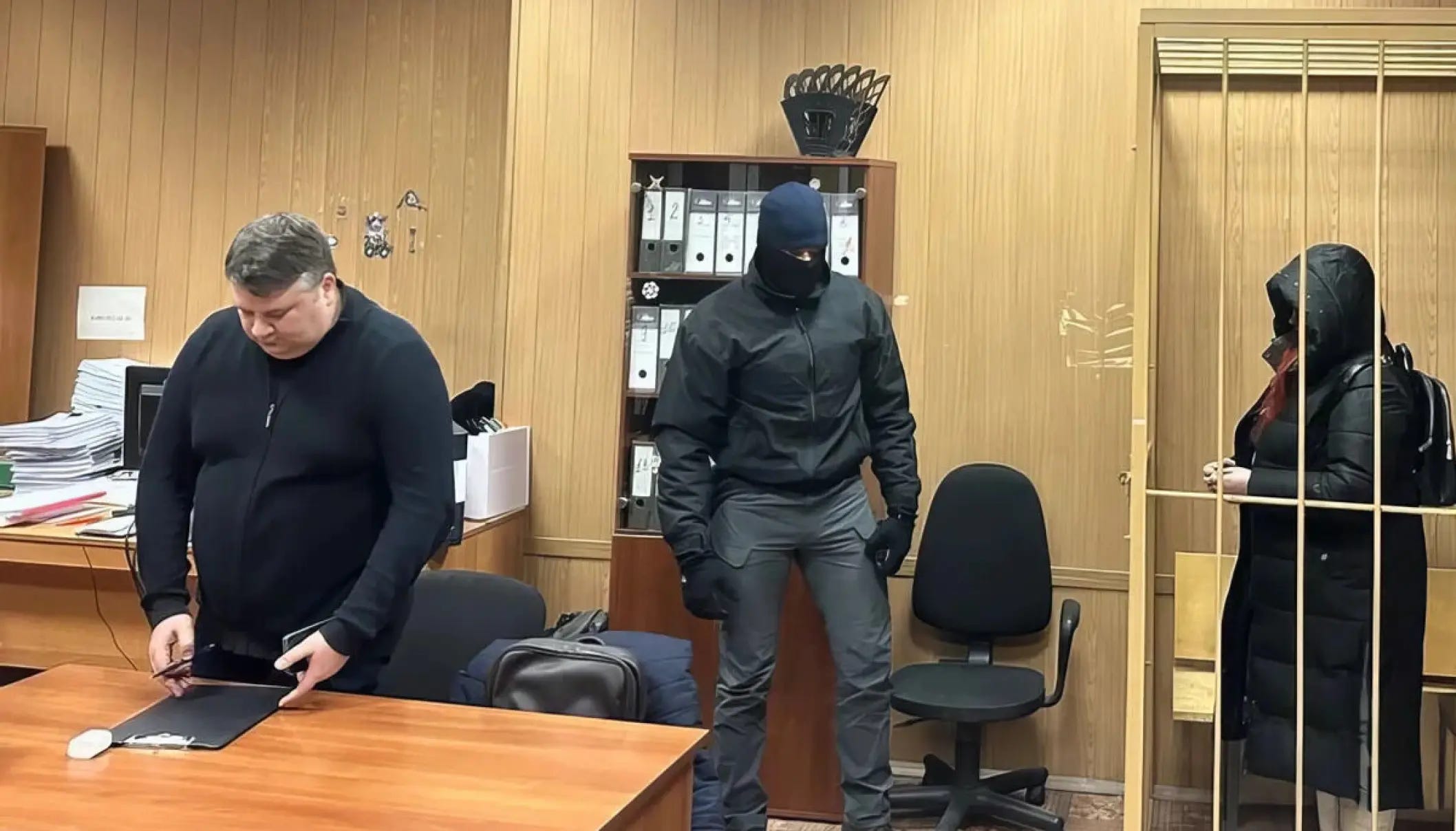
The Korean government has imposed sanctions on individuals and companies across Southeast Asia tied to regional crime rings, in response to a surge in crimes targeting Korean nationals. The move marks the largest sanctions package the government has ever issued. The sweeping measures target 15 individuals and 132 entities believed to have been directly or indirectly involved in online scams, luring schemes and the confinement of Korean nationals in Cambodia. According to the Ministry of Foreign Affairs, the sanctions include the Cambodia-based Prince Group and its chairman Chen Zhi, who oversaw the operation of large-scale scam compounds such as the Taizi and Mango complexes, where many Koreans were detained. Sanctions were also imposed on the head of a scam syndicate active in Cambodia’s Bohai region and a gang member identified as a key suspect in the assault, confinement and death of a Korean university student in August. The Prince Group was blacklisted by the United States and the United Kingdom last month, while the China-based Huiyuan Group — also included in Korea’s sanctions list — was designated a “primary money laundering concern” by the U.S. authorities. Under the measures, designated individuals and entities will face asset freezes, including virtual assets, restrictions on financial transactions in Korea. Individuals will face entry bans. The decision marks Korea’s first independent sanctions targeting transnational crime in Southeast Asia and the largest single package ever imposed, the ministry said, underscoring the government’s determination to crack down on criminal networks that have caused serious harm at home and abroad - Korea Times
Cambodia has withdrawn from eight sports at the SEA Games in Thailand over safety concerns, a sports official said on Nov 27, as a border row between the nations simmers. Intermittent military clashes between Cambodia and neighbouring Thailand, host of the SEA Games beginning on Dec 9, have erupted since earlier in 2025. More than 40 people were killed during five days of combat in July. While a truce backed by United States President Donald Trump has halted most hostilities, diplomatic tensions remain. In a letter dated Nov 26, the National Olympic Committee of Cambodia (NOCC) informed the SEA Games Federation that it would not participate in judo, karate, pencak silat, wrestling, wushu, petanque, football and sepak takraw at the regional Games. “This adjustment has been made due to significant security concerns, which poses challenges to ensuring the safety and protection of our athletes and officials,” the letter says - Straits Times
Voters in Switzerland rejected by large majorities two initiatives in a referendum on Sunday, one proposing a 50 percent inheritance tax on the super-rich and another to extend mandatory civic or military service to women. Some 84 percent of voters said no to the civic duty proposal, while around 79 percent voted against the inheritance tax initiative, according to initial projections after polling closed at noon on Sunday. The tax measure was a proposal to impose a 50 percent levy on inheritance above a tax-free amount of 50 million Swiss francs (€53.6 million) and direct the funds toward measures to mitigate climate change. It was put forward by the youth wing of the leftist Social Democrats. The “For a committed Switzerland” initiative wanted to see compulsory military or civilian service for men extended to women and expanded to additional forms of service to benefit society such as protecting the environment, assisting vulnerable people and helping with disaster prevention - Politico
The journals…..