Overnight strikes hit Odesa hard - including a multi-storey apartment building - a stark reminder that nowhere in Ukraine is truly safe anymore.
But zoom out.
In the Middle East, Donald Trump is once again threatening Iran with destruction - while quietly extending deadlines and offering no clear path forward.
Meanwhile, the reality on the ground tells a very different story:
• The Strait of Hormuz isn’t “closed” - it’s being reshaped
• Oil is flowing - just not always in US dollars
• Iran is still striking targets across the Gulf
• And yes - they’re still capable of downing advanced US aircraft
This isn’t a conflict winding down.
It’s one where one side is improvising… and the other is all-in.
That’s what makes this moment so dangerous.
And as I head into the region, one question hangs over everything:
👉 Is there actually a plan — or are we drifting toward something much bigger? Watch the video above
News Briefs
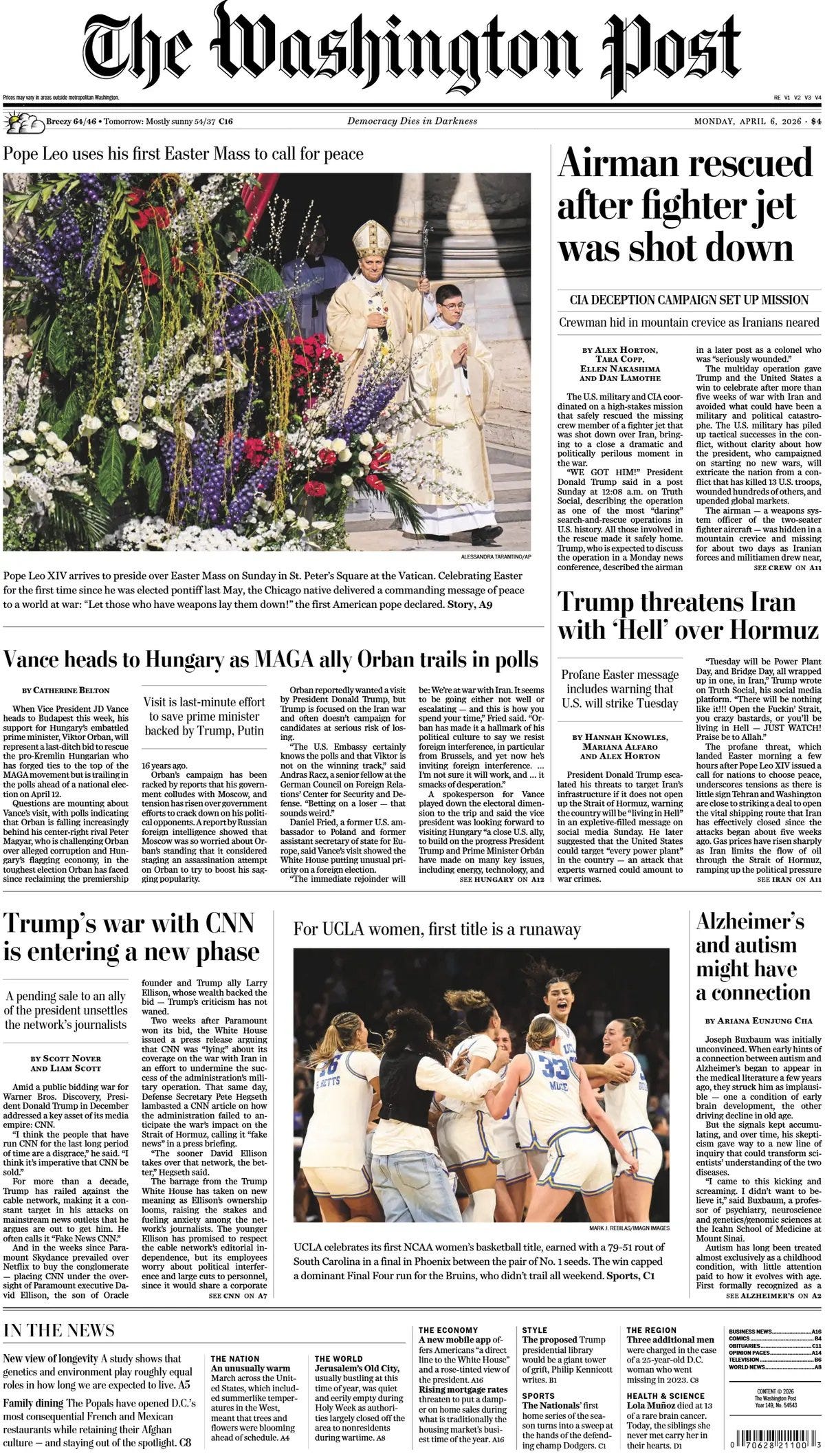
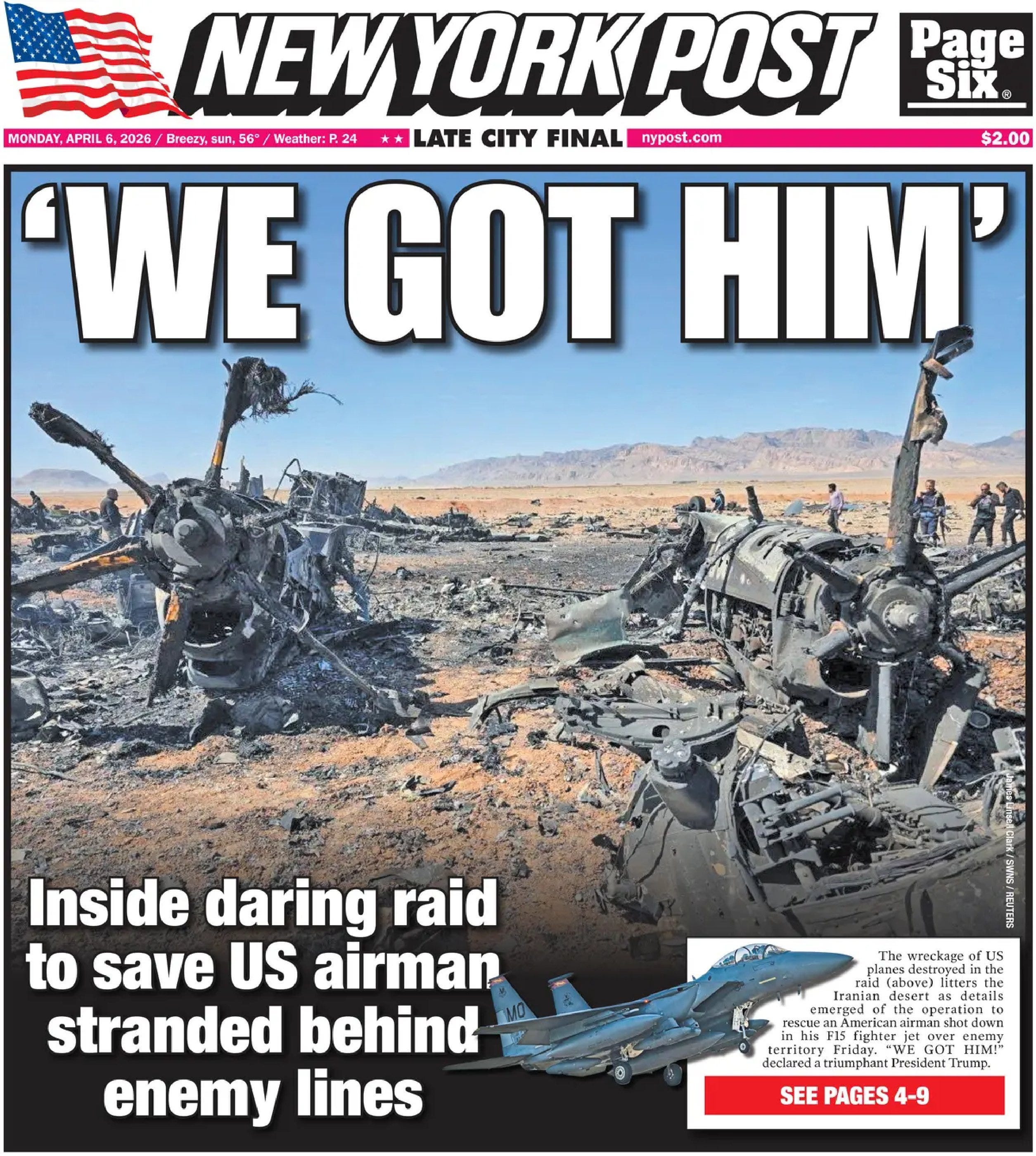
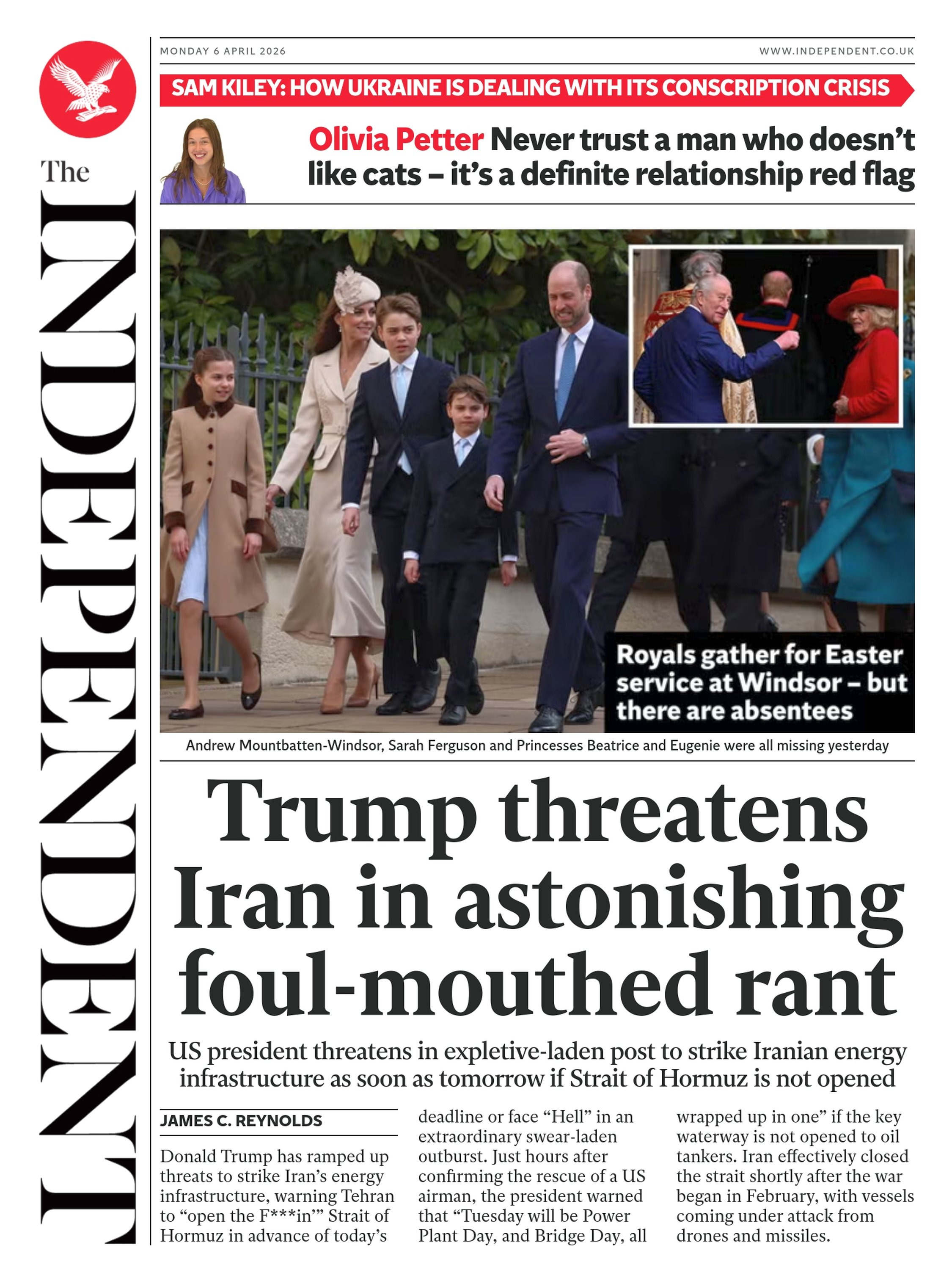
Iran said on Monday that it would retaliate forcefully if President Trump carries out his threat to strike Iranian power plants and bridges unless Tehran ends its chokehold on the Strait of Hormuz. Both countries appeared to stand on the precipice of what could become a new phase in the month-old war, as they escalated threats and Iran and Israel launched new attacks. An Israeli strike overnight on Monday killed Majid Khademi, the intelligence chief for the Islamic Revolutionary Guards Corps, in the latest killing of a senior Iranian leader. Mr. Trump has repeatedly threatened to bombard critical Iranian infrastructure unless Iranian forces end their de facto blockade on the Strait of Hormuz, which is a conduit for a significant portion of the world’s oil and gas. Iran, in turn, has refused to back down, firing repeated volleys of ballistic missiles at its neighbors and ensnarling global shipping. “If attacks on civilian targets are repeated, the subsequent phases of our offensive and retaliatory operations will be carried out much more crushingly and extensively,” Ebrahim Zolfaghari, an Iranian military spokesman, said on Monday. Strikes on power plants could impact millions of civilians across Iran and many legal experts argue it could be considered a war crime under international law. Such attacks could also add to worries about the global economy, which has already been rattled by soaring energy prices since the war began in late February. The impasse has left Mr. Trump contemplating extreme options for the next steps, including a ground invasion of islands in the Persian Gulf. Mediators in Pakistan, Egypt and Turkey have sought to clinch a deal to end the crisis to little avail. While Mr. Trump has postponed threatened attacks before, analysts say repeatedly doing so without tangible progress toward a deal would risk eroding his credibility. Mr. Trump, seemingly emboldened by the U.S. rescue of an American airman in Iran over the weekend, told Fox News on Sunday that he believed he could reach a deal with Iran by Monday. But he also said he was “considering blowing everything up” and taking control of the country’s oil if Iran did not cooperate. In an expletive-laden social media post, Mr. Trump told Iranian leaders to “open the Fuckin’ Strait, you crazy bastards” or else the attacks on infrastructure would commence. He later wrote “Tuesday, 8:00 P.M. Eastern Time!” appearing to suggest a deadline for the strikes - NYT
Iran has formulated its positions and demands in response to recent ceasefire proposals conveyed via intermediaries, a foreign ministry spokesperson said on Monday, adding that negotiations were “incompatible with ultimatums and threats to commit war crimes.” Spokesperson Esmaeil Baghaei said Tehran had a set of requirements based on its national interests that had already been conveyed via intermediary channels, adding that earlier US demands such as the 15-point plan were rejected for being “excessive.” “Iran does not hesitate to clearly express what it considers its legitimate demands and doing so should not be interpreted as a sign of compromise, but rather as a reflection of its confidence in defending its positions,” Baghaei said in a press conference. “We have formulated our own responses” and will announce details in due time, he added in response to an Iranian journalist's question regarding ongoing efforts to bring about a ceasefire between Iran and the US - Al Arabiya
The Kremlin on Monday said that the Iran war was escalating in both geography and economic impact, and that the whole Middle East region was “on fire” due to the US and Israeli attacks on the Islamic Republic. When asked by Reuters about Trump’s remarks, Kremlin spokesman Dmitry Peskov told reporters that Russia had seen them but that the Kremlin preferred not to comment directly. “We note that the level of tension in the region is growing and continues to grow,” Peskov said. “In fact, the entire region is on fire. These are all very dangerous and negative consequences of the aggression that was unleashed against Iran…The geography of this conflict has expanded, and now we are all aware of the consequences that we have, including very, very negative consequences for the global economy.” - Reuters
“It’s really diplomacy that is going to get us out of this mess.” Bombing Iran “back into the Stone Ages” is not the way to solve the conflict in the Middle East, and sides should be encouraged to “let talks continue”, says senior fellow at the Atlantic Council Michael Bociurkiw. He was speaking to Rosie Wright and Calum Macdonald on Times Radio Breakfast. Listen live everyday 6-10am.
US-Israel strikes on Iran severely impacted Thailand’s tourism, with a 30-40% rise in booking cancellations, especially from Middle Eastern visitors seeking medical treatment. The conflict has sent booking cancellations soaring and foot traffic plummeting, not only in establishments catering to Middle Eastern visitors but also across the broader industry. Thailand’s Tourism Ministry said Middle Eastern visitor numbers more than halved in February alone, from 32,831 the previous year to 16,080. The region does not rank among Thailand’s top 10 source markets. However, the sudden absence of Middle Eastern visitors – combined with airspace disruptions that pushed European travellers onto costlier alternative routes – has laid bare how vulnerable the kingdom’s tourism sector, which contributes 12 per cent to gross domestic product, is to geopolitical shocks. Meanwhile, neighbouring Malaysia and Indonesia – also top destinations for Middle Eastern tourists – have similarly been affected. Malaysia’s Tourism Ministry said on March 31 that arrivals from the affected region fell 40.3 per cent in March 2026 compared with the same period in 2025. Its Indonesian counterpart said on April 1 that that the country had lost an estimated 60,000 foreign tourists from the conflict - Straits Times
Vice President JD Vance is heading to Hungary this week with a lofty goal: to try and boost Hungarian Prime Minister Viktor Orbán in the country’s looming election. Orbán is an ally of both US President Donald Trump and Russian President Vladimir Putin, and Trump has made it no secret that he hopes Orbán will win reelection — but he’s been flailing in the polls ahead of the April 12 vote. Vance’s Tuesday visit follows Secretary of State Marco Rubio’s own trip to Hungary in February, during which he lauded Hungary-US relations and the two countries signed a civilian nuclear cooperation agreement. Vance will speak with Orbán and give public remarks during the two-day trip; expect him to reiterate the Trump administration’s stance that Hungary, under Orbán, should serve as a model for other European countries - Semafor
Ukraine has kept up its attacks on Russian oil export and production infrastructure, hitting facilities in two regions, while widespread Russian drone attacks on Ukraine killed at least one civilian overnight and fighting persisted at the front, officials said. Meanwhile, Ukrainian President Volodymyr Zelenskyy traveled to Syria on April 5 for talks with his Syrian counterpart, Ahmed al-Sharaa, as Kyiv looks to highlight the military expertise it has gained after more than four years of war. The August 5 attacks came at a time when US-led negotiations to end Russia’s full-scale invasion of Ukraine, which has now passed the 1,500-day mark, have been stalled amid the US-Israeli war with Iran. Ukrainian drones struck Primorsk, a key Russian oil export hub on the Baltic Sea, and the NORSI oil refinery in the Nizhny Novgorod region, near the Volga River east of Moscow, Ukrainian drone forces commander Robert Brovdi said. An apartment building and other civilian infrastructure was damaged in the southern Odesa region, a frequent target of Russian attacks, and the Poltava region was also among those hit. Fighting continued on several sections of the front in eastern and southern Ukraine, with Russian forces mounting dozens of attacks, the Ukrainian military said. - RFE/RL
Two defamation lawsuits were filed by a Thai politician against editors of The Isaan Record in March – moves that drew criticism as attempts to silence investigative reporting. The Record’s report was linked to coverage of alleged bribery in a labour trafficking scandal, but the legal cases have been described by the outlet as strategic lawsuits against public participation (SLAPP). While the initial case was ultimately dropped, it was followed by a second lawsuit. According to the outlet, its reporters obtained evidence from files of the Department of Special Investigation (DSI) indicating that two politicians and five high-ranking officials accepted cash bribes from brokers linked to Finnish berry companies. The evidence includes text messages and images from chat conversations showing agents delivering money to Thai officials, including a case in which a former Minister of Labor allegedly accepted a box packed with cash. All told, the total amount of bribes was more than 36 million baht [about €900,000]. This information aligns with reports from Finnish media during a human trafficking case where prosecutors revealed in court that Thai brokers secretly collected 2,000-3,000 baht[about €50-€75] from each laborer as a fee for documents from the Ministry of Labor required to leave the country. While there are currently prosecutions in Finland against individuals who exploited laborers from Isaan in a human trafficking case, no comparable prosecutions have yet been brought in Thailand. Meanwhile, the laborers who were deceived continue to face debt burdens due to loans taken out for expenses related to accepting offers from the Thai brokers to pick wild berries in Finland. “This underscores a broader pattern in Thailand, in which defamation laws are often used by politicians, companies and powerful individuals to exert pressure on journalists and activists by imposing legal and financial burdens,” the Foreign Correspondents Club of Thailand said.
President Donald Trump went on an unhinged 1 a.m. rant about the Supreme Court as it considers whether to allow him to scrap birthright citizenship. The 79-year-old president suggested on Truth Social that it’s “too bad” the Supreme Court didn’t “study” Mark Levin’s Fox News show, in which the host argued that the 14th Amendment was not intended to grant birthright citizenship to children of undocumented immigrants. “If they saw it they would never allow that money making HOAX to continue. THEY SHOULD USE THEIR POWERS OF COMMON SENSE FOR THE GOOD OF OUR COUNTRY,” Trump wrote. The nation’s highest court heard oral arguments last week on whether the U.S. should stop granting citizenship to children of undocumented immigrants, as proposed in an executive order signed by Trump. The move has been struck down by every lower federal court that has considered the challenge. The conservative Supreme Court, including justices nominated by Trump, also appears highly skeptical about whether the president can remove the citizenship clause. Trump took the unusual step of sitting in on the April 1 hearing to watch the justices debate his push to end automatic birthright citizenship. The president stormed out of the hearing after the SCOTUS justices shot down several arguments from the administration’s attorney, Solicitor General D. John Sauer. During the Sunday episode of Life, Liberty and Levin, the pro-Trump Fox News host Mark Levin argued that the 14th Amendment was never intended to grant U.S. citizenship beyond freed Black slaves and their children. “You on the court, you get to decide now on a big issue, you should leave it to the people in our elected representatives or the amendment process with a legislative process,” Levin said - TMZ
The journals…..