🔥 World Briefing Hot Take
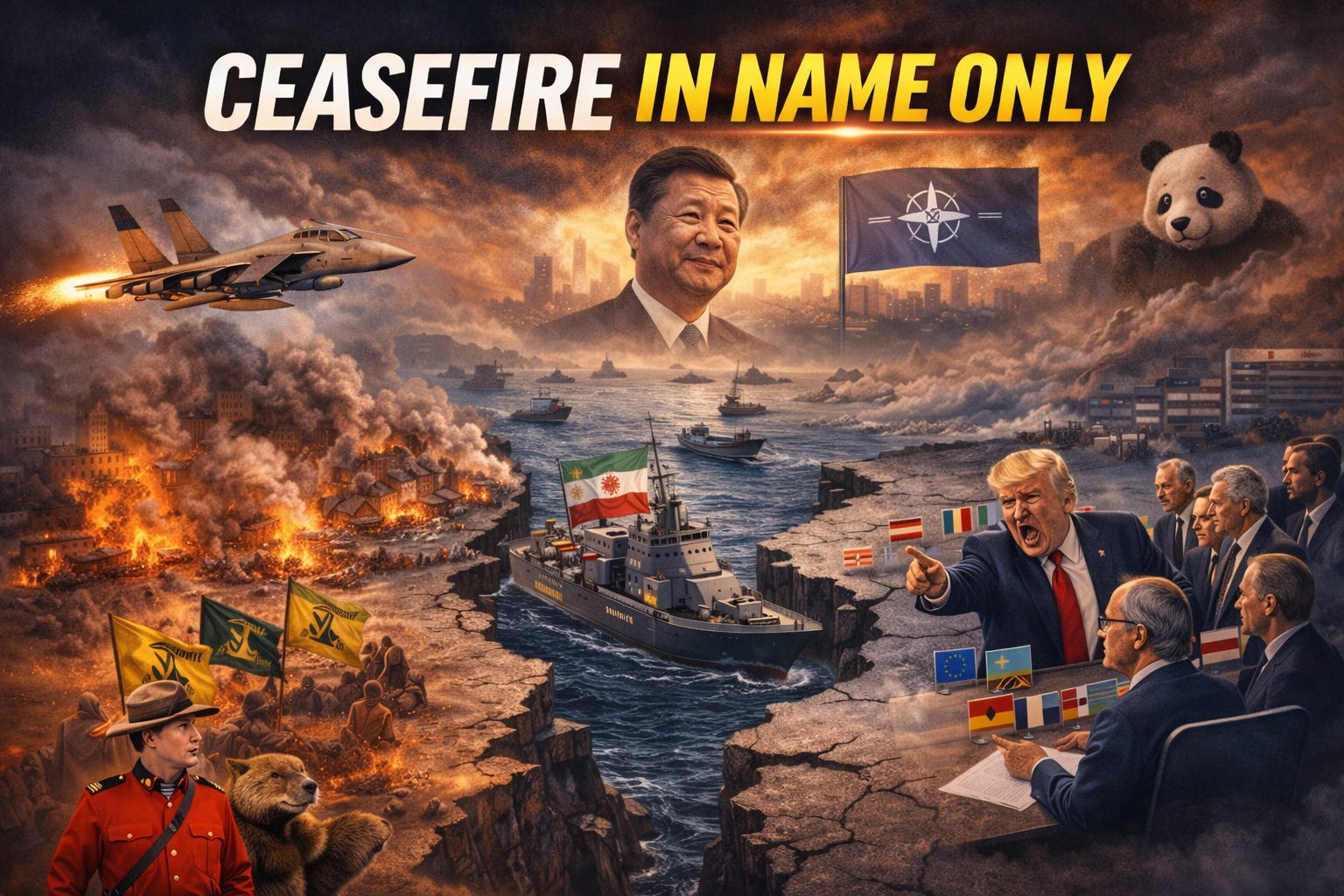
Let’s call this what it is: a transactional truce with no shared understanding of the terms.
Iran appears to be consolidating the one prize that matters most - de facto control over the Strait of Hormuz, potentially even testing the idea of monetizing global energy flows through transit fees. That’s not a concession - it’s leverage.
Israel, meanwhile, is signalling that Lebanon - and by extension Hezbollah - remains unfinished business, ceasefire or not.
And then there’s Washington.
A deal rushed to meet a political deadline is now colliding with geopolitical reality. Trump’s public and private outbursts at NATO allies suggest something deeper: the United States may no longer be able to command alignment, even among its closest partners.
But here’s the shift that should really focus minds: as the U.S. pressures allies, and Europe hesitates, China is quietly positioning itself as the more predictable, more transactional - and in the eyes of many, more “responsible” - global actor.
Not through speeches, but through energy flows, currency channels, and strategic patience.
Put it all together and the picture is stark:
➡️ A ceasefire that doesn’t fully cover the battlefield
➡️ A vital shipping lane that isn’t fully open
➡️ An alliance that isn’t fully united
➡️ And a rival power ready to step into the gaps
In other words, the architecture of global order isn’t just under strain - it’s fragmenting in real time.
➡️ Watch below my on-the-ground report from Istanbul Airport on how these shifts are already reshaping global aviation routes - and why Turkey is emerging as a key beneficiary.
➡️ Upgrade to a paid World Briefing subscription for the deeper, subscriber-only analysis.
News Briefs
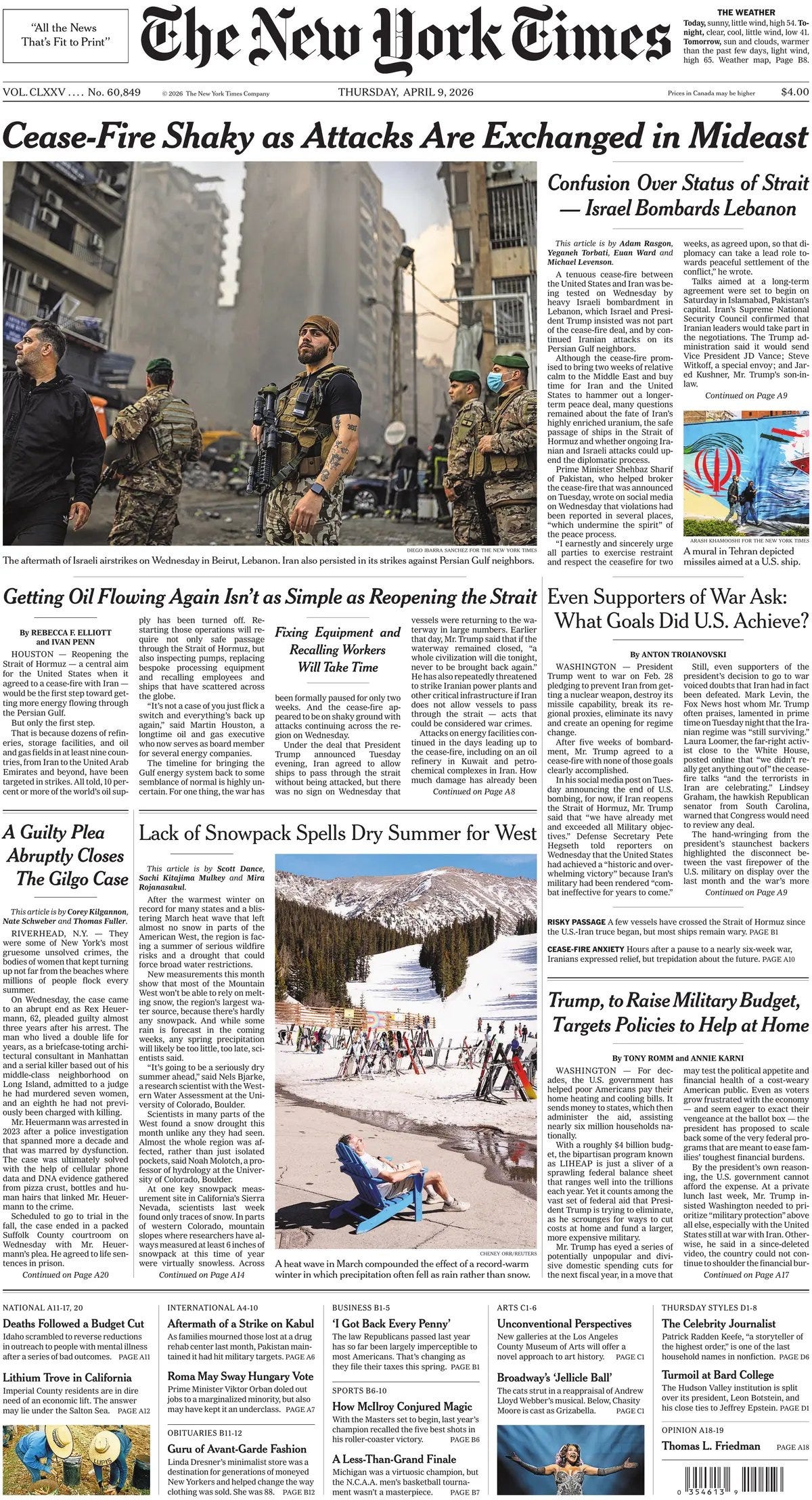
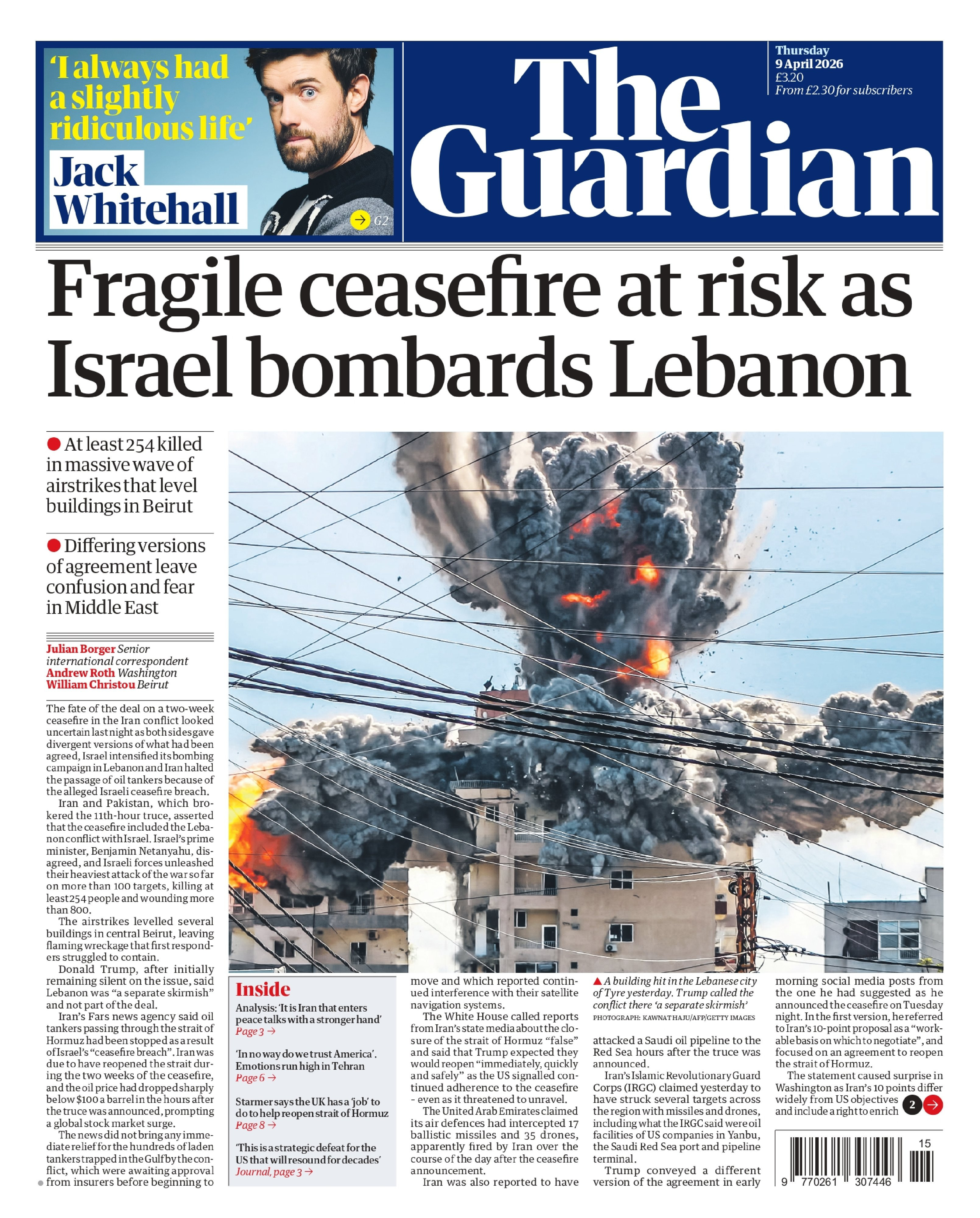
Israel sought to start talks with Lebanon, where Iran-backed Hezbollah militants have been the target of a deadly Israeli bombardment that has drawn widespread condemnation and shaken the two-week cease-fire deal reached by Washington and Tehran earlier this week. The Israeli strikes, which Lebanon’s Health Ministry says killed more than 303 people on April 8, threatened to upend the temporary truce and upcoming talks between US and Iranian officials in Pakistan, which brokered the cease-fire agreement. “In light of Lebanon’s repeated requests to open direct negotiations with Israel, I instructed the cabinet yesterday to start direct negotiations with Lebanon as soon as possible,” Israeli Prime Minister Benjamin Netanyahu said in a statement on April 9. “The negotiations will focus on disarming Hezbollah and establishing peaceful relations between Israel and Lebanon.” Shortly before Netanyahu’s statement, Lebanese President Joseph Aoun said that “the only solution to the situation in Lebanon is to achieve a cease-fire between Israel and Lebanon, followed by direct negotiations between them.” Reuters cited a senior Lebanese official as saying Lebanon had spent the last day pushing for a temporary truce to allow for broader talks with Israel. The official said that no date or location had been set and that Lebanon needed the US as a mediator and guarantor of any agreement, Reuters reported. Netanyahu had rejected an offer for direct talks with Lebanon in March. The US and Iran reached the two-week cease-fire agreement late on April 7, just hours before a deadline set by US President Donald Trump. But a dispute over whether the deal includes Lebanon has heightened tension and clouded prospects for progress.
More than 24 hours after the US-Iran ceasefire was announced, confusion continues to grow over the safe reopening of the Strait of Hormuz for vital maritime traffic as a central tenet of the ceasefire agreement, adding further uncertainty and disarray to the first sighs of relief that normal operations can now resume in the world’s vital energy shipping waterway. On the first day of the ceasefire and into Thursday, the expected oil and gas tanker traffic has not yet resumed, although Iran first announced on Tuesday that it would ensure safe navigation through the strait during the ceasefire. Only four bulk cargo vessels with their Automatic Identification System trackers on passed through the Strait of Hormuz, according to ship-tracking data quoted by the Associated Press. A separate dataset from AXSMarine showed that the confirmed number of ships passing the strait in the first 24 hours of the ceasefire stood at 11. This data does not include the so-called “dark fleet ships”, which operate with their transponders turned off to evade Iranian crude oil sanctions, while other sources have warned of so-called “spoofing,” meaning ships might be showing false positions. Iran appears to be consolidating a firm unilateral position towards lifting its blockade of the Strait of Hormuz, which is set to contradict the ceasefire agreement amid Tehran’s apparent hardline positioning that it has the upper hand instead of the US and that it is Tehran who decides. Iran’s announcement that it wants to collect transit fees was met with global furore, as ships have never paid to use the waterway and Iran’s plans violate the international agreement known as Law of the Sea (UNCLOS) - Euronews
U.S. President Donald Trump unloaded his frustration with NATO allies in a bad-tempered meeting with Secretary-General Mark Rutte on Wednesday — and indicated he was considering reprisals for lack of support over the war in Iran. Rutte met Trump behind closed doors as part of a long-scheduled visit that quickly turned into a life-support mission after the U.S. president repeatedly threatened to quit the alliance because countries like Spain and France refused to back the U.S.-Israeli conflict with Tehran, which has reached a fragile ceasefire. According to two European officials, and a person familiar with the matter, who were briefed on the talks, Trump used the White House meeting as a venting session for the president to air out his frustration about Europe’s refusal to participate in the Iran operation. “It went shit,” said the first European official. “The conversation was nothing but a tirade of insults.” Trump “apparently threatened to do just about anything.” That official and the person familiar with the matter said Trump also signaled he was considering options for reprisals, but didn’t go into detail. The same two people and a third European official briefed on the meeting — who like others in this article were granted anonymity to divulge sensitive details — said the U.S. president gave those present the impression he wanted concrete actions from allies to help reopen the Strait of Hormuz as soon as possible - Politico
“The scale of the killing and destruction in Lebanon today is nothing short of horrific. Such carnage, within hours of agreeing to a ceasefire with Iran, defies belief. It places enormous pressure on a fragile peace, which is so desperately needed by civilians” - UN human rights chief Volker Türk
A shaky ceasefire… and a quiet aviation power grab. From Istanbul Airport, it’s clear:
Turkey is absorbing the traffic the Gulf can’t reliably hold. My hot take:
The UAE and Qatar built world-class hubs - but geopolitics just exposed their biggest vulnerability. Meanwhile, Turkey’s advantage? It straddles continents — and crises. This shift may last longer than anyone in the Gulf wants to admit.
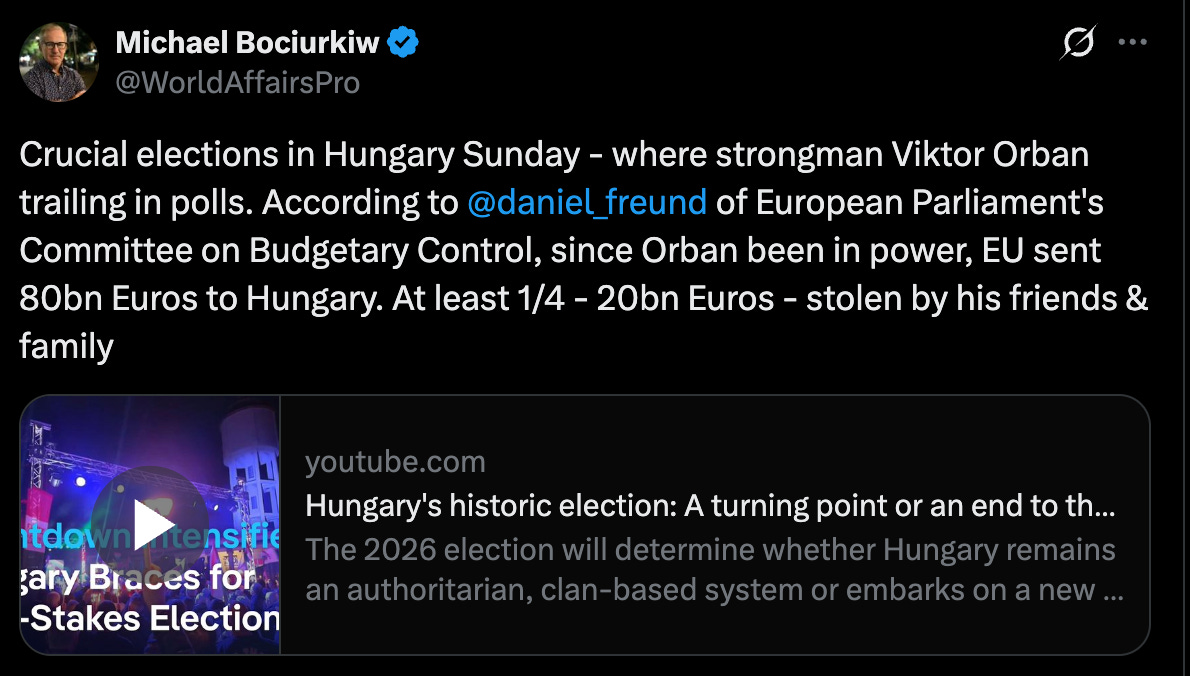
Viktor Orban, uniquely endorsed by both U.S. President Donald Trump and the Kremlin, could lose his 16-year iron grip on power on Sunday, opinion polls indicate, in an election many Hungarians believe will decide their country’s fate in Europe. Orban, the European Union’s longest-serving prime minister, has led Hungary since 2010, entrenching his power by curbing independent media and democratic rights and building an “illiberal democracy” that has earned him fans on Europe’s far right and in Trump’s Make America Great Again (MAGA) movement. However, three years of economic stagnation and soaring living costs, along with the enrichment of oligarchs close to the government, have angered voters. Orban’s campaign has also been ruffled by press reports that his government has colluded with Moscow. A former Orban loyalist, Peter Magyar, has successfully tapped into Hungarians’ discontent and his centre-right Tisza party now comfortably leads most polls. But political analysts also caution that undecided voters, a redrawing of the electoral map in favour of Orban’s Fidesz and a high proportion of ethnic Hungarians in neighbouring countries - who mostly back the ruling party - create a mood of uncertainty. They say anything from a Tisza supermajority - able to change the constitution - to a Fidesz majority remains possible. The stakes could not be higher for the Central European nation of 9.6 million people and for the continent. “This is one of the most momentous elections in Europe and for Europe in many years,” said Gregoire Roos, director of the Europe, Russia and Eurasia Programmes at Chatham House. “In Moscow, Hungary has been seen as a precious trouble-making interlocutor within the EU — maintaining energy ties... and adopting, by far, the toughest tone vis-a-vis Ukraine than any other EU country. In the United States, Hungary has drawn attention as a laboratory of sovereigntist politics.” The Trump administration’s public support for Orban was crowned this week with a visit by U.S. Vice President JD Vance who attacked what he called “disgraceful” EU interference in the vote. A European Commission spokesperson said elections were “the sole choice of the citizens” - Reuters
President Donald Trump has attacked “evil” reporters for exposing his Iran peace plan, which started to unravel shortly after it was announced. Early on Wednesday, Trump reneged on threats to flatten Iran and trumpeted a ceasefire deal in what he called “a big day for World Peace!” What ensued was chaos, as inconsistent statements from Iran contradicted elements of a U.S. peace plan touted by the 79-year-old president. CNN strayed into Trump’s crosshairs over its coverage of the confusion, as did The New York Times. “The Failing New York Times and Fake News CNN each reported a totally FAKE TEN POINT PLAN on the Iran negotiations which was meant to discredit the people involved in the peace process,” he raged at around 11 p.m. Eastern time on Wednesday. “All ten points were a made up HOAX - EVIL LOSERS!!! MAKE AMERICA GREAT AGAIN.” The president had earlier said that Iran had put forward a “workable” 10-point plan, saying it was a “basis on which to negotiate.” U.S. officials have discussed a broader framework, reportedly including more points. Trump later posted a release from Iran’s foreign minister, Abbas Araghchi, saying that it was Iran’s “official statement.” In it, Araghchi said that the Strait of Hormuz would be opened if attacks on Iran stopped. However, another Iranian statement was released by its Supreme National Security Council, claiming victory over Trump. “The enemy, in its unfair, unlawful, and criminal war against the Iranian nation, has suffered an undeniable, historic, and crushing defeat,” it read. CNN reported on both, earning Trump’s ire. He responded with two Truth Social posts, accusing the network of sourcing the statement from a “fake news site.” He added that authorities were investigating whether it had committed a crime by doing so. “CNN is being ordered to immediately withdraw this Statement with full apologies for their, as usual, terrible ‘reporting,’” the president wrote. “Results of the investigation will be announced in the near future.” In a second post, published just before midnight Wednesday, Trump continued to criticize CNN, writing, “No one can believe that Fake News CNN put out a knowingly false and dangerous statement pretending it came from the upper levels of the Iranian Government.” “CNN just got caught cheating - A very dangerous thing to do!” - The Daily Beast
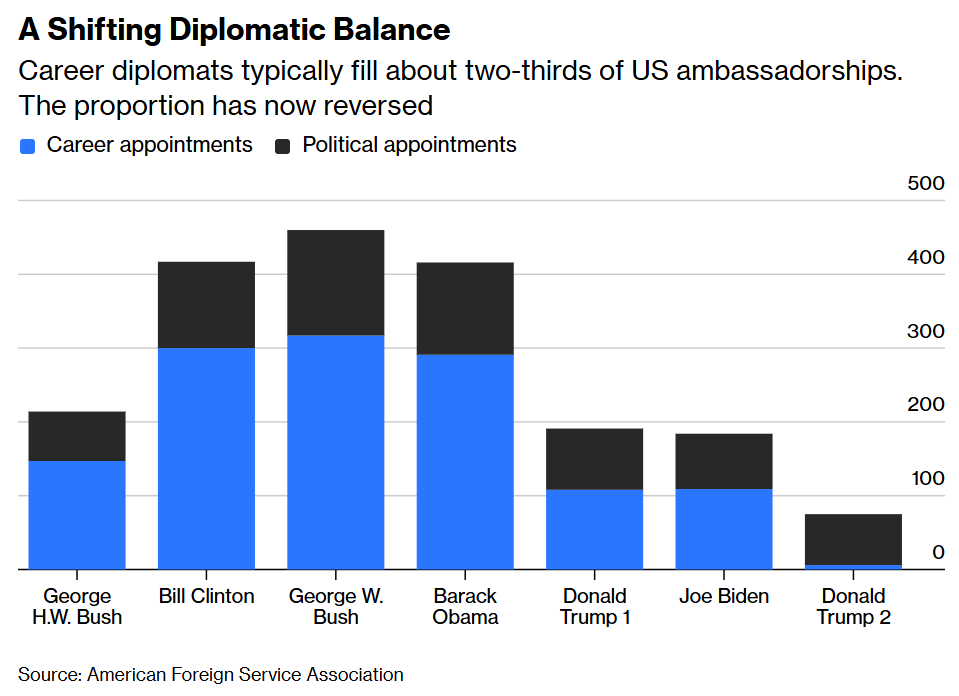
US diplomatic corps are but a shadow of their former self: out of 195 ambassadorial postings around the world, more than 110 sat empty as of early March - including in countries as vital to US interests as Germany and South Korea.
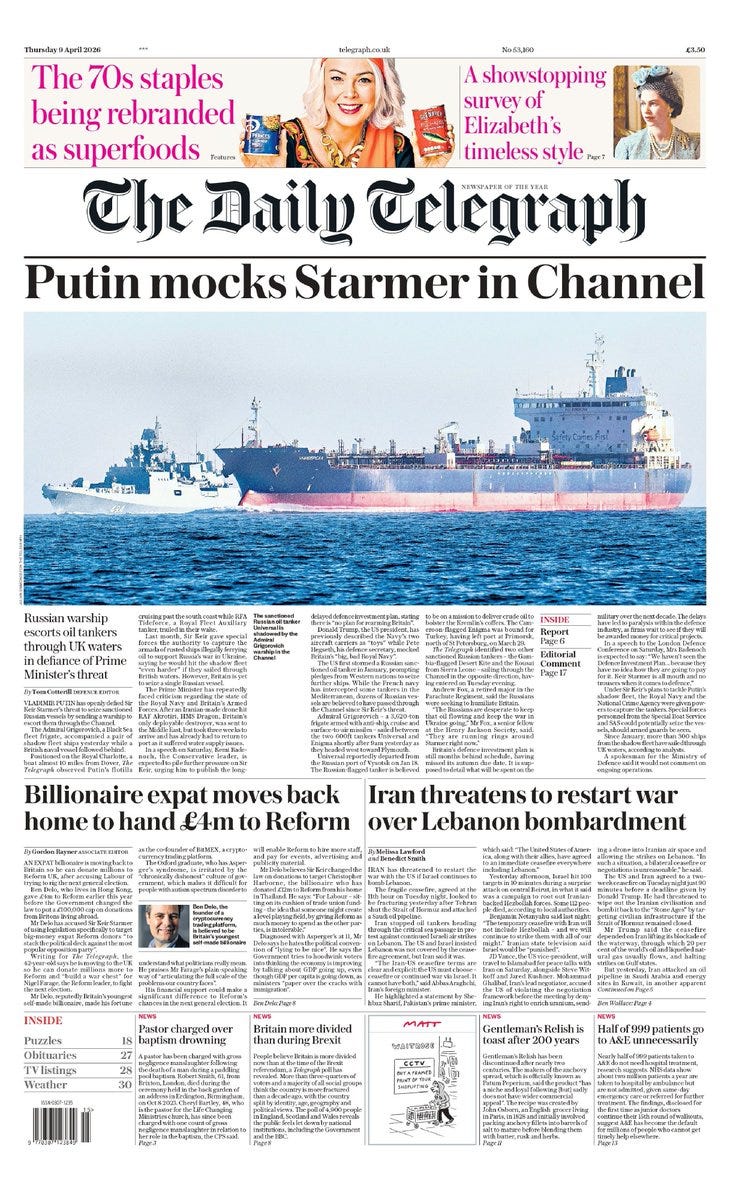
Three Russian submarines conducted a “covert” operation over cables and pipelines in waters north of the UK, Defence Secretary John Healey said. A British warship and aircraft were deployed to deter the “malign” activity by Moscow and there was “no evidence” of any damage to UK infrastructure in the Atlantic, he added. Addressing Russian President Vladimir Putin directly, Healey said: “We see you. We see your activity over our cables and our pipelines, and you should know that any attempt to damage them will not be tolerated and will have serious consequences”. The UK is dependent on its undersea cables and pipelines for its data and energy. There are around 60 undersea cables which come ashore at several parts along the UK coastline, particularly around East Anglia and South West England. More than 90% of the UK’s day-to-day internet traffic travels via these undersea cables. Healey told a Downing Street press conference on Thursday that Russia had sent an Akula class submarine as a diversionary tactic while two of its GUGI spy submarines carried out the surveillance of these cables. Healey said when the first Akula submarine was monitored it soon left UK waters and went back to Russia, while the two GUGI vessels remained. The Royal Navy deployed a Type 23 frigate HMS St Albans, RFA Tidespring and Merlin helicopters to track all three of the Russian submarines. Other nations were involved in tracking the Russian activity - though Healey only mentioned Norway by name. “Our armed forces left [Russia] in no doubt that they were being monitored, that their movements were not covert, as President Putin planned, and that their attempted secret operation had been exposed,” Healey said. “We watched them, we were able to track them, we dropped sonar buoys to demonstrate to them that we were monitoring every hour of their operation.” Healey also claimed that Putin had sought to capitalise on the world being “distracted” by war in the Middle East and that it was Russia that posed the “primary threat to UK security”. He said Moscow still "poses a threat" but expressed confidence the UK could track and monitor future activity while continuing to expose "any covert operations that Putin wants to mount that may threaten our vital interests" - BBC
Russia’s oldest independent newspaper Novaya Gazeta said Thursday that police were carrying out a search of its Moscow office. Novaya Gazeta, which said masked security officers entered its newsroom around noon, did not immediately know the reason for the search. The newspaper said its lawyers were not being allowed to enter the building. Russia’s Interior Ministry later confirmed the search was part of a criminal probe into the “illegal use, transfer or storage of information containing personal data.” The ministry said an unidentified “group of individuals” obtained and used personal information in news articles and online content that “painted a negative picture of Russians.” Novaya Gazeta was not explicitly mentioned in the Interior Ministry’s press release, but a police spokesperson told Interfax that employees of the newspaper are under investigation. The state-run news agency RIA Novosti later reported that Novaya Gazeta’s executive director, Oleg Roldugin, was arrested on Thursday and taken in for questioning. Novaya Gazeta ceased print publication shortly after the full-scale invasion of Ukraine due to draconian censorship laws that the government passed as part of a broader crackdown on the press. The newspaper has continued to publish articles and videos online. Novaya Gazeta’s former editor-in-chief, Dmitry Muratov, won the Nobel Peace Prize in 2021 for his “efforts to safeguard freedom of expression.” - Moscow Times
The journals…..