

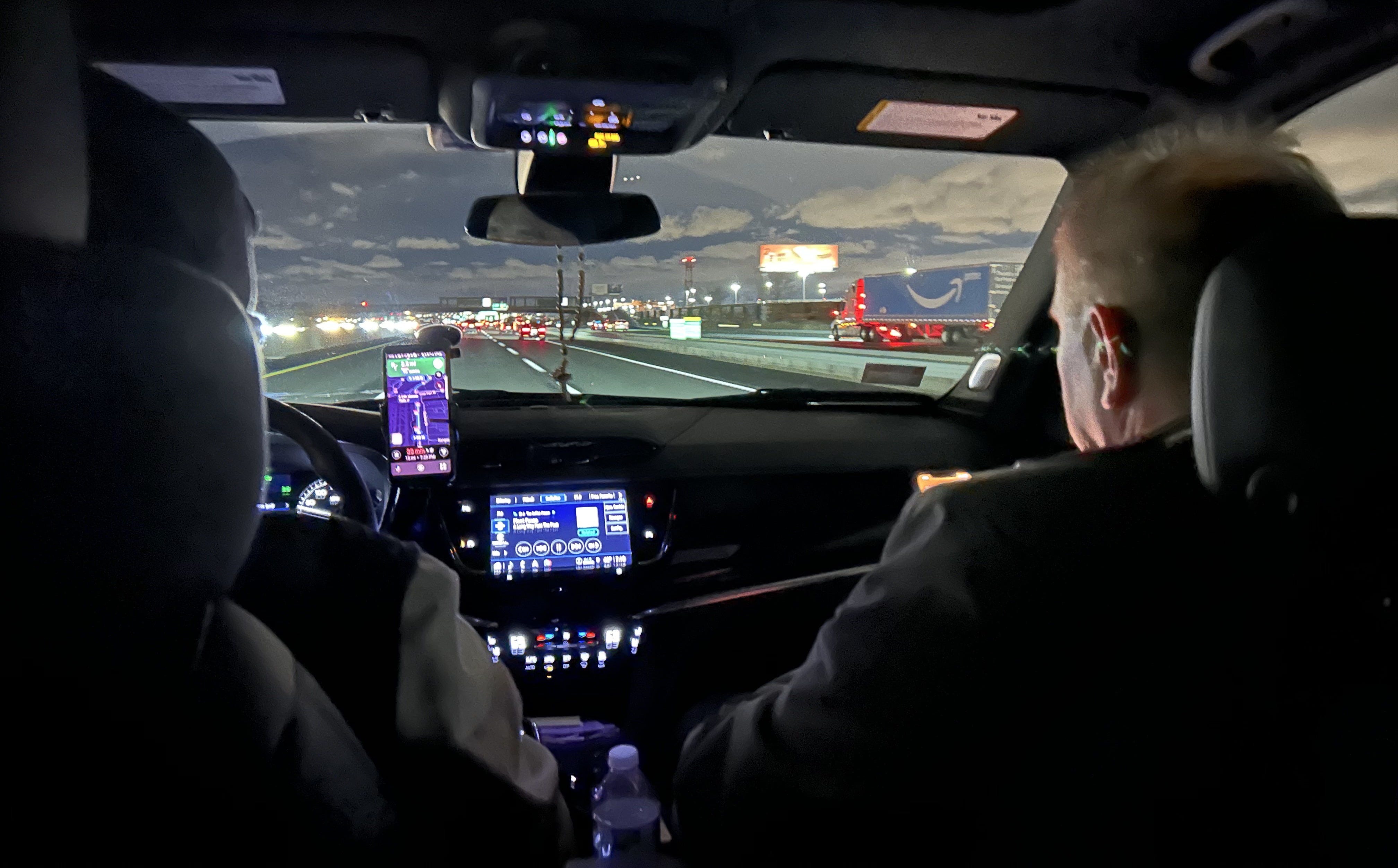
Recorded on the move across Southeast Asia - from the back seats of Grab cars in Manila, Bangkok and now Kuala Lumpur - a very different picture of the war in the Middle East comes into focus. Not missiles, not maps, not men in suits - but exhausted drivers pulling 16 to 18-hour shifts just to stay afloat.
As fuel prices spike, tourism falters, and commissions from platforms such as publicly listed and solidly-funded Grab Holdings hold firm, the people keeping cities moving are being pushed to breaking point. Some are sleeping less. Some are falling behind on car rental payments. Others are quietly absorbing rising maintenance and insurance costs that, in many cases, have doubled in a matter of weeks.
This is not theory. This is the front line of economic fallout — and almost no one is reporting it.
WORLD BRIEFING: HOT TAKE 🔥
This is where geopolitics stops being abstract — and starts showing up in the rearview mirror.
While policymakers debate escalation and energy markets, platforms like Grab Holdings - backed by supposedly ESG-conscious investors including SoftBank, Toyota Motor Corporation, BlackRock and Morgan Stanley - continue to operate a model that, in a moment of acute crisis, raises serious questions about who actually absorbs the shock. (Ironically, the former CEO of Uber and current director of Grab, Dara Khosrowshani, is of Iranian origin).
Because when commissions hold at up to 30% (sometimes more) while drivers’ core costs - fuel, maintenance, insurance - surge dramatically, neutrality is no longer a credible position.
It becomes a reputational choice. And potentially an ESG one.
These same institutions routinely speak about sustainability, stakeholder capitalism, and social responsibility. But on the ground - from Manila to Bangkok to Kuala Lumpur - the reality looks very different: drivers working 16–18 hour shifts, falling behind on payments, and absorbing volatility that the system simply passes down the chain.
That disconnect matters. Because ESG is not tested in stable quarters. It is tested in moments like this.
And right now, the burden is not being shared — it is being transferred.
From governments…
To platforms…
To drivers — the least protected actors in the entire chain.
The result is not just economic strain — it is creeping operational risk.
Fatigued drivers.
Longer hours.
Higher probability of accidents.
A safety issue hiding in plain sight - and one that regulators, investors, and passengers alike may not ignore forever.
Meanwhile, governments across Southeast Asia - heavily exposed to Gulf energy flows - are scrambling to contain the fallout with subsidies and cash assistance that drivers say fall far short of reality. Here in Malaysia, a fuel subsidy scheme now provides verified, full-time e-hailing drivers with discounted RON95 at RM1.99 per litre, capped at 800 litres per month to offset higher mileage. In the Philippines, cash assistance is being distributed to public transport workers - but drivers say the rising cost of fuel and food is far outpacing the support, leaving many struggling to afford even basic staples like rice.
So the system holds.
But only because those at the bottom are being stretched further to sustain it.
No meaningful relief.
No structural adjustment.
No shared downside.
Just a model that works — until it doesn’t.
There is, however, a small but immediate lever - and it sits with passengers. If you use platforms like Grab Holdings, tipping your driver - where possible - makes a direct difference. The company says 100% of tips go to drivers, and in this environment, that extra margin can be the difference between breaking even and falling short.
And it’s not just ride-hailing. Drivers working across food delivery - including GrabFood and services linked to Uber Technologies - are facing the same squeeze: higher fuel costs, longer hours, and thinner returns.
It’s not a solution.
But for now, it’s one of the few ways to push support directly to the front line.
Taxi Talks Launch 🚕
Welcome to Taxi Talks - a new World Briefing series taking you inside the vehicles that keep cities alive.
From Grab drivers in Southeast Asia to taxi drivers, tuk-tuk riders, and ride-hailing workers around the world, this series captures unfiltered, on-the-ground voices - the conversations you only hear when the camera is off and the road stretches ahead.
No studio.
No script.
Just reality — from the driver’s seat.
Emmanuel, Grab Driver, Manila
“I am working from 8am to 12 midnight - that’s 16 hours-a-day. Some days - 18 hours. Before the war I was making as much as 2,000 pesos-a-day.
“Today, I will take home 900 only (the official minimum daily wage in the Philippines is 658-695 pesos, or $10.52-$11.11).
“The Philippine government is offering cash handouts of 5,000 pesos but that went in one day to cover my expenses. (As of March 2026, the Philippine government is providing a 5,000-peso ($83) fuel subsidy to motorcycle taxi drivers and other public transport workers nationwide, Al Jazeera reported. This financial assistance is in response to surging fuel prices and a declared state of national energy emergency following Middle East hostilities).
“Before I was with a logistics company but the salary was limited. Everything has risen in price here. Not only fuel (it had doubled) but also rice. There is a drivers strike coming but I can’t afford to miss out on rides.”
*We’ve changed the names of driver in order to protect their identity
**Grab was approached with a request to respond, but they did not