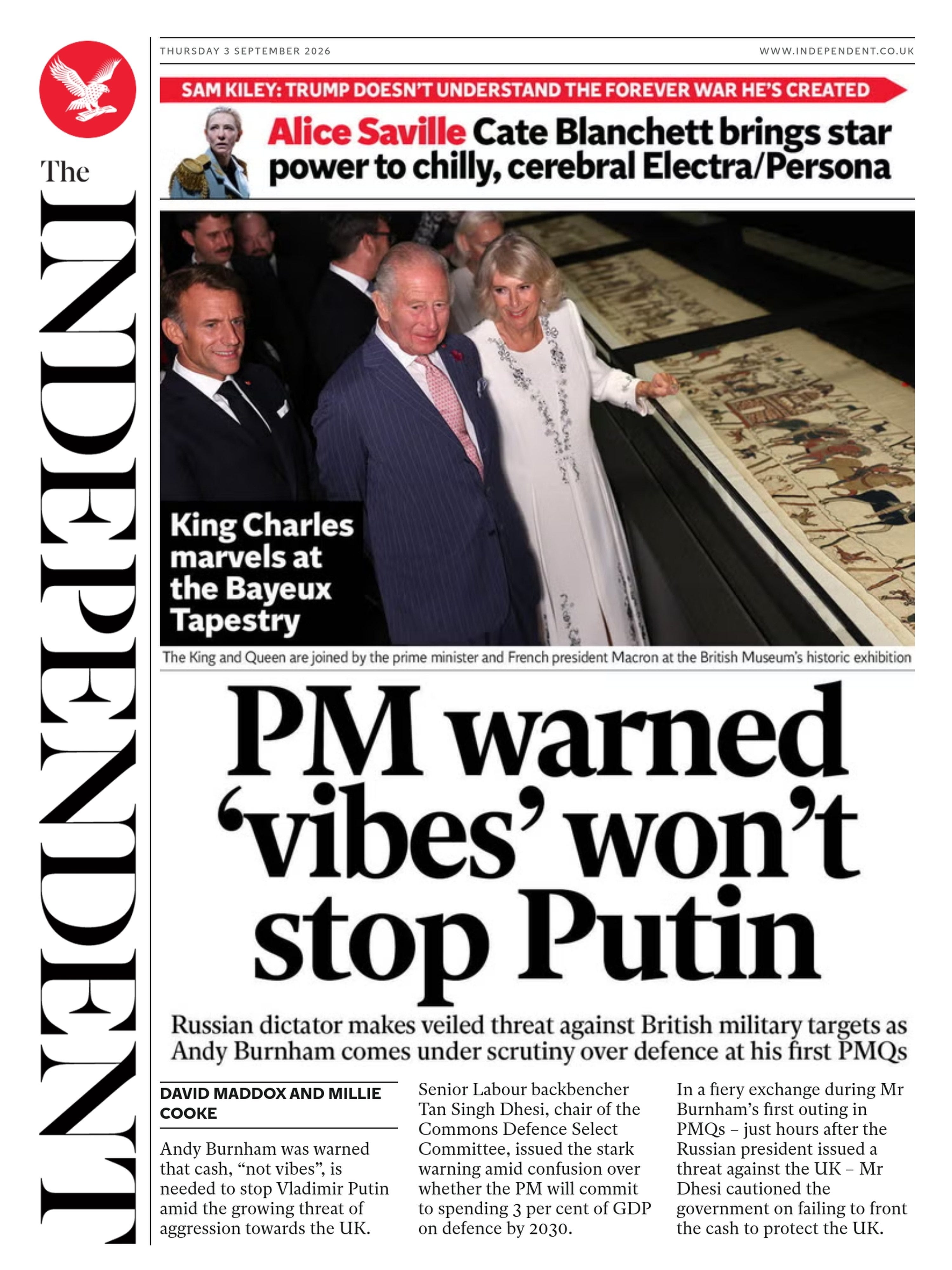
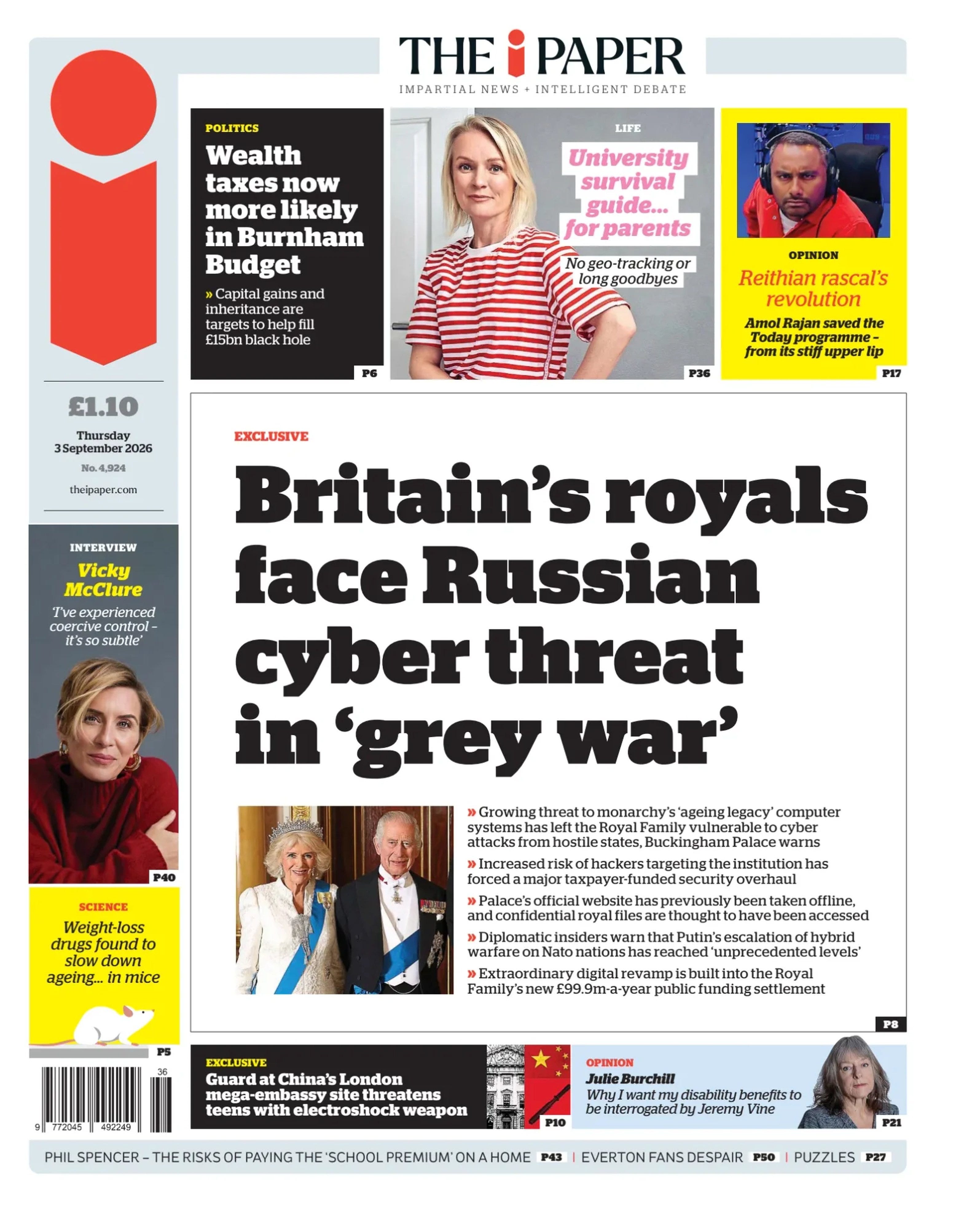
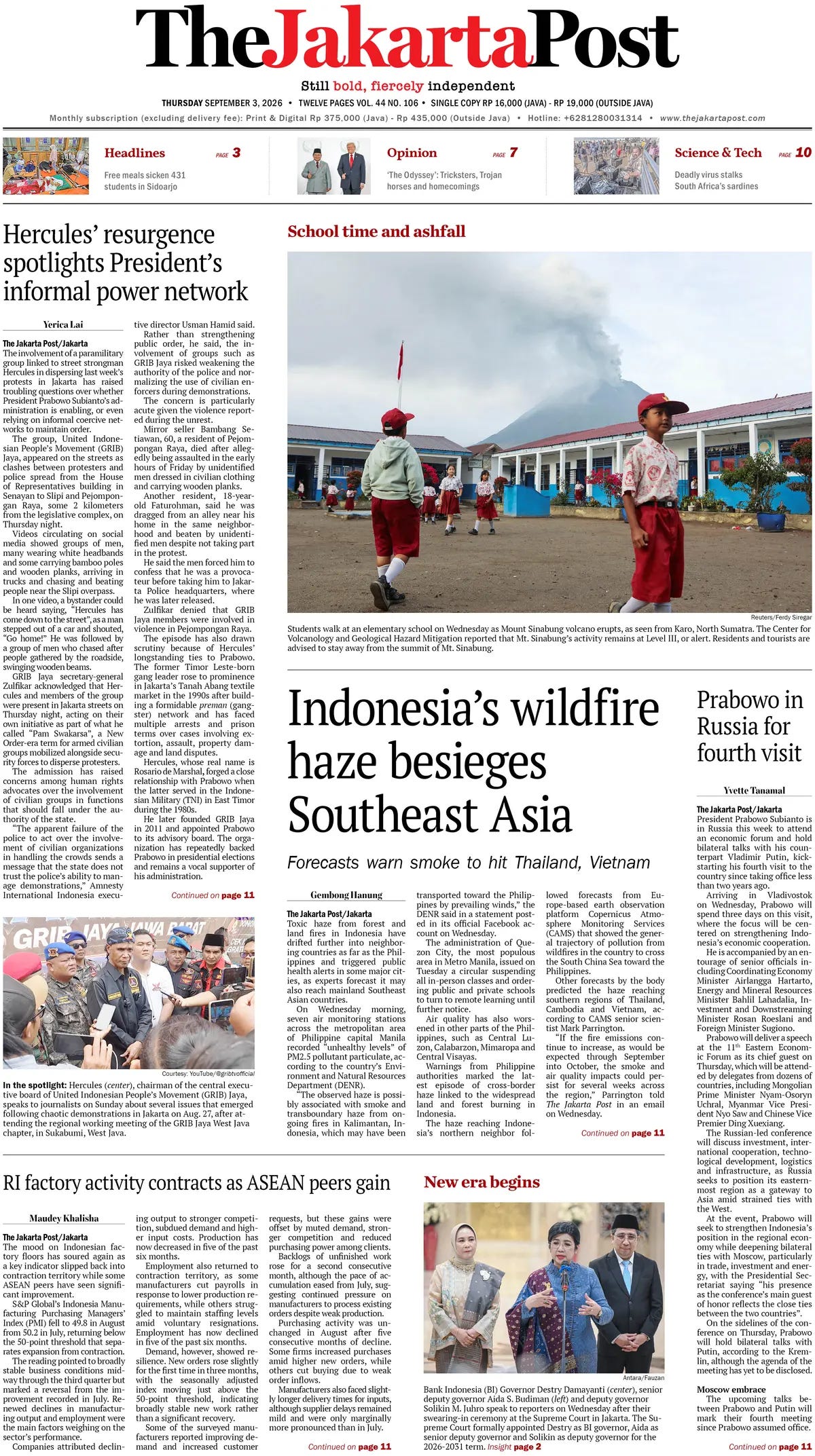
The most revealing text to come out of the G20 finance ministers’ meeting in Asheville wasn’t in the statement. It was in the footnote.
Scott Bessent’s chair’s statement, issued September 1, closes with a single line: the document was agreed by all G20 members present except China, which objected to paragraphs 4, 10, 11 and 13. There was no communiqué, because consensus no longer exists to produce one.
Read the text and the shape of the dispute becomes clear. Seventeen paragraphs sailed through: artificial intelligence as a general-purpose technology, financial literacy, Basel III, stablecoin frameworks, FATF and scam compounds, a call for the IMF and World Bank to help countries grow. Paragraph 12 even name-checks Trump Accounts, a domestic American retirement savings product, in a G20 text, and Beijing let it pass without a murmur. What China objected to were the only four paragraphs in the document that describe an identifiable adversary.
Paragraph 4 raises continued disruption to energy trade and calls for free and predictable navigation through the Strait of Hormuz. Paragraphs 10 and 11 are the imbalances section: countries should eliminate non-market policies and practices that worsen imbalances, and those running excessive and persistent surpluses should remove distortions that suppress domestic consumption and produce an over-reliance on exports for growth. Paragraph 13 commits the G20 to faster debt treatments and to contributions from official bilateral creditors. Nobody is named anywhere. Nobody needs to be.
Beijing’s Foreign Ministry said it “deeply regrets” the outcome and called for coordination based on consensus and equal participation. Then came the real reply — not through diplomatic channels, but through Yuyuan Tantian, the CCTV-affiliated account Beijing uses to place authorised leaks on trade. Its piece, published Thursday and translated in full by Bill Bishop’s Sinocism, accuses Washington of “smuggling in its own agenda” (夹带私货): writing the vocabulary of overcapacity and “China shock 2.0” into a multilateral text so that tariffs and export controls already imposed acquire a G20 imprimatur for the next round. Collect on the same grievance twice. A negotiator, quoted anonymously, notes that the G20 has never defined “non-market policies and practices” - and that the phrase traces to the 2018 Section 301 investigation of China.
On that specific point, the document supplies the receipt. The last sentence of paragraph 11 asks the IMF and the OECD to improve the data necessary for analysing imbalances, including their coverage of non-market policies and practices. That is the mechanism. An undefined American term, carried into a G20 text, then handed to two international institutions as a standing collection mandate. Next year it isn’t a talking point. It’s a dataset. Beijing’s objection to paragraph 11 is not wounded pride; it is an accurate reading of what the sentence does.
By playing these petty tricks at the G20 meeting, the United States has damaged both the G20’s credibility and the atmosphere for China-U.S. cooperation - Yuyuan Tantian
Consider where Xi Jinping was while all this was happening. The SCO summit in Bishkek ran August 31 to September 1 - the same two days as Asheville. Kyrgyzstan closed its chairmanship with the Bishkek Declaration and 27 accompanying documents, with António Guterres in the room calling for a more multipolar order. Kyrgyzstan is also, as I noted on the BBC, among the most willing destinations anywhere for precisely the goods paragraph 10 of the G20 statement describes. China–Kyrgyz trade hit $11.7 billion in seven months, led by EVs, batteries and solar. Set that against a Kyrgyz economy of roughly $23 billion a year and a population of 7.3 million, and the arithmetic answers itself: a country that size is not consuming half its annual output in Chinese electric vehicles. It is a doorway. The American argument, delivered as a live demonstration in a friendly capital - while the same government was in Asheville objecting to the language that describes it.
None of this is new; it is only quieter. In November 2018, at APEC in Port Moresby, Chinese officials were reported to have pushed their way into the office of PNG Foreign Minister Rimbink Pato in an eleventh-hour attempt to rewrite the draft communiqué. Police were called. Beijing called the account simply untrue. APEC ended without a joint statement for the first time in its history. That was tantrum diplomacy in its raw form - a door, a shove, a chairman’s statement.
I first put a name to it for CNN in 2019, after the Osaka G20, where the discord was sparked by Washington’s refusal to sign on to Paris climate language, and where the operating rule had become that whoever screamed loudest or bullied hardest got their way. I ended that piece saying it was too early to declare tantrum diplomacy ascendant over multilateralism. Asheville is a reasonable answer.
Because look at the inversion. In Osaka, the United States was the holdout blocking the text. In Asheville, it wrote the text, embedded the disputed term into an IMF work programme, and let a footnote name the holdout for it. Nobody had to force a door. The tantrum has been proceduralised - logged in a footnote, rebutted by WeChat, and answered with a rival summit 10,000 kilometres away. And with Washington chairing the G20 this year and Beijing hosting APEC, both capitals own a stage. Neither has much incentive to produce a communiqué on it.
One more date worth marking: the IMF and World Bank annual meetings convene in Bangkok in October. Paragraph 11’s data mandate will have had six weeks to start moving by then.
Volodymyr Zelensky has reprimanded two rival Ukrainian security services and demanded an investigation after the agencies were involved in a shootout on the streets of Kyiv. In his evening address, Ukraine’s president said an “absolutely disgraceful incident” had taken place involving units of Ukraine’s largest espionage agency, the SBU, and the military intelligence service, HUR. “Here in Ukraine, the only people anyone should be shooting at are the Russian occupiers, in defence of Ukraine,” he said. Zelensky said prosecutors would investigate the incident. The violence has raised questions about Kyiv’s ability to keep in check agencies whose influence and resources have greatly increased since Russia’s full-scale invasion of Ukraine in 2022. After violence erupted overnight and on Wednesday morning in the sleepy Berezniaky district, the SBU had issued contradictory statements — first saying it had worked with the HUR to foil a Russian “terrorist attack”, then later that it had been involved in a stand-off with a “group of individuals” trying to block SBU officers from carrying out a search. Agents from the SBU’s elite “Alpha” unit opened fire and arrested three people who “belong to one of the units of Ukraine’s defence forces”, the intelligence agency said in its later statement. The SBU said several people had been injured “among those who resisted”. The incident appears linked with previous reports about the arrest of a commander of the Russian Volunteer Corps, a unit of Russian nationalists fighting for Ukraine and attached to HUR. The unit is headed by Russian far-right extremist Denis Nikitin - FT
Volodymyr Zelensky is planning a visit to Canada next week, but the trip is not yet finalized, sources from both countries said Wednesday. Five sources with direct knowledge of the planning said Mr. Zelensky’s government is arranging a visit to Canada midweek. Three of the sources said the travel will include business and community events in Toronto, for which invitations have already been issued. However, some of the sources also cautioned that while plans are in the works, the high-level visit could still be called off. The trip is aimed at persuading Ottawa to provide more assistance to Kyiv as it fights off the Russian invasion.
The Dutch central bank announced Wednesday that it has moved billions of dollars worth of its gold reserves out of North America in a move it described as “crisis preparedness” in a time of global political unrest. It said that between March and August, some 86 metric tons (94.8 tons) of gold were transferred to London from the combined total of around 313 metric tons (345 tons) held in New York and Ottawa, Canada. Before the move, New York housed 31.3% of the Dutch gold and Ottawa held 19.7%. After the move, both cities now hold 18.5%, the bank said. The bank owns 612.4 metric tons (675 tons) of gold that was worth 72.2 billion euros (about $83.6 billion) at the end of 2025. “With this relocation, we have improved the tradability of our gold reserves,” the bank’s governor, Olaf Sleijpen, said in a written statement. “We expect that we will never need to use them, but we do need to strengthen our resilience and preparedness.” More than 27 metric tons (30 tons) of gold were “physically transferred” from the United States and Canada to the Dutch bank’s heavily guarded vault on a military base near the central town of Zeist, the bank said, without elaborating on exactly how the gold bars got across the Atlantic Ocean. A similar quantity of gold was transferred from Zeist to London. The rest of the relocation was achieved by selling around 59 metric tons (65 tons) of gold in New York and using the proceeds to buy gold in London - AP
Support independent reporting that goes beyond the headlines. Upgrade now and get 30% off a paid World Briefing subscription — and help keep me reporting, travelling and connecting the geopolitical dots so that you don’t have to.
👉 Upgrade now — 30% off. Click here
Brussels Moves to Dismantle Its Own Diplomatic Service
The European Commission is quietly drafting plans to break up the European External Action Service and absorb much of it into the Commission itself, the FT reports - a partial unwinding of one of the EU’s signature institutional reforms of the past twenty years.
According to the FT, officials from the Commission’s secretariat-general and its legal and budget arms are mapping which EEAS functions could be transferred to existing departments. The driver is a Franco-German push for a foreign policy overhaul by year’s end, with capitals frustrated that the service has failed to coordinate coherent responses to Ukraine, Iran, Trump’s foreign policy, and the rise of economic coercion as a tool of statecraft.
Money is the other half of the story. The EEAS costs roughly €1bn a year, and the FT notes that any transfer of powers could be folded into the December negotiations over the EU’s 2028–34 budget - a moment when member states are pressing Brussels to cut. Supporters argue consolidation would also align diplomacy more closely with the Commission’s real leverage: trade, aid, digital regulation and technology.
A stripped-down EEAS would survive, retaining peacekeeping missions and military training. Paris and Berlin have proposed compensating Kaja Kallas with expanded personal oversight of an enlarged external relations portfolio.
Kallas pushed back after meeting EU foreign ministers, telling reporters, per the FT, that most backed the existing institutional setup and that member states did not want to surrender steering of foreign policy. She framed the trade-off bluntly: consolidation into the Commission only works if her role oversees those services.
Connecting the dots: Read this less as a foreign policy debate than as a budget one. Every multilateral institution is being told to shrink at once. At the UN, the Secretariat entered 2026 cutting thousands of posts, with the UN80 reform agenda effectively swallowed by the organisation’s worst liquidity crisis in decades and a collapse in donor funding. Brussels is now running the same play: a €1bn diplomatic service is an inviting target heading into talks on the 2028–34 budget, and “efficiency” is doing familiar work as a synonym for cuts.
The personal dimension matters too. Kallas arrived in Brussels with a shrunken domestic mandate - after the revelation that her husband held a stake in a logistics firm still moving goods to Russia, her approval rating in Estonia had fallen to around 16 per cent by early 2024, with major Estonian newspapers calling for her resignation. In Brussels, her critics have made much the same complaint the FT’s sources make now: that she still operates like the outspoken national prime minister she was, staking out positions ahead of the 27 rather than brokering their consensus. Slovakia’s Robert Fico has openly called for her to go.
But the structural point outlasts the personality one. The EEAS was built in 2010 to give the EU a diplomatic voice independent of the Commission. Dismantling it during a war on the continent - while Washington’s reliability is in question - would concentrate external action in an institution answering to Brussels rather than to capitals. Watch next month’s leaders’ summit.
Prominent Hong Kong democracy activist Joshua Wong has pleaded guilty to a charge of foreign collusion in a second national security case that could see him jailed for life. Wong, 29, entered the plea at Hong Kong’s High Court in the district of Admiralty on Wednesday. He is accused of asking foreign countries to “impose sanctions or blockade, or engage in other hostile activities” against China and Hong Kong in 2020, after Beijing imposed a national security law on the autonomous territory. The offence is punishable by a prison term of three to 10 years, or up to life imprisonment if it is deemed to be “of a grave nature”. Wong is already serving a nearly five-year sentence for subversion and was due to be released next year. He emerged as one of the most internationally recognised faces of Hong Kong’s pro-democracy movement during the Umbrella Movement protests in 2014. The movement served as a catalyst for the 2019 protests that led to Beijing’s imposition of the national security law. Wong also co-founded Demosisto, a pro-democracy political party that launched in 2016. The party disbanded in 2020 on the same day the national security law was enacted. Prosecutors said on Wednesday that Wong had written for newspapers and spoken to media outlets to call for international sanctions against China and Hong Kong after the security law took effect, and met with foreign politicians including former US House of Representatives Speaker Nancy Pelosi and current Secretary of State Marco Rubio. After the charges were read out to him, Wong stood up and told the judge loudly, “Confirm”. The judge said the sentence will be decided “as soon as possible” but did not specify a date - Al Jazeera
The Pentagon has scrubbed internal documents after an explosive report was leaked that revealed pushback against Pete Hegseth’s orders. The Washington Post had sparked an uproar with its report detailing concerns from top military leaders about the war, prompting a furious response from Pentagon officials, including the defense secretary. In response, the Defense Department removed documents associated with the Secretary of Defense Orders Book (SDOB), which had been kept on the Secret Internet Protocol Router Network (SIPRNet), sources told the Post. The SDOB was at the center of the Post’s reporting on top commanders voicing their disagreement with Hegseth’s order for some troops in the Middle East to stay there longer amid the prospect of prolonged military operations against Iran. The Navy’s top admiral, along with leaders of the U.S. European Command, the U.S. Pacific Command, and the U.S. Southern Command, were said to have responded to the troops’ extension in the Middle East with “non-concurs” in the SDOB, which was seen by unnamed sources who revealed the internal disagreement to the Post. It remains unclear how the removal of such documents could impact military planning. A former defense official who routinely viewed these documents told the Post that purging the SDOB will “dramatically reduce the number of people who have direct access to it,” which could constrain urgent planning needs. Commanders and their staff who rely on the SDOB to make time-sensitive decisions can still rely on the database, the official said, but added that it is now “certainly more difficult.” Sean Parnell, a Pentagon spokesman, did not deny that the documents were removed - The Daily Beast
The journals…