

🔥 World Briefing Hot Take
Here's the verdict, and it isn't pretty: two co-belligerent states - Russia and Iran, partners in everything from drones to sanctions-busting - are now methodically strangling the two shipping arteries the world can least afford to lose. In the Strait of Hormuz, energy flows have been halted or squeezed for months. And here in Odesa, where I watched a foreign-flagged merchant vessel take a direct missile hit to the bridge today and burn with no firefighting in sight, Russia is systematically dismantling the corridor that feeds the Global South. Ukraine's ports have already lost a third of their grain export capacity. Egypt - which increased its purchases of Ukrainian wheat by nearly 83% last season to become its biggest buyer - Algeria, Indonesia, and famine-wracked Yemen are the customers on the other end of these burning ships. And the Western response? The EU's latest sanctions package is so riddled with carve-outs that Brussels diplomats have taken to calling it "the Emmental" - after the cheese. A proposed ban on Russian cod and pollock was scrapped entirely because Europe's food processors need it for fish sticks. Fiddle sticks, indeed. When merchant ships are being swatted like flies on a table and the collective West's rebuttal is a seven-day extension on an oil price cap, the message received in Moscow and Tehran is unmistakable: the arteries are yours for the taking.
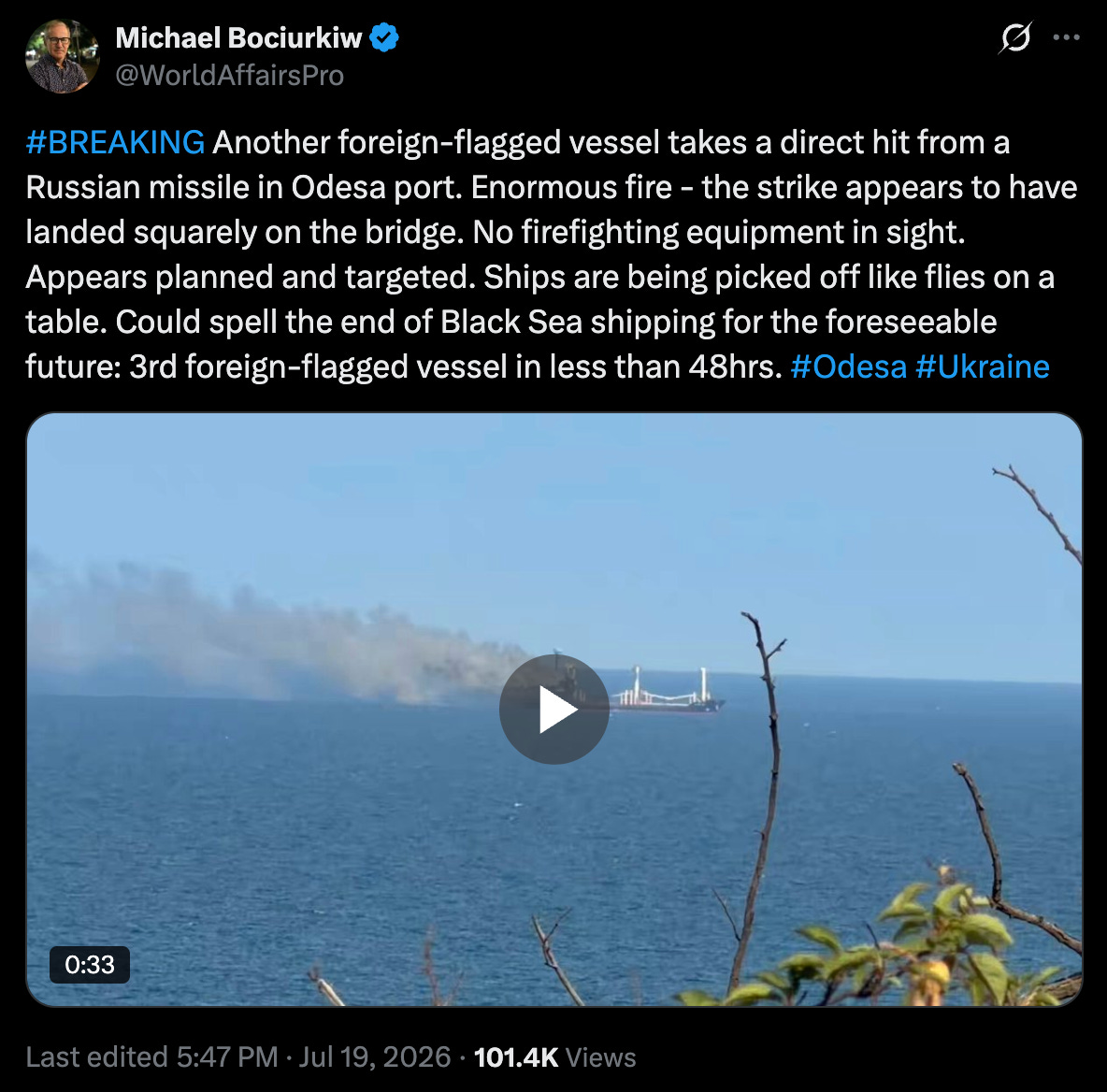
ODESA — The missile found the bridge.
Not the hull, not the cranes, not the grain elevators lining this battered port - the bridge, the nerve centre of the ship, struck with the kind of precision that ends any polite debate about intent. By the time I reached a vantage point Sunday afternoon, the foreign-flagged merchant vessel was burning uncontrolled, an enormous column of black smoke rolling over the harbour, and for the longest time there wasn’t a piece of firefighting equipment in sight. When first responders finally arrived, it looked to be too late for her. Earlier, overhead, two fast-flying rockets screamed across the city centre. Unimpeded. No interceptors. No answer.
It was, by any measure, a violent day in Odesa - one of several in a very violent week. And here is the verdict, delivered from the ground: what is happening in this port is not a series of unfortunate incidents. It is a campaign. And it is one half of something larger - a coordinated squeeze, by two co-belligerent states, on the commercial shipping arteries the world can least afford to lose.
A campaign, by their own description
You don’t have to take my word - or my eyewitness account - for the word “campaign.” Ukraine’s main farmers’ union, the UAC, said it plainly in its latest weekly report: Russia is “systematically striking port infrastructure, terminals and the entire transport logistics chain,” with ballistic missiles returning to the arsenal again and again.
The numbers tell the rest. Ukraine has lost roughly a third of its capacity to export grain through its Black Sea ports, which handle more than 90 per cent of the country’s agricultural exports - its single biggest source of foreign currency. Monthly throughput at the Odesa-region ports has collapsed from about 6 million metric tons to about 4 million. Four of the ports’ 13 large grain terminals have suspended purchases. The ports have lost roughly a third of their storage capacity - some 2.5 million tons of monthly accumulation at the deep-water terminals - creating a bottleneck that leaves grain with nowhere to go. And the UAC warns that if the current tempo of strikes continues without repairs, the infrastructure could be significantly degraded within months.
This is how a shipping corridor dies - not with a treaty torn up on live television, but quietly, actuarially. Shipowners grow reluctant to call at Ukrainian ports; analysts at ASAP Agri say that reluctance is already pushing freight rates upward. War-risk underwriters reprice. Crews think twice. Meanwhile the costs stack from every direction: Türkiye raised its strait transit fees by about 15 per cent on July 1, and Ukraine’s state railway has proposed a 30 per cent tariff hike from August. Ships being picked off like flies on a table is merely the visible layer. The invisible layers - insurance, freight, finance - are where the corridor actually bleeds out.
To be fair, both sides are now targeting each other’s revenue lifelines: Ukrainian forces have struck Russian energy infrastructure, including oil tankers. But there is a category difference between hitting a belligerent’s war-funding exports and putting a ballistic missile into the bridge of a foreign-flagged civilian merchant vessel loading grain.
Who actually pays
Here is the part that should be front-page news everywhere, and isn’t: the customers on the other end of these burning ships are not hedge funds in Geneva. They are the world’s most bread-dependent nations.
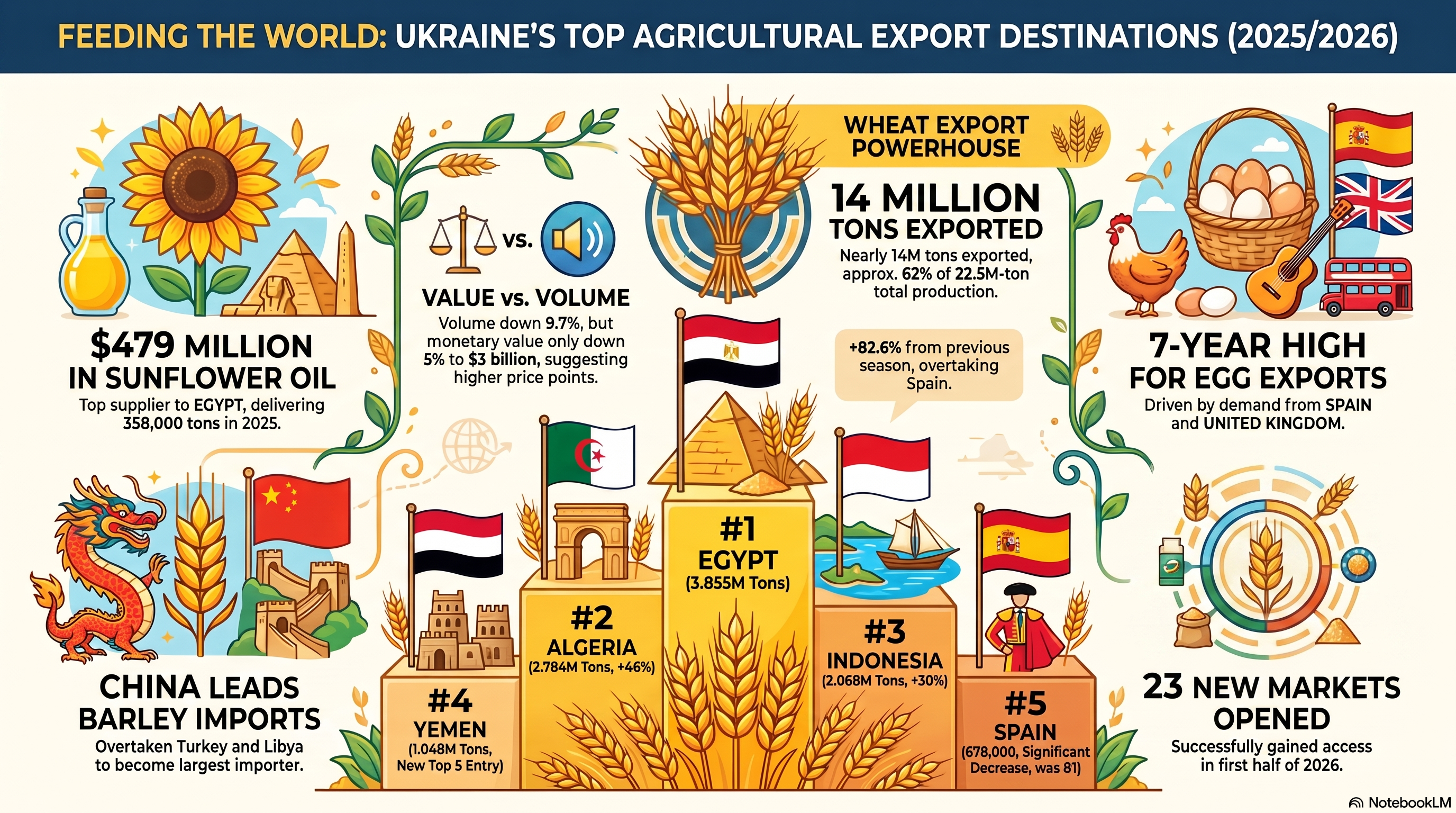
Per the Ukrainian Grain Association’s season wrap-up, Egypt increased its purchases of Ukrainian wheat by nearly 83 per cent last season - 3.855 million tons - to become the top buyer. Algeria was second, up 46 per cent. Indonesia third. Yemen - Yemen, a country the UN has spent a decade trying to hold back from famine - took more than a million tons. Four of the five largest buyers of Ukrainian wheat are Global South states. Egypt is also the top destination for Ukrainian sunflower oil.
Cairo's dependence cuts in an uncomfortable direction, too. Even as Egypt became Ukraine's biggest legitimate wheat buyer, Kyiv accused it of accepting cargoes of grain stolen from Russian-occupied territories - four laundered shipments through Egyptian ports since April alone, by the foreign ministry's count, including 26,900 tons unloaded at Abu Qir in May despite a formal Ukrainian request to seize the vessel. This after President el-Sisi personally assured Zelensky in April that the practice would stop. When your bread supply is this exposed, it seems, promises bend. Which is precisely the vulnerability Moscow is counting on as it burns the legitimate corridor.
Read that against the trajectory: Ukraine’s wheat exports had already fallen nearly 10 per cent last season, to about 14 million tons, before this month’s port campaign knocked out a third of what remained. Cairo doubled down on Odesa at precisely the moment Odesa began to burn. When this corridor constricts, the price is not paid in Rotterdam or Houston. It is paid in Cairo bread lines and Sana’a feeding centres. Ukraine’s government - a country that lost millions to Stalin’s engineered famine in 1932-33 - calls this what it is: hunger, weaponized. On this point, Kyiv’s framing and the shipping data are in full agreement.
The second artery
Now widen the lens, because Odesa is not an isolated theatre. Regular readers will recall that this newsletter has called Russia and Iran what they are - co-belligerents - since the Gulf war made their partnership operational. Look at the map of world shipping today and you see their joint handiwork: in the Strait of Hormuz, oil and gas transit has been halted or severely limited for months by the Middle East war. In the Black Sea, the grain corridor is being dismantled missile by missile.
Two chokepoints. Two co-belligerents. One effect: global commerce rerouted, repriced, and held hostage. Hormuz hits the energy markets and hurts everyone roughly in proportion to their wealth. The Black Sea hits commodity grain and hurts the poorest first and worst. Together they amount to something we have not seen in the post-war era - a sustained, deliberate campaign against the freedom of navigation itself, conducted below the threshold that would trigger a collective response.
Which brings us, inevitably, to the collective response.
Watch my special Sunday video briefing above…..
There’s no better time to upgrade to a paid subscription or support independent global reporting and commentary via Patreon or PayPal.
The Emmental
The European Union is currently attempting to pass its 21st sanctions package against Russia. Many in Brussels assumed this would get easier after Viktor Orbán’s departure in May. Instead, six weeks after an ambitious draft landed in capitals, EU diplomats have taken to calling the package “the Emmental” - after the Swiss cheese famous for its holes.
Consider the holes. A headline proposal to ban imports of Russian cod, haddock and pollock was watered down so thoroughly it was scrapped altogether - because Germany, Poland and Portugal need Russian fish for domestic food processing. Fish sticks, to be precise. Fiddle sticks, say I. A proposed automatic Schengen ban on Russian ex-combatants was diluted into a vague commitment to study the visa code, because Mediterranean capitals wouldn’t risk a bumper tourist summer. Bulgaria vetoed blacklisting Patriarch Kirill and Lukoil’s chief, partly because a sanctioned billionaire’s companies supply spare parts for Sofia’s metro. Austria held the whole thing hostage over compensation for a bank that chose to keep doing business in Russia.
And the centrepiece - the price cap on Urals crude, the Kremlin’s main revenue artery? Brussels couldn’t even agree to freeze it for six months. Then not for three. In the end, ambassadors extended it by seven days, to July 23, with a make-or-break meeting set for July 22 - conveniently the day after Belgium’s national day, when much of official Brussels decamps to the beach for a month. The deliberations, note well, are tangled up precisely because Hormuz’s closure has scrambled the oil market - the EU literally cannot price its Russia sanctions without accounting for what Iran’s war has done to shipping. The two arteries are connected even in Brussels’ own paperwork.
So tally it up. Merchant ships swatted like flies in Odesa harbour. A third of Ukraine’s grain-export capacity gone. Egypt, Algeria, Indonesia and Yemen watching their bread supply burn at anchor. Hormuz throttled. And the collective West’s rebuttal: a seven-day extension on an oil cap and a sanctions wheel of cheese.
The message received in Moscow and Tehran could not be clearer. The arteries are yours for the taking - we have fish sticks to make.
I’ll be tracking Wednesday’s EU meeting and the situation here in the port. Paid subscribers to World Briefing Plus will get my video analysis from Odesa this week, including what I saw at the harbour and what shipping insiders here are telling me about the weeks ahead. If this kind of on-the-ground reporting matters to you, this is the moment to upgrade.
News Briefs
U.S. and Iranian forces edged closer to a wider war over the weekend as two American soldiers were killed during an Iranian missile barrage in Jordan, and both sides targeted sensitive infrastructure sites including bridges and water facilities. In a sign that the fighting could intensify, American officials who spoke on the condition of anonymity on Sunday said that the United States was sending more warplanes to the Middle East, a move that was in the works even before the soldiers’ deaths. The strike on Jordan, which also left one service member missing, capped a week of spiraling attacks that largely demolished what remained of the deal to end the war that President Trump agreed to with Iran last month. The State Department cautioned Americans traveling abroad that tensions in the Middle East had created the “potential for unforeseen escalation.” The U.S. military said early on Sunday that it had attacked Iranian military coastal surveillance and air defense facilities, as well as the Islamic Revolutionary Guards Corps forces responsible for striking U.S. forces in Jordan. Iran retaliated with strikes on Kuwait, Bahrain and Jordan, Middle East countries where the United States maintains a significant military presence. In recent days, Iranian attacks have increasingly damaged critical infrastructure, including an oil facility and power and water treatment plants in Kuwait, according to the authorities. Jordan evacuated the international airport and seaport in the coastal city of Aqaba after a “specific and credible threat,” according to the U.S. Embassy there. The country’s air defenses later shot down three Iranian missiles that targeted the country, the Jordanian military said, while a fourth landed in an unpopulated area - NYT
Turkey is in talks to transfer a sophisticated Russian air-defense system to the United Arab Emirates in hopes of clearing American objections to its purchase of advanced F-35 warplanes, U.S. and regional officials familiar with the matter said. The U.S. removed Turkey from a program to buy and help build the F-35 in 2019 after it bought an S-400 system from Russia. The U.S. worries that having the two advanced technologies operating simultaneously in Turkey could allow the S-400 to learn key operational details of the F-35 - including its radar signature and share them with Moscow - WSJ
New York City Mayor Zohran Mamdani said his office is still looking into arresting Benjamin Netanyahu if the Israeli prime minister visits the city for the United Nations General Assembly in September. Speaking on The New York Times’ “The Interview” podcast, Mamdani said his administration’s legal department is actively discussing the potential arrest of Netanyahu, something he vowed on the campaign trail to pursue. “I believe that Prime Minister Netanyahu belongs in The Hague,” Mamdani said. “He’s a war criminal who has been charged by the International Criminal Court. And what you will find is that is an opinion that is held by many purely because of what his actions have wrought over these last many years.” Asked what he believed the law allowed him to do, Mamdani responded: “That’s an active conversation with our legal department. However, what we’ve seen at the national level is a desire sometimes to write your own laws, to go outside of the bounds of legality. That’s not something we have an interest in.” - CNN
After nearly six weeks of heroics and heartache, thrills and spills, heat, rain and rowing, New York New Jersey stadium was preparing on Sunday to host the crowning event of the World Cup tournament — the final between coolly confident Spain, aiming for their second world title, and fiery Argentina, defending their crown in what they hope will be the bow on the gift of Lionel Messi's glittering career. Fears over air quality evaporated along with the thick layer of smoke that had blanketed the region for days, the result of wildfires in Canada. The heat of recent weeks was also tempered, and clear skies and a beautiful day greeted crowds at East Rutherford, New Jersey. U.S. President Donald Trump’s expected attendance at the match added extra layers of security to the world’s biggest sporting event. Hundreds of journalists, entertainers, and volunteers waited in snarling lines for up to three hours, with wand-waving Secret Service agents screening entrants. For fans, the entrance lines were quicker but they faced long queues once inside for food and merchandise. Dressed in the traditional blue and white colours of Argentina or red and yellow of Spain, the supporters were trickling into the stadium hours before the 3 p.m. ET (1900 GMT) kickoff, with a pre-match "closing ceremony" featuring Post Malone and Tom Cruise set to begin at 1:30 p.m. ET (1730 GMT). The closing ceremony will also feature American singer Jennifer Hudson delivering a rendition of the U.S. national anthem and tenor Christopher Macchio singing “America the Beautiful,” giving a distinctly U.S. flavour to proceedings, which will for the first time since the first World Cup in 1930 feature two Spanish-speaking teams in the final. The tournament has adopted several American traditions — not without controversy — including “hydration” breaks part-way through each half that broadcasters have used to run more commercials, and championship rings for the winners - Reuters
The journals….
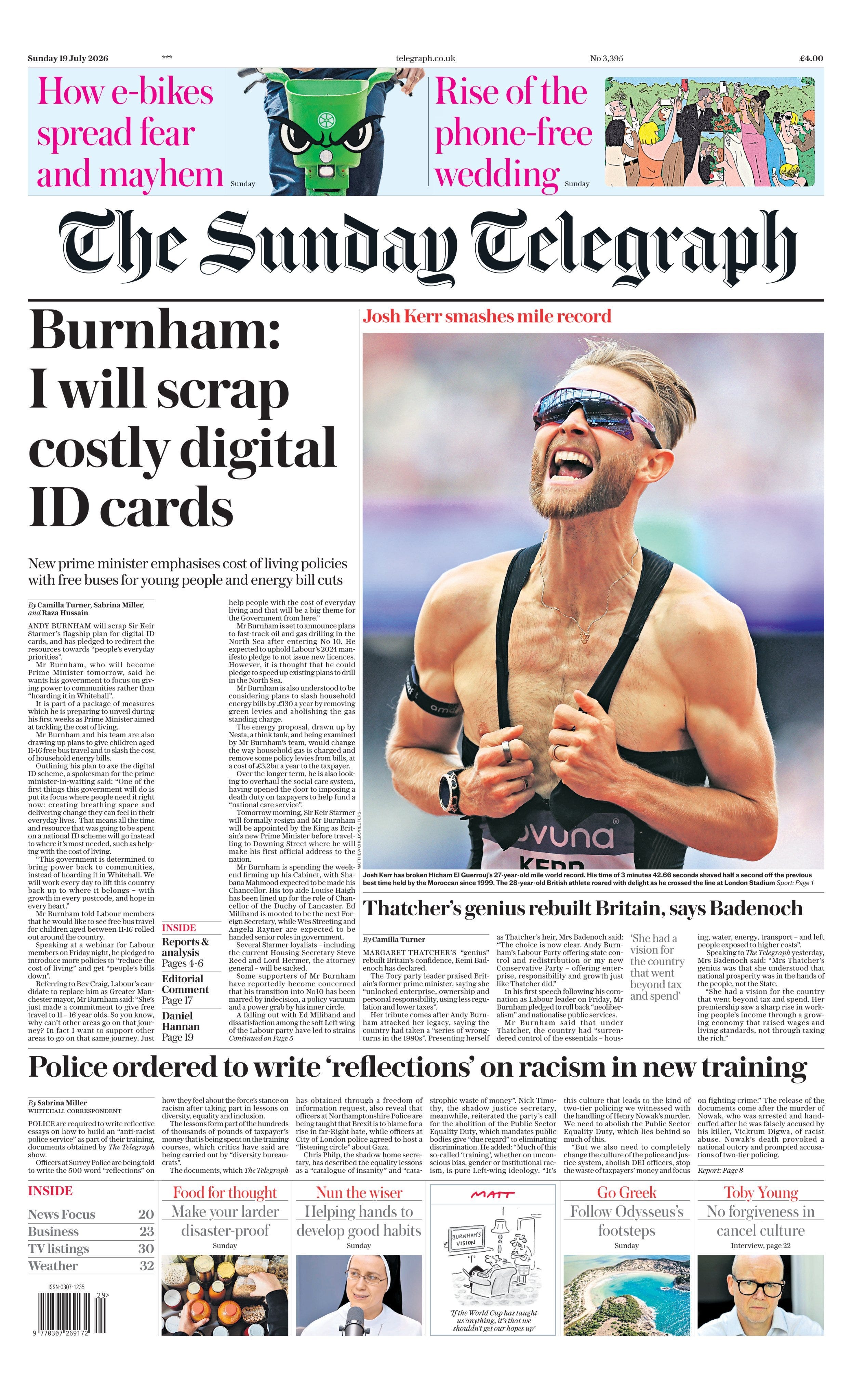
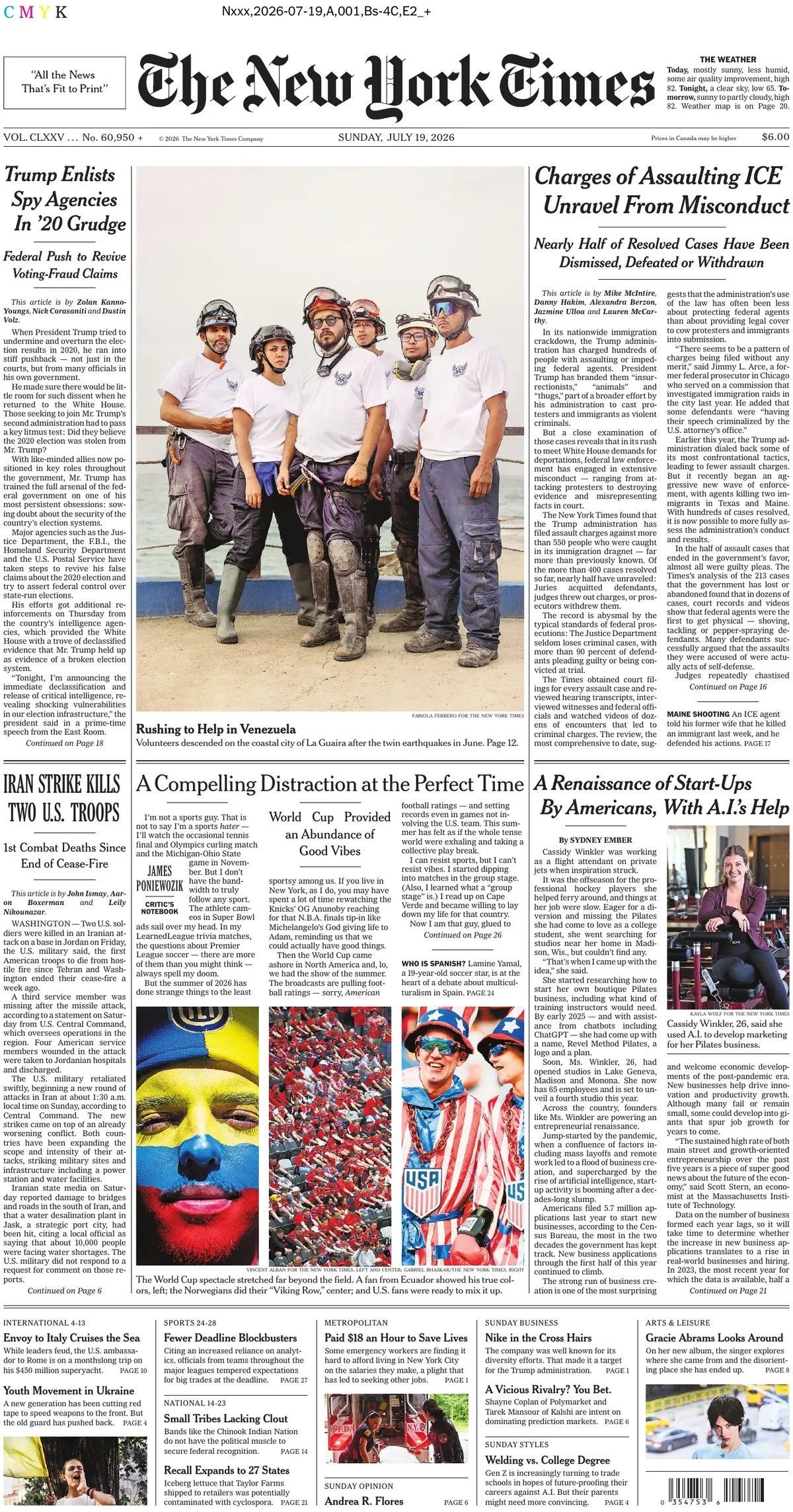
Against the footage of Ukrainian farmers valiantly harvesting, this is doubly tragic