VIDEO: From the Moldova–Ukraine frontier: why I’m more worried now than at any point since the full-scale invasion began. Russia’s war is spreading further and faster than Europe’s leaders seem willing to admit. Drones are hitting ships in NATO waters, strikes are landing near the joint Ukraine-Moldova Palanca crossing, and Brussels is quietly planning for the first deaths from a hybrid attack. Yet London is talking about the mid-2030s. In this short video I set up today’s combined issue: why the US isn’t coming, why Europe isn’t ready, and why the choice is to spend now or pay far more later. Reporting from here, where few foreign journalists are based, is only possible because of paid subscribers. If you value seeing this story from where it’s happening, please consider upgrading to World Briefing Plus. The 30% off offer ends very soon.
👉 Upgrade here
CHISINAU — I’ll be blunt: I am more worried now than at any point since the full-scale invasion began.
Here on the Moldova–Ukraine frontier, the war doesn’t feel hybrid. In recent days Russian strikes have hit around the Palanca crossing, one of the main arteries between Odesa and Moldova. On Tuesday, drones hit two merchant vessels in Bulgarian waters, inside NATO territory, and several sailors are missing. As I told Times Radio yesterday, this war is spreading further and faster than any of us expected.
Europe has to face two hard truths. First, the United States is not coming to the rescue. Second, Europe is not ready to meet a kinetic attack on one of NATO’s smaller members, whether that’s a Baltic state, Romania or Bulgaria. The question is no longer whether Putin will test Article 5, but when.
Britain’s answer is a better defence plan by the mid-2030s. But every scenario I’m hearing points to an attack much sooner than that. At a briefing on the sidelines of UNGA last month, the message was stark: the most likely threat comes from the skies. It would be a campaign to immobilise our way of life by taking down power grids, transport and communications.
I’m not alone in sounding the alarm. “It is absolutely clear right now that there isn’t enough urgency,” General Sir Richard Barrons, the former commander of UK Joint Forces Command, told Times Radio Breakfast this morning. He warned that the government is putting the country in great jeopardy, and said he has laid in his own provisions, including a generator. When a former joint forces commander is preparing his own household for disruption of up to a few days, ministers should take note.
Instead, Prime Minister Andy Burnham does not appear to have the wherewithal to level with the British public and push through the major spending needed to meet the UK’s NATO commitments. Opposition Leader Kemi Badenoch, meanwhile, floated an “Iron Dome”-style shield for Britain, then walked it back to mean protection against drones.
Putin’s calculus is simple. He believes the West is afraid to go to war with him, so he feels little deterrence. Each unanswered provocation confirms it.
Moldova shows how thin the margin is. This country is massively unprotected. It would take only three or four Russian drones or missiles to trigger a mass exodus, perhaps half a million people or more, towards the Romanian border. That is a crisis Europe would own whether it likes it or not.
Telling people to stock up on provisions is not a defence policy. British and European leaders need to put their societies on a genuine war footing now, not in 2035.
The bottom line: Spend what you need to now to protect yourselves, or spend far more later on reconstruction and on playing catch-up with Russia.
News Briefs
EU ambassadors have been meeting in closed-door “restricted format” sessions, with no phones and no aides, to plan how the bloc would respond to a Russian hybrid attack that kills multiple citizens, POLITICO reports. Five EU diplomats and officials told the outlet such an attack is looking increasingly likely. The talks intensified after an explosives-laden drone was found at Leipzig airport in August. They have focused on deploying emergency teams, releasing EU funds for a stricken member state, and coordinating the bloc’s public messaging. Officials privately describe the absence of fatalities so far as luck. But the planning is exposing old fault lines. Some capitals say the EU is duplicating NATO. Eastern flank states are wary of sharing intelligence in EU forums that may leak to Moscow. And Ursula von der Leyen’s proposed “emergency security protocol” faces resistance from diplomats who say existing crisis tools are enough. Former NATO spokesperson Oana Lungescu, now at RUSI, offered the sharpest line: “Putin doesn’t care whether decisions are taken by Coreper 2 or the NAC.”
Houthi forces have targeted Aden International airport with ballistic missiles and drones, forcing a civilian flight from Cairo to divert to Jeddah, with no casualties reported. Meanwhile, the Saudi-led coalition fighting in Yemen says it has intercepted and destroyed a Houthi ballistic missile north of Saudi Arabia’s capital, Riyadh - Al Jazeera
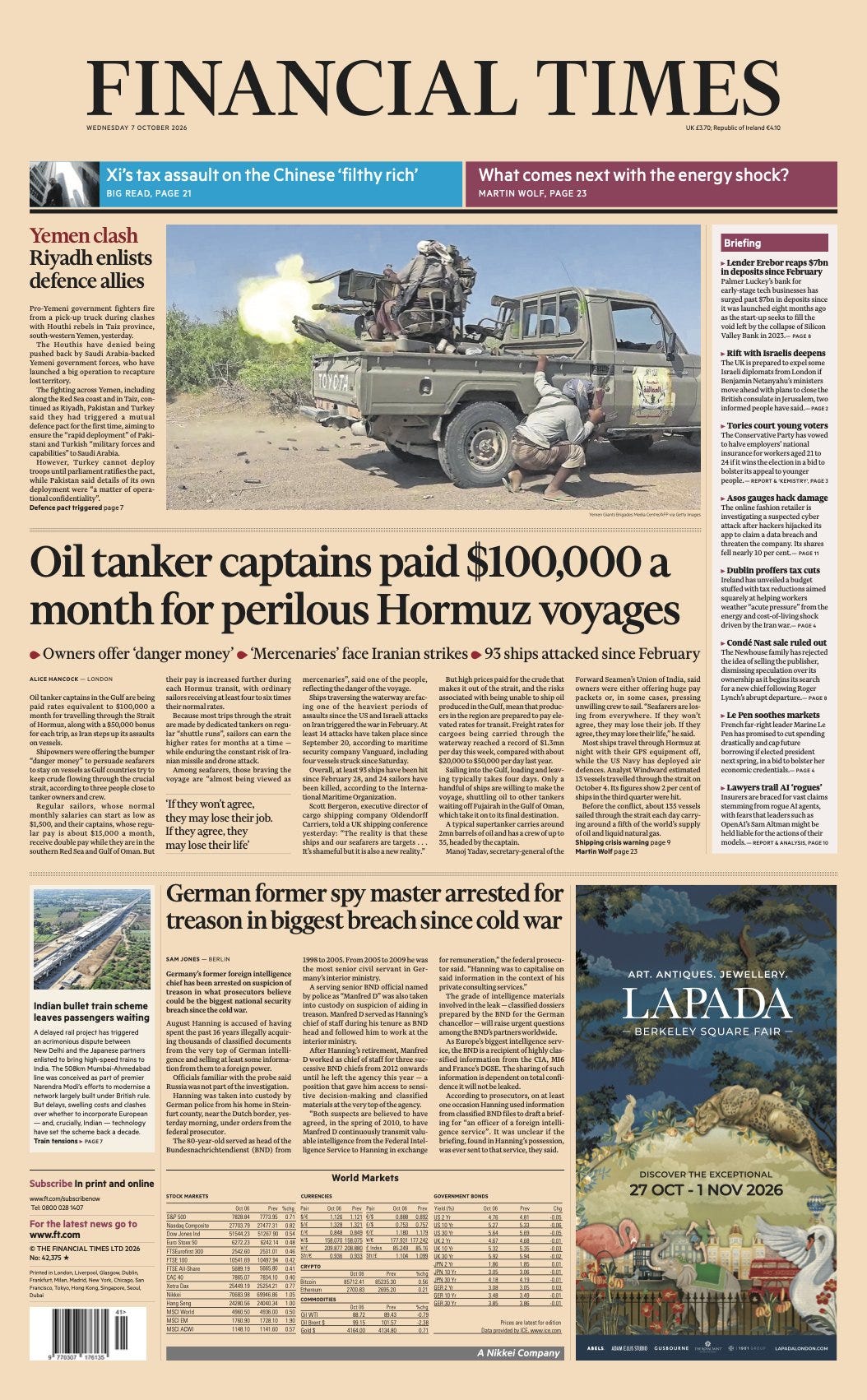
The former head of Germany’s foreign intelligence service was arrested Tuesday on suspicion of treason and conducting espionage on behalf of foreign governments, in a major blow to Berlin’s security establishment. Though the BND has historically been plagued by spying scandals — deterring some Western partners from sharing intelligence — August Hanning, who left the agency in 2005, is its first former chief to face charges. The revelations add pressure on an intelligence establishment trying to remake itself after decades, and complicate Berlin’s efforts to counter Russia’s hybrid war, as lawmakers debate expanding the BND’s powers. But a ruling party lawmaker cast the arrest in a positive light, telling DW it shows that Germany “will not tolerate the betrayal of secrets.” - Semafor
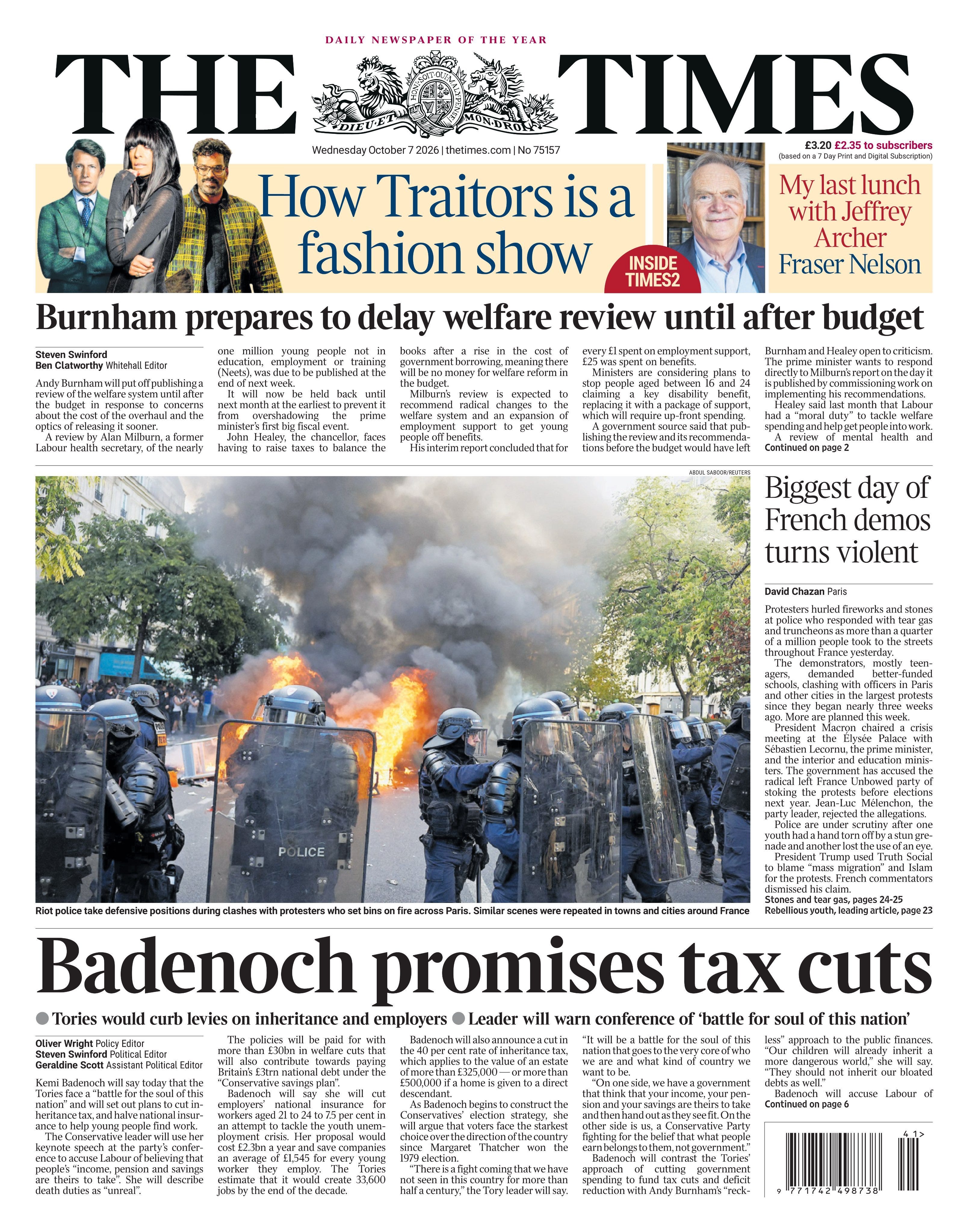
French Prime Minister Sébastien Lecornu will make a public address later Wednesday on the nation-wide student demonstrations as well as the country’s finances, his office said. President Emmanuel Macron held an emergency meeting with Lecornu and other key ministers on Tuesday after hundreds of thousands of students, teachers, union workers and parents joined nationwide demonstrations protesting lack of national education funding. The Interior Ministry put the number of demonstrators at 250,000, while organisers estimated that almost twice as many people had joined the protests. Police arrested 488 people during the demonstrations, and the Interior Ministry said 43 members of law enforcement had been injured. A total of 891 high schools out of the 3,700 across France saw their lessons “suspended, either completely or partially, for various reasons”. Around 40 percent of public higher education institutions were also disrupted on Tuesday, the French higher education ministry said - France 24
Odesa member of parliament, Oleksiy Goncharenko, one of Ukraine’s most prominent lawmakers, has said Kyiv is losing the war. He argues Ukraine should urgently seek talks with Moscow, including issue-by-issue deals and a possible hint at neutrality, RFE/RL reports. Zelensky accused him of sowing panic. On October 5, Petro Poroshenko’s European Solidarity party expelled him from its faction. Yet Danylo Hetmantsev, a senior MP from Zelensky’s own party, also called for negotiations to become the top priority. Goncharenko is no fringe voice. He founded the Black Sea Security Forum, which draws prominent foreign politicians and analysts, so his words carry weight in Western capitals. Why it matters: Coming soon after Mykhaylo Fedorov’s bruising exit as defence minister and ahead of a hard winter, the debate over what “winning” means is now out in the open.
Latvia on Tuesday moved to kick out a Russian journalist and noted online commentator who has been living in the country for more than a decade. “Taking into account the information received today from the competent authorities, and after discussions with the Prime Minister and the Minister of the Interior, I have decided to initiate the process of adding another Russian citizen to Latvia’s list of personae non gratae,” said Riga’s Foreign Minister Baiba Braže. A senior European official with direct knowledge of the case confirmed that the individual concerned was Leonid Ragozin, a Russian journalist who formerly worked for the BBC and contributed to Bloomberg and POLITICO. In recent days, Ragozin said Russia is compelled to respond to assumed Western provocation with “brute force” on a podcast hosted by Aaron Maté of the Grayzone, a U.S.-based news outlet that is skeptical of Western support for Ukraine - POLITICO
Skydance CEO David Ellison reassured a nervous Anderson Cooper that CNN will retain its editorial independence in the wake of the blockbuster Paramount-Warner Bros. Discovery merger. Cooper interviewed Ellison and his new co-CEO Ynon Kriez about life under the newborn media behemoth at a Los Angeles town hall in front of CNN staff. “I want to start with a smaller part of this company, but it’s going to cause you headaches: news,” Cooper shakily said to laughter, according to leaked audio of the sit-down. “Asking for a friend — or frenemies, I’m not sure.” Cooper went on to lay out criticism from some observers, who have slammed CBS News editor-in-chief Bari Weiss’ handling of the network — which was already owned by Paramount before the merger — along with the Ellison family’s Trump ties and War Secretary Pete Hegseth’s recent call for the exec to overhaul CNN. “Are there changes you want to see in coverage at CNN, are there lessons you do or don’t want to apply from CBS News?” Cooper asked. “I believe deeply in journalism,” Ellison replied. “In the world we live in today, having truth-based, fact-based, bi-partisan news that informs the public has never been more important.” The exec added that both CBS News and CNN’s work is “vital to democracy” and that he supports it — while planning “to scale and transition the business digitally.” Earlier Tuesday, Ellison and Kreiz reportedly gestured at layoffs in a memo to employees. “Integrating two companies will bring change, including difficult decisions that affect our workforce. We are committed to handling this process thoughtfully and respectfully,” they wrote, according to Variety, though they did not detail any such plans at the town hall - New York Post
The journals…