Giorgia Meloni and Pedro Sánchez agree on almost nothing about migration. They have now found a way to make each other's tourists pay for it. As POLITICO reports, Madrid on Saturday reimposed identity checks on flights and ferries arriving from Italy, suspending passport-free travel with a fellow founding member of the European project - retaliation for the checks Rome has been running on arrivals from Spain since Aug. 1.
The trigger was Ceuta. Some 72,000 people surged into the Spanish exclave, and Italy warned they could cross the Strait of Gibraltar and use Schengen to fan out across the continent. They didn’t. Spanish authorities and the European Commission confirmed this week, POLITICO reported, that not one of them made the crossing, for the unglamorous reason that ferry travel requires documents they don’t have. Italy’s own interior minister, Matteo Piantedosi, praised Spain’s handling of the crisis at Tuesday’s meeting of EU interior ministers and offered Rome’s solidarity.
Then Rome kept the checks anyway
Madrid issued a Friday statement warning of proportionate countermeasures absent a reversal by Aug. 9. The office of Italian Prime Minister Giorgia Meloni replied that Italy takes no ultimatums from abroad on national security. Spain moved the next day. Brussels is now doing what Brussels does: Migration Commissioner Magnus Brunner posted that he had spoken to both interior ministers, that both describe the controls as temporary, and that trust between member states is the currency the bloc can least afford to spend. He hinted Italy might lift its measures soon. Nobody has committed to a date.
A note from the queue
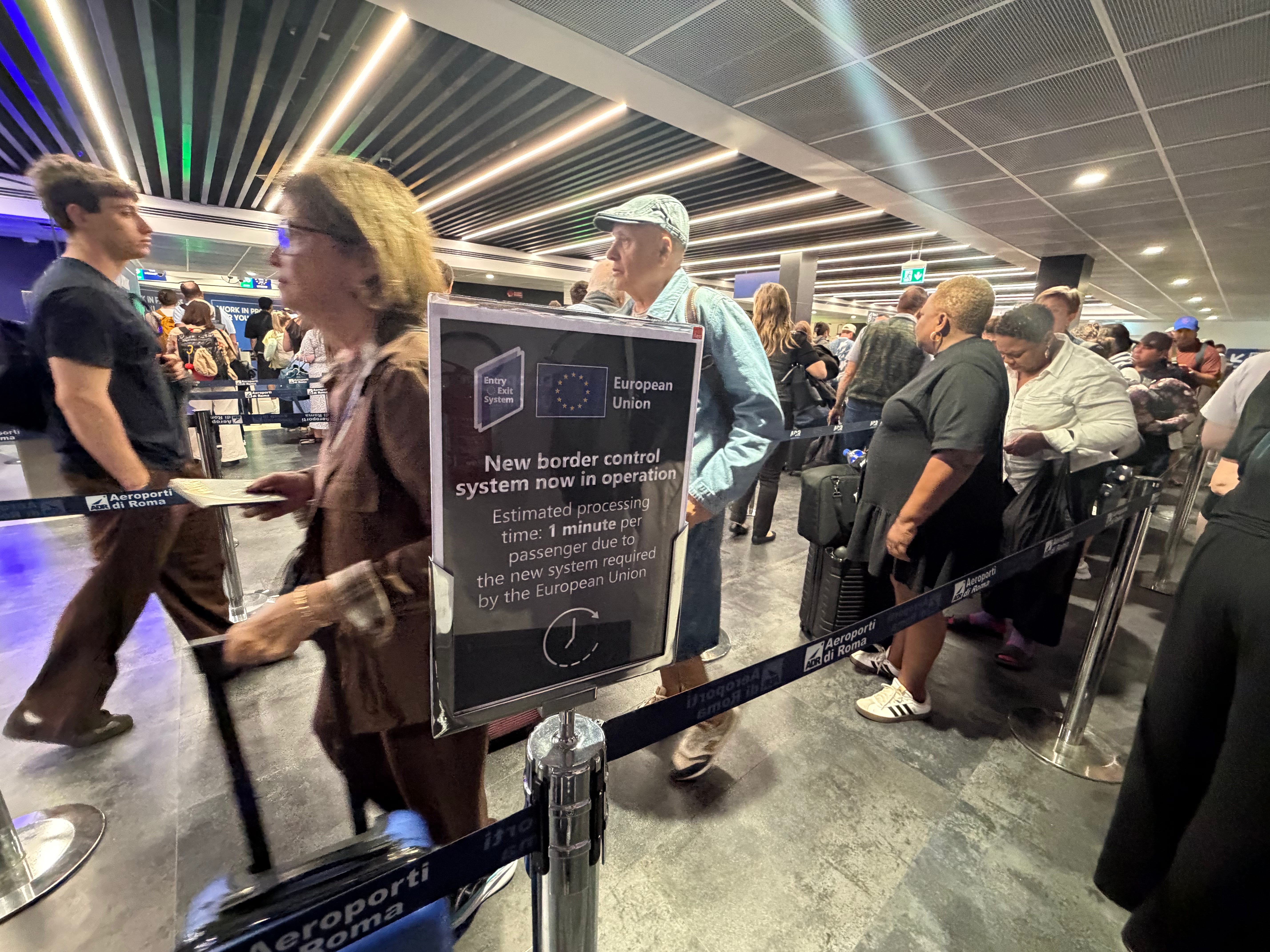
I went through Rome’s Fiumicino airport last month, before any of this started, and the lines were already grim. Aeroporti di Roma had posted signs at the stanchions (see photo below) advising a minute of processing per passenger under the EU's new Entry/Exit System - the delay attributed, pointedly, to a system "required by the European Union." Stack a political ID check on top of that and you are not managing a border, you are manufacturing a bottleneck. Anyone flying Madrid–Rome this month should assume the posted connection times are fiction.
Connecting the dots
This is not really about Ceuta, and both capitals know it. Meloni built a career on the migration file and has been driving the EU toward harder external borders and faster returns. Spanish Prime Minister Pedro Sánchez runs the opposite argument: that Europe needs foreign workers to avoid demographic and economic decline, and he backed it by regularizing status for hundreds of thousands of undocumented migrants - a scheme Meloni attacked and put on the agenda at last month’s European Council. When Ceuta blew up, she organized a letter from 22 EU leaders to von der Leyen and Costa arguing Spanish policy had weakened the bloc’s external frontier. Madrid’s counter is that Italy has logged the EU’s highest irregular-crossing numbers in recent years, at times double Spain’s.
Rome’s instinct for converting a technical question into a sovereignty fight is well documented. In June, NATO Secretary General Mark Rutte told Fox News that 500 US aircraft had taken off from American bases in Italy in support of Epic Fury, Washington’s name for the campaign it launched against Iran alongside Israel. The remark set off a political row in Italy, where Meloni’s government has insisted it never authorised the use of Italian territory for direct military action against Iran. Defence Minister Guido Crosetto’s reply was a masterclass in framing: he expressed surprise that Rutte, who “has nothing to do with Operation Epic Fury,” had conveyed a “totally misleading message” by conflating authorised support flights with combat operations. NATO’s own clarification was that Rutte had merely noted allies including Italy honouring existing bilateral basing and overflight agreements - while opposition leaders in Rome demanded fresh explanations from the government.
The distinction Crosetto drew was real. But the volume was the point. This is a government that reaches first for the language of national dignity, whether the interlocutor is the alliance’s secretary general or the prime minister of Spain - and reaches for it hardest when the underlying facts are contested rather than clear.
So the checks are a message, not a control measure. Which is precisely what makes them dangerous. Schengen’s suspension clause was drafted for genuine security emergencies such as the Covid-19 outbreak - six months initially, renewable to two years, three in exceptional cases. It is now being used as a bilateral bargaining chip between two governments whose dispute is ideological rather than operational. Once a border closure becomes a way to score a domestic point, the threshold for the next one drops. France, Germany, Poland and others already have controls up for their own reasons.
And it is worth asking what this energy is being spent instead of. My middle-class friends in Italy are not losing sleep over Ceuta. They are losing it over grocery bills that keep climbing and wages that haven’t moved in years - squeezed from both ends, with no policy answer on offer. A fraction of the attention Meloni is devoting to the Spanish frontier, redirected at prices and pay, would be the more useful border to defend.
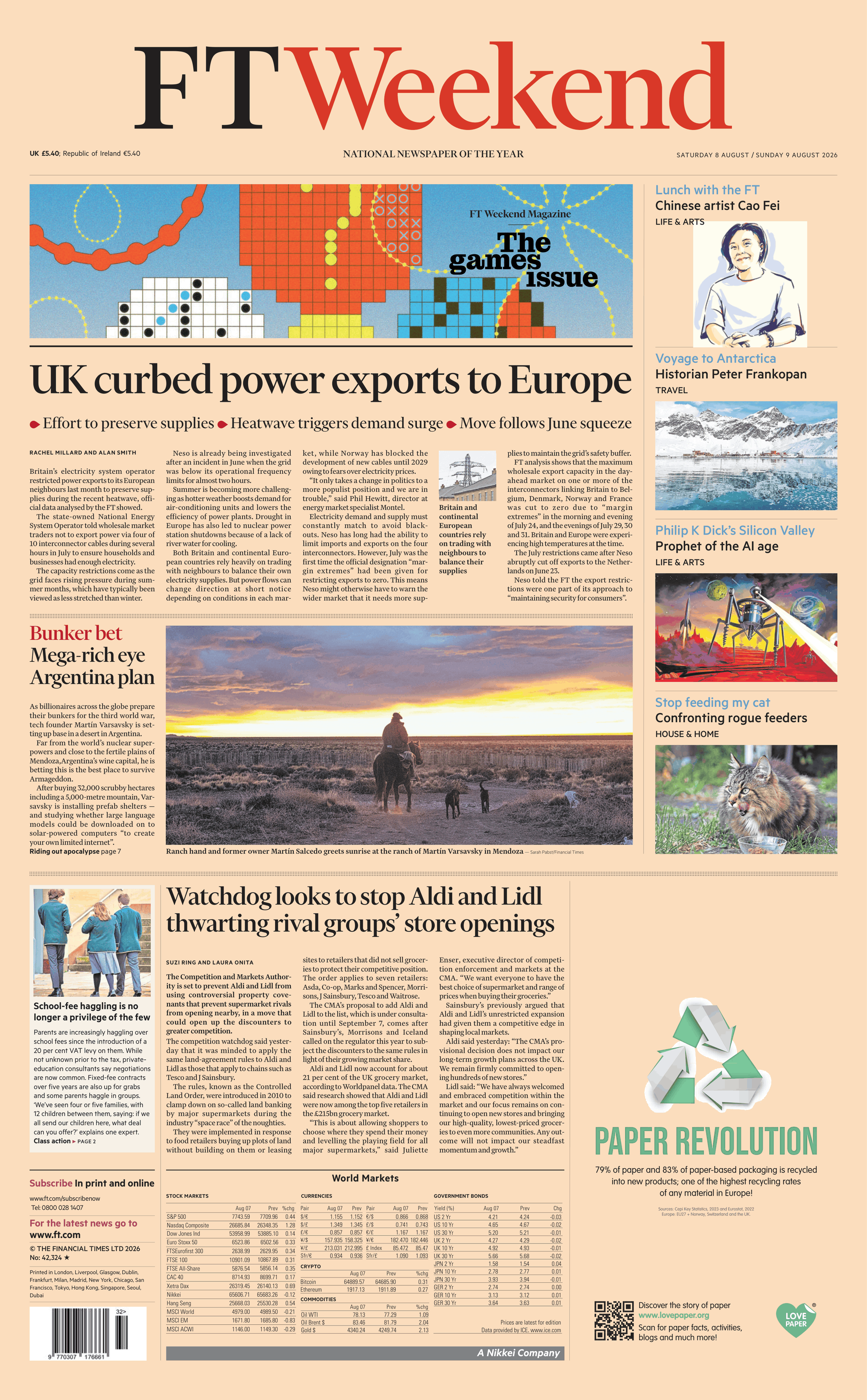
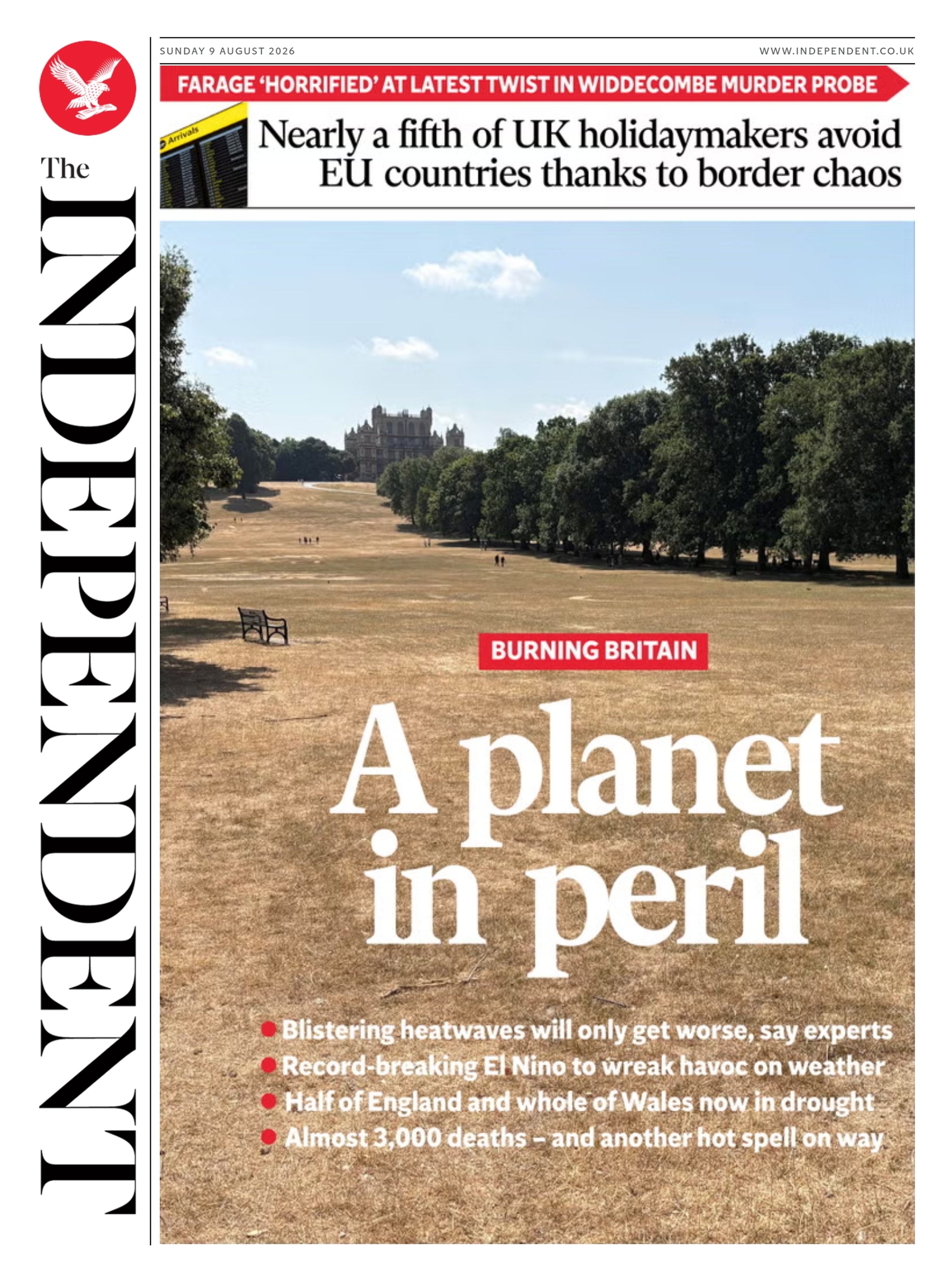
This is not a hypothetical cost. When Greece announced in April that it would not apply the EU's Entry/Exit System to British travellers, figures from a UK travel-agent network showed its share of UK holiday bookings climbing from 7.7 percent in mid-April to just under 10 percent by the end of the month - a shift of more than two share points in a fortnight, on a border decision and nothing else. The Independent's front page on Sunday carried Savanta polling showing 43 percent of UK adults are changing their travel plans, weighing a change, or feeling more anxious about going abroad, with EES queues reported at up to three hours across Spain, Portugal, France and Italy. Travellers reroute on friction, and they do it fast.
Nobody expects Rome and Madrid to hold this for three years. But 3.2 million Spaniards visited Italy in 2024 and 5.4 million Italians visited Spain, and those people are now standing in front of carabinieri and National Police being asked for documents they hadn’t planned to carry. Some of them will do what the British did, and go somewhere that isn't making a point.
Twenty-nine countries, one common travel area, and a functioning passport-free zone that turns out to last exactly as long as two prime ministers find it politically convenient.
Israeli Prime Minister Benjamin Netanyahu has rejected US President Donald Trump’s 15-point plan for Gaza, stating that no military pull-out will happen until Hamas is “genuinely” disarmed. Trump’s Board of Peace said last month it had reached an agreement for the “complete disarmament” of Hamas and other armed groups in Gaza. But Hamas said handing over its heavy weapons was contingent on Israel ending “all forms of aggression” and withdrawing its forces from Gaza. Israel has continued to carry out strikes on Gaza since agreeing to an initial ceasefire in the territory last October. “Israel rejects the 15-point document,” Netanyahu said at a cabinet meeting on Sunday. The Israeli military “will not carry out any withdrawal until Hamas is genuinely disarmed and will continue to thwart threats against our forces and our citizens”, he added. Trump last month announced “a monumental step toward lasting peace and security” after Hamas said it had accepted a disarmament plan for Gaza. But Netanyahu said that Hamas had to disarm before Israel withdrew its forces from Gaza, adding it couldn’t be some “fictitious disarmament” - BBC
Israeli Finance Minister Bezalel Smotrich commended Netanyahu’s statements, saying he “welcomed the prime minister’s unequivocal clarification.” He said: “We went to war with one central objective: the destruction of Hamas militarily, civilly, and as a governing authority. That means there can be no Hamas in Gaza the day after, and Gaza must not pose a threat to Israeli citizens and residents of the South for many years to come. This roadmap runs 180 degrees contrary to that objective.” Smotrich also stated that all reconstruction in Gaza would first require complete Hamas disarmament. “The objective of the war to which we are committed is clear: a situation in which there is no Hamas in Gaza...we will not give up even a fraction of that objective,” he said - Jerusalem Post
Netanyahu’s peace plan rejection was expected. The fact that the Israeli prime minister took all this time to just come up with this decision and it’s coming in the form of a full rejection of the 15-point plan did not surprise anyone in Gaza. The only concern that people have right now is that this is translating into greater uncertainty. The plan was meant to provide more structure and a framework. There are important elements that were part of the plan in terms of security – Israeli withdrawal from the area that it has been occupying over the past years across Gaza known as the “Yellow Line”, the disarmament of Hamas, as well as the entry of international stabilisation forces. Now, the full rejection here puts the sequencing and the steps to complete that into serious question. It translates into no clear end to hostilities and wars. Over the past five days, there were no reported strikes, assassinations or aerial activities apart from the ongoing shooting in areas adjacent to the “Yellow Line”, but this could come back at any time. This rejection is seen as a licence for the Israeli military to come out of this five-day break into more of an escalation on the ground - Al Jazeera in Gaza
As for the Gaza Strip, I want to make the main point clear: as long as I am prime minister, there will be no Palestinian state, not in Gaza and not in Judea and Samaria - Benjamin Netanyahu
Pakistani Prime Minister Ishaq Dar says the trilateral Mecca defence deal, signed by Turkiye, Saudi Arabia, and Pakistan, is “purely” defensive in nature and not targeted against any country. In a statement posted on X, Dar said the sole purpose of the Mecca Joint Defence Agreement is to further strengthen joint ongoing efforts towards peace, stability, and prosperity in the wider region. The agreement, signed by the three countries on Friday in Mecca, treats an attack on any one of the countries as an attack on all three. Dar said the defence pact remains open to any country in the region willing to uphold its fundamental principles and resolve differences through “mutual respect, cooperation and peaceful means”. He reiterated that, according to the accord, any external armed attack on any one of the three countries will be considered an attack on all, consistent with the inherent right of individual and collective self-defence under Article 51 of the UN Charter. The pact, he added, does not abrogate or replace any existing bilateral or multilateral agreements between these countries, or with other countries or organisations - Al Jazeera
The US has pledged $1bn (£740m) to Colombia hours after the country’s new right-wing populist president was sworn in. Abelardo de la Espriella, an admirer of Donald Trump who echoed many of the US president’s policies on the campaign trail, used his maiden speech to promise an “all-out war” on drug cartels. The US state department said the “security package” would help him achieve “our shared goals”, which include fighting organised crime and illegal immigration. Trump repeatedly criticised de la Espriella’s left-wing predecessor over his approach to both. The inauguration is the latest in a wider trend of Latin American nations shifting rightwards on a backdrop of economic hardship and concerns about gang violence. Trump has taken a greater interest in Latin America during his second term, courting politically aligned leaders and spurning those with whom he disagrees. Before the election, Trump said de la Espriella had the “total support and strength of the United States behind him”, predicting a “much better relationship” with Colombia after he was elected in June. A lawyer and businessman by trade, de la Espriella has cast himself as maverick outsider, vowing to combat crime with an “iron fist”. In a fiery first official speech - addressing troops at a nearby military base - de la Espriella pledged to crush armed insurgents, rebuild Colombia and defend democracy “by reason or by force.” He said in "the age of the Tiger" - a reference to his self-styled nickname - the state would be forceful and decisive against crime, adding: "There will not be a single place in our territory where criminals can feel safe."- BBC
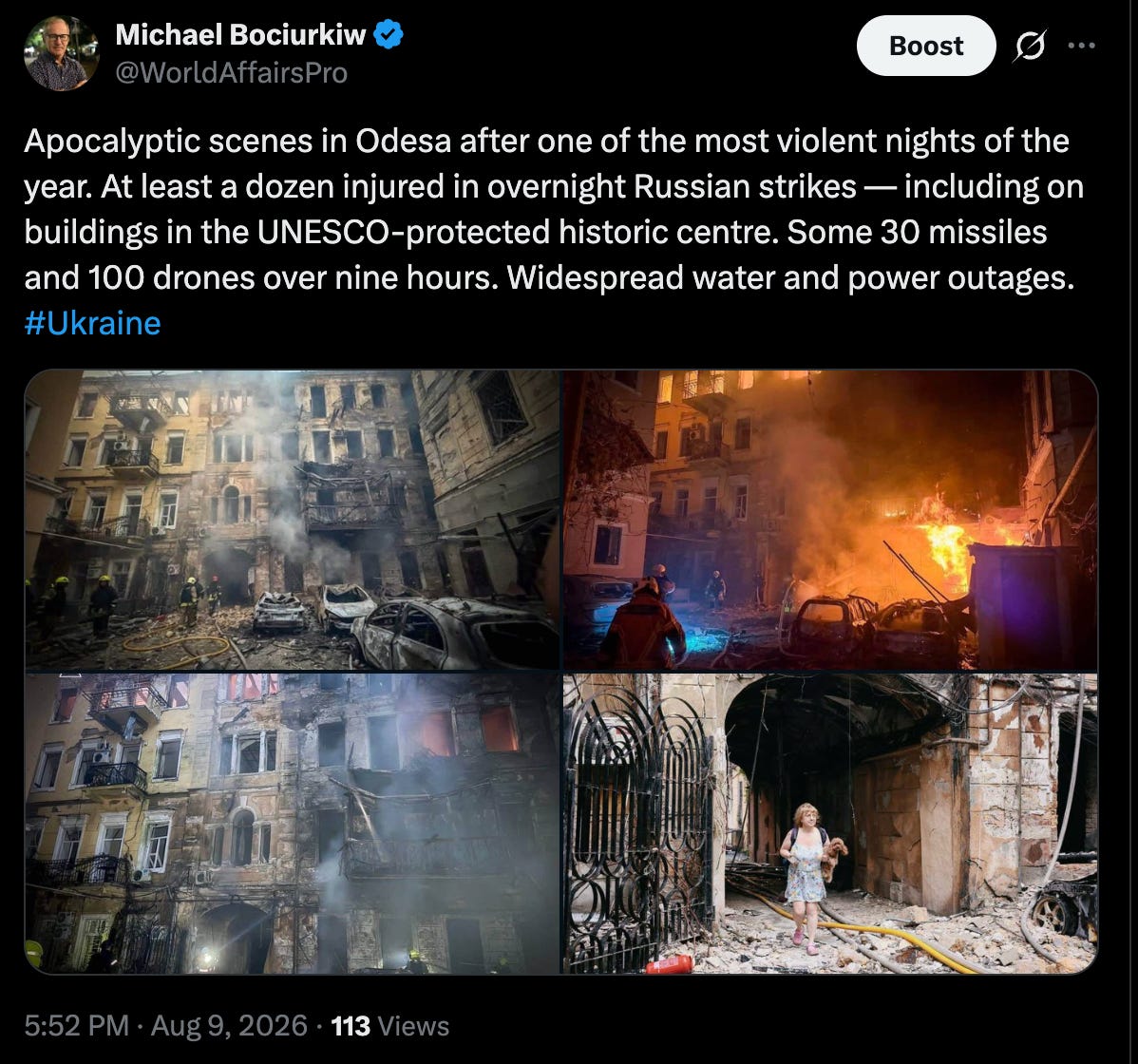
Kyiv has 4,000 shelters for more than 3 million people. Odesa’s problem is the same one, smaller.
The verdict first: Ukraine’s civilian death toll is climbing not only because the interceptors have run out, but because there is nowhere to run to when they do. And this is more than four years into the war.
RFE/RL and Current Time reported this week from Kyiv’s Desnyanskiy district — Soviet-era blocks, most without basements — where residents describe shelters so overcrowded there is no room to sit, let alone lie down. One mother told the outlet she rides out attacks in her hallway with an 18-month-old rather than attempt an eight-minute walk to a school shelter under fire. The arithmetic is brutal: roughly 4,000 shelters for a city of 3 million-plus, many of them derelict or locked. On one recent night, 56,000 Kyivans slept in metro stations with tents and mats — under two percent of the population, and a scene that hasn’t been common since spring 2022.
The context is the escalation. With the front lines barely moving, Moscow has shifted weight to the air campaign: 17 killed in a single night in the Kyiv region this week, with Ukrainian air defences failing to down a single ballistic missile. The UN logged 1,396 civilian deaths in the first half of 2026, up 37 percent year on year. Overnight on August 8, three generations of one family were killed in Pukhovka — a grandfather, grandmother, and a three-year-old boy.
And then the blame game, which is where this story turns from tragedy to scandal. Mayor Vitali Klitschko says district administrations sat on more than $11 million allocated for shelter construction in 2025 and left most of it unspent — while noting he lacks the authority even to reprimand a district head. The Desnyanskiy administration fires back that the city holds the powers and the budget, and that nobody has ever defined how many shelters Kyiv actually needs. Meanwhile the fastest fix on offer — prefabricated reinforced-concrete boxes that bolt together in two or three days and stop shrapnel if not a direct hit — arrived in Kyiv only last December, and was paid for by local businesses.
Video: Odesa dispatch
Kyiv’s shelter shortage is a national condition, not a capital one. Filmed in Odesa: what it actually takes to reach cover when the alert sounds: the locked doors, the distances, the stairwells that were never built for this.
As President Donald Trump relies on special envoys to conduct diplomacy in the Middle East, ambassadorial posts in the region remain vacant — while the Iran war provides a real-time test of his approach. Excluding Israel, the conflict with Iran has ensnared a dozen Middle Eastern countries that have normalized relations with the US, and half of them lack a Senate-confirmed US ambassador; only one, Egypt, has an active nominee. The openings span close US regional partners that host critical US military assets, face the threat of Iranian attack, and play central roles in negotiations on the war. Oman and Bahrain are the only two Gulf states with serving US ambassadors, and both are technically holdovers from President Joe Biden’s time in office. The current administration expresses confidence in its diplomatic framework, which relies on regional leaders’ direct dialogue with Trump, Cabinet members, and special envoys like his longtime friend Steve Witkoff and son-in-law Jared Kushner. But former ambassadors who have served in administrations of both parties told Semafor that they fear the vacancies have made it more difficult for the US to communicate with allies during a rapidly evolving war.
The journals….