🔥 World Briefing Hot Take
Russia’s war in Ukraine has decisively left the battlefield - and Europe is only now grasping how far it has spread. What began with tanks, missiles, Iranian-supplied drones and trenches has morphed into a hybrid campaign with no clear front lines and no geographic limits. From suspected sabotage inside German naval shipyards to Russian satellites shadowing, intercepting, and potentially disabling European space assets, Moscow is testing Europe’s resilience across domains most civilians never see - but utterly depend on.
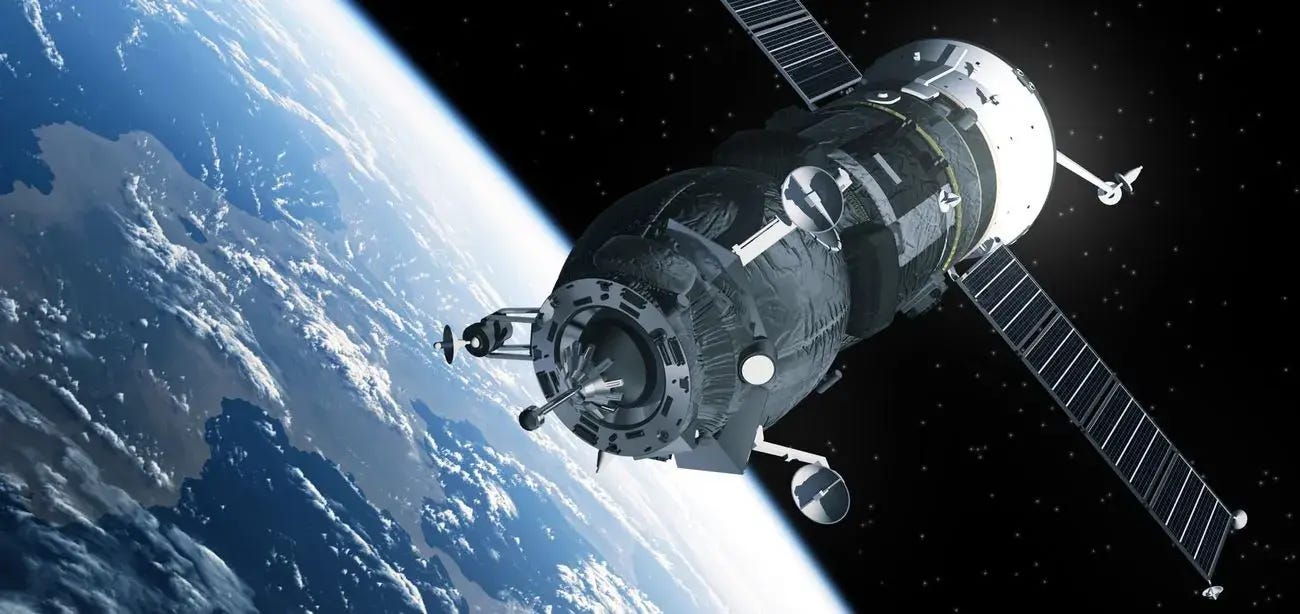
The alleged activities of Russia’s Luch satellites mark a dangerous escalation. Space is no longer just a backdrop for modern warfare; it is an active arena. European officials warn that Russian spacecraft are positioning themselves inside narrow communications beams, siphoning data, jamming signals, and even gaining the ability to manipulate satellite trajectories. Combined with persistent GPS interference, undersea cable damage, and now port-side sabotage, the message from Moscow is blunt: critical infrastructure whether on the seabed, in a harbour, or in orbit - is fair game. As one German official put it, satellite networks are the Achilles’ heel of modern societies. Whoever controls or cripples them can paralyse nations without firing a single shot.
What makes this moment especially perilous is that it still sits below the threshold of open war. President Vladimir Putin has refined a model that spreads fear, drains security resources, and probes Western red lines without triggering a NATO response. Europe is discovering that deterrence built for tanks and troops is ill-suited for grit poured into ship engines or signals hijacked in space. Ukraine was the opening act. The wider test now is whether Europe recognises that hybrid war isn’t a sideshow - it’s the main event, unfolding above our heads as much as on the ground.
As we approach the four-year mark of Russia’s full-scale invasion of Ukraine, a fundamental question looms: what, exactly, triggers NATO’s Article 5 collective defence? Video credit: Foreign Correspondents’ Club, Hong Kong
News brief: Russian spy spacecraft can manipulate the paths of key European satellites’ and even crash them, security officials say. It comes as European officials said they believe two Russian space vehicles have intercepted the communications of at least a dozen key satellites over Europe. The Russian vehicles, known as Luch-1 and Luch-2, have shadowed European satellites more actively amid growing tensions between Russia and the West since the Kremlin’s full-scale invasion of Ukraine in 2022. Orbital data shows Luch-2 has approached 17 European satellites since it was launched in March 2023. The interceptions not only compromise sensitive information transmitted by European satellites but also allow Moscow to manipulate their trajectories and even crash them, the Financial Times reports. Both Russian satellites are suspected of “doing sigint [signals intelligence] business”, Major General Michael Traut, head of the German military’s space command, told the newspaper. Another senior European intelligence official told the FT that the vehicles deliberately position themselves within the narrow data beams transmitted from Earth-based stations to the satellites. The official warned the satellites are at risk of interference and even destruction at the hands of hostile objects recording their unencrypted command data. German Defence Minister Boris Pistorius said last September that Intelsat satellites used by German armed forces and across the rest of Europe were being shadowed by Russian satellites. Intelsat is a US-Luxembourg firm operating more than 50 satellites used by private companies as well as government agencies. “Satellite networks are an Achilles heel of modern societies. Whoever attacks them can paralyse entire nations,” he said. “The Russian activities are a fundamental threat to all of us, especially in space. A threat we must no longer ignore.” Major General Paul Tedman, head of the UK Space Command, said in October that Russian forces were targeting UK military satellites on a weekly basis. “We’re seeing our satellites being jammed by the Russians on a reasonably persistent basis,” he told the BBC. “They’ve got payloads on board that can see our satellites and are trying to collect information from them.” The allegations come as Russia has ramped up its "hybrid warfare" across Europe, including severing and damaging undersea cables and pipelines, interfering with GPS signals and carrying out drone incursions - Daily Mirror
German authorities on Tuesday detained two men accused of attempting to disable German Navy vessels, amid a broader wave of suspected sabotage incidents across Europe since Russia’s full-scale invasion of Ukraine. The Hamburg public prosecutor’s office said in a statement that a 37-year-old Romanian national and a 54-year-old Greek national had been arrested in Hamburg and a village in northern Greece, respectively. Authorities also searched three properties in Hamburg, Greece and Romania. Prosecutors said the suspects worked at the Port of Hamburg and had carried out acts of sabotage on several corvettes — the smallest class of warship — intended for the German Navy. The damage included pouring some 20 kilograms of grit into an engine, puncturing water lines, removing fuel caps and disabling safety switches. The Hamburg authorities said they were looking into who else might be behind the attacks. German lawmaker Roderich Kiesewetter, from the ruling coalition Christian Democrats, told POLITICO on Tuesday: “The modus operandi and the apparent objective fit a Russian pattern of using targeted acts of sabotage against militarily relevant and critical infrastructure to prepare for attacks and spread terror in Germany through hybrid methods.” Europe has suffered at least 145 sabotage incidents since the beginning of Russia’s full-scale invasion of Ukraine in 2022, according to a study by the AP news agency. The acts, which have tended not to cause fatalities or significant damage, have disrupted Europe by keeping intelligence, police and prosecution assets busy with cross-border investigations. AP reported that Russia has in some cases used common criminals to perform minor acts of sabotage.
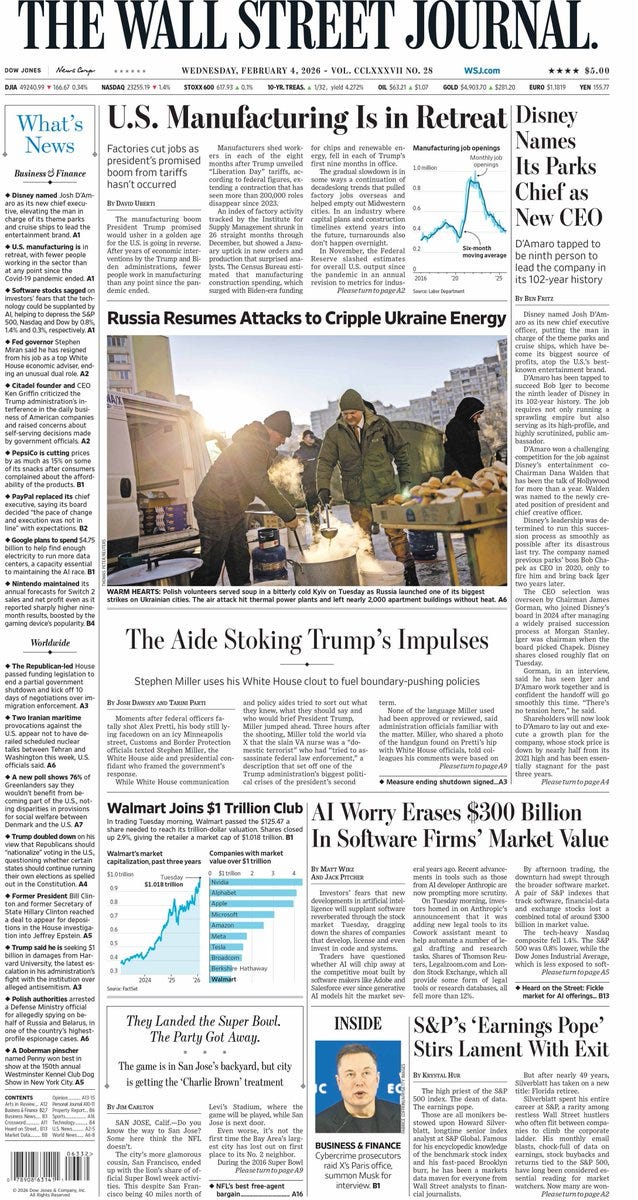
The Kremlin’s resumption of its campaign of air strikes on Ukraine’s energy infrastructure ignited a firestorm of bipartisan calls on Capitol Hill for immediate action to support Kyiv, but a more measured response from the White House. The strikes on February 3 came just days before US-facilitated negotiations were set to resume, underscoring what lawmakers and Ukrainian officials described as a familiar Kremlin tactic: using diplomacy to buy time while ratcheting up strikes in what is already Europe’s bloodiest conflict since World War II. Overnight barrages struck energy infrastructure across multiple regions, knocking out heat and electricity during one of the coldest winter. Ukrainian officials said the attacks left cities freezing and reinforced concerns in Washington that negotiations without enforcement mechanisms risk emboldening Moscow rather than restraining it. White House Press Secretary Karoline Leavitt said President Donald Trump was not surprised by the renewed attacks, describing the collapse of the informal pause in strikes as predictable. Leavitt noted that Russia’s limited commitment to halt attacks on energy targets had expired earlier this month, and that Moscow had never pledged a broader cessation of hostilities. She framed the development as consistent with Trump’s longstanding view that Russia responds only to strength, not goodwill. “His reaction was, unfortunately, unsurprised. These are two countries who have been engaged in a very brutal war for several years,” she said, referring to Trump’s reaction. Privately, administration officials described expectations for the upcoming talks -- expected to include US envoy Steve Witkoff -- as deliberately restrained, emphasizing that the focus is now on testing whether Russia will accept any meaningful constraints on its conduct - RFE/RL
Discounts on Russian oil being offered to Indian refiners have widened over the past 10 days, raising the question of whether processors will be encouraged to snap up cargoes despite a trade agreement with the US that hinges on lower purchases. Russia’s flagship Urals grade is being offered at more than $10 a barrel below Brent, inclusive of shipping and other costs, traders involved in the purchases said, asking not to be named as the information isn’t public. According to market intelligence firm Argus, which puts discounts at around $11 a barrel, the figure stood at $9.15 until Jan. 22. The current markdown is also at least three times the level quoted by traders before the US sanctioned Russian producers Rosneft PJSC and Lukoil PJSC last October. Discounts can vary depending on payment conditions. President Donald Trump announced on Monday that the US would cut import tariffs on Indian goods in exchange for India ceasing to take Russian oil. While Prime Minister Narendra Modi confirmed the pact, he didn’t comment specifically on crude or other details, leaving refiners to pause purchases and seek clarity from New Delhi. India, not traditionally a major buyer of Russian oil, turned to the producer after the invasion of Ukraine in early 2022 — driven by discounts. Purchases have eased over recent months but still averaged around 1.2 million barrels a day in January, according to Kpler, compared with a peak of 2 million barrels a day. India is “unlikely to fully disengage” from Russian oil in the near term, Kpler said in a note on Tuesday. Imports are expected to remain broadly stable in the 1.1 million to 1.3 million barrels a day range through the first quarter and early into the next, the data intelligence firm said. Kpler put Urals discounts at around $9 a barrel to ICE Brent to India, some $4 to $5 cheaper than Venezuelan barrels - Economic Times
Colombian President Gustavo Petro and US President Donald Trump appeared to bury the hatchet on Tuesday (Feb 3), after a year of sparring that culminated in threats by Trump to topple the left-wing leader like in Venezuela. “My impression of the meeting a few hours ago is first and foremost that it was positive,” Petro told reporters after meeting Trump at the White House behind closed doors. Trump said he “got along very well” with the leader whom he recently accused of pumping cocaine into the United States and had warned to “watch his a**” after the fall of Venezuela’s Nicolas Maduro. “He and I weren’t exactly the best of friends, but I wasn’t insulted because I never met him. I didn’t know him at all, and we got along very well,” said Trump at the White House, hours after talks ended. Trump said the two countries were “working on” anti-drug trafficking cooperation, and also on lifting US sanctions that the Republican had placed on the South American country. Fears in Bogota that Petro could be subjected to one of Trump’s famously fiery televised Oval Office confrontations were dispelled when reporters were kept out. Petro also said after the meeting that Trump had agreed to mediate Colombia’s trade war with Ecuador. The South American neighbours have imposed import tariffs of 30 per cent on one another in a dispute over how to tackle drug trafficking - also a major political issue for Trump - AFP
China banned concealed door handles on EVs over safety concerns, the first ruling of its kind in the world. The crackdown targets a design that was popularized by Tesla and has faced scrutiny after a series of high-profile incidents in which people were unable to open car doors following crashes. It’s the latest setback for Tesla in China; Elon Musk’s EV giant saw its first year of declining sales there in 2025 as competition intensified, and he recently signaled a pivot to robots over cars. The ban also casts China as a global “rule-setter”for new vehicle tech, a Shanghai-based consultant said: By moving first, Beijing could “influence global norms” if its safety standards travel with its EV exports - Semafor
The journals….