🔥 World Briefing Hot Take
The emerging picture from U.S. intelligence officials is as extraordinary as it is alarming: Russia - a nuclear-armed rival the United States has cautiously tried to keep engaged diplomatically - may now be helping Iran target American forces in the Middle East. According to officials cited by The Washington Post, Moscow has been passing Tehran the locations of U.S. warships, aircraft and other military assets since the conflict erupted. Analysts say the precision of Iran’s strikes - hitting command-and-control sites and early-warning radar systems - suggests access to far more sophisticated surveillance than Iran possesses on its own. Russia’s space-based intelligence capabilities, refined during years of war in Ukraine, could provide exactly that. “It does seem like it’s a pretty comprehensive effort,” one of the intelligence sources said
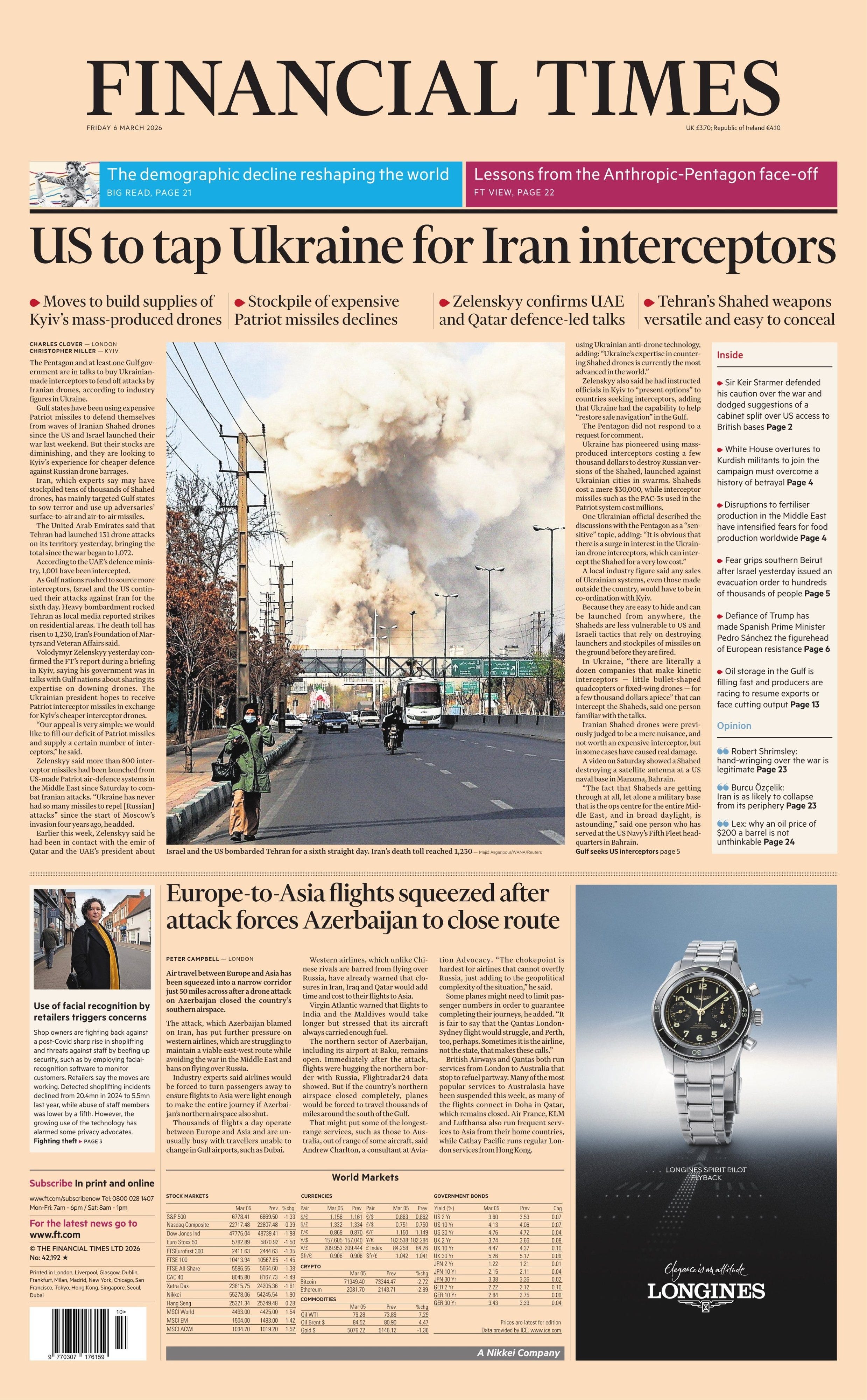
If accurate, the revelation shatters the notion that the widening Gulf conflict is a contained regional confrontation. Instead, it begins to resemble a shadow war between major powers - with Moscow indirectly enabling attacks on U.S. forces while publicly calling for restraint. The paradox is striking: Washington is simultaneously seeking Ukraine’s expertise in intercepting Iranian drones - technology Kyiv perfected under relentless Russian bombardment - even as the Kremlin appears to be aiding the very attacks those systems are meant to stop.
The political implications for Washington are enormous. For years Ukraine has warned that Russia is not a neutral broker in global crises but a driver of instability - whether through energy coercion, military aggression or strategic partnerships with Iran and North Korea. If Moscow is now helping Tehran target U.S. assets, the question is no longer whether Russia is part of the problem. The question is whether Washington is prepared to acknowledge that reality - and recalibrate its approach before the conflict spreads further and the global energy system, already on edge, takes an even greater hit.
Some lawmakers are already sounding the alarm. Congressman Seth Moulton, a Marine veteran, warned that the widening war in the Gulf is not only putting Americans directly at risk but also draining resources from Ukraine’s fight against Russia. The conflict, he noted on MS Now, is consuming large quantities of U.S. air defense interceptors and precision munitions - weapons that could otherwise have been earmarked for Kyiv. Moscow’s reported intelligence support to Tehran, he added, directly “puts Americans in danger.”
News Briefs
Russia is providing Iran with targeting information to attack American forces in the Middle East, the first indication that another major U.S. adversary is participating — even indirectly — in the war, according to three officials familiar with the intelligence. The assistance, which has not been previously reported, signals that the rapidly expanding conflict now features one of America’s chief nuclear-armed competitors with exquisite intelligence capabilities. Since the war began Saturday, Russia has passed Iran the locations of U.S. military assets, including warships and aircraft, said the three officials, who spoke on the condition of anonymity because of the matter’s sensitivity. “It does seem like it’s a pretty comprehensive effort,” one of the people said. Reached by The Washington Post on Friday, Dmitry Peskov, the Kremlin spokesman, declined to comment on the intelligence findings. Moscow has called for an end to the war, which it labeled an “unprovoked act of armed aggression.” The extent of Russia’s targeting assistance to Iran was not entirely clear. The Iranian military’s own ability to locate U.S. forces has been degraded less than a week into the fighting, the officials said. Six U.S. troops were killed and several others were injured by an Iranian drone attack Sunday in Kuwait. Iran has fired thousands of one-way attack drones and hundreds of missiles at U.S. military positions, embassies and civilians, even as the joint American-Israeli campaign has hit more than 2,000 Iranian targets — including ballistic missile sites, naval assets and the country’s leadership. Two of the officials familiar with Russia’s support for Iran said that China did not appear to be aiding Iran’s defense, despite close ties between the two countries. Analysts said that the sharing of intelligence would fit the pattern of Iran’s strikes against U.S. forces, including command and control infrastructure, radars and temporary structures, like the one in Kuwait where six service members were killed. The CIA’s station at the U.S. Embassy in Riyadh, Saudi Arabia’s capital, also was struck in recent days. Iran is “making very precise hits on early warning radars or over-the-horizon radars,” said Dara Massicot, an expert on the Russian military at the Carnegie Endowment for International Peace. “They’re doing this in a very targeted way. They’re going after command and control,” she added. Iran possesses only a handful of military-grade satellites, and no satellite constellation of its own, which would make imagery provided by Russia’s much more advanced space capabilities highly valuable — particularly as the Kremlin has honed its own targeting after years of war in Ukraine, Massicot said. Nicole Grajewski, who studies Iran’s cooperation with Russia at the Harvard Kennedy School’s Belfer Center, said that there had been a high level of “sophistication” in the Iranian retaliatory strikes, both in what Tehran has targeted and in its ability in some cases to overwhelm U.S. and allied defenses. “They’re getting through air defenses,” she said, noting that the quality of Iran’s strikes appeared to have improved even from its 12-day war with Israel last summer. The Pentagon is quickly burning through its supply of precision arms and air defense interceptors, people familiar with the matter have told The Post, underscoring concerns raised by Gen. Dan Caine, chairman of the Joint Chiefs of Staff, as President Donald Trump deliberated whether to approve the operation. The administration has sought to downplay Caine’s assessment. Russia’s assistance reshuffles how various countries have engaged in a proxy war since Russia’s 2022 full-scale invasion of Ukraine. Throughout that conflict, U.S. adversaries including Iran, China and North Korea have provided Russia with either direct military aid or material support for Moscow’s vast defense industry. The United States has given Ukraine tens of billions of dollars’ worth of military equipment and shared intelligence on Russian positions to improve Kyiv’s targeting - Washington Post
As Washington’s Middle Eastern allies use US-made Patriot air defence systems to shoot down Iranian missiles and drones, Ukraine is about to face a dire shortage of ammunition for them. Experts have told Al Jazeera that Russian President Vladimir Putin is sure to exploit the shortage of pricey guided missiles the truck-mounted Patriots launch at machine gun speed to down his pride and joy, Russia’s ballistic missiles that he once declared were “indestructible”. Their supply to Ukraine began in 2023 and was initially limited to several batteries stationed in the capital, Kyiv. The location of the systems was constantly changed to protect them from Russian attacks. The Patriots “have undoubtedly been the most important defence element, especially for cities with more than a million residents, Kyiv in particular, even though they couldn’t intercept all Russian missiles,” Nikolay Mitrokhin of Germany’s Bremen University told Al Jazeera.
But a shortage underscores a deeper problem – poor defence of Ukraine’s infrastructure, including power generation and transmission stations, against Russian strikes, he added. With or without the guided missiles, Ukraine’s energy infrastructure is “doomed,” because even though Russia would not dare strike Ukrainian nuclear power stations, the Patriot systems cannot protect all key transmission lines, he said. “The key question is how to stop Russia from manufacturing and using missiles, not about how many more guided missiles or Patriot systems Ukraine needs,” he concluded - Al Jazeera
Iran and the US have made overtures to end their widening war, though officials are skeptical that either side is ready to seek peace. Tehran has reportedly sought negotiations after the conflict erupted, although its leaders have publicly remained defiant. Earlier this week, US President Donald Trump said he had agreed to talks, but has since said that it is now “too late.” Even the possibility of an imminent truce, though, highlights the need for a plan for the peace. Trump had suggested Iranians would overthrow their government, but lately hinted that regime moderates could take over. US lawmakers have, however, expressed skepticism that there was a meaningful post-war plan - Semafor
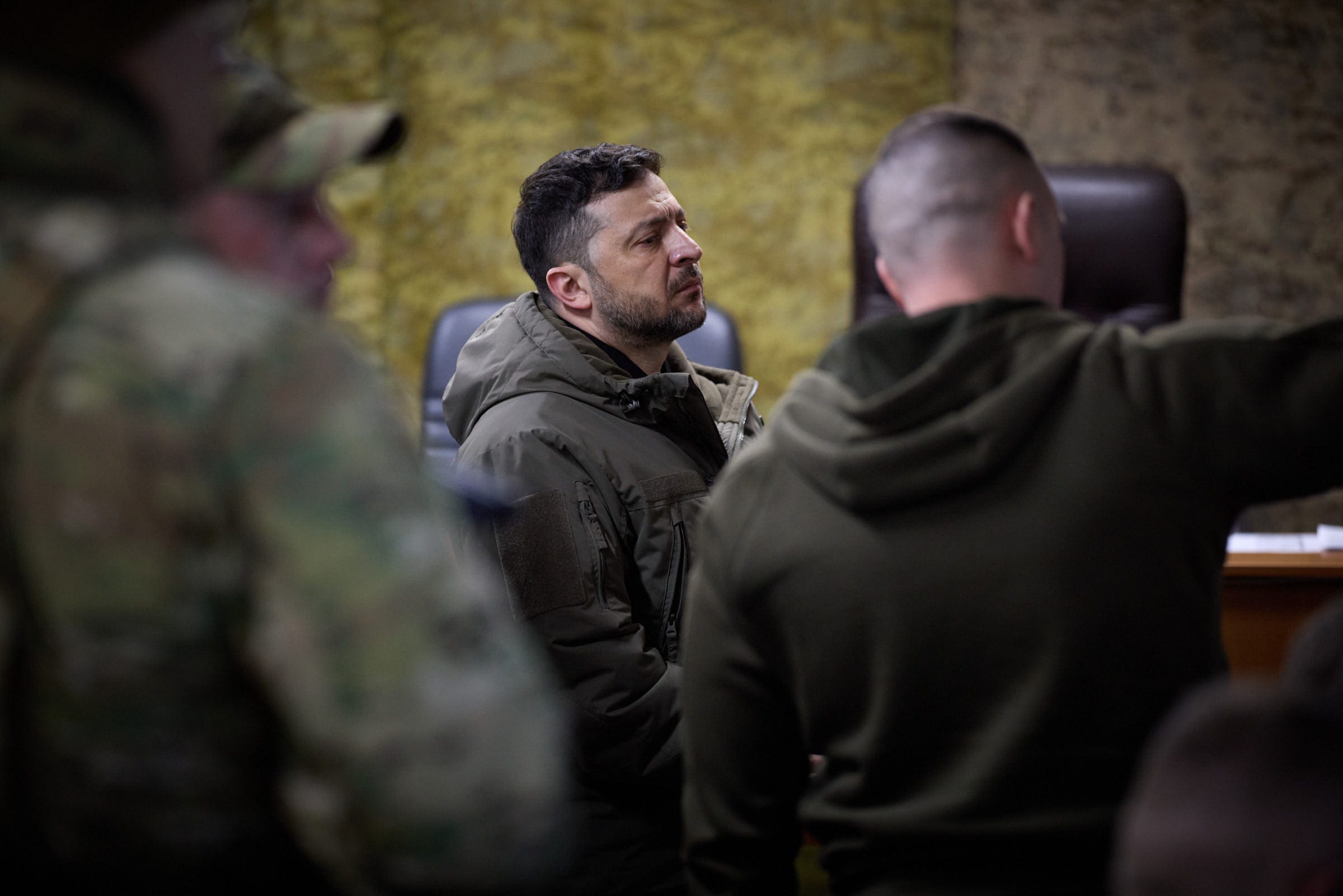
The European Commission on Friday rebuked Ukrainian President Volodymyr Zelenskyy over remarks that Hungary interpreted as a threat against Prime Minister Viktor Orbán. Zelenskyy alluded Thursday to giving the address of a “certain person” — widely understood to mean Orbán — to Ukrainian troops for a direct talk “in their own language.” Hungary took offense to the remarks, as an intensifying spat between Kyiv and Budapest threatens to run out of control. “Specifically in relation to the comments made by President Zelenskyy, we are very clear as the European Commission that that type of language is not acceptable. There must not be threats against EU member states,” Commission deputy chief spokesperson Olof Gill told reporters Friday, in a rare condemnation of the leader in Kyiv. Ukraine on Friday accused Hungary of kidnapping seven employees of the state-owned Oschadbank and seizing millions in cash and gold, while Orbán had vowed on social media Thursday to “break the Ukrainian oil blockade by force.” After his emotional outburst on Thursday, Zelenskyy said he was ready to repair and restart the pipeline in a month if the EU officially requests it and promises Orbán will unblock the €90 billion loan. Tensions between Ukraine and Hungary have escalated in recent weeks as Budapest continues to veto a €90 billion loan package for Kyiv. Orbán’s core complaint remains the halt of Russian oil flowing through the Soviet-era Druzhba pipeline, which Budapest believes Kyiv has deliberately shut off. Ukraine denies Orbán’s allegation, saying the pipe was severely damaged by a Russian drone attack in January - Politico

Connecting the geopolitical dots so you don’t have to. Become a paid subscriber and join the inner circle.
Air travel between Europe and Asia has been squeezed into a narrow corridor just 50 miles across after a drone attack on Azerbaijan closed the country’s southern airspace. The attack, which Azerbaijan blamed on Iran, has put further pressure on western airlines, which are struggling to maintain a viable east-west route while avoiding the war in the Middle East and bans on flying over Russia. Industry experts said airlines would be forced to turn passengers away to ensure flights to Asia were light enough to make the entire journey if Azerbaijan’s northern airspace also shut. Thousands of flights a day operate between Europe and Asia and are unusually busy with travellers unable to change in Gulf airports, such as Dubai. Western airlines, which unlike Chinese rivals are barred from flying over Russia, have already warned that closures in Iraq, Iran and Qatar would add time and cost to their flights to Asia. Virgin Atlantic warned that flights to India and the Maldives would take longer but stressed that its aircraft always carried enough fuel. The northern sector of Azerbaijan, including its airport in Baku, remains open. Immediately after the attack, flights were hugging the northern border with Russia, Flightradar24 data showed. But if the country’s northern airspace closed completely, planes would be forced to travel thousands of miles around the south of the Gulf - Financial Times

Asian carriers like Cathay Pacific Airway and Singapore Airlines are among the best positioned airlines to weather the war in the Middle East as travellers scramble for flights – and pay huge premiums – to escape the conflict. Asian airlines have emerged as one of the go-to choices for people leaving the Middle East in the wake of US and Israeli strikes on Iran. Extensive airspace closures mean carriers like Emirates and Qatar Airways QCSC have essentially ground to a halt, creating opportunities for rivals that can fly non-stop between Europe and Asia. Passengers in European hubs are handing over huge sums of money to secure a seat to Asia on flights that bypass the Middle East. A one-way economy ticket flying Singapore Airlines from Heathrow to Singapore on March 5 costs HK$66,767 (S$10,916) – a 900 per cent increase on fares later in the month. The same ticket on a flight to Hong Kong is HK$26,737, compared with HK$5,670 in just a few weeks from now. But it’s unclear how long such sky-high fares, which are also helping absorb the surge in oil prices resulting from the war, will last. While prolonged disruptions would underpin higher fares for longer, a resolution to the conflict likely comes with a swift resumption of operations for the region’s carriers given the Middle East’s critical importance to global travel and trade flows. “Asian airlines may see a short-term combination of higher fares, stronger cargo yields and modest market share gains,” said Linus Benjamin Bauer, founder of aviation advisory firm BAA & Partners. “But this is fundamentally a redistribution of traffic, not a structural rebalancing of global aviation networks.” Business Times
After six days of airspace disruptions due to the conflict between US-Israel and Iran, Emirates has said that it expects to return to full flight capacity in the “coming days”. Following the partial re-opening of regional airspace, the Dubai-based carrier has been operating a reduced flight schedule while working to restore full network operations. On Thursday, it carried approximately 30,000 passengers out of Dubai and by Saturday it will have 106 daily return flights operating to 83 destinations – almost 60% of its route network. “The airline anticipates a return to 100% of its network within the coming days, subject to airspace availability and the fulfilment of all operational requirements,” an Emirates statement said on Friday. “Safety, as ever, remains paramount as is our duty of care.” - Euronews
Canadians are known for their kindness, but the geese aren’t earning that same reputation at Tallahassee’s Florida A&M University. In footage captured by student Naike Owens, a Canadian goose prowls the green, chasing students. In one instance, Owens captured the goose flying head-on at an innocent bystander and pulling her hair. The woman falls over multiple times in an attempt to get away. The goose continues to waddle toward her until it begins to look for new victims. Owens, safe from the goose’s violent attacks in the shelter of her car, can be heard laughing in the background of the video. Unflappable, the goose leaves the woman alone and decides to chase after a nearby group of people instead. It’s unclear how long the rampage continued. Spring is the most dangerous time to be around geese, as it is their breeding season. They tend to be more aggressive and territorial during that time - The Daily Beast
The journals….