🔥 World Briefing Hot Take: Astonishing Timing
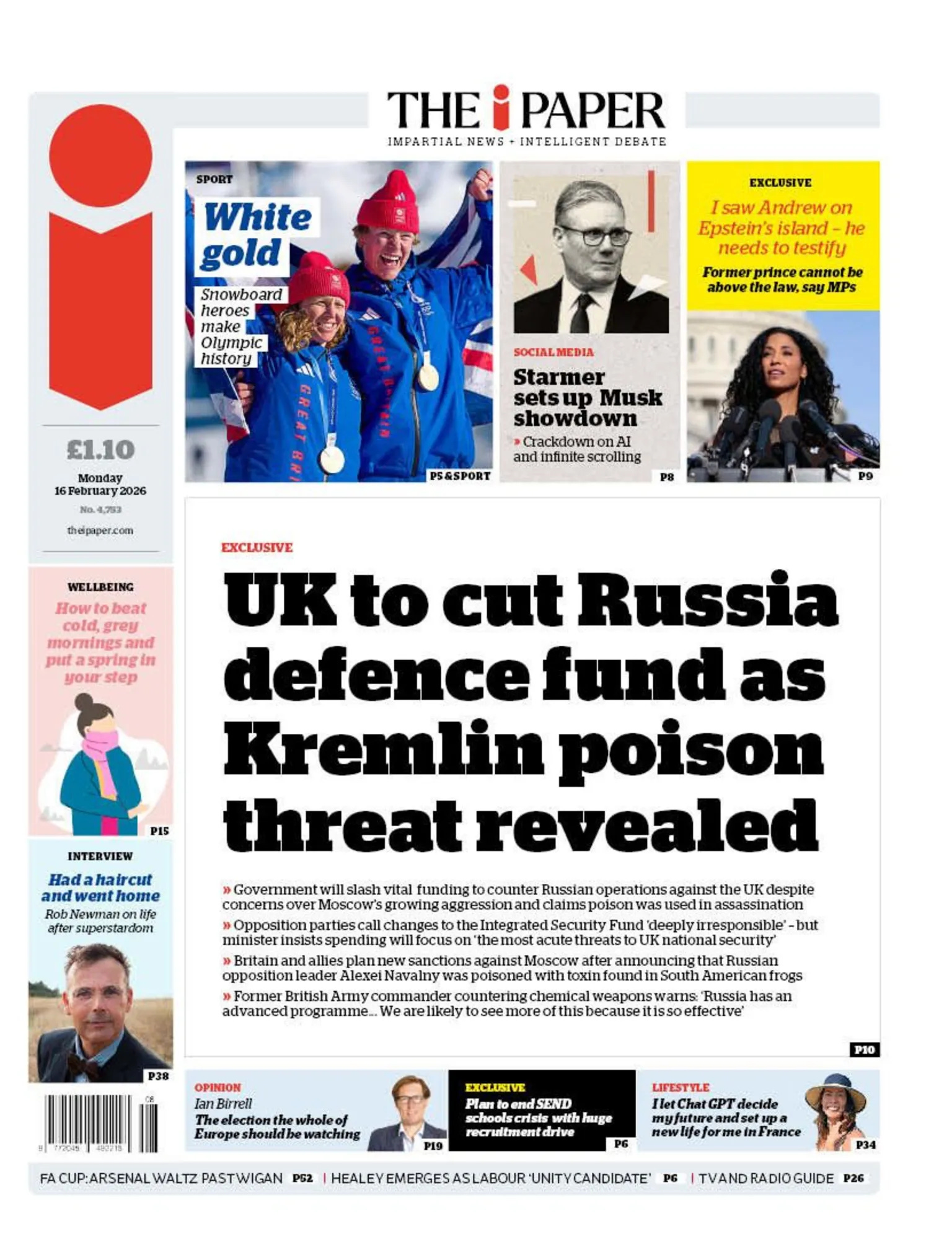
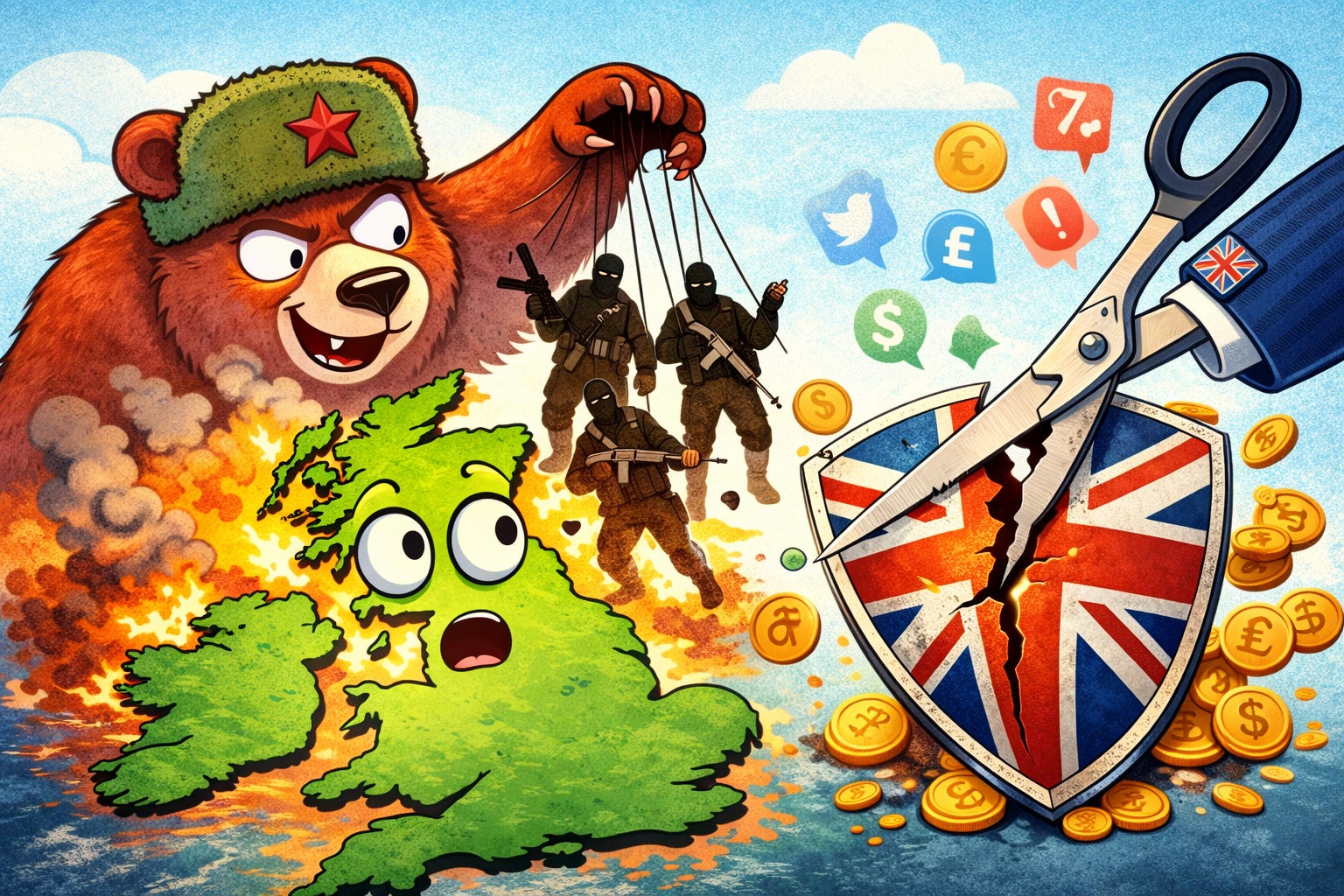
The UK openly admits it is a “top-tier target” for Russian hybrid warfare. Its own officials warn of rising aggression from Moscow. Prime Minister Keir Starmer stood in Munich and declared: “We must be able to deter aggression, and, yes, if necessary, we must be ready to fight.” And yet - London is cutting domestic counter-Russian threat funding by more than 20 percent.
The timing is astonishing.
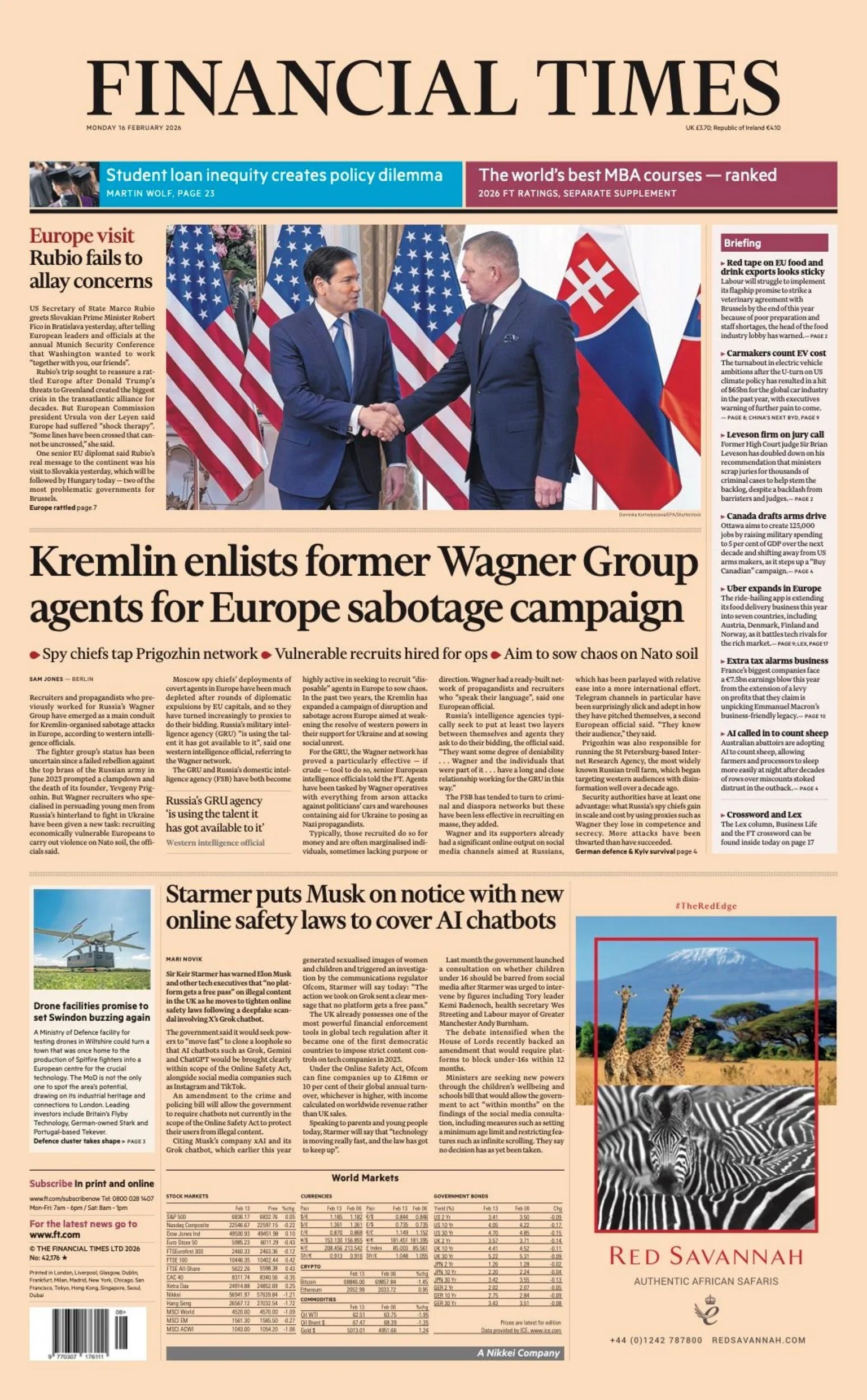
The Financial Times reports that recruiters and propagandists formerly linked to Russia’s Wagner Group are now serving as a conduit for Kremlin-backed sabotage operations across Europe. With Russian diplomats and spies expelled from EU capitals, Moscow has adapted - deploying proxies to recruit marginalized Europeans for arson, vandalism, disruption, and information warfare. Telegram channels are slick. Recruitment is opportunistic. The agents are “disposable.”
This is not theoretical.
The UK has already experienced the Salisbury poisoning in 2018, when many lethal doses of Novichok were used. Russian vessels have been accused of mapping submarine cables and even shining military-grade lasers at RAF aircraft. A warehouse in Britain storing aid for Ukraine was set ablaze in 2024. British infrastructure and businesses remain prime cyber targets.
At precisely the moment Moscow expands its shadow war, Britain trims the budget designed to counter it.
And London is not alone. Across Europe there remains a dangerous gap between rhetoric and readiness - an unwillingness, or inability, to put societies on anything resembling a war footing despite nearly four years of full-scale war on the continent.
Credit where it is due: many European capitals expelled large numbers of Russian diplomats and suspected intelligence officers after the invasion. Canada, by contrast, has not expelled a single Russian diplomat since February 2022. One might assume Ottawa believes only Boy Scouts are dispatched to Moscow’s embassy in Canada. Readers can be assured that is not the case.
Nearly four years into this war, the West still talks about deterrence. But deterrence requires investment, resilience, and political courage.
Budgets are policy. And right now, some of them send a troubling signal.
News Briefs
Recruiters and propagandists who previously worked for Russia’s Wagner Group have emerged as a main conduit for Kremlin-linked sabotage attacks in Europe, according to western intelligence officials. The fighter group’s status has been uncertain since a failed rebellion against top brass of the Russian army in June 2023 prompted a clampdown and the death of its founder, Yevgeny Prigozhin. But Wagner recruiters who specialised in persuading young men from Russia’s hinterland to fight in Ukraine have been given a new task: recruiting economically vulnerable Europeans to carry out violence on NATO soil, the officials said. Moscow spy chiefs’ deployments of covert agents in Europe have been depleted after rounds of expulsions by EU capitals, and so they have turned increasingly to proxies to do their bidding. Russia’s military intelligence agency (GRU) “is using the talent it has got available to it,” said one Western intelligence official, referring to the Wagner network. The GRU and Russia’s domestic intelligence network (FSB) have both become highly-active in seeking to recruit “disposable” agents in Europe to sow chaos. In the past two years, the Kremlin has expanded a campaign of disruption and sabotage across Europe aimed at weakening the resolve of western powers in their support for Ukraine and at sowing social unrest. For the GRU, the Wagner network has provided a particularly effective - if crude- tool to do so, European intelligence officials told the FT. Agents have been tasked by Wagner operatives with everything from arson attacks against politicians’ car and warehouses containing aid for Ukraine to posing as Nazi propagandists. Typically, those recruited to do so for money and are often marginalized individuals, sometimes lacking purpose or direction. Wagner had a ready-built network of propagandists and recruiters “who speak their language,” said one European official. Russian intelligence agencies typically seek to put at least two layers between themselves and agents they ask to do their bidding, the official said. The FSB has tended to turn to criminal and diaspora networks but these have been less effective in recruiting en masse, they said. Wagner and its affiliates already had a significant online output on social media channels aimed at Russians, which have been parlayed with relative ease into a more international effort. Telegram channels in particular have been surprisingly slick and adept in how they have pitched themselves, a second European official said. “They know their audiences,” they said. Security officials have at least one advantage: what Russia’s spy chiefs gain in scale and cost by using proxies such as Wagner they lose in competence and secrecy.” - FT
The UK government will slash “vital” domestic spending to counter Russian threats by more than a fifth over the next three years, despite major concerns over rising aggression from Moscow. Ministers last week announced a shift in funding allocations for the Integrated Security Fund (ISF), a cross-government fund tackling the “highest priority threats to national security”, both in the UK and abroad. It comes despite both Sir Keir Starmer and his Foreign Secretary Yvette Cooper warning of the growing danger posed by Russia in the coming years, and follows criticism from former US officials over the level of UK defence spending. It also follows the claim that the Kremlin killed anti-Putin activist Alexei Navalny using a toxin from an Ecuadorian poison dart frog. Speaking at the security conference in Munich, the Prime Minister called on his fellow European leaders not to dither as “Russia has proved its appetite for aggression” with its invasion of Ukraine. And he added: “We must be able to deter aggression, and, yes, if necessary, we must be ready to fight.” In a written ministerial statement released last week, Security Minister Dan Jarvis said that there would be changes to the ISF that will “focus programming funding towards the most acute threats to UK national security…This includes increasing the ISF’s investment in its two largest areas of spend: countering Russian aggression, including in Ukraine; and strengthening the Cyber and Tech capabilities of the UK and our allies.” But figures released as part of the statement show domestic spending to counter Russian threats – called “non-Official Development Assistance” – will fall from £59.5m in 2026/27 to £46.7m in 2028/29, a drop of more than 20 per cent. Over the same period, spending on domestic cyber and tech to counter cyber attacks, will also be cut from £113.3m to £95m, or by around 16 per cent. This is despite the UK being described as a “top tier target” for Russian hackers by experts, as Moscow seeks to wage its hybrid war against the West, targeting major businesses in the UK as well as the NHS. Opposition parties have criticised the cut in spending, with Liberal Democrat defence spokesman James MacCleary warning that as the Kremlin “intensifies its shadow warfare against the British people, this Government remains dangerously asleep at the wheel. “These are not abstract risks; they are direct attacks on our infrastructure, our democracy, and our safety,” he added - I-Paper
As the United States heads toward the midterm elections, there are growing concerns among some political scientists that the country has moved even further along the path to some form of autocracy. Staffan I. Lindberg, the director of Sweden's V-Dem Institute, which monitors democracy across the globe, says the U.S. has already crossed the threshold and become an "electoral autocracy." Steven Levitsky, a professor of government at Harvard University and co-author of How Democracies Die, agrees. “I would argue that the United States in 2025-26 has slid into a mild form of competitive authoritarianism,” Levitsky said. “I think it’s reversible, but this is authoritarianism.” Under competitive authoritarianism, countries still hold elections, but the ruling party uses various tactics — attacking the press, disenfranchising voters, weaponizing the justice system and threatening critics — to tilt the electoral playing field in its favor. Levitsky cited what he considers two strikingly autocratic moments that occurred in September. First, the Trump administration threatened ABC’s parent company, Disney, following Jimmy Kimmel’s comments on the killing of Charlie Kirk. “We can do this the easy way or the hard way,” Brendan Carr, the chairman of the Federal Communications Commission, warned. A week later, President Trump proposed that U.S. generals use American cities as training grounds for their troops. “We’re under invasion from within,” Trump said to a gathering of military brass in Quantico, Virginia. “No different than a foreign enemy, but more difficult in many ways because they don’t wear uniforms.” Levitsky said this is the kind of language dictators in South America used in the 1970s — leaders like Augusto Pinochet in Chile. A smaller number of scholars reject the portrayal of Trump as a would-be autocrat. They say he is expanding executive power to address the excesses of his predecessor, former President Joe Biden - NPR
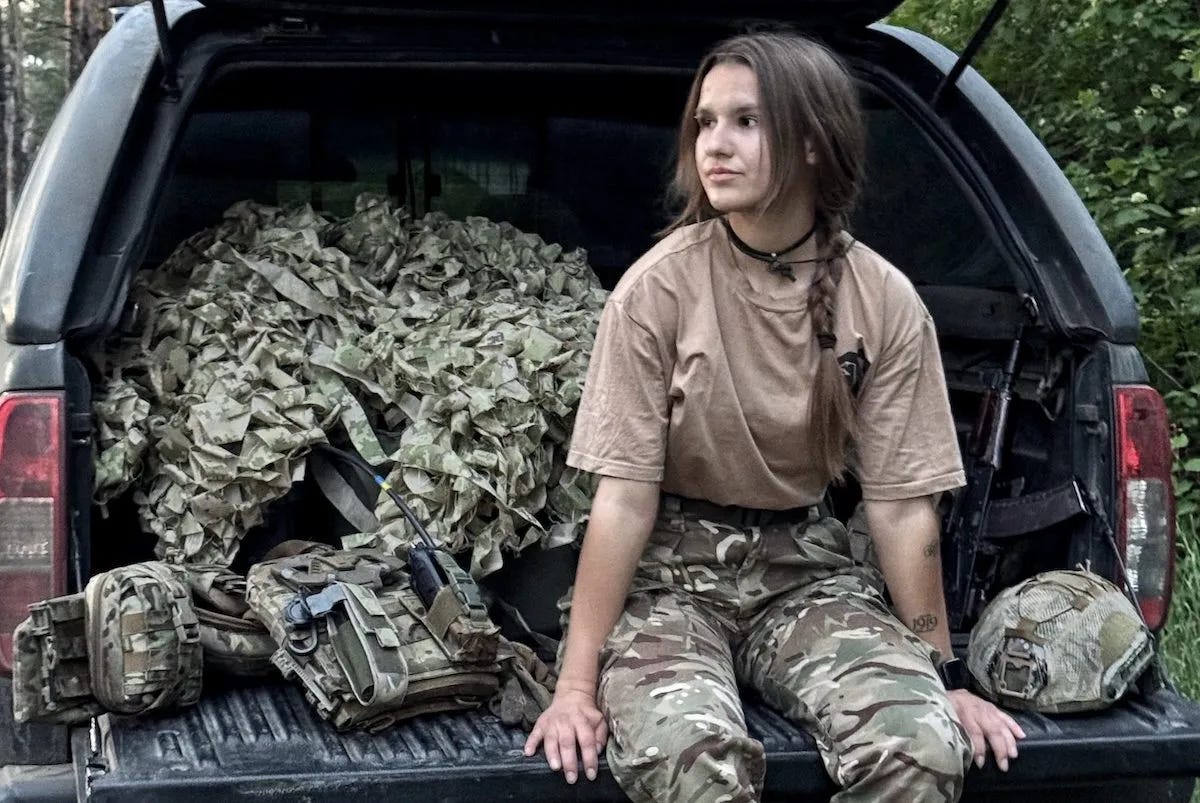
While women still make up only a small share of the Ukrainian Armed Forces, their numbers have risen sharply since before Russia’s full-scale invasion four years ago, and they now serve across nearly every specialty. Some joined after their husbands were killed in the war; some enlisted to avenge other loved ones lost to the invading army. According to Ukraine’s military, more than 70,000 women were serving at the start of 2025, including roughly 5,500 in combat roles. In November, one Ukrainian servicewomen said that around 20,000 women were serving in combat roles. Until recent reforms, Ukrainian women were formally barred from most combat roles, restrictions that were only fully lifted after Russia’s full-scale invasion in 2022. That shift has begun to take institutional form on the battlefield. Ukraine’s National Guard recently deployed its first all-female FPV drone strike crew, a unit operating entirely without men. The team drives its own vehicles, assembles its own munitions and conducts live attack missions along the front. Commanders said the unit emerged after it emerged that some female operators performed better when freed from constant scrutiny in mixed-gender teams. Ukraine’s Unmanned Systems Forces have also fielded all-female strike units, including the “Harpies,” which recently received a customized Vampire bomber drone developed specifically for women operators. Ukrainian servicewomen were previously issued uniforms and body armor designed for men, a mismatch that many said affected mobility and safety. Ukraine’s military plans to begin issuing female-specific body armor this year, following the approval of interim anatomical padding and women’s underwear, as part of efforts to adapt standard equipment to female soldiers while maintaining protection standards - Asia Times
Ukraine’s state anti-corruption agencies on Monday charged former Energy Minister German Galushchenko with money laundering and taking part in a criminal organization, a day after he was arrested at the Ukrainian border during an attempt to flee the country. The crackdown is part of the ongoing Operation Midas, which is investigating the $100 million corruption plot in Ukraine’s state nuclear energy sector that rocked the inner circle of President Volodymyr Zelenskyy last year. According to the National Anti-Сorruption Bureau of Ukraine (NABU), Galushchenko and his family members became investors in a fictitious investment fund, created to launder the $100 million siphoned out of Ukrainian state nuclear energy company Energoatom. “To conceal his involvement, two companies were created in the Marshall Islands, integrated into the structure of a trust registered in Saint Kitts and Nevis. The high-ranking official’s ex-wife and four children were registered as beneficiaries of the companies,” NABU said in a statement Monday. NABU did not name Galushchenko directly, but described him as Ukraine’s energy minister in 2021-2025 in its official communication about the case. Galushchenko was the only energy minister serving from 2021 until July 2025. Detectives, with the help of anti-corruption authorities from 13 countries, established that money was transferred out of the fund to accounts in Swiss banks. “Over $7.4 million was transferred to the accounts of the fund, which was managed by the suspect’s family. Another over 1.3 million Swiss francs and 2.4 million euros were issued in cash and transferred directly to the family in Switzerland,” NABU said. “Some of these funds were spent on paying for the children’s education in prestigious institutions in Switzerland and were placed in the accounts of his ex-wife. The rest was placed on a deposit, from which the family of the high-ranking official received additional income and spent it on their own needs,” the detectives added - Politico
A diplomatic dispute between Japan and China over the security of Taiwan is weighing on the Japanese economy, which is heavily dependent on Chinese tourists. China has urged its citizens to refrain from traveling to Japan as retaliation over a remark made in November by the Japanese prime minister, Sanae Takaichi, that aggravated Beijing. Ms. Takaichi suggested that Japan would come to the defense of Taiwan, which China claims as its territory, in the event of a Chinese invasion. Chinese travelers, the largest source of inbound tourism and tourist spending in Japan, have pulled back sharply. Arrivals fell 45 percent in December from a year earlier. On Monday, data released by the Japanese government revealed that inbound tourist spending dropped 2.8 percent to $45.6 billion in the last three months of last year. It was the first year-on-year decline in more than four years. Overall, Japan’s economy grew 0.2 percent in the quarter, the report showed. China in recent years has accounted for around a quarter of all foreign visitors to Japan, according to official figures. The Japan National Tourism Organization reported recently that Chinese tourists spent about a fourth more than other visitors last year - NYT
The journals…..