

China Builds Parallel Systems in Russian-Occupied Ukraine
A new investigation by Ukrainian outlet Babel and the Eastern Human Rights Group reveals how China is quietly embedding itself into the economic, communications, and cultural infrastructure of Russian-occupied Ukrainian territories — without holding any official role.
The research, based on insider information, business interviews, and analysis of financial flows, was led by human rights advocate Pavlo Lysianskyi, who founded the Eastern Human Rights Group in 2014. Lysianskyi died in a road accident in November 2024 before completing the work; his team published the findings without him.
Telecommunications is the most visible footprint. When Russian forces capture a city, they sever Ukrainian networks and reconnect them through the company Miranda-Media using Chinese hardware. Huawei supplies servers, antennas, and routers. Around 6,000 Huawei base stations have been deployed across occupied southern and eastern Ukraine, covering not just cities but villages and road corridors.
Finance has shifted to the yuan as dollars and euros are unavailable. Promsvyazbank - which controls over 70% of financial operations in the occupied territories — had opened 79 yuan exchange points by end of 2025, turning over an average of 12.3 million yuan daily. This allows Russian authorities to conduct trade and payments as though Western sanctions do not exist. From February 1, 2025, businesses have been required to install online cash registers - almost all Chinese-made - giving authorities visibility over every transaction. Russia is offering tax rebates of up to 28,000 rubles per device to accelerate uptake.
Industry is also dependent on Chinese involvement. The Karansky quarry in Donetsk runs on Chinese equipment maintained by Chinese engineers; without them, production halts. Its output is used for Russian road and housing construction in the occupied territories.
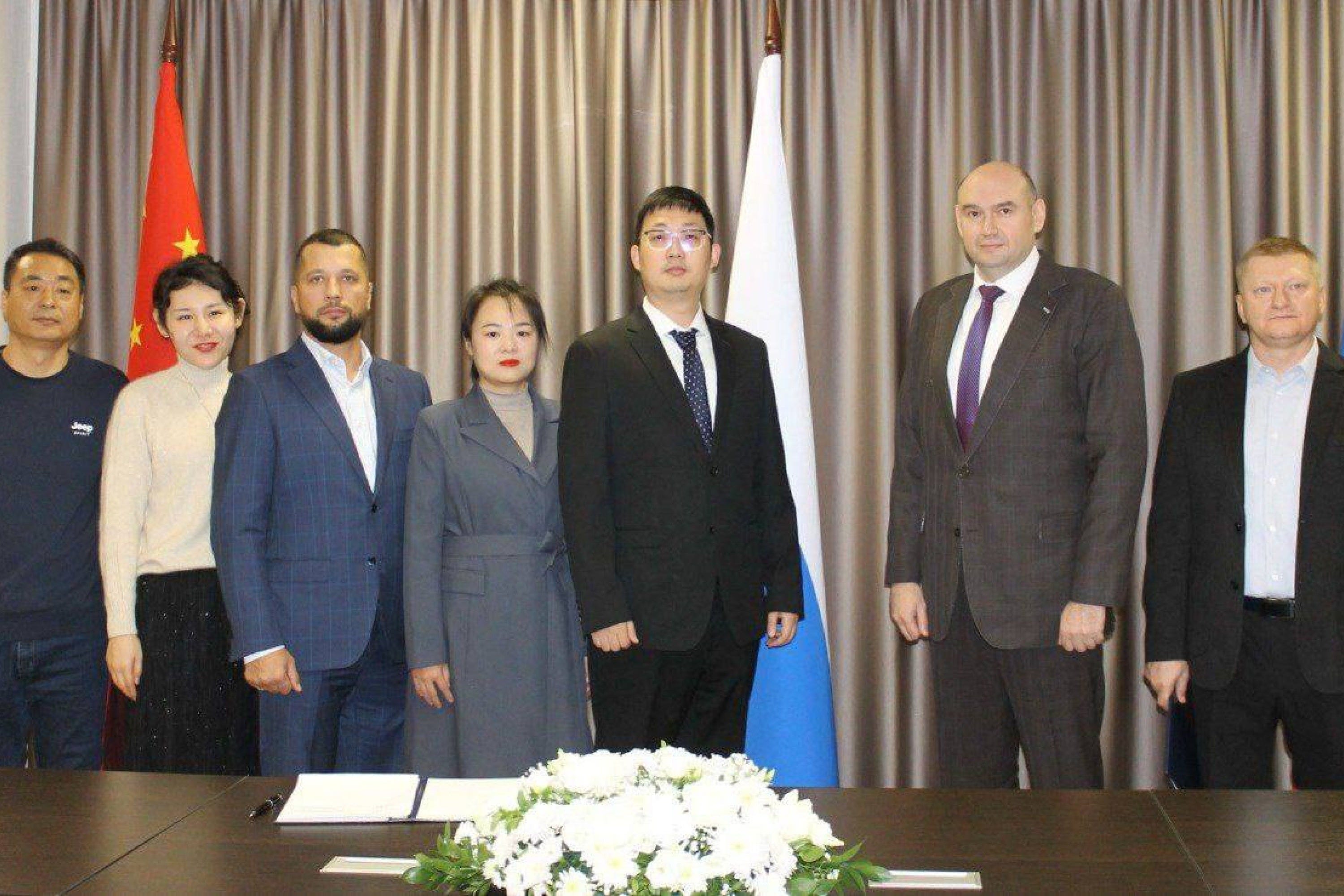
Education and culture are the newest front. A Chinese citizens’ initiative group is registering a private school for approximately 300 Chinese students in occupied Luhansk, operating under Russian educational standards. The school will teach them Russian and preparing them for eventual enrolment in Russian universities, according to RFE/RL.
Cultural centers have opened in the occupied territories - offering Chinese language, calligraphy, painting, tea ceremonies, and Lunar New Year celebrations to local residents.
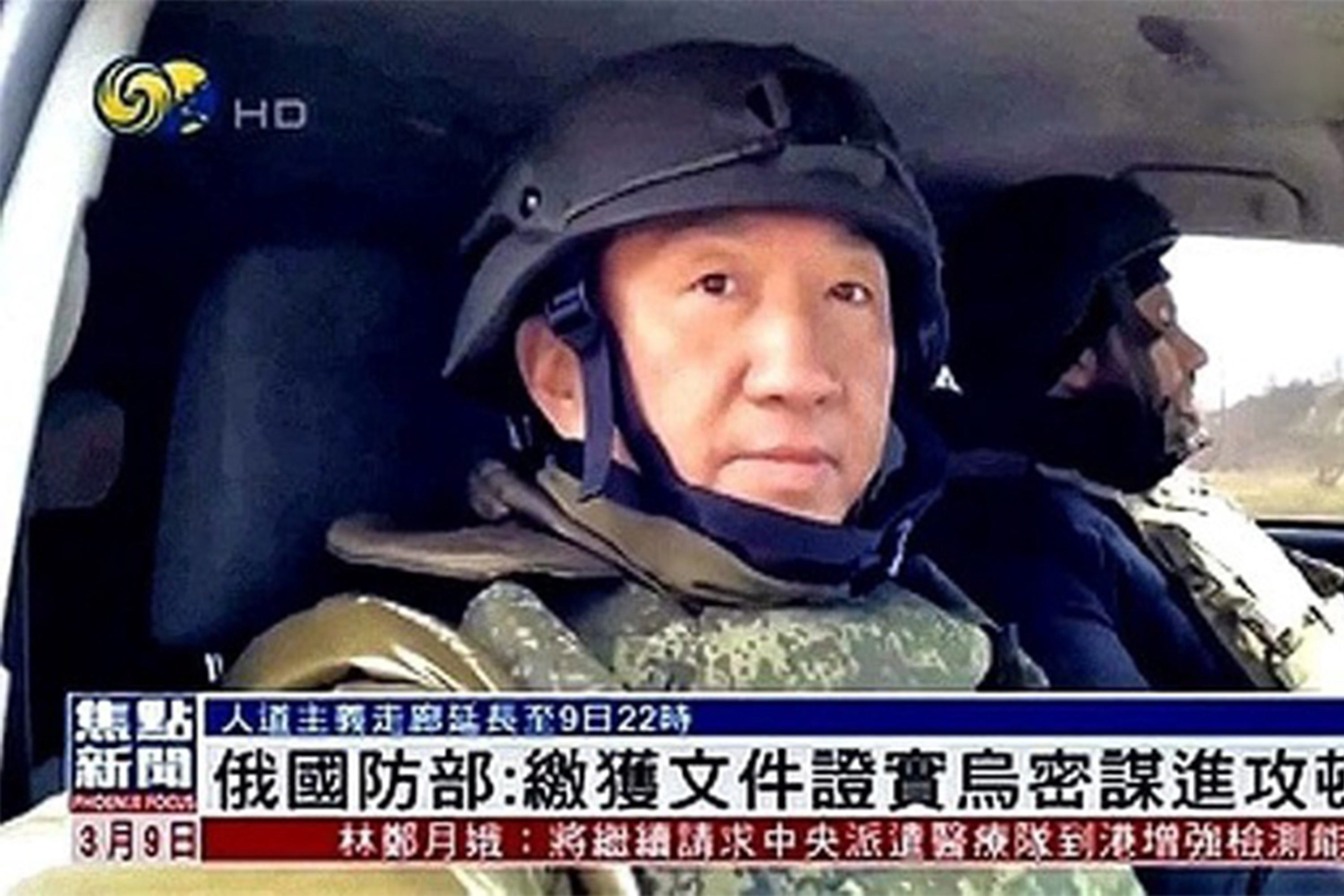
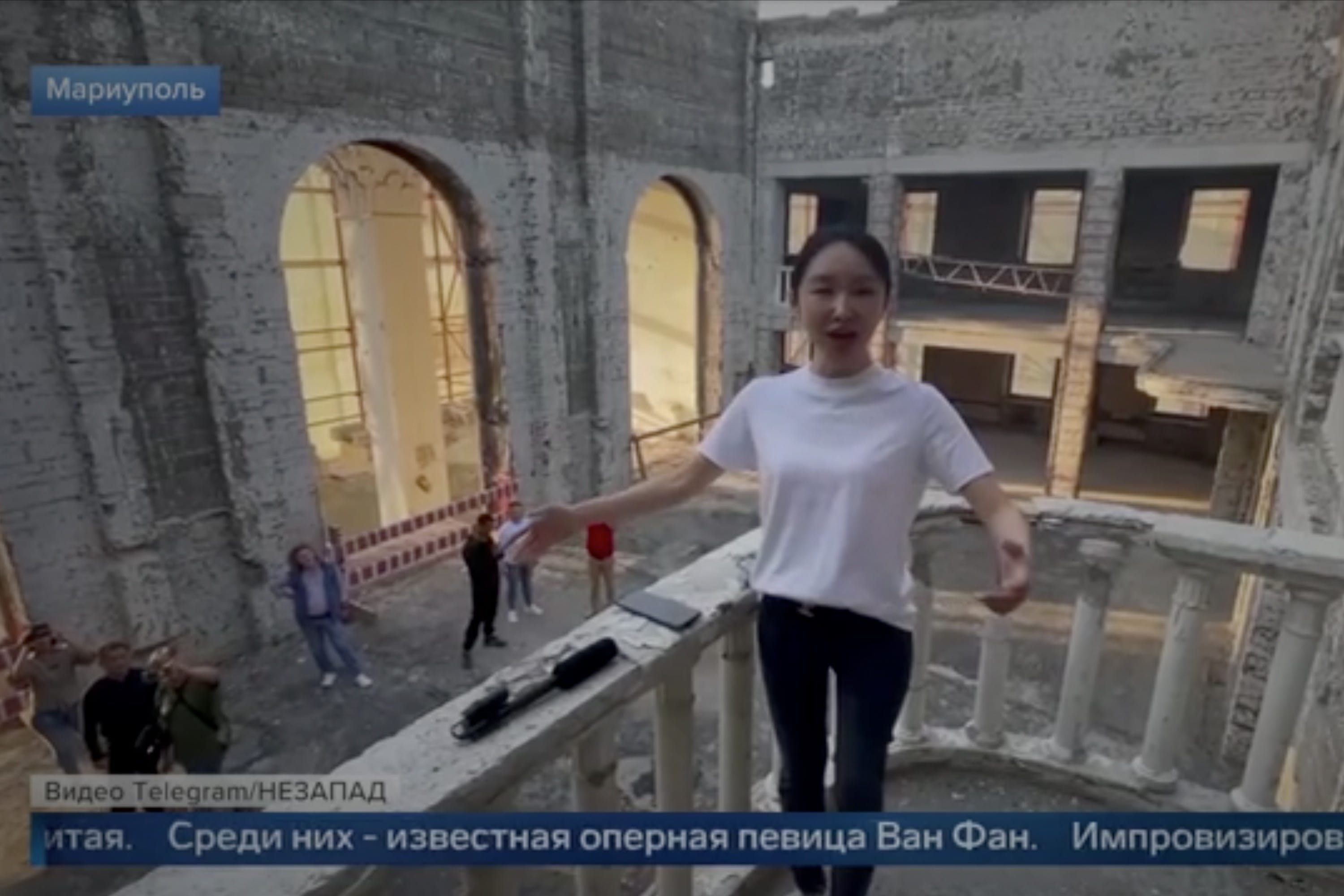
Media operations follow a similar pattern of deniability. Chinese bloggers and journalists, carrying no official status from Beijing, travel with Russian propaganda teams to front-line cities and produce content that mirrors Russian narratives - a structure that allows China to avoid sanctions by framing it as independent citizen journalism.
One of the media visits was by Liu Yuguang, a war correspondent of Hong Kong-based Phoenix TV, whose largest shareholder is a company wholly owned by the Chinese government. Lu is a well-known personality in China, and his career and background have been reported on by Tencent, Sohu and Sina, The Guardian reported. He is a former navy officer in the People’s Liberation Army, who lived in Moscow for several decades and covered events including the Chechen war, where he reportedly had Russian military protection. He has received multiple awards from the Russian government and military for his reporting. He has previously said that his outlet has good relations with intelligence figures in Russia, The Guardian reported.
“His reports from Ukraine have included Russian disinformation such as claims of more than 1,000 people held hostage as human shields by Ukrainian militants. However, his interviews with Ukrainian civilian victims, and criticism of Chinese internet users objectifying Ukrainian women, have also drawn nationalistic and pro-Russia trolling, accusing him of creating pro-Ukraine “rumours” and being “crooked assed”, an internet slang term for having bias or lacking objectivity,” The Guardiuan reported.
Iran, meanwhile, has emerged as the end buyer for the occupied territories’ raw output. The trading company managing ten mines in Luhansk region added Iran to its export list in 2025. Occupied administrations have also arranged food exports to Iranian buyers. Deals are being brokered at Russian economic forums, including KazanForum, and occupied regional authorities have a confirmed schedule of participation in international events through 2026.
The overall picture the investigation presents: Russia seizes the land, China provides the systems that keep it functioning, and Iran purchases the output - a division of roles that has quietly solidified over the past two years.
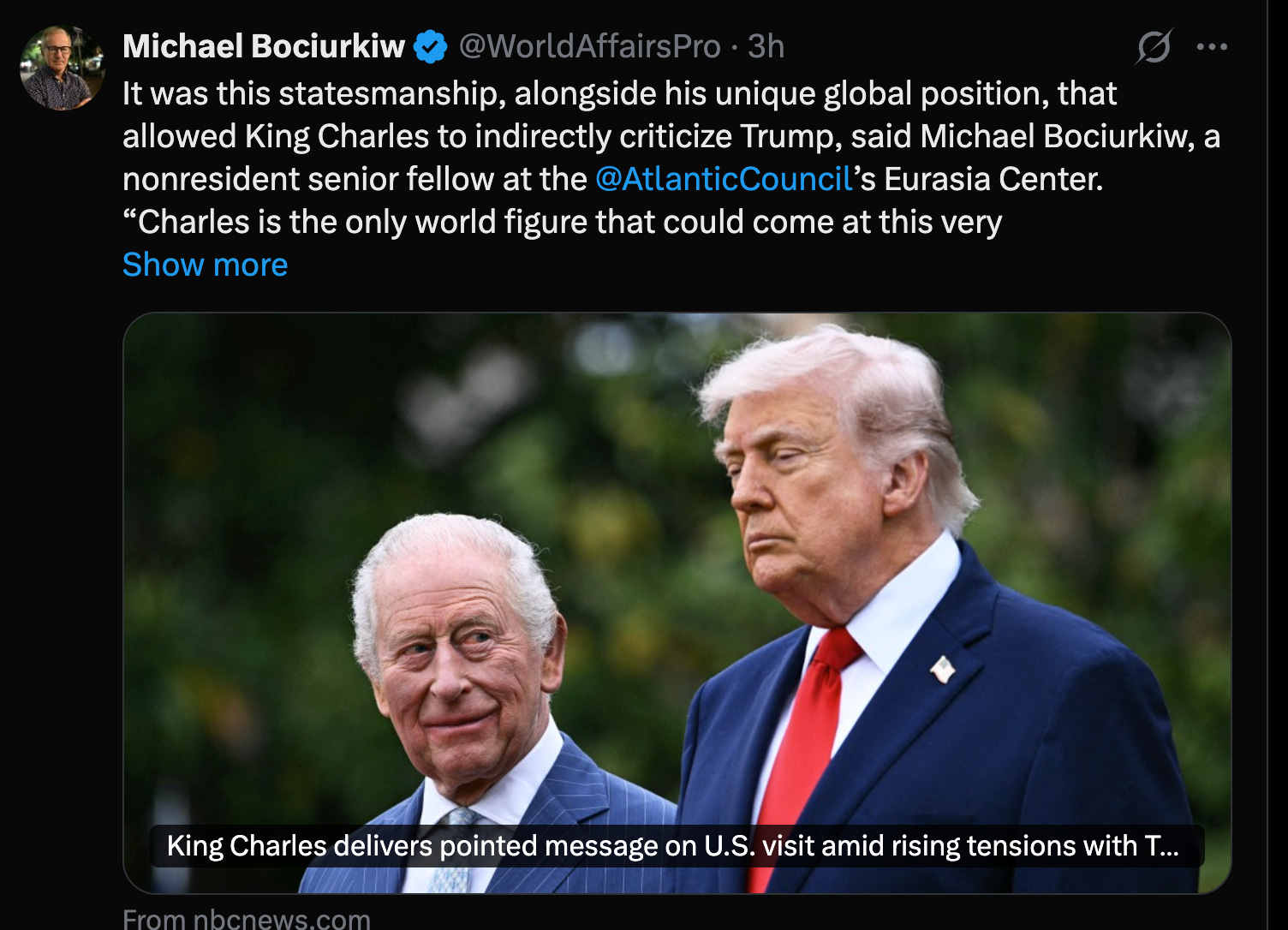
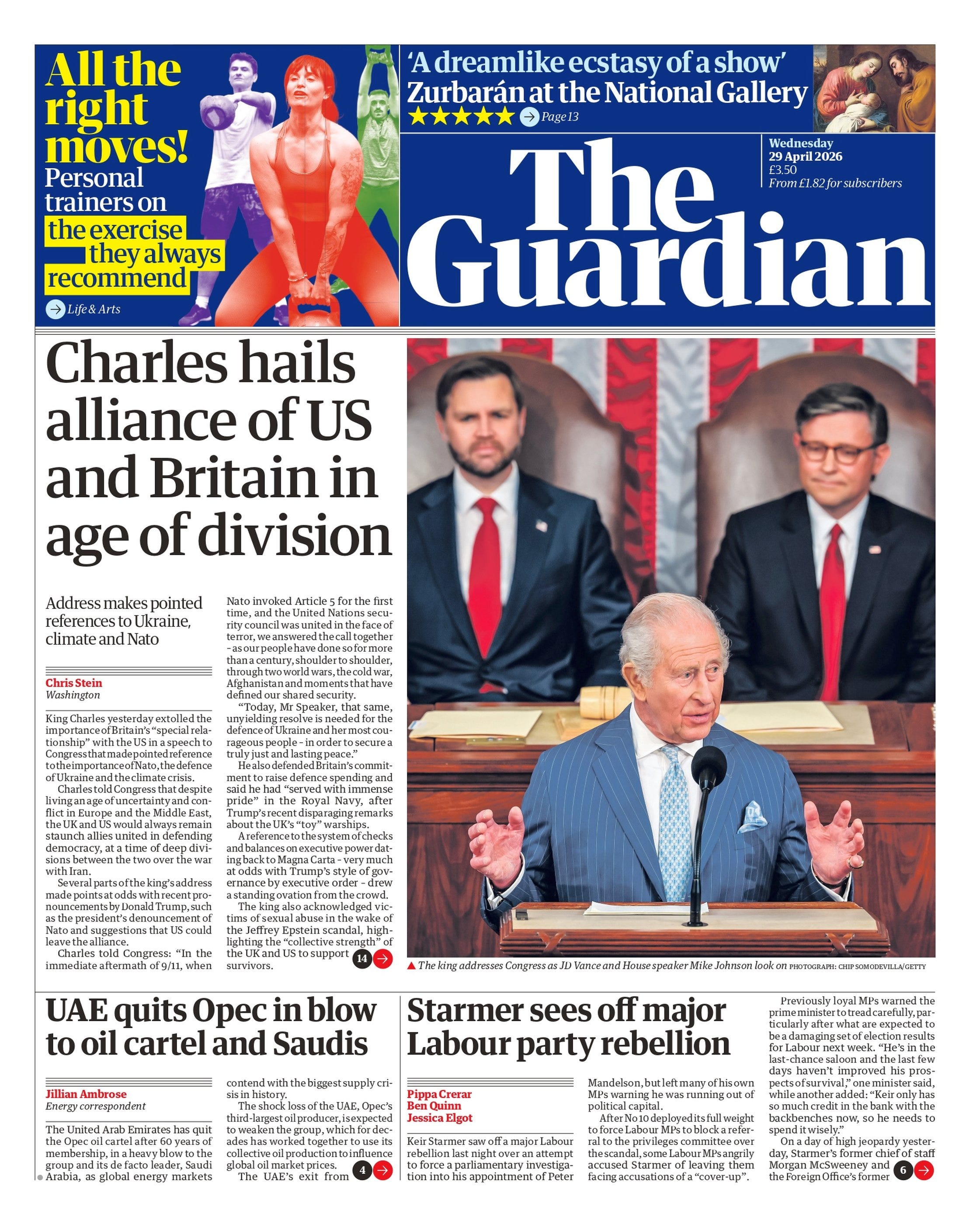
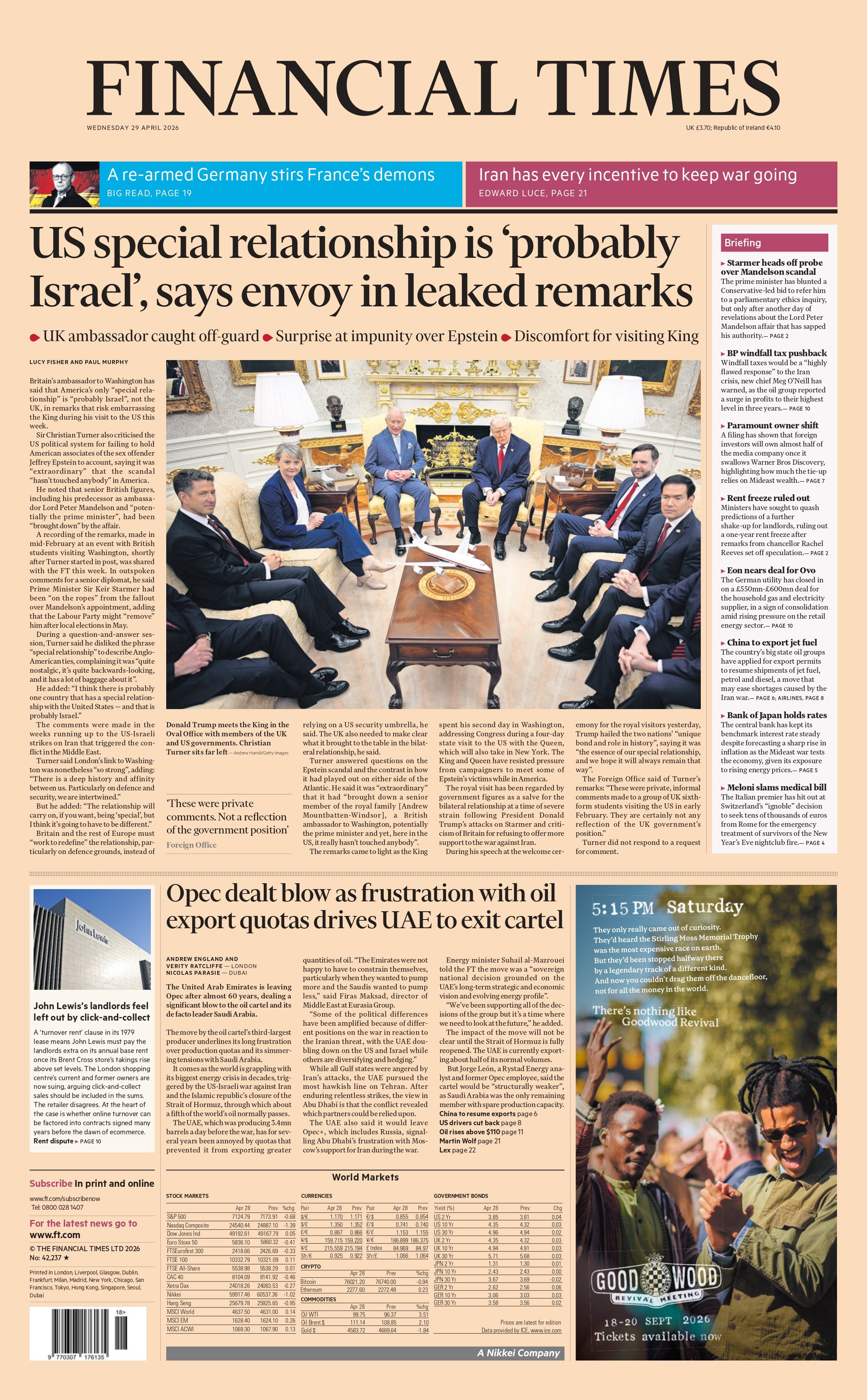
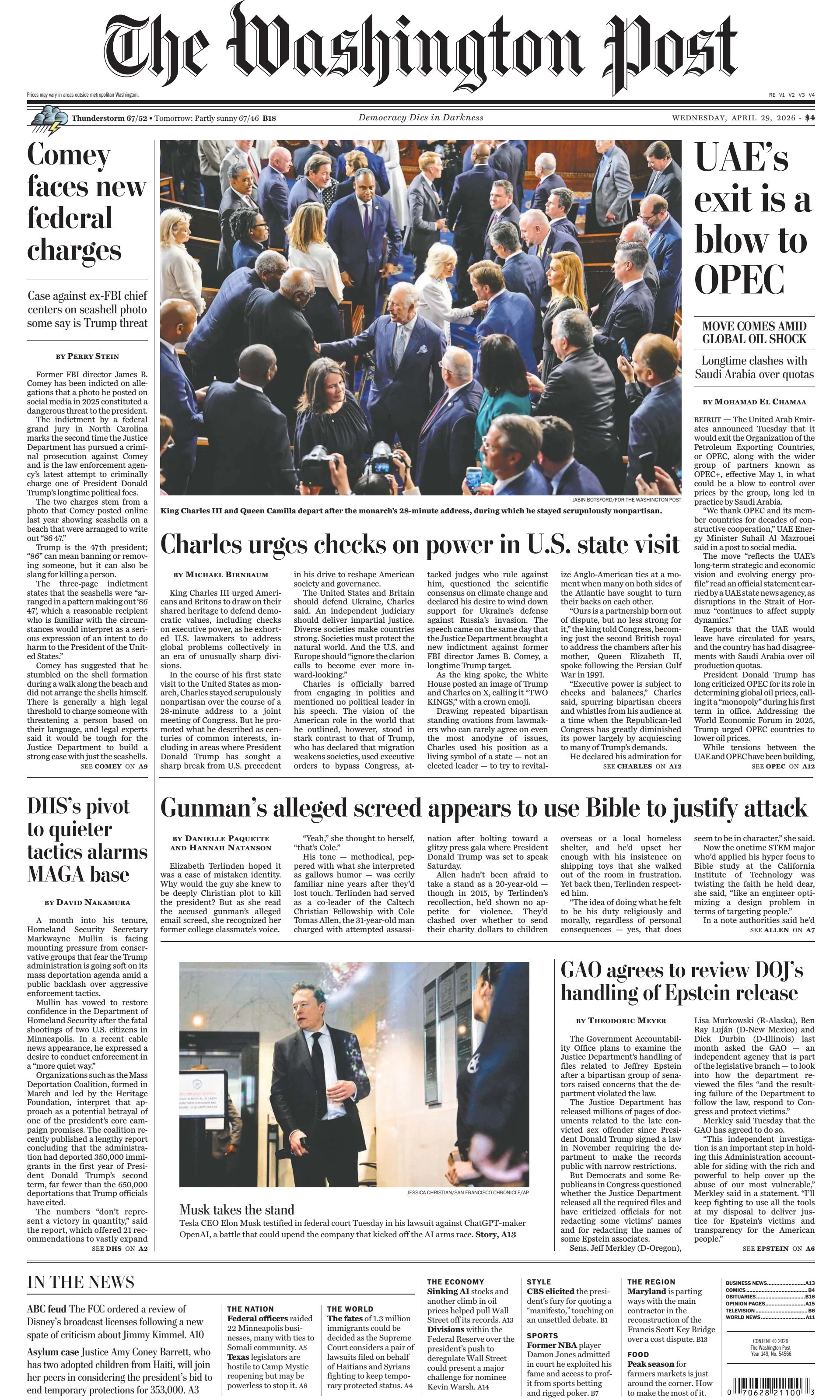
In a rare and pointed intervention on American soil, King Charles III used an address to a joint session of Congress to deliver a veiled but unmistakable defense of NATO unity, Ukraine, and the rule of law - drawing a contrast with Donald Trump’s more skeptical view of transatlantic alliances. Invoking NATO’s collective defense clause following the September 11 attacks, Charles reminded lawmakers: “In the immediate aftermath of 9/11, when NATO invoked Article 5 for the first time … we answered the call together, as our people have done so for more than a century, shoulder to shoulder.” The reference underscored alliance solidarity at a time when Trump has repeatedly criticized NATO partners for not doing enough. The king also called for “unyielding resolve” in support of Ukraine and pointed to the Magna Carta’s enduring principle that even a monarch is subject to the law - a symbolic nod to democratic norms. His remarks were framed as both a celebration of the U.S.-U.K. “special relationship” and an implicit warning against abandoning it. Trump, hosting Charles with full state visit pageantry, struck a more upbeat tone, calling Britain America’s closest ally and highlighting shared military history. A White House social media post showing the two leaders laughing — captioned “TWO KINGS” — leaned into criticism branding Trump as overly monarchical. The visit also exposed tensions over the Middle East. At a White House state dinner, Trump said Charles shared his position that Iran must never obtain a nuclear weapon, declaring: “We’re never going to let that opponent have a nuclear weapon.” The king, however, made no mention of Iran in his own remarks, underscoring the constitutional limits of his role. A Buckingham Palace spokesperson later clarified: “The King is naturally mindful of his Government’s long-standing and well-known position on the prevention of nuclear proliferation.” The speech - only the second by a sitting British monarch to Congress - comes amid broader strains over NATO burden-sharing, Iran policy, and the future of Western alliances. Charles echoed Keir Starmer, warning: “We must not disregard everything that has sustained us for the last 80 years. Instead, we must build on it.” He also condemned recent violence against journalists, stating such attacks “will never succeed,” and urged global action on climate change, warning of the “collapse of critical natural systems.”
US President Donald Trump told aides to prepare for a prolonged closure of the Strait of Hormuz as peace talks with Iran falter, deepening worries over the global economy’s prospects. The World Bank estimated that an extended disruption could drive energy prices up by almost a quarter compared to 2025; the strait cannot quickly be replaced, Morningstar analysts warned in a note to clients. Iran appears to be playing for time in talks, betting that it can withstand economic pressures for longer than the US. “We thought we were getting a TACO,” Bloomberg’s Javier Blas said, referring to the acronym Trump Always Chickens Out. “But so far we are getting a NACHO: Not A Chance Hormuz Opens.” - Semafor
Estonia is preparing to fend off Russian soldiers, even after the fighting in Ukraine is over. The small Baltic nation has blocked some 1,300 Russian ex-combatants from entering the country this year, according to its foreign ministry. Now it’s pushing Brussels to ban former Russian soldiers from entering the EU, and to keep them out long after the guns have fallen silent. “You cannot allow these people who are committing the crimes, who are raping the women, who are killing the children and civilians on the battlefield, that we allow these people to come to Europe,” Estonia’s Defense Minister Hanno Pevkur told POLITICO. “It’s not the question of Estonia, it’s the question of the European security,” he added. Estonia first raised the idea at a meeting of EU foreign ministers in January. Though critics warn a blanket ban could also hit coerced conscripts and deserters, the proposal drew the support of Kaja Kallas, the EU’s foreign policy chief and a former Estonian prime minister. The idea enjoys the support of “many member states,” Kallas said in January. In late March, the EU’s national leaders asked the European Commission to explore “possible ways to address” the issue. Kallas has promised concrete proposals in time for an EU summit in June. Lithuania has also pledged to maintain a blacklist, alongside strict entry restrictions that already amount to a near-total ban on Russian citizens. Estonia frames the proposal as both a security and a moral imperative. “People committing the war crimes … should not walk on the European countries’ soil,” Pevkur said. Estonian officials warn that former soldiers could be recruited by Russian President Vladimir Putin’s security services for sabotage or espionage in Europe. “I’m sure Putin will push these people to Europe,” Estonian Foreign Minister Margus Tsahkna told journalists in January. “We know already hybrid attacks today, but can you imagine these hundreds of thousands of ex-combatants, criminals coming here?” - Politico
Russia’s Defense Ministry said the Victory Day parade on Red Square -- an annual Kremlin spectacle celebrating the Soviet role in World War II and Moscow’s military today -- will be drastically scaled back this year, with no military vehicles or heavy weaponry on display for the first time in almost two decades. A day after the ministry confirmed late on April 28 persistent rumors that this year’s May 9 parade would be much more low-key, President Vladimir Putin’s spokesman suggested the main reason was Ukrainian “terrorist activity,” clearly a reference to drone attacks Kyiv has launched as it battles against Russia’s full-scale invasion. “Against the backdrop of this terrorist threat, of course all measures to minimize danger are being taken,” spokesman Dmitry Peskov told reporters. The Defense Ministry statement said the parade would include soldiers and other personnel marching. But no cadets from Russia’s most prestigious military academies would be participating, it said, and no “column of military equipment” -- a reference to a display that in past years frequently featured tanks, armored vehicles, ICBMs, and more. The annual event held just outside the Kremlin’s walls has traditionally served as a celebration of Russia’s history marking the defeat of Nazi Germany in World War II, with veterans given prominent places of honor - RFE/RL
Rice farmers in Vietnam’s Mekong Delta and Thailand’s northeast are facing a mounting cost crisis as the Middle East war ripples through global shipping and energy markets. In Vietnam’s An Giang province, farmer Nguyen Thanh Giang told The Straits Times that diesel prices have doubled and production costs have surged, while buying prices remain flat. “Some of us are seriously considering not growing the next crop,” he said. The newspaper reported that disruption is hitting exporters hard. Iraq was Thailand’s single largest rice customer, buying one million tonnes in 2025, but Thai rice exports have “totally stopped” since the war broke out, as vessels can no longer transit the Strait of Hormuz. Thailand had targeted seven million tonnes of exports in 2026. Freight costs for Vietnamese exporters have risen 25–35%, with ships rerouting around conflict zones adding up to 15 extra days of transit time. Insurance premiums and inland logistics costs are also climbing. So far, Vietnam’s export volumes are holding — 1.74 million tonnes shipped by mid-March, up 2.3% year-on-year — but prices have fallen as Vietnamese firms compete with India and Thailand for remaining markets. Profit margins for both farmers and trading companies are narrowing. Experts say Vietnam’s food security is not under immediate threat. The Mekong Delta, which produces around seven million tonnes of rice in roughly 100 days, supplies 90% of Vietnam’s rice exports — over eight million tonnes worth $4.1 billion in 2025. But analysts warn the medium-term risk is structural: as margins collapse, farmers may switch to other crops, gradually eroding the supply base. “Food security is not just about having enough rice today,” Do Ha Nam of the Vietnam Food Association told the newspaper, “but about ensuring that rice farmers continue to grow rice tomorrow.”
Japan Airlines is about to use humanoid robots as baggage handlers. It plans to launch a two-year trial at Tokyo’s Haneda airport at the beginning of May. Created by Unitree Robotics in Hangzhou, China, the bots are being used to help address the country’s labor shortage, which is coupled with a surge in inbound tourism. In total, Haneda handles around 60 million passengers a year, and forecasts suggest staff ratios are likely to worsen. Speaking to Kyodo news agency, JAL Ground Service president Yoshiteru Suzuki said the introduction of robots will “inevitably reduce the burden on workers and provide significant benefits to employees.” Humans will still perform safety tasks, Suzuki said. The robots will instead focus on handling cargo on the tarmac, with plans to eventually clean aircraft cabins. Japan has an aging population, which is contributing to a shrinking workforce. Meanwhile, the Japan National Tourism Organization says there were seven million visitors to Japan in January and February alone this year - The Daily Beast
Against a backdrop of geopolitical tensions, a global energy crisis and inflation weighing on purchasing power, the French are revising their holiday plans for the summer of 2026. As a result of budgetary prudence and the search for security, fewer people in France are planning to head on holiday at all this summer, and those that are are opting for destinations closer to home – mainly in France. Geopolitical issues and security concerns have a strong influence on the decisions of French holidaymakers. According to an Ifop study carried out for Alliance France Tourisme in March 2026, 68% of French people plan to go away for at least a week, a fall of 9 points compared to 2025. Only 37% are certain they will go, down from 50% last year, “reflecting a rise in uncertainty”. However, summer holidays remain high on the list of household priorities. “This study shows that there is no collapse in the intentions of the French, who remain very attached to holidays, but that the first effects of the current situation are beginning to be felt, under the combined effect of concerns about security and tighter budget constraints,” Dominique Marcel, the President of Alliance France Tourisme, said - Euronews
The journals…..
Very disturbing indeed.