

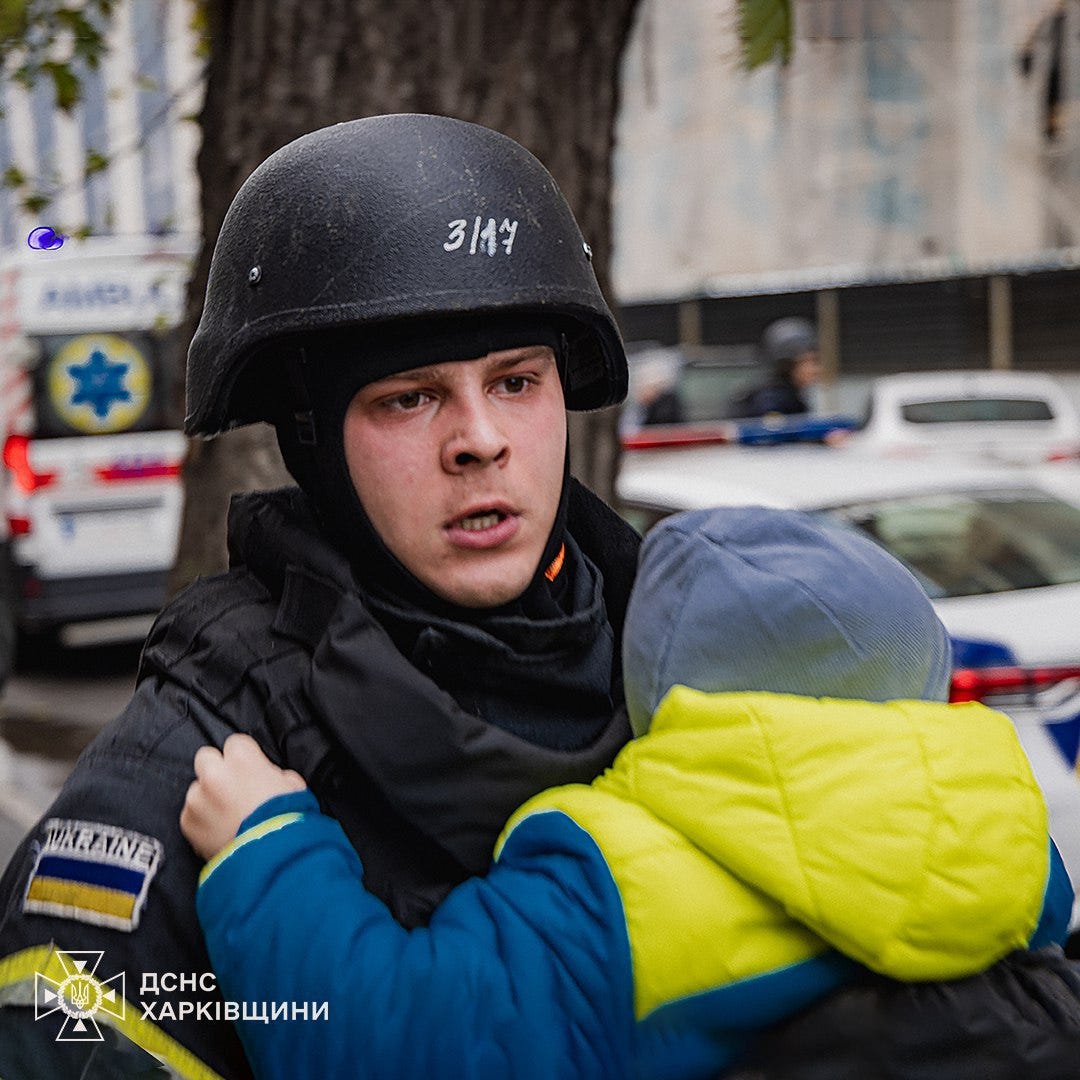
Russia fired a new nuclear-capable ballistic missile with multiple warheads at western Ukraine as part of a barrage of missiles and drones that pounded Ukrainian cities, including Kyiv, where at least four people were killed and dozens wounded. Russia’s Defense Ministry said on January 9 that the use of the missile, called the Oreshnik, was in response to an alleged Ukrainian drone attack in late December that Moscow said had targeted a residence used by President Vladimir Putin. Kyiv denied the allegation, and the CIA has also called it false. Ukraine’s air force had warned of an imminent launch of a missile from Russia’s Kasputin Yar testing ground just before midnight. Later, it issued a statement saying a high-speed ballistic missile had been fired by Russia. The US Embassy in Kyiv issued an unusual security alert late on January 8, suggesting Moscow may have notified US officials ahead of time as a way to avoid alarming Washington. Ukrainian President Volodymyr Zelenskyy had also warned of a possible strike. Damage or casualties from the missile strike was unclear. Multiple videos posted on Telegram and elsewhere by surveillance cameras in the western Lviv region appeared to show what appeared to be six objects streaking toward the ground. The Oreshnik is reportedly capable of carrying six warheads. The missile strike was part of a barrage of drones and missiles that hit Ukrainian cities and towns overnight, including the capital, Kyiv. At least four people died in the capital and more than 24 were wounded, officials said. The Russian attack heavily damaged power transmission and generation facilities, leaving more than 500,000 people in Kyiv and the surrounding region without electricity, the Energy Ministry stated. Kyiv Mayor Vitaliy Klitschko warned that nearly 6,000 apartment buildings -- about half of Kyiv -- lacked heating after critical infrastructure was damaged. He urged residents to temporarily leave Kyiv for areas with power and heating to do so, as temperatures were forecast to drop to around -17 degrees Celsius at night - RFE/RL
A Russian attack drone hit a civilian ship under a foreign flag while en route to the Chornomorsk port within the Ukraine maritime corridor. A crew member was killed. Another ship was also hit near the Odesa port, and there are casualties. World Briefing was near the port today after 13:00 GMT when an approaching Russian attack drone was successfully blown out of the sky. Some weeks ago, the large consulate of the People’s Republic of China in Odesa was closed indefinitely due to its close proximity to the port.
Britain is ready to use “hard power” against Russia, one of Keir Starmer’s allies has said, as two of Vladimir Putin’s shadow ships passed through the English Channel. Following the dramatic US-UK operation to seize a Russian dark-fleet vessel off Iceland on Wednesday, ministers now regard the North Atlantic as part of the UK’s new “front line” against Putin, The i Paper understands. As the “grey war” between Moscow and the West intensified, the importance of this new front line was emphasised in a phone call between Starmer and Donald Trump on Thursday, with the Prime Minister telling the US President that “more could be done” to protect the North Atlantic from Russian aggression. The focus on the Northern Atlantic – particularly the strategically important waters known as the Greenland-Iceland-UK (GIUK) Gap – has escalated following the capture by US Special Forces, assisted by the RAF and Royal Navy, of the MV Marinera, a Russian oil tanker wanted for evading sanctions. Downing Street confirmed that the UK is preparing to carry out more operations against Russia’s shadow fleet, as first revealed by The i Paper. But despite the increasingly assertive rhetoric from the British Government, it emerged that 50 vessels suspected of belonging to the shadow fleet have strayed into or near UK waters in the past three days, including two ships in the Channel, raising questions over whether the Ministry of Defence would act. The UK Government has said it is considering taking action to seize vessels not necessarily with the US, either alone or in alliance with another Nato ally. A Downing Street spokeswoman said of the Starmer/Trump phone call: “The leaders discussed Euro-Atlantic security and agreed on the need to deter an increasingly aggressive Russia in the High North.”
This special World Briefing video analysis is free and open to all viewers - no paywall. Overnight, Ukraine came under one of the heaviest aerial assaults in recent weeks: 22 missiles, 242 drones, at least 5 killed and 25 injured. But the most dangerous threat now isn’t only what’s falling from the sky - it’s what’s happening on the ground. Ukraine is facing a severe cold snap, with nighttime temperatures plunging to –15°C and below. According to Kyiv Mayor Vitali Klitschko, as many as half of Kyiv’s buildings are currently without heating. I also examine Russia’s use of the Oreshnik missile, reportedly fired toward western Ukraine near Lviv, uncomfortably close to NATO and EU borders. Traveling at roughly 13,000 km/h, and capable of carrying nuclear warheads, its deployment sends a stark signal - not just to Ukraine, but to Europe.
Protests in Iran continued for a 13th day on January 9 despite a brutal crackdown and threats by the authorities to punish “rioters” demanding an end to the Islamic republic. The protests have grown to their biggest in several years as crowds flooded streets in major cities, small towns, and neighborhoods across Tehran late on January 8. The next day, the protests reached the southeastern city of Zahedan, where Sunni Baluch worshippers took to the streets after the Friday prayers. Raw footage from January 8 shows brutal crackdowns, but protesters adopted bolder tactics: direct clashes with security forces and torching police and Basij paramilitary outposts. Iran’s Supreme Leader Ayatollah Ali Khamenei addressed supporters of the regime on January 9, saying that “saboteurs, agitators” had “destroyed the country’s buildings to please” US President Donald Trump. He added that Trump has the “blood of Iranians on his hands” following US strikes on Iran in June, and that the US leader would be “overthrown.” After his speech, pro-Islamic republic rallies were held in several cities after Friday prayers with heavy state media coverage. Anti-establishment protests are expected to resume at dusk. Tehran’s prosecutor Ali Salehi described protesters who burn public property and clash with security forces as “terrorists” who will be charged with “moharebeh,” or waging war against God, which can carry the death penalty. Several security bodies in separate statements also warned protesters on January 9. The Intelligence Organization of the Islamic Revolutionary Guards Corps (IRGC) said the “continuation of the situation is unacceptable” and repeated the claim that the protests are instigated by foreign backers - RFE/RL
The Syrian army says that Aleppo’s Sheikh Maqsoud neighbourhood is now a closed military area, after a government-imposed deadline for SDF fighters to lay down their weapons passed. The SDF says the area, now subject to a complete army-imposed curfew, is under “intense, heavy-shelling”. The Syrian government has announced the opening of response centres to provide relief to people displaced in Aleppo. Syria’s President al-Sharaa has spoken by phone with Iraqi Kurdish leader Masoud Barzani about the fighting in the city, guaranteeing his government is committed to ensuring Kurds’ equal “national, political and civil rights” - Al Jazeera
The EU provisionally approved a trade deal with the South American Mercosur bloc to create the world’s largest free trade zone after 25 years of negotiations marked by deep divisions within the EU’s member states. A “cars for cows” agreement favoring EU industrial goods and LatAm farm products, Mercosur’s champions argued the deal secures EU access to Brazil and Argentina’s critical minerals, reducing dependence on China and proving Europe can overcome disagreements to act decisively. The agreement, set to be signed next week, overcomes intense opposition from European farmers, and demonstrates that Europe’s efforts to extend economic collaboration stand in stark contrast to the US’ approach of “coercion over cooperation,“, The New York Times wrote - Semafor
France will delay this year’s Group of 7 summit to avoid a conflict with the mixed martial arts event planned at the White House on June 14, two officials with direct knowledge of G7 planning told POLITICO. Paris had previously announced that this year’s gathering of G7 leaders would take place from June 14 — which is both Flag Day in the U.S. and President Donald Trump’s 80th birthday — to June 16 in Evian-les-Bains on the shores of Lake Geneva. But Trump in October announced that the White House would host a “big UFC fight” on June 14. Ultimate Fighting Championship CEO Dana White told CBS News Thursday that the logistics of the event have been finalized. White said the event will gather up to 5,000 people on the South Lawn of the White House. The G7 will now run from June 15 to June 17.
Venezuela’s future might hinge on opposition leader María Corina Machado willingness to hand her Nobel Peace Prize over to Donald Trump. The U.S. president is so openly desperate for the award that members of his administration attacked the Nobel Committee for putting “politics over peace” when they gave last year’s prize to Machado rather than the U.S. president. Machado immediately dedicated her prize to Trump (and the “suffering people of Venezuela”) in October. But apparently that wasn’t good enough for the U.S. president. Hours after the U.S. struck Caracas and ousted Nicolás Maduro on Saturday, Trump said that while Machado’s stand-in candidate won more than two-thirds of the vote in Venezuela’s last election, “It’d be very tough for her to be the leader,” because she “doesn’t have the support or the respect within the country.” So now Delcy Rodríguez, Maduro’s vice-president, is acting president. Over the weekend, two sources close to the White House told the Washington Post that Trump didn’t want Machado to lead the country because she committed the “ultimate sin” of accepting her Nobel Peace Prize. “If she had turned it down and said, ‘I can’t accept it because it’s Donald Trump’s,’ she’d be the president of Venezuela today,” this person said. A day after this report was published, Sean Hannity casually asked Machado if she’d ever offered to physically give her Peace Prize to Donald Trump. “It hasn’t happened yet,” she said. “But I would love to be able to personally tell him … certainly the Venezuelan people want to give it to him. What he has done is historic; it is a huge step toward a democratic transition.” Journalist Rachael Bade reported that Fox News host Rachel Campos-Duffy, wife of Transportation Secretary Sean Duffy, has been publicly and privately pushing for Machado to meet with Trump and give him her prize. Hannity raised that possibility in an interview with Trump on Thursday night. While any other president would have said they were touched but couldn’t possibly accept, Trump seemed quite eager to take Machado’s prize. “I’ve heard that she wants to do that. That would be a great honor,” he said - New York Magazine
A new report by Cirium has found that Aeromexico was the most reliable carrier, while Santiago Airport in Chile had the highest on-time departure rate. For the second consecutive year, Aeromexico has claimed the top spot in Cirium’s global ranking of on-time performance, which compares the top 10 per cent of passenger airlines by capacity. The airline had 90.02 per cent of its nearly 189,000 flights depart or arrive within 15 minutes of schedule, with each month holding close to or above the 90 per cent mark. Saudia came in second place, with an 86.53 per cent punctuality rate. Third was SAS (Scandinavian Airlines) with 86.09 per cent. In the large airports ranking, Santiago’s Arturo Merino Benítez International Airport (SCL) took the top spot. It is Chile’s largest and busiest aviation hub, serving as the country’s primary gateway to the world. Read more at partner website My Savvy Traveller
The journals……
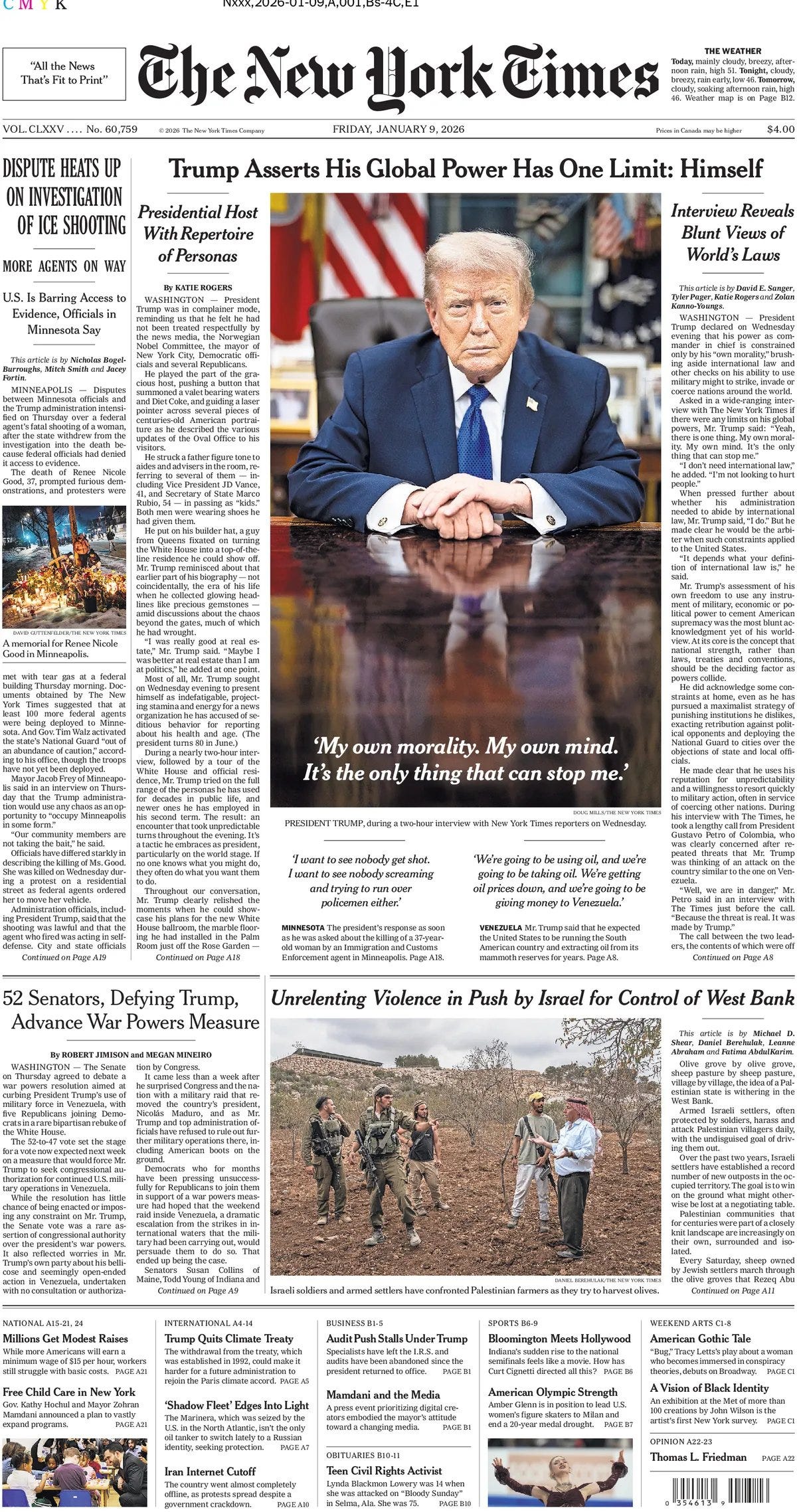

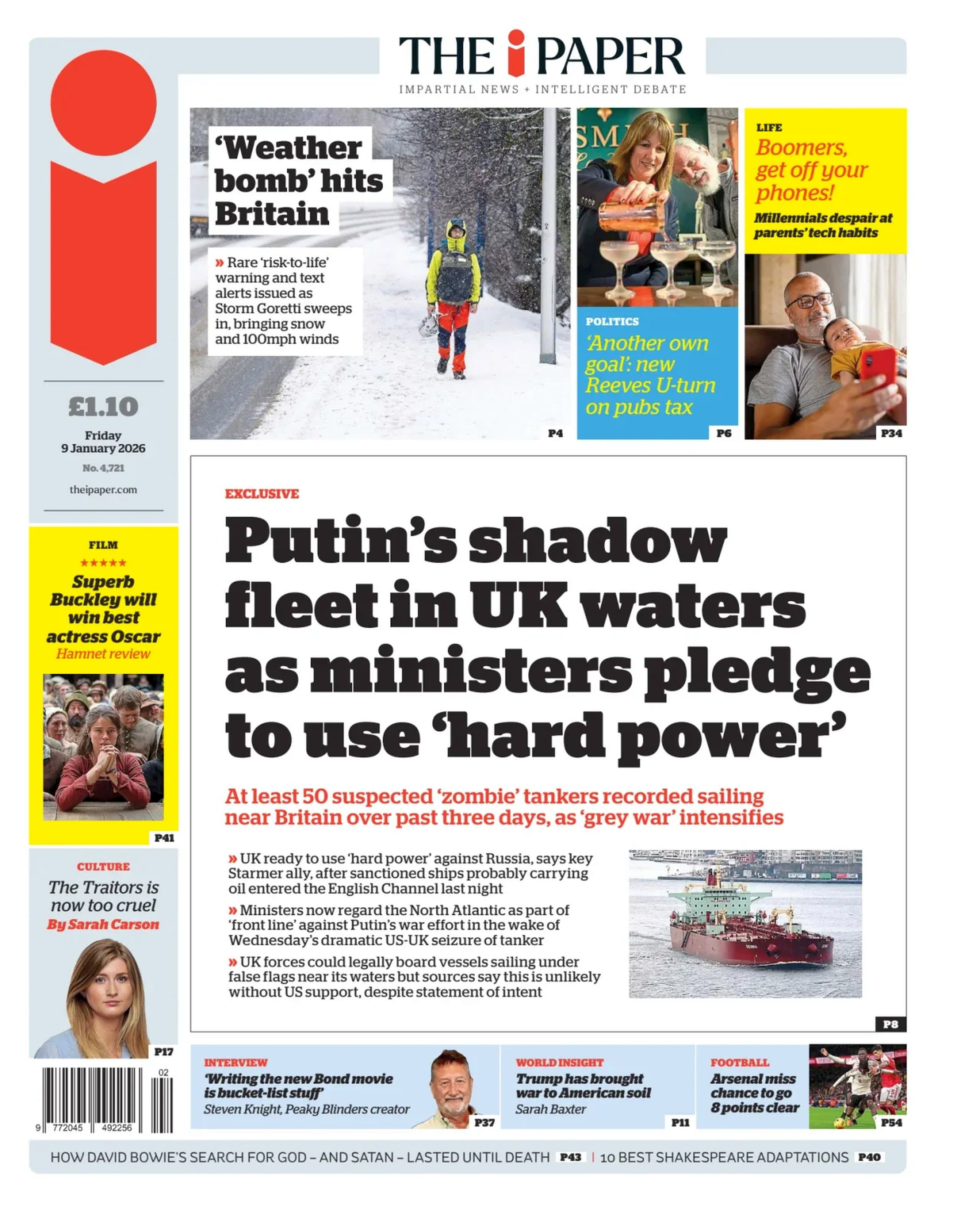
It appears the free world is reaching a Chamberlain/Churchill moment. Although it is unclear what comprises the "Free World" any longer. Appease or fight, the Moral Tragedy, is one of the most meaningful and difficult decisions anyone has to make. I'm praying it does not come to the testing of Article 5. Will the US remember that the EU enacted Article 5 following 9/11?