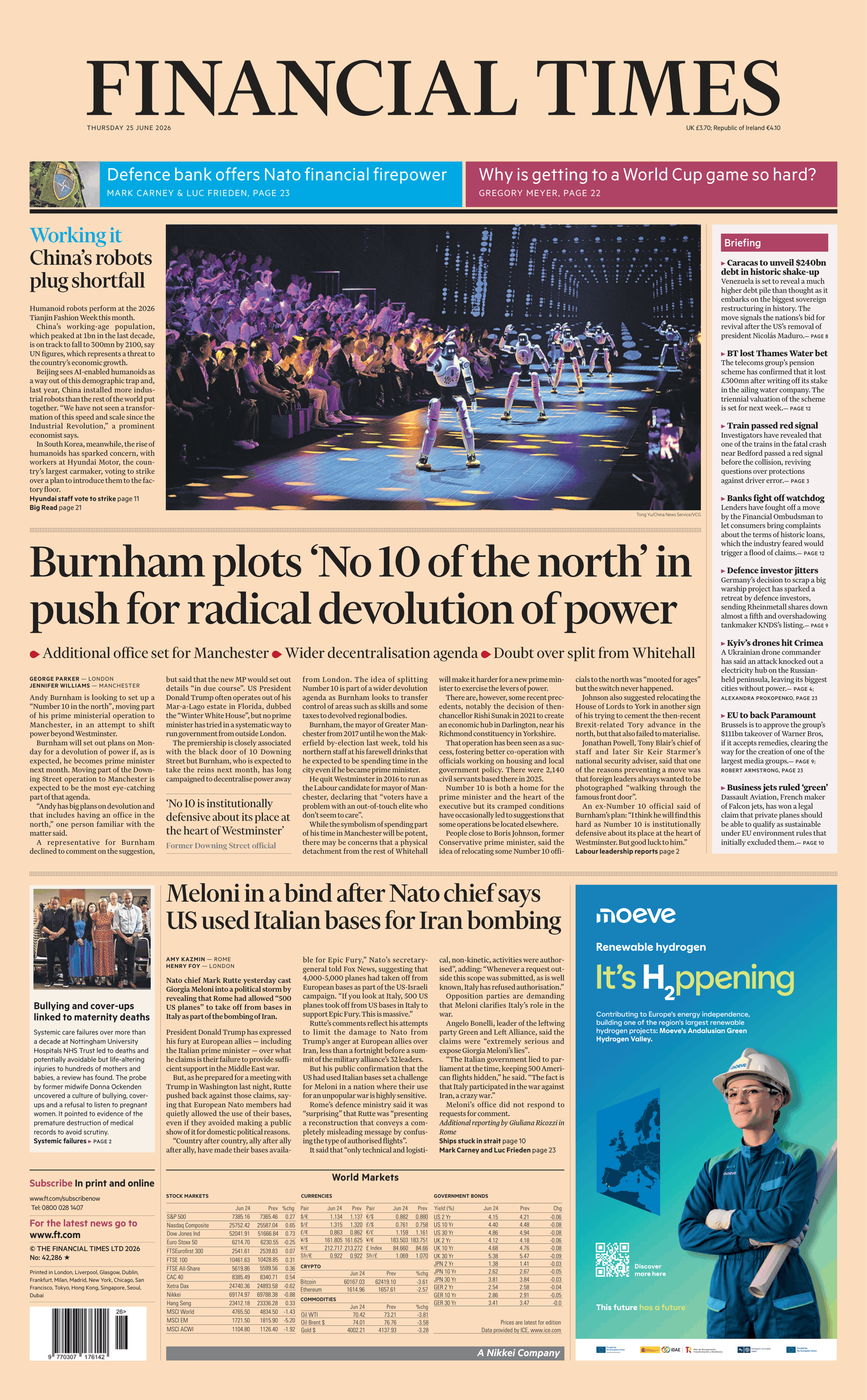
Forget the palace coup. The real story of Russia’s unraveling may be found in the fine print of its federal budget and the fuel queues stretching across its eleven time zones.
In a move that passed largely unnoticed, Russia’s parliament last week handed the finance ministry sweeping new powers to spend beyond legal limits and borrow past the statutory debt ceiling - without formal budget amendments or parliamentary approval. The rubber-stamp Duma, it seems, had become too slow an obstacle for a Kremlin at war.
The numbers tell the story. By the end of May, Russia’s federal deficit had reached 6 trillion roubles - roughly $83 billion - already more than double the shortfall originally budgeted for all of 2026. The National Welfare Fund has been drawn down to a fraction of its pre-war level. The central bank’s benchmark rate sits at 14.25%. VAT has been raised. Regions have had federal loan repayments quietly deferred to 2030.
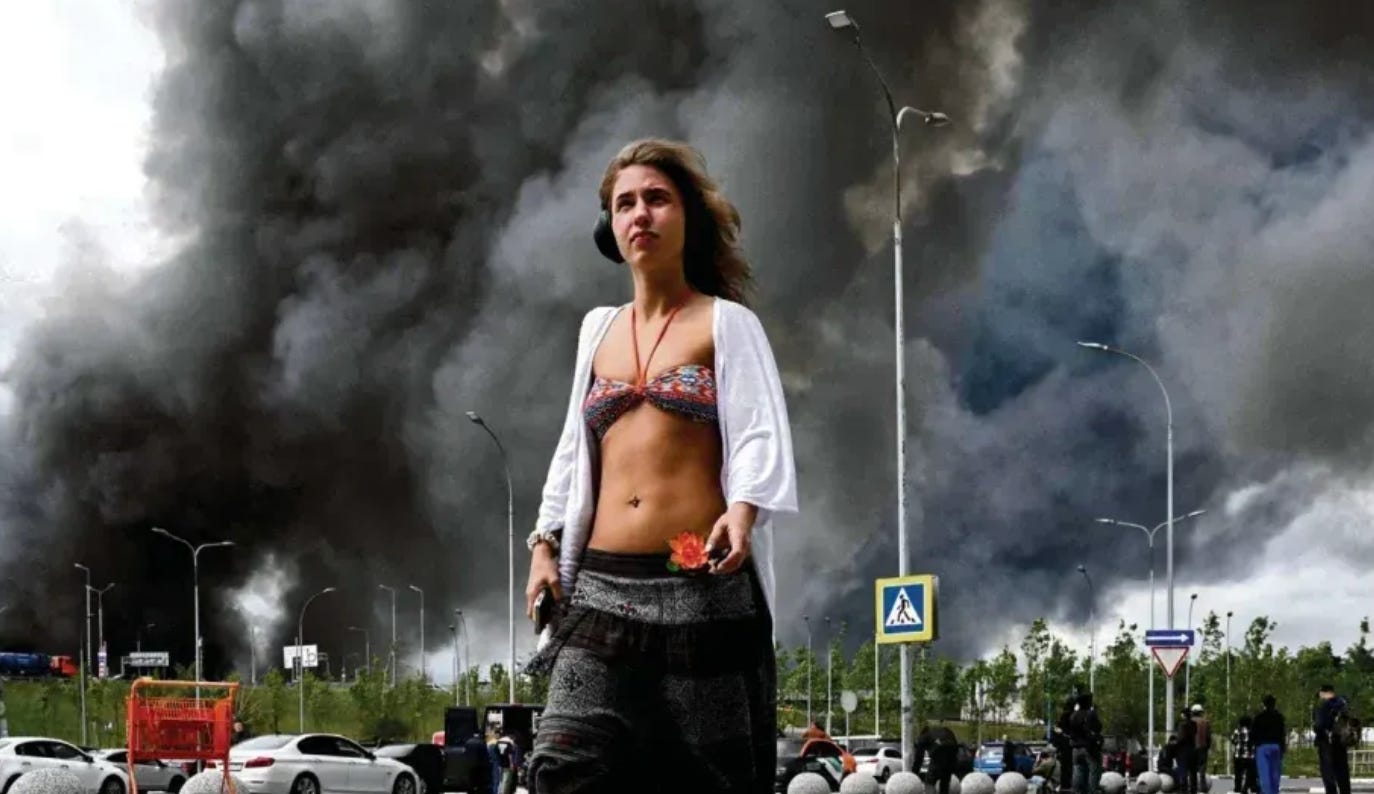
And the pressure is now showing up at the pump. Ukraine’s sustained drone campaign against Russian energy infrastructure has knocked out a significant share of the country’s refining capacity, triggering fuel shortages, price spikes, and long queues at filling stations nationwide. The Moscow refinery - the largest fuel supplier to the Russian capital region and one of the country’s biggest, processing 11.6 million metric tons of oil in 2024 - was struck twice this month and will be offline for at least six months, two industry sources told Reuters. In Crimea, petrol sales to the public have been suspended entirely. Deputy Prime Minister Alexander Novak has raised the prospect of a diesel export ban; the Kremlin is reportedly even weighing fuel imports to plug the gap.
A cornered autocracy is rewriting the fiscal rules as it goes, cutting parliament out of the loop, and will not admit to dangers it cannot control. It’s less dramatic than a palace coup, but this is what decline looks like - Alexandra Prokopenko
The human cost of the war is registering on the balance sheet too. An estimated 352,000 Russian soldiers have been killed since 2022, each confirmed death triggering a federal payout of 14.2 million roubles. Finance Minister Siluanov warned earlier this year the military may need an additional 2 trillion roubles just to cover this year’s costs.
Even Russian companies are being left to fend for themselves. Firms have spent over $1 billion erecting improvised air defences against Ukrainian drone strikes - and the Kremlin won’t allow them to write it off against tax. To do so would mean officially classifying the attacks as a “military risk,” shattering the fiction of a contained “special military operation.”
As Carnegie fellow Alexandra Prokopenko argues, this is what decline looks like before anyone names it: not sudden collapse, but a quiet suspension of the state’s own rules, with the population absorbing the costs through inflation, punitive interest rates, and empty fuel stations.
The bill is still mounting - and someone will eventually have to pay it.
- Analysis drawing on Alexandra Prokopenko, Carnegie Russia Eurasia Center (via FT); Reuters reporting on Moscow refinery and Russian fuel crisis.
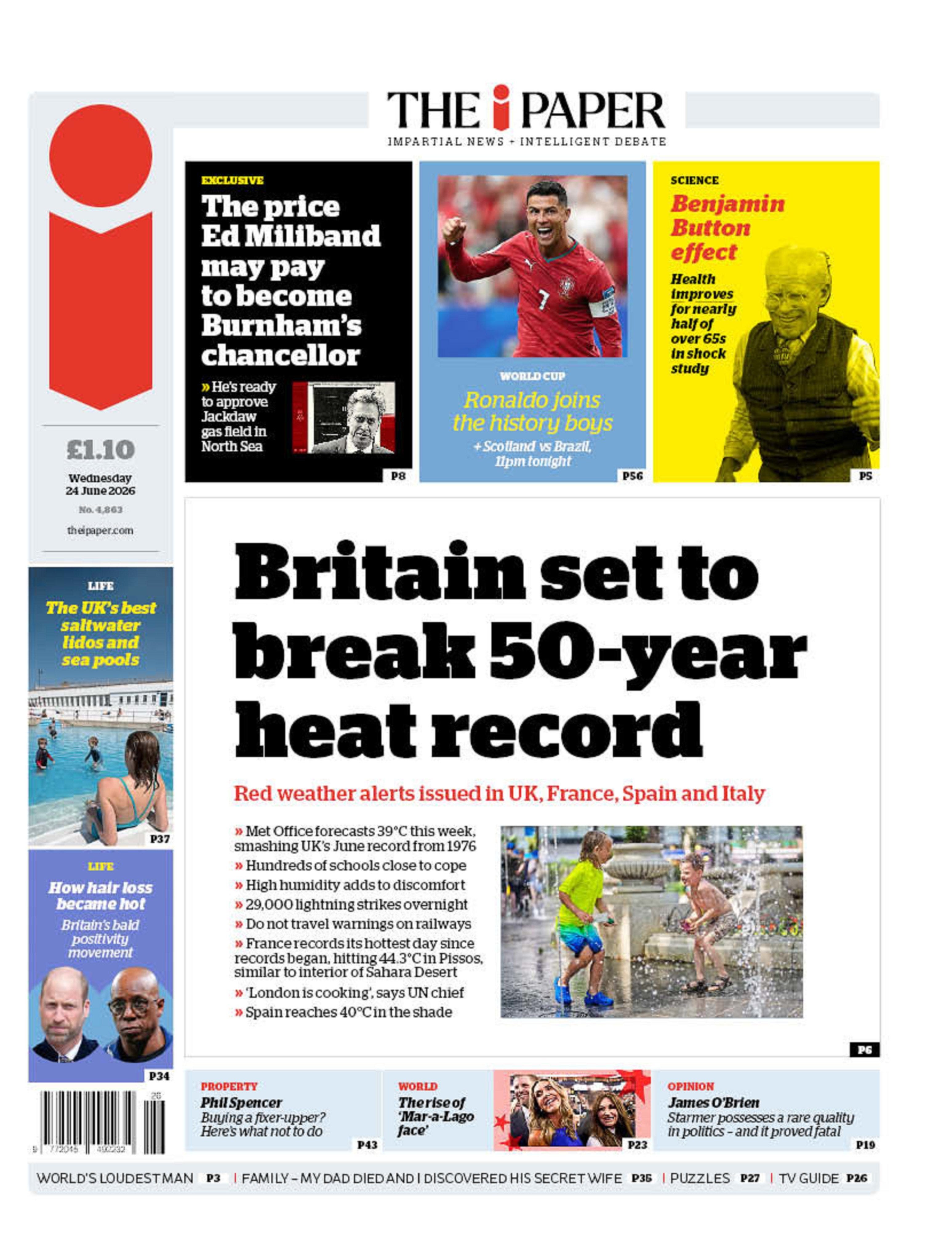
As Rusia Cracks, Europe Blinks
The moment Putin’s war economy is visibly faltering, the EU is slowing Ukraine’s path to membership
Just as the economic cost of Vladimir Putin’s full-scale invasion is becoming impossible to conceal, Europe is losing its nerve on the one prize that matters most to ordinary Ukrainians: EU membership.
Brussels has quietly scaled back its ambitions for Ukraine’s accession talks, now targeting the opening of just two negotiating clusters in July - down from the five the European Commission had publicly committed to as recently as last month. Hungary, wielding its veto with quiet effectiveness, has refused to sign the letters needed to unblock the remaining clusters. A working group meeting this week ended with the process frozen.
The climbdown stings because expectations had been deliberately raised. Enlargement Commissioner Marta Kos set July as the deadline to open all six clusters and declared Ukraine technically ready. “Everything is ready,” she said. It wasn’t - politically, at least.
The irony is sharp. At the precise moment Russia is rewriting its own fiscal rules to stay afloat, draining its sovereign wealth fund, and watching its refineries burn, the EU is letting Budapest hold a continent’s strategic logic hostage. For Ukrainians who have largely abandoned hope of NATO membership, EU accession is the horizon they’re fighting toward. Europe’s hesitation, however procedural it may appear in Brussels, lands as something far heavier in Kyiv.
— Source: Euronews
Two devastating earthquakes struck Venezuela on Wednesday evening in rapid succession, setting off what could become one of the deadliest natural disasters in the region’s history. The first quake, a magnitude 7.2, was centred near San Felipe in the state of Yaracuy, the BBC reported. Just 39 seconds later, a stronger 7.5-magnitude tremor hit the same area. The back-to-back shocks were felt across the country, including in Caracas, where buildings have collapsed, fuel supplies have been severed, and people are reported trapped under rubble calling for help. Venezuela’s interior minister has urged all residents to leave their homes. The scale of the catastrophe could be staggering. The US Geological Survey places the probability of more than 10,000 fatalities at 44% following the second main shock - and a 30% chance the death toll surpasses 100,000. Casualty figures and damage assessments remain incomplete as emergency responders work to reach affected areas. Venezuela’s chronic infrastructure deficits and weakened public institutions are likely to severely hamper relief efforts in the hours and days ahead.
— World Briefing will continue to update this story as details emerge.
U.S. President Donald Trump has returned to a familiar theme during a meeting with NATO chief Mark Rutte, slamming European countries for not supporting the US-Israel war on Iran. Sitting across from Rutte in the White House’s Oval Office, Trump reiterated his frustration that members of the NATO alliance did not join in the war effort. “We didn’t need help on this at all. We demolished them in literally the first week,” Trump said of Iran. “But it would have been nice if they would have said, ‘We’d like to help.’ We didn’t even need it, but it would have been nice if they said that.” Trump, who has openly mused about pulling back from the transatlantic alliance, signalled he would discuss the matter further with Rutte behind closed doors. “ We’re going to be discussing what took place, and we’ll see what happens,” he said. Trump has frequently expressed disappointment that European nations did not do more to support the US in its war against Iran, which unleashed weeks of conflict across the Middle East and sent shockwaves through the global economy. But Rutte’s appearance in the Oval Office comes at a critical time. In roughly two weeks, on July 7, NATO is slated to hold its annual summit in Ankara, Turkiye’s capital. Rutte is widely seen as sympathetic to Trump, and critics view his visit to the White House as an attempt to soothe the US president. He also praised the US attacks on Iran, exhibiting the trademark flattery that has defined his approach to managing fragile relations between Trump and European allies. “I really want to make clear how important it is what you are doing on Iran,” Rutte said, calling Trump the “leader of the free world” - Al Jazeera
What was meant to be a day of Republican unity became something closer to a family meltdown on Capitol Hill Wednesday, as President Trump canceled the signing of a bipartisan housing bill - one of his own legislative priorities - and then spent over an hour privately berating GOP senators in a closed-door lunch meeting Semafor reported. Trump’s grievances were familiar: senators won’t abolish the filibuster, haven’t passed his voter ID legislation, and approved a war powers resolution curbing his Iran authority. Sen. John Cornyn of Texas noted that the president “spent the first hour and five minutes criticizing various members” before closing with a call for unity - leaving little room for actual dialogue. The housing bill - a rare cost-of-living win Republicans had hoped to tout ahead of the midterms - now sits in limbo. Some Trump aides were caught off-guard by the last-minute cancellation, given the party’s desperation to show voters it can govern. Sen. Kevin Cramer of North Dakota summed up the mood: “We probably aren’t going anywhere anytime soon.” One unnamed Republican senator gave a reporter an eye roll and walked away. A source briefed on the meeting was more blunt: “Total clusterf*ck. No unity.” With midterms approaching and a Republican Congress struggling to pass core legislation, Wednesday was a reminder that the party’s biggest obstacle may be itself.
One day after adopting a resolution aimed at removing US military forces from the conflict with Iran, the Senate walked back its rebuke of President Donald Trump’s handling of the war, rejecting an attempt to advance a similar war powers measure. Wednesday’s late-night vote came after Trump expressed frustration with Senate Republicans who voted for an Iran war powers resolution on Tuesday, as well as Republicans who missed that vote, arguing that Congress had undermined his position at the negotiating table with Iran. The final tally was 47-50-1. Wednesday’s vote marks the 11th time the Senate has voted on an Iran war powers measure since the beginning of the year - CNN
One of the biggest events of the summer has been a mystery: When and where are Taylor Swift and Travis Kelce getting married? And when does everyone get to celebrate? New details confirmed by The New York Times suggest a multiple-day event at Madison Square Garden, which an entertainment industry executive said Ms. Swift had rented. The entertainment industry executive and another person with knowledge of the matter described the anticipated festivities: On July 2, the plans call for an intimate gathering of about 100 people at the Garden. The next day on July 3, about 1,000 guests would gather there for a splashier celebration, with possible stage appearances. The preparations extend beyond the arena: A permit was filed with New York City to close the streets around Madison Square Garden from July 2 to midday July 4 for the events, according to three people who have knowledge of the matter. Several members of the Kansas City Chiefs have booked hotel rooms for dates around July 3 at the Marriott Marquis in Times Square, according to a person told of the accommodations. Amtrak police officers, who patrol the station beneath the arena, have been told to expect a Swift wedding the weekend of July 4. Since Ms. Swift and Mr. Kelce first announced their engagement last August, their relationship has garnered outsize attention. America does not have royal weddings, but the union between, arguably, the biggest pop star in the world and the Chiefs three-time Super Bowl champion comes close - NYT
The journals……