World Briefing — NATO Summit Special Coverage
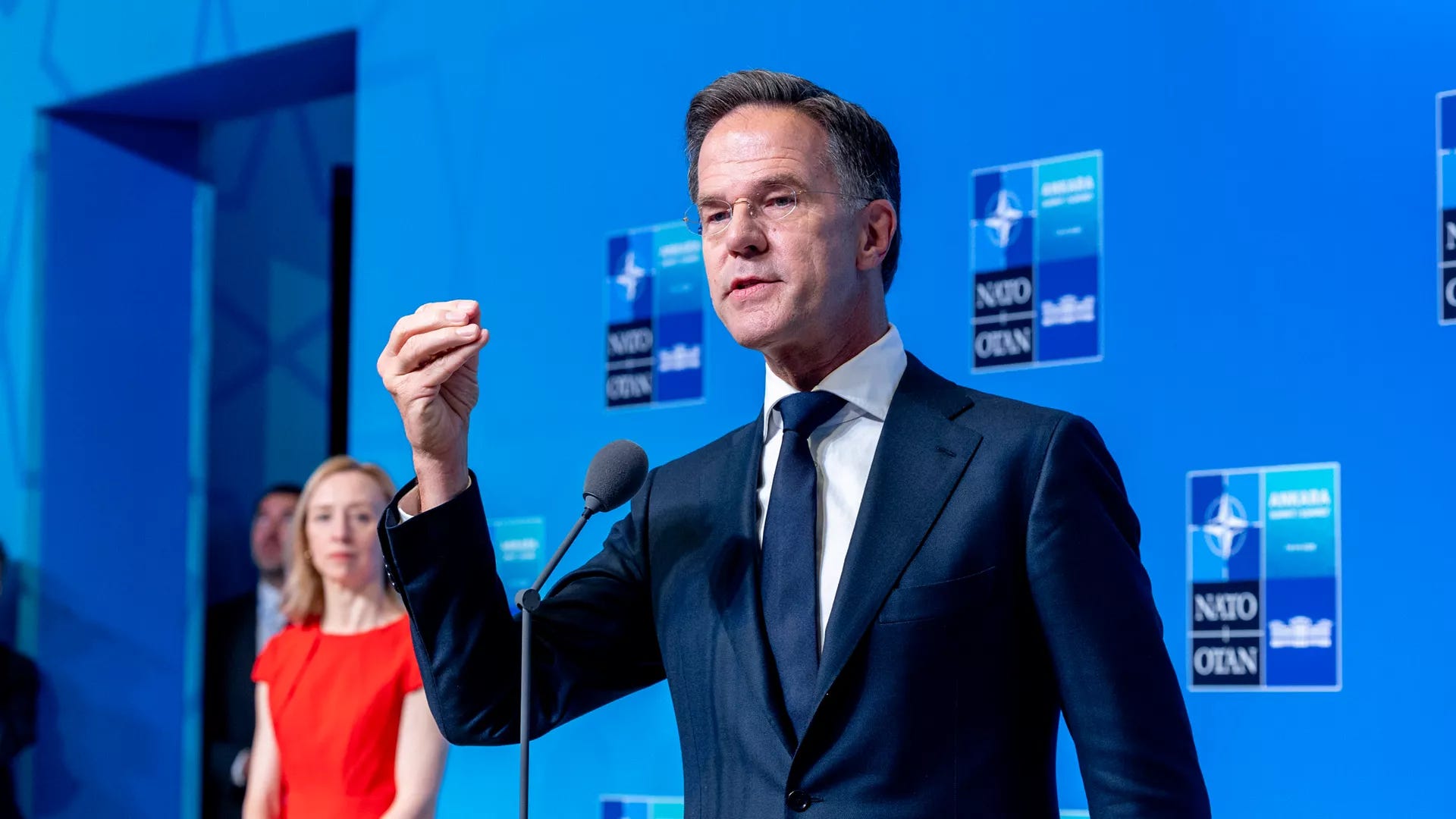
On BBC World this morning, I made an argument that tends to land badly in Western capitals but holds up against everything we’re seeing on the ground: despite the mounting hardships ordinary Russians now face - long lineups at petrol stations, Ukrainian drone and missile strikes reaching deep into the country, tightening internet restrictions - there is little prospect of a popular uprising against Putin and his war.
The summit’s marquee announcement - Trump’s pledge to license Ukrainian production of Patriot interceptors - illustrates the gap this piece is about. Laudable, yes. But as we detail elsewhere in this edition, it is years and many ifs away from stopping a single Iskander, in a week when Kyiv failed to intercept 23 of them. Announcements are not deterrence.
If you want to understand why the war grinds on regardless, look at Belgorod this week.
The border region has absorbed a punishing Ukrainian missile and drone campaign - regional authorities recorded more than 230 attacks in a matter of days, with at least four civilians killed and gas, water, and electricity knocked out across parts of a city of 320,000. An independent local outlet has documented 2,836 residents of the region killed since the war began - roughly one death every 14 hours. “We are living in hell every single day,” one resident wrote on VK, according to reporting by The Moscow Times.
But read those posts closely and note where the anger is directed: at the acting governor, for slow repairs. At officials, for “counting the dead on social media” instead of fixing the water. Not at the Kremlin. Not at the war. Five years in, with the war literally landing on their homes, the grievance remains administrative, not political. That is not a population on the verge of revolt. It is a population that has pretty much internalized the war as weather.
The same pattern is visible in Moscow’s response to Ukraine’s deep-strike campaign against refineries and fuel infrastructure: this week the Kremlin banned diesel exports to protect domestic supply. It will absorb the economic pain, ration, adapt - and fight on. It can also lean on buddies from Iran and North Korea to India and China.
The nuclear question NATO leaders won’t say aloud
The second point I made on air is one NATO leaders are acutely aware of, even if it rarely surfaces in summit communiqués: for Putin, this is an existential battle. Pushed into a corner, he could do the unthinkable and reach for tactical nuclear weapons - especially when the red lines drawn for him have been dotted rather than solid. Every threshold the West declared and then quietly abandoned has taught the Kremlin the same lesson about the cost of escalation: negotiable.
Consider the posture of the alliance itself. NATO has scrambled jets hundreds of times since the start of the war. The UK Ministry of Defence reports a 30 percent increase over two years in Russian vessels threatening British waters, with the spy ship Yantar lasering RAF pilots and GPS jamming hitting Royal Navy frigates. Britain, an island, is vulnerable: it has about 60 undersea cables, plus energy links, according to the BBC. Defence Secretary John Healey told MPs in January the UK absorbed some 90,000 cyber attacks in the past year, most linked to state actors.
That is not the behaviour of an alliance throwing everything it can at stopping Putin. And it is emphatically not the behaviour of a Putin who is scared of NATO. It is the behaviour of an adversary probing, testing, and learning — off Scotland, over the Baltic, under the Atlantic’s cables - while the alliance reacts.
The enemy within
Which brings us back to the warning from Kyiv: analyst Bohdan Chomiak argues that the debate over weapons stockpiles misses the more dangerous front: the capture of NATO members’ domestic politics by Russia-sponsored populists, and hybrid campaigns that no ceasefire will pause. “The enemy within is worse than the external enemy,” he writes.
Put the three pictures together - a Russian population that will not rise, a Kremlin that reads Western red lines as suggestions, and an alliance whose internal cohesion is the actual target - and the Ankara summit’s arithmetic about spending percentages starts to look like an answer to the wrong question.
Live from Rome on BBC World Television, I connect the intersecting geopolitical fault lines running from the NATO Summit to the Gulf to the front lines of Ukraine. With President Trump declaring the ceasefire over, renewed escalation in the Gulf risks diverting Western attention - and scarce air defense systems - away from Ukraine, just as President Zelensky pleads for more protection for Kyiv. For Gulf leaders, the timing could hardly be worse: the region was only beginning to normalize, and this crisis puts fresh pressure on capitals from Abu Dhabi to Riyadh. And on Ukraine: knowing Putin’s character, he is unlikely to be pushed to the negotiating table. For him, this is an existential fight - and if cornered, he could reach for the unthinkable: tactical nuclear weapons. NATO leaders know it, and they’re navigating an extraordinarily difficult course.
Brief: Trump’s Patriot Pledge to Ukraine — Laudable, but Loaded with Ifs
World Briefing — NATO Summit Special Coverage
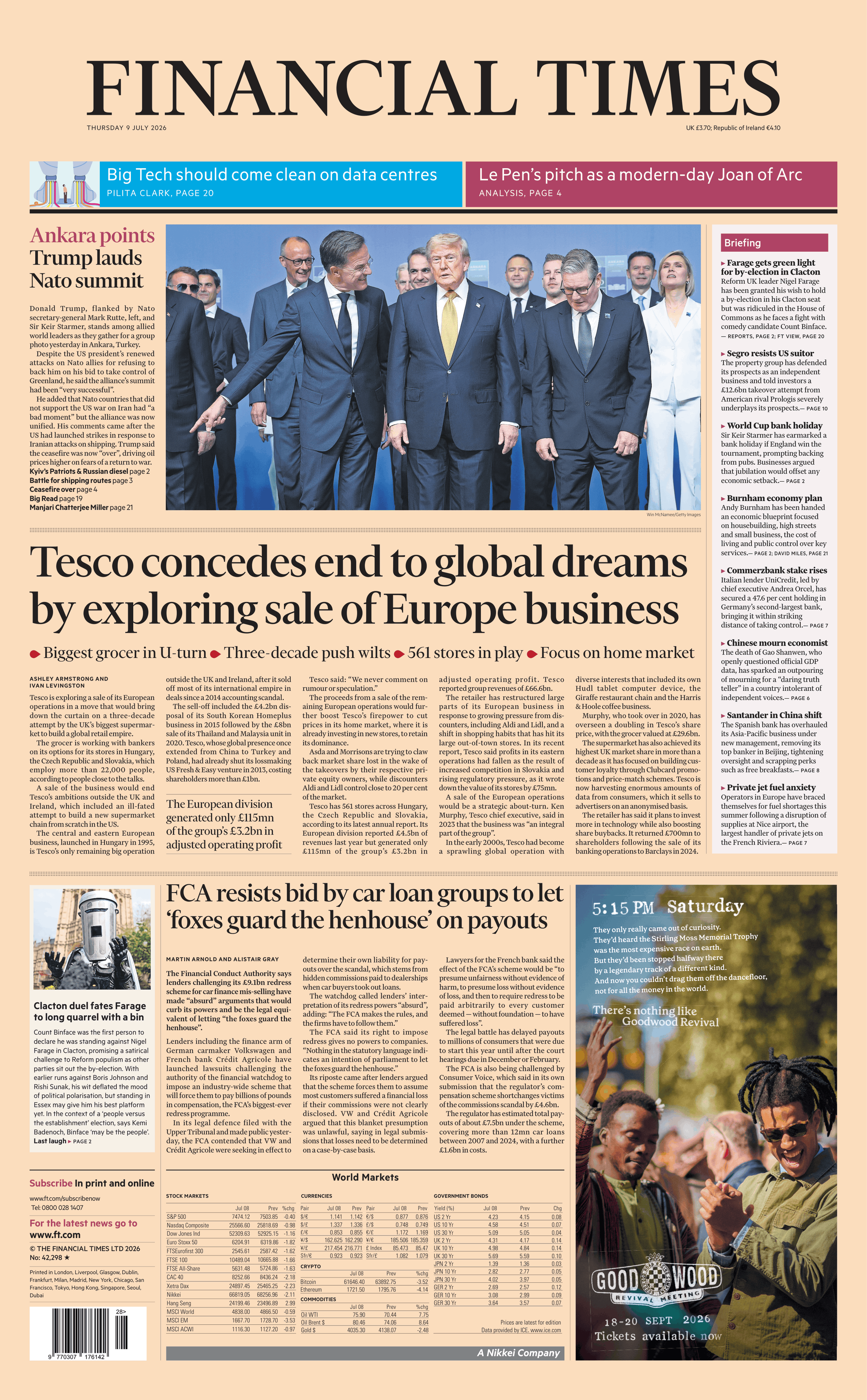
On the sidelines of the NATO Summit in Ankara, US President Donald Trump handed Volodymyr Zelenskyy a headline: Washington will license Ukraine to manufacture its own Patriot interceptor missiles. “We’ll give them the right to make Patriots,” Trump said - adding, characteristically, that Kyiv would then have no grounds to complain about supply.
The need is undeniable. Ukraine’s interceptor stockpiles are running dry - drained in part by US drawdowns to counter Iranian attacks in the Middle East - and Russia has adjusted its targeting accordingly. According to RFE/RL, Ukraine has intercepted 90 percent of Russian long-range drones and 80 percent of cruise missiles this year, but 70 percent of the 522 ballistic missiles fired got through. In the July 6 barrage on Kyiv - the third in a week - not one of 23 Iskander-M missiles was stopped. The July 2 attack killed more than 30 people, among the deadliest of the entire war.
But the distance between pledge and production is vast. Experts consulted by RFE/RL point to a thicket of obstacles: production facilities that would themselves sit exposed to Russian ballistic strikes, the same component shortages plaguing US manufacturers, layers of American export-control and legal hurdles, and fears in Washington that sensitive technology could leak to Moscow or Beijing. Even optimists put meaningful output a year or more away - in a war where Kyiv’s air defence math is failing this week.
The candid assessment from one analyst: whatever Trump approved, it won’t help Ukraine in the near term. Some Ukrainian defence voices argue the better bet is offense - long-range strike capability against the Russian plants and units launching the missiles - while domestic firms race to field homegrown alternatives like Fire Point’s Freya system, itself still months from an operational battery.
A green light, in other words - at the far end of a very long road.
As NATO leaders gather in Ankara, a Kyiv-based analyst warns the alliance is fighting the wrong war - and that a ceasefire in Ukraine would settle nothing
World Briefing — NATO Summit Special Coverage
KYIV — As alliance leaders debate weapons stockpiles and spending targets in Ankara this week, a pointed warning is coming out of the Ukrainian capital: NATO’s most dangerous vulnerability isn’t a shortage of arms - it’s the erosion of political will from within.
“Too often we are presented with false choices,” Bohdan Chomiak, a Kyiv-based analyst, wrote in his newsletter to subscribers this week. The prevailing logic - that defending NATO against Russia simply requires more weapons - misses the nature of the threat, he argues. “If NATO falls apart because populist right-wing demagogues, sponsored by Russia and supported by Russian social media campaigns, capture the political agenda of NATO countries and make it impossible for NATO to function, will more weapons solve this problem?”
It’s a question with particular resonance at a summit already shadowed by questions about alliance cohesion - and it cuts to the heart of the ceasefire debate now dominating diplomatic back channels.
Chomiak is blunt about what a ceasefire would and wouldn’t achieve. “Will a ceasefire in Ukraine stop Russian hybrid campaigns to prevent Ukraine from joining the EU?” he writes. “In other words, will a ceasefire stop the use of other means of war? Probably not.”
If NATO falls apart because populist right-wing demagogues, sponsored by Russia and supported by Russian social media campaigns, capture the political agenda of NATO countries and make it impossible for NATO to function, will more weapons solve this problem?
The implication: any agreement that freezes the front lines while leaving Moscow’s disinformation machinery, political interference operations, and economic coercion intact would merely shift the war to quieter terrain - one where Ukraine’s Western partners have proven far less vigilant.
His prescription is uncompromising. Russia’s covert and overt war campaign ends with certainty only “if Russia is defeated and the allies don’t let greed lead them to crafting a peace agreement based on preferential access to the natural resources of the Russian empire” - a caution aimed squarely at Western capitals where talk of post-war reconstruction contracts and resource deals has already begun.
His closing line distills the warning into a single sentence that could serve as an epigraph for this entire summit: “The enemy within is worse than the external enemy.”
Bohdan Chomiak is a Kyiv-based analyst. Excerpted from his subscriber newsletter with permission. Views expressed are his own.
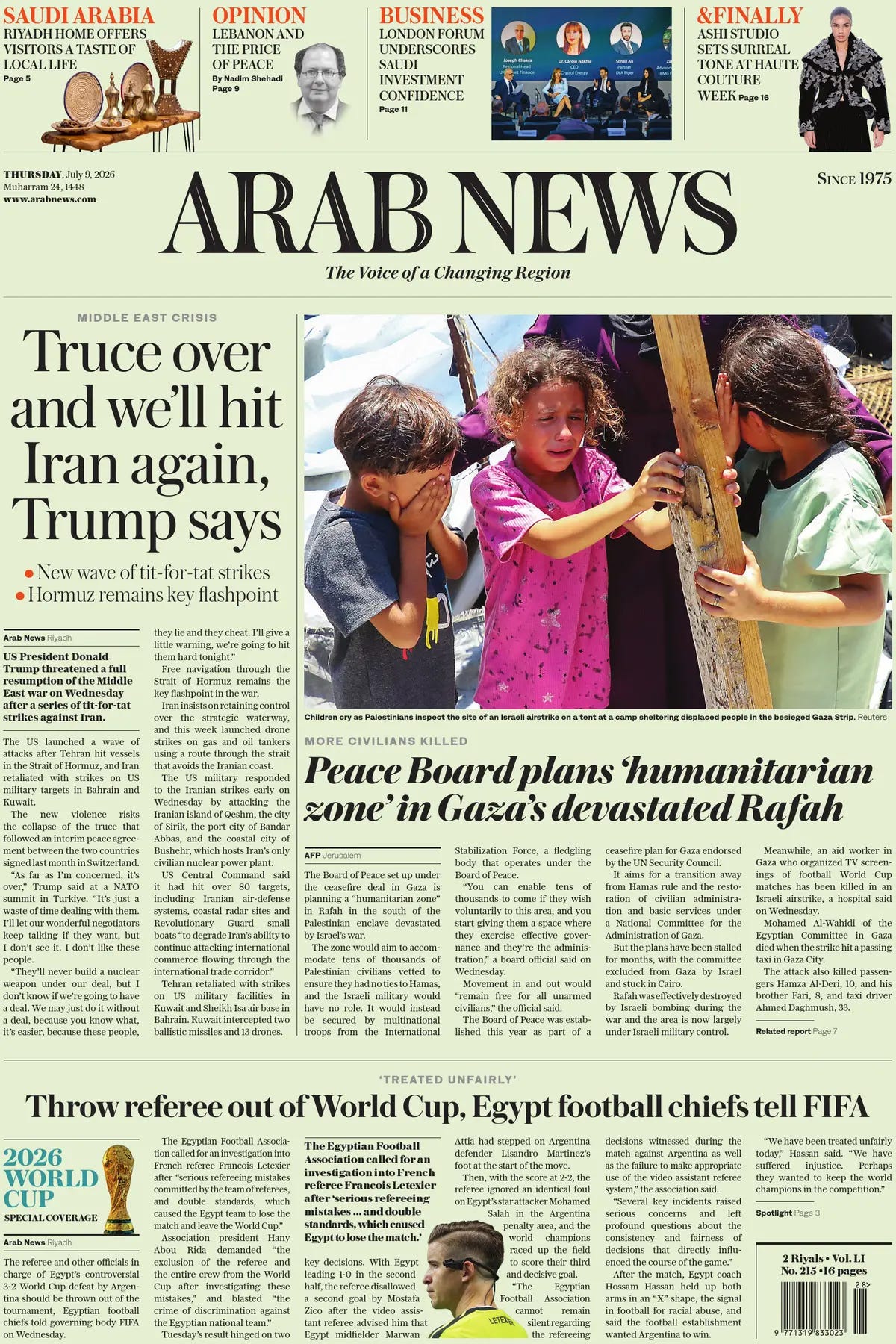
Another round of US strikes on Iran was underway late Wednesday, the United States Central Command (CENTCOM) said. It said the strikes were intended to further degrade Iran’s ability to threaten freedom of navigation in the Strait of Hormuz. “The United States is holding Iran accountable for recent unjustified aggression against commercial shipping and civilian crews freely navigating a vital international waterway,” CENTCOM said in a post on X. Earlier in the day, US President Donald Trump alluded to a second day of attacks on Iran and said the ceasefire with Tehran was over, in his view. He called Iranian leaders “scum” and “cuckoo.” - Al Arabiya
Italian Prime Minister Giorgia Meloni said Italy will not take part in military operations against Iran, reiterating Rome’s position amid escalating tensions in the region. “We have had a very clear line from the beginning of the conflict in Iran … we will not participate in attacks against Iran,” Meloni told reporters at the NATO summit in Ankara. In March, Italy denied permission for US military aircraft bound for the Middle East to land at the Sigonella air base in Sicily.
A coalition of nine European countries is urging Brussels to prolong emergency flexibility for the Entry/Exit System, arguing the bloc is not yet ready to phase out the current safeguards. In a joint letter dated July 7 and seen by POLITICO, Belgium, France, Germany, Greece, Italy, Malta, the Netherlands, Portugal and Switzerland told Internal Affairs Commissioner Magnus Brunner that the system’s first months of operation have exposed “significant difficulties” that cannot be underestimated. The ministers reaffirmed their support for the new Entry/Exit system but want the Commission to allow member countries to continue using the system’s built-in emergency mechanism beyond Sept. 6, 2026, when it is due to expire. The mechanism allows border authorities, in exceptional cases, to temporarily suspend the collection of travelers’ fingerprints and facial scans to ease congestion, while still registering everyone entering and leaving the Schengen area. In the letter, ministers also request written guarantees from the Commission on this issue before the current flexibility expires. Commission spokesperson Markus Lammert said the Commission welcomed the countries’ “explicit commitment” to the full implementation of the EES and to the systematic registration of all non-EU travelers. He reiterated that the legislation already includes built-in flexibilities, including the possibility of suspending biometric data collection over the summer, and said the Commission remains in “close and constructive contact” with the “few member states” experiencing difficulties at certain border crossing points. “There is a strong joint will to make the system work everywhere,” he added. The letter comes as airports, airlines and ferry operators sound the alarm that the new system is causing long queues and operational disruption during the summer travel season, with industry groups arguing that technical and operational problems are unlikely to be resolved by early September. So far, the Commission has given no indication that it intends to extend the current flexibilities beyond Sept. 6 or suspend the mechanism more broadly - Politico
***Read this story on EU border complications in Rome via our partner website, My Savvy Traveller

Colombian President-elect Abelardo de la Espriella on Tuesday suspended the transition process with President Gustavo Petro and accused him of planning a coup to stay in power after the outgoing leader refused to recognize results of the country’s election. Petro said Monday that he refused to recognize de la Espriella’s victory in the June 21 presidential runoff election over the Petro coalition’s candidate Sen. Iván Cepeda, alleging fraud without providing evidence. The conservative, Trump-endorsed de la Espriella said in a video posted Tuesday on social media that Petro and Cepeda had launched a plan to “cling to power at all costs” through “a coup d’état” by refusing to recognize his victory. He did not provide evidence to support the allegation, and Petro did not immediately respond to it. “As president-elect, I call on Colombia’s armed forces to honor their oath to protect the constitution and democracy and to disobey any orders from Petro to the contrary,” de la Espriella said. He also called on the international community to monitor the transfer of power and urged his supporters to “resist” until his inauguration on Aug. 7. The presidential transition, known in Colombia as “empalme,” in which the outgoing administration provides the president-elect with the information to prepare for governing, has been marked by mutual accusations between political rivals Petro and de la Espriella. Germán Ávila, Colombia’s finance minister and the Petro administration’s transition coordinator, ordered his team to suspend the handover process in response to de la Espriella’s suspension. In a televised address, he criticized statements by members of de la Espriella’s transition team and said the president’s team had “nothing to hide.” - NBC
The journals….