FIUMICINO, Italy. In June, Gianfranco Miconi told a visiting Canadian reporter that he would never give up his fishing hut at the mouth of the Tiber. “I’m not leaving this place. I’ll leave here dead,” he said.
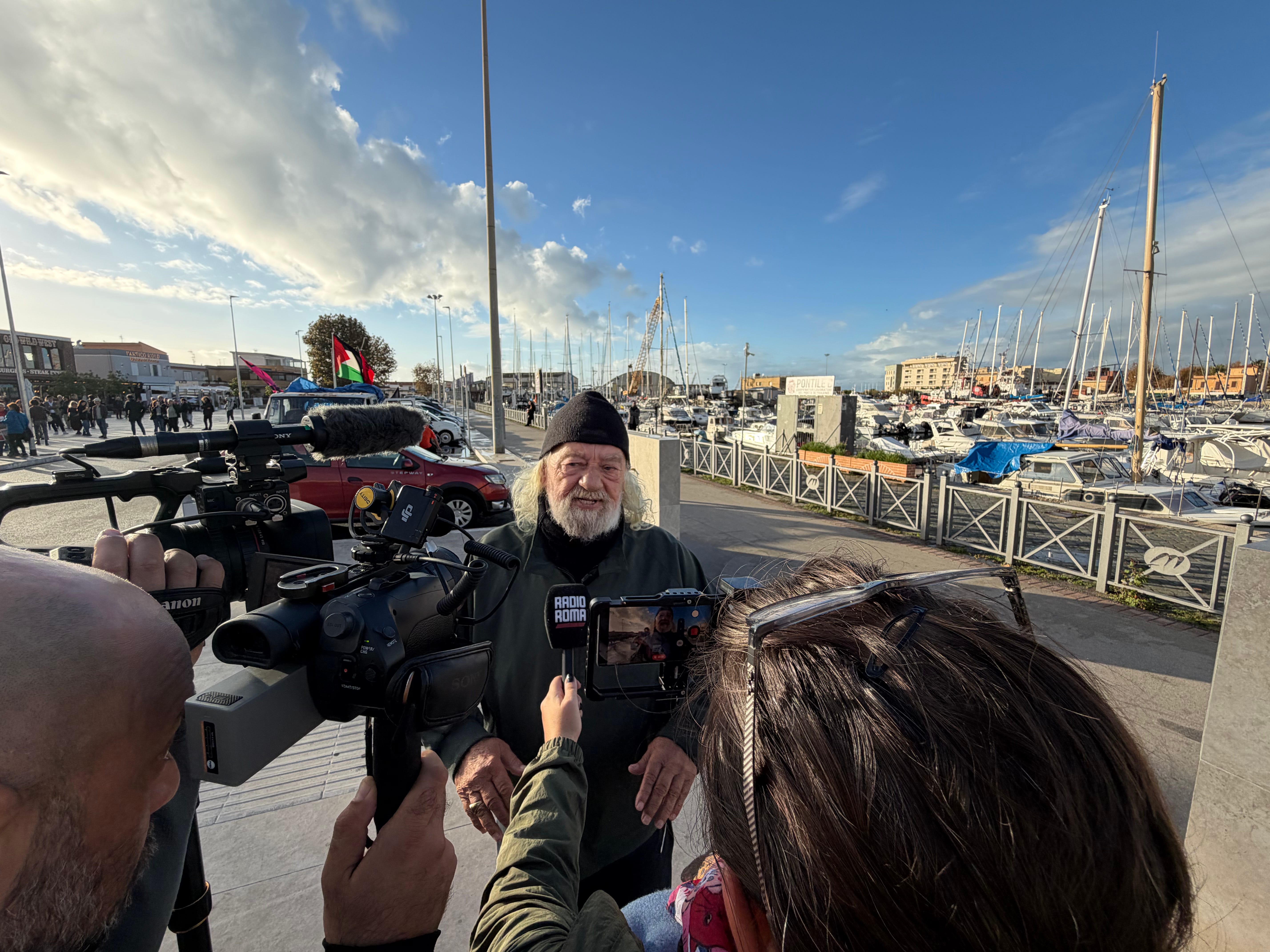
On Sunday I met him on the harbour front here, very much alive - and evicted. Miconi, 74, a former government worker known to everyone as “Attila,” wore a black wool cap over a mane of white hair and stood with the masts of the marina behind him while a local television crew held a microphone under his chin. He is articulate, warm and press-savvy, and he patiently took my questions through a Rome reporter who translated. He told the reporters gathered around him that he was among those turned out when police cleared seven huts at dawn on Thursday, and that he is now in temporary lodging with no idea what comes next.
The reporter he spoke to in June was my friend and Globe and Mail colleague, Eric Reguly, whose piece “Turning tides” brought this fight to an international audience. By Sunday it had brought more than 600 people into the streets of this seaside town beside Rome’s main airport, behind a banner reading “For every eviction, a barricade.”
I followed the march, and the scene deserves more than a local brief. Nearly every argument Europe is having with itself was on that street.
My first encounters were with the police, and they were not pleasant. Officers declined to point me to a spokesperson and would not say how many of them were deployed. When they noticed me filming, the tone turned threatening: where was I from, what did I do, and a foreign press accreditation, I was told, was not enough.
The march itself could not have been more different. It was the first Italian protest I have covered, and it never stopped feeling like a street party. Children and dogs wove through the crowd, a sound system on a flatbed truck kept the music going, and more than a few marchers had fortified themselves beforehand with prosecco and limoncello.
The huts, known as bilancioni, sit on the site of a planned cruise terminal and marina, put at up to €600 million and backed by Royal Caribbean and a British infrastructure fund. It would bring some of the world’s largest ships to within minutes of Fiumicino airport.
In July a Lazio court annulled the project’s environmental approval. The ministries involved and Fiumicino’s own town hall have appealed, and Italy’s Council of State is expected to rule in February. So residents ask why the huts had to be emptied now, for a port that has lost a crucial environmental authorisation.”
Mayor Mario Baccini says the area had to be secured and the huts will be restored and returned to the city. One placard offered a blunter reading: “Baccini at Royal Caribbean’s orders.” The mayor is a local man, but the capital’s fingerprints are on this too: Thursday’s operation was planned by Rome’s police headquarters, and it was Rome’s mayor, Roberto Gualtieri, who put the port on the list of essential works for the 2025 Jubilee.
Start with scale: an industry written off during Covid now wants what would be Italy’s first big privately run port. Then overtourism: Fodor’s put little Isola Sacra on its 2026 no-travel list, citing Venice and Santorini as warnings and noting that Rome already struggles with more than 35 million visitors a year. Then cumulative burden. Fiumicino already hosts Italy’s busiest airport, which wants a fourth runway, and the same committees are fighting both. The huts, organisers said in remarks carried by RAI, recall a Fiumicino that lived off the sea “before watching it only from the height of aeroplanes.”
Italians call projects like these grandi opere, and the biggest of them, the Meloni government’s €13.5 billion bridge to Sicily, is still awaiting final authorisation a year after the national audit court refused to sign off on it.
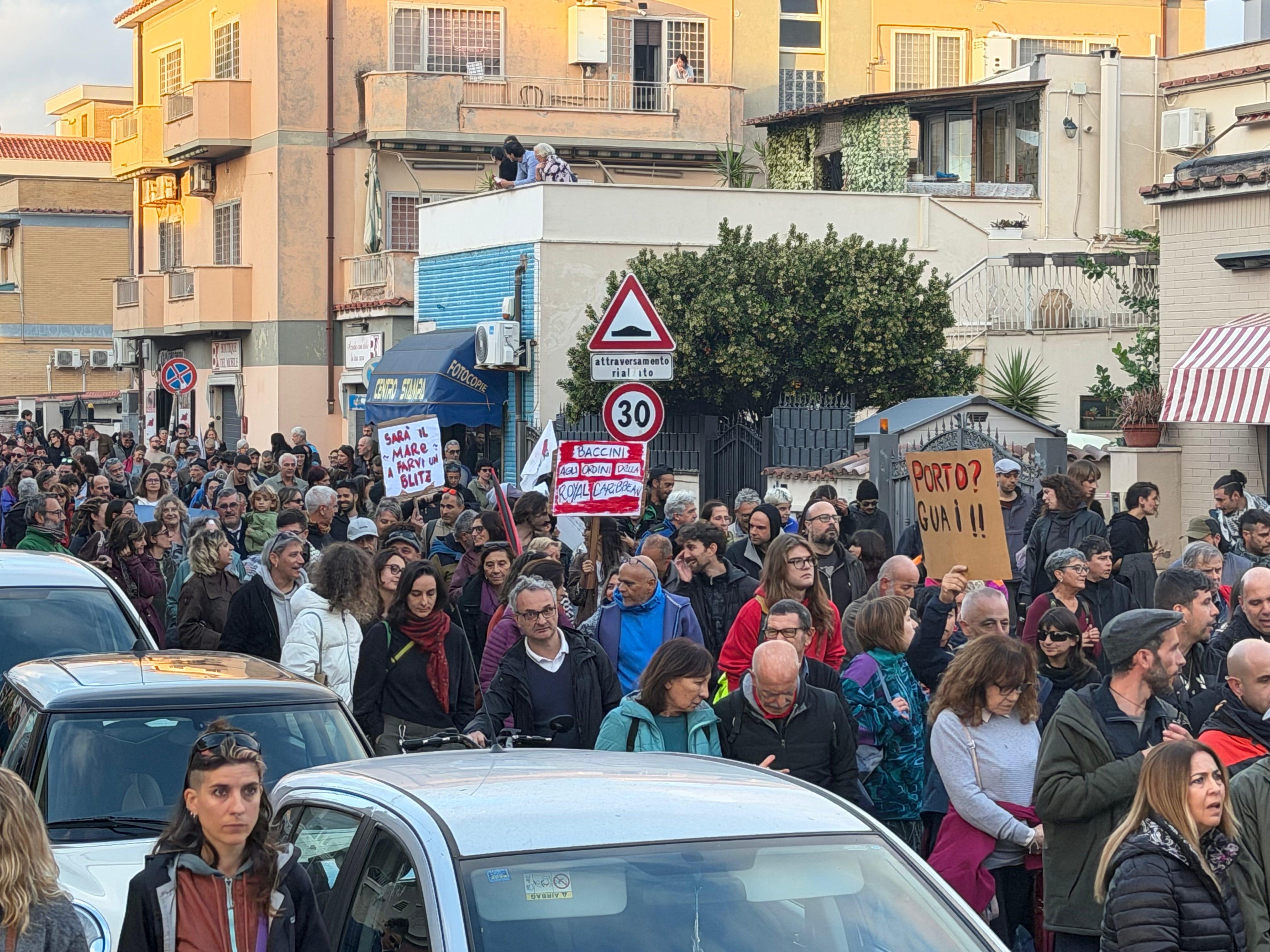
There is a climate irony here too. Western Europe has just had its hottest summer on record, and river-cruise sailings were cancelled as the Danube and Rhine ran too low to navigate. Ocean mega-ships are a different business, but this one is planned for a coast already losing sand and a sea setting temperature records. Getting the ships in at all would mean dredging roughly three million cubic metres of sand from a shallow seabed, by Fodor’s account, and doing it again and again. Another placard on Sunday put it best: “It’ll be the sea that raids you.”
Carovita, not dolce vita
And then housing, of which Attila is now the face. It may explain the turnout. Italians have a word for what is squeezing them: carovita, the high cost of living, and it is a long way from la dolce vita. Inflation hit 5.4 per cent in October, a level last seen in 2023, and pay is not keeping up. The country has seen weeks of cost-of-living protests, part of a wave across Europe, with coordinated rallies called for this coming weekend. One speaker on Sunday tied the huts to evictions of occupied social spaces across Rome this year.
Some caution is due. A local bar owner urged me not to overdo it: this was people angry that a handful of long-time residents had been turned out. She is right about the trigger. But she is no cheerleader for the port either. Cruise passengers, she told me, are not expected to spend much in town. Her own sister marches with the movement.
And the ledger has two sides. Baccini has argued the port would bring thousands of construction and service jobs at no cost to the town. The airport is already its economic engine, and visitors seeking a slower pace than Rome fill its restaurants and a mushrooming number of short-term rentals.
My view is that the ships already have a home at Civitavecchia, an hour up the coast with a rail link to Rome, and should stay there. Isola Sacra has no station at all, and opponents reckon each ship call would mean more than 100 buses. Nor would this be the only new berth. A publicly run commercial port is already under construction a few miles north, and it too is slated to take cruise ships. Anna Longo of the heritage group Italia Nostra told Fodor’s that a second cruise port so close to the first is “incomprehensible.”
When Reguly sought an interview for his piece, Baccini wondered why Canadians should care about a Fiumicino matter. On Sunday more than 600 of his own townspeople supplied an answer. They are not only saying no: organisers want the huts restored as heritage inside a nature park at the river mouth, and a public debate on the area’s future. They get their next hearing on December 1, when the town council holds a special session on the dispute. Until the judges rule, a community with a court ruling in its pocket is in no mood to wait quietly.
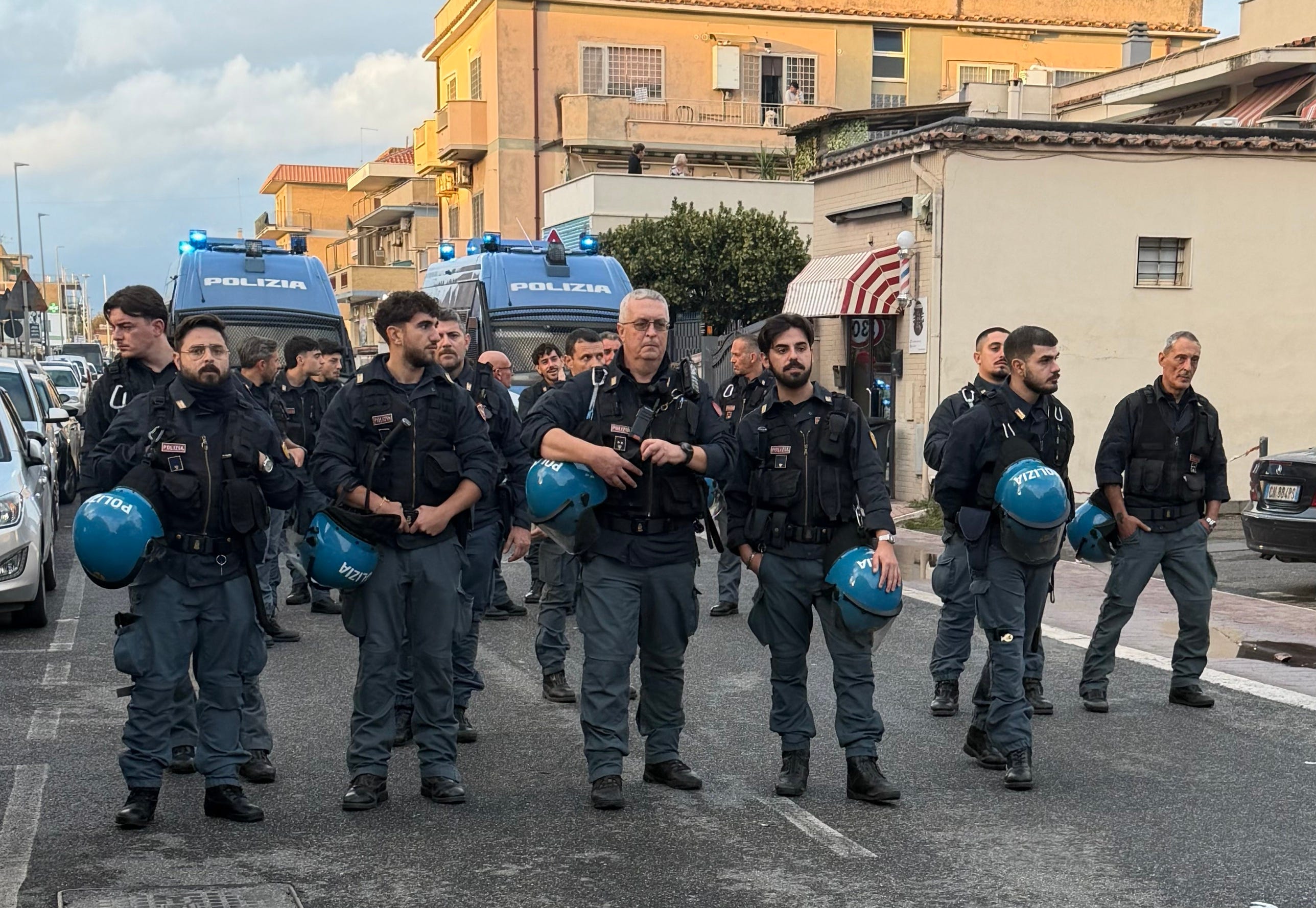
The mayor’s office and Royal Caribbean were asked for comment. None had responded by publication time.
News Briefs
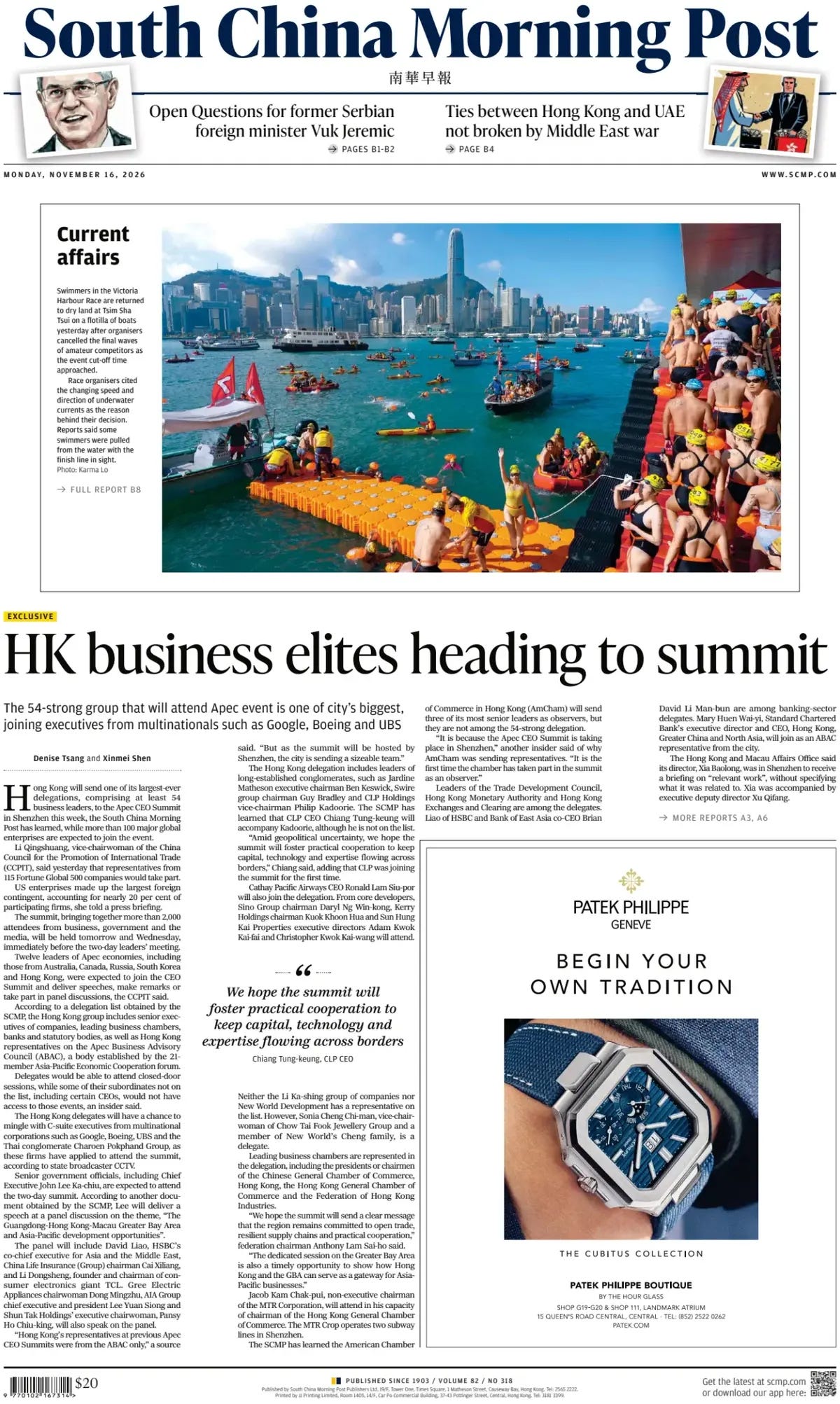
Beijing has confirmed that Xi Jinping will sit down with Donald Trump and Vladimir Putin in Shenzhen on Thursday, on the margins of the APEC leaders’ summit, the first time the three have met in a trilateral format. Foreign ministry spokeswoman Mao Ning said the encounter would be of “ground-breaking significance,” with world peace and strategic stability between major powers on the agenda. Expect more theatre than substance. US officials say Trump wants to talk nuclear arms reductions and raise his war in Iran, but will steer clear of Russia’s war in Ukraine, and a senior administration official concedes no agreement is expected. China, with roughly 600 warheads against some 5,000 each for the US and Russia, has long insisted the two larger arsenals shrink before its own is up for discussion. The optics of the three together will be interesting, as I told Sky News on Sunday. Trump and Xi may not see eye to eye on much, but one thing they share is that both are indirectly supporting Putin’s war in Ukraine: Xi with drone parts and other supplies, Trump by loosening sanctions restrictions on Russia, which boosts Moscow’s ability to fund the war. US allies are uneasy: Kurt Tong, a former US ambassador to APEC, told the Japan Times the meeting would be “perceived extraordinarily negatively in Japan” - CNA, Japan Times
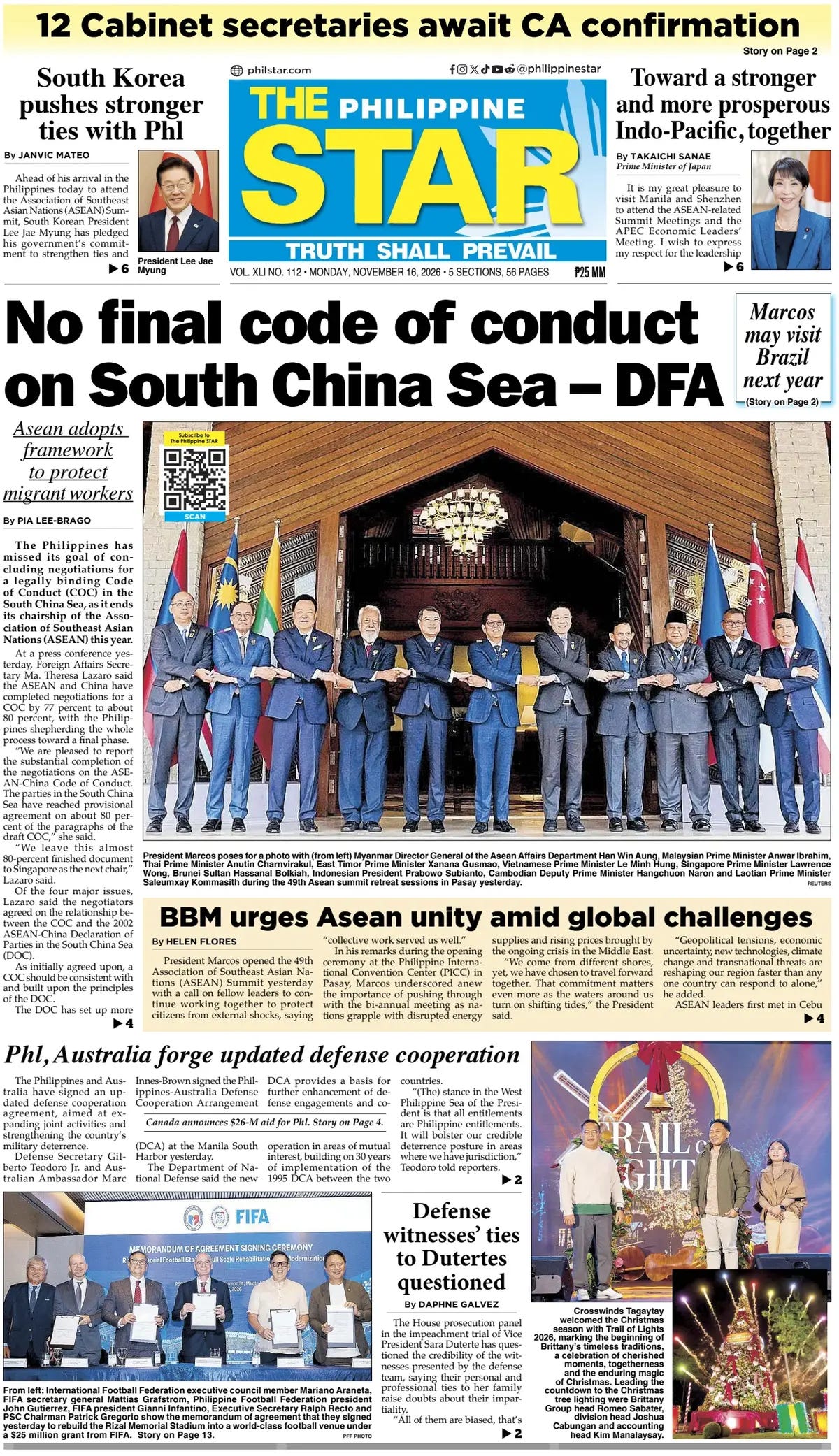
“Not a failure” is Manila’s verdict on a South China Sea code of conduct that remains unfinished as its year in the ASEAN chair ends. Roughly four-fifths of the draft is provisionally settled, by Philippine foreign minister Theresa Lazaro’s count, but the sticking points include whether the code would bind anyone legally. That leaves next year’s chair, Singapore, with two unfinished files: the code and Myanmar. On Myanmar, the door back in for the military-backed administration is now ajar but conditional, and the junta’s presence in Manila stayed at the level of a foreign ministry director-general. The headline deliverable is a signed ASEAN Digital Economy Framework Agreement. Self-restraint was the watchword on Monday, when Ferdinand Marcos Jr shared the stage with Chinese Premier Li Qiang at the ASEAN-China summit. Tuesday afternoon brings Donald Trump, whose arrival is timed for after the main sessions wrap, with a special ASEAN-US summit closing the programme before he heads to Shenzhen for Thursday’s sit-down with Xi and Putin - ABS-CBN, Al Jazeera, AP, ANI
Roberto Vannacci has named his price for propping up a second Meloni government, and Kyiv is at the top of the bill. In an interview with POLITICO, the former general, whose far-right National Future party is polling at around 7%, set three conditions for a deal after Italy’s election next year: an end to all support for Ukraine, the repatriation of migrants he considers unassimilated, and withdrawal of Italian backing for the EU’s Green Deal. The MEP and one-time military attaché in Moscow says he wants no cabinet seat, which would leave him free to keep agitating from outside government. Giorgia Meloni insists she won’t be dictated to, but with his party level with her coalition partners, the League and Forza Italia, her path to a majority may run through him. Opposition lawmaker Lia Quartapelle told POLITICO that any such bargain would come “at Ukraine’s cost.”
Land for NATO membership? I called it buffoonery on Sky News from Rome. NATO entry needs unanimity. Ceding territory needs a Ukrainian referendum. Neither is happening. Kyiv wants a ceasefire and security guarantees. Moscow is recycling its 2022 demands and running out the clock. In this live interview Sunday from Rome, I also discussed plans for a trilateral meeting between Donald Trump, Xi Jinping and Vladimir Putin at the APEC Summit in Shenzhen
President Volodymyr Zelenskyy has urged the United States and Elon Musk to lift restrictions on Ukraine’s access to the Starlink network, saying “It is important to be on the right side of history….Our interceptor drones lose connection with their operators at a speed of 161 kilometers per hour and simply cannot catch up with Russian jet-powered ‘shaheds,’” Zelenskyy wrote in a post on X. “We are counting on these restrictions being lifted.” Kyiv relies on the network for its frontline communications and operating drones, including interceptors that shoot down incoming Russian drones. Last week, Zelenskyy said that Ukraine’s military was facing “systematic” restrictions on the service, operated by Elon Musk’s SpaceX, with connections only working when devices were moving slower than 161 kilometres per hour. “We still have no clear explanations,” Zelenskyy said on Friday, confirming the restrictions were still in place “along the entire front line” and over territory occupied by Russia. Ukraine relies on Starlink for battlefield communications and access to the military-grade Starshield to intercept drones and missiles in its territory. Ukraine first reported problems using Starshield last month following a row between Zelenskyy and US President Donald Trump over a US-Russia diesel deal, before access was eventually restored. Kyiv says the restrictions effectively make it impossible for them to intercept Russia’s jet-powered drones, which can travel at up to 1,000 km/h - Euronews
Ukrainian forces have struck the strategic bridge linking Russia to annexed Crimea as part of a record-setting overnight drone attack on Russian regions, officials said Monday. Kremlin-backed head of Crimea Sergei Aksyonov said automobile traffic would be restricted until at least midday local time while emergency services were deployed to the scene. Russia’s Transportation Ministry said passenger trains continued running normally while engineers were looking into opening a two-way lane for cars. The extent of the damage was not immediately known. Europe’s longest bridge connects Russia with the Crimean peninsula, seized by Russia from Ukraine in 2014. It is widely viewed as one of Russian President Vladimir Putin’s signature infrastructure projects. It has been struck several times, including an October 2022 blast in which an explosive-packed truck was detonated on the bridge, causing months of disruption - Moscow Times
Estonia said on Sunday it would close its border with Russia as of December 1 after stopping what it called an attempted arson attack by Russia's GRU military intelligence on a drone factory. The move marked a sharp escalation in tensions between Estonia and Russia, which Tallinn sees as part of a broader campaign of hostile activity linked to Moscow’s war against Ukraine. Moscow said it would verify whether Estonia was indeed planning to shut all crossings. Earlier on Sunday, Prime Minister Kristen Michal wrote on X that the GRU had ordered a "sabotage attempt" at the Estonian defence company Threod Systems on Saturday night. Michal called the incident “part of Russia’s broader hybrid war against Europe, with the aim of decreasing support to Ukraine and pressure on Russia”. Threod Systems manufactures reconnaissance and attack drones - Euronews

Producers at leading newsrooms read World Briefing to see what’s coming next. You can read it the way they do: in full.
This autumn that meant reporting from Odesa, from the Moldova–Ukraine frontier where almost no foreign journalists are based, Rome, and from inside the UN during General Assembly week.
Reader support is what makes that travel possible.
World Briefing Plus subscribers get:
→ Subscriber-only video briefings every Saturday
→ In-depth reporting and analysis that connects the geopolitical dots
→ From 2027: in-person and virtual briefings
🌍 Upgrade: https://michaelbociurkiw.com/winter2026
Prefer to back the reporting directly?
❤️ Patreon: https://patreon.com/Michael_Bociurkiw
☕ PayPal: https://www.paypal.com/ncp/payment/DGPNWZ6ERYYW2
The world isn’t getting any simpler. Thank you for helping me make sense of it.
The journals…