

In this bonus video, free for all readers, I connect the dots between the unrest spreading across European cities and the war in Ukraine. Over the past few days, Paris has at times looked like a war zone, and protests have flared in Milan, Bologna and Turin. The common thread is the cost of living. The bigger question is where this leads: could a cost-of-living revolt in Europe chip away at support for Ukraine, and play into Moscow’s hands?
For those who prefer to read rather than watch, here’s the gist.
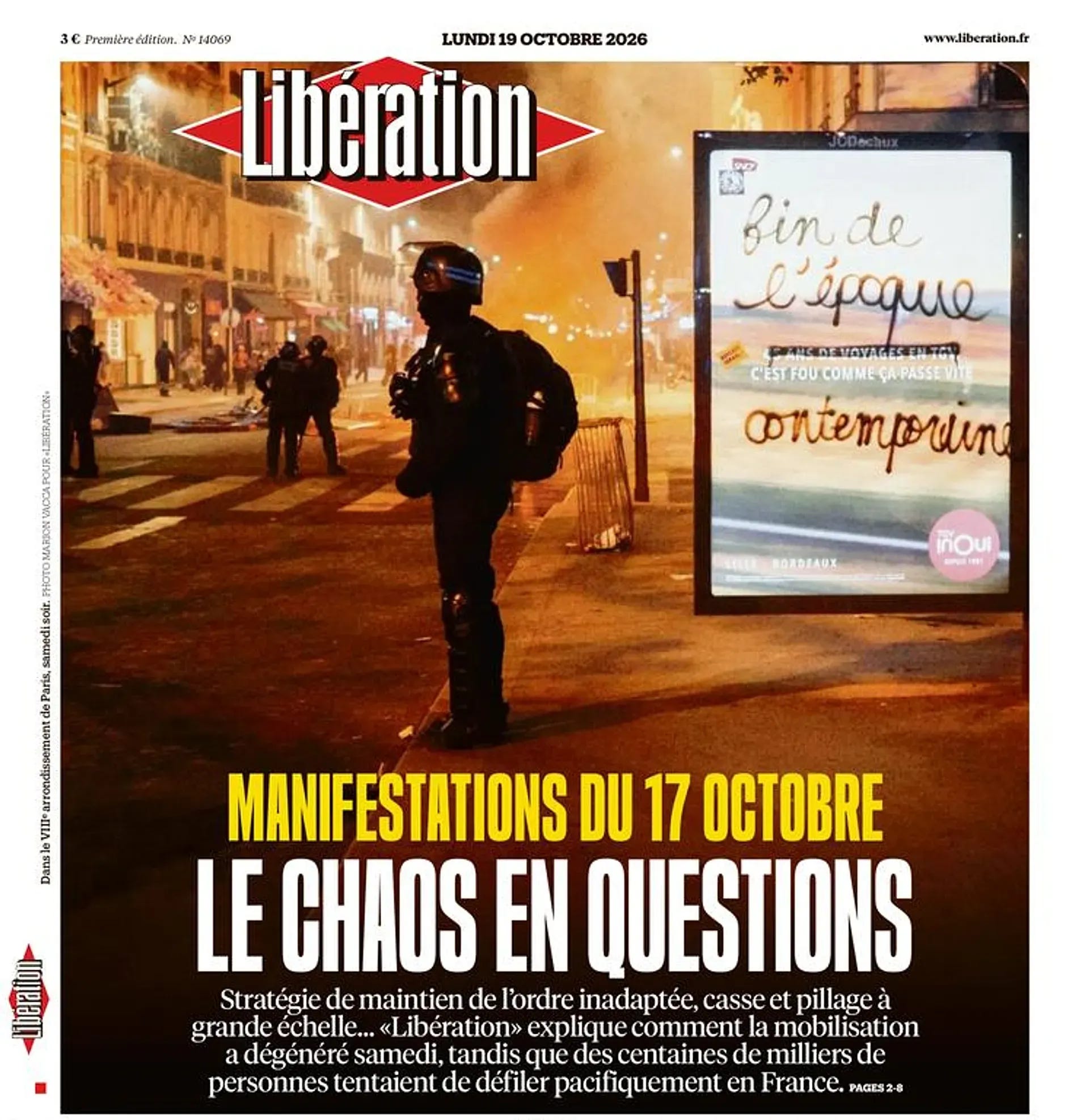
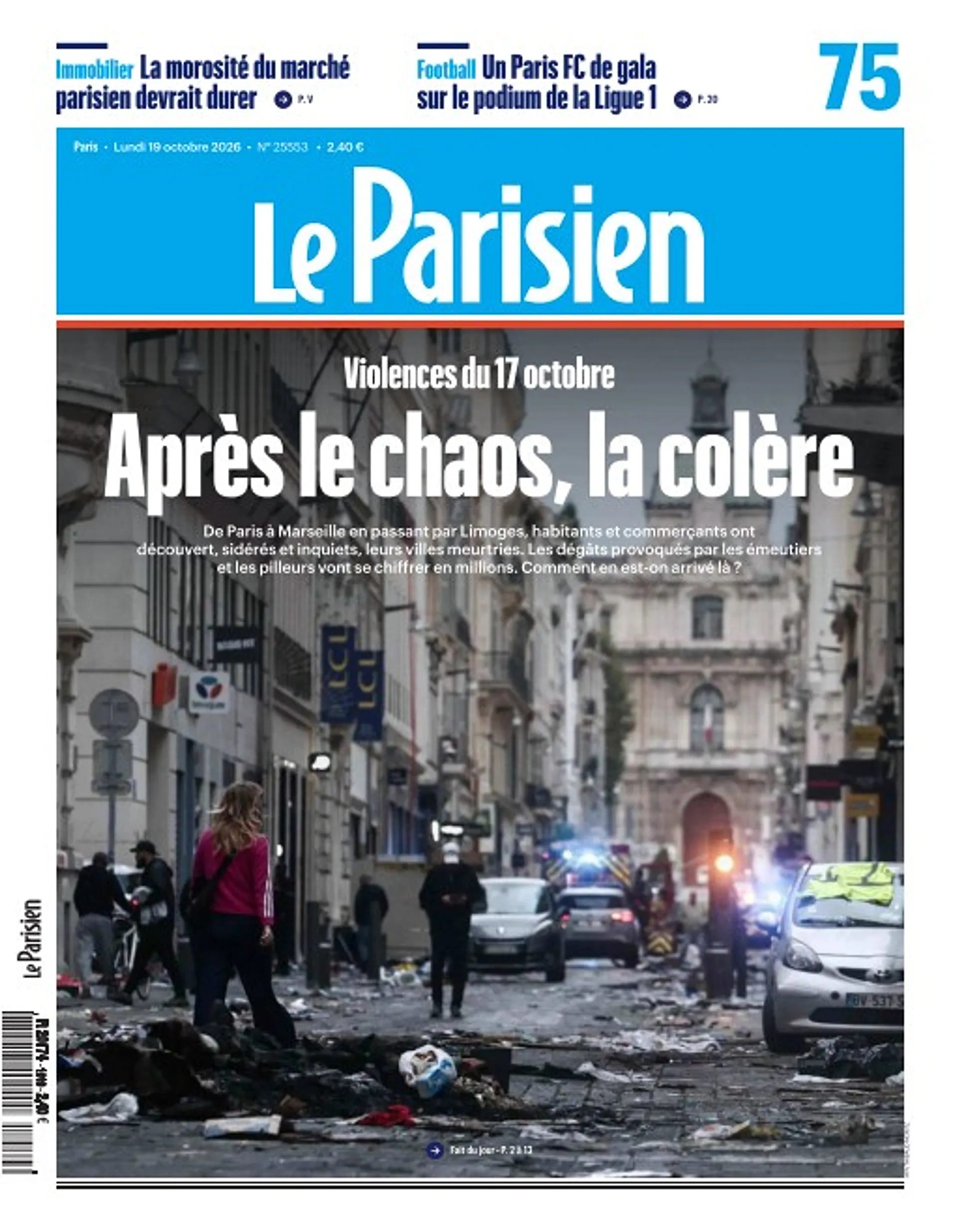
The trigger is money. In France and Italy, anger over rising prices has spilled onto the streets. In Milan, protesters targeted petrol price hikes and the state of the education system, with some references to the wars. Demonstrations followed in Bologna and Turin. Italian Prime Minister Giorgia Meloni called an emergency meeting, and Milan’s mayor described the unrest as a worrying phenomenon.
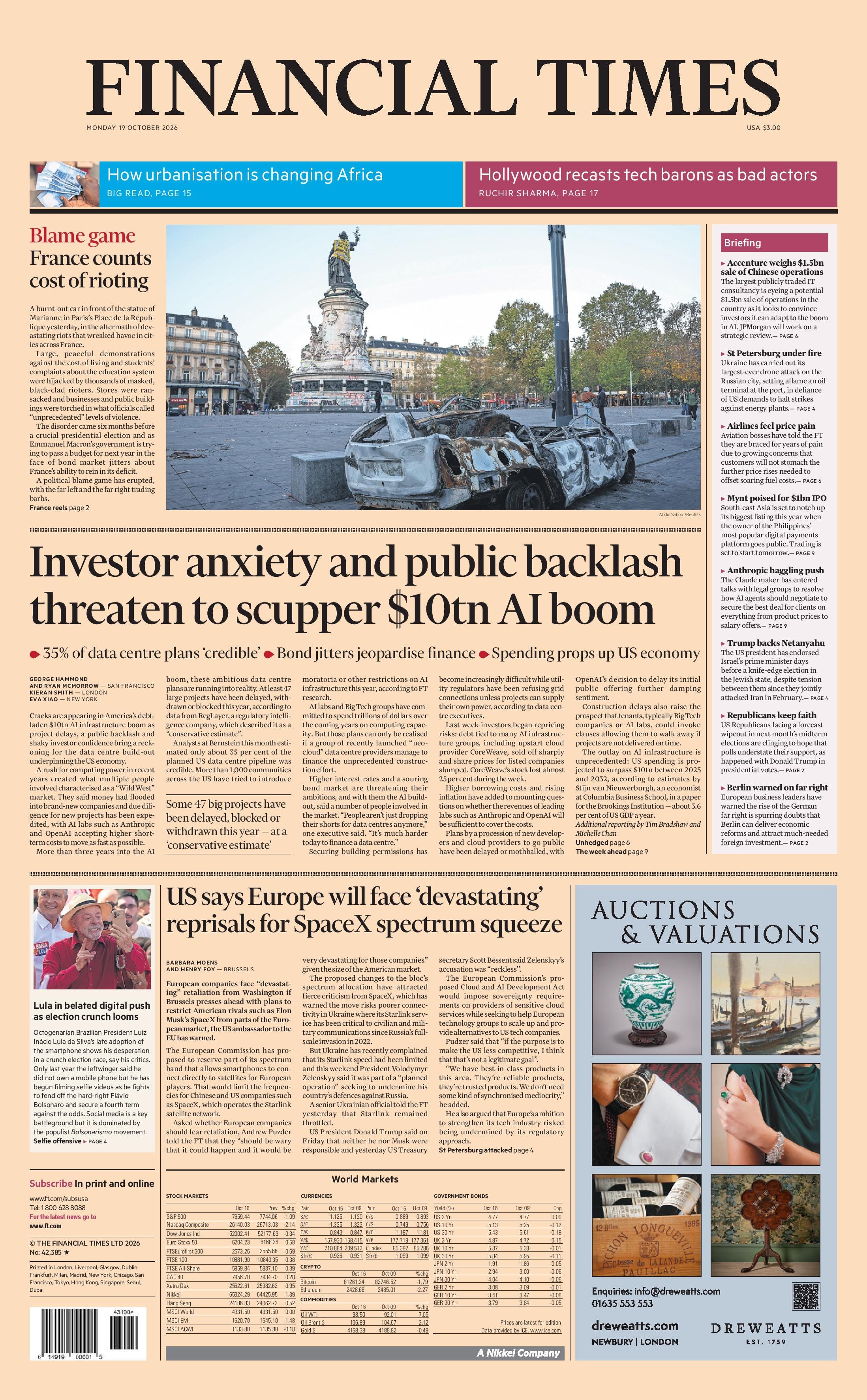
In France, the scenes have been worse. Paris, the world’s top tourist destination, began to resemble a war zone this weekend, which is hardly good for the country’s image. Much of the anger is aimed at President Emmanuel Macron. After nearly a decade in power, many ordinary French people feel his promise of a better France hasn’t reached them.
Readers may recall the Gilets Jaunes, the long-running movement sparked by fuel price hikes in 2018. Fuel is again part of the story. The war involving Iran has pushed up energy prices. To a much smaller extent, so have Ukraine’s strikes on Russian refineries, which have hit the supply of refined Russian oil. That feeds a narrative some politicians are happy to exploit.
What struck me was the tone. Both Macron and Meloni have blamed hooligans. When I watched Macron’s speech last night and then Prime Minister Sébastien Lecornu’s press conference today, I saw a lot of tone deafness. The prime minister’s opening words promised a massive criminal response, with an 80% prosecution rate. He claimed two-thirds of those arrested were adult men already known to police, which is difficult to verify. He floated localized curfews and hinted at a crackdown on social media, where these movements spread. He blamed the far left for the mayhem and warned it could destabilize next year’s presidential election. But almost zilch about the core grievances of students and protesters.
Why this matters for Ukraine: Support for President Zelensky in Europe appears to be slipping slightly. In both France and Germany, figures on the far left and far right are more open to Moscow’s arguments. If cost-of-living anger keeps growing, those voices will get louder, and Kyiv’s backers may find it harder to make the case for sustained support. That is especially true if a far-right politicians such as Marine Le Pen or Jordan Bardella wins next year’s presidential election in France, one of Ukraine’s most important backers.
News Briefs
Russian President Vladimir Putin has proposed a summit next month with US President Donald Trump and Chinese leader Xi Jinping to negotiate an end to the four-year-old Ukraine conflict that would favour Moscow, the Wall Street Journal reported on Sunday, citing people familiar with the discussions. The proposed summit comes amid warming ties between Trump and Putin especially after the US President announced a deal to buy Russian diesel and signed an order on Friday waiving key sanctions on Moscow. Citing a former Russian intelligence officer briefed on the matter, the paper said that Putin’s suggestion came in an October 9 telephone call with Trump that also yielded the diesel deal between the two countries. The Russian and Chinese embassies in Washington did not immediately reply to requests for comment. The Kremlin has suggested holding the trilateral dialogue on the sidelines of the upcoming Asia-Pacific Economic Cooperation summit, the WSJ report said, citing people familiar with the discussions. That summit is set to take place on November 18 to 19 in Shenzhen. Kremlin spokesman Dmitry Peskov confirmed to the Journal that discussions were taking place over a potential meeting. “There is no clear understanding yet regarding the meeting itself or its potential agenda, although all three parties acknowledge the hypothetical possibility of such a meeting taking place,” he told the Wall Street Journal. A senior US official told the Journal that Trump had not agreed to such a summit, but he could be receptive to the idea. Trump’s diesel deal with Putin and the executive order waiving sanctions on Moscow have drawn criticism from Ukrainian President Volodymyr Zelenskiy, who has warned it would embolden Putin and prolong the war.
The plan represents an effort by Putin to capitalize on warming ties between Trump and the Russian leader that have alarmed Ukraine and its allies in Washington and Europe. Such a summit - without the involvement of Ukrainian President Volodymyr Zelensky - would be unprecedented and send alarm bells ringing in European capitals and beyond - Wall Street Journal
Saudi Arabia is set to postpone in-person events at its “Davos in the desert” investment conference following an escalation in Houthi attacks on the country’s airports, according to three people familiar with the matter. One of the people said that the organisers of the annual Future Investment Initiative, which was due to begin next week, are now considering either holding the event virtually on the planned dates or postponing it. But they added that the gathering would not take place in person as planned. The move follows a spate of attacks by Yemen’s Houthi rebels in recent weeks, including strikes on Riyadh’s airport, and deals a fresh blow to the kingdom’s ambitions to establish itself as a global financial centre. The FII is one of the Gulf region’s highest-profile gatherings and typically attracts heads of state and executives from the world’s largest banks, asset managers and energy majors. Over the past decade, the FII has become one of Saudi Crown Prince Mohammed bin Salman’s main platforms to showcase the country’s economic diversification efforts to an international audience - FT
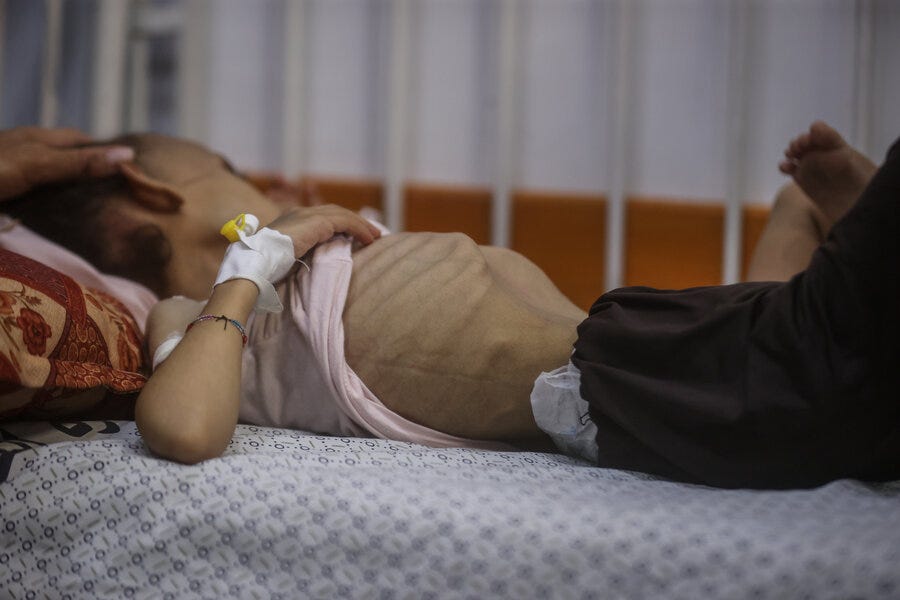
Funding shortages have forced the World Food Programme to cut food assistance in Gaza by around a third. Half a million people have lost access to critical aid just as winter approaches. More than nine months into an extremely fragile ceasefire, 1.4 million people, two-thirds of Gaza’s population, still face crisis or worse levels of acute food insecurity. WFP warns that up to 90 percent of Gazans could face high levels of acute food insecurity by the end of 2026, and that recent modest improvements remain fragile. Most people in Gaza have been displaced multiple times. They live amid insecurity, damaged homes, poor sanitation and limited access to safe water. With 80 percent unemployed, many cannot afford fresh vegetables, fruit, protein or cooking fuel. The cuts are also hitting the West Bank. In September, WFP halved the number of people it assists there, from 400,000 to 200,000. Escalating violence, movement restrictions and a deepening economic downturn have left an estimated 900,000 people food insecure, and a third of families cannot afford a nutritious diet. WFP says it urgently needs US$450 million through March 2027 to keep supporting vulnerable people in Gaza and the West Bank. Without it, the agency warns, the fragile gains made since the ceasefire could be lost.
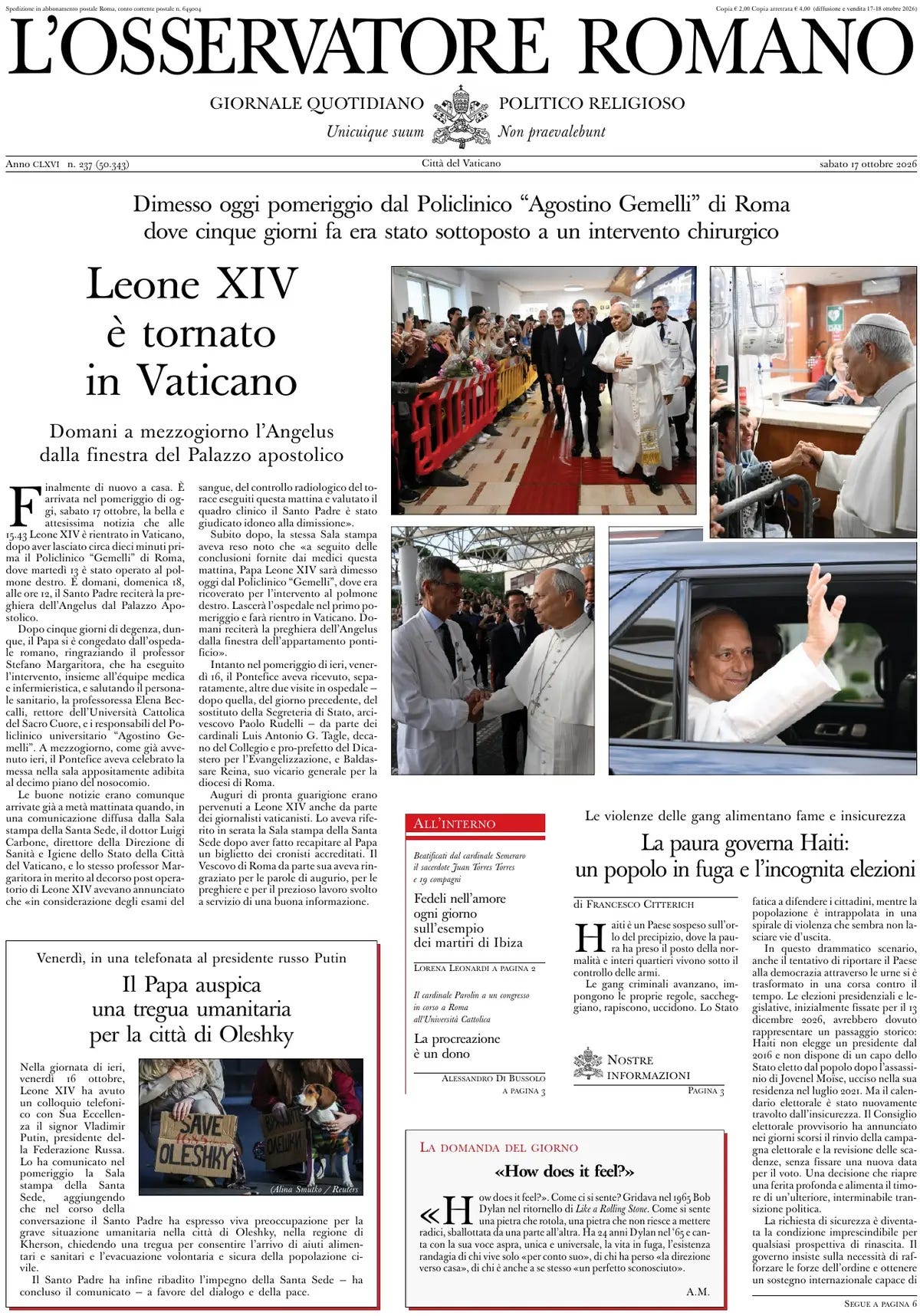
Ukraine says its Starlink service has been deliberately throttled. President Volodymyr Zelenskyy described the slowdown as part of a “planned operation” to undermine the country’s defences against Russia, the Financial Times reports. A senior Ukrainian official told the paper on Sunday that the service was still being restricted. Washington has pushed back hard. President Donald Trump said neither he nor Elon Musk was responsible, and Treasury Secretary Scott Bessent dismissed Zelenskyy’s accusation as reckless. Starlink has been central to Ukraine’s civilian and military communications since Russia’s full-scale invasion in 2022, and any degradation strikes at the heart of its war effort. The dispute is unfolding alongside a wider transatlantic fight over the satellite network. The European Commission has proposed reserving part of its spectrum for European satellite operators, a move that would limit access for US and Chinese firms, including SpaceX. The US ambassador to the EU, Andrew Puzder, warned that European companies could face devastating retaliation if Brussels goes ahead. SpaceX has argued the change risks poorer connectivity in Ukraine. The backdrop matters too. Ukraine has just carried out its largest-ever drone attack on St Petersburg, setting an oil terminal ablaze, in defiance of US demands to stop hitting Russian energy infrastructure. Nothing so far links the two. But as Kyiv and Washington diverge on how the war should be fought, the question of who controls Ukraine’s lifeline to the battlefield is becoming harder to ignore.
Nearly 46,000 foreign nationals from 151 countries have signed contracts with the Russian army and are fighting, or have fought, against Ukraine, according to Dmytro Usov, secretary of Ukraine’s Coordination Headquarters for the Treatment of Prisoners of War, as reported by Suspilne. The biggest pools of recruits remain close to home for Moscow: Uzbekistan, Tajikistan, Belarus, Kazakhstan, Azerbaijan and Kyrgyzstan. But Colombia, an unexpected name, also makes the top tier. The more striking trend is how far the net is widening. Over the first nine months of 2026, recruits from Indonesia, Peru, Sierra Leone, Burundi, Chad, the Philippines, Congo and Panama rose. Meanwhile, the number of recruits from Nepal, Sri Lanka, Cuba and China is falling. Africa has become a major hunting ground. In Kenya, a joint intelligence and police report presented to parliament put the number of recruits at more than 1,000, five times the government’s earlier estimate. Most had been lured by fake job offers and flown out on tourist visas through Istanbul and Abu Dhabi. In South Africa, where World Briefing reported independently on men tricked into frontline service, the government came under pressure to act. President Cyril Ramaphosa raised their return directly with Vladimir Putin. South African law bars citizens from fighting for a foreign army without government authorisation. The figures suggest that Russia’s manpower model increasingly depends on economic desperation across the Global South. It raises uncomfortable questions for those governments about how their citizens end up on a European battlefield, and who is profiting from sending them there.
CNN’s legendary chief international anchor is departing the network. Christiane Amanpour, 68, has decided to sign off from CNN next June, she announced in a bombshell statement on Monday. “After many months of thought and a few sleepless nights, I have decided to separate from CNN, my partner of 43 fantastic years!” she said, adding that she “looks forward to interesting new projects down the line, and will always be rooting for CNN and maintaining its history of independent journalism. Remember: always be truthful, not neutral.” CNN chairman Mark Thompson broke the news to Amanpour’s colleagues in a memo. “Christiane has thought carefully about this decision, and she and I have been discussing it for some months,” he wrote. “Like so many CNNers who will hear the news today, I’m very sorry to see her go, but I’ve come to accept that this is the right time for her, both personally and professionally.” - AP
The U.S. Supreme Court agreed on Monday to consider whether Congress had the constitutional authority to impose a ban on distilling spirits in private homes more than 150 years ago. Plaintiffs challenging the prohibition on home distilling claim the 1868 law is an antiquated relic of Reconstruction-era politics. They argue that Congress overstepped its taxation powers when it enacted the home distilling ban as part of a tax reform measure designed to curb fraud by commercial distillers. Government attorneys counter that Congress properly restricted where spirits can be distilled to prevent producers from evading federal excise taxes. They warn that lifting the ban would violate Supreme Court precedent and erode congressional powers. Federal law makes home distilling a crime punishable by a maximum sentence of five years in prison and a $10,000 fine - AP
The journals…
Europe and NATO must act now!!! They must clear the skies over Ukraine from Russian attacks. Otherwise, not only will they lose Ukraine and their own security, but also the destruction of their national political systems due to populist pressures! Why are they such cowards???
And it clicks for Canada as well. If Putin succeeds in Ukraine, Trump will be coming for Canada. It is as clear as night follows day!!!