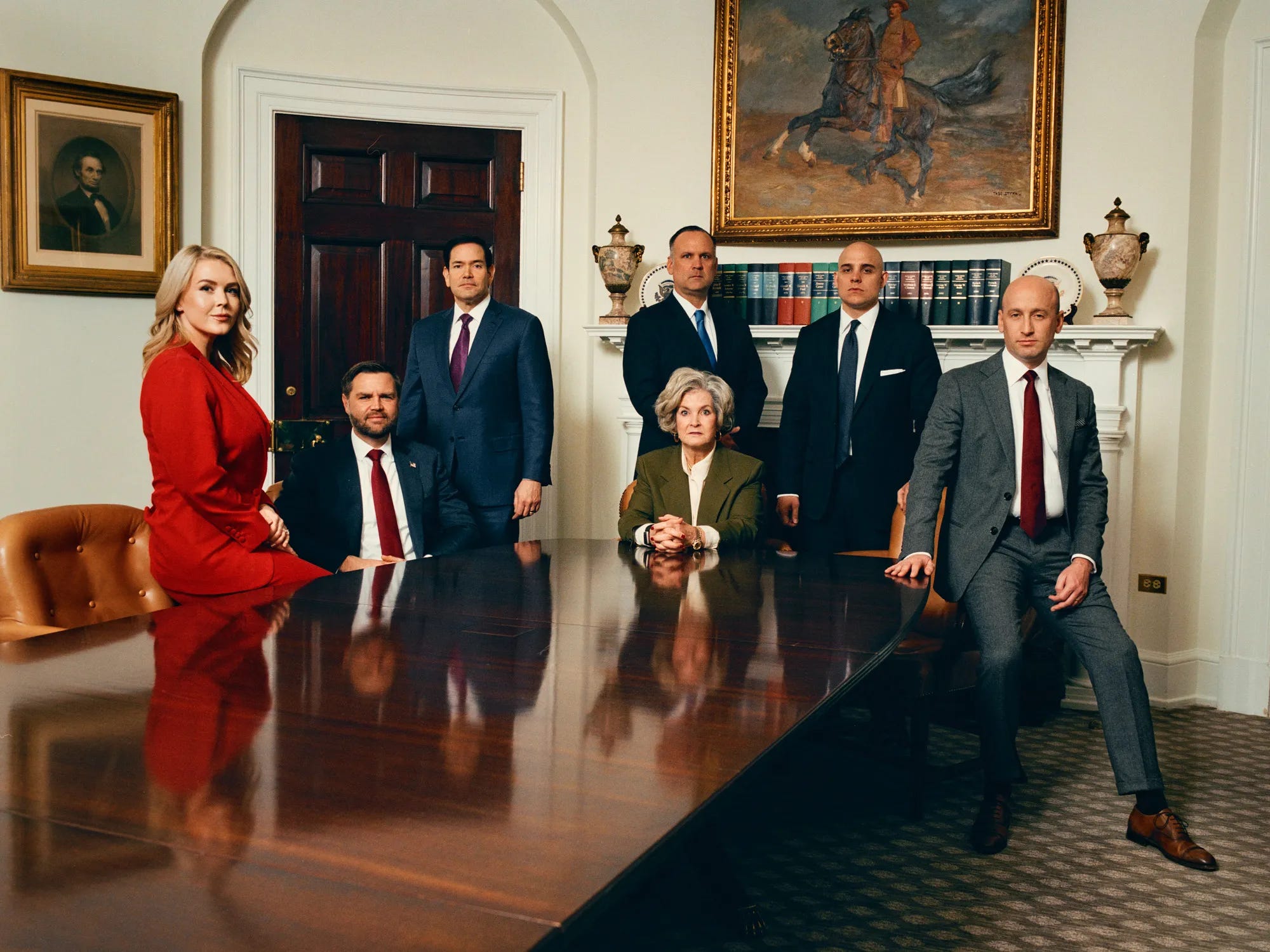
Washington is still absorbing the shockwaves from an extraordinary Vanity Fair feature that pulls back the curtain on Donald Trump’s White House - and the administration’s reaction has, if anything, reinforced its central findings.
At the center of the storm is Chief of Staff Susie Wiles, whose unusually candid remarks - delivered across eleven interviews over eleven months - reveal a presidency riddled with contradiction.
The article’s author, veteran chronicler of presidential power Chris Whipple, has noted in an interview with CNN’s Anderson Cooper that the flurry of “out of context” accusations and blanket denials is precisely what one would expect from a White House caught flat-footed.
“Everything was scrupulously in context,” Whipple told Cooper. “And I go to tell you, the giveaway when you’re a journalist, and you hear that you are the target, the subject, saying things like ‘context’ and omissions,’ you know you’re on the right track. Because there isn’t a single fact, or a single assertion, that they’ve challenged in the piece.” In his telling, the response functions less as a rebuttal than as confirmation that the reporting struck uncomfortably close to home.
Whipple went on to tell Cooper that the revelations in the interviews represented “one of those cases as a reporter in your career when lightening strikes. And it was astonishing to me to the degree to which she (Susie Wiles) was unguarded and freewheeling on the record all the time.”
Wiles disclosed that President Trump believed Vladimir Putin was never serious about a ceasefire in Ukraine, even as his administration pressed Kyiv to cede territory and proceeded with a high-profile Alaska summit that effectively lifted Putin from diplomatic isolation and restored him to the world stage. If Trump had already concluded that Putin was intent on taking all of Ukraine, the logic of conferring such legitimacy now demands scrutiny.
“The experts think that if he could get the rest of Donetsk, then he [Putin] would be happy,” Wiles told Vanity Fair way back in August. “Donald Trump thinks he wants the whole country.”
The revelations chronicled in Vanity Fair extend well beyond Ukraine. Of particular interest to World Briefing readers, Wiles said she was strongly opposed to Elon Musk’s dismantling of USAID - an extraordinary admission that underscores internal resistance to decisions with far-reaching humanitarian and geopolitical consequences. “I was initially aghast,” Wiles told Vanity Fair. “Because I think anybody that pays attention to government and has ever paid attention to USAID believed, as I did, that they do very good work.”
She also described a president who “operates [with] a view that there’s nothing he can’t do. Nothing, zero, nothing.” Yet that self-image now collides with reality: if Trump truly believes there are no limits to his power, why has he failed to deliver on his most emphatic foreign policy pledge - to end the Russia–Ukraine war on Day One of his presidency?
Today’s World Briefing brings us a little close to understanding how power actually functions inside the Trump White House - and why the gap between confidence, competence, and outcomes is becoming increasingly difficult to ignore.
President Trump thinks Russian dictator Vladimir Putin wants much more than what’s on the table in talks to end the Russia-Ukraine war, according to White House chief of staff Susie Wiles. “The experts think that if he could get the rest of Donetsk, then he [Putin] would be happy,” Wiles told Vanity Fair in August, according to a report published Tuesday. “Donald Trump thinks he wants the whole country.” Trump’s team has been pushing Ukraine to give up some of the Donbas region, a key sticking point in the talks, and they’re now trying to sell Russia on the peace plan. Moscow has not yet agreed to these terms and Ukraine is loath to cede any territory without security guarantees from the United States. Trump for months has been convinced Putin is hellbent on taking over the entirety of Ukraine with his nearly four-year-old war there — disagreeing with advisers who felt that giving him Ukraine’s easternmost region would be enough, Wiles signaled. A senior US official told The Post the same late last month as the latest US peace plan push was just kicking off. When asked what concessions Russia would have to make in a peace deal, the person said it was simply getting Russia to accept that it can’t take over all of Ukraine. “I mean, look, everyone knows Vladimir Putin wants to take the whole country,’’ the official said of the Russian dictator. “That’s his been his long-sought goal. That is something he’s made quite clear. The president is very aware of that.” Trump is not alone, according to the Vanity Fair report. Secretary of State Marco Rubio suspected similarly — at least in October — that even a maximalist deal forking over parts of the Donbas that Russia has been unable to seize in more than 11 years of war in that region would not be enough to stop Putin. “There are offers on the table right now to basically stop this war at its current lines of contact, okay?” Rubio told Vanity Fair. “Which include substantial parts of Ukrainian territory, including Crimea, which they’ve controlled since 2014. And the Russians continue to turn it down.” “And so … you do start to wonder, well, maybe what this guy wants is the entire country,” he added. While other US officials claimed Monday that they believed Russia would accept the 20-point peace plan they’ve been hammering out with Ukraine, the Kremlin itself has not said it would approve the plan. The reaction to Wiles’ comments has been stark, with some foreign policy experts and Ukraine advocates questioning why experts would believe Putin would stop fighting if only Ukraine capitulates on the eastern portion of its country. “@realDonaldTrump is right. He should lead and push the Europeans to rebuild and buy American weapons for Ukraine to hold the line while bolstering NATO’s eastern front to deter further aggression,” Hudson Institute fellow and foreign policy analyst Rebeccah Heinrichs posted to X. “And crush Russia even more economically while backing Euros interdiction of the shadow fleet.” - NY Post
Wiles said she saw trouble brewing before Trump’s infamous Oval Office scrum with Volodymyr Zelensky last February, when the president and Vance berated Ukraine’s leader on worldwide television. “If we had to do it over,” Wiles said, “I wouldn’t have cameras, because it was going to end that way.” Wiles claims the ugly spectacle was the culmination of churlish behind-the-scenes behavior by Zelensky and his entourage. It began with Zelensky failing to show up for a meting with Treasury Secretary Scott Bessent when he visited Kyiv to make a deal on mineral rights - and escalated: “It just was a bad sentiment all the way around. And I wouldn’t say (Vice-President) JD snapped, because he’s too controlled for that. But I think he’d just had enough. The Trump-Putin relationship zigged and zagged. In the walk-up to the August summit with Putin in Alaska, Trump had publicly sought a ceasefire with Ukraine. It seemed he was finally getting tough with Putin. But in fact, Trump gave up on a ceasefire before the Anchorage meeting began.” - Vanity Fair
In the hours after the story sent Washington abuzz, there has been an outpouring of support for Wiles from Trump’s top aides, Cabinet officials and some of his staunchest online protecters, CNN reported. The full-throated defense of the nation’s first female chief of staff masked a stunned White House inner circle left aghast by what some saw as a significant blunder from a typically low-profile leader many entrusted to clean up messes, not make them. Wiles called the article a “disingenuously framed hit piece on me and the finest President, White House staff, and Cabinet in history.” White House press secretary Karoline Leavitt also attacked Vanity Fair, arguing there was a “bias of omission” by excluding the positive things Wiles and others said. Privately, however, some White House aides and advisers expressed unease at the unvarnished views Wiles shared with a reporter. One Trump ally told CNN that the article appeared in “every group chat,” adding “everyone is shocked and confused.”
Across more than 10 interviews, Wiles spoke frankly about working for Trump, saying the president “has an alcoholic’s personality,” despite being known as a teetotaler. The comments, made in conversations over the past year with author Chris Whipple, are striking both in candor and topic. Judging by the response of the White House, Whipple - who is described as having an encyclopedic knowledge of former White House chiefs of staff - told CNN’s Anderson Cooper that being accused of taking things “out of context” means that he was bang on. He said the non-denial denials is what’s to be expected from an administration caught flat footed. Whipple also said that in the course of the interviews the candor shown by Wiles felt like “bing struck by lightening.”

China’s first flight of the Jiutian drone carrier signals a shift toward massed, long-range swarm warfare that could expose Taiwan, US warships and vulnerable Pacific airbases to saturation attacks built on sheer numbers rather than stealth. The test, conducted this month in Shaanxi Province, marked a significant step in China’s push toward airborne swarm warfare and long-range unmanned surveillance, according to multiple media reports. The aircraft, first unveiled at the Zhuhai Airshow in November 2024, is designed to act as an airborne mothership capable of launching more than 100 smaller drones or loitering munitions during a single mission. With a maximum take-off weight of about 16 tons, a 25-meter wingspan and an operational ceiling of 15,000 meters, Jiutian can remain airborne for roughly 12 hours and reach targets up to 7,000 kilometers away, those reports said. Chinese military commentators say this allows the drone to deliver saturation attacks, conduct intelligence, surveillance and reconnaissance (ISR), and support electronic warfare by overwhelming adversary air defenses through numbers and not just stealth. Western defense analysts describe the platform as a rare example of a high-altitude, long-endurance unmanned aerial vehicle (UAV) purpose-built for swarm deployment, beyond the capacity of US systems such as the Global Hawk or MQ-9 Reaper attack drones. Chinese sources also stress the Jiutian’s dual-use roles, including disaster relief, logistics and communications support, underscoring its broader strategy of integrating civilian and military drone development amid rising regional tensions - Asia Times
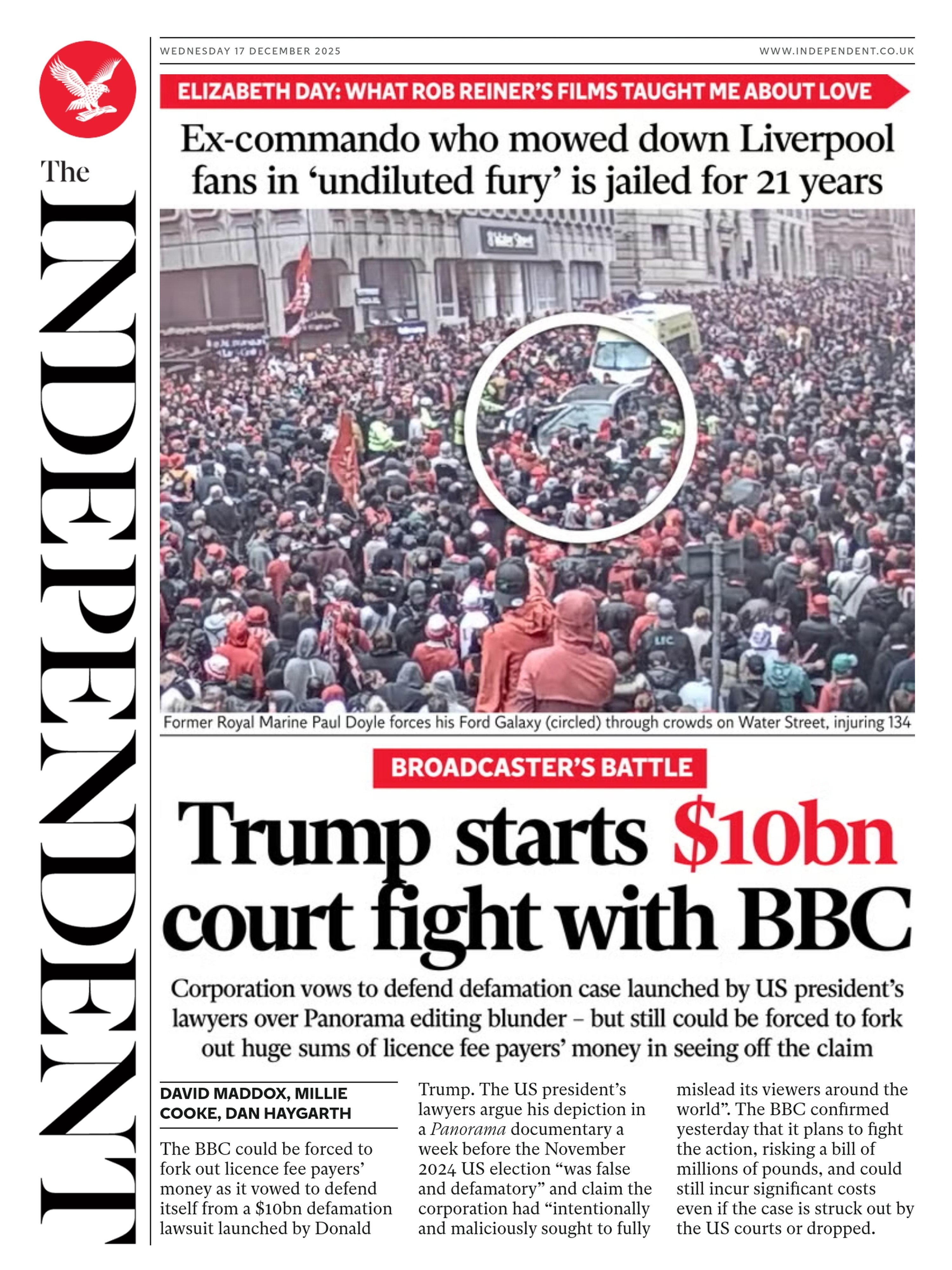
U.S. President Donald Trump on Tuesday expanded a list of countries subject to a full travel ban, prohibiting citizens from an additional seven countries, including Syria, from entering the United States. The White House said in a statement that Trump signed a proclamation “expanding and strengthening entry restrictions on nationals from countries with demonstrated, persistent, and severe deficiencies in screening, vetting, and information-sharing to protect the Nation from national security and public safety threats.” Tuesday’s move banned citizens from Burkina Faso, Mali, Niger, South Sudan, Syria and those holding Palestinian Authority-issued travel documents. The action also imposes a full ban on Laos and Sierra Leone, which had previously only been subject to partial restrictions. The White House said the expanded ban goes into effect on January 1 - Reuters
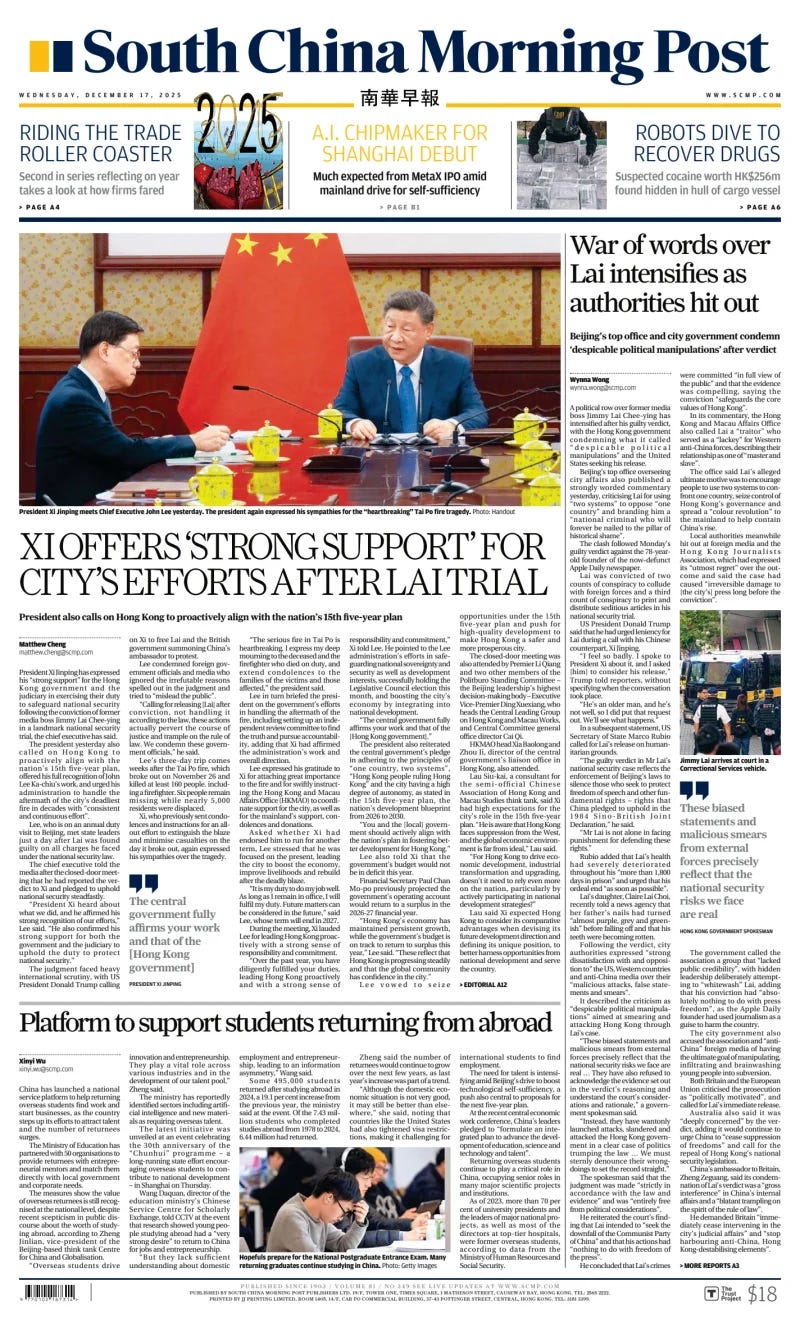
Colombia’s president, Gustavo Petro, has triggered yet another diplomatic rupture in South America after denouncing Chile’s president-elect, José Antonio Kast, as a “Nazi,” rejecting the legitimacy of Chile’s democratic choice and sharply diverging from the cautious language typically observed between regional leaders. Petro’s remarks came within hours of Kast’s decisive victory in Chile’s presidential runoff, in which the conservative candidate secured more than 58 per cent of the vote, defeating hard-left contender Jeannette Jara. Jara conceded promptly, saying that “democracy has spoken loud and clear” and wishing Kast success “for the good of Chile.” Petro, however, used his social media platform X to frame Kast’s victory as evidence of an advancing wave of fascism in Latin America. “Fascism advances. I will never shake hands with a Nazi or a Nazi’s son, nor will I; they are death in human form,” the Colombian president wrote. In a retort that called for Chileans to “take care of Neruda’s tomb,” Petro went on to equate Kast’s electoral mandate with the legacy of former dictator Augusto Pinochet. “It’s sad that Pinochet had to impose himself by force, but sadder now is that the people choose their Pinochet: elected or not, they are sons of Hitler and Hitler kills the people,” Petro said, adding that Latin Americans “know how to resist.” The language marked one of the most explicit attacks by a sitting South American president on a democratically elected counterpart in recent years and raised immediate concerns about the state of Colombia – Chile relations, historically among the region’s most stable. Kast’s victory completes a broader rightward shift in South American politics, following the election of Javier Milei in Argentina, Daniel Noboa in Ecuador and Nayib Bukele in El Salvador, while Bolivia recently ended nearly two decades of socialist rule with the election of centrist Rodrigo Paz. Petro, the region’s most unhinged left-wing leader, with just eight months remaining in his presidential term, appeared to ignore the potential diplomatic fallout of his remarks - The City Paper/Bogota
US crude oil prices fell below $55 per barrel on Tuesday, the lowest level since early 2021, over expectations of a surplus and optimism around Ukraine peace talks. OPEC+ members have ramped up production this year, spurring fears of a “super glut.” And while peace in Ukraine likely remains a ways off, some traders are pricing in lower geopolitical risk. A Rystad Energy analyst noted that an end to the conflict could bring millions of barrels of Russian oil back to the market. Prices might have been dragged down further but for disruptions to Venezuela’s oil exports after the US seized a tanker in the Caribbean: Oil has played a central role in Washington’s pressure campaign against Caracas - Semafor
A first class brag online quickly turned into a costly lesson after a South Carolina-bound passenger posted a photo of his boarding pass on social media, boasting he could afford first class “because of Trump.” The image exposed his full name and airline record locator. Before he reached the airport, someone used those details to access the airline’s manage-booking system and cancel the flight. Many airline portals only require a last name and confirmation code, making interference surprisingly easy once information is public. The incident went viral after being shared on X, highlighting how boarding passes reveal far more than most travelers realize. Similar cases over the years show that posting travel documents online can invite tampering, refunds, or itinerary changes. The takeaway is simple. Boarding passes are sensitive documents, not flex material. In a polarized online climate, mixing politics with travel details only raises the risk - Flight Drama
FIFA introduced on Tuesday (Dec 16) a small number of US$60 “Supporter Entry Tier” tickets, aiming to make next year’s World Cup more affordable for fans of qualified teams. Football’s governing body said that the discounted tickets would cover all 104 matches of the tournament, including the final. The cheaper tickets will make up 10 per cent of Participating Member Associations’ (PMAs) allocations. The PMAs, which represent competing national teams and manage dedicated fan ticket programmes, will handle the ticket allocation process. The announcement comes amid growing scrutiny of ticket pricing ahead of the 2026 tournament, set to take place from Jun 11 to Jul 19 across Canada, Mexico, and the United States. Last week, Football Supporters Europe (FSE) accused FIFA of imposing “extortionate” ticket prices that could prevent average fans from attending the event - CNA
The journals…..