Live on CBC News: Is the Ukraine–Russia “energy ceasefire” a truce on paper only?
Russia fired six ballistic missiles at Kyiv on Monday evening, and the city didn’t know they were coming. Explosions were heard before the air raid sirens sounded, and Ukraine’s Air Force has now confirmed what residents felt: the missiles were picked up by radar only once they were already over the capital. The Air Force says no warning of launches from Russian territory came in, and it is investigating why.
“A bunch of missiles just arrived without an air raid alert,” a Kyiv TV host told me as it happened. Another resident, sheltering underground on the left bank, said she couldn’t even leave the metro station. She called it terrifying, because the strikes came with no warning at all. Mayor Vitali Klitschko said a missile hit a four-storey warehouse in the Desnianskyi district and that transport infrastructure was also struck. Casualty figures were not yet confirmed at the time of writing.
The silence before the strike matters more than the damage. Advance notice of Russian ballistic launches is one of the things Ukraine relies on its partners for. So people on the ground immediately asked whether Washington had stopped sharing intelligence. Ukraine’s Centre for Countering Disinformation urged people not to spread that theory and says it is checking the facts. To be clear: there was no confirmation of any cutoff.
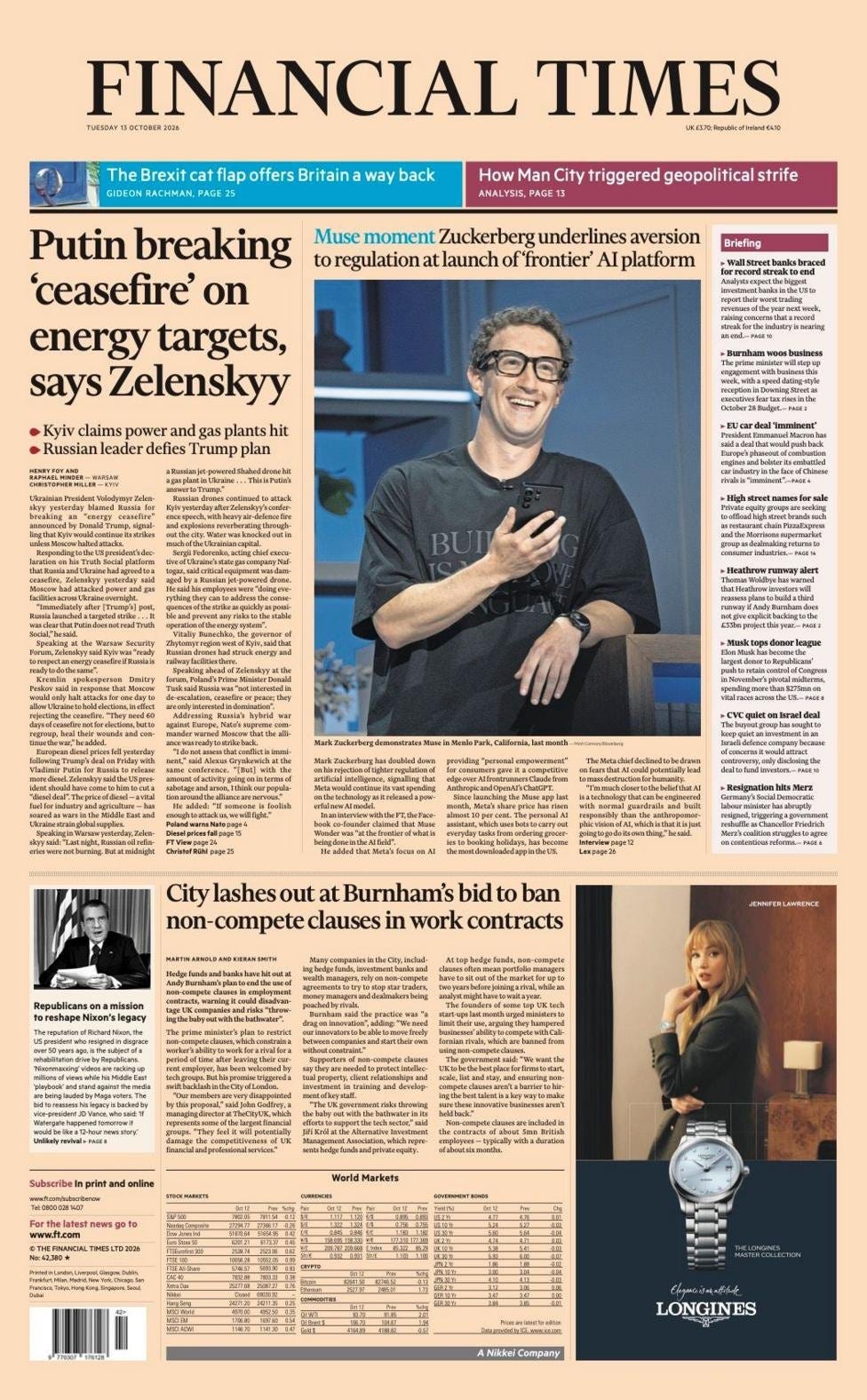
The timing is why the question is being asked. A day earlier, the Financial Times reported that the Trump administration was pressing Kyiv to stop striking Russian oil refineries. According to European officials, Washington threatened to suspend intelligence sharing and block PURL, the mechanism Europeans use to buy US weapons for Ukraine - including the crucial Patriot missile defense systems Kyiv heavily relies on. US officials reportedly called Kyiv and European capitals over the weekend, strong-arming them as well as the deputy head of the Presidential Office Pavlo Palisa.
That comes on top of Trump’s announcement of an “energy truce” on October 11, after he had already cleared Russian diesel exports through a temporary US Treasury licence. Zelensky says Ukraine has held off hitting Russian energy targets since the truce was announced, while Russian strikes on Ukrainian power and fuel sites have continued. Asked on Monday whether Moscow had broken the truce, Trump said he would have to check because there were violations “on both sides.”
Whether Monday’s failure was technical, Russian tactics, or a political signal from Washington, the effect on Kyiv is the same: a capital of three million, with an already diminishing population, left wondering whether its early-warning system can still be trusted.
Trump’s Russian Diesel Gamble Could Backfire, Warns Ex-UK Envoy
Donald Trump’s decision to start importing Russian diesel is less of a departure than it looks, and it may not even work on its own terms. That’s the argument Nigel Gould-Davies makes in an opinion piece for The Moscow Times published on Oct. 12. Gould-Davies is Senior Fellow for Russia and Eurasia at the International Institute for Strategic Studies and a former British ambassador to Belarus.
In his analysis for the independent, Kremlin-banned outlet, Gould-Davies says the Oct. 9 announcement follows a familiar pattern. Washington again leans toward Moscow and pressures Kyiv. It again chases energy business with Russia. And it again gives up leverage without getting anything back, much as it did in 2025 when it dropped its demand for an immediate ceasefire and its threat of new sanctions.
What is new, he writes, is the motive: lowering pump prices before the Nov. 3 midterms. The plan may still fail. Gould-Davies notes that the volumes are too small to move prices and will likely arrive too late. He adds that Ukrainian strikes on Russian refineries could stop the fuel from arriving at all. A bipartisan group of senators has already said the imports would break the 2022 ban on Russian energy. They would also cut across the Lindsey Graham Act passed last month.
The sharper risk, according to The Moscow Times piece, is the reported US threat to cut Ukraine off from intelligence and the PURL weapons pipeline if it keeps hitting Russian refineries. Gould-Davies argues Kyiv would survive this. Ukraine now builds its own long-range weapons, and Europe can fill some of the intelligence gap. The biggest loss would be Patriot interceptors, about 95% of which reach Ukraine through PURL. He contends that US defence firms would also lose out, both on European-funded sales and on Ukrainian battlefield data. Those losses would far outweigh a brief dip in fuel prices.
His verdict is that the White House’s Russia policy is “a masterclass in strategic failure.”
Drones struck two merchant ships off Bulgaria’s Black Sea coast early Tuesday, prompting Prime Minister Rumen Radev to summon Russia’s ambassador. “The latest attack on a commercial vessel in the immediate vicinity of Bulgaria’s territorial waters is absolutely unacceptable,” Radev wrote on X. He said Bulgaria had no “clear and conclusive evidence” to point fingers, but that “the logic suggests that the outcome benefits the Russian Federation.” Three aerial drones hit the Ukrainian-owned Chelsea 3, sailing under the Maltese flag near Bulgarian territorial waters at around 1:30 a.m., Radev said. All 15 crew members — seven Ukrainians and eight Azerbaijanis — were taken safely to Varna, with five receiving medical assistance. A second vessel sank and one crew member was rescued, the prime minister added. Sofia is seeking international support to investigate the strikes and strengthen air and maritime surveillance. Radev — whose Russia-aligned government took office earlier this year — said he would summon Moscow’s ambassador to Bulgaria, Eleonora Mitrofanova, and speak with NATO Secretary-General Mark Rutte. Spillover from Russia’s war against Ukraine is escalating. The incident comes a week after drones hit two other merchant ships in Bulgaria’s exclusive economic zone, sinking one - POLITICO
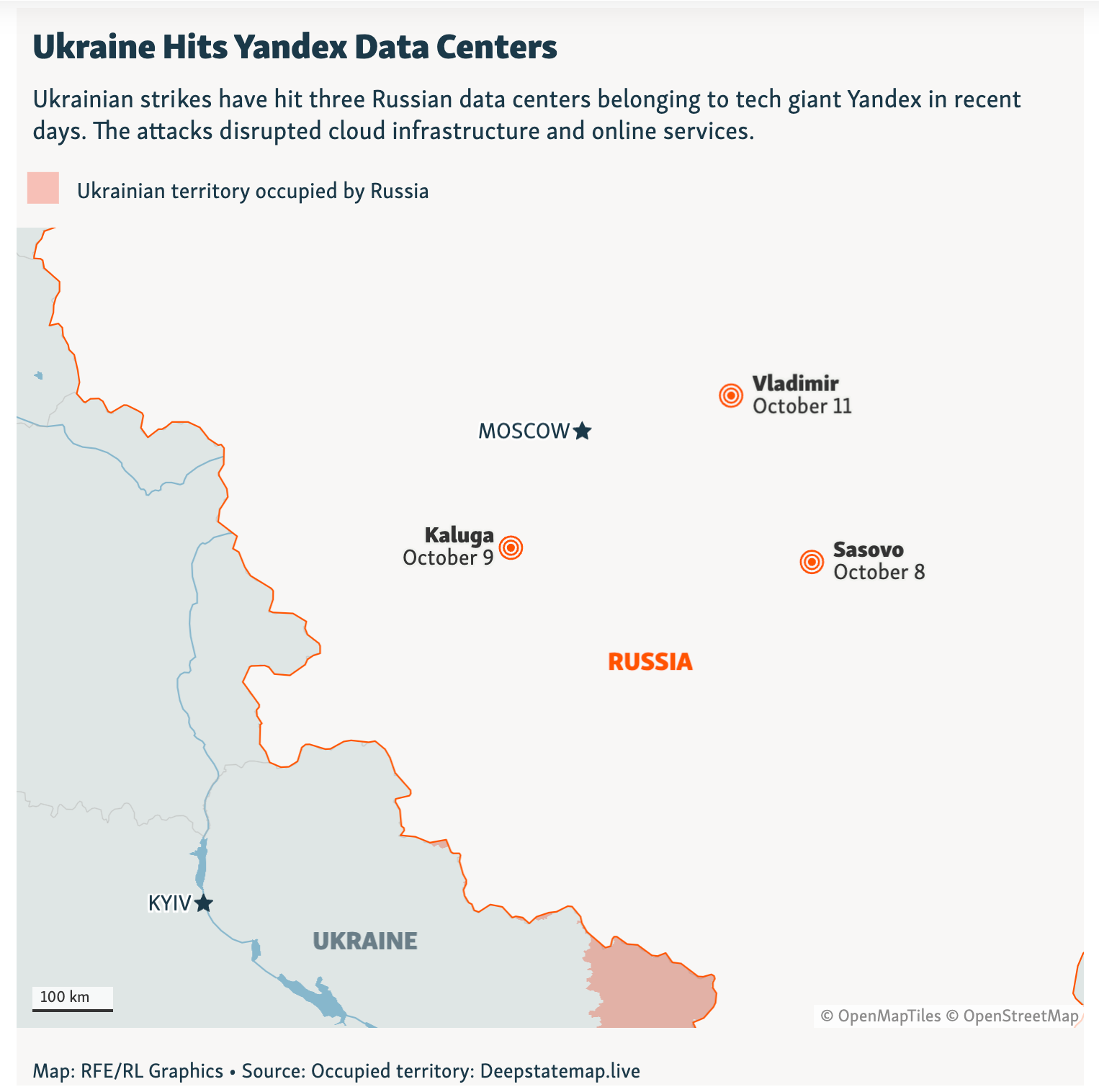
Ukrainian President Volodymyr Zelenskyy said Ukraine’s recent attacks on data centers of Russian tech giant Yandex have lowered the number of Internet bots promoting pro-Kremlin hate, a claim that has been disputed by many technology researchers. In recent days Ukraine has struck three data centers belonging to Yandex, often called “Russia’s Google,” causing significant disruptions to many of the company’s services, including ride-sharing, payments, food-ordering, cloud computing and chat-bots. The latest attack hit a Yandex facility in Vladimir, around 180 kilometers east of the capital Moscow, on October 11, forcing a complete suspension of operations - RFE/RL

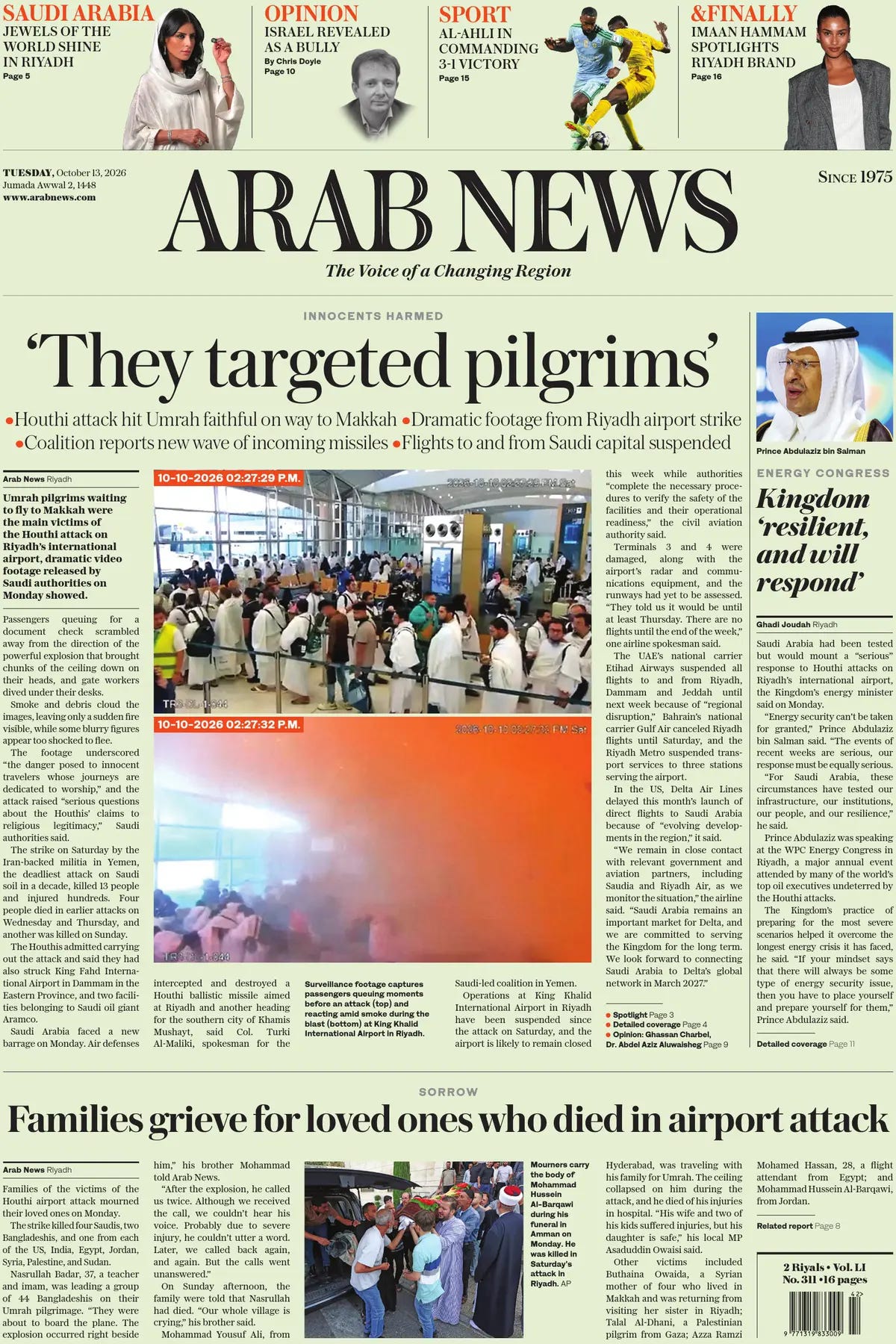
“The word fear in the Saudi dictionary does not exist,” Saudi’s energy minister said Monday at a conference skipped by top oil executives, as back-to-back Houthi strikes on Riyadh’s airport threaten the kingdom’s economic ambitions. “Efforts to project a business-as-usual calm look strained,” Semafor’s Saudi bureau chief wrote. Saudi’s push to attract foreign investment and tourism is facing setbacks, with limited travel options for its upcoming flagship business event: The main airport is closed, some governments advised against traveling there, and Delta delayed plans for nonstop service to Riyadh. Saudi has poured money into global tech and AI projects, The Wall Street Journal noted, and how it responds to this crisis “will have consequences that stretch well beyond the kingdom.” - Semafor
The view from Kuala Lumpur is gloomier. Malaysia’s foreign ministry, Wisma Putra, has advised Umrah pilgrims to postpone travel to Saudi Arabia after deadly attacks on Riyadh’s King Khalid International Airport, the New Straits Times reports on its Oct. 13 front page. The paper says a fresh attack on the airport left one person dead and 11 injured. Several flights from KLIA and Johor to the kingdom have been delayed or cancelled indefinitely, and Umrah operators say they will follow the airlines’ lead. For a kingdom selling a bright future, Malaysia’s pilgrims are one more sign that the security picture still gets a vote.
Actor and disability rights advocate RJ Mitte, who brought a lifetime of experience with cerebral palsy to fictional family struggles in an essential role on “Breaking Bad,” died Monday at age 34, authorities and his representatives said. Cameron County Justice of the Peace Cyndi Hinojosa said she had declared Mitte dead at about 1:30 pm local time at what she believed was his home in Brownsville, Texas. She said she was unable to provide a cause, but an autopsy will be performed. Mitte played Walter White Jr., the son of Bryan Cranston’s chemistry teacher-turned-meth dealer Walter White on nearly every episode of the five seasons of the AMC show, which recently ranked as the best of the 21st century in a New York Times poll. Cranston said he is in “deep despair” for the loss of his “sweet son.” “I met him when he was only 14 years old when he was cast as Walter White Jr., a part he played with such joy and enthusiasm,” Cranston said in a Facebook post on Monday night. “Born with Cerebral Palsy, he never — ever — allowed that challenge to be an excuse for anything. He met the demanding shooting schedule head on with great determination.” Mitte told the AP news agency in 2014 that his disability and the surrounding struggles with physical therapy, family problems and exorbitant medical bills, all key subjects on the show, made him better at his job - Euronews
CNN host Kaitlan Collins has humiliated Donald Trump by airing footage of hundreds of vacant seats at his latest rally. The 80-year-old president is desperately trying to energize MAGA voters with campaign rallies across the country before the Nov. 3 midterms. Trump appeared at the Covelli Center in Youngstown, Ohio, on Monday, his second rally this month in the bellwether state. His focus on Ohio comes as a CNN poll put Democratic Senate candidate Sherrod Brown 6 points ahead of incumbent Republican—and Trump thirst-magnet—Jon Husted. The same poll, conducted Sept. 29-Oct. 5, had Trump’s own approval with Ohio voters at a dismal 36 percent. That brewing dissatisfaction saw around 3,000 people attend Monday’s rally, at a venue to which he drew around 7,000 supporters in 2017 and about 5,500 in 2022, according to estimates by the Tribune Chronicle. Entire sections of the Covelli Center arena and upper levels were empty, according to the Washington Post. The publication also pointed out that Trump, who regularly brags about the size of his audiences at rallies, did not mention the topic of attendance on Monday. Post reporter Emily Davies shared photos on X showing “entirely empty sections” in the arena, with the damning pictures taken as Trump walked on stage. A quarter of the seats in the venue were covered in tarps, and only two-thirds of the available seats were ever filled, according to local station WFMJ - The Daily Beast
The journals…