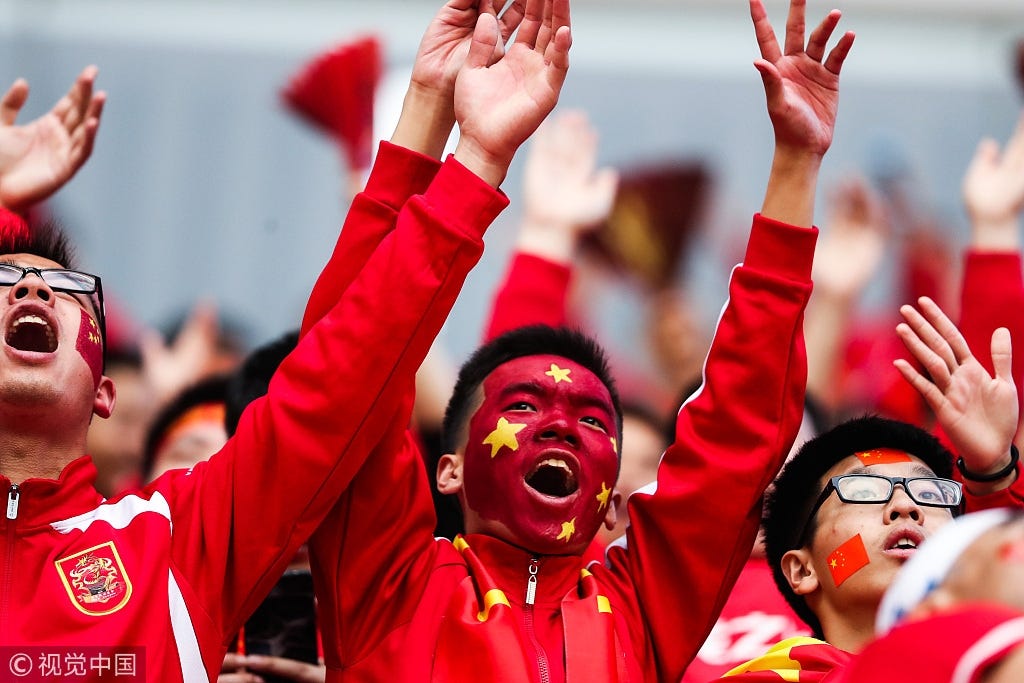
As the 2026 FIFA World Cup gets underway across North America, one of the tournament’s most revealing storylines involves a country that isn’t playing. China - home to the world’s largest football fan base, roughly 289 million people - has again failed to qualify for the finals. The defeat that sealed its fate came in June 2025: a 1-0 loss to Indonesia in Jakarta that left the team stranded at the bottom of its Asian qualifying group. It was a stinging rebuke, made more painful by the tournament’s expansion to 48 teams and Asia’s allocation of 8.5 direct qualifying berths - conditions specifically designed to widen the door. China couldn’t walk through it.
And yet China is everywhere at this World Cup.
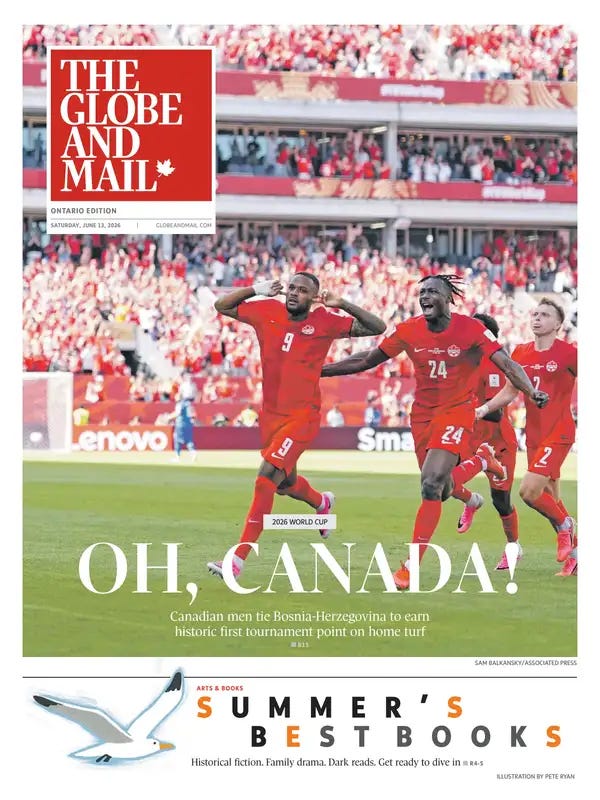
Lenovo serves as a top-tier FIFA Partner, Hisense acts as a World Cup sponsor and technology provider, and dairy giant Mengniu maintains a major commercial presence. Their reported combined investment exceeds $500 million. Lenovo is supplying devices, AI infrastructure, servers, and digital solutions for the tournament - including Football AI Pro, a generative AI assistant developed for all 48 participating teams. Hisense’s video assistance replay system is installed at stadiums across the host cities. In short, China is not merely buying billboard space - it is embedded in the tournament’s operating system.
Then there’s the referee.
Ma Ning, a 46-year-old match official nicknamed the “Card Master,” has become a national sensation - a focal point for Chinese fans who have no team to cheer. His selection has triggered a national pride campaign bordering on a meme movement, with hashtags related to his involvement racking up over 3.6 million views on Weibo. Within two weeks of joining RedNote to document his journey to the tournament, he had gained 197,000 followers. Brands including Lenovo and Hisense have reportedly signed deals with him. A referee as surrogate national hero is, by any measure, a telling indicator of where Chinese football stands.
The structural problem runs deep: China’s football model - top-down, capital-intensive, driven by state mandate - has repeatedly failed to produce what the game actually demands: improvisation, creativity, grassroots depth. The 2016 national football plan promised tens of thousands of new pitches and tens of millions of schoolchildren introduced to the sport. It did not produce an elite eleven. Club football, tied largely to the property sector, buckled when the real estate market weakened; corruption scandals eroded public trust further. And the so-called “academic cliff” - the point in early adolescence when intensifying exam pressure pulls talented young players away from the sport - continues to thin the talent pool before it can mature.
Glimmers of a different model are emerging. The “Suchao” grassroots movement in Jiangsu - teachers, coders, students, and delivery workers playing before packed crowds - suggests genuine enthusiasm that no central plan manufactured. That bottom-up energy may prove more durable than anything that came from Beijing’s desk.
The bottom line: The 2026 World Cup holds up a clear mirror. China can manufacture a $500 million commercial presence at football’s biggest event, supply its broadcast infrastructure, and send a referee who trends nationally. What it cannot yet do is send a team. The gap between those two realities is the story of Chinese football - and closing it will require patience, institutional reform, and a willingness to cultivate what cannot simply be purchased.
⚽ The World Cup is finally here. But beyond the fan zones, sponsorship activations, and FIFA branding, there's another story unfolding in Vancouver. From the atmosphere on the streets to concerns over corporate control and soaring public costs, I take a closer look at what Canada's biggest sporting event is really leaving behind.
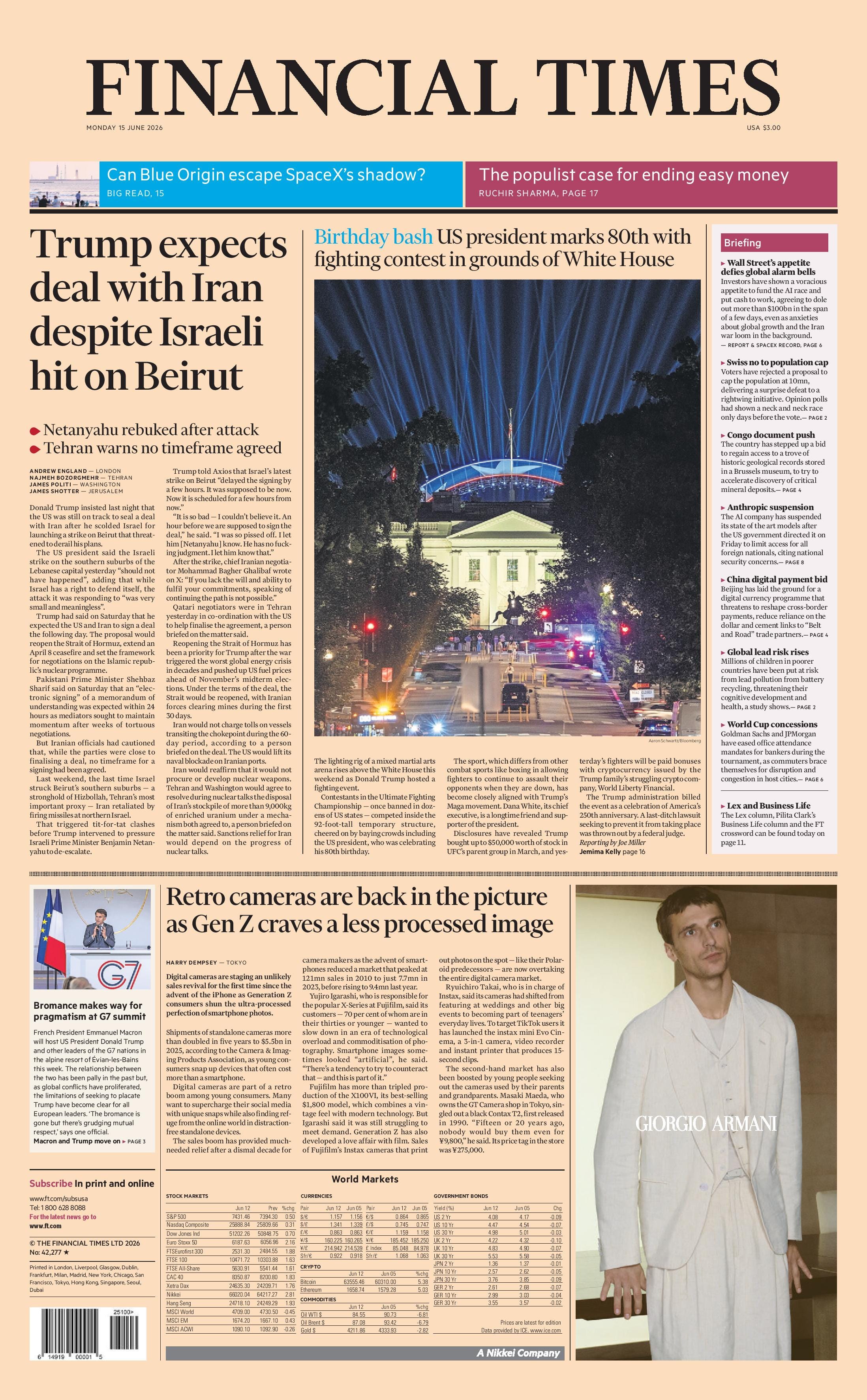
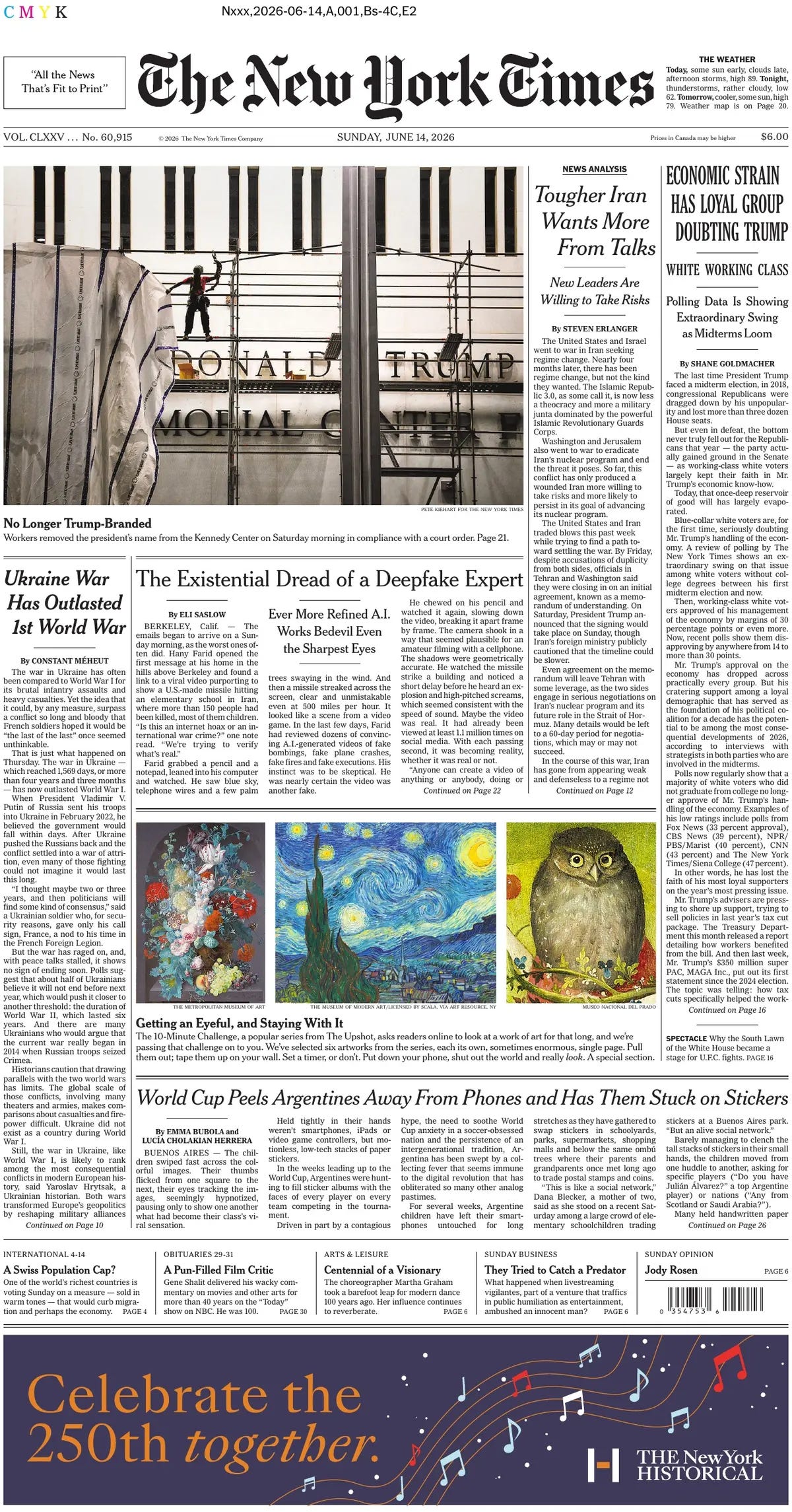
The United States and Iran reached a cease-fire agreement on Sunday, paving the way for further talks that could ultimately end a months-long war that has killed thousands and rattled the global economy. President Trump said that the deal would reopen the Strait of Hormuz, an economically vital waterway, and that he had authorized “the immediate removal of the United States Naval blockade” on Iranian ports. “Ships of the World, start your engines,” he wrote. “Let the oil flow!” The agreement will be signed on Friday. The signing - which Iran and Pakistan, a mediator, said would take place in Geneva - would be the highest-level meeting between Tehran and Washington in 47 years. The text of the agreement was not immediately released. But Mr. Trump’s post aligned with what American and Iranian officials had previously said an initial agreement might contain. The deal would include a 60-day cease-fire, the officials said. Each side sought to portray the agreement as a diplomatic victory after nearly four months of war. But some of the thorniest issues - including the fate of Iran’s nuclear program, and sanctions relief for Tehran - remain unresolved and have been pushed to a further round of negotiations. In a statement, Supreme National Security Council’s said the agreement called for an immediate end to military operations on all fronts, including Lebanon, where Israel and the Iranian-backed militant group Hezbollah are fighting. Israel, which was not a party to the U.S.-Iran negotiations, has not yet commented on the agreement. A last-minute flurry of negotiations, led by Qatar, eased the tensions, and the final agreement appeared to come together late in the night in Tehran. Iran held off agreeing until the early hours of Monday there, allowing it to claim it had not signed on Mr. Trump’s birthday, on Sunday, as he had wanted, according to two Iranian officials who spoke on condition of anonymity. Major questions remain unanswered. One concerns the fate of Iran’s nuclear program, over which neither country has shown much willingness to compromise. Lebanon may prove to be another stumbling block - NYT
Iran waited until the clock passed midnight local time to finalize the agreement, because it did not want the momentous occasion to coincide with President Trump’s birthday on Sunday, according to two Iranian officials cited by The New York Times who could not be identified because of the matter’s sensitivity. The seven-and-half-hour time difference allowed both Tehran and Washington to claim their preferred version of when the deal was finalized. President Trump had said it would be on Sunday, and Iran had said it would be on a later day.
The Financial Times, reporting on the ceasefire, said Donald Trump had settled for “a truce of convenience with Iran.” It added Tehran agreed to lift its toll on vessels passing through the Strait of Hormuz for 60-days, and the U.S. would lift its blockade of Iranian ports.
For more than three decades, I’ve reported from conflict zones, humanitarian crises, and geopolitical flashpoints - and World Briefing is how I continue that mission independently. No editors second-guessing the story. No algorithms deciding what matters. Just rigorous, on-the-ground analysis delivered straight to your inbox.
If you find this reporting valuable, please consider upgrading to a paid subscription - or support World Briefing at your own level via PayPal or via Zelle (mbociu@gmail.com).
At a time when foreign coverage is shrinking and misinformation is filling the void, your support helps keep independent global journalism alive and in the field.
Thank you for reading, sharing, and being part of this community.
British forces on Sunday intercepted a sanctioned oil tanker belonging to Russia’s shadow fleet in the English Channel, the defense ministry said. The six-hour operation in the early hours was supported by aircraft, including Chinook helicopters, and navy vessels such as the frigate HMS Sutherland. The vessel will now be moved to an anchorage off the south coast of England and monitored, it added. “Russia relies on its shadow fleet to fund their conflict in Ukraine and our interdiction delivers a blow to Putin’s illegal war,” said defense minister Dan Jarvis. He said the operation was carried out in “close coordination with the French.” Disrupting the shadow fleet was “directly bearing down on the resources sustaining Russia’s aggression in Ukraine and reducing its capacity to threaten security across Europe and beyond,’ he added. The U.K. has sanctioned hundreds of vessels suspected of being part of the shadow fleet used by Russia to bypass Western embargoes since the invasion of Ukraine in 2022. The ships - usually aging tankers with dubious ownership - are banned from accessing U.K. ports and services. Prime Minister Keir Starmer said the operation delivered “yet another blow to Russia and reminds those fueling Putin's war in Ukraine that they cannot hide.” - AFP/Moscow Times
Thousands of citizens took to the streets for the 14th consecutive day in Tirana, Albania's capital, on Saturday evening, protesting against a luxury tourism project worth around 4.6 billion dollars (nearly 4 billion euros) that's planned in a protected coastal area on the Adriatic. The project, which is linked to an investment vehicle of Jared Kushner, son-in-law of US president Donald Trump, involves developing a hotel complex on an abandoned island and the adjacent shoreline, an area of particular ecological importance due to its nearby lagoon and migratory birds, including flamingos. The now nightly demonstrations have seen protesters gather in the centre of Tirana, blowing whistles and holding cardboard flamingo replicas as they denounce the project for threatening the natural environment and the area’s protected species. The government maintains that the investment will transform the country’s tourism map and strengthen its path towards the European Union, but environmental organisations and opposition figures warn of serious risks. Calls to halt the development project have been gradually replaced by overtly political demands, centred on calls for Prime Minister Edi Rama's resignation and early elections. Rama has defended the project, insisting he has no intention of backing down. Speaking in a recent interview, the long-time socialist prime minister vowed not to “step back” from the development and defended his administration’s environmental record, insisting that the protests were being encouraged by malicious cyber activists overseas. Despite Rama’s defence, the protests have gathered pace, with supporters in Albanian communities in neighbouring Greece and other European countries also holding rallies - Euronews
The top Democrat on the Senate Foreign Relations Committee is pressing the State Department for answers about Trump’s Board of Peace. In a letter to Secretary of State Marco Rubio first shared with Semafor, Sen. Jeanne Shaheen, D-N.H., said Congress has remained “largely in the dark” about the board’s work since its launch in February, when Trump pledged $10 billion in US funding. “While I strongly support serious and accountable reconstruction efforts in Gaza, the Board’s apparent lack of accountability, standards and sound legal standing raises serious concerns over the responsible use of American taxpayer dollars,” Shaheen wrote. She asked whether the board’s funds can be used to compensate Trump during or after his presidency, and who oversees the operating funds and money donated by other countries; the latter are reportedly being deposited in a JPMorgan account, rather than a planned World Bank fund. A State Department official referred a request for comment to the White House. “President Trump has ended nine wars, brought hostages home to their families, secured the release of Americans detained abroad, and more. It’s sad that Democrats want to pick apart the President’s incredible work to promote peace around the world,” White House spokeswoman Anna Kelly said in a statement - Semafor
The journals….