Behind the Curtain at the UNGA
Yesterday I sat in on a closed-door briefing I can’t describe in detail, but its core message has stayed with me: Moscow believes there is no deterrence, full stop. In the Kremlin’s reading, Vladimir Putin can go as far as he wants into Europe with little or no consequence, and a country that believes that is at its most dangerous.
In today’s video, I walk through what that means: stepped-up Russian aggression likely aimed at the Baltic and Nordic states, tunnel-building and troop buildups along the borders, talk of a major new mobilisation, and a missile and drone campaign across Ukraine ahead of winter. Putin is effectively calling the West’s bluff, betting we won’t go to war. I also share new details on the deteriorating situation on the ground in Kyiv - even the venerable McDonald’s is being forced to reduce its menu.
This is a special blended edition. With UNGA and Xi Jinping’s high-profile visit to Washington overlapping, I’ve combined two days into one briefing with deeper analysis and more punch. It may become a format we use from time to time, so I’d love your feedback. Hit reply and tell me what you think.
If World Briefing helps you make sense of a world that's getting more dangerous by the day, please consider upgrading to World Briefing Plus. For a limited time, annual subscriptions are 30% off: https://www.michaelbociurkiw.com/subscribe?coupon=b76fe333
A day after President Trump used the General Assembly stage to threaten to annihilate the Islamic Republic, Iranian President Masoud Pezeshkian answered from the same dais, rejecting Washington’s “terrorist” label and casting Iran as terrorism’s victim. “We will never bow our head or bend at the knee,” he said, adding that Tehran remains open to negotiation, but not under threat of force. It was the first time the UN has hosted the leader of a country at war with the host nation. The lone US delegate walked out within minutes. Meanwhile, Secretary of State Marco Rubio called Monday’s indirect talks between Foreign Minister Abbas Araghchi and US mediators Steve Witkoff and Jared Kushner significant, but dismissed Iran’s standing to lecture anyone, pointing to the killing of thousands of protesters and Tehran’s regional proxies. There was no breakthrough - PBS The Newshour
Secretary of State Marco Rubio said on Wednesday that President Trump had invited President Vladimir V. Putin of Russia to attend the Group of 20 leadership summit in Miami in December, in what would mark Mr. Putin’s first in-person appearance at the annual gathering since 2019. Mr. Rubio added that Mr. Trump would speak with Mr. Putin in Miami if he accepted the invitation. Mr. Trump last met with the Russian leader in August 2025 at a summit in Alaska. Since then, their relations have been cool, as Mr. Putin has proved less willing to strike a deal to end his war in Ukraine than Mr. Trump had hoped. “We think it’s an opportunity for him to engage not just with the president but with other world leaders,” Mr. Rubio told reporters on the sidelines of the United Nations General Assembly gathering in New York. The Kremlin did not immediately publicly respond to the invitation. Many G20 leaders are unlikely to welcome Mr. Putin at the event, to be held at the Trump National Doral Golf Club. When the country’s finance minister attended a gathering of his G20 counterparts in Asheville, N.C., last month at the invitation of the Trump administration, his presence drew European protests. He was excluded from the customary “family photo” of ministers in attendance. Russia was suspended in 2014 from the more elite Group of 7, previously known as the Group of 8, after Mr. Putin annexed Ukraine’s Crimean Peninsula. But Russia remains a member of the Group of 20, an organization of advanced and developing nations whose leaders meet annually to discuss global economic issues - NYT
UNGA: After the visa chaos, a pass problem on campus
Getting a US visa wasn’t the only obstacle to attending this year’s General Assembly. Getting into the rooms has proved nearly as hard.
A longtime Ukrainian-American activist and UN regular tells World Briefing that, beyond the visa denials we reported earlier in the week, organizers cut back special guest passes. They also introduced a new requirement: a separate ticket not just for the General Debate but for every “high-level” event on the UN campus.
The catch? Annual pass holders, the NGO representatives who are at the UN year-round, say they were never clearly told. According to our source, the only notice came in two emails, one from ECOSOC and one from the Department of Global Communications. Both were mainly about cutting back special passes. Near the bottom of each, in fine print, was a line saying high-level events required an RSVP for a special ticket. Neither said that annual pass holders also needed the extra authorization.
The result, our source says, was accredited civil society representatives risked being turned away from events they had every reason to believe they could attend. For an institution that routinely calls for greater civil society participation, it’s not a good look.
Beyond the UNGA
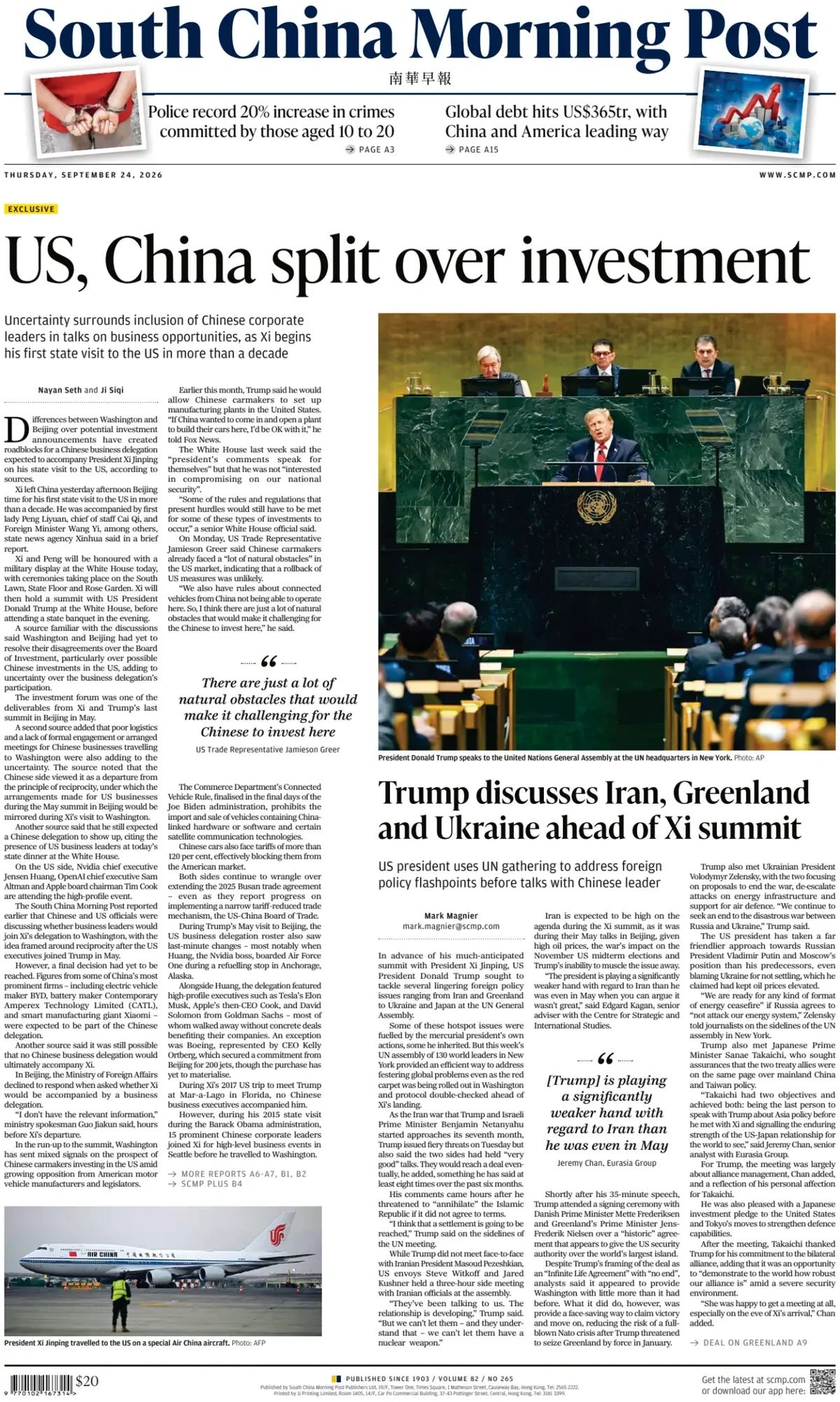
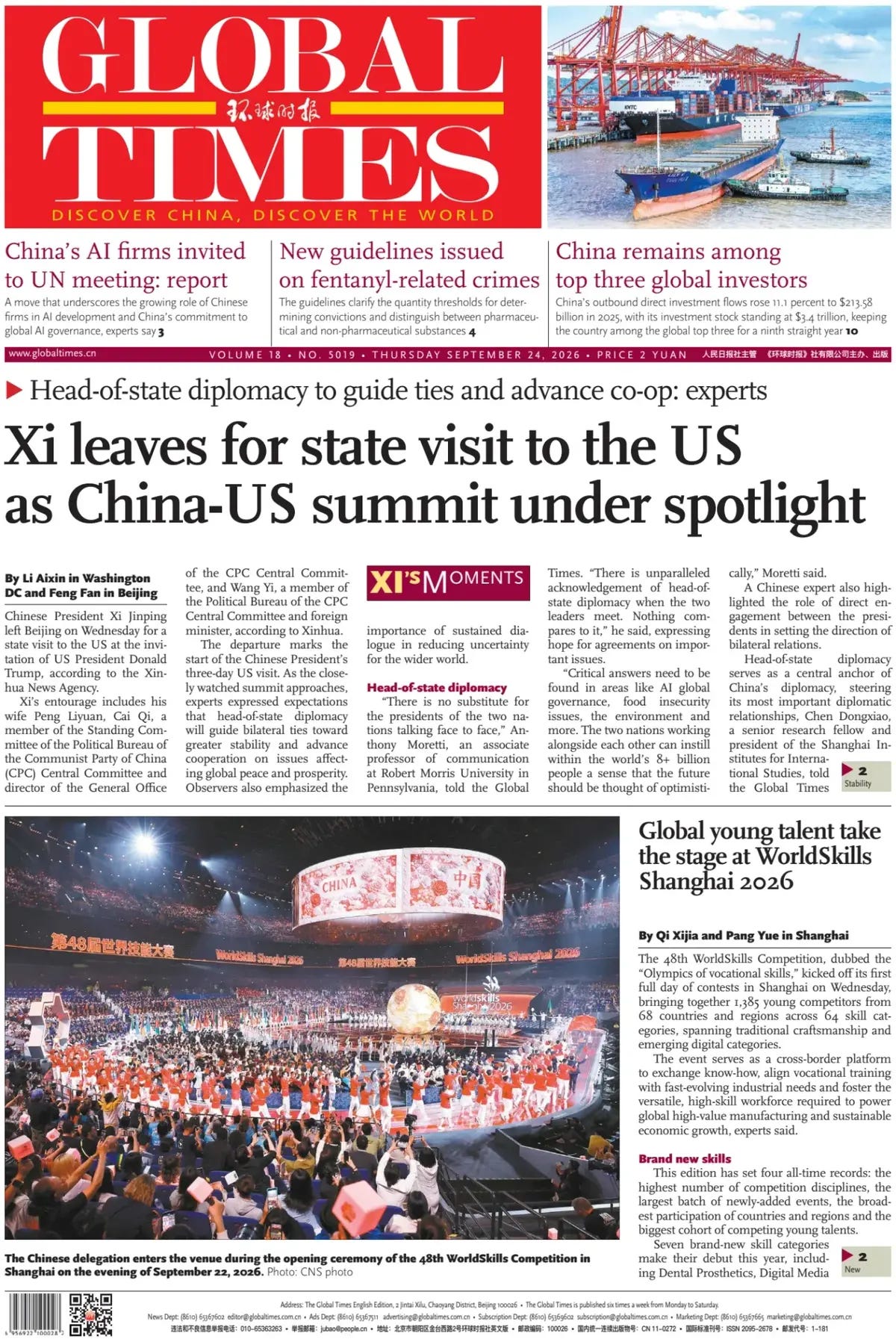
President Donald Trump on Thursday hailed the “truly great friendship” he has forged with Xi Jinping as the Chinese leader began his highly anticipated state visit. While Trump has many thorny issues to discuss with the president of America’s biggest economic rival, he focused on his long relationship with Xi as the two gathered with aides for opening remarks before formal talks. Trump and Xi have no shortage of difficult issues to cover when they sit down for the private discussions. China has resisted the Trump administration’s urgings — and economic threats — to use its considerable leverage to prod Iran to agree to U.S. terms to end the nearly seven-month war. Xi wants to see Trump permanently halt arms sales to Taiwan and loosen export restrictions on cutting-edge advanced chips. The two sides on Wednesday agreed to extend by two months a one-year trade truce that was set to expire Nov. 10 as they work to find a more durable agreement. Xi said in his remarks upon arriving that the “competition should be a healthy one and should be kept within bounds.” “It should be a race of catching up with one another, not a wrestle in which one either wins or loses,” Xi added. Xi also announced that China will invite 100,000 American youth to come to his country for studies and exchanges in the next five years and that China will send two pandas to the zoo in Atlanta. He called the beloved animals an “envoy of friendship” and that they will meet the American people in a “few days.” - AP
Prime Minister Mark Carney of Canada said that he had prepared over the past year for the “extreme tail risk” that President Trump might order military action against Canada, but disclosed that the two men have spoken “frequently,” even since trade talks collapsed last month, describing a tense, evolving relationship. When pressed on whether he took Mr. Trump’s threats to make Canada a 51st state seriously, Mr. Carney suggested that he had carefully examined the possibility of U.S.-led military action, but declined to discuss in detail what that involved. “I think you have a responsibility in these roles to look at extreme tail risk,” said Mr. Carney, a former central banker for Britain and Canada who approaches the world by meticulously assessing worst-case scenarios and drafting responses. He added: “That’s just risk management. That’s not a base case, but it would be irresponsible not to” prepare - NYT
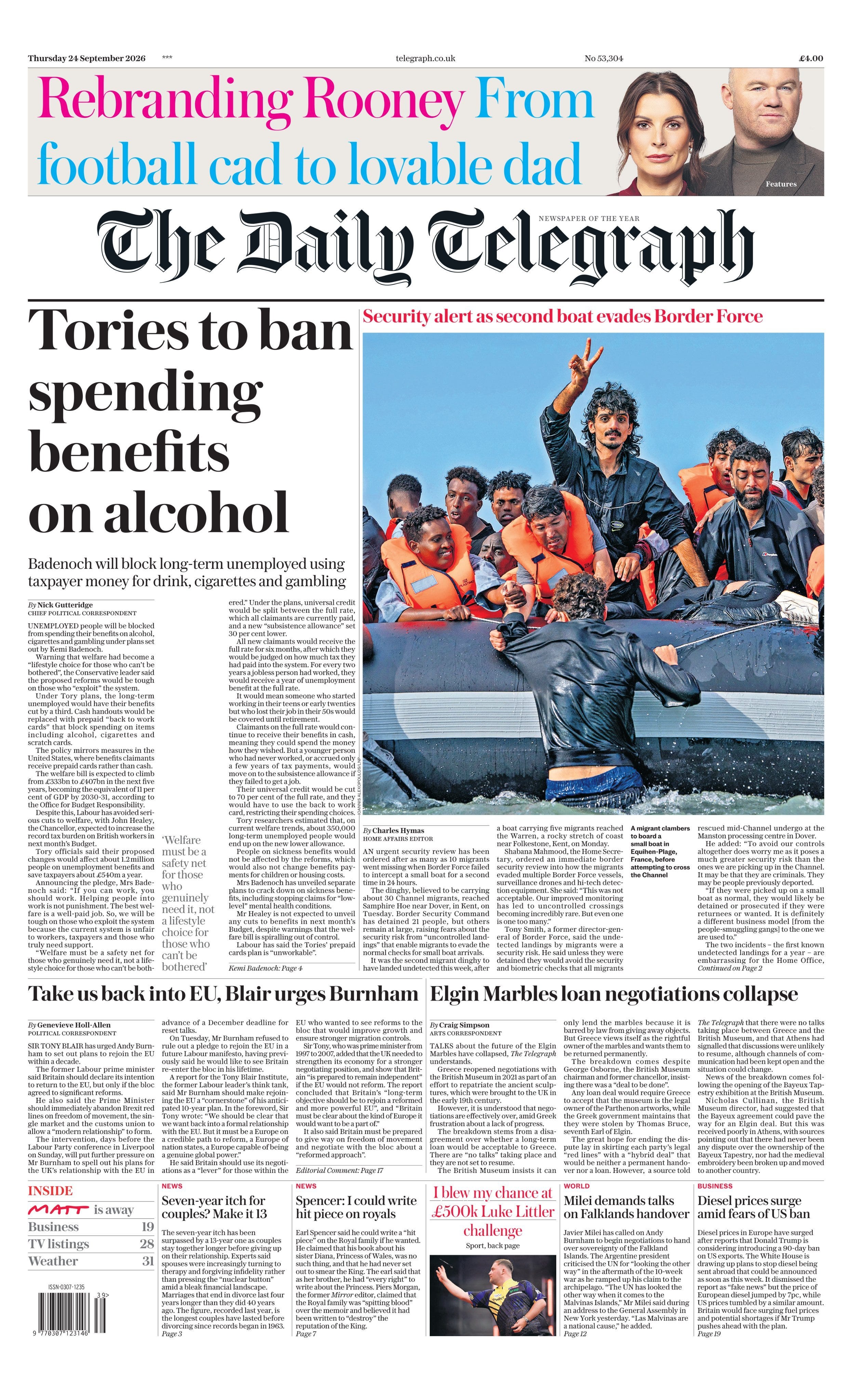
The US is reportedly preparing a plan to ban diesel exports for 90 days, as the White House mulls acting on record-high fuel prices over the objections of several cabinet members. The Treasury secretary has privately lobbied against the idea, according to Politico, while the energy secretary said that such a “blunt tool… definitely doesn’t work,” echoing the interior secretary. US President Donald Trump’s former energy chief said a ban sends a “terrible investment signal,” concurring with analysts: S&P Global estimated that a full ban would drive US refineries to reduce their run rates by up to 10%. The ban would also raise global diesel prices, rebounding on American consumers who depend on imports. European diesel prices spiked 7% Wednesday morning - Semafor
The fire at a Starlink ground station near Warsaw on Wednesday night was an act of sabotage and part of hybrid warfare against Poland, Digital Minister Krzysztof Gawkowski said Thursday morning. “[This was] sabotage and an attempt to disrupt the operation of a vital station that is crucial for the security and continuity of internet services in Ukraine,” Gawkowski told state broadcaster TVP Info, stopping short of blaming Russia for the incident directly. “It’s about actions aimed at shutting down the internet and disrupting the functioning of basic services. These may concern the supply of water, gas or electricity, as well as the financial system,” Gawkowski added.
UNGA: Ukraine’s Free Press Is Running Out of Road
At the UN General Assembly this week, I’ve been making one urgent case: Ukraine’s independent media is on the brink of collapse. European President Roberta Metsola paused briefly yesterday to hear directly from me about the carnage in this sector after years of war in Ukraine.
I told her that the toll is brutal. At least 152 media workers have been killed since the full-scale invasion, including 121 who had been mobilised into the army. Many of the survivors are at the front and may never return to journalism. This month, a Russian drone hit a Kyiv TV building and wrecked its newsroom. In the occupied territories, at least 26 Ukrainian journalists are held in Russian custody, most on fabricated terrorism or espionage charges.
The money has vanished too. Nearly 90% of regional outlets relied on foreign grants, with advertising covering just 3–10% of revenue, and US cuts pulled that support out from under them. Kyiv has made things worse. The state-funded “United News” tele-marathon has absorbed the major broadcasters and left commercial media little room to earn revenue, drawing criticism from Brussels. Senior Kyiv journalists tell me privately they are battling depression.
My ask is that we fund a Ukrainian media in exile before these journalists become baristas and mechanics. Exiled newsrooms from Myanmar, Afghanistan, Iran and Belarus already know how to operate from abroad. Pooling talent, security and back-office resources would stretch every donor dollar.
If Ukraine’s journalists disappear, Moscow wins the information war by default.
In the past year, rapid advances in drone technology have made reporting work in Ukraine more dangerous than ever. Multiple incidents recounted by reporters over the past months seem to show that journalists are no longer protected by PRESS markings. Instead, these have become a target used by Russian forces to identify and attack media teams with drones - European Federation of Journalists
Trump aide’s rare Q&A arrives via White House spin shop
A closely guarded Trump aide thrust into the spotlight by a secret flight out of Turkey has given her first extended public comments, but only after they passed through the White House communications director. Natalie Harp, the president’s 35-year-old special and executive assistant, sent written answers to Washingtonian by way of Steven Cheung, who told the magazine Harp had passed them to him. The magazine, which named her among the capital’s 300 Most Powerful Women, noted that Harp reportedly helps run the president’s social media, and that her replies mirror the capitalization and tone of Trump’s Truth Social posts.
The answers were sent on August 18, as scrutiny of Harp surged after she became one of the few aides aboard the Turkey flight with Trump and was singled out in a viral speech by Democratic Senator Jon Ossoff.
Harp offered little about her actual role. Instead, she said her biggest frustration is that Washington doesn’t work “at the speed of TRUMP!”, accusing the radical left of trying to stall the president’s agenda. She said she begins each day listening to the Bible and praying, and named Chief of Staff Susie Wiles, who is fighting cancer while serving, and disability advocate Joni Eareckson Tada as role models. Asked whether her age had held her back, she brushed it aside and credited Trump with spotting talent regardless of demographics.
Why it matters: Harp is one of the least visible and most influential figures around Trump. A rare statement that arrives vetted by the comms office and written in the president’s own style reveals little about her work, but a good deal about how tightly the White House controls its message.
The journals…