

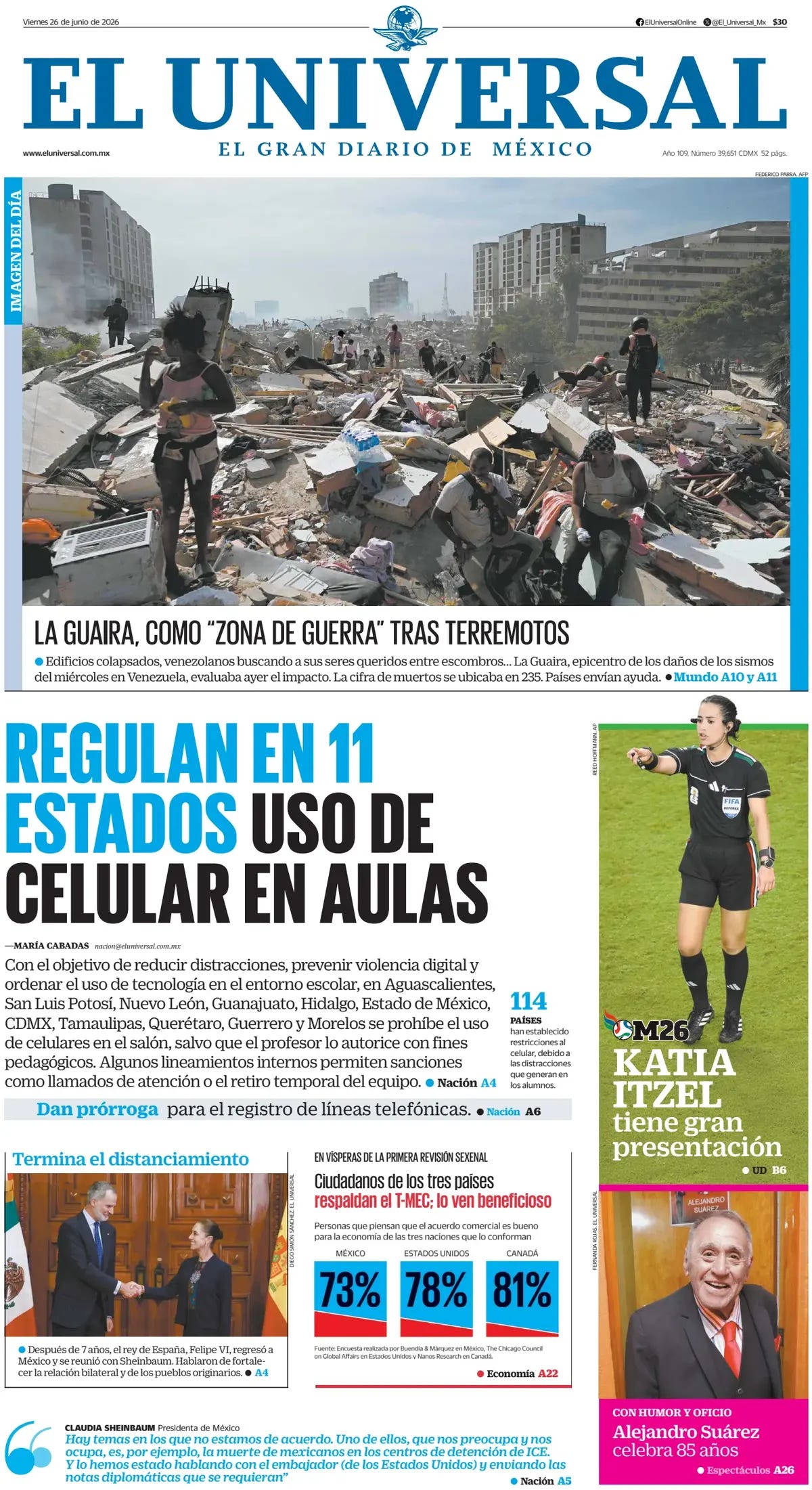
We arrived in Mexico City late at night, and within minutes of getting into a taxi, asked our driver in broken Spanish what he thought of La Presidente, Claudia Sheinbaum. The response was instant: a firm thumbs up, no hesitation. It was a small moment, but it captured something real - and not just about Sheinbaum. From the moment you step off the plane here, something else becomes clear: Mexicans, or at least the ones I’ve encountered, are warmly, almost reflexively pro-Canadian. It makes a certain geopolitical sense. Both countries share a continent with an unpredictable neighboyr who has made a habit of swinging the tariff baton, issuing threats over drug flows, cartel crackdowns, and trade imbalances, and generally making life difficult for those closest to it. That shared experience creates a quiet solidarity you can feel on the street. On a continent where so much is shaped by one country’s gravitational pull, it’s a genuinely heartening thing to discover.
A longtime resident of the capital offered a more pointed version of the same sentiment about La Presidente: “Claudia is popular because her supporters are much more numerous and much more uneducated.” Cutting, perhaps. But also, according to new data, worth exploring further.
New analysis from Mexico Decoded, comparing approval across 61 demographic groups, shows Sheinbaum - a 64-year-old energy and climate change scientist and the first woman and first person with Jewish heritage to hold the office - has not simply inherited the coalition of her predecessor, Andrés Manuel López Obrador (known universally as AMLO), she has fundamentally reshaped it. Yes, she retains strong support among rural, lower-income, and less-educated voters. But she has surged by up to 12 points among university graduates, professionals, teachers, and Mexico City residents - precisely the groups AMLO most openly alienated. Former voters of the once-dominant Institutional Revolutionary Party - the PRI, which governed Mexico for seven decades before losing power - are coming her way. Opposition-held states are softening. The movement has outlived its founder and expanded into territory he never reached, driven not by welfare handouts but by a tougher security posture and the capture of a major cartel figure. The taxi driver and the cynical expat are, it turns out, both part of the same expanding coalition.
That political confidence may explain a moment this week that deserves more international attention than it received. When Iran’s World Cup squad was subjected to what can only be described as shoddy and frankly unacceptable treatment by host nation USA - logistical obstacles that looked less like oversight and more like deliberate inhospitality - Sheinbaum stepped in and offered the Iranian team a temporary home base in Mexico. It was a gesture of basic human decency dressed up as sports diplomacy, and it landed. For a country that has long positioned itself as a bridge between the Global South and the Western-dominated international order, it was also entirely consistent. Mexico didn’t grandstand. It just opened a door.
Which makes the week’s other headline all the more jarring. Alejandro Gertz Manero - Sheinbaum’s appointee as Mexico’s ambassador to London - recently disclosed assets including ten properties, two Rolls-Royces, over a million dollars in jewellery, and bank accounts across four countries. He belongs to Morena - the ruling party founded by AMLO - whose founder preached “Franciscan austerity” and surrendered the presidential jet. The gap between the motto - for the good of all, first the poor - and the reality has become a recurring embarrassment, from luxury watches to a $2,600 Tokyo restaurant tab run up by AMLO’s own son. Gertz Manero says his wealth was inherited. But as analyst Viri Ríos put it, the party is “a mix of officials, politicians, and personalities of all kinds and levels of wealth” - a truth its brand has never quite made peace with.
And then, because this is Mexico, there is Merlín. The duck who waddled into national legend during the team’s World Cup opening match made it all the way to the gates of Azteca Stadium on Wednesday, cheered by fans and trailed by cameras, before FIFA regulations turned him away at the door. He’d already visited the presidential palace (Sheinbaum described Merlin as “a symbol of the World Cup and a symbol of what Mexican families stand for”). He had a million social media followers. He just couldn’t get a seat in the stands. In a tournament that has sometimes struggled to generate genuine joy, a duck from Mexico City did what billion-dollar marketing budgets couldn’t. That he was ultimately stopped by bureaucratic fine print felt almost too on-brand.
Three stories from one extraordinary week. A thumbs-up from a taxi driver. A president who housed a politically isolated nation’s football team. An ambassador with two Rolls-Royces. And a duck who got further than most politicians ever do.

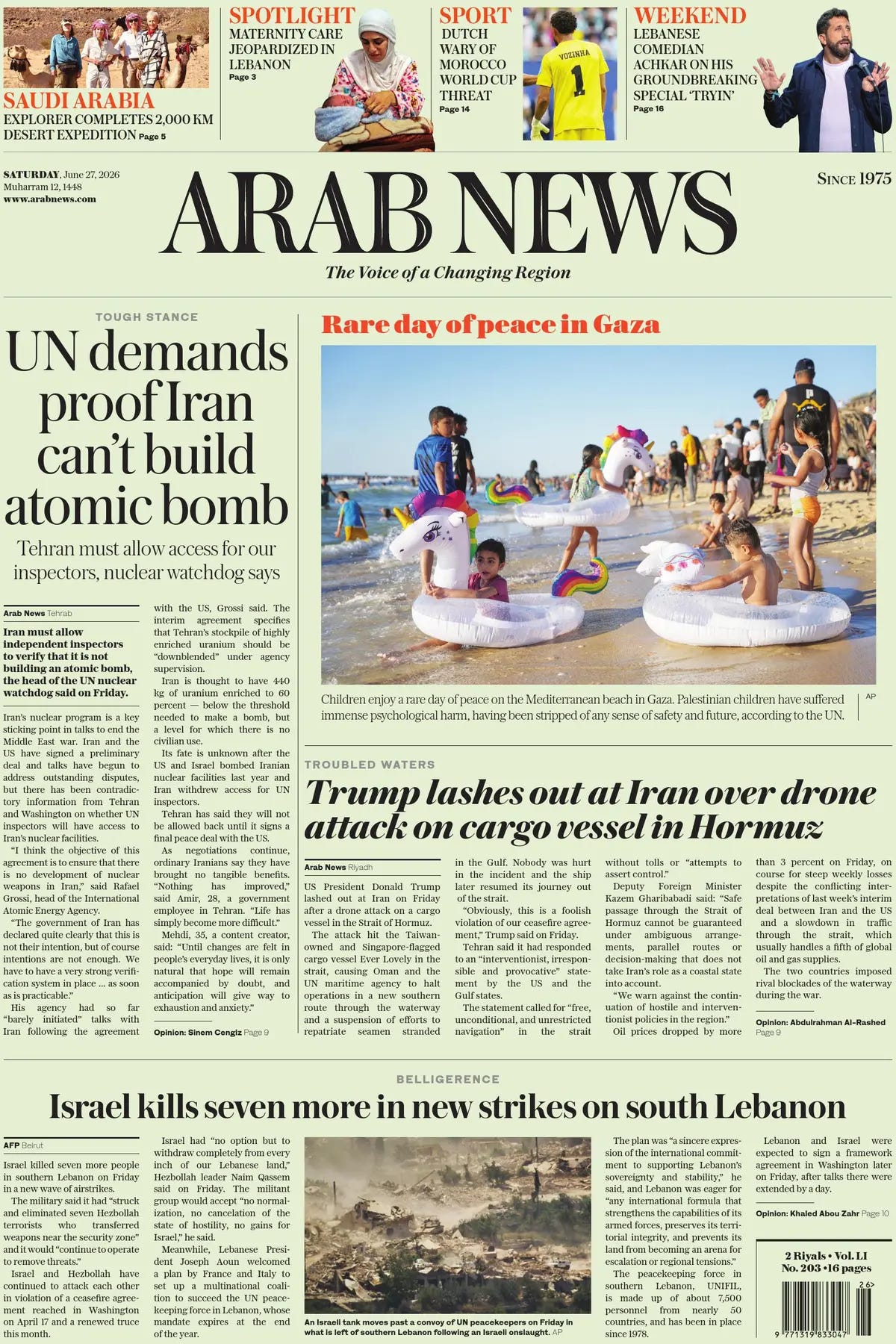
The US military said it conducted strikes against Iranian sites in response to Tehran’s attack on commercial shipping in the Strait of Hormuz, in the latest threat to the fragile cease-fire agreed to by Washington and Tehran. “US Central Command (CENTCOM) forces conducted strikes against Iran, June 26, as a powerful response to yesterday’s attack on a commercial ship that was transiting the Strait of Hormuz,” the military said on social media. The statement came shortly after US President Donald Trump told reporters “You’ll find out” when asked about a potential US response to Iran’s reported drone strikes on June 25 against cargo ships in the strait. In a social media post before the strike was announced, Trump wrote that Iran had fired four drones at commercial shipping in the strait - RFE/RL
CNN star Erin Burnett offered some irrefutable evidence that despite President Donald Trump’s claims, his administration does not have “total control” of the Strait of Hormuz. Iran’s Islamic Revolutionary Guard Corps attacked a cargo ship navigating the strait on Thursday for the first time since the U.S. and Tehran agreed last week to work toward a peace deal, The Wall Street Journal reported. The vessel was hit by a drone hours after Iran’s paramilitary navy warned ships to only follow routes the regime had sanctioned, undermining Trump’s claims that the strait was fully open in accordance with his memorandum of understanding signed earlier this month. Before the attack, Trump had insisted to reporters in the Oval Office, “We have total control of the strait.” But Tehran’s strike spoke “louder than any words,” Burnett said. “Now, obviously, if you have total control of the strait, other countries aren’t bombing ships in the strait,” Burnett said. “That’s just to state the obvious.” The 60-day deal to reopen the strait required Iran to make its best efforts to ensure the safe passage of commercial vessels in exchange for the U.S. lifting a blockade of its port. The deal has been widely criticized for providing concrete benefits to Iran in exchange for vague promises, with even the president’s allies conceding the agreement was weaker than the Obama-era Joint Comprehensive Plan of Action that Trump ripped up in his first term. After Thursday’s strike, the status of Trump’s MOU was even more shaky and undefined, Burnett said - The Daily Beast
Kremlin-backed authorities in annexed Crimea declared a state of emergency on Friday afternoon following days of intense Ukrainian attacks that have knocked out power in parts of the peninsula and compounded ongoing challenges for residents, including fuel shortages and restrictions on public transit. “This state of emergency will remain in effect until the situation improves,” Sevastopol Governor Mikhail Razvozhayev said in a Telegram video address announcing a citywide state of emergency. Sergei Aksyonov, the Russian-appointed governor of Crimea, posted his own video declaring a regionwide state of emergency, emphasizing the economic rationale behind the move. “This approach should simplify and streamline the process of property damage claims,” Aksyonov said. Razvozhayev said the state of emergency will allow local business owners to invoke force majeure clauses and enable residents to seek financial compensation for electrical equipment damaged as a result of rolling blackouts. In addition to providing financial support, the state of emergency lets authorities restrict freedom of movement. Crimea has faced rolling blackouts over the past week as Ukrainian air attacks have targeted energy infrastructure. Authorities have asked residents to limit their energy consumption while repair crews aim to restore normal operations on the regional energy grid. Razvozhayev said Friday that the unstable power supplies had caused problems with water pressure in parts of Sevastopol, which is home to Russia’s Black Sea Fleet. He said the water supply would return to normal once the power grid stabilized. Restrictions were also imposed along the Kerch Bridge connecting Crimea with mainland Russia. Officials said more than 2,000 vehicles were waiting to cross amid wait times of around five hours - Moscow Times
A United States diplomat was stabbed to death in the head and neck in Myanmar, and his ex-wife, Pavinee Supasirivisan, is the alleged murderer. Daniel Riva, 43, from Long Island, New York, was found dead on May 11 in the Sakura Residence and Hotel. The hotel is located just one mile away from the U.S. embassy, making it a popular location for U.S. diplomats and other visitors. According to an attorney familiar with the case, the Thai woman appeared in her second hearing at Kamayut Township Court in Myanmar on Tuesday for an immigration-related charge associated with foreigners committing a crime in the country. The attorney chose to remain anonymous, the Associated Press reported. Supasirivisan could face a sentence of six months to five years for the immigration charge, and another ten years or a potential death penalty on the murder charge. Officials and witnesses who have testified in court are hesitant to speak to the media and investigators on the case due to the strict government regulations, along with journalists being prohibited from court hearings, but it is confirmed that there were three prosecution witnesses who testified during Tuesday’s hearing, and two legal representatives for the defendant. It is unclear whether Supasirivisan has pleaded guilty to the charge.
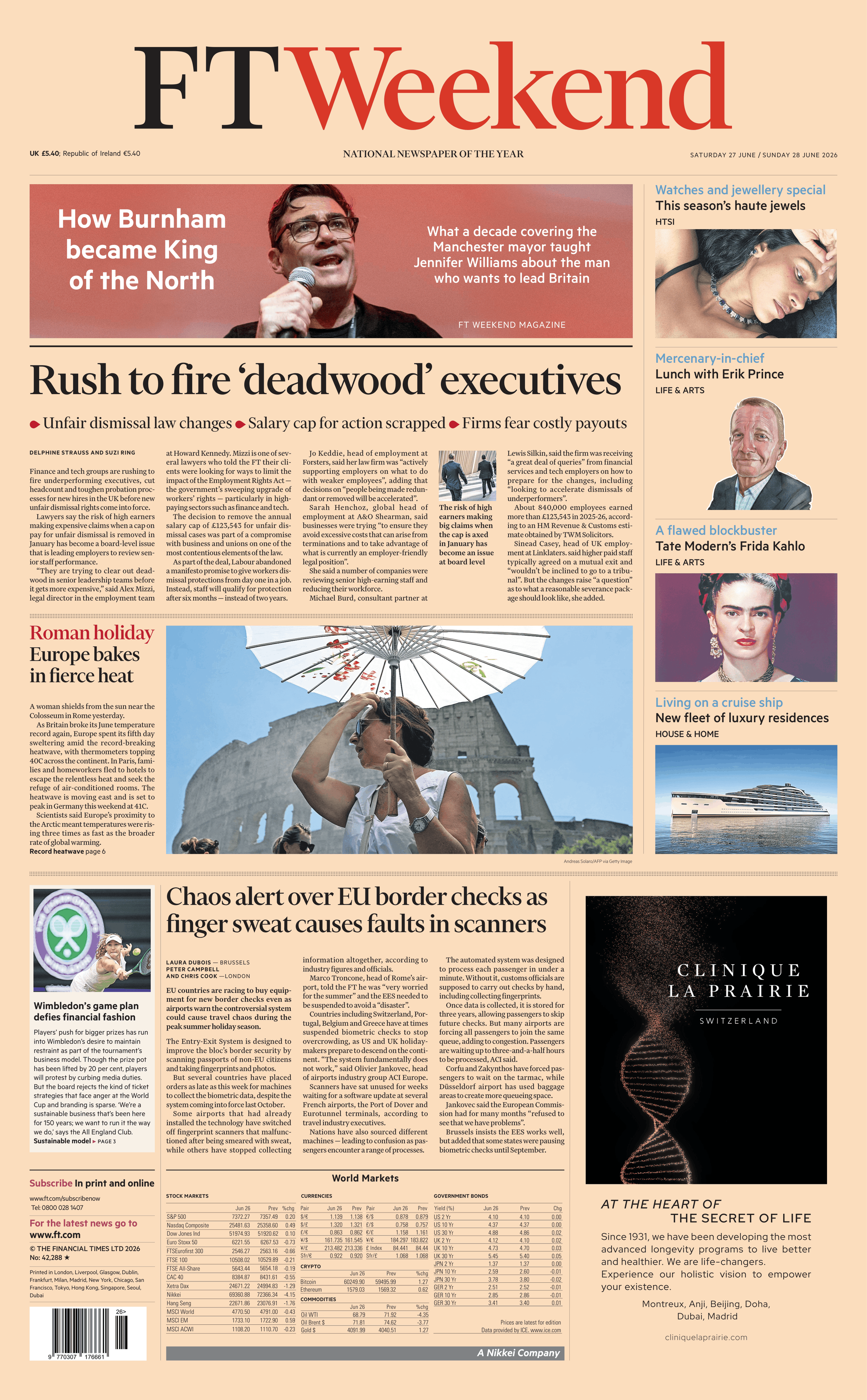
Rome’s airports will have to suspend the EU’s new digital border system for non-EU citizens to avoid a “disaster” during the peak tourism summer months, according to the head of the airports company. Marco Troncone said that allowing passengers to skip the biometric entry-exit system (EES) was the only way of avoiding travel chaos over the summer amid warnings from other European airport officials. Non-EU citizens, including Britons, must have their fingerprints and facial images taken the first time they enter the EU, under a new scheme designed to control the bloc’s borders. The system was first introduced last October and fully rolled out in mid-April after delays. EES has been delayed by faulty technology, leading to long queues for passengers even before the peak summer travel period, with some people missing flights. “We are very worried for the summer,” Troncone, the chief executive of Aeroporti di Roma, which operates Fiumicino and the smaller Ciampino airport, told the Financial Times. On a scale of one to 10, Troncone said his concern was now “eight or nine”. He added: “The process proves to be incompatible with the peak volumes that we are going to face. So the only way is to open up the valve. There is no way that we can deliver 100% of the enrolment.” - The Guardian
The journals…..
Hi Michael and thank-you for your insights, it refreshing to here positive things happening in a country with a well-liked leader. It's incredible how important it is, in a democracy, to elect carefully and wisely. Churchill expressed deep faith in the average, ordinary voter to make the right decisions. He believed that the ultimate power of democracy rested with the everyday, humble citizen casting a private, un-coerced vote. It appears that Mexico and Canada made the correct choices. (I sense a fatigue in your demeanor, take care of yourself)