This edition of World Briefing is being filed from Hong Kong, just hours after the close of the Year Ahead panel at the Foreign Correspondents’ Club Hong Kong. One question loomed large during the discussion: is the United States edging toward military action against Iran - and if so, how does that square with the MAGA promise to end America’s role as the world’s policeman?
Supporters of Donald Trump voted for fewer foreign entanglements, not more. Yet current US actions - from the Persian Gulf to Venezuela and northern Nigeria - suggest something very different.
Why this matters
Washington’s rapidly escalating military buildup in the Middle East - including an aircraft carrier strike group, fighter jets, air defenses and thousands of troops - is sharply increasing pressure on Iran, even as verified footage points to one of the bloodiest crackdowns on protesters in the Islamic Republic’s modern history.
Experts warn the posture looks less like deterrence and more like preparation. Airlines are already acting accordingly, rerouting or suspending flights across the region as geopolitical risk spikes. Meanwhile, independent human rights monitors say the death toll from Iran’s protest crackdown could climb into the tens of thousands - numbers that dwarf official figures.
The contradiction at the core
Trump’s rhetoric has long promised restraint, retrenchment and an end to endless wars ("I am especially proud to be the first President in decades who has started no new wars”). But the reality unfolding - visible on radar screens, flight maps and the streets of Iran - tells a different story. Whether intentional or not, this moment underscores a growing disconnect between the MAGA brand of isolationism and the muscular foreign policy now playing out in real time.
More insights from the FCC power panel — and what this could mean next — coming soon.
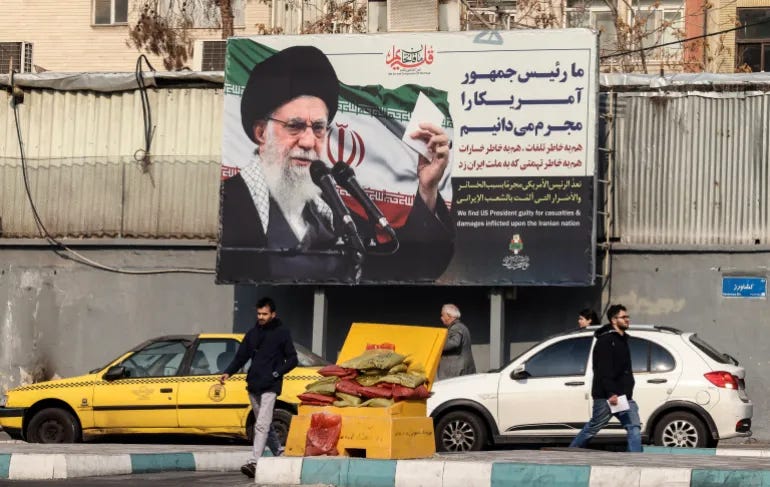
The United States is deploying jet fighters, air defenses, and an air carrier with thousands of troops to the Middle East, in a move that has heightened tensions with Iran and increased the likelihood of military action, experts say. US President Donald Trump threatened military strikes against Iran after the authorities killed thousands of people in a brutal crackdown on anti-government protests. Trump recently backed away, although he has not ruled out an attack on the Islamic republic. Experts say the military buildup along with planned US naval exercises in the region increases the pressure on Iran and provides more offensive military options if Washington chooses to attack Iran. “This can be a message to Iran that we’re ready, our capabilities are in place,” Farzin Nadimi, a senior fellow at the Washington Institute for Near East Policy, told RFE/RL’s Radio Farda. Nadimi added that the chances of US strikes on Iran were “very high,” pointing to the “overtly aggressive” military buildup in the Persian Gulf. The aircraft carrier USS Abraham Lincoln and three accompanying destroyers are headed toward the Middle East carrying over 5,000 troops. US Central Command has said that F-15E Strike Eagle fighter jets were deployed to the region.
Iran Revolutionary Guard spokesperson Mohammad Ali Naini has warned the US, saying, “If their aircraft carrier made a mistake and entered Iranian territorial waters, it would be targeted,” the Hamshahri newspaper quoted him as saying.
The Javan newspaper reported Iran is “ready for a major response” if hit by the US and would seize the strategic Strait of Hormuz, the key transit hub for energy supplies. Analysts say US military options include strikes on military facilities or targeted attacks against the leadership under Ayatollah Ali Khamenei in a full-scale bid to bring down the system that has ruled Iran since the 1979 Islamic Revolution - Al Jazeera
Flights to parts of the Middle East remain disrupted this week, after several international airlines temporarily suspended or adjusted routes amid rising geopolitical risk and updated airspace safety guidance. The move follows reports of a large US naval deployment moving towards the Gulf and intensifying rhetoric between the US and Iran. The changes are affecting routes to Israel, parts of the GCC and Jordan, with airlines stressing that the measures are precautionary and subject to constant operational review. Several European, North American and Asian carriers have confirmed cancellations or operational changes to flight routes across the Middle East. They include: Air France, KLM, British Airways, Lufthansa, Air Canada (suspensions of flights to Israel until further notice); and low coast carriers Wizz Air, IndiGo and Transavia. While major Gulf carriers such as Emirates and Qatar Airways continue to operate, they are heavily rerouting around the Tehran Flight Information Region (FIR), adding 30 to 90 minutes to some flight times. Flydubai has also cancelled several services to Iranian cities, including Tehran, Mashhad and Shiraz - CN Traveller/My Savvy Traveller
Verified videos emerging from Iran show bodies piled up in a hospital, snipers stationed on buildings and CCTV cameras being destroyed, following the unprecedented crackdown on protests earlier this month. BBC Verify has been tracking the spread of protests across Iran since they first erupted in late December, but the near total internet blackout imposed by the authorities has made it extremely difficult to document the scale of the state’s deadly crackdown on protesters. The US-based Human Rights Activists News Agency (HRANA) says it has confirmed the killing of nearly 6,000 people, including 5,633 protesters, since the unrest began at the end of December. It says it is also currently investigating another 17,000 reported deaths received despite an internet shutdown after nearly three weeks. Another group, the Norway-based Iran Human Rights (IHR), has warned that the final toll could exceed 25,000. Iranian authorities said last week that more than 3,100 people were killed, but that the majority were security personnel or bystanders attacked by “rioters”. The latest videos to emerge from the country are understood to have been filmed on 8 and 9 January, when thousands of people took to the streets following a call for nationwide protests from Reza Pahlavi, the exiled son of the late Shah. They are thought to be the deadliest nights for protesters so far and these newly verified videos show how Iran’s security forces have been violently cracking down on protesters - BBC
U.S. Treasury Secretary Scott Bessent, speaking to Fox News, said Donald Trump and Canadian Prime Minister Mark Carney spoke and claims the Canadian leader was “very aggressively walking back some of the unfortunate remarks he made at Davos.” However, a reporter for the Toronto Star posted on Twitter that neither Carney nor his office advised Canadians of this call. However, Carney said publicly he didn't regret a word of his speech in Davos, and in French doubled down on the "economic coercion" theme.
Israel said it recovered the body of the final hostage held in Gaza, a milestone in efforts to advance a US-brokered ceasefire in the enclave. Police officer Ran Gvili was killed fighting Hamas attackers on Oct. 7, 2023 — Israel had resisted moving ahead with the truce until his remains were retrieved. For the first time since 2014, there are no Israeli hostages, dead or alive, in Gaza — “a reminder of the deep roots of this conflict and how difficult it could still be to shape a lasting peace,” the BBC wrote. Israel also said Monday it will reopen a key border crossing between Gaza and Egypt, but the next steps of the peace plan center on more challenging tasks, including Hamas’ disarmament - Semafor
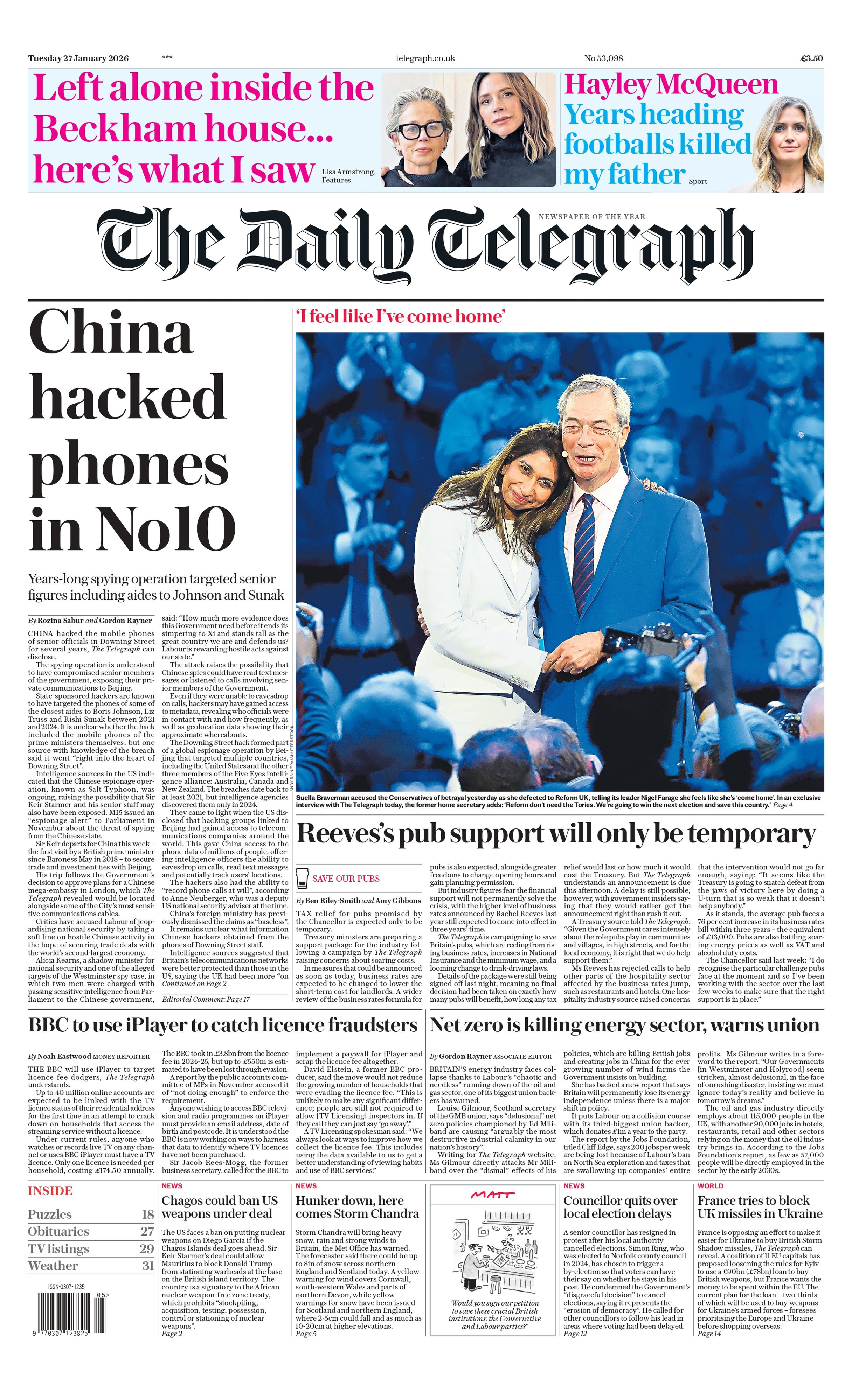
Top aides for PMs Boris Johnson, Liz Truss and Rishi Sunak were among the targets of a sophisticated Chinese hacking campaign in the UK, it has been reported. The personal communications of several influential figures on Downing Street were compromised between 2021 and 2024 as part of an operation dubbed Salt Tycoon, according to the Daily Telegraph. Sources told the newspaper the global-scale operation is believed to still be continuing, raising questions over whether current government ministers and officials may have been hacked.However, separate security sources speaking to the Times downplayed claims China’s efforts were successful in the UK. The timing of the story is awkward for No 10, as Sir Keir Starmer prepares to leave later today on the first official visit to China by a British Prime Minister since 2018. He is expected to meet Chinese leaders in Beijing as part of the trip and visit Shanghai before stopping off in Japan - Metro
After months of intense negotiations, the European Commission concluded on Tuesday a free-trade deal with India which sharply reduces tariffs on EU products from cars to wine as the world looks for alternative markets following President Donald Trump’s tariffs. The announcement was made during a high-level visit by European Union leaders including Commission President Ursula von der Leyen. Both countries hailed a “new chapter in strategic relations” as both sides seek alternatives to the US market. India is currently facing tariffs of 50% from the Trump administration, which has severely dented its exports. After sealing the Mercosur deal with Latin American countries earlier this month, the EU has said it aims to speed up its trade agenda with new partners. Talks went down to the wire with negotiators meeting over the weekend and in the early hours of Monday. The deal says it will bolster the “untapped” potential of their combined markets but did not include politically sensitive sectors such as agriculture - Euronews
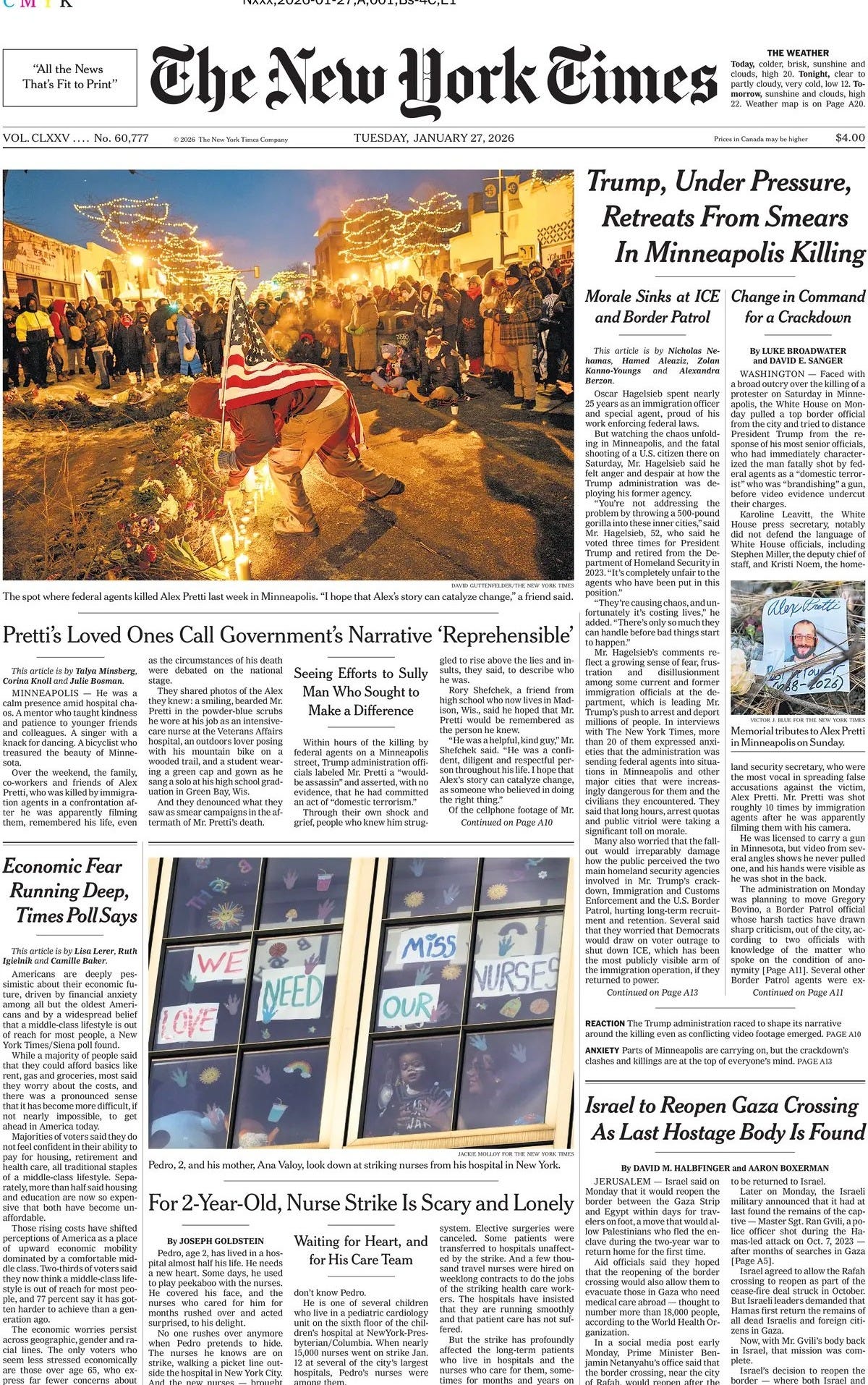
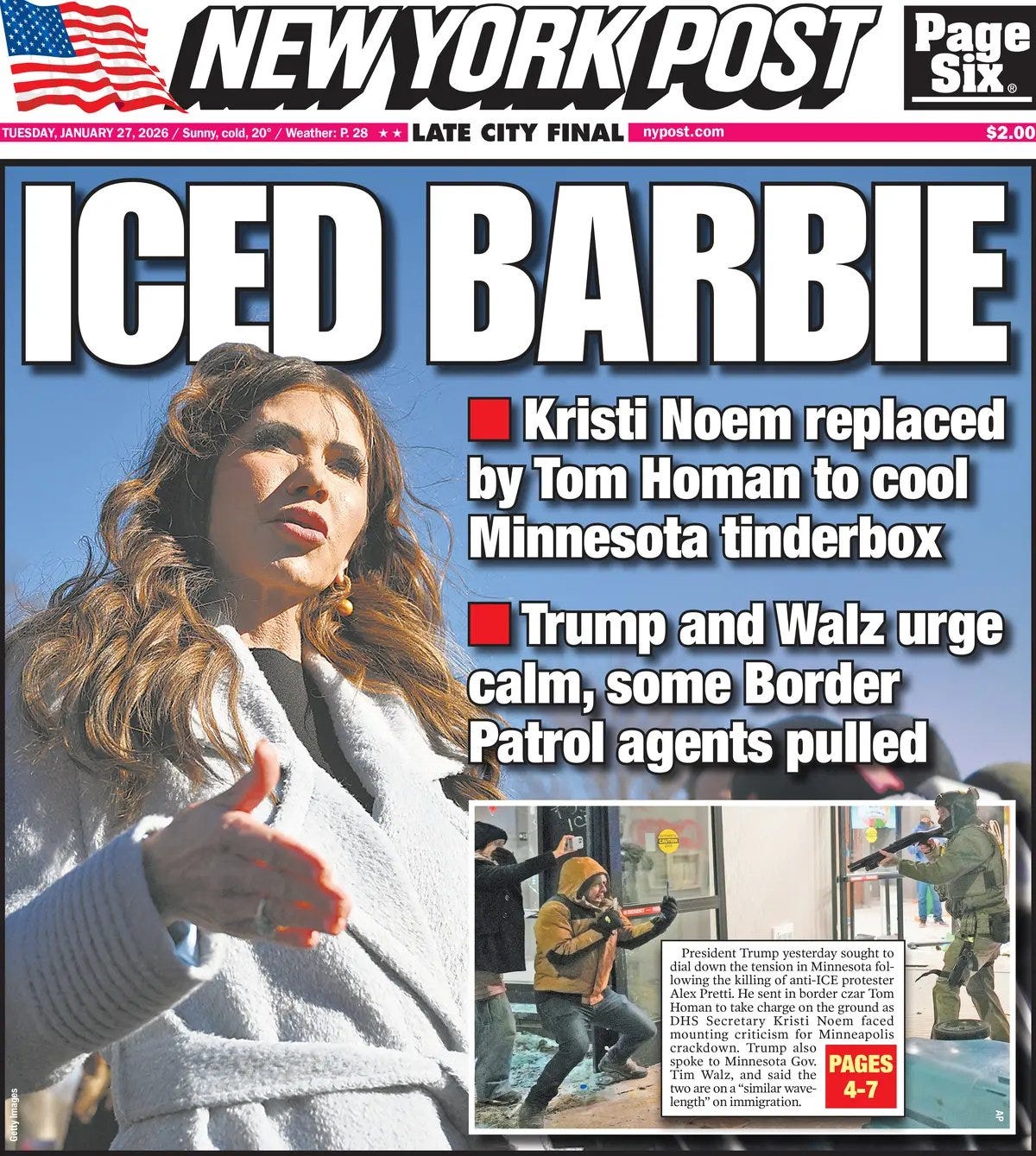
U.S. Immigration and Customs Enforcement agents will have a security role during the upcoming Milan Cortina Winter Games, according to information shared with local media by sources at the U.S. Embassy in Rome. The Associated Press independently confirmed the information with two officials at the embassy. The officials who confirmed ICE participation on Tuesday said that federal ICE agents would support diplomatic security details and would not run any immigration enforcement operations. During previous Olympics, several federal agencies have supported security for U.S. diplomats, including the investigative component of ICE called Homeland Security Investigations (HSI), the sources said. They could not be named because they are not authorized to speak publicly. HSI has a global footprint, and it’s common for the Department of Homeland Security (DHS) to provide security support at major international events. The State Department’s Diplomatic Security Service does this as well, routinely supporting events like the Olympics. The use of U.S. law enforcement agencies in these contexts isn’t unusual. During the 2016 Rio Olympics, the Transportation Security Administration deployed officers to assist with airport screening due to the surge in visitors and the potential threat of attacks - AP
Former Fifa president Sepp Blatter on Monday suggested he supports fans boycotting World Cup matches in the United States this year due to security concerns. Blatter gave his support to comments from Swiss anti-corruption lawyer Mark Pieth, who worked with Fifa on potential reforms when Blatter was president, saying fans should stay away from the US for the tournament. “I think Mark Pieth is right to question this World Cup,” Blatter said on social media. Pieth cited the killing of protester Renee Good by an American immigration agent in Minneapolis earlier this month as one reason for supporters not to travel to the US. Blatter’s endorsement of Pieth’s comments comes in the wake of the death of a second US citizen, Alex Pretti, last weekend. The World Cup is due to be hosted by the US, Canada and Mexico from 11 June to 19 July. Blatter stepped down as Fifa president in 2015 amid several scandals and was replaced by Gianni Infantino, who has forged close ties with Donald Trump - The Guardian
The journals….